Friday, February 13, 2026

Georgia National Guard Soldiers Reunite Lost Puppy With Owner During D.C. Patrol

What began as a routine patrol at the Anacostia Metro station quickly turned into a heartwarming reunion when soldiers assigned to the 170th Military Police Battalion, Georgia Army National Guard, helped return a lost puppy to its grateful owner, Feb. 9.
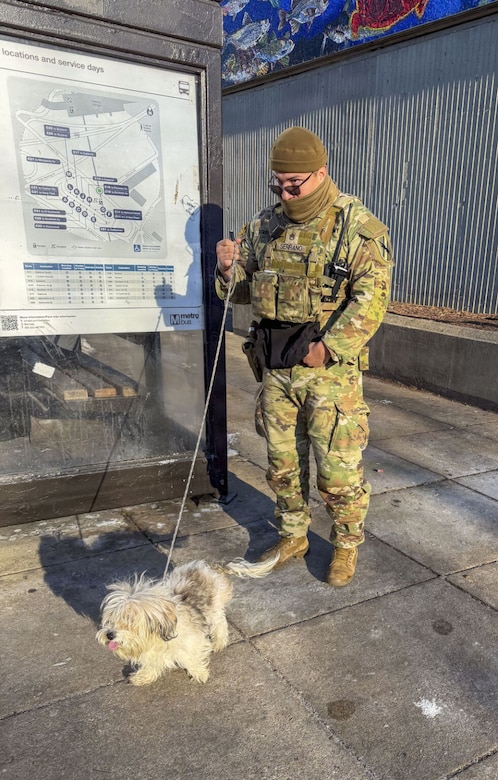
A man dressed in a camouflage military uniform and sunglasses holds the leash of a small fluffy white dog while standing next to a Metro station.

Army 1st Lt. David Okonofua, a military police officer supporting the D.C. Safe and Beautiful mission, was patrolling the station alongside Army Sgt. Michael Waller, Army Staff Sgt. Cesar Serrano and Army Staff Sgt. Martinez when a mother and child approached the team.  

"It was one of those moments where everything feels normal, which made the situation stand out when we were flagged down," Okonofua said.  

Holding a small white puppy, the woman explained that the dog's owner had left the puppy on a transit bus and they were searching for help.  

"They were ... actively seeking assistance," Okonofua said. "Their urgency and body language made it clear that something wasn't right."

Waller and the other soldiers immediately stepped in.
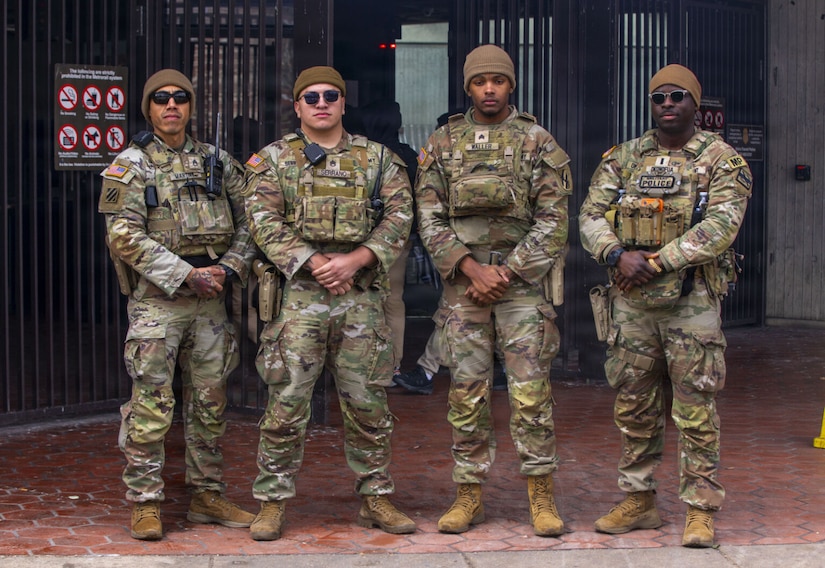
Four men in camouflage military uniform pose for a photo in front of a Metro station.

The patrol team took custody of the puppy, ensuring it was safe and cared for while they worked to locate the owner. The soldiers provided food and water and carried the puppy with them as they coordinated with the station manager and contacted local animal rescue resources.  

Community members also joined the effort.  

"Pedestrians shared dog treats and food," Waller added. "The community helping out and being diligent really helped us care for the lost animal. I have dogs at home, so we know how to treat dogs."  

"We're dog people," Serrano said laughing.

"It was a nice, cute little puppy, very sweet," Waller added. "Didn't bite, very friendly with everybody that walked past."
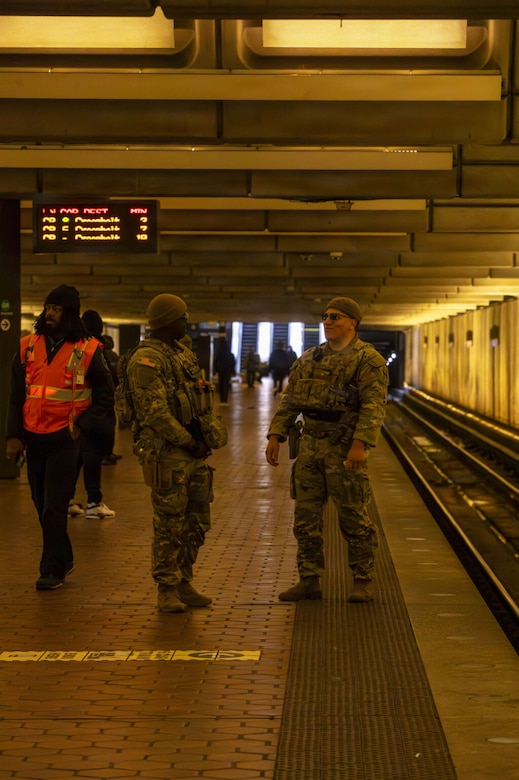
Two men in camouflage military uniform stand near the train tracks in an underground Metro station. Another man, wearing a Metro employee uniform and reflective vest, walks by.

About an hour later, a woman arrived at the station asking if anyone had seen a small white dog. After verifying details, the soldiers reunited the owner with her pet.  

"She was very relieved," Okonofua said. "The dog was also very happy to be reunited with its owner. She thanked us, and we shared a few words before she left with her puppy."  

Okonofua emphasized that this moment exemplified the broader purpose of the mission.  

"Our mission goes beyond just security," he said. "It's about protecting people, property and even animals. Helping reunite someone with their pet builds trust and shows that we care about the community we serve."  

For Waller, the experience was a reminder of one of the many reasons soldiers put on the uniform.  

"It's not every day you get to put on a uniform and be a hero, making a difference," he said. "When you're actually doing it, it does feel good."

Battles of Saratoga: Turning Point in American Revolutionary War

This year marks the nation's 250th birthday, celebrating the Declaration of Independence.

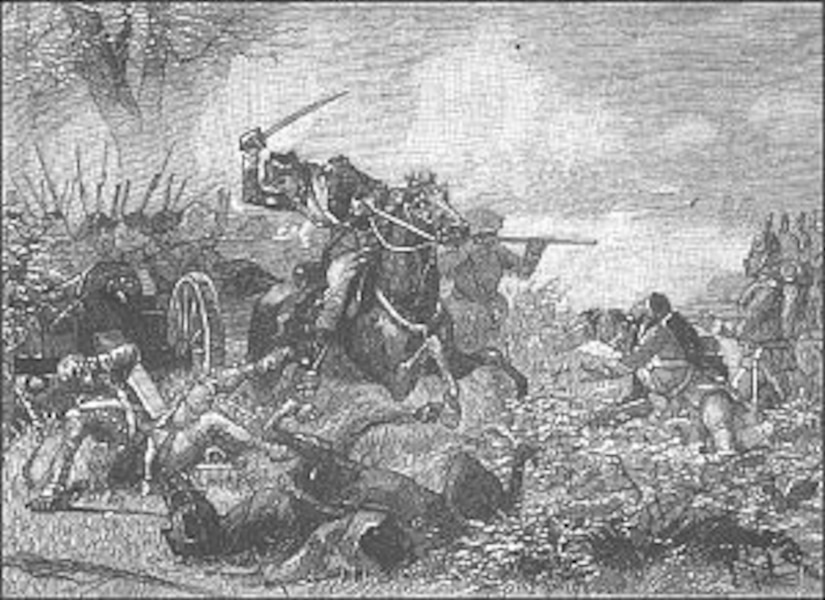
A black and white painting depicts soldiers shooting each other with long guns and slashing each other with swords.

On July 4, 1776, things were not going well for the American military forces, which were retreating from New York City and Canada following battles with the British. A little more than a year later, a turning point occurred as British forces surrendered, following the Battles of Saratoga, Oct. 7, 1777. 

The British planned to sever New England from the rest of the country by sending forces from Canada eastward down the Mohawk River, southward via Lake Champlain and northward up the Hudson River, where they planned to converge in Albany, New York. 

The plan was strategically sound, but things went horribly wrong for the British.

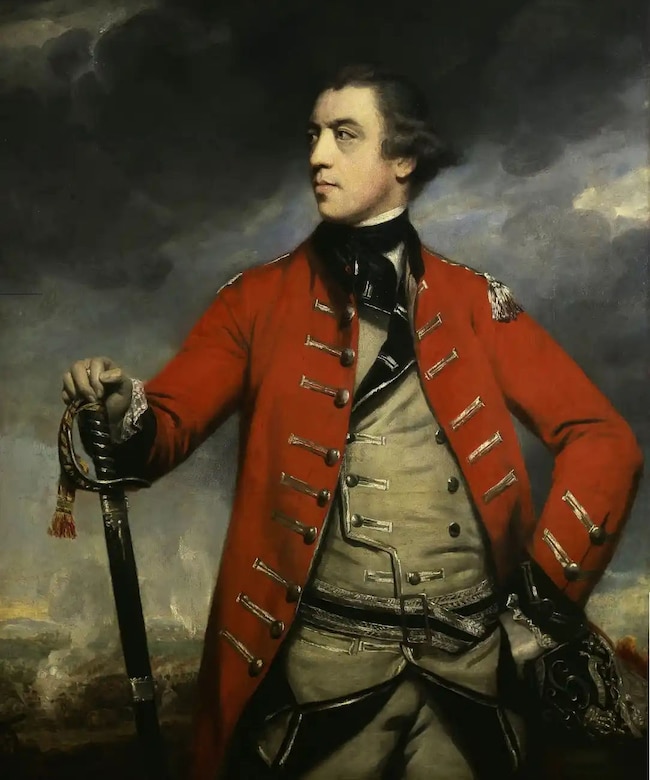
A painting depicts a man in his military dress uniform, right hand resting on his downturned sword as storm clouds form in the distance.
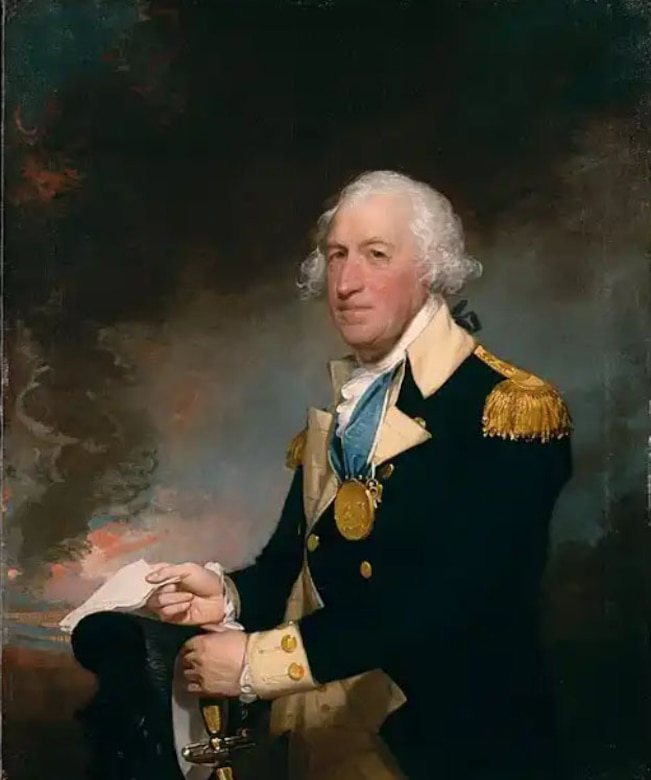
A painting depicts a man in a military dress uniform with a pendant hanging around his neck in a night scene.
British Army Gen. John Burgoyne led about 8,000 troops south from Canada through the Champlain Valley. 

British Army Gen. William Howe never moved his forces north up the Hudson River, and British Army Brig. Gen. Barry St. Leger turned back his forces meant to arrive from Canada through the Mohawk Valley, leaving Burgoyne's entire force surrounded and outnumbered by the Americans in upstate New York.

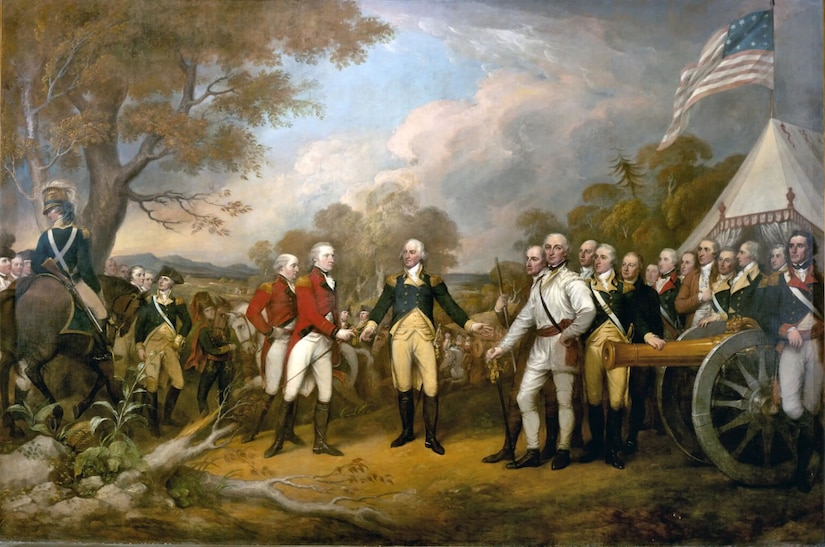
A painting depicts troops in various Revolutionary War-era military uniforms standing next to a cannon in the countryside under a partly cloudy sky.

Burgoyne surrendered his entire force to Continental Army Maj. Gen. Horatio Gates. 

The victory was so successful that France decided to ally itself with the United States, providing much-needed assistance with its military, supplies and equipment. 

Later in the war, Spain and the Netherlands also provided assistance to the U.S.

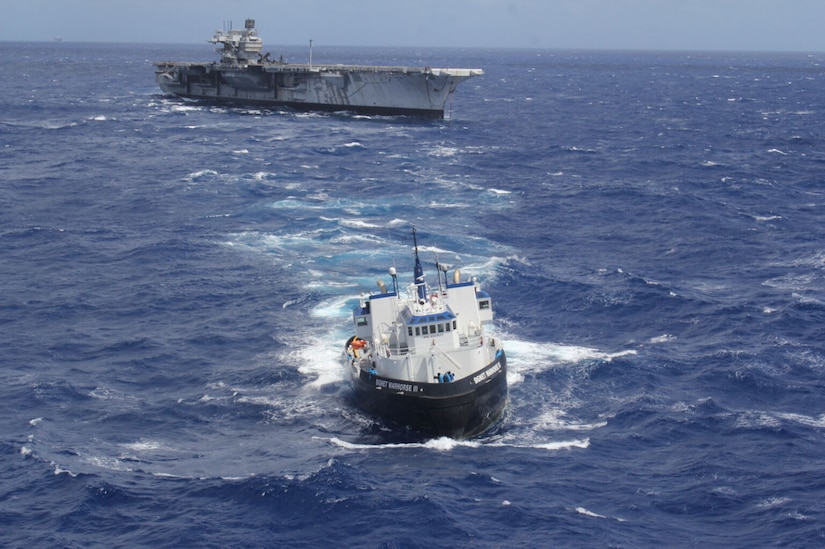
A tugboat tows an aircraft carrier at sea.

A number of Navy ships, including sailing vessels, cruisers and aircraft carriers, bore the name USS Saratoga in honor of that victory. 

Today, the National Park Service maintains the site of the victory, which is now called Saratoga National Historical Park.