Wednesday, December 10, 2025

Army Activates U.S. Army Western Hemisphere Command in Historic Transition Ceremony

The Army activated the U.S. Army Western Hemisphere Command in a ceremony held Dec. 5 at Fort Bragg, North Carolina — uniting U.S. Army Forces Command, U.S. Army North and U.S. Army South into a single, four-star operational headquarters.
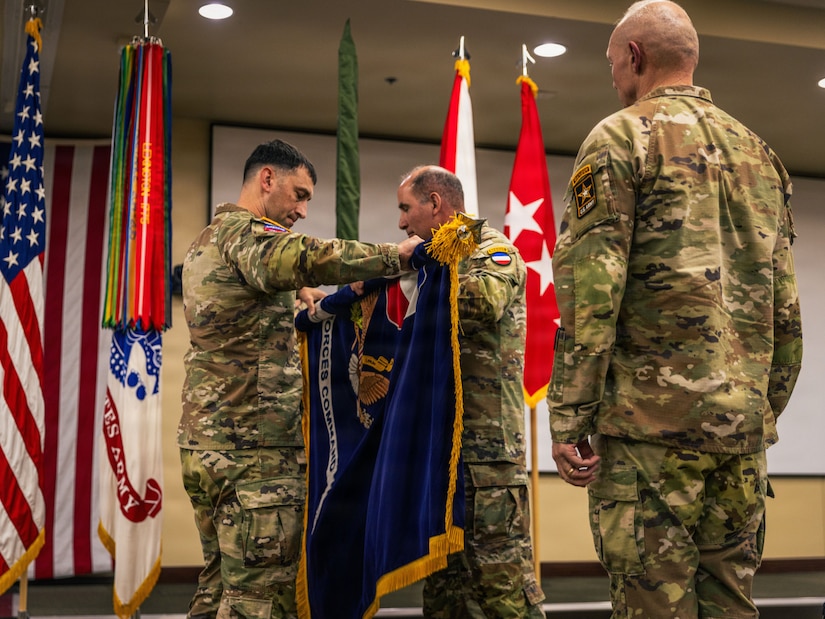
Two men wearing camouflage military uniforms roll up a dark blue flag with gold fringe as a man in similar attire watches in the foreground; the American flag and other military flags are behind them.

The ceremony also marked the casing of the U.S. Army Forces Command colors and the retirement of its commanding general, Army Gen. Andrew Poppas, who led the command since July 2022. 

"Today we become something new, but [U.S. Army Forces Command]'s spirit of readiness, resilience and warfighting strength will not fade. Rather, that spirit will radiate throughout the Army," said Poppas, who retired after more than 37 years of service.

Army Gen. Joseph A. Ryan assumed command of West-Hemcom. He previously served as the Army's deputy chief of staff for Operations, Plans and Training.

The ceremony marked a significant moment in the Army's transformation as the establishment of West-Hemcom is part of a broader transformation campaign to modernize Army command structures and improve operational agility.
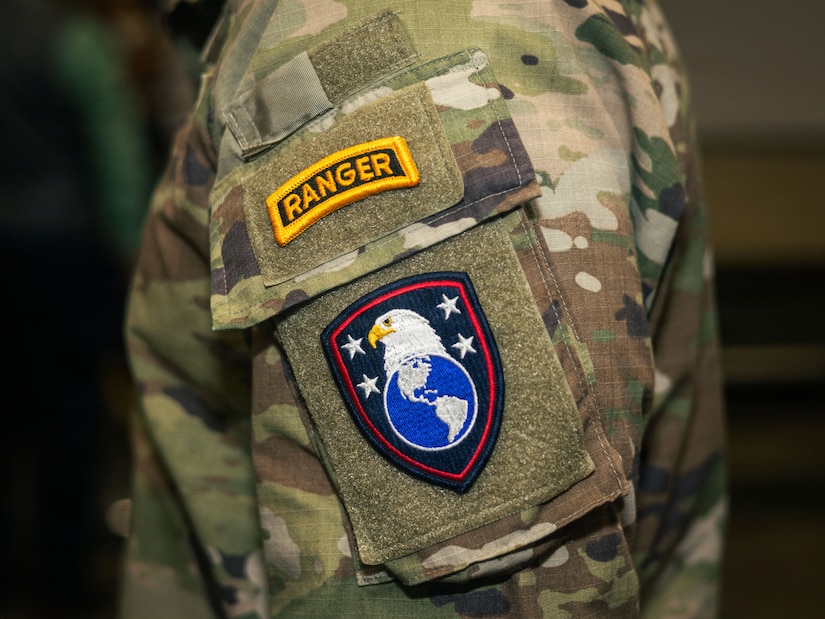
An up-close picture of the shoulder of a camouflage military uniform with a tab that says "Ranger" on top and a patch with an eagle head over a globe with four white stars depicted on a black background.

The newly established command is an operational warfighting theater command headquarters overseeing all Army plans, posture, operations and power projection in support of U.S. Northern and Southern Commands — and aligned with national strategic priorities. 

"Western Hemisphere Command is designed for speed, flexibility and relevance to effectively respond to challenges in our complex times," said Army Chief of Staff Gen. Randy George. "By consolidating these headquarters and aligning the theater, we will streamline processes, eliminate redundant efforts and free up talent and resources. This will allow us to better support our fighting formations." 

West-Hemcom unifies domestic-response capabilities from U.S. Army North, regional engagement expertise from U.S. Army South and large-scale readiness oversight from U.S. Army Forces Command. This integration delivers uninterrupted readiness, rapid force generation and expertise in homeland defense and civil support. It also enables the Army to respond more rapidly to crises and to continue building strong military alliances. 

"Today is much more than a change of command ceremony," Poppas said. "It's a major step toward the merger of three powerhouse Army headquarters into one operational, transregional team that will face the nation's top strategic priorities."
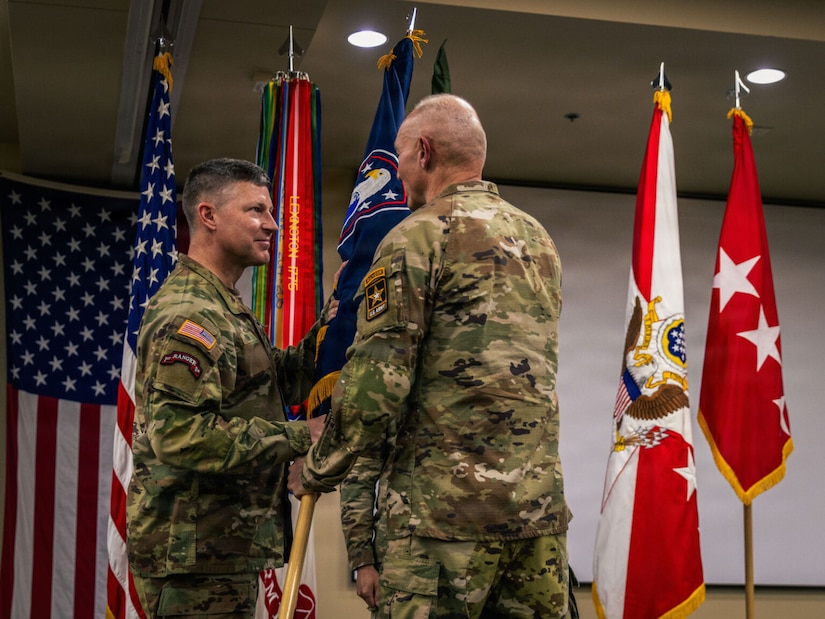
A man wearing a camouflage military uniform passes a guidon with a flag to another man in similar attire; the American flag and other military flags are behind them.

The activation of West-Hemcom is the first step in a conditions-based transformation. By February 2026, the new command will reach its initial operational capability and will be assigned to Southcom and Northcom to prepare to accept theater Army authorities and responsibilities. Following initial operational capability, U.S. Army North and U.S. Army South will inactivate. If all conditions are met, West-Hemcom will reach full operational capability by summer 2026. 

"Today, we continue in the Army's rich history of transformation — combining Forces Command, Army North and Army South — to form the United States Army Western Hemisphere Command," Ryan said. "The Army is making an enormous investment in this transformation, combining three important, effective and historically capable commands into one. It is our responsibility to deliver returns on that investment."

From Quadcopters to Micro-UAS: The Aircraft Used at DOW's Drone School

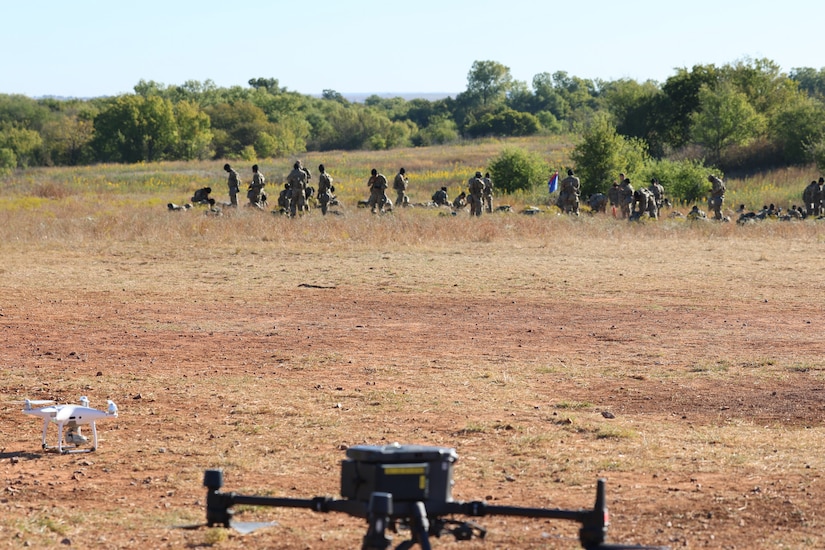
The increasing prevalence of drones on the modern battlefield means it's crucial for our service members to be familiar with the various systems they might encounter, which is why at the Joint Counter-Small Unmanned Aircraft Systems University at Fort Sill, Oklahoma, students learn the ins and outs of about two dozen of these aircraft.  

Two drones sit on a dirt patch. In the distance, several soldiers mill around.

The JCU is the War Department's only joint training center aimed at countering the growing number of aerial threats U.S. troops face across the world.  It teaches service members of every branch how to operate drone equipment, plan counter-small UAS strategies and train others to defend installations.   

During the courses, students get to know 24 types of commercial off-the-shelf small UAS that they may see downrange, from "blue air" drones that are considered friendly to "red air" drones that are used by our adversaries.  

The types of aircraft the JCU trains students on range from commercial quadcopters to tiny micro-UAS and custom-built foam drones that can mimic real threats. Here are the highlights of a few of them:   

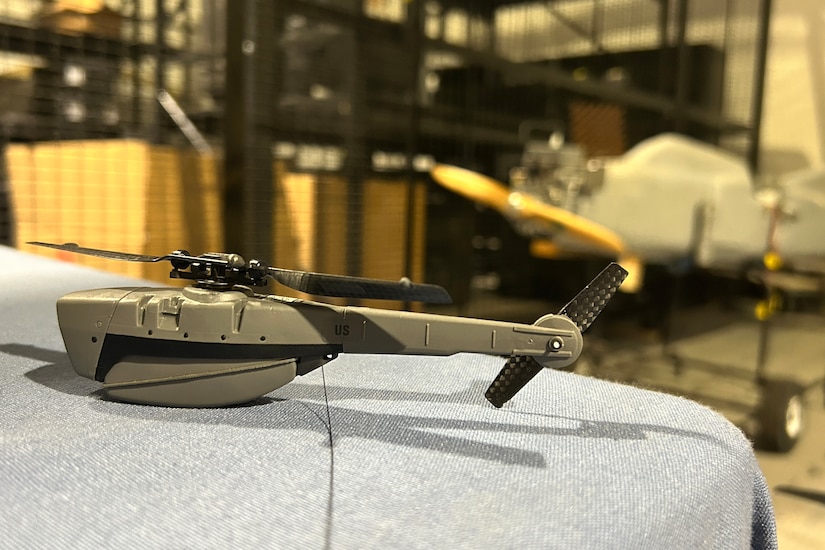
A small drone sits on a table.
 

The Black Hornet:  

The Black Hornet is the smallest drone currently used by the JCU. Developed under Special Operations Command, this tiny, covert drone does close intelligence, surveillance and reconnaissance — it can even be used inside buildings for hostage rescues. It includes an enhanced thermal camera and is small enough for service members to carry on their utility belts.  

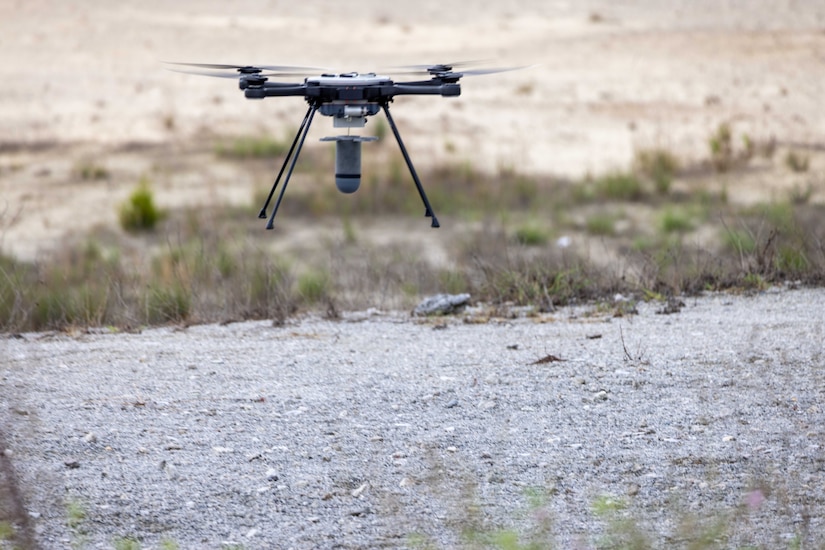
A quadcopter drone hovers a few feet above gravel.

R80D SkyRaider:  

Developed exclusively for DOW and other federal agencies, the R80D SkyRaider is a vertical takeoff and landing quadcopter that's agile and can carry and deliver multiple payloads up to 7.7 pounds. It has one of the fastest, most powerful embedded artificial intelligence computing devices available for small UAS. It can also thrive in GPS- or communications-denied environments.  

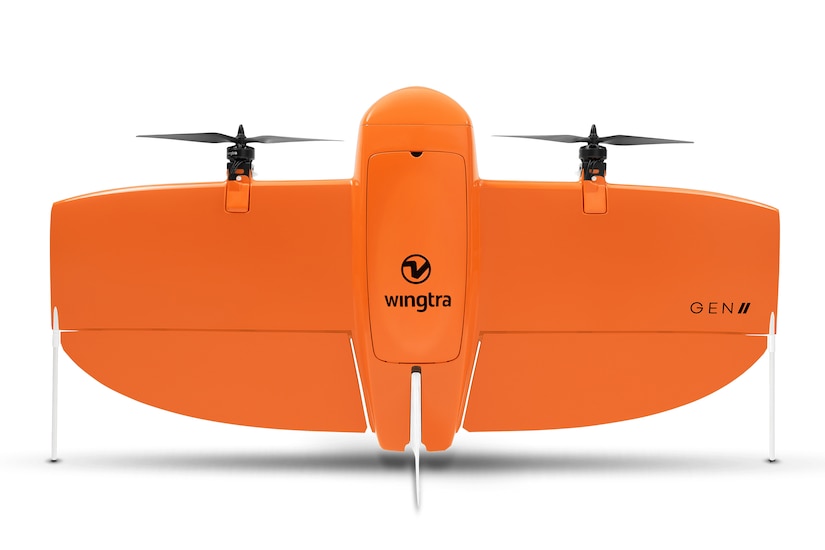
A wide-winged drone with two propellers sits upright.

WingtraOne Gen II:  

The WingtraOne Gen II is one of the fastest mapping and surveillance small UAS on the planet. This fixed-wing drone has multiple cameras and a light detection and ranging — LiDAR — option, which can create precise 3D models of objects and environments. It can go about 36 mph and works well in high winds.  

A quadcopter drone sits on the ground.

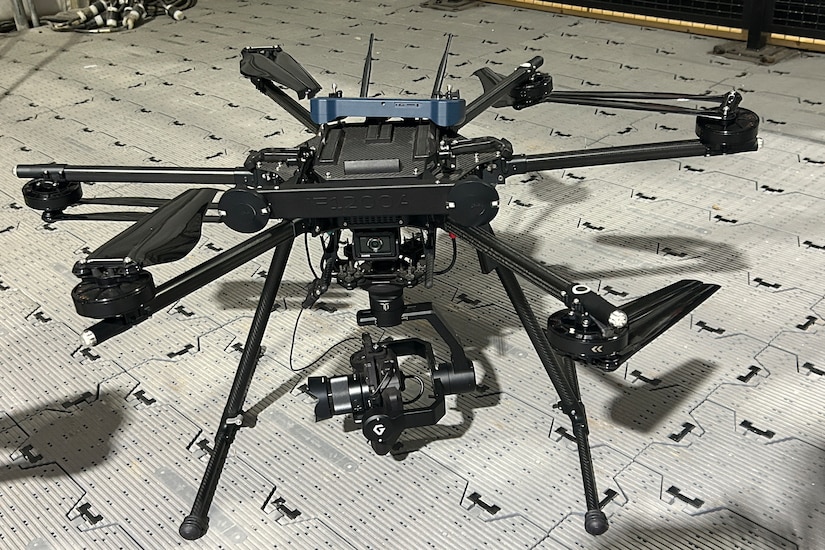
IF 1200:  

Weighing between 21 and 55 pounds, the IF 1200 electric hexacopter is the most aggressive small UAS the school has, and it's mostly used for detection, said JCU Air Boss Jacob Cameron. The IF 1200 can adapt to any requirement set and can be used with LiDAR, radiation detection sensors, electro-optical/infrared sensors and delivery capabilities. It can travel up to 70 mph, carry up to 35 pounds and stay in the air for up to 45 minutes. 

"That drone can do flips," Cameron said. "You think it'd be slow and clunky, but that is probably the fastest hexacopter drone that we have, and it's the most capable."  

A quadcopter drone sits on the floor.

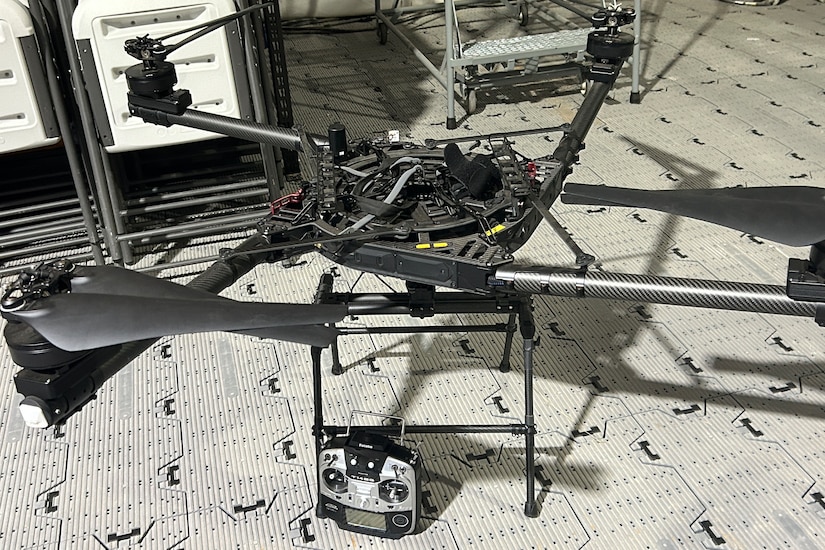
Alta X:  

The IF1200's larger counterpart, the Alta X, is the school's largest quadcopter, even though it's significantly quieter than the JCU's other drones. The all-electric Alta X is also mostly used for detection and can carry up to 40 pounds. It flies best when it's got a heavy payload. The Alta X can fold down to half its size in 20 seconds and can accommodate many sensors and third-party payloads, such as EO/IR, mapping and LiDAR. 

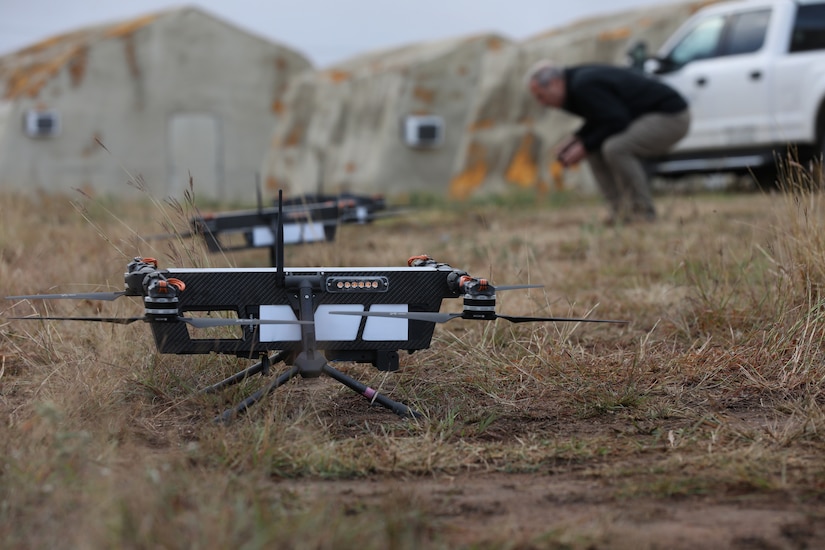
A small quadcopter drone sits on grass. In the background, another drone sits, and a man bends over to look at it.

TSM-800:  

Produced by the Army Threat Systems Management Office, this drone is designed for threat simulation and is capable of swarming up to 150 systems from a single ground control station. Each drone can carry a payload of 8 pounds. Three bomblets can be carried per drone. It is Wi-Fi compatible or can be used on a private LTE tower, Cameron said.  

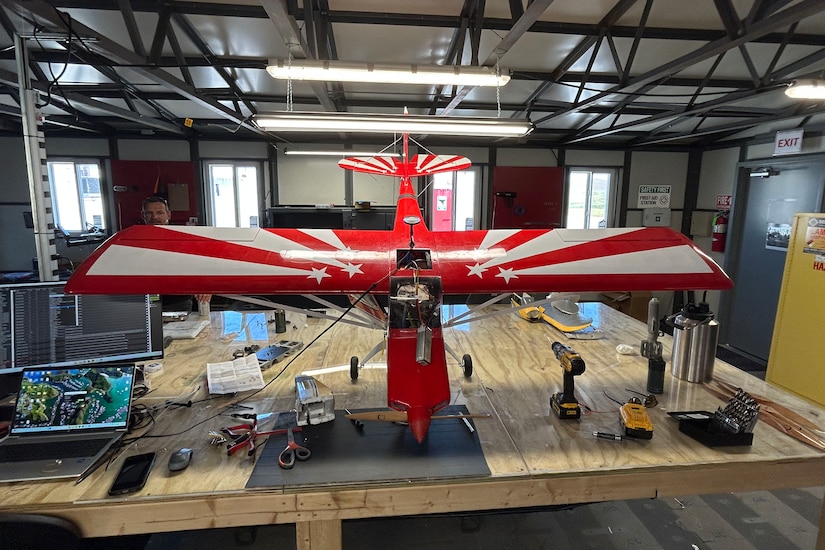
A large drone that looks like a small airplane sits atop a wooden table.
 

Super Decathlon: 

The "Super D" is a larger aircraft that has a gas engine and can be used for autopilot and manual missions. It's primarily used for detection and identification in the JCU's operator's course, as well as for loitering munition demonstrations for the planner's course. 

If an enemy tries to electronically jam it while it's on autopilot, the Super D can still fly through that area without being affected, Cameron said. It's completely autonomous, can carry large payloads over long distances, and can fly up to 70 miles. Cameron said it's great for student practice because its size makes it easier to find on radar signatures.  

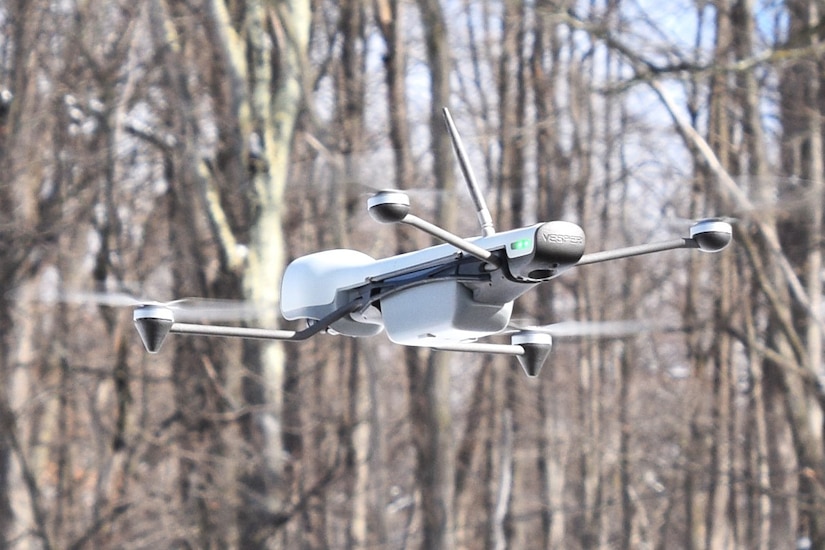
A quadcopter drone flies in the air amid a backdrop of leafless trees.

Vesper:  

The small Vesper quadcopter provides intelligence, surveillance and reconnaissance. At 2.2 pounds, it's light and easily portable. It has an EO/IR camera and can top out at 45 mph for about 50 minutes of flight time. It has low-light capabilities, extended endurance and stealth capabilities.  

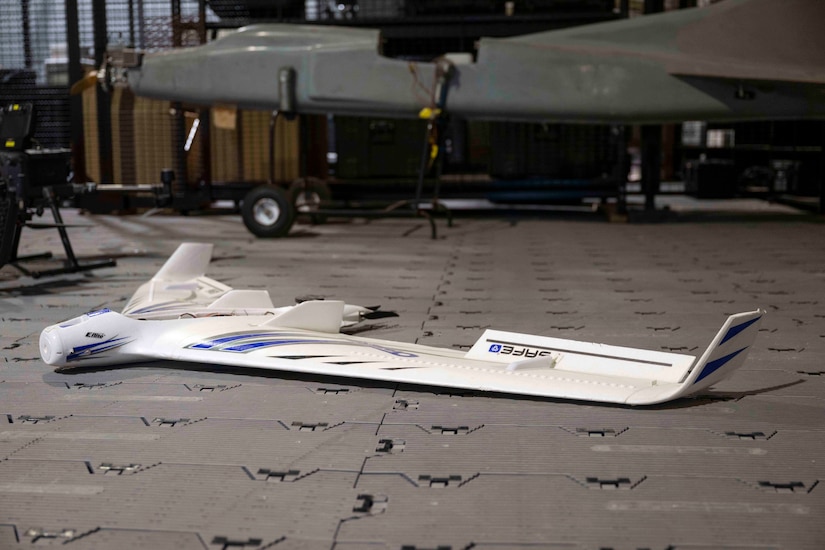
A small, white drone sits on the floor. A larger drone sits on wheels in the background.

Opterra:  

The lightweight Opterra has multiple camera mounting stations and is predominantly used as a target drone. 

"The Opterra is outstanding for being shot at because it's foam, and bullets will pass straight through it unless you hit specific small components on it, like the engine itself," explained Army Maj. Dennis "Chip" Stanford, JCU's executive officer. "It can be shot a lot." 

The JCU also teaches students on the CarbonCub, Skywalker X8, Vector-Scorpion, Osprey, IF 800 and the JTAC24, a JCU-designed and 3D printed target drone, as well as a few others.  

U.S. Army Europe, Africa Launches First Drone Warfighter Competition

Ten teams are competing in the inaugural U.S. Army Europe and Africa Best Drone Warfighter Competition at the 7th Army Training Command's Grafenwoehr Training Area, Germany, Dec. 8-10.

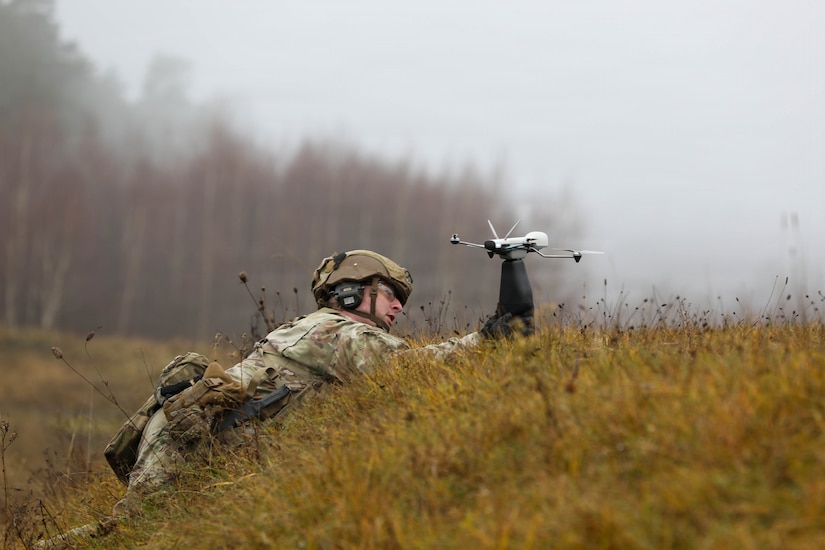
A soldier wearing a camouflage military uniform lies in a grassy field and prepares to launch a small drone on a cloudy day.

The multinational competition is designed to test and showcase unmanned aerial system operator capabilities and to serve as a visible culmination of experimentation, readiness and transformational warfighting initiatives, ensuring that participating U.S., allied and partner soldiers are trained, tested and ready to deploy modern UAS capabilities in complex operational environments. 

"It's pretty exceptional that although we're competing, we're friends, we're partners, we're allies," said Army Brig. Gen. Terry Tillis, 7ATC commander, during the opening ceremony.

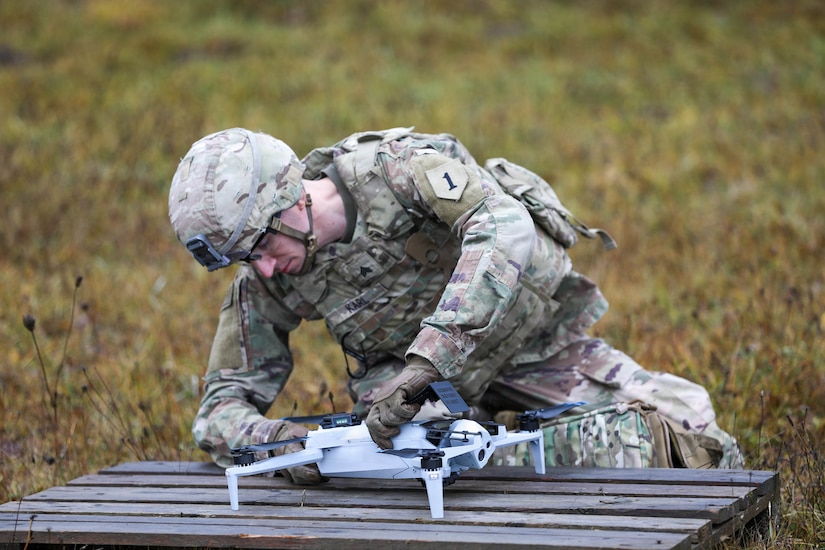
A soldier wearing a camouflage military uniform steadies a small drone on a wooden table outside and prepares it for launch.

"There's a larger picture," Tillis added. "It's not just about flying UAS. It's about utilizing the UAS as integrated enablers to achieve desired effects. It's about UAS facilitating the combined arms maneuvers of our ground forces into a position of advantage so they can seize and hold terrain." 

Army units permanently stationed in Europe and competing in the drone warfighter competition include the 1st Battalion, 4th Infantry Regiment, Joint Multinational Readiness Center, 7ATC; 173rd Infantry Brigade Combat Team, U.S. Army Southern European Task Force, Africa; 2nd Cavalry Regiment, V Corps; and 5th Battalion, 4th Air Defense Artillery, 52nd Air Defense Artillery Brigade, 10th Army Air and Missile Defense Command.

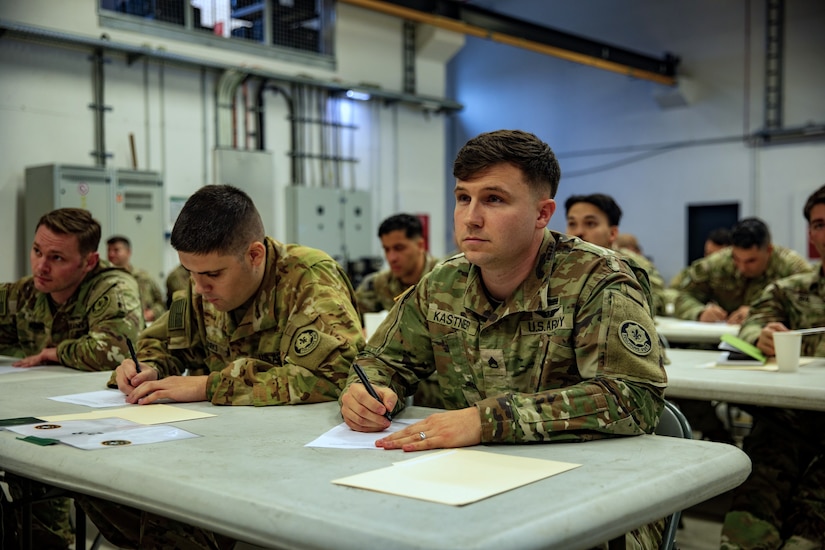
Three soldiers in camouflage military uniforms write on pieces of paper while seated at a table. Several other soldiers in similar attire, doing the same thing, are seated at a table in the background.

Other units rotationally deployed to the European theater under V Corps that are also competing include the 1st Armored Brigade Combat Team, 1st Infantry Division; 3rd Brigade Combat Team, 1st Cavalry Division; and 3rd Combat Aviation Brigade, 3rd Infantry Division. 

International teams from Italy and Spain are also competing. Each team has two to six soldiers, including a short-range reconnaissance drone team and a first-person-view drone team. 

Teams are scored over three days of graded activities, including a written UAS knowledge exam and two training scenarios conducted on a variety of soldier skills within a time limit. 

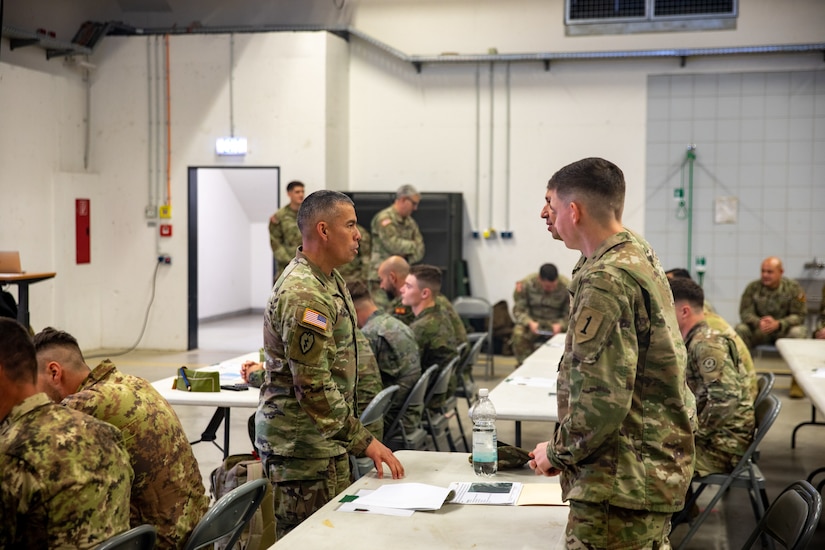
A soldier in a camouflage military uniform stands in front of a table while talking to two soldiers in similar attire standing across from him. Several other people in similar attire are seated at tables around the room.

One area focuses on their tactical abilities to carry out an aerial reconnaissance and a strike mission using a variety of small UAS platforms against an enemy force in an urban environment, including establishing camouflage and security. 

The second scenario tests aerial land navigation, accuracy and maneuverability of a first-person-view drone through an obstacle course to clear and secure a trench, as well as team cohesion and decision-making during a call-for-fire mission. 

Teams are using a variety of issued and self-built drones. 

The top Army team will be announced at the end of the competition and go on to compete in the 2026 Army Best Drone Warfighter Competition.

Operation Christmas Drop: DOW's Longest-Running Humanitarian Mission in Pacific

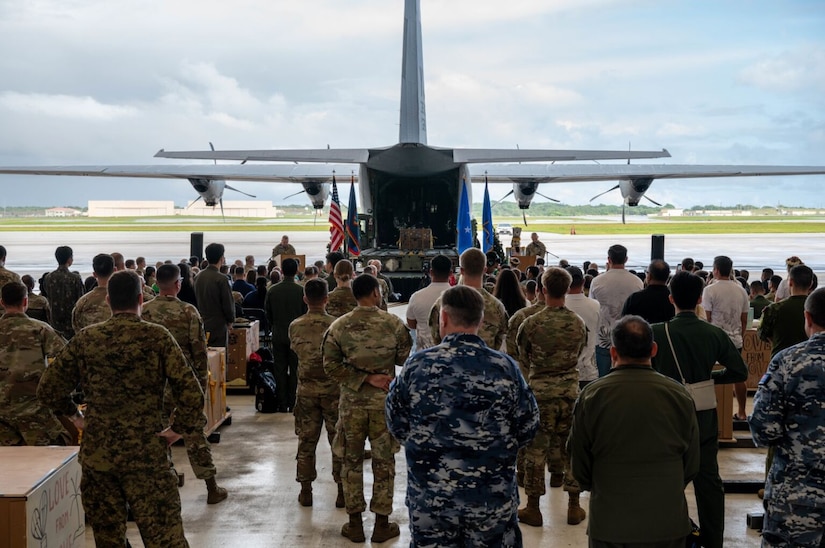
Leaders from the U.S. Air Force, partnering nations and community members gathered for a traditional "push ceremony," marking the official beginning of Operation Christmas Drop 2025 at Andersen Air Force Base, Guam, Dec. 8, 2025.

A group of service members and civilians stand behind an open military aircraft in a hangar.
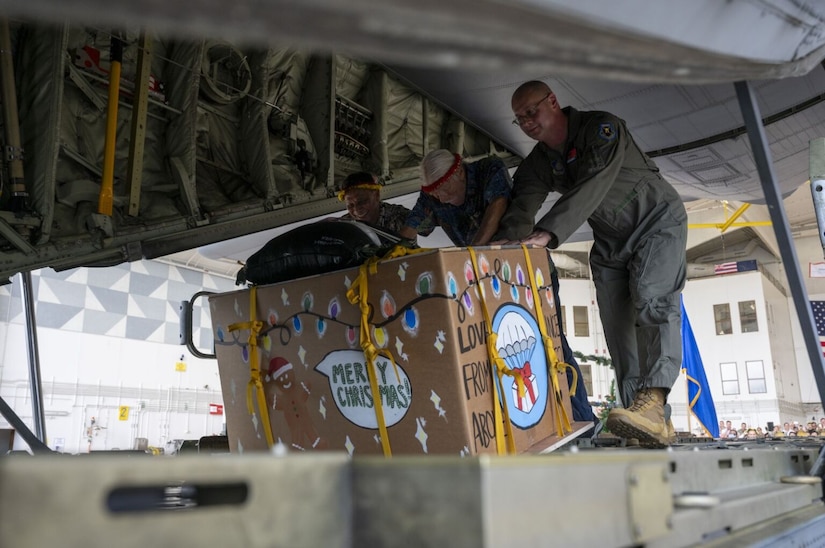
Three men push a large box down the back of a military aircraft.
The event served as the symbolic opening for the 74th iteration of the operation, the War Department's longest-running humanitarian airlift mission. It began in 1952 after an Air Force B-29 crew flying near Guam spotted islanders waving from below and dropped supplies as an act of goodwill.
 
"Operation Christmas Drop delivers more than just supplies," said Aren Palik, vice president of the Federated States of Micronesia. "It delivers hope, connection and the reassurance that even across a vast ocean, we remain part of one family. It is an accomplishment that speaks to the steadfast commitment of the United States and its Pacific partners to care for our people and our communities."

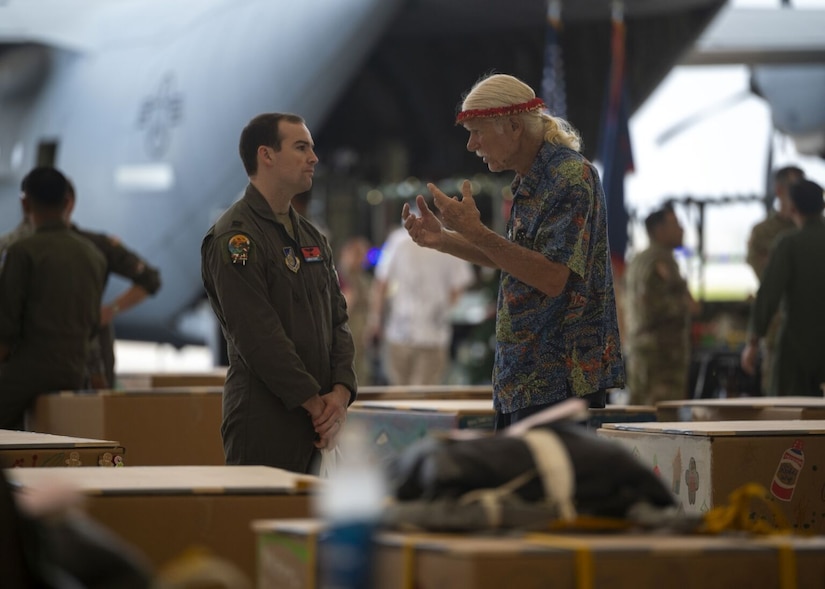
Two men, one a service member and the other a civilian, chat amongst a sea of supply boxes in an aircraft hangar. A military aircraft is in the background.

 
The ceremony concluded with Palik, Bruce Best — known at Operation Christmas Drop as "Brother Bruce" — and Air Force Col. Richard McElhaney, 374th Airlift Wing commander, loading the first official bundle into the cargo bay of a C-130J Super Hercules assigned to the 36th Airlift Squadron, operating under the 374th Expeditionary Wing.
 
"These bundles supply 56,000 people across 59 islands each year, but I don't think we can truly grasp that impact until we see the families wave and jump up and down in excitement as we fly by," McElhaney said. "While this is an amazing humanitarian mission, it's also an invaluable training event for participating aircrews. This training, and the work we do here, matters and translates to our readiness."

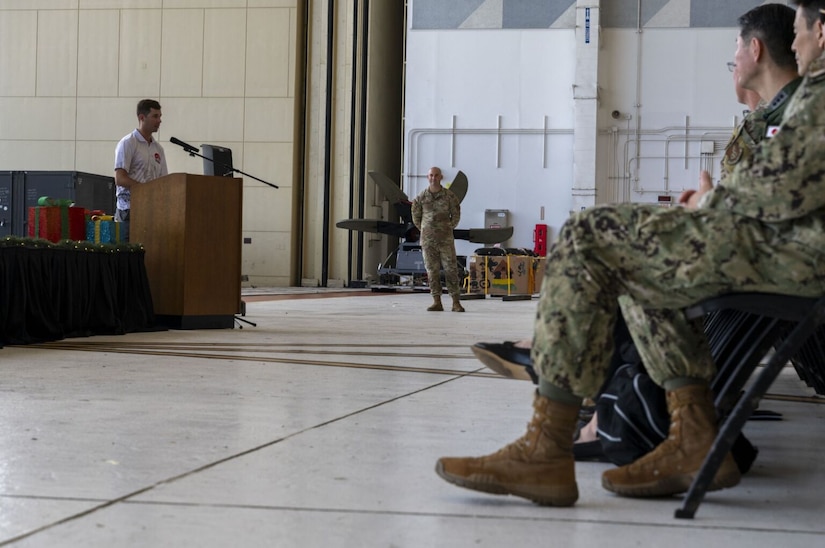
A man stands at a lectern and gives a speech to a seated crowd of civilians and service members inside an aircraft hangar.
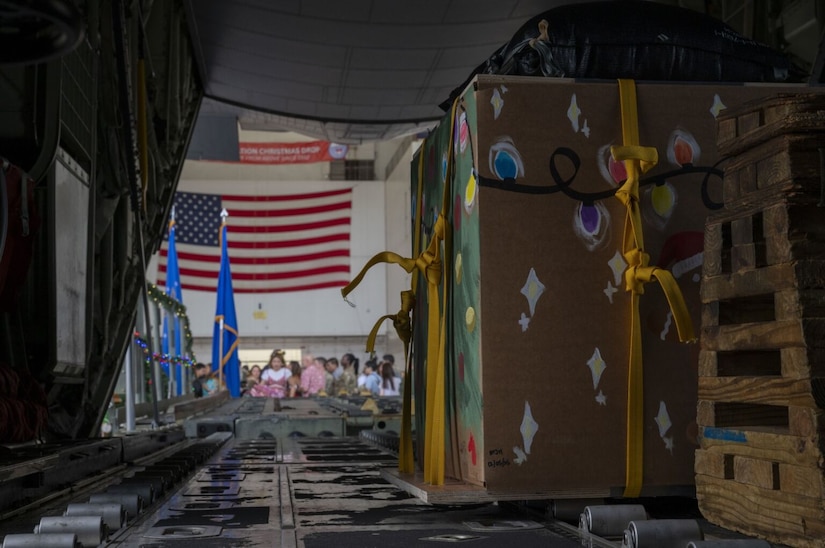
Large boxes sit inside the back of a military aircraft.
Throughout the remainder of the operation, the Air Force and partnering nations will airdrop a total of 270 bundles filled with critical supplies to remote communities across the Pacific, delivering humanitarian assistance while simultaneously conducting valuable low-level flight, precision-airdrop and logistical coordination training — skills that strengthen the ability to execute rapid global airlift missions across the Indo-Pacific region.
 
"The people of the Federated States of Micronesia extend our deepest gratitude," Palik said. "Beyond the food, tools, fishing gear, school supplies and gifts, you deliver something far more valuable: the spirit of compassion that defines this Christmas season."