Thursday, April 23, 2026

Department of War Showcases Progress on Golden Dome for America, the Nation's Next-Generation Homeland Defense

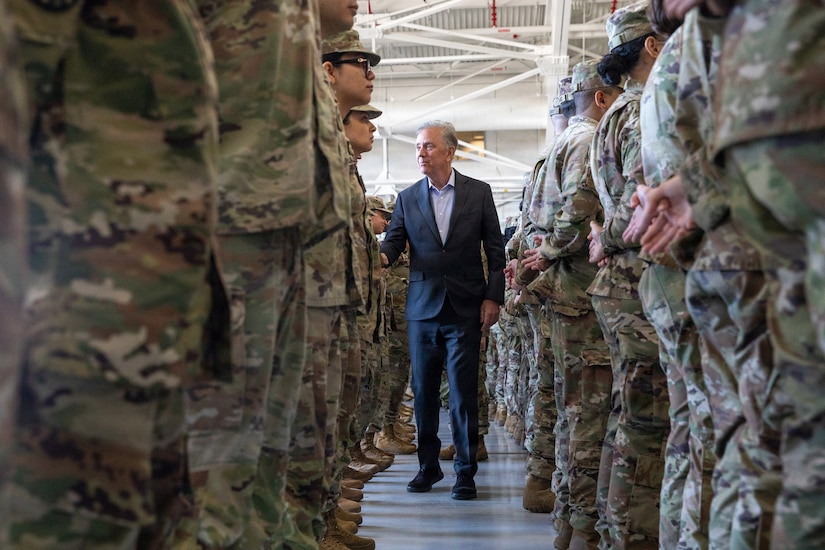
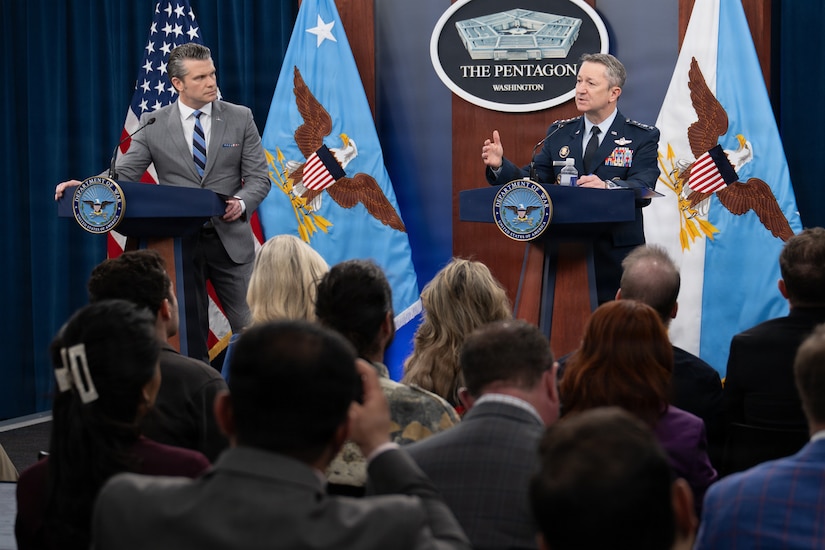
Senior leaders from the Department of War, U.S. government, and defense industry gathered at Joint Expeditionary Base Little Creek-Fort Story, April 23, to provide an update about Golden Dome for America (GDA), the nation's initiative to build a next-generation missile defense shield to protect the Homeland.

Speakers included Undersecretary of War for Research and Engineering and the Department of War's Chief Technology Officer Emil Michael; Director of Golden Dome for America Gen. Mike Guetlein; and Deputy Director of Operations at North American Aerospace Defense Command (NORAD) Maj. Gen. Mark Piper. 

The event, set against a backdrop of current missile defense capabilities, underscored the urgent need to modernize the nation's defenses against a new generation of advanced threats, as directed by President Trump.

"Golden Dome is the decisive response to a new era of threats," said Gen. Mike Guetlein, Director of Golden Dome for America. "We are moving with purpose and urgency to forge a shield that is layered, integrated, and automated. The progress on display today is tangible proof that this is not a future concept, but a reality we must build now." 

GDA is a layered defense architecture designed to protect the United States from complex ballistic, hypersonic, and cruise missiles, as well as advanced aerial threats. It enhances national security by integrating a persistent space-based sensor network for global tracking, a portfolio of advanced interceptors providing defense-in-depth, and an integrated command and control system to manage threats at machine speed.

The program's momentum was a central theme, with officials confirming GDA is ahead of schedule and on budget. Key achievements highlighted include the completion of the initial architecture blueprint, the establishment of a Command-and-Control Consortium, and the awarding of active contracts for critical system components.

Emil Michael, Under Secretary of War for Research and Engineering, spoke to the program's innovative foundation.

"It is this Department's mandate to definitively secure our homeland," said Under Secretary Michael. "We are embracing an open architecture that harnesses the full power of American innovation—from artificial intelligence to the commercial space industry—to build the impenetrable shield that this nation deserves."

During remarks, the operational imperative for capabilities was validated by Piper.

"From a NORAD and NORTHCOM perspective, the requirement is clear," said Maj. Gen. Piper. "To defend North America and win tomorrow's fight, we must maintain our warfighting advantages and operate beyond stovepiped systems operating at human speed. Golden Dome is forging the integrated, automated battle management network needed to see every threat, make decisions in milliseconds, and keep America safe."

The choice of Hampton Roads for the event underscored the region's role in the national endeavor. The area hosts testing for the Army Long-Range Persistent Surveillance (ALPS), a key terrestrial sensor whose data directly informs the development of the broader GDA architecture.

Department officials explained GDA is a fiscally responsible, vital investment in national security. The program's modular, open-systems approach is designed to control costs and provide sustained, predictable demand signals to the U.S. industrial base, ensuring the nation can outpace emerging threats for decades to come.

Personal Property Activity Engages Industry Partners Ahead of Peak PCS Season

The War Department's newest special activity — the Personal Property Activity — met today with moving, shipping and logistics leaders to provide an update on the accelerated reform aimed at improving one of the most critical quality-of-life issues facing military families, the permanent change of station moving process.

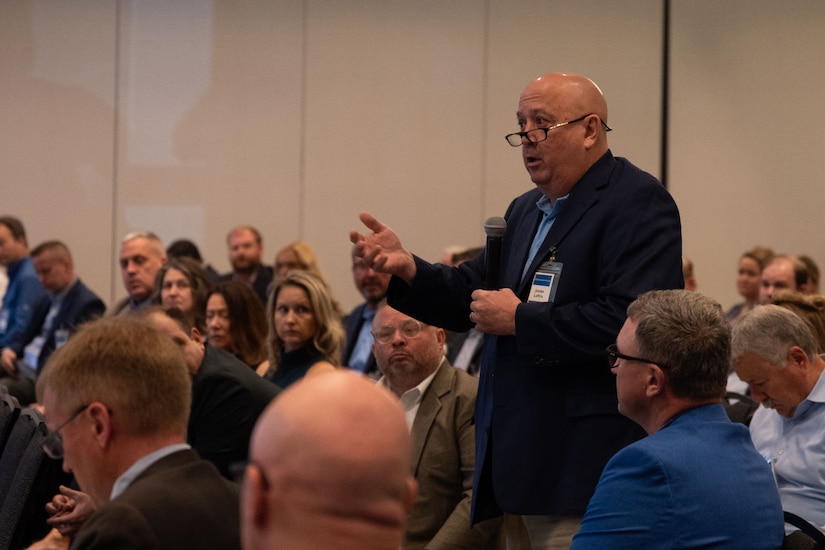
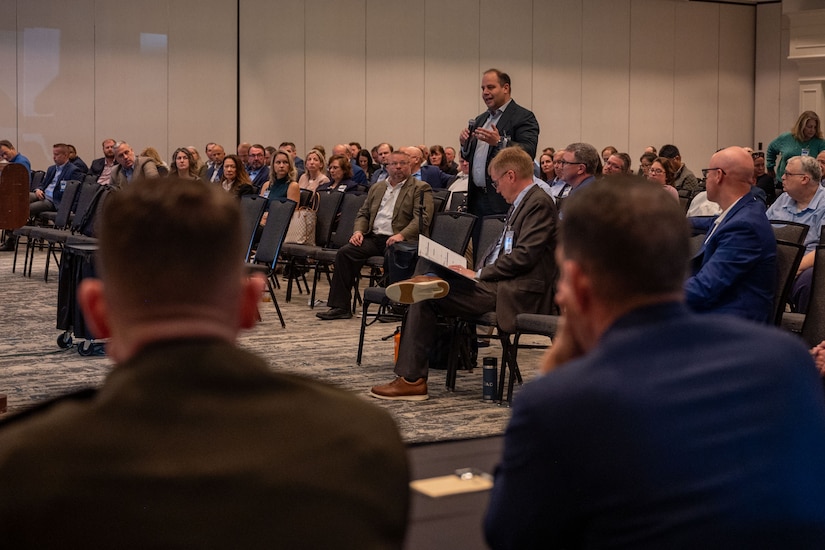
A man in business attire stands and speaks into a microphone. All around him, people are seated in the audience.

The engagement brought leaders from across the household goods industry together with Personal Property Activity officials to identify operational challenges, improve accountability and implement solutions ahead of the 2026 PCS peak season. It marked the organization's first in-person industry engagement since transitioning from a task force to a permanent special activity earlier this year. 
 
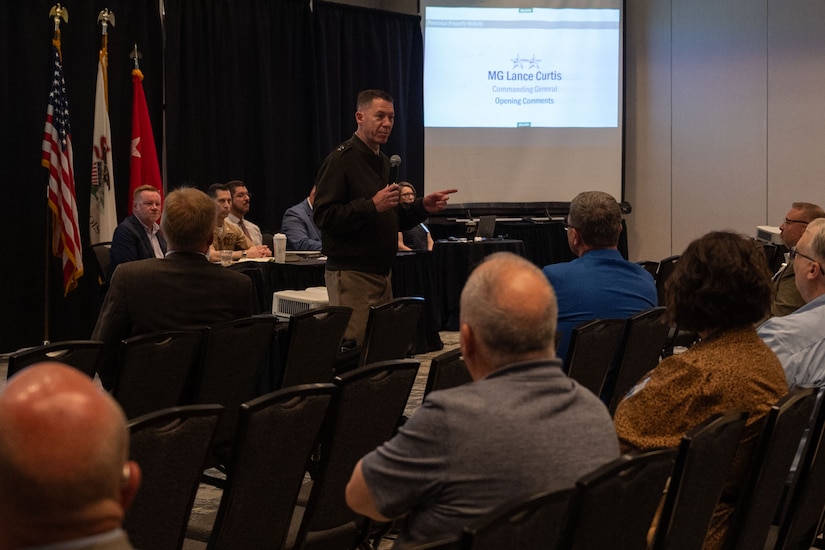
"If you want to influence the future, please work with us and give us your ideas," said Army Maj. Gen. Lance Curtis, PPA commander. "We cannot do it without you; we need you, alongside us, at the tip of the spear to rewrite our future."  
 
Discussions focused on increasing shipment predictability for service members and their families, improving communication, strengthening performance standards and modernizing the Defense Personal Property Program.

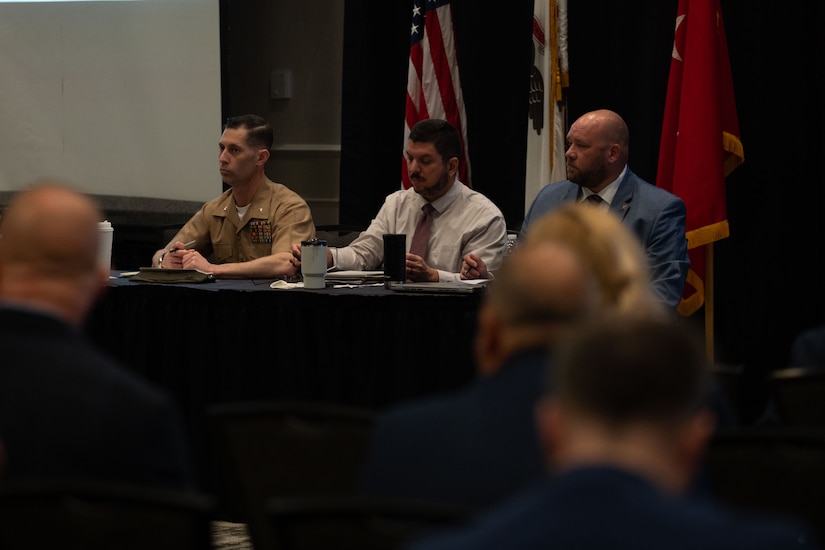
Two men in business attire sit at a table with a man in a formal military uniform as they listen to questions from the audience seated in front of them; behind them are an American flag and two other flags.

The engagement supported President Donald J. Trump's broader priority of delivering more efficient, accountable government services for military personnel. It also aligns with Secretary of War Pete Hegseth's directive to fix long-standing issues within the military moving system. 
 
When announcing the establishment of the Personal Property Activity in January, Hegseth called the organization "a permanent solution for all service members who move" and emphasized the department's responsibility to deliver reliable household goods services to warfighters worldwide. 
 
Personal Property Activity leaders emphasized that reform will be data-driven and facts-based and that industry plays a critical role in delivering results.

A man in a formal military uniform stands and speaks into a microphone to a seated audience; to his left is a screen with slides projected on it.

The organization also highlighted measurable progress already underway, including an increase in self-reported claims satisfaction from 52% to 69%, signaling improved service quality for service members and families navigating the relocation process. 
 
Army Col. Mike Ashton, Personal Property Activity director of operations, announced a departmentwide website, "where service members and providers will be able to find all the resources and advisories all collocated in one place."  
 
The website will be a one-stop shop for military movers and providers, and it will go live May 1.

A man in business attire stands and speaks into a microphone. All around him, people are seated in an audience.

Industry partners received an update on the reform and actions taken to address workforce challenges, commercial best practices, pricing structures and operational innovations experienced by industry. The improvements are intended to enhance the program's overall performance across the relocation enterprise and improve the quality of service delivered to military movers. 
 
"We have seen a noticeable increase in responsiveness to industry's concerns since Secretary Hegseth announced the Personal Property Activity," said Chuck Kuhn, an industry partner. "Maj. Gen. Curtis and his team have been aggressive with the right sense of urgency to engage with industry to hear and address our concerns, while proactively improving the overall moving experience for military families."  
 
The Personal Property Activity continues working with industry partners to modernize military relocations, improve the quality of life for service members and ensure PCS moves support readiness rather than disrupt it.

Braker Breakthrough: Drone-Delivered Bunker-Busting Warhead Passes Test

In a significant leap forward for battlefield technology, Army infantry drone operators successfully tested a new warhead designed for delivery by an unmanned aerial system. 
 
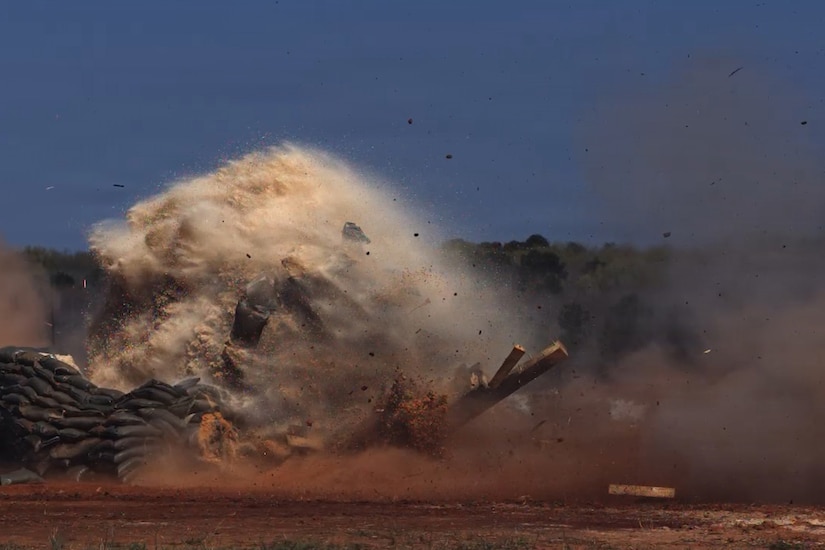
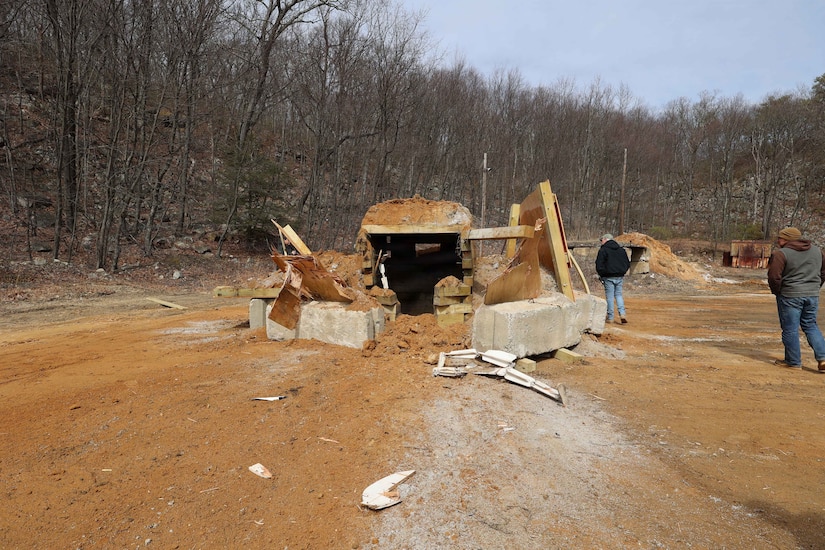
The live-fire demonstration of the bunker rupture and kinetic explosive round, which took place at Redstone Arsenal, Alabama, March 26, comes only weeks after the initial design and rapid prototyping of the system, and showcases the Army's accelerated approach to innovation in the face of evolving threats. 

A large, clouded explosion of dust and debris fills the sky as it rises from the ground.

The Army continuously transforms by using the latest technologies to gain a warfighting advantage, ensuring the force is lethal, modern and ready. The development of this air-delivered munition directly supports that mission, as well as Secretary of War Pete Hegseth's readiness and transformation priorities. 
 
The Braker project, led by a team from the U.S. Army Combat Capabilities Development Command Armaments Center and Project Manager Close Combat Systems, aimed to create a lightweight, powerful and lethal warhead that could be deployed from a small, agile drone. 
 
"Our Picatinny team went from concept to live-fire in two weeks," said Army Col. Vinson Morris, project manager of Project Manager Close Combat Systems. "Braker proves our ability to rapidly develop and safely deliver devastating effects from small, unmanned aircraft systems. We are now creating the architecture with Picatinny Common Lethality Integration Kit and the small, universal payload interface for industry to scale this critical warfighter advantage." 

Two people in casual attire observe the remains of a partially destroyed bunker in a dirt terrain with trees in the background.

The Picatinny Common Lethality Integration Kit is a safe and effective method for integrating lethal payloads with UAS platforms, designed and developed by engineers at the U.S. Army Combat Capabilities Development Command Armaments Center. 
 
The rapid development-to-testing timeline of Braker was made possible by the Army's emphasis on additive manufacturing, also known as 3D printing. 
 
In early March, engineers from the Armaments Center began designing, explosive pressing, housing manufacturing and integrating the warhead to be used on a low-cost and expendable one-way attack drone. 
 
Shortly thereafter, transfer and compatibility tests were conducted at Picatinny Arsenal, and approximately a dozen warheads were assembled, one of which was tested on a makeshift test range bunker. 

After proving worthiness and validating effectiveness, the prototype warheads departed Picatinny Arsenal, New Jersey, for Redstone Arsenal, where a live demonstration was conducted for Army leaders. 
 
The successful detonation of a target deployed by a device attached to a drone demonstrates a new and potent capability for the modern warfighter. It also illustrates how quickly engineers can design, fabricate and integrate hardware to meet urgent and compelling needs. 
 
"Rapid demonstrations of overwhelming lethality, such as Braker, are attributed to years of continued technology investments and the organic core technical competencies and facilities resident at the [U.S. Army Combat Capabilities Development Command] Armaments Center," said Anthony Sebasto, executive director of the Munitions Engineering and Technology Center.

Thousands of Kids Descend on Pentagon for 'Bring Your Child to Work Day'

More than 8,000 kids showed up at the Pentagon today, with their parents in tow, to learn just exactly what their moms and dads do when they go to work every day. At the Pentagon, the event was billed as "Bring Your Child to Work Day," and it's the fourth time the War Department has held the event.

A man in a navy-blue suit shakes hands with a child in a crowd. A woman wearing a spring floral dress walks beside him.

All through the War Department headquarters, kids accompanied their parents to their offices to see where they work. Then they moved on to more exciting opportunities in the courtyard and elsewhere in the building to do activities such as face painting, meeting with military working dogs and viewing military displays like an infantry squad vehicle, an Air Force explosive ordnance disposal team, Marine Corps martial arts and a Navy STEM display. 

Early on in the day, Secretary of War Pete Hegseth and his wife, Jennifer, welcomed the kids and promised a day of fun and learning about the War Department and what it does for the nation. 

"It is so great to see everybody here, so many kids, on this gorgeous day that we have," Jennifer Hegseth said. "I just think it's so important for you all to be able to share this with your family and kids, for you to be able to see what your parents do." 

She then told visiting children the work their parents do is important to the department and the nation. 

"Your parents represent America's values to the rest of the world every day, values like freedom, democracy and opportunity; these are the values we believe in strongly and sharing them with the world is what you guys do every day," she said. "Not many kids get to see behind these famous walls ... so today you get the opportunity to come inside, where most people [only] get to see it on TV or in the movies. But we wanted to celebrate with you, and we're just so happy you're here." 

The secretary said defense of the nation is the No. 1 priority of the department, and that it's the parents who make it happen.

"Defending this country requires brave people, brave people like your mom and dad, who wear that uniform, a camouflage uniform, or a formal uniform and they wear it proudly, and you should be proud of them," he said. "Today we're proud to welcome you ... to the Pentagon to share a glimpse of what they do. Your parents are the best of America. They're raising you to love this country, to serve God, [and] to serve the Constitution. Those are beautiful things." 

A surprise to everybody in the Pentagon courtyard was when Second Lady of the United States Usha Vance arrived at the main stage to read a book to the hundreds of children seated on the lawn. The opportunity was part of her 2026 summer reading challenge. Vance said in her family, reading is an important activity.

"I have three kids ... we're big readers in our family, and I just wanted to emphasize that this summer, I'm very excited to have a summer reading challenge again," Vance said. 

Most of the children in attendance had their own copy of the book Vance read to them, "Buddy the Soldier Bear," by author Mary Joy. The book tells the story of a lonely stuffed bear sitting in a toy store who wants desperately to go home with somebody. Eventually, Buddy is purchased and sent off in a care package to a soldier overseas. The bear has adventures there with the soldier but eventually heads home with him where he is able to join a loving military family. 

All around the Pentagon courtyard were displays where visitors could learn more about the armed force. The Army, for instance, had enhanced night vision goggles on display.

Henry, 12, tried on those night vision goggles with his younger brother William and his sister Lucy. He said he started his adventure at the Pentagon with the "Mission Match" passport — a document he got in advance of arriving at the Pentagon that challenges him to visit displays from all five military services, along with three other displays. 

But the most exciting thing he saw? "The canine training," he said. 

One day, Henry said, he hopes to join the military himself "so I can get free college" and plans to do something in combat arms. "I want to fight," he said. 

Jeremiah, 15, is an Air Force child and has been around the world to both Romania and Germany. He said he liked the travel the Air Force afforded him, and he liked seeing the world — but he liked being at Barksdale Air Force Base, Louisiana the best.

During his day at the Pentagon, he said, he saw displays from all the military services but was impressed with stuff from the Army. 

"They had some equipment for thermal imaging," he said. "Thermal imaging and night imaging." 

Jeremiah said he has no plans himself to follow his mom into the military but wants instead to go off to school and become an engineer. "I want to be a mechanical engineer, so I'll probably go to Purdue," he said. 

Inside the Pentagon Briefing Room, Pentagon Press Secretary Kingsley Wilson held mock press briefings to answer questions from dozens of children who filed into the room with their parents — a room most Americans see only on television.

A person stands at a lectern as people in an audience sit in the foreground.

Wilson told the kids the purpose of the press room is to help tell the story of the War Department. 

"One of the ways that we tell the story of our warfighters is by holding press conferences," she said "That's where we stand in front of reporters and answer questions they have about the department, why we're doing certain things and how we're doing them. And that's what we're going to do today. Except this time, you all get to be the reporters, and you get to ask the questions." 

Over the course of two mock press briefings, Wilson fielded more than a dozen tough questions related to how the Pentagon works and the building itself, the role of service members, the kinds of equipment the U.S. military uses and one question about how many helicopters the U.S. military has. 

"Definitely a lot of helicopters," she said. "I don't have an exact number for you, but we've got a lot of helicopters, and our helicopter pilots are really incredible. It is difficult to fly a helicopter; a lot more difficult than aircraft sometimes. It's definitely very cool that we're able to use helicopters all over the world, not just here in the United States; and our pilots that fly those are some of the best of the best."

Southcom Establishes Autonomous Warfare Command

Marine Corps Gen. Francis L. Donovan, commander of U.S. Southern Command, directed the establishment of the Southcom Autonomous Warfare Command. 

The new command will support President Donald J. Trump's National Security Strategy priorities, Secretary of War Pete Hegseth's National Defense Strategy lines of effort, Southcom imperatives, regional security cooperation and operational dominance. 

An unmanned aerial vehicle flies through a blue sky with clouds and trees below. In the foreground is the silhouette of a person with the controls.

"From the seafloor to space and across the cyber domain, we fully intend to leverage the clear superiority of the American defense ecosystem by deploying cutting-edge innovation and working ever closer with our enduring partners in the region to outmatch those who threaten our collective peace and security," Donovan said. 

Once fully established, the new command will employ autonomous, semiautonomous and unmanned platforms and systems to counter threats and challenges across domains, linking tactical missions to long-term strategic effects. It will also collaborate closely with allies and partners in the region to advance shared goals, such as disrupting and degrading narco-terrorist and cartel networks and responding to life-threatening crises caused by large-scale natural disasters. 

During the lead-up to establishing the autonomous warfare command, Southcom will work with the military services and the War Department's Defense Autonomous Warfare Group to identify the required expertise and capabilities for the new command to reach full operational capacity and integrate into Southcom's mission. 

A man in a formal military uniform sits at a desk and speaks into a microphone. People in similar attire are behind him.

"Our geographic area of responsibility has a wide range of conditions, varied terrain and diverse operational environments that make it an ideal setting in which to innovate. It is also a region with very capable and committed security partners who lean forward, embrace technologies and are very eager to work collaboratively with us to support regional stability in new and effective ways," Donovan said. 

Earlier this year, the Southcom commander signaled his interest in leveraging emerging technologies in his written posture statement to Congress, telling lawmakers he intended "to capitalize on next-generation capabilities like unmanned platforms, [artificial intelligence] integration and commercial tools to better enable us and our partners to counter … threats together." 

Two people in blue military uniforms and one person in casual attire stand on a boat and hold a long tube as they prepare to put it in the ocean; another person in casual attire is holding additional equipment and observing.

Outlining his imperatives while speaking to Senate Armed Services Committee members on Capitol Hill last month, Donovan said he aimed to develop and field cost-effective and modernized forces tailored for the Southcom mission, including autonomous systems and human-machine teaming "to greatly increase lethality, all-domain awareness and data-sharing for U.S. and partner forces."

Tuesday, April 21, 2026

Army Contracting Command Accelerates Hypersonic Weapon Fielding

Speed defines the Army's long-range hypersonic weapon, Dark Eagle. But long before the system moves at hypersonic velocity, precision behind the scenes makes that speed possible. 
 
U.S. Army Contracting Command Redstone Arsenal awarded a $2.7 billion production contract March 31, supporting Dark Eagle, marking a major milestone achieved ahead of an accelerated fiscal year 2026 fielding timeline. 
 
Getting there was anything but routine. 

More than two dozen people in camouflage military uniforms stand in a field around a large military weapons system that is pointing in the air.

At the command, a six-person team of contracting and pricing professionals played a central role in navigating a compressed schedule, evolving requirements and complex negotiations to support one of the Army's top modernization priorities. 
 
"This acquisition was different from a typical contract because it was a joint effort between the Army and Navy, and [it] combined both research and development and production under a single effort," said Paul Daugherty, command contracting officer. "The accelerated timeline compressed proposal reviews, revisions and contractor counterproposals, requiring the team to develop alternative approaches quickly while maintaining acquisition standards."  

Dark Eagle represents a significant leap in capability in a complex War Department effort requiring close coordination across development, testing and production. 
 
To meet an aggressive goal of awarding the contract by the end of the second quarter of fiscal year 2026, the command adjusted its approach by engaging with partners early and working through challenges as they emerged. 

A missile launches during daytime, leaving plumes of smoke and flames behind it as it rises into a blue sky.

The milestone reflects a synchronized effort across contracting centers, program executive offices and industry partners, with ACC-Redstone Arsenal at the center of executing the acquisition strategy. 
 
"This effort marked a significant milestone as the first production contract for the common hypersonic glide body program, transitioning from an [other transaction authority] to a [federal acquisition regulation] part 15 contract," said Eric Blystone, command pricing branch chief. "With limited historical cost data available, the team coordinated closely with partners, including [the Defense Contract Management Agency] and [the Defense Contract Audit Agency], to conduct detailed analysis and support a fair and reasonable outcome for the government." 
 
The effort shows how disciplined execution and early alignment can accelerate complex acquisition programs while maintaining standards. 

"This development and production contract provides the Army and Navy the ability to achieve optimized pricing across base and option years, allowing the government to buy to budget while maximizing every taxpayer dollar," said Vince Dickens, command branch chief of hypersonic missile and counter-unmanned aerial systems. "The close partnership across contracting, pricing and stakeholders was critical to delivering a successful outcome for the warfighter."

Spring Culminating Exercise Tests Cadet Warfighter Skills

Nearly 3,000 cadets participated in the U.S. Air Force Academy's spring culminating exercise in Colorado Springs, Colorado, April 15-18. 

The exercise is rigorous, realistic, multidomain military training that develops cadets into combat-ready Air Force and Space Force leaders. 

Three women in camouflage military uniforms sit in front of computers and monitors inside a tent; the middle one is pointing to a monitor.

"Our focus is forging these cadets into warfighters," said Air Force Lt. Col. Benjamin Mackey, division chief for Cadet Wing Operations. "We're presenting them with opportunities to learn and grow. The [culminating exercise] allows them to test their military training so that when they graduate, they're ready to lead on Day 1 in any environment."

From Classroom to Combat Scenarios 

The comprehensive exercise applied classroom learning and small-group military training in a notional field training environment, where cadets practiced command and control, cyber operations and integrating space effects into their mission planning and other joint force capabilities. 

"The [culminating exercise] exposed cadets to leading in a joint warfighting construct," Mackey said. "It provided them with a reference of the framework they'll use as officers and gave them valuable background knowledge, which will make them that much more effective working with their sister services."

A person in a camouflage uniform and goggles lies on the grass in darkness with their torso lifted and points a machine gun.

The exercise required cadets to synchronize efforts across multiple teams and functional areas, reinforcing the idea that individual actions contribute to mission success at a larger scale. Cadets were expected to assess evolving situations, prioritize tasks and make timely decisions, while maintaining accountability for their teams and mission objectives. 

Decision-Making Under Pressure 

Academy planners designed the exercise around realistic, stressful scenarios to develop critical thinking skills while testing the mettle of cadets. 

"This exercise gave cadets a chance to sharpen their skills within a controlled yet dynamic environment," said Air Force Tech. Sgt. Richard McArdle, an academy exercise planner. "We designed it to replicate something they'll most likely see during their Air Force or Space Force careers to improve their ability to adapt and overcome in ever-changing environments."

Two people dressed in camouflage military uniforms run outside in the snow while carrying a manikin on a stretcher; nearly a dozen people in similar attire are also running. In the distance are trees, mountains and buildings.

A separate group of cadets served as an opposing force, a tactical enemy team that worked to disrupt friendly operations within each joint operations area. 

"We designed the exercise to have these items called injects," McArdle said. "When a cadet squadron or [joint operations area] meets a certain objective, one of the injects will be triggered to change the scenario to give the cadets more things to think about and adapt to."

Applying Training in Real-Time Scenarios 

One scenario involved the Air Expeditionary Task Force issuing an order to the joint personnel recovery center to rescue a cadet in enemy territory. 

"It was an opportunity for cadet leadership to test how they've organized, trained and equipped their fellow cadets to be ready to step into a specified role within a larger scenario to accomplish the mission," Mackey said. "I'm impressed with how they've gotten after it."

The quick response force received the order, prepared themselves and used navigation, small unit tactics, tactical combat casualty care and field communication techniques to locate and extract their teammate. "My biggest takeaway was learning how to adapt in real-time," said Cadet 2nd Class Joseph Bevivino, quick response force commander. "Our plans changed quickly, and we had to make decisions and maintain command and control from a distance. It reinforced how important communication, flexibility and trust are in a dynamic environment."

Six military tents are set up in a line on a grassy field under clouds, as the sun sets in the distance.

The sense of ownership extended beyond individual missions to the exercise's overall design and execution. 

"One thing that makes the academy unique is that we place an immense amount of responsibility on the cadets," McArdle said. "They played a big part in making this exercise happen. From providing logistical support to mission planning, which allowed [the] permanent party to tailor what we do around what the cadets planned for. The [culminating exercise] has so many moving parts, and without the cadets, permanent party, contractors and civilians, it would have been impossible."

Preparing Leaders for Day 1 

The multiday training event ensured cadets gained the leadership skills and experience needed to navigate unforeseen challenges throughout their careers, Mackey said. 

"The skills that the cadets learn might not directly translate into their Air Force specialty code or Space Force specialty code, but their leadership, teamwork and problem-solving skills will absolutely translate to any job they'll do," he added. 

Academy officials directed the culminating exercise as a cumulative test for cadets to incorporate lessons learned during their basic cadet training, silver training weekends and individual leadership training, ensuring they are prepared for the rigors of leadership upon graduation and commissioning as second lieutenants in the Air Force or Space Force.

Monday, April 20, 2026

Service Member Olympians Meet With Secretary of War

Soldiers and airmen who participated in the 2026 Milan Cortina Winter Olympic Games in Italy with the World Class Athlete Program visited the Pentagon April 17. During the visit, the athletes also got an unexpected opportunity to meet with Secretary of War Pete Hegseth. 

Nearly a dozen people in athletic attire pose for a group photo with a man in business attire in the center.

"I welcomed 10 American Olympians — who also wear the uniform — to the Pentagon," Hegseth said via social media. "They represent the very best of our nation." 

This isn't the first time the secretary has talked with the world-class athletes. In advance of the Olympic Games, he called them directly to wish them luck in the competition.  

The visit highlighted the War Department's support for service member athletes and reinforced military appreciation across the sports community. During their visit to the Pentagon, the athletes and their leadership met with the secretary, toured the Pentagon and also met with their respective military service branch leaders. 

Olympic bobsledders Army Spc. Azaria Hill and Sgt. Frank Del Duca said their focus on fitness as Olympic athletes and soldiers aligns squarely with the secretary's fitness standards. 

A man in business attire talks with a woman wearing a blue athletic jacket that has "USA" printed on the back. Others in similar attire stand nearby.

"We are definitely big on fitness," Hill said. "That's kind of the basis of what we have to do — what we do day to day."

Hill is a motor transport operator in the Army and a bobsled brakeman as an Olympic athlete. During the 2026 Winter Olympics, she and her bobsled driver ranked in fifth place in the 2-woman bobsled competition. 

Del Duca, who joined the Army a little over six years ago, is an infantryman and also a bobsled driver.

"Fitness is a huge part of my performance as a soldier, as well as my performance as an athlete in the World Class Athlete Program," he said. "I do both, and I have to stay sharp and fit for both. And then there's also the positive benefits just to your general health as well. My obligations as a soldier require a high, high level of fitness, and that spreads to every part of my life."

As a soldier and an athlete, Del Duca said there's a balancing act that has to happen to make sure everything gets done right.

"It's full time for both," he said. "Sometimes the slider will shift one way or the other, depending on the time of year. So, during the Olympics and during the competitions to qualify for the Olympics, I'm doing mostly World Class Athlete Program things. Then that immediately shifts after the season, and I go do my infantry things."

Nearly a dozen people in athletic attire stand in a conference room and speak with a man in business attire.

Del Duca said he was excited to meet with Hegseth and said the secretary was impressed with what he saw from the athletes.

"He just had a lot of support for our program and what we're doing, both as soldiers and then in the athlete program," Del Duca said.

In the 2026 Winter Olympics, Del Duca and his teammate came in 4th in the 2-man bobsled competition.

Both the Army and the Air Force run a World Class Athlete Program, where athletes can work with expert trainers within the military as they prepare for world-class competitions — such as the Olympics — while at the same time, be service members and have a future job after their competition days are over.

The program serves both the athletes and the military, said Eli Bremer, an advisor to the Air Force's program.

For athletes, Bremer said, pursuing Olympic dreams while serving means a much more stable and greater level of support than what they might get going it alone. As civilians, athletes often find it hard to both train to the level they need to train and also support themselves. So, for many, it's a struggle to be an athlete. However, joining the Air Force or the Army through the World Class Athlete Program means those athletes can use their training and athletic performance as part of their career.

"It's really hard for them to hold jobs and have even consideration of a career while training for competition as a civilian," Bremer said. "That's why the military is such a positive aspect, because we have a program that allows them to pursue ... the Olympics for the United States, but after that, it's also an off-ramp into a real job."

Nearly a dozen people in athletic attire stand in a conference room as a man in business attire shakes hands with a small child.

And for the military, Bremer said those stellar athletes in uniform showcase to the whole world two of the things the military is all about: fitness and discipline.  

Program athletes advance their own goals by serving, but they advance the military by being top-level ambassadors who authentically demonstrate what the U.S. military is capable of achieving. When they share that they both serve in uniform and represent their nation at the Olympics as athletes, they make military service appealing to young Americans who also value fitness, discipline and patriotism and who are looking for a place that will make use of what they know they can bring to the table.

"It's a symbiotic relationship," Bremer said. "Athlete endorsers are the highest sought endorsers ... and these authentic testimonials are the gold standard. And so, what we have are some of the world's greatest athletes who have actually joined the military, who are actually serving the military, actually pursuing a career in the military — you cannot get a better testimonial ... than that."

Following their visit to the Pentagon, the athletes traveled to Nationals Park in Washington, where they met with the MLB team during batting practice and were recognized before the first pitch. Just before the start of the game, the Olympic athletes took the field and welcomed the Nats to their positions.

Medal of Honor Monday: Army Sgt. Joseph B. Adkison

Two consecutive days during World War I changed Army Sgt. Joseph B. Adkison's life forever. His actions during the first led to him receiving the Medal of Honor.

A man in a military dress uniform with medals on his left chest poses for a photo.
Adkison was born Jan. 4, 1892, in Egypt, Tennessee, to Joseph F. Adkison and Adeline Delashmit. His father died when he was just 7. He grew up with three siblings in Atoka, Tennessee, just north of Memphis.  

He enlisted in the Tennessee Army National Guard in 1917. His unit, Company C, 119th Infantry Regiment, 30th Infantry Division, fought in the second Battle of Lys and the second Battle of the Somme in 1918. 

On Sept. 29, 1918, near Bellicourt, France, Adkison's unit became pinned down by intense German machine-gun fire. 

According to his Medal of Honor citation, Adkison alone rushed across the 50 yards of open ground directly into the face of the hostile machine gun, kicked the gun from the parapet into the enemy trench and captured the three men manning the gun.  

"The gallantry and quick decision of this soldier enabled the platoon to resume its advance," the citation read.

Dozens of men in military uniforms holding guns stand in formation in a dirt field as three other men in similar attire stand in a trench.

However, Adkison's fortune would soon run out. The following day, Sept. 30, he was struck by enemy artillery fire, suffering severe injuries to his right arm and leg. The wounds ended his military service, and he was medically discharged. 

In March 1919, he was invited to the White House to receive the Medal of Honor from President Woodrow Wilson. Adkison declined due to his severe injuries. Instead, an Army officer was sent to the farm he lived on in Tipton County, Tennessee, to make the presentation on behalf of the president. 

Adkison received the medal, surrounded by family and friends, at the Atoka Presbyterian Church. He was the first man from Tennessee to receive the Medal of Honor during the war.

A close-up of a man’s face as he poses for a photo.

Adkison's injuries affected him for the remainder of his life. He endured repeated hospitalizations and chronic complications, which worsened after he was struck by an automobile in 1937. Despite the public recognition of his heroism, much of his postwar life was spent managing his poor health caused by his wartime injuries. 

Family records indicate Adkison was a very quiet man who shunned publicity and was known affectionately as Bernard, his middle name, by family and friends.  

He died May 23, 1965, in his hometown. His legacy lives on there, as his medal is on display at the Tipton County Museum, and a park in Atoka is named for him. 

Friday, April 17, 2026

Guard Unit 'Turns Blue,' Symbolizing Mobile Infantry Transition

The Nevada Army National Guard's 1st Battalion, 221st Cavalry Regiment transitioned from a mounted cavalry formation to a mobile infantry battalion during a "turning blue" ceremony at the Clark County Armory in Las Vegas, April 12.

More than a dozen people in camouflage military uniforms stand in formation outside, as a man in similar attire inspects each person.

The ceremony formalized the unit's shift under the 116th Cavalry Brigade Combat Team, following its official transition March 31, part of the Army Transformation Initiative to increase mobility, lethality and readiness for large-scale combat operations.

In April 2025, Secretary of War Pete Hegseth directed the Army to implement a transformation and acquisition reform initiative meant to advance President Donald J. Trump's peace through strength agenda.

Two women in camouflage military uniforms pose for a photo with their arms crossed outside.

The unit's transition from a cavalry regiment to an infantry battalion reflects a War Department initiative to restructure force composition by converting armored units into more agile formations capable of rapid deployment. As part of this change, the battalion will replace its tanks with infantry squad vehicles, increasing mobility and operational flexibility.

"Moving from armor to mobile infantry doesn't make this unit lighter; it makes it more relevant, more responsive and more lethal," said Army Brig. Gen. Randy Lau, Nevada Army National Guard land component commander.

A man in a camouflage military uniform pins a rope onto the shoulder of another man in similar attire outside, while dozens of people, also in military uniforms, stand behind them.

Soldiers began the day with a 6-mile ruck march that fed directly into the ceremony, symbolizing both the physical rigor and cultural transformation required to move from armored cavalry operations to the demands of infantry service. The infantry blue cord, worn over the shoulder, signifies a soldier's place in the Army's infantry branch and its legacy of leadership in combat.

About 160 soldiers received their blue cords during the ceremony. One was Army Sgt. Jessica Tanonaka, who became the first female in Nevada Army National Guard history to earn the infantry designation, marking a milestone for the organization as it continues to expand opportunities across its formations.

Dozens of people in camouflage military uniforms march in formation on a dirt road, with mountains in the background.

"We've always endured change," said Army Lt. Col. Michael Moya, commander, 1st Squadron, 221st Cavalry. "We've always adapted and always exceeded the mission. I am thoroughly excited about this transition to infantry. It makes me proud that when I joined this organization, I came in wearing this cord, and I get to leave this organization wearing the cord." 
 
Lau said that the unit is well-positioned to lead the transformation.

"If there is one unit in this state ready for that challenge, it's the 1-221," he said, adding, "The Army needs you, the guard needs you, Nevada needs you, and today, you step forward, not only as transformed soldiers, but as infantrymen leading the transformation of our force." 

Air Force, Army, Marines Unite for Joint Air Traffic Control Training

Airmen, soldiers and Marines completed two weeks of airfield training at Robins Air Force Base, Georgia, learning valuable skills while highlighting the power of military interoperability.

Two people in camouflage military uniforms work on a large air traffic control system outside while four other people in similar attire observe; one of them is holding up a computer for another person to look at.

 
The joint training brought together the Air Force's 53rd Combat Airfield Operations Squadron, the Marine Corps' Air Control Squadron 2 and the Army's Air Traffic Services Command. 
 
The training, led by the Air Traffic Services Command's quality assurance division, centered on the Air Force's new, deployable, airport surveillance radar and precision approach radar system, also known as an air traffic navigation, integration and coordination system. Service members were trained in setting up the system's version 10 radar, operations shelter and lighting systems used to create runways in austere and deployed environments. The air traffic controllers also took turns practicing precision approaches and landings. 
 
"It's a unique system, so we need a unique kind of training," said Air Force Staff Sgt. Jacob Terry, 53rd CAOS combat airfield watch supervisor. "The knowledge that [the Air Traffic Services Command] is able to come out and provide, in both a controlling and maintaining aspect, is really what we needed to be able to deploy the system and operate it the way that it needs to be operated."

A man in casual attire talks on a radio while sitting on a black case outside next to a large air traffic control system; another man in a camouflage military uniform sits in a chair looking at the man talking on the radio.

 
While new to the Air Force, the system has been operated by the Army for over 20 years. It's the only air traffic control system that all three branches have in common. 
 
According to John Kelley, the quality assurance lead for the Air Traffic Services Command, the Army's experience with the system is a major perk, giving other air traffic control service members the opportunity to learn from years of practical application. 
 
The quality assurance division, made up of six air traffic controllers and five maintainers, regularly visits various military bases to train their counterparts, reviews and verifies technical orders and offers courtesy inspections.

A large military aircraft flies over an air traffic control system attached to a military vehicle parked in a field.

 
"We're here to teach them everything that we know on how to troubleshoot and maintain the system, how to set it up and actively use it right away and give them ideas of how they would implement it in a real-world environment," said Army Sgt. 1st Class Wigetes Ho, an air traffic controller maintenance evaluator assigned to the Air Traffic Services Command. 
 
"On the air traffic control side, our role is to sit inside the shelter with their air traffic controllers and assist them in learning how to do precision approaches and the phraseology, terminology and theory behind them to get them to the point where they're actually employing it themselves, can get their certification and safely land aircraft," Kelley said. "The goal is to get them where they're self-sufficient." 
 
Beyond the technical skills, the training fostered crucial inter-branch relationships in a relatively small career field.

A person wearing a headset sits in a dark room while observing air traffic control monitoring equipment.


"Another big purpose of this training was to build rapport between branches," said Army Sgt. 1st Class Bernard Green, quality assurance division evaluator and noncommissioned officer in charge. "We don't work with the Air Force or Marines a lot, especially for air traffic controllers. Building that rapport between branches and learning from each other and having connections that you can reach out to in another branch and ask for help, while it may not have been the main goal of this training, it was a positive outcome." 
 
The connections create even stronger interoperability in deployed environments, allowing air traffic control service members to operate the system together, if required. 
 
"It just ties the whole picture together when it comes to airfield operations between the Army, Air Force and Marine Corps," Terry said. 

Thursday, April 16, 2026

Golden Dome Will Protect Homeland, Provide Layered Defense, Leaders Say

During a hearing yesterday in Washington before the House Armed Services Committee's strategic forces subcommittee, Marc Berkowitz, the assistant secretary of war for space policy, reiterated the need for the Golden Dome for America as he described the intensifying strategic competition facing the nation.

A man in business attire sits at a table and speaks into a microphone; people in similar attire are sitting behind him.

The pace and scale of the threat is unprecedented; rivals are expanding, diversifying and increasing the sophistication of their arsenals in respect to missiles and other aerial weapons, Berkowitz said. 

He noted that the Golden Dome is a comprehensive defense against the most catastrophic threats facing the United States — threats that include ballistic, hypersonic and advanced cruise missiles, as well as next-generation aerial weapons and nuclear threats. 

"Golden Dome will protect our homeland, citizens, critical infrastructure and second-strike capability," Berkowitz said. "Today, our capability to defend the nation is limited, and its effectiveness is eroding against an increasingly advanced set of threats. Golden Dome will rectify this by creating a layered defense in depth of the United States."

Regarding the cost, Berkowitz said it is significant, but a necessary investment to protect assets of "truly incalculable value" — the lives of U.S. citizens and the territorial integrity of the nation.

"The cost of failing to defend our homeland would be infinitely greater," he added.

A man in a formal military uniform sits at a table and speaks into a microphone.

Air Force Gen. Gregory M. Guillot, commander of U.S. Northern Command and North American Aerospace Defense Command, said his commands routinely intercept long-range bombers and other aircraft approaching North America, while standing ready to defend against long-range missile attacks 24/7.

Guillot described several recent command initiatives to build on preparedness and respond to missile threats, including Northcom's activation of Joint Task Force Gold, which will serve as the operational arm for the future layered defense systems provided by the Golden Dome.

Space Force Gen. Michael A. Guetlein, the Golden Dome program manager, said a new generation of advanced air and missile threats, unprecedented in their speed, numbers and lethality, now holds the American homeland at risk.

A man in a formal military uniform sits at a table and speaks into a microphone.

"Our adversaries are not just expressing the intent. They are demonstrating the capability to threaten our families and our way of life; this threat is not theoretical. We see it unfolding in front of our own eyes every day," he said.

Guetlein described Golden Dome as the cornerstone of the U.S. strategy to rapidly improve the defense of the homeland and ensure peace through strength.

"The vision is ambitious, but it is achievable. The foundational technology exists today, and we are moving with the utmost urgency to bring it to bear. Our strategy is built on speed, affordability and partnerships," he said.

The general said his priority is establishing a unified command and control network linked to the existing battle-proven systems, while investing in next-generation technology, as well as driving down the cost per intercept.

Air Force Lt. Gen. Heath Collins, the Missile Defense Agency director, and Army Lt. Gen. Sean A. Gainey, commander of the U.S. Army Space and Missile Defense Command, also testified.

Wednesday, April 15, 2026

Africom Commences Exercise Flintlock 2026 in Africa

U.S. Africa Command hosted dual opening ceremonies in Libya and Côte d'Ivoire yesterday, officially beginning Exercise Flintlock 2026 — its annual combined special operations exercise.

More than a dozen people in camouflage military uniforms aim weapons and walk through a desert.

This year's exercise brings together approximately 1,500 service members from more than 30 African and international partner nations to strengthen interoperability and collective readiness. 
 
"I'm happy to announce that our premier special operations exercise in Africa, Flintlock 2026, has begun," said Army Lt. Gen. John Brennan, Africom deputy commander. "This exercise will forge stronger bonds between all those participating and demonstrate our shared commitments to confronting and degrading terrorism in Africa." 
 
Flintlock 2026 marks the first time Libya has hosted an operating location with joint forces training alongside one another. It was made possible by the 3+3 Libyan Joint Military Committee, which supports Libyan joint forces efforts.

A person in a camouflage military uniform, helmet, goggles and face mask aims a weapon around the corner of a concrete building outside in a desert.

"Due to the investment of visionary leaders on both sides, and the diligence of the 3+3, it is now a reality," Brennan said. "Security breeds prosperity, and this is clearly visible in Libya today, as you've seen on the demonstration field in front of you." 
 
Cohosted with the Italian special forces, the training location in Sirte, Libya, focuses on enhancing counterterrorism capabilities and running a multinational joint operations center to improve regional security coordination.  
 
Simultaneously, a ceremony in Abidjan, Côte d'Ivoire, commenced at the country's main training location — a key security leader in West Africa. Ivorian-led operations will center around a command-and-control headquarters in Jacqueville, Côte d'Ivoire, directing special operations units conducting tactical objectives.

A man in a camouflage military uniform walks past a line of people in similar attire outside in a desert; to his right are two other men in business attire, and behind him are vehicles.

"Your presence here reflects our shared commitment to cooperation, collective security and peace," said Ivorian Special Forces Deputy Commander Col. Kitchafolwori Sekongo during the opening ceremony in Côte d'Ivoire. "In doing so, we strengthen our ability to operate together, particularly in the face of complex and evolving security challenges." 
 
Flintlock is an African-led, partner-centric exercise designed to build the sovereign capacity of nations to provide for their own security. By sharing costs, leadership and expertise, participating nations make a collective investment in regional stability. 
 
The exercise will continue throughout April and is designed to reinforce adherence to the rule of law and the protection of civilians in military operations. Through shared training and collaboration, Flintlock strengthens the network of trusted partners committed to peace and security in Africa.

Tuesday, April 14, 2026

Army Engineers Conduct Bridge-Building Exercise in Texas

Army Reserve soldiers assigned to the 401st Engineer Company spent March 26-29 at Bardwell Lake, Texas, conducting a multiday bridge-building exercise designed to train new troops and refresh skills.

About a dozen people in camouflage military uniforms and life jackets attach two sections of a floating bridge while on a lake.

Army 1st Lt. Jacob Hawkins, a platoon leader with the 401st, said the company specializes in building floating bridges and rafts that allow military vehicles and personnel to cross bodies of water when permanent infrastructure is damaged, unavailable or tactically unsuitable.

"We basically make bridges that float on water," Hawkins said, noting that the unit uses specialized boats and modular bridge sections to create rafts capable of carrying Humvees, tanks and other heavy equipment. "Anytime we need people to get from one side of the water to the next, we can create a raft and take them across."

A man in a camouflage military uniform and a life jacket looks over the edge of a floating bridge while standing on the structure on a lake. A dozen other people in similar attire are sitting and standing farther back on the bridge, while three people in similar attire use a boat to maneuver the structure.

The company recently relocated from Oklahoma to Seagoville, Texas, bringing in a wave of new soldiers. Hawkins estimated that roughly half the unit is fresh out of advanced individual training, making this their first hands-on experience with bridge building operations.

"There's not very many times in the military where you get to be on a boat or a bridge floating around," he said. "Once you're out on the water, you can see all the soldiers smiling. They're having a good time. It's great for morale."

The training includes both day and night operations. Soldiers practiced deploying bridge bays, maneuvering boats, assembling rafts and transporting vehicles, skills that can be critical in real-world missions.

Hawkins recalled a previous large-scale exercise in which the unit moved an entire battalion across a river in a single night.

A dozen people in camouflage military uniforms and life jackets use ropes and other equipment to attach two sections of a floating bridge.

"Between five and 10 minutes, you can do a build," he said. "It's really cool to see how fast they can do this little Tetris act with the bridges."

Army Capt. Charles LeBaron, the company commander, said the exercise also serves as a field-training event for soldiers who have spent little time outside of the classroom environment.

"Getting them straight into a reserve unit that actually gets to go out into the field and practice their job is amazing," he said.

The training was conducted in partnership with the U.S. Army Corps of Engineers, which operates Bardwell Lake. LeBaron praised the collaboration, calling the Corps of Engineers "a great partner to work with" and highlighting the value of having access to the facilities it manages.

A dozen people in camouflage military uniforms and life jackets use a boat to maneuver a floating bridge in the water.

"They [were] more than welcome to have us out here," he said. "They get activity on their lake, they get publicity and we get good training. It's good for the engineer regiment as a whole."

With mostly clear skies, mild temperatures and open water, soldiers spent their nights camping near the shoreline — an experience Hawkins described as ideal for training and building camaraderie.

Monday, April 13, 2026

Medal of Honor Monday: Spanish-American War Heroes

Many heroic actions took place during the Spanish-American War in the late 19th century. One such action was the Battle of Tayabacoa, Cuba, a special operation effort to land supplies and reinforcements, which resulted in four Buffalo Soldiers receiving the Medal of Honor.

The battle took place June 30, 1898, when 30 Cuban freedom fighters and U.S. soldiers aboard the Army transport steamships Fanita and Florida and the gunboat USS Peoria made an amphibious landing at Tayabacoa.

A black and white photo of a small military ship tied to a dock in a harbor.

Four miles west of the town, at the mouth of the Tallabacoa River, was a heavily defended Spanish fort. The Peoria lobbed cannonballs at the fort, but the damage was light.

The 30 fighters crept into the jungle on a reconnaissance mission but were discovered by Spanish scouts and soon came under heavy enemy fire, causing them to retreat.

The party took cover in a mangrove swamp. Maximilian Lund, a Danish surgeon, swam out to the Peoria to report that the survivors needed assistance, as some were wounded and their rowboats had been sunk by Spanish fire.

The first four rescue attempts failed due to heavy enemy fire. The fifth attempt was made under the cover of darkness.

A black and white photo of a man posing for a portrait in his military dress uniform. The Medal of Honor is pinned on the man's uniform.
A black and white photo of a man posing for a portrait in his military dress uniform.
Army 2nd Lt. George P. Ahern, Army Sgt. William H. Thompkins, Army Cpl. George H. Wanton and Army Pvts. Dennis Bell and Fritz Lee volunteered for the rescue mission, battling sustained enemy fire from concealed positions.

This time, the rescue was a success, with all but one soldier returning safely to the ships.

But the fearless warfighters were not ready to quit. On July 2, 1898, the Peoria returned to the mouth of the Tallabacoa River, along with the gunboat USS Helena, and shelled the fort for 30 minutes, damaging it and the area around it.

The troops then set fire to Spanish housing in the nearby town of Tunas de Zaza. The gunboats then proceeded 40 miles east to Palo Alto, near the town of Trinidad, where the Cuban troops and supplies disembarked to carry on other operations.

A black and white photo of a man in a suit posing for a photo while leaning on a chair. The Medal of Honor is pinned on the man's jacket.
A black and white photo of a man in a suit and hat posing for a portrait.
A black and white photo of a man in a dress military uniform posing for a photo.
Bell, Wanton, Lee and Thompkins received the Medal of Honor, and Ahern received a Silver Star Medal. All the soldiers served in the 10th Cavalry Regiment.

Bell, who was born in Washington, D.C., enlisted in the Army in 1892. He received his Medal of Honor while still serving in Cuba in June 1899. He attained the rank of corporal before retiring from the Army in December 1903. He died Sept. 28, 1953, in Washington, and he is buried at Arlington National Cemetery in Arlington, Virginia.

A black and white photo of a large gunboat docked in a harbor.

Wanton was born May 15, 1868, in Paterson, New Jersey. He served in the Navy from 1884 to 1888 and then joined the Army in August 1889. He received his Medal of Honor in June 1899. Wanton attained the rank of master sergeant before retiring in 1925. He died Nov. 27, 1940, in Washington, and is also buried at Arlington National Cemetery.

Lee was born in June 1866 in Dinwiddie County, Virginia, and joined the Army in 1889. Shortly after the war ended, his health deteriorated. He received his Medal of Honor while in the hospital June 23, 1899, and was medically discharged July 5, 1899. He moved to Leavenworth, Kansas, and died there Sept. 14, 1899. He is buried at Fort Leavenworth National Cemetery. In July 2025, Fort Lee, Virginia, located a few miles from where Lee grew up, was rededicated to him.

A black and white photo of several small steamships tied up in a port.

Thompkins was born Oct. 3, 1872, in Paterson, New Jersey, and joined the Army in August 1889. He received his Medal of Honor in June 1899, and not much is known about his life after his military service. He died in 1916 and is buried at San Francisco National Cemetery.

Ahern was born in New York City on Dec. 29, 1859. In 1906, he initially retired from the Army as a major but returned to active-duty service July 1, 1916, and served as secretary of the War College from 1918 to 1919. He worked at the Veterans Bureau from 1920 to 1924 and finally retired as a lieutenant colonel in 1930. He died in Washington on May 13, 1942, and is the final rescue volunteer buried at Arlington National Cemetery.