The amphibious assault ship USS Essex hosted a historic Tiger Cruise for friends, family and community members before returning to its home port, Aug. 14.
The Essex deployed two air-cushioned landing craft, assigned to Assault Craft Unit 5, to Red Beach at Marine Corps Base Camp Pendleton, California, where 122 family and friends, known as Tigers, were eagerly awaiting to embark on the ship and be reunited with their loved ones.
"I'm happy we were able to bring sailors together with their families and show them what we do on a daily basis for this country," said Navy Capt. Russell Everitt, the USS Essex commanding officer. "I definitely hope we can do this type of thing again [in] the future."
A Tiger Cruise allows friends and family of sailors and Marines to board a naval ship and experience the daily life of a service member stationed aboard the USS Essex. More importantly, it provides a warm welcome home reception for service members and their families after long periods away at sea.
"I've done a lot of operations, but I haven't done anything like this," said Navy Chief Petty Officer Christopher Wyatt, assigned to Assault Craft Unit 5. "It was a truly rewarding feeling knowing I was bringing people's families to them."
This marks the first time the ship has embarked Tiger Cruise guests via air-cushioned landing craft, making it not only a heartwarming reception but also a historic endeavor for the Essex.
"Being back on a ship was a very surreal experience for me," said Michael Sweeney, a Marine Corps veteran and father of Marine Corps 1st Lt. John Sweeney, assigned to the 15th Marine Expeditionary Unit. "I definitely remember transiting the ship being a lot easier when I was younger."
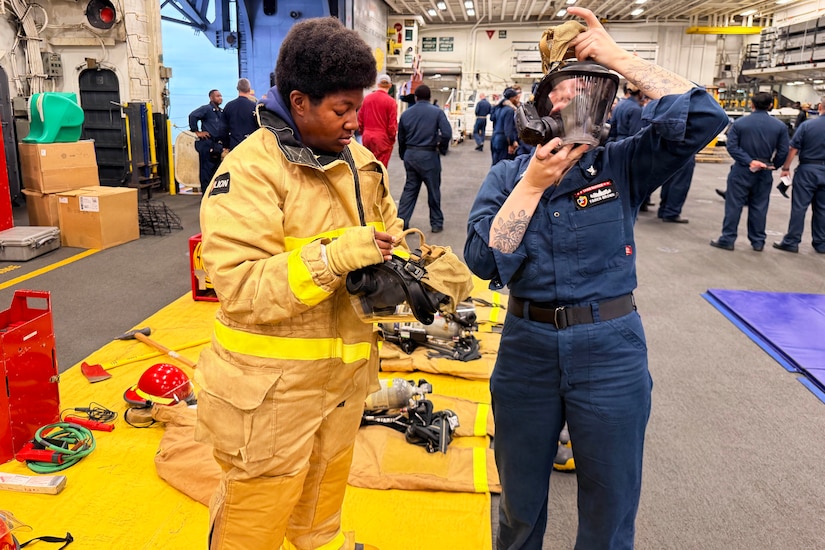
Once aboard, guests went through a ship safety briefing to ensure everyone had a fulfilling experience while staying safe on the active warship. Afterward, they followed their service members for personalized tours of the USS Essex.
"The excitement I have cannot be put into words," said Navy Petty Officer 3rd Class Megan Smith. "My father was a former service member; I like that we were able to compare and contrast our experiences in the Navy while we were both on board."
The evening culminated in a steel beach picnic, a time-honored Navy tradition for ships at sea, hosted by the Essex Supply Department. Sailors, Marines and Tigers joined together on the flight deck and shared food, drinks, games and memories as the sun slowly set over the Pacific Ocean.
"Coordinating this event took a lot of time, but it was very satisfying," said Navy Chief Petty Officer Maria Estrada. "We were able to showcase different aspects of the ship's operations as well as some of its capabilities."
The USS Essex returned to Naval Base San Diego the following day. Service members and guests stood on the flight deck and took in the downtown skyline, marking the end of two and a half months at sea in support of Exercise Rim of the Pacific and reuniting the ship with its Southern California home.
"I was just happy to be on board," said Hollis Cantrellmusson, mother of Navy Petty Officer 3rd Class Bailey Cantrellmusson. "The sailors on board were very courteous, nice and gracious."





 Posts
Posts

