Tuesday, March 10, 2026

Army Tests APEX Counter-UAS Round in Arizona

The Yuma Test Center at U.S. Army Yuma Proving Ground, Arizona, recently tested a new 30 mm Aviation Proximity Explosive round, primarily developed for firing from the AH-64 Apache helicopter.
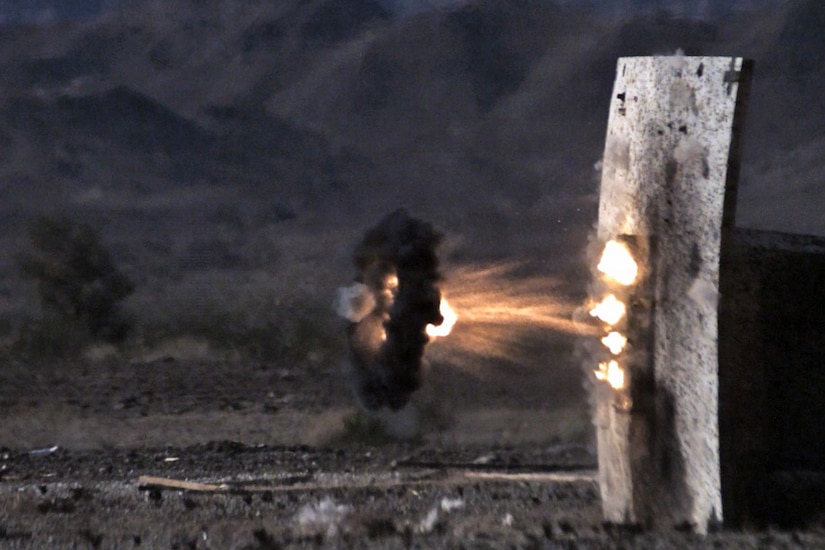
A small circle of black smoke radiates from a military round that explodes near a target on a range.

The APEX closely resembles the fielded M788 training round and M789 high explosive dual-purpose round. 

Walter McCormick, a test officer at the proving ground, explained that the APEX is designed to integrate with the existing M230 gun already mounted on the Apache. 

"The APEX round was developed to be a [fragmented] round that would [explode] in front of the [unmanned aerial system] and make a [small] pattern that would take out a UAS," McCormick said, adding that the need for counter-UAS solutions is urgent. 

In recent years, the UAS has become the weapon of choice on the battlefield, as seen in Ukraine and Russia. Army Secretary Daniel Driscoll is pushing for the Army to focus its efforts on UAS and counter-UAS technology. In fact, the Yuma Test Center has been designated as the primary, dedicated interagency counter-small UAS test and training range.

During testing, the center performed two subtests: the first to assess and compare it with the legacy M789 rounds, and the second test was to engage a UAS. Crews fired approximately 1,200 rounds across the two variants at both short and long ranges.

"We engaged a couple [of] different UASs and a few different ground targets," McCormick said.
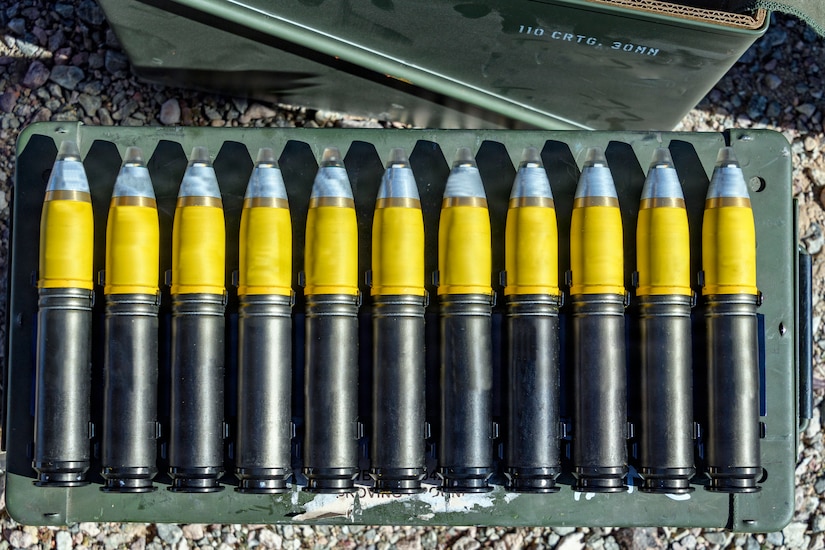
Eleven large munition rounds are lined up on a case outside.

Yuma Proving Ground has nearly 2,000 square miles of restricted airspace and year-round sunshine, which makes it ideal for aerial testing.

"They have done ground testing at other ranges. The problem is they don't have the land or airspace to do aerial firing from a helicopter. So, that's a big benefit. Plus, all the unique instrumentation YPG offers," McCormick said.

During the APEX test, the proving ground used its full arsenal of support capabilities to collect data, including air-to-ground assets such as chase pilots from UH-60 Black Hawk helicopters flying overhead for scoring, tracking mounts, telemetry, high-speed video, still photographers and data collectors.

These assets are readily available to industry partners testing at the proving ground.

"The Black Hawk was used primarily for overhead [scoring], so we can assess where rounds are impacting based on [the] firing point of the aircraft. The other benefit of surrounding ground camera angles was having a 360-[degree] view of the situation," McCormick said.

The next step for the APEX is to undergo airworthiness release based on the current test results. This will provide a safety release for the APEX to be fired from Apaches by soldiers when rounds are available. The airworthiness release is a milestone on the road toward materiel release and fielding.

260th Special Purpose Brigade Activated to Strengthen Security in the Nation's Capital

The District of Columbia National Guard activated the 260th Special Purpose Brigade at the D.C. Armory, March 7. It is the only brigade in the Army specifically designed to coordinate military support to civil authorities and protect critical infrastructure in the nation's capital.

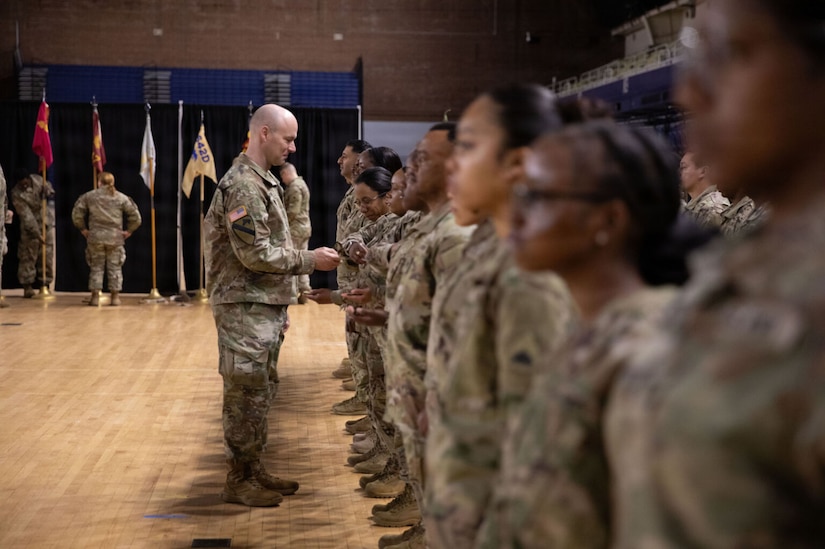
A group of people dressed in camouflage military uniforms stand at attention as a man also dressed in similar attire hands them a coin.

The brigade was created in response to Executive Order 14339 and a subsequent directive from the secretary of war. These called for the immediate establishment, training and equipping of a dedicated National Guard unit. The goal is to support public safety operations and strengthen coordination between military forces and civilian security partners in the district.  

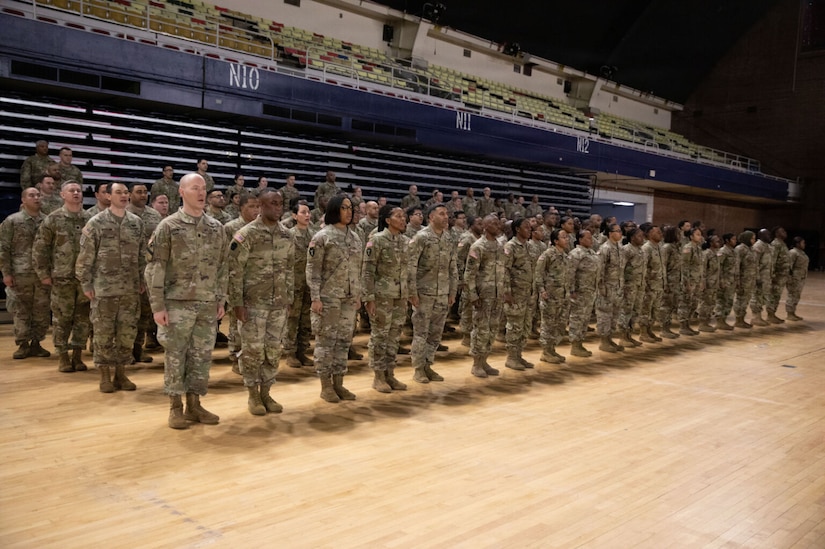
Army Brig. Gen. Craig Maceri, land component commander for the D.C. National Guard, presided over the activation ceremony. Soldiers stood in formation as the brigade's colors were uncased — a military tradition that signals a unit's formal activation and readiness for duty.  

"The activation of the 260th Special Purpose Brigade represents the deliberate execution of national guidance," Maceri said. "This unit provides the critical command and control structure that enables us to execute a broad spectrum of scalable operations while effectively integrating with our federal and district partners."  

The brigade will coordinate military support to civil authorities and enabling National Guard forces to rapidly integrate with federal and local agencies responsible for safeguarding the capital.

A group of people dressed in camouflage military uniforms stand in formation.

Washington presents a unique operational environment, including the constitutional institutions of the federal government, foreign embassies and national monuments, as well as millions of visitors each year. Protecting that environment requires close coordination between military forces and civilian agencies during major national events, security operations and emergencies.  

Among the brigade's key partners is the U.S. Marshals Service, which regularly works alongside the D.C. National Guard during security operations in the capital.  

"Partnerships like this are essential in Washington," U.S. Marshal Jurgen Soekhoe said. "The 260th Special Purpose Brigade brings a level of coordination and readiness that allows federal law enforcement and the National Guard to operate as a unified team when security demands it."  

Army Col. Lawrence Doane, commander of the 260th Special Purpose Brigade, said the brigade structure ensures continuous coordination with partner agencies. It also allows the brigade to expand rapidly when missions require additional forces.

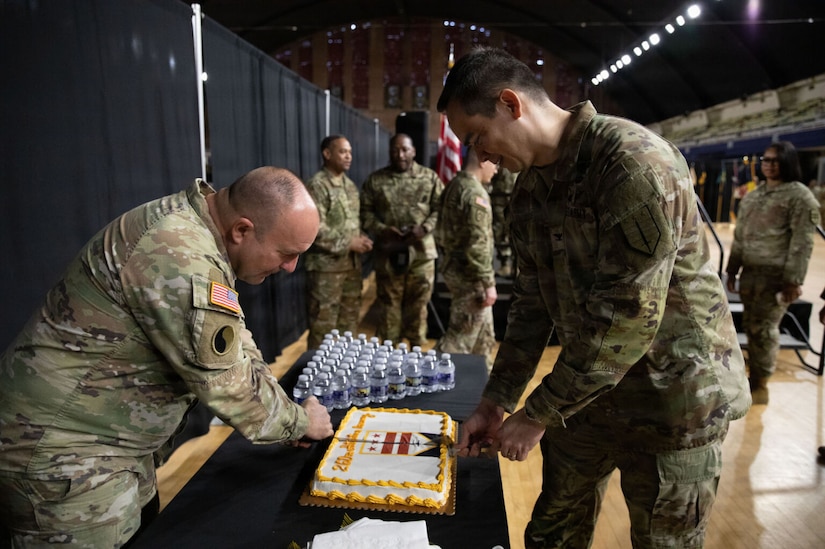
A man dressed in a camouflage military uniform cuts a cake as another man in similar attire looks on.

"This brigade gives us an operational foundation for unity of effort," Doane said. "It ensures continuity of planning and coordination so that when the situation changes, we can respond quickly and with clarity."  

The brigade also reflects the unique federal role of the D.C. National Guard, which reports directly to the president, not a state or territory governor. This structure places the organization at the center of national-level security planning for the capital.  

The unit's new patch connects the brigade's modern mission with its historic lineage. The design features three red stars and two red bars drawn from the District of Columbia flag, itself derived from the coat of arms of George Washington's family.  

The brigade carries forward the heritage of the 260th Military Police Command, a D.C. National Guard headquarters brigade that, for decades, coordinated military police operations supporting civil authorities and emergency response across the district, until its inactivation in 2011. Its lineage reflects a long-standing mission of integrating National Guard forces with federal and local partners to protect critical institutions and maintain security in the nation's capital.

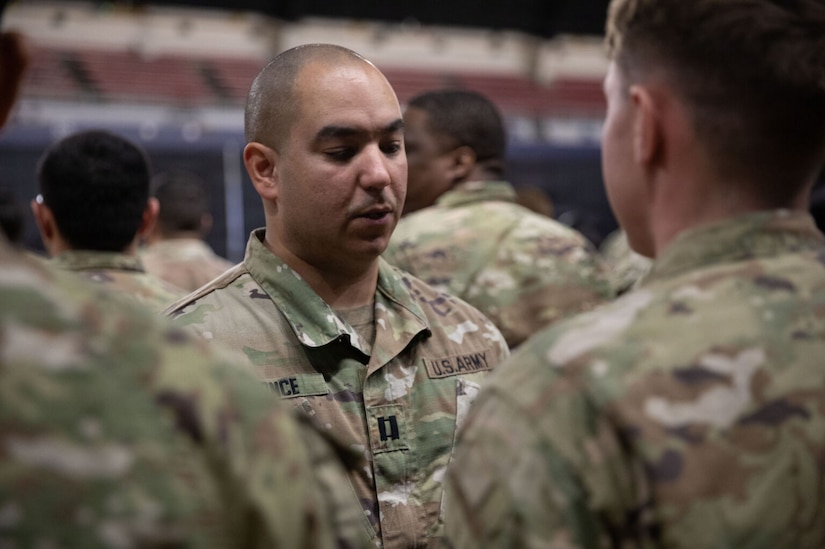
A man wearing a military camouflage uniform, stands while looking down. Other men in the foreground stand at attention.

At the patch's center is an upright, unsheathed sword representing the brigade's role in providing security for all who live, work and visit the nation's capital.  

"This new patch reflects something bigger," Doane said. "It represents our commitment to protecting every person who sets foot in the nation's capital."  

With the uncasing of its colors, the 260th Special Purpose Brigade begins its mission as a dedicated force. It will support public safety, infrastructure protection and coordination between civilian and military agencies in Washington.