Thursday, April 23, 2026

Department of War Showcases Progress on Golden Dome for America, the Nation's Next-Generation Homeland Defense

Senior leaders from the Department of War, U.S. government, and defense industry gathered at Joint Expeditionary Base Little Creek-Fort Story, April 23, to provide an update about Golden Dome for America (GDA), the nation's initiative to build a next-generation missile defense shield to protect the Homeland.

Speakers included Undersecretary of War for Research and Engineering and the Department of War's Chief Technology Officer Emil Michael; Director of Golden Dome for America Gen. Mike Guetlein; and Deputy Director of Operations at North American Aerospace Defense Command (NORAD) Maj. Gen. Mark Piper. 

The event, set against a backdrop of current missile defense capabilities, underscored the urgent need to modernize the nation's defenses against a new generation of advanced threats, as directed by President Trump.

"Golden Dome is the decisive response to a new era of threats," said Gen. Mike Guetlein, Director of Golden Dome for America. "We are moving with purpose and urgency to forge a shield that is layered, integrated, and automated. The progress on display today is tangible proof that this is not a future concept, but a reality we must build now." 

GDA is a layered defense architecture designed to protect the United States from complex ballistic, hypersonic, and cruise missiles, as well as advanced aerial threats. It enhances national security by integrating a persistent space-based sensor network for global tracking, a portfolio of advanced interceptors providing defense-in-depth, and an integrated command and control system to manage threats at machine speed.

The program's momentum was a central theme, with officials confirming GDA is ahead of schedule and on budget. Key achievements highlighted include the completion of the initial architecture blueprint, the establishment of a Command-and-Control Consortium, and the awarding of active contracts for critical system components.

Emil Michael, Under Secretary of War for Research and Engineering, spoke to the program's innovative foundation.

"It is this Department's mandate to definitively secure our homeland," said Under Secretary Michael. "We are embracing an open architecture that harnesses the full power of American innovation—from artificial intelligence to the commercial space industry—to build the impenetrable shield that this nation deserves."

During remarks, the operational imperative for capabilities was validated by Piper.

"From a NORAD and NORTHCOM perspective, the requirement is clear," said Maj. Gen. Piper. "To defend North America and win tomorrow's fight, we must maintain our warfighting advantages and operate beyond stovepiped systems operating at human speed. Golden Dome is forging the integrated, automated battle management network needed to see every threat, make decisions in milliseconds, and keep America safe."

The choice of Hampton Roads for the event underscored the region's role in the national endeavor. The area hosts testing for the Army Long-Range Persistent Surveillance (ALPS), a key terrestrial sensor whose data directly informs the development of the broader GDA architecture.

Department officials explained GDA is a fiscally responsible, vital investment in national security. The program's modular, open-systems approach is designed to control costs and provide sustained, predictable demand signals to the U.S. industrial base, ensuring the nation can outpace emerging threats for decades to come.

Personal Property Activity Engages Industry Partners Ahead of Peak PCS Season

The War Department's newest special activity — the Personal Property Activity — met today with moving, shipping and logistics leaders to provide an update on the accelerated reform aimed at improving one of the most critical quality-of-life issues facing military families, the permanent change of station moving process.

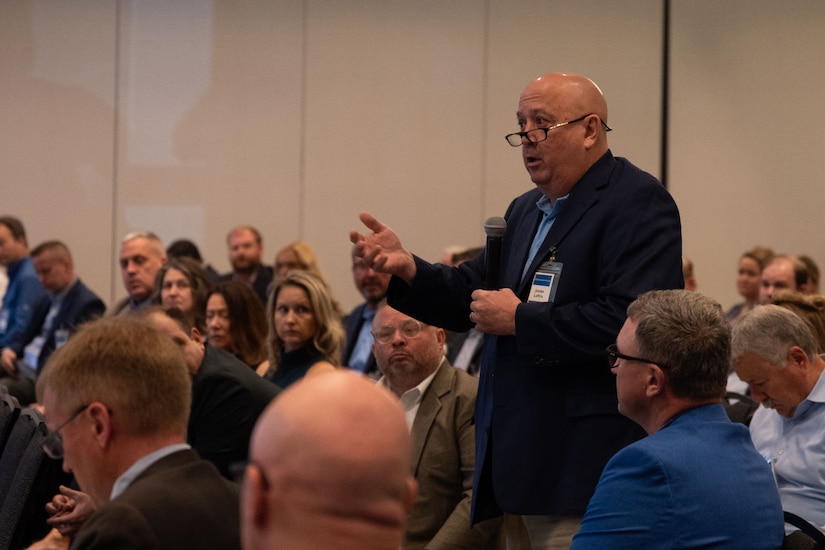
A man in business attire stands and speaks into a microphone. All around him, people are seated in the audience.

The engagement brought leaders from across the household goods industry together with Personal Property Activity officials to identify operational challenges, improve accountability and implement solutions ahead of the 2026 PCS peak season. It marked the organization's first in-person industry engagement since transitioning from a task force to a permanent special activity earlier this year. 
 
"If you want to influence the future, please work with us and give us your ideas," said Army Maj. Gen. Lance Curtis, PPA commander. "We cannot do it without you; we need you, alongside us, at the tip of the spear to rewrite our future."  
 
Discussions focused on increasing shipment predictability for service members and their families, improving communication, strengthening performance standards and modernizing the Defense Personal Property Program.

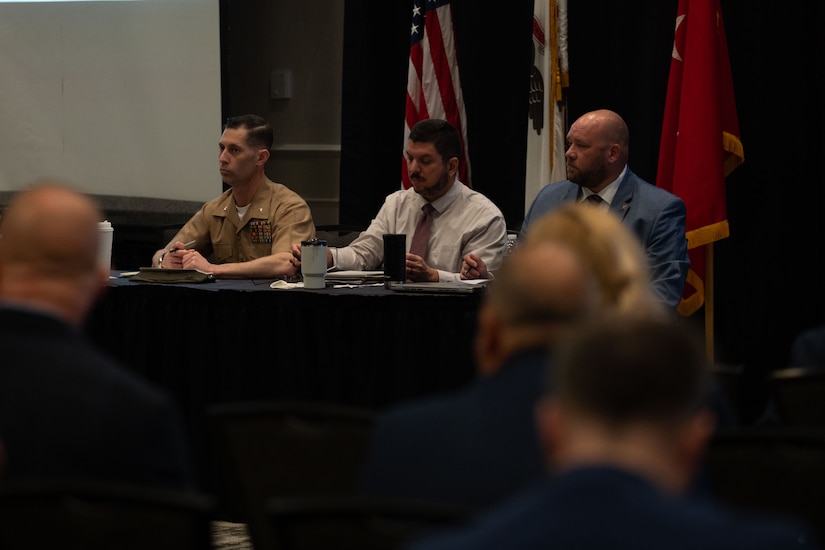
Two men in business attire sit at a table with a man in a formal military uniform as they listen to questions from the audience seated in front of them; behind them are an American flag and two other flags.

The engagement supported President Donald J. Trump's broader priority of delivering more efficient, accountable government services for military personnel. It also aligns with Secretary of War Pete Hegseth's directive to fix long-standing issues within the military moving system. 
 
When announcing the establishment of the Personal Property Activity in January, Hegseth called the organization "a permanent solution for all service members who move" and emphasized the department's responsibility to deliver reliable household goods services to warfighters worldwide. 
 
Personal Property Activity leaders emphasized that reform will be data-driven and facts-based and that industry plays a critical role in delivering results.

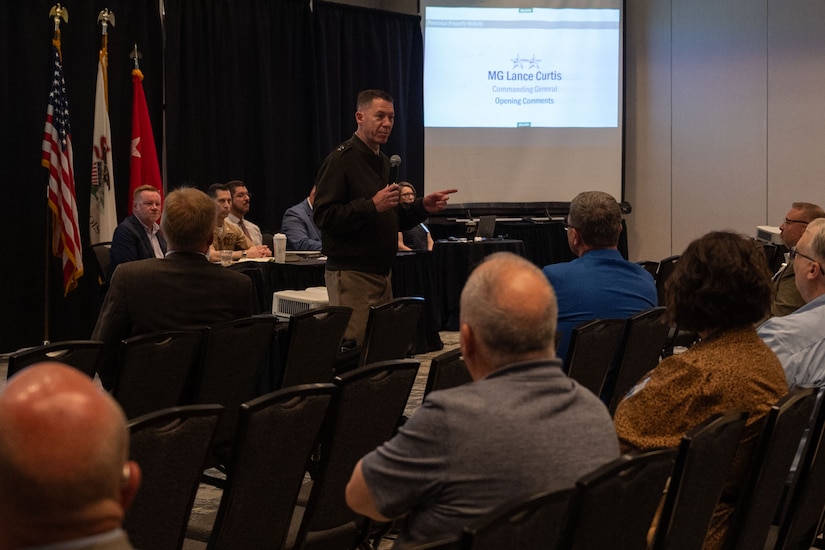
A man in a formal military uniform stands and speaks into a microphone to a seated audience; to his left is a screen with slides projected on it.

The organization also highlighted measurable progress already underway, including an increase in self-reported claims satisfaction from 52% to 69%, signaling improved service quality for service members and families navigating the relocation process. 
 
Army Col. Mike Ashton, Personal Property Activity director of operations, announced a departmentwide website, "where service members and providers will be able to find all the resources and advisories all collocated in one place."  
 
The website will be a one-stop shop for military movers and providers, and it will go live May 1.

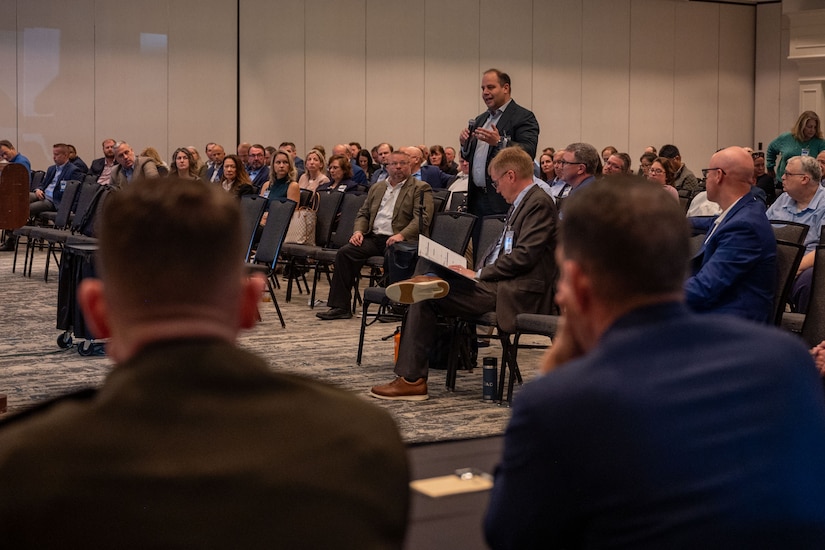
A man in business attire stands and speaks into a microphone. All around him, people are seated in an audience.

Industry partners received an update on the reform and actions taken to address workforce challenges, commercial best practices, pricing structures and operational innovations experienced by industry. The improvements are intended to enhance the program's overall performance across the relocation enterprise and improve the quality of service delivered to military movers. 
 
"We have seen a noticeable increase in responsiveness to industry's concerns since Secretary Hegseth announced the Personal Property Activity," said Chuck Kuhn, an industry partner. "Maj. Gen. Curtis and his team have been aggressive with the right sense of urgency to engage with industry to hear and address our concerns, while proactively improving the overall moving experience for military families."  
 
The Personal Property Activity continues working with industry partners to modernize military relocations, improve the quality of life for service members and ensure PCS moves support readiness rather than disrupt it.

Braker Breakthrough: Drone-Delivered Bunker-Busting Warhead Passes Test

In a significant leap forward for battlefield technology, Army infantry drone operators successfully tested a new warhead designed for delivery by an unmanned aerial system. 
 
The live-fire demonstration of the bunker rupture and kinetic explosive round, which took place at Redstone Arsenal, Alabama, March 26, comes only weeks after the initial design and rapid prototyping of the system, and showcases the Army's accelerated approach to innovation in the face of evolving threats. 

A large, clouded explosion of dust and debris fills the sky as it rises from the ground.

The Army continuously transforms by using the latest technologies to gain a warfighting advantage, ensuring the force is lethal, modern and ready. The development of this air-delivered munition directly supports that mission, as well as Secretary of War Pete Hegseth's readiness and transformation priorities. 
 
The Braker project, led by a team from the U.S. Army Combat Capabilities Development Command Armaments Center and Project Manager Close Combat Systems, aimed to create a lightweight, powerful and lethal warhead that could be deployed from a small, agile drone. 
 
"Our Picatinny team went from concept to live-fire in two weeks," said Army Col. Vinson Morris, project manager of Project Manager Close Combat Systems. "Braker proves our ability to rapidly develop and safely deliver devastating effects from small, unmanned aircraft systems. We are now creating the architecture with Picatinny Common Lethality Integration Kit and the small, universal payload interface for industry to scale this critical warfighter advantage." 

Two people in casual attire observe the remains of a partially destroyed bunker in a dirt terrain with trees in the background.

The Picatinny Common Lethality Integration Kit is a safe and effective method for integrating lethal payloads with UAS platforms, designed and developed by engineers at the U.S. Army Combat Capabilities Development Command Armaments Center. 
 
The rapid development-to-testing timeline of Braker was made possible by the Army's emphasis on additive manufacturing, also known as 3D printing. 
 
In early March, engineers from the Armaments Center began designing, explosive pressing, housing manufacturing and integrating the warhead to be used on a low-cost and expendable one-way attack drone. 
 
Shortly thereafter, transfer and compatibility tests were conducted at Picatinny Arsenal, and approximately a dozen warheads were assembled, one of which was tested on a makeshift test range bunker. 

After proving worthiness and validating effectiveness, the prototype warheads departed Picatinny Arsenal, New Jersey, for Redstone Arsenal, where a live demonstration was conducted for Army leaders. 
 
The successful detonation of a target deployed by a device attached to a drone demonstrates a new and potent capability for the modern warfighter. It also illustrates how quickly engineers can design, fabricate and integrate hardware to meet urgent and compelling needs. 
 
"Rapid demonstrations of overwhelming lethality, such as Braker, are attributed to years of continued technology investments and the organic core technical competencies and facilities resident at the [U.S. Army Combat Capabilities Development Command] Armaments Center," said Anthony Sebasto, executive director of the Munitions Engineering and Technology Center.

Thousands of Kids Descend on Pentagon for 'Bring Your Child to Work Day'

More than 8,000 kids showed up at the Pentagon today, with their parents in tow, to learn just exactly what their moms and dads do when they go to work every day. At the Pentagon, the event was billed as "Bring Your Child to Work Day," and it's the fourth time the War Department has held the event.

A man in a navy-blue suit shakes hands with a child in a crowd. A woman wearing a spring floral dress walks beside him.

All through the War Department headquarters, kids accompanied their parents to their offices to see where they work. Then they moved on to more exciting opportunities in the courtyard and elsewhere in the building to do activities such as face painting, meeting with military working dogs and viewing military displays like an infantry squad vehicle, an Air Force explosive ordnance disposal team, Marine Corps martial arts and a Navy STEM display. 

Early on in the day, Secretary of War Pete Hegseth and his wife, Jennifer, welcomed the kids and promised a day of fun and learning about the War Department and what it does for the nation. 

"It is so great to see everybody here, so many kids, on this gorgeous day that we have," Jennifer Hegseth said. "I just think it's so important for you all to be able to share this with your family and kids, for you to be able to see what your parents do." 

She then told visiting children the work their parents do is important to the department and the nation. 

"Your parents represent America's values to the rest of the world every day, values like freedom, democracy and opportunity; these are the values we believe in strongly and sharing them with the world is what you guys do every day," she said. "Not many kids get to see behind these famous walls ... so today you get the opportunity to come inside, where most people [only] get to see it on TV or in the movies. But we wanted to celebrate with you, and we're just so happy you're here." 

The secretary said defense of the nation is the No. 1 priority of the department, and that it's the parents who make it happen.

"Defending this country requires brave people, brave people like your mom and dad, who wear that uniform, a camouflage uniform, or a formal uniform and they wear it proudly, and you should be proud of them," he said. "Today we're proud to welcome you ... to the Pentagon to share a glimpse of what they do. Your parents are the best of America. They're raising you to love this country, to serve God, [and] to serve the Constitution. Those are beautiful things." 

A surprise to everybody in the Pentagon courtyard was when Second Lady of the United States Usha Vance arrived at the main stage to read a book to the hundreds of children seated on the lawn. The opportunity was part of her 2026 summer reading challenge. Vance said in her family, reading is an important activity.

"I have three kids ... we're big readers in our family, and I just wanted to emphasize that this summer, I'm very excited to have a summer reading challenge again," Vance said. 

Most of the children in attendance had their own copy of the book Vance read to them, "Buddy the Soldier Bear," by author Mary Joy. The book tells the story of a lonely stuffed bear sitting in a toy store who wants desperately to go home with somebody. Eventually, Buddy is purchased and sent off in a care package to a soldier overseas. The bear has adventures there with the soldier but eventually heads home with him where he is able to join a loving military family. 

All around the Pentagon courtyard were displays where visitors could learn more about the armed force. The Army, for instance, had enhanced night vision goggles on display.

Henry, 12, tried on those night vision goggles with his younger brother William and his sister Lucy. He said he started his adventure at the Pentagon with the "Mission Match" passport — a document he got in advance of arriving at the Pentagon that challenges him to visit displays from all five military services, along with three other displays. 

But the most exciting thing he saw? "The canine training," he said. 

One day, Henry said, he hopes to join the military himself "so I can get free college" and plans to do something in combat arms. "I want to fight," he said. 

Jeremiah, 15, is an Air Force child and has been around the world to both Romania and Germany. He said he liked the travel the Air Force afforded him, and he liked seeing the world — but he liked being at Barksdale Air Force Base, Louisiana the best.

During his day at the Pentagon, he said, he saw displays from all the military services but was impressed with stuff from the Army. 

"They had some equipment for thermal imaging," he said. "Thermal imaging and night imaging." 

Jeremiah said he has no plans himself to follow his mom into the military but wants instead to go off to school and become an engineer. "I want to be a mechanical engineer, so I'll probably go to Purdue," he said. 

Inside the Pentagon Briefing Room, Pentagon Press Secretary Kingsley Wilson held mock press briefings to answer questions from dozens of children who filed into the room with their parents — a room most Americans see only on television.

A person stands at a lectern as people in an audience sit in the foreground.

Wilson told the kids the purpose of the press room is to help tell the story of the War Department. 

"One of the ways that we tell the story of our warfighters is by holding press conferences," she said "That's where we stand in front of reporters and answer questions they have about the department, why we're doing certain things and how we're doing them. And that's what we're going to do today. Except this time, you all get to be the reporters, and you get to ask the questions." 

Over the course of two mock press briefings, Wilson fielded more than a dozen tough questions related to how the Pentagon works and the building itself, the role of service members, the kinds of equipment the U.S. military uses and one question about how many helicopters the U.S. military has. 

"Definitely a lot of helicopters," she said. "I don't have an exact number for you, but we've got a lot of helicopters, and our helicopter pilots are really incredible. It is difficult to fly a helicopter; a lot more difficult than aircraft sometimes. It's definitely very cool that we're able to use helicopters all over the world, not just here in the United States; and our pilots that fly those are some of the best of the best."

Southcom Establishes Autonomous Warfare Command

Marine Corps Gen. Francis L. Donovan, commander of U.S. Southern Command, directed the establishment of the Southcom Autonomous Warfare Command. 

The new command will support President Donald J. Trump's National Security Strategy priorities, Secretary of War Pete Hegseth's National Defense Strategy lines of effort, Southcom imperatives, regional security cooperation and operational dominance. 

An unmanned aerial vehicle flies through a blue sky with clouds and trees below. In the foreground is the silhouette of a person with the controls.

"From the seafloor to space and across the cyber domain, we fully intend to leverage the clear superiority of the American defense ecosystem by deploying cutting-edge innovation and working ever closer with our enduring partners in the region to outmatch those who threaten our collective peace and security," Donovan said. 

Once fully established, the new command will employ autonomous, semiautonomous and unmanned platforms and systems to counter threats and challenges across domains, linking tactical missions to long-term strategic effects. It will also collaborate closely with allies and partners in the region to advance shared goals, such as disrupting and degrading narco-terrorist and cartel networks and responding to life-threatening crises caused by large-scale natural disasters. 

During the lead-up to establishing the autonomous warfare command, Southcom will work with the military services and the War Department's Defense Autonomous Warfare Group to identify the required expertise and capabilities for the new command to reach full operational capacity and integrate into Southcom's mission. 

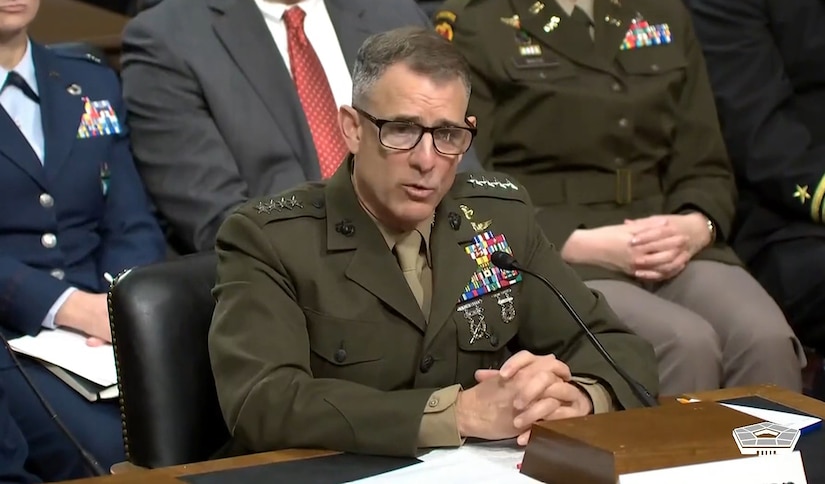
A man in a formal military uniform sits at a desk and speaks into a microphone. People in similar attire are behind him.

"Our geographic area of responsibility has a wide range of conditions, varied terrain and diverse operational environments that make it an ideal setting in which to innovate. It is also a region with very capable and committed security partners who lean forward, embrace technologies and are very eager to work collaboratively with us to support regional stability in new and effective ways," Donovan said. 

Earlier this year, the Southcom commander signaled his interest in leveraging emerging technologies in his written posture statement to Congress, telling lawmakers he intended "to capitalize on next-generation capabilities like unmanned platforms, [artificial intelligence] integration and commercial tools to better enable us and our partners to counter … threats together." 

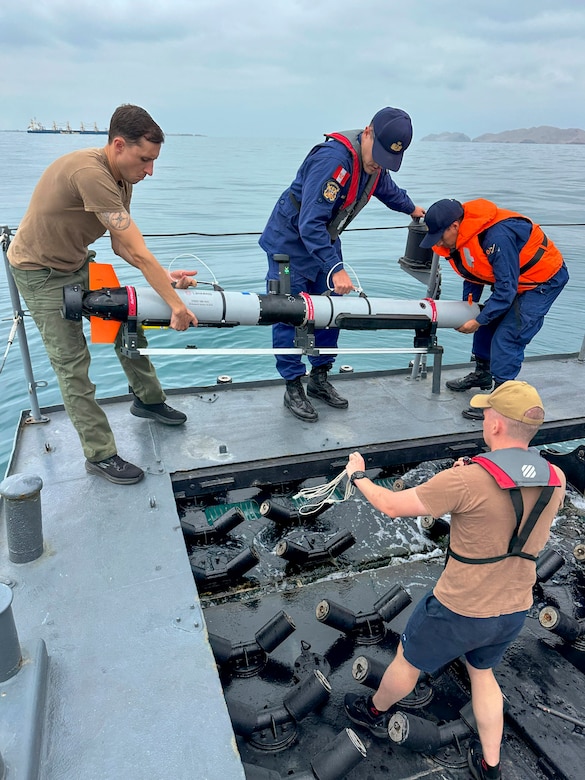
Two people in blue military uniforms and one person in casual attire stand on a boat and hold a long tube as they prepare to put it in the ocean; another person in casual attire is holding additional equipment and observing.

Outlining his imperatives while speaking to Senate Armed Services Committee members on Capitol Hill last month, Donovan said he aimed to develop and field cost-effective and modernized forces tailored for the Southcom mission, including autonomous systems and human-machine teaming "to greatly increase lethality, all-domain awareness and data-sharing for U.S. and partner forces."