The Utah Army National Guard is supporting wildfire response efforts across Utah, putting specialized aviation capabilities to work alongside local and government firefighting agencies as wildfires continue to challenge communities across the state.
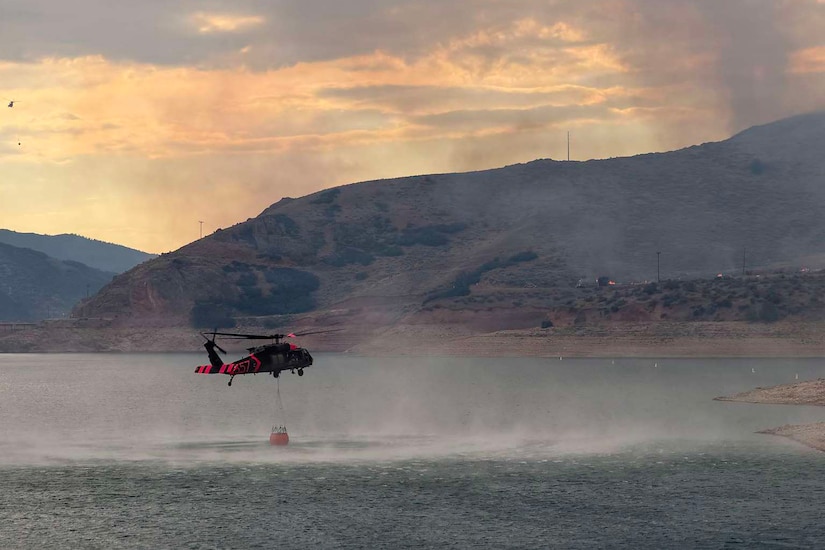
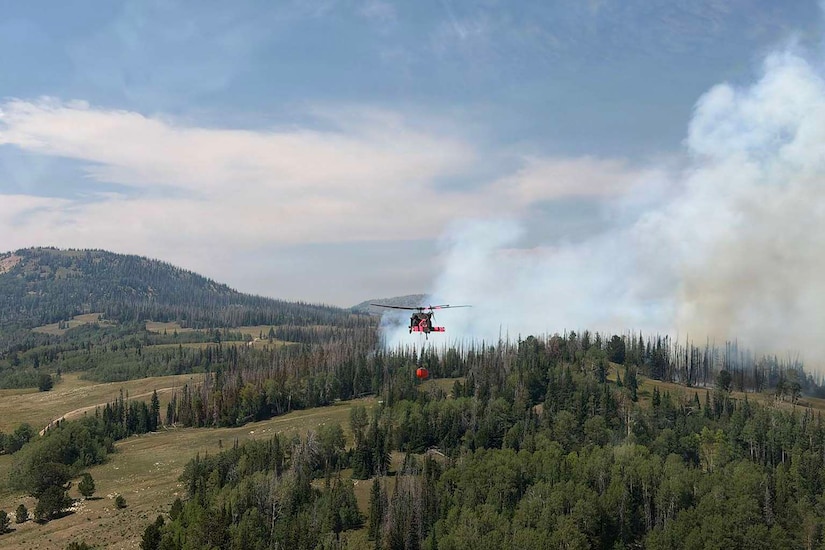
"We have two UH-60 Black Hawks and aircrew members and support personnel who are helping with fire suppression activities on this fire," said Army Lt. Col. Penny McCarthy, battalion commander.
Guard members began wildfire support Aug. 5, assisting with the Black Canyon Fire in Sanpete County, Utah. Several days later, the mission shifted to the Rocky Canyon Fire. When local authorities request assistance, the Utah National Guard is activated to support emergency response efforts through the state's department of emergency management and the governor's office.
"We stand ready to support our state when these types of incidents occur," McCarthy said.
Soldiers quickly transitioned from training to real-world operations. For the pilots and aircrews, that means long days, multiple flights and repeated water bucket drops. Army Chief Warrant Officer 4 Chris Aylstock, a pilot supporting the mission in Morgan County, said crews are working approximately 12-hour shifts, with pilots sometimes spending seven to eight hours in the air.
"We fly out there, get gas, get the word to launch, get on the fire, do a full fuel cycle, come back, get gas, shove a sandwich down the throat, go back out and do another fuel cycle," Aylstock said.
The demanding schedule requires careful planning and continuity between crews. Pilots are rotated through the mission while maintaining overlap between shifts so crews arriving for duty understand the fire and the operation's current status.
"We try to have at least five pilots doing some kind of overlap each day," Aylstock said. "That way, we just have some experience going from one day to the next."
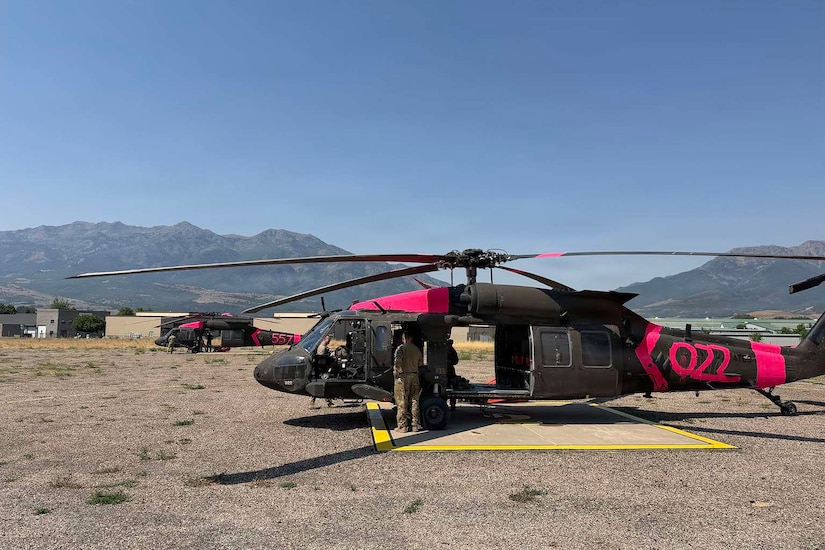
It takes an entire unit to keep the aircraft in the fight. Each helicopter undergoes meticulous maintenance to ensure effectiveness.
"We have our maintainers back at [the base] turning wrenches and working overtime to get these aircraft ready to launch each morning," Aylstock said. "This really is an all-hands-on-deck push to get these crews out the door. Before each day's mission, crews receive updated maps, frequencies and information about the fire before launching from their staging location."
Each morning, crews fly from West Jordan, Utah, to Morgan County, then conduct an operational briefing with fire managers and receive the information they need to integrate safely into the larger firefighting effort. While on the fire, Utah Army National Guard helicopters use 530-gallon buckets to drop water on areas identified by fire managers.
Aylstock said the aircraft supports the priorities of the incident commanders with direct attacks on the fire, supporting backburning operations, pretreating vegetation with water and providing structure protection, all while working in conjunction with other aerial assets and ground crews.
The operation requires constant coordination with other aircraft. Air tankers and helicopters share the same airspace, requiring National Guard crews to adjust their timing and routes throughout the day.
The distance between the water source, staging area and fire can also affect how many drops a crew can make during a shift. Aylstock said one of his flight days included 48 bucket drops, with crews adjusting their operations as the fire and mission changed.
The guard members start preparing months before wildfire season begins.
"Our battalion has firefighting capability. It is something that we practice ... all the way up until our fire season starts on April 1, so that we are prepared to respond to any kind of incident," McCarthy said. "We do a lot of coordination with our partners from the Department of Natural Resources, the United States Forest Service and local agencies to gain education and coordination so that we're best prepared for fires when our firefighting season kicks off," she added. Aircrews also conduct flight evaluations and training specifically designed to prepare them for firefighting missions.
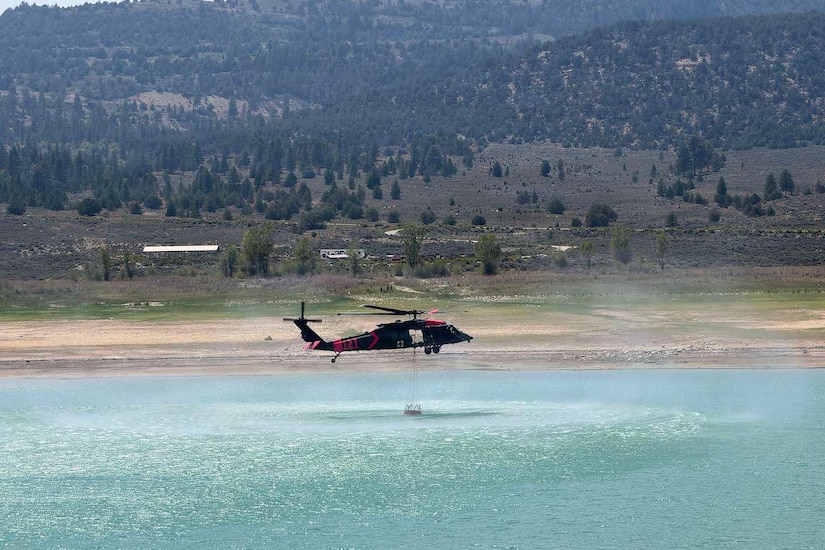
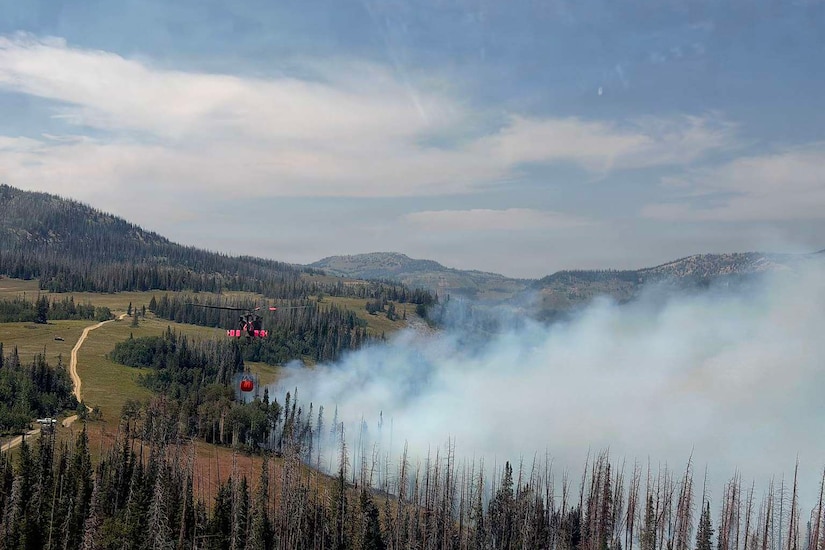
That preparation is particularly important because wildfire aviation missions carry significant risks and require experienced crews. Aylstock said pilots assigned to serve as fire pilots typically have extensive flight experience, and the unit deliberately rotates experienced pilots through the mission to build depth across the battalion.
For the crews flying the Rocky Canyon Fire, the long hours and demanding conditions are balanced by the knowledge that their work directly supports communities in their own state.
"One of the most important things that we do on these fires, of course, is preserving life, preserving property and easing human suffering," McCarthy said. "And it just hits different when it's our neighbors." Some soldiers in the battalion live in or have family members in communities affected by wildfires, making the mission particularly personal.
For the soldiers flying above the fire, the mission is more than a training requirement. It is an opportunity to put years of preparation and experience to work protecting the communities they call home.
"It's really important for us; it's a tremendous honor for us to be able to support the firefighting efforts when we're called upon, especially when it's just right in our own backyard," McCarthy said.


 Posts
Posts

