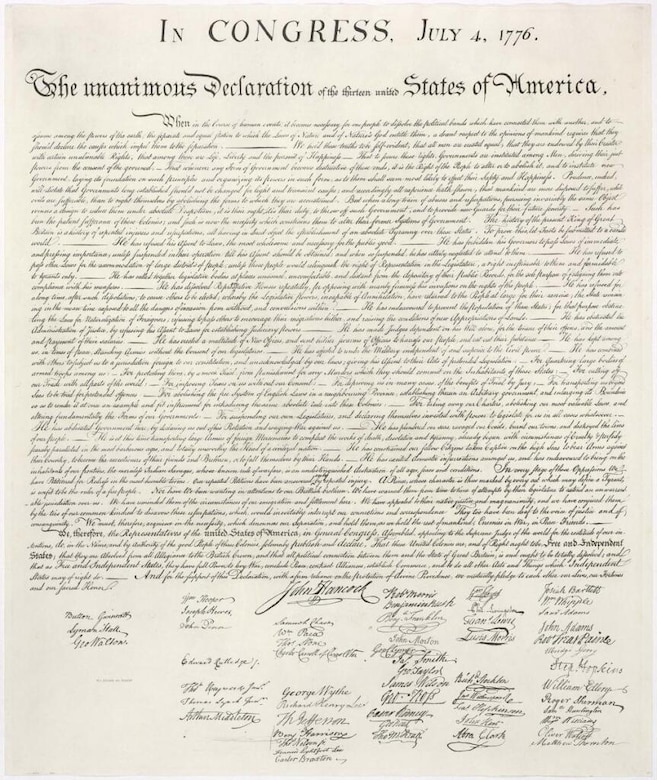
Delegates to the Second Continental Congress adopted the Declaration of Independence July 4, 1776. The 56 delegates who signed the formal break from Britain are all considered Founding Fathers; four represented New York.
The New York delegates included William Floyd, Francis Lewis, Philip Livingston and Lewis Morris. Their signatures are grouped on the top second column from the right of the document.
William Floyd
Floyd was born on Dec. 17, 1734, in the town of Brookhaven on Long Island, New York, to Nicoll and Tabitha Floyd. He was the oldest of nine children.
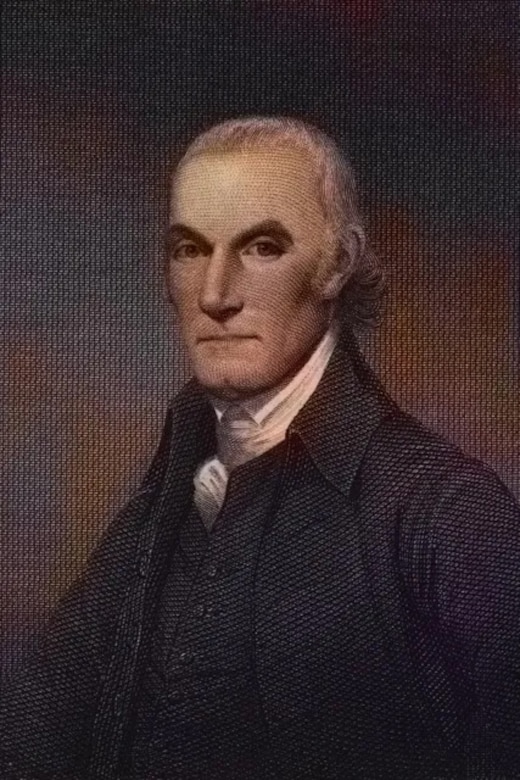
When his parents died in 1755, Floyd inherited the family's wealthy estate and took responsibility for his siblings; he was a successful farmer and local politician. In 1760, he married Hannah Jones. They had three children: Nicoll, Mary and Catherine. After his wife died in 1781, he married Joanna Strong in 1784, and they had two children: Ann and Elizabeth.
During the Revolutionary War, Floyd served as a major general in the New York militia. The British seized Floyd's land and house shortly after the declaration was signed and used it for a military staging area for the remaining seven years of the war. Floyd served as a delegate in the First and Second Continental Congress. After the war, Floyd served several terms in the New York State Senate and in the first Congress under the U.S. Constitution.
Floyd died Aug. 4, 1821, at the age of 85, and is buried at the Westernville Cemetery in Oneida County, New York.
The town of Floyd, New York, is named for him, as are several schools in New York and the William Floyd Parkway in Brookhaven.
In 1976, the William Floyd Estate was donated to the National Park Service and is open to the public.
Francis Lewis
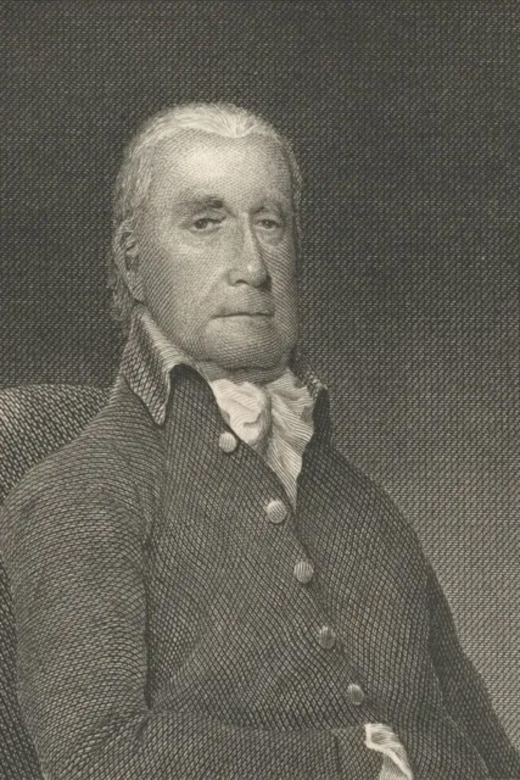
Lewis was born in Llandaff, Wales, March 21, 1713, the only child of Morgan and Anne Lewis. However, they both died in 1718, when Lewis was 5, and he was raised by his aunt.
Lewis was educated in Scotland and London. As a young man, he chose a career as a merchant, which entailed extensive travel to other countries, including the American colonies. He sold the land that he had inherited from his father to finance his travels.
Lewis married Elizabeth Annesley in 1745, and they had seven children. During the French and Indian War, 1754 to 1763, he was an aide to British Army Col. James Mercer, the commander of Fort Oswego, New York. In 1756, French forces besieged the fort. Lewis and many others were taken prisoner to French Canada and then to France, where he was eventually freed in a prisoner exchange after seven years in captivity.
He resumed his merchant business after the war, settling down in what is now Queens, New York. He became involved in local politics, helping to organize the Sons of Liberty in 1765, and served as a delegate to the First and Second Continental Congress.
During the Revolutionary War, he supplied the Continental Army with clothing, weapons and provisions. In 1776, his home was destroyed by the British, and his wife, Elizabeth, was captured and held as a prisoner for several months; she was released in a prisoner swap and died in 1779.
Lewis died Dec. 31, 1802, and is buried in Trinity Church Cemetery in New York City.
His name and legacy live on throughout New York City. In Queens, a park, a masonic lodge and a high school all bear his name, as does Francis Lewis Boulevard — a major thoroughfare that runs the entirety of the borough.
Philip Livingston
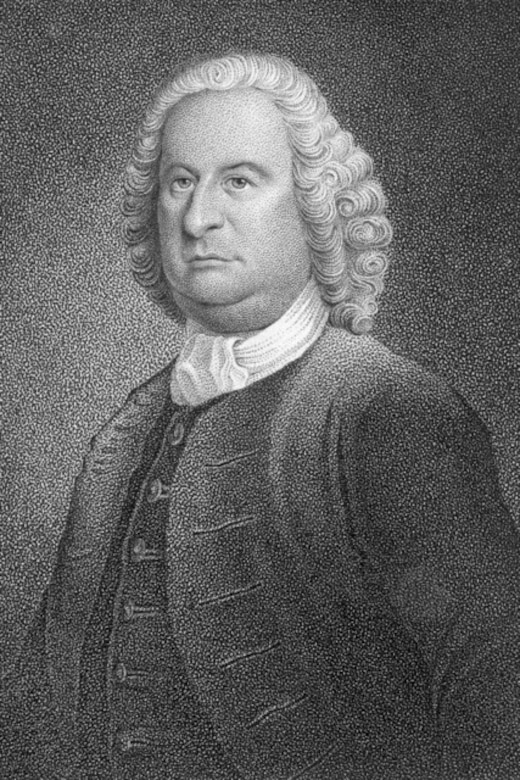
Livingston was born Jan. 15, 1716, in Albany, New York, to Philip and Catharine Livingston. He had a brother named William.
In 1737, he graduated from Yale College in Connecticut and apprenticed as a merchant under his father's supervision. He eventually moved to New York City, where he worked in trade with the British West Indies.
In 1740, he married Christina Ten Broeck, and they had nine children.
By the middle of the 18th century, Livingston served as a New York City alderman and then held other positions in the colonial government. During the summer of 1776, the British took his two homes, using one as a barracks and the other as a Royal Navy hospital.
In 1777, he was appointed to the New York State Senate and served as a delegate in the First and Second Continental Congress.
Livingston died June 12, 1778, and is buried in the Prospect Hill Cemetery in York, Pennsylvania. He was buried there because that is where he died suddenly while attending a session of the Second Continental Congress.
Livingston Avenue and Philip Livingston Magnet Academy, both in Albany, New York, are named for him.
Lewis Morris
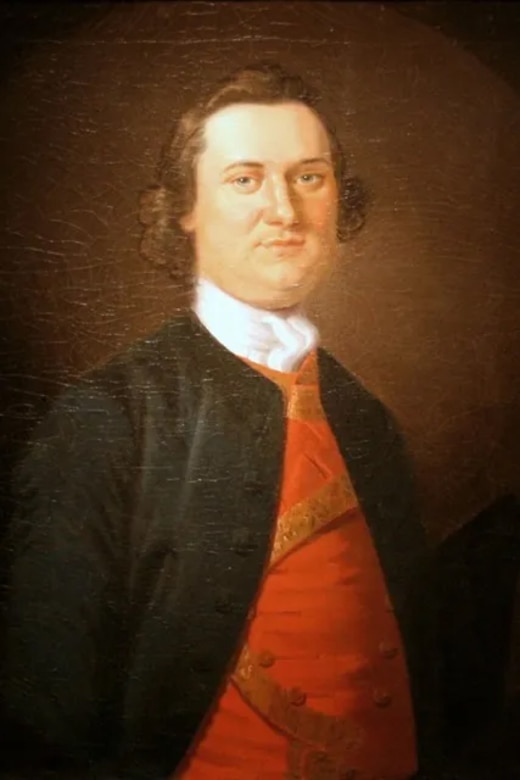
After his mother died in 1731, Morris' father married Sarah Gouverneur, and the couple had three children. Morris was tutored at home until age 16. He attended Yale College in Connecticut and graduated in 1746; he returned home to help his father manage the estate.
He married Mary Walton in 1749, and they had 10 children.
In 1760, Morris was appointed a judge of the Court of Admiralty and, in 1769, became a member of New York's Colonial Assembly.
In 1775, he was elected as a delegate to the Second Continental Congress. Shortly after signing the Declaration of Independence, the British ransacked Morris' estate and slaughtered his cattle. He resigned from Congress in 1777 and returned home to restore his property and other farmlands destroyed by the British. He was an advocate for agriculture and education during his two terms as a state senator, 1777-1781 and 1784-1788.
Morris died Jan. 22, 1798, and is buried in a family vault below St. Ann's Episcopal Church in the Bronx.
This is the third installment in a series of articles about the men who signed the Declaration of Independence. The 56 delegates to the Second Continental Congress, representing the 13 colonies, are all considered Founding Fathers.


 Posts
Posts

