Thursday, June 18, 2026

Team Army Opens 2026 Warrior Games With Eight Powerlifting Medals

Team Army opened the first day of competition at the 2026 Warrior Games in San Antonio with wins in powerlifting, earning eight medals while demonstrating that the greatest victories often extend far beyond the podium. 

The powerlifting medalists included: 1st Lt. Jani Merritt, gold; Staff Sgt. Chelsea Scott, gold; Staff Sgt. Nate Mateo, gold; Sgt. Tukiau Salanoa-Tuioti, gold; Capt. Channda Mitchell, gold; Capt. Jake Malven, silver; retired Sgt. 1st Class Valerie Watkins, bronze and retired Capt. Tony Smith, bronze. 

A woman in athletic attire sits in a wheelchair holding a medal around her neck while a man in similar attire leans next to her, also holding a medal, as they pose for a photo.

While the medals reflected exceptional performances on the platform, the stories behind them highlighted the perseverance, support and sense of community that define the Warrior Games experience as well as the Army Recovery Care Program's commitment to helping wounded, ill and injured soldiers recover and thrive. 

Mateo, a second-time Warrior Games competitor, said he shares his gold medal with family, who traveled nearly 24 hours from Saipan to cheer him on in San Antonio. He said seeing his family and friends in the stands served as a powerful reminder that recovery is rarely a journey taken alone.   

"My wife, Regina, and my family have been with me from the start," Mateo said. "I wouldn't have been where I am today if it wasn't for her. She’s been keeping me in the right state of mind and reminding me of all we have accomplished together through this journey." 

A man wearing athletic attire and an award medal lifts his arms in celebration while holding a service flag around his shoulders,

Returning to the Warrior Games with another year of training and experience behind him, Mateo said the lessons from coaches and teammates have prepared him mentally and physically while inspiring him to pay that support forward. 

"Everything I learned and experienced last year followed me into this year," he said. "This year, my goal is to return that favor by encouraging, mentoring and supporting everyone on Team Army." 

For first-time competitor Scott, a gold medal was meaningful, but the relationships forged throughout recovery proved even more valuable. 

"Winning a gold medal at my first Warrior Games is something I'm incredibly proud of, but what this experience represents goes far beyond the medal itself," she said. "Recovery can sometimes feel isolating, but being part of this team continuously reminds me that I'm not alone." 

Three men wearing athletic attire and award medals hold service flags around their shoulders while standing and smiling for a photo.
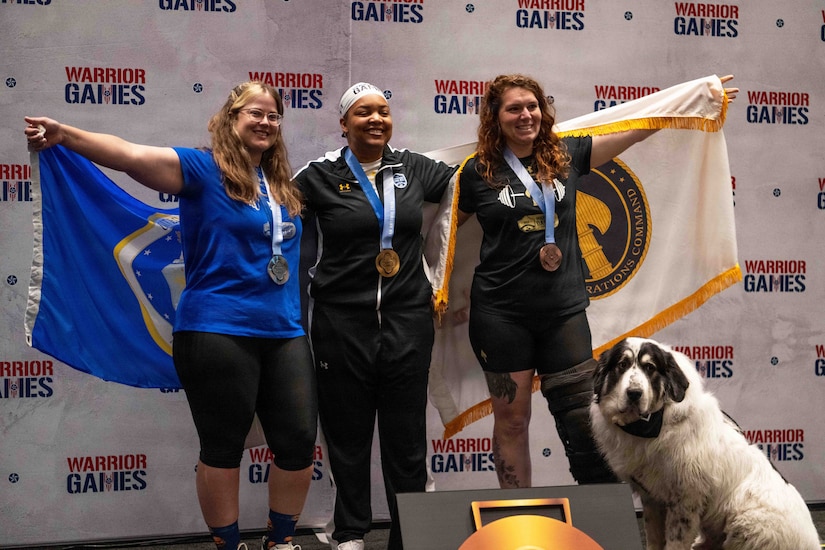
Three women wearing athletic attire and award medals hold service flags around their shoulders while smiling for a photo; a service dog is also posing with them.
Scott credits adaptive sports and the Army Recovery Care Program with helping her regain confidence and discover new ways to challenge herself as she navigates recovery. 

"They showed me that recovery is not just about healing, and it's certainly not linear," she said. "It's about finding new ways to grow, push your limits and continue doing the things you love." 

Smith also made his Warrior Games debut June 13, earning a bronze medal after overcoming doubts and trusting the preparation that brought him to the platform. 

"I was excited, but I was also nervous," he said. "After losing a significant amount of weight over the past few months, I was the lightest competitor in my division. There were definitely moments of doubt, but I trusted my training, my coaches and the support system that helped me get there." 

Looking beyond the medal itself, Smith said the Warrior Games reinforced lessons that will remain with him long after the competition ends. 
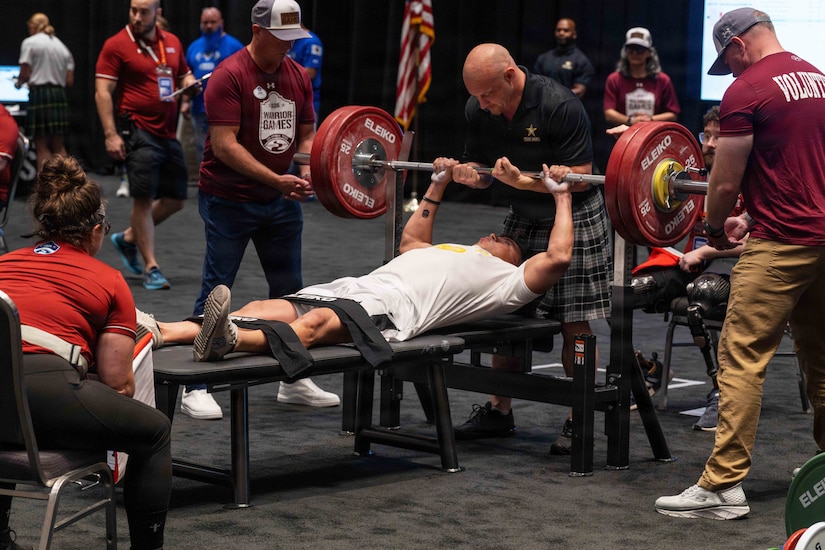
A man in athletic attire lies on a weight bench and grips a barbell, while three people in similar attire assist and a woman sits in a chair to observe; in the background, people in similar attire do similar activities.

"This journey taught me that recovery is a process, not an event," he said. "More than anything, I learned the importance of community. None of us accomplish things alone. While I'm proud of the bronze medal, I'm even more grateful for the lessons this experience has reinforced: trust the process, lean on your support system and never count yourself out." 

The Army Recovery Care Program uses adaptive sports and reconditioning activities to assist wounded, ill and injured soldiers build confidence, resilience and community throughout their recovery journeys. On the opening day of competition, Team Army's powerlifting performance reflected not only athletic achievement but also the determination to keep moving forward despite injury, illness and adversity. 

As the 2026 Warrior Games continue throughout the week, Team Army competitors will carry that same united spirit into every event, proving that while medals are earned on the field of play, recovery itself is the greatest victory.

Drone Dominance Program Receives First Order, Gauntlet II Gets Underway

Drone Dominance Program Gauntlet Phase II qualifiers conclude this week at Camp Grayling, Michigan. This high-stakes test pits 49 companies and 79 unique unmanned aerial systems against rigorous mission scenarios, including long-range strikes and close-quarters tactical assaults. Each company brought 20 drones to take on the challenge. 

The qualifier event is a critical test for a battlefield that is evolving at an unprecedented pace and showcased how the War Department is answering the call with radical innovation. 

The Drone Dominance Program is a $1.1 billion, two-year effort to execute President Donald J. Trump's Executive Order 14307, which articulated the urgent need for the department to procure, integrate and train with low-cost, high-performing drones manufactured in the U.S.  

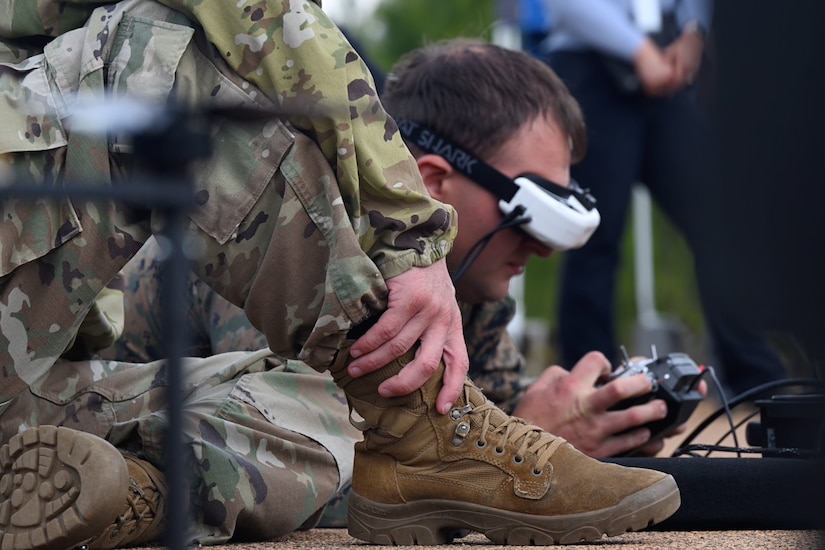
A man lies on his stomach while wearing a headset and holding a remote control. People in similar attire sit next to him.

The goal of the program is to rapidly arm combat units with a massive, scalable fleet of low-cost, expendable one-way attack drones. The effort is also expected to increase the flow of private capital into the U.S. industrial base, while simultaneously driving down costs. 

Sponsored by the Office of the Secretary of War and jointly administered by the Defense Innovation Unit and Test Resource Management Center, the Drone Dominance Program is at the forefront of the department's pivot to a challenge-based acquisition approach. It also means shifting from slow, multiyear cycles to agile, six-month sprints.   

The program is putting technology to the test in a series of four gauntlet phases — demanding, realistic challenges designed to identify the most resilient and effective drone platforms.  

At the conclusion of each phase, selected drone technologies are fast-tracked for large-scale production, ensuring warfighters are equipped with a decisive advantage on the modern battlefield. 

"This is an urgent matter," said Owen West, DIU director. "Our adversaries are scaling their UAS technology, tactics and industries at an alarming rate. Following Secretary of War [Pete] Hegseth's orders, we are acting decisively to develop new defensive and offensive capabilities to match these threats." 

West noted that the department is already seeing results.  

The first batch of drones was accepted, with nearly 2,000 additional units shipped to the services and thousands more ramping up for fulfillment.  

Following a highly successful Phase I, which saw the purchase of 30,000 drones, the department is gearing up for the next major milestone. 

"As directed by President Trump and Secretary Hegseth, we have begun to equip our warfighters with the best drones in the world," said Travis Metz, DIU deputy director. "We have ordered 30,000, which are being delivered now and will be ordering 60,000 more in September, all based on competitive events and moving supply chains to the United States as we progress." 

By fostering fierce commercial competition via a public leaderboard, the department aims to scale production from 30,000 to 150,000 units per phase, ultimately dropping the target unit cost from $5,000 to approximately $3,000. By 2027, the Drone Dominance Program intends to field more than 200,000 lethal, artificial intelligence-enabled drones, ensuring the U.S. military executes a technological leapfrog to secure an enduring edge over our adversaries. 

Gauntlet II will kick off later this summer, during which entrants must bring 120 drones as the competition expands into night operations and more complex urban and confined environments.

Crush the Mountain, Ace the Test

A woman and a man in athletic attire run down a path in a forest.

The sound of running shoes crunching against gravel echoed through the forest as airmen made their way up the hillside.

Some focused on maintaining their pace. Others kept their eyes on the runner ahead. The climb was steep, but nobody stopped.

Below them, the city slowly came into view.

Airmen assigned to the 426th Air Base Squadron, 501st Combat Support Wing, in Stavanger, Norway, regularly take to the trails surrounding the nearby NATO Joint Warfare Centre as part of a mountain run that has become a staple of squadron life.

The run has been a tradition for several years, but leaders recently began timing participants as the Air Force transitioned to its new 2-mile fitness assessment. Overlooking the city, the squadron found a natural training ground just outside its workplace.

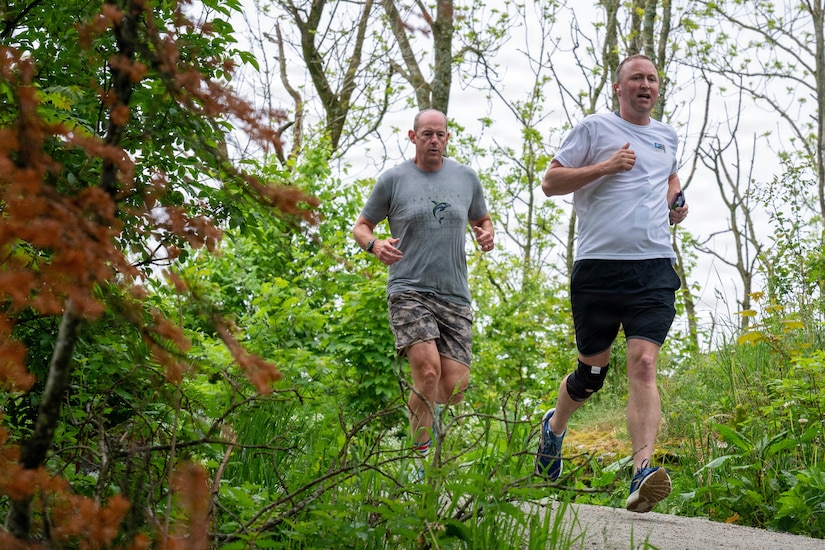
Two men in athletic attire run down a path in a forest.

"We believed that consistent physical fitness drives performance, morale and unit cohesion," said Air Force Lt. Col. Daniel A. Hayes, outgoing commander of the squadron. "Particularly valuable during Norway's long, dark winters."

The route has also sparked friendly competition throughout the squadron.

"The competitiveness brings out the best in all of us because we want to win," said Air Force Tech. Sgt. Bryan K. Genobles, superintendent of the Financial Analysis Flight, 501st Combat Support Wing.

According to Hayes, airmen have consistently improved their 2-mile runs since the squadron began timing them.

"Our mountain runs are intentionally harder than what the standard track will give you," he said. "We developed the motto: 'If you can crush the mountain, you'll ace the test.'"

The run also gives new squadron airmen a goal to reach for as they attempt to run down people in front of them, effectively making themselves and the unit better, Genobles said.

A man in athletic attire runs down a path overlooking a town on the water with mountains in the background.

According to Hayes, the shared challenge has helped new members integrate into the squadron more quickly, while strengthening relationships throughout the unit.

The tradition continues after the run ends with airmen gathering for lunch, giving them an opportunity to relax, compare times and spend a moment together outside the workplace.

"The Norwegians have a saying: 'There's no bad weather, only bad clothes,'" Hayes said. "By embracing the environment's natural challenges, we prepare airmen not only to thrive on the Air Force fitness assessment but, more importantly, to build sustainable health and resilience."

For Hayes, who recently completed his final mountain run before relinquishing command, the people he served alongside stand out above all else.

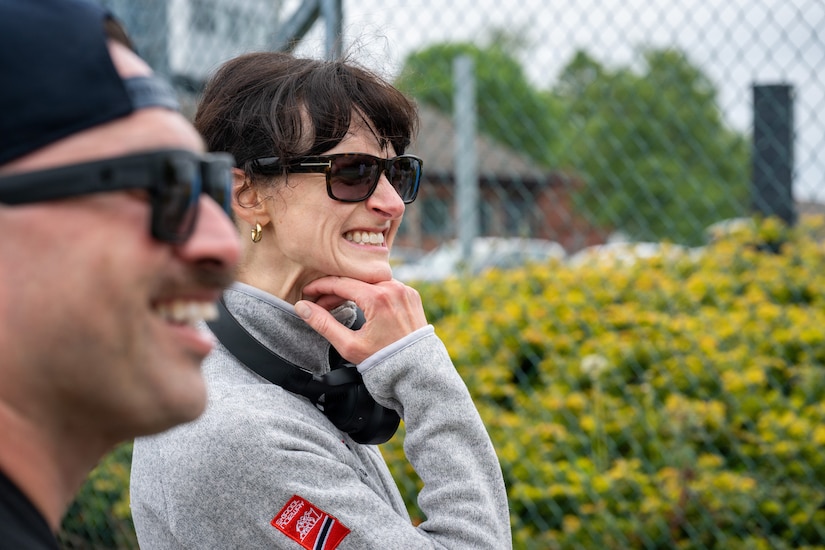
A close-up of a man and a woman in athletic attire and sunglasses smiling, while standing outside.

"I will most remember the great camaraderie we had together, both in the office and on the mountain," he said. "That is a special team of people that I feel lucky to have been part of."

As the final runners crossed the finish line during the morning June run and conversations shifted from race times to lunch plans, the trail grew quiet once again. The mountain remained, waiting for the next group of airmen ready to take on the climb.

U.S. 2nd Fleet, International Partners Commence Fleet Exercise 250

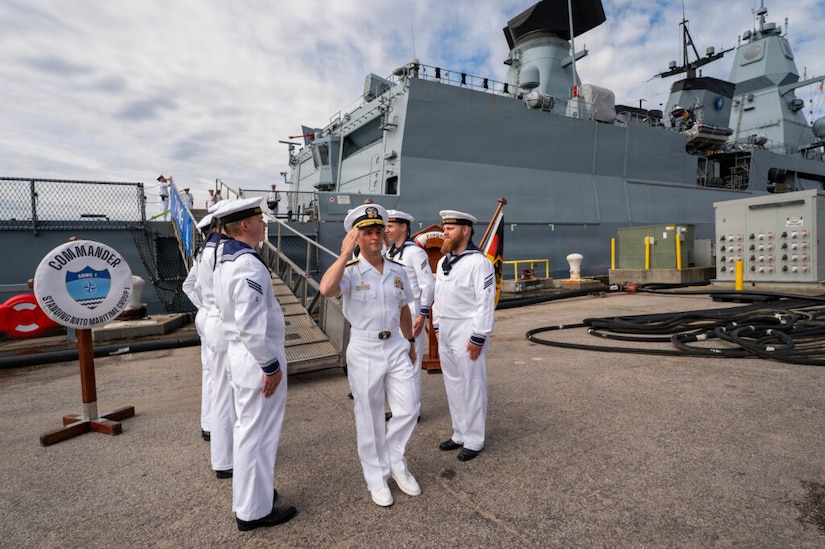
Ships from 17 allied and partner nations arrived at Naval Station Norfolk, Virginia, to prepare for Fleet Exercise 250, June 14-15.

Five men in military dress uniforms stand at attention as another man in similar attire standing between them renders a salute; a military ship is in the background.

Beginning today, the multinational maritime exercise will commence for the first time in the Norfolk area and in the Atlantic Ocean. A special reception aboard the amphibious assault ship USS Iwo Jima will serve as an opening event. The large-scale exercise is designed to enhance interoperability and test the integrated forces in a dynamic, multidomain training environment.

The exercise will bring together 31 warships, multinational aircraft and their crews to conduct a series of structured training events at sea. The training will focus on a full spectrum of naval warfare, including antiair, antisubmarine and amphibious operations, culminating in a scenario-driven event against a dynamic adversary.

The primary goal is to build cohesiveness, validate tactical procedures and strengthen the collective capabilities of the participating forces in a simulated combat environment.

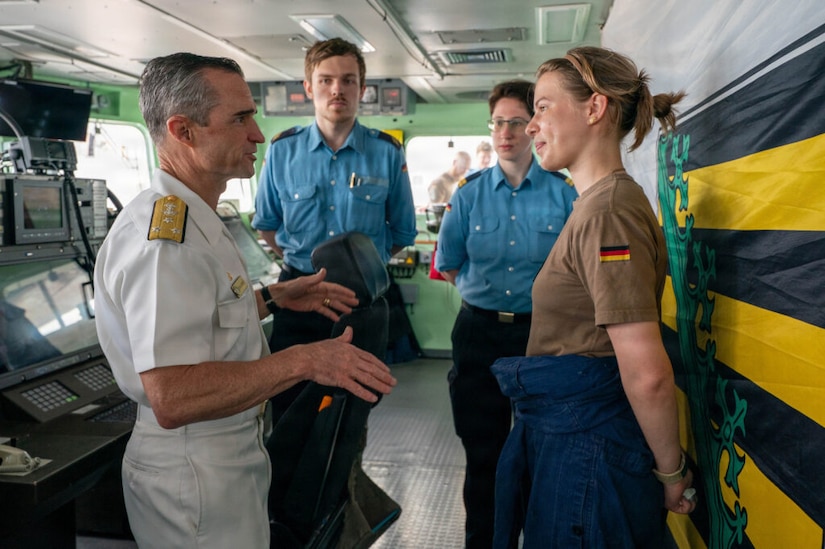
A man wearing a white military dress uniform talks to three other people in foreign military uniforms inside the bridge of a military ship.

"Fleet Exercise [250] is a tremendous opportunity to bring together a powerful, multinational force," said Navy Vice Adm. Doug Perry, commander of the U.S. 2nd Fleet. "Training and operating as an integrated team sharpens our competitive edge and demonstrates our shared commitment to maritime security and stability in the Atlantic."

The exercise is divided into two main phases: harbor phase, today through June 21, and the at-sea phase, June 22-29.

During harbor phase, participating forces will assemble at Naval Station Norfolk for final planning, briefings and integration. The at-sea execution will see ships get underway to conduct a series of training events, a fleet formation photo exercise and a final battle problem.

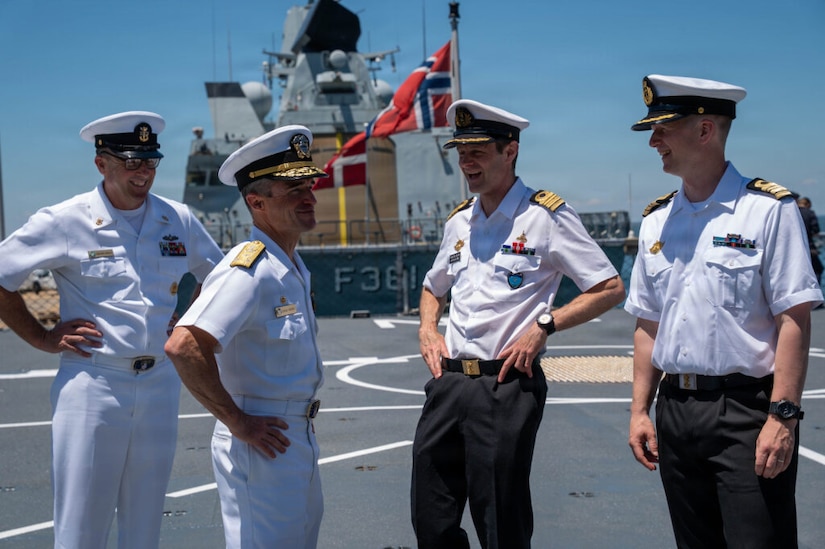
Four men in military dress uniforms stand and chat on the deck of a military ship; the Norwegian flag is flying in the background.

The exercise runs concurrently with several public events in Norfolk, including the 50th Annual Norfolk Harbor Fest, Virginia SAIL 250 and Norfolk Fleet Week. These events will feature public tours of visiting warships and international tall ships, alongside a grand Parade of Sail, offering the public a unique opportunity to engage with sailors and mariners from around the world.

Participating nations in the exercise include Belgium, Brazil, Canada, Cameroon, Côte d'Ivoire, Cyprus, Denmark, France, Germany, Mexico, Morocco, Netherlands, Norway, Peru, Senegal, Spain, Turkey, the United Kingdom and the United States.

Following the exercise, many participating units — joined by the historic tall ships — will sail to New York City to take part in the International Naval Review 250 from July 3-8.

"While [Fleet Exercise] 250 provides critical at-sea training that enhances our combined capabilities, it also sets the stage for a historic celebration at the International Naval Review in New York City," Perry said. "The interoperability we forge here in [Virginia] ensures that when this magnificent multinational fleet arrives to commemorate our nation's 250th anniversary, it will stand as a powerful symbol of enduring global partnerships and our shared commitment to the seas."

USV Swarm Demonstrates Maritime Security Capabilities During Exercise Salaknib 26

Soldiers assigned to the 25th Infantry Division partnered with Philippine Army forces and industry representatives during Exercise Salaknib 2026 to demonstrate how autonomous maritime systems can enhance security and protect critical transportation operations in contested environments.

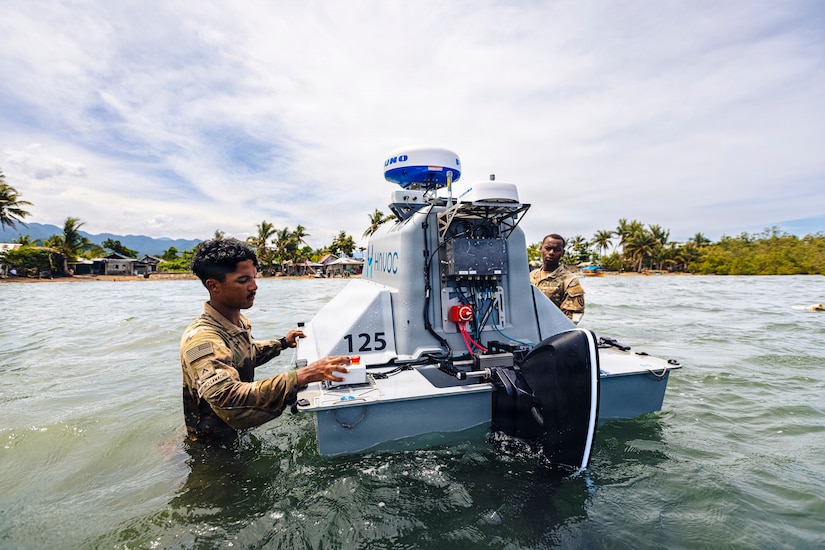
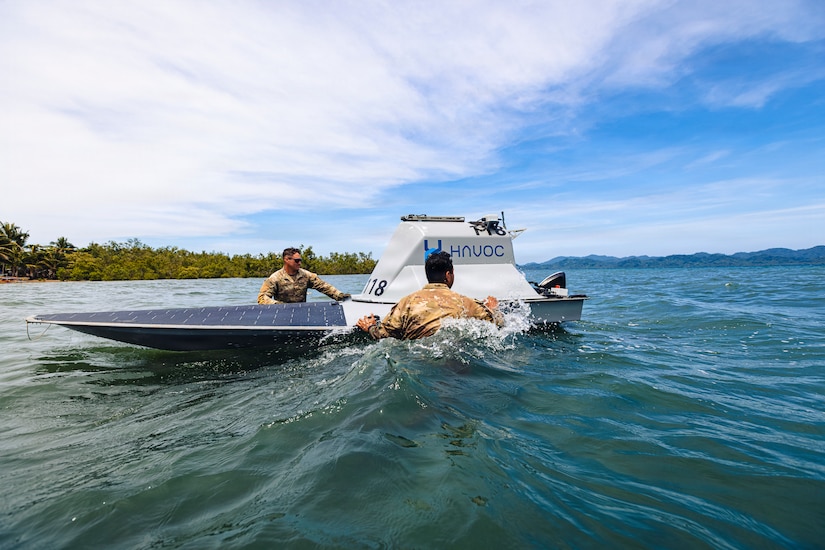
Two men wearing camouflage military uniforms stand in waist-deep water as they inspect an unmanned surface vessel; there are houses and trees in the background.

The maritime screen operation, conducted in the waters of the Casiguran Sound in the northeastern part of Luzon, Philippines, showcased the ability of U.S. and Philippine forces to integrate emerging technology into combined operations while strengthening interoperability between the longtime allies.

At the center of the mission were unmanned surface vessels, or USVs, operated by soldiers assigned to the 125th Intelligence and Electronic Warfare Battalion, 25th Infantry Division. They deployed a swarm of autonomous boats to establish a security screen across the waterway as a U.S. Army logistics support vessel approached the port.

The mission supported the more than 260-mile movement of Philippine Army vehicles and personnel, including armored personnel carriers, using the logistics support vessel. As the vessel transited the sound, the autonomous boats spread across a wide perimeter, continuously monitoring the maritime environment and relaying information to onshore personnel.

Two men wearing camouflage military uniforms stand in waist-deep water as they inspect an unmanned surface vessel; there are trees and mountains in the background.

The operation demonstrated how autonomous systems can extend situational awareness beyond what traditional means can provide, enabling commanders to gain a clearer understanding of activity across the area of operations.

"I think it's great to integrate this emerging technology in these exercises; it builds trust in the U.S. and partner soldiers," said Ben Outlaw, an industry partner representative supporting the operation. "It also allows us to showcase and validate our systems interoperability between next-gen command and control nodes across all partner nations."

These boats provide situational awareness to commanders with their ability to find, fix, target, kill and confirm. With the information the USV provides, the commander's decision-making process is compressed from hours to seconds.

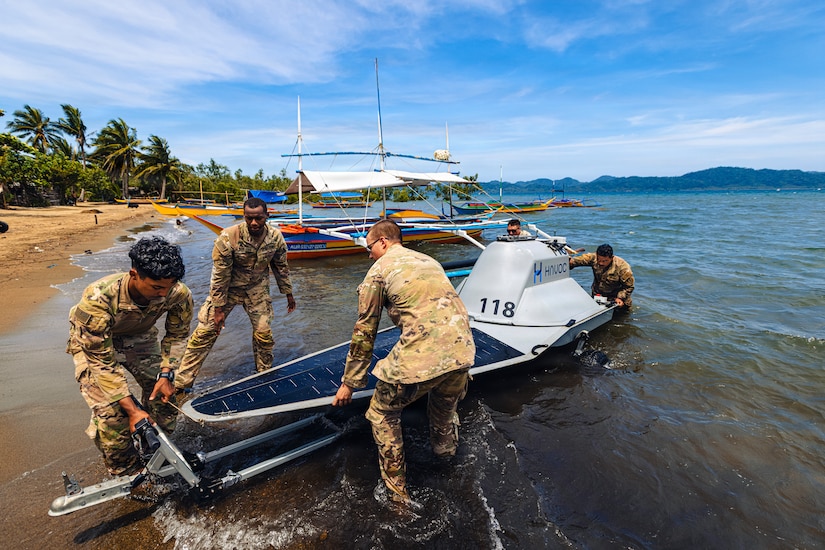
Five men wearing camouflage military uniforms push an unmanned surface vessel out of the water and onto a trailer while standing on a beach; there are several small boats in the background.

The maritime screen mission highlighted the growing role autonomous technologies can play in future military operations. Rather than relying solely on manned platforms, commanders can use multiple autonomous vessels operating simultaneously to maintain persistent awareness across large maritime areas.

During the operation, the USVs autonomously navigated while using onboard sensors to detect and report potential threats or anomalies within the operating area. Information collected by the vessels was transmitted in near real time, a capability that will allow commanders to maintain continuous awareness of the maritime domain and make informed decisions.

For soldiers operating the systems, the exercise provided valuable experience integrating advanced technology into a multinational environment.

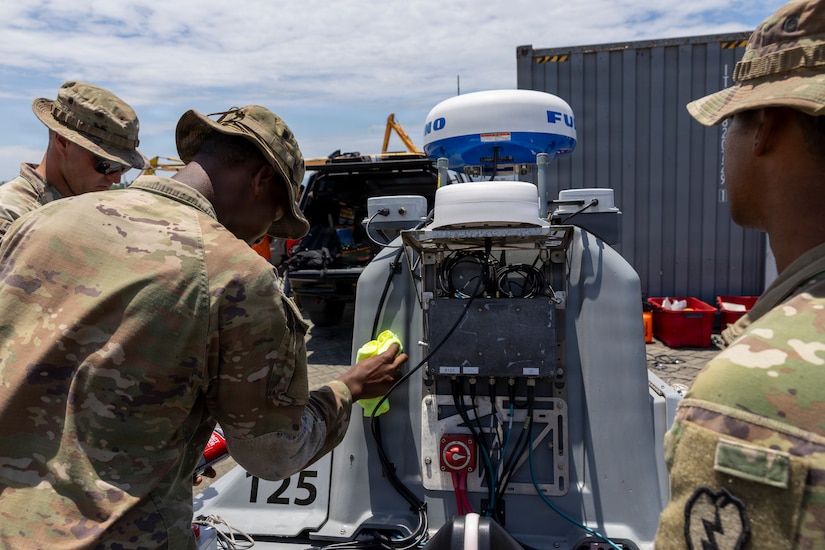
A man wearing a camouflage military uniform checks the engine on an unmanned surface vessel that is on a trailer as two other men in similar attire observe.

"I've really enjoyed working with the USVs during Salaknib 2026," said Army Pvt. Caleb Hannah, exercise participant assigned to the 125th Intelligence and Electronic Warfare Battalion.

The team deployed the autonomous intelligence, surveillance and reconnaissance boats to provide security for landing craft. The systems escorted the logistics support vessel to port from about 6 miles out, allowing Philippine vehicles to roll onto the dock.

Exercise Salaknib 2026 provides U.S. and Philippine forces with opportunities to train in partnership across multiple domains, enhancing readiness and strengthening the alliance between the two nations. The maritime screen mission served as an example of how emerging technologies can be integrated into combined operations to improve security, increase operational flexibility and expand commanders' options during future contingencies.