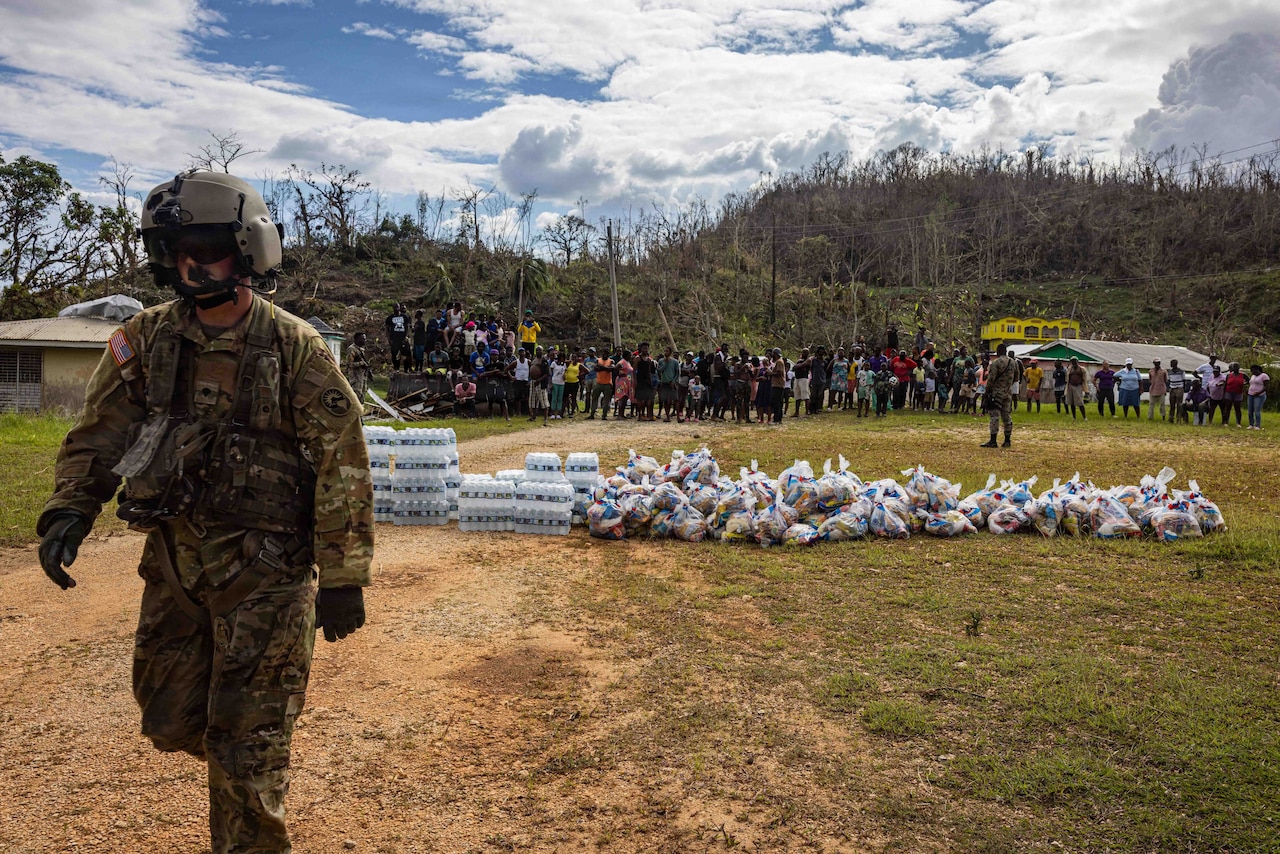
Joint Task Force Bravo, in concert with the 22nd Marine Expeditionary
Unit, provided critical humanitarian assistance to Jamaica in the
aftermath of Hurricane Melissa from Oct. 31 to Nov. 13.
As part of the U.S. military response, nine aircraft were allocated to
support the effort, including three CH-47 Chinooks and three UH-60 Black
Hawks from the 1st Battalion, 228th Aviation Regiment, JTF Bravo, and
three CH-53E Super Stallions from the 22nd MEU, operating from the USS
San Antonio.
In total, the team flew 249 hours across 133 flights, transporting more than 779,000 pounds of lifesaving assistance, including approximately 600,000 pounds of food and water, 179,000 pounds of equipment, and 428 critical personnel movements.
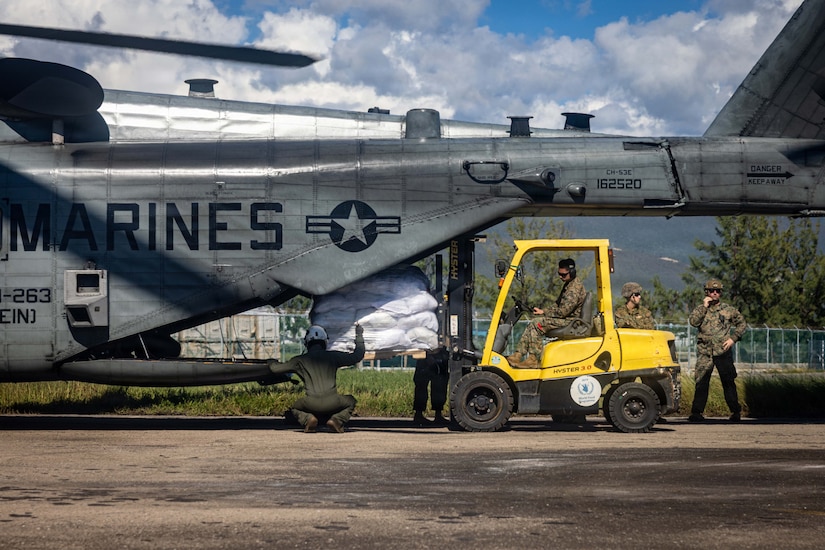
"JTF Bravo is designed and trained to rapidly respond when our nation or partners need us," said Army Col. Robert Snyder, joint task force commander. "What really stands out in a mission like this is the expertise and professionalism of our incredible service members — from the pilots and aircrew flying long hours to our troops on the ground managing logistics, airfield and flight operations, aircraft maintenance, and communications to ensure we accomplish the mission. I am very proud of our soldiers, airmen, Marines and sailors."
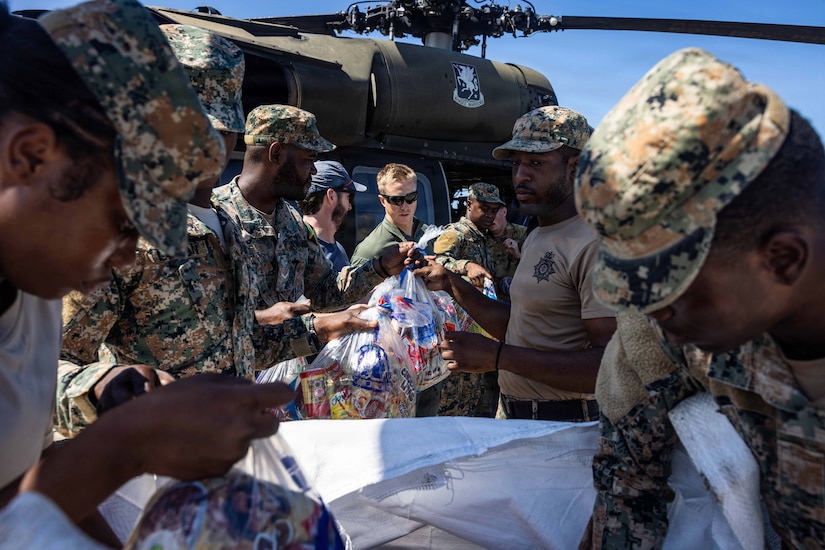
JTF Bravo and 22nd MEU, in partnership with the Jamaica Defense Force and the U.S. State Department's Disaster Assistance Response Team, were able to facilitate critical airlift of essential relief supplies to dozens of hurricane-affected communities across Jamaica that were otherwise inaccessible.
"Watching our teams work side by side with the State Department, Jamaica Defense Force and dozens of other organizations, it is clear to me that everyone shared the same goal: save lives and help the people of Jamaica," Snyder said. "Throughout the operation, I have been extremely impressed with the professionalism and dedication of the Jamaica Defense Force, and I look forward to working with them again. I know we made a difference for the people of Jamaica, and we strengthened our partnership with the Jamaica Defense Force."
To maximize the amount of time aircraft were able to operate on station, the task force established a forward arming and refueling point, accessible to JTF Bravo and 22nd MEU aircraft. This capability delivered nearly 25,000 gallons of fuel, which allowed aircraft to immediately refuel upon returning from missions, enabling a quicker return to follow-on missions.
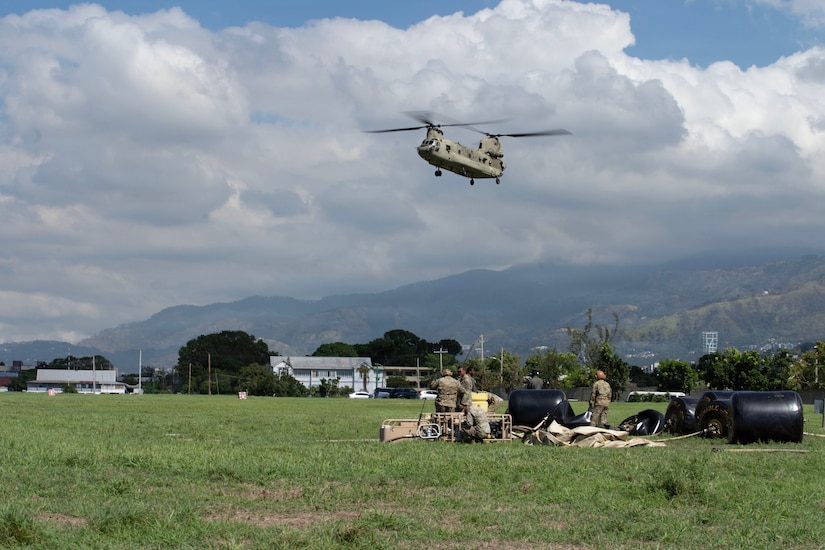
Furthermore, the 22nd MEU facilitated safe operations of all aircraft through the employment of a Marine air traffic control mobile team, who oversaw arming and refueling operations, conducted surveys of helicopter landing zones, and established procedures for the safe loading of cargo onto aircraft.
"As a combat logistics battalion deployed with a Marine expeditionary unit that serves as a crisis response force, providing foreign humanitarian assistance is what we do, said Marine Corps Lt. Col. Zach Hornbaker, commanding officer of Combat Logistics Battalion 26, 22nd MEU. "I am incredibly proud of what we have been able to accomplish working alongside Joint Task Force Bravo and our partners in the Jamaica Defense Force."
Hurricane Melissa made landfall Oct. 28 in Jamaica as a Category 5 storm with winds sustained at 185 mph. Within 72 hours, U.S. service members from the task force were on location to reinforce the State Department-led response, assessing the needs of the affected areas and coordinating logistic and airlift support to get emergency food, water, shelter materials and other relief supplies where they were needed most.
"The partnership between the Jamaica Defense Force and JTF Bravo, along with the 22nd MEU, is forged in a shared commitment to regional security," said Jamaica Defense Force Lt. Col. Morton Stewart, bridge executive officer of the Maritime Air and Cyber Command. "This was proven by the immediate deployment to Jamaica following Hurricane Melissa, swiftly integrating into the JDF response mechanism to address Jamaica's needs. This united effort showcases a resilience that not only thrives on interoperability, but also the incredible professionalism of the United States military, strengthening the very foundation of our bilateral cooperation to overcome any adversity."
For more than 50 years, U.S. Southern Command has worked to build regional and interagency partnerships to ensure the continued stability of the Western Hemisphere.
During much of that time, JTF Bravo has supported U.S. military and humanitarian operations, providing critical airlift, medical, logistics, and security assistance to partner nations. JTF Bravo functions as Southcom's rapid response element, enhancing regional security, promoting stability, and strengthening partnerships through disaster response, joint exercises and capacity-building.
The 22nd MEU is a forward-deployed, rapid response force with aviation, ground and logistics combat elements. For this mission, its combat logistics battalion was tasked to deliver foreign humanitarian assistance, alleviate suffering and help Jamaican communities recover from the devastating impact of the storm. The 22nd MEU came ashore to supplement JTF Bravo with additional logistical and aviation support, ensuring rapid, flexible assistance.




 Posts
Posts

