Wednesday, April 29, 2026

Multinational Forces Validate Defensive Readiness During Exercise Balikatan 2026

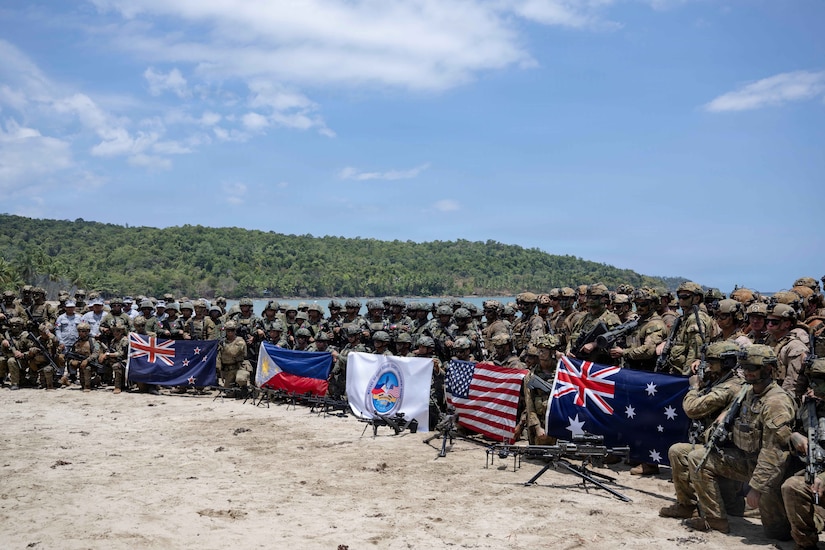
Over 500 service members from the United States, Philippines, Australia and New Zealand successfully coordinated fires from land and air to defeat a simulated adversary attack as part of Exercise Balikatan 2026, April 27. 

During the counter-landing live-fire training, forces demonstrated their ability to sense the actions of a dynamic notional enemy, make collective decisions in real time and coordinate an array of fire from missile systems, fighter aircraft, mortars and machine guns. They combined advanced intelligence, surveillance and reconnaissance capabilities with lethal firepower through a multidomain, combined command and control node to think, decide and act as one team. 

"We can talk about all the capabilities we have, but the integration of those capabilities is the cornerstone of how this is done right," said U.S. Marine Corps Col. G. J. Flynn III, commanding officer of Marine Rotational Force – Darwin. "The friendships that we made being in the dirt in defensive positions alongside each other, that is what really matters about this event."   

This training marked the first time these four nations conducted a counter-landing live-fire event during Exercise Balikatan. Participants included U.S. Marines assigned to the Marine Rotational Force – Darwin, U.S. soldiers assigned to the 7th Infantry Division/Multi-Domain Command-Pacific, Philippine marines assigned to the 3rd Marine Brigade and elements of the Philippine Air Force and Philippine Army. They were joined by soldiers assigned to the 5th/7th Battalion, Royal Australian Regiment, and for the first time, soldiers assigned to the 2nd/1st Battalion, Royal New Zealand Infantry Regiment. 

"Beach defense is not the responsibility of a single unit or domain; it requires seamless integration across services and with our allies," said Philippine Marine Corps Col. Dennis Hernandez, Armed Forces of the Philippines spokesperson for Balikatan 2026. "Exercises like this ensure that we are prepared to protect our coastal communities and territorial integrity with precision, speed and overwhelming coordination." 

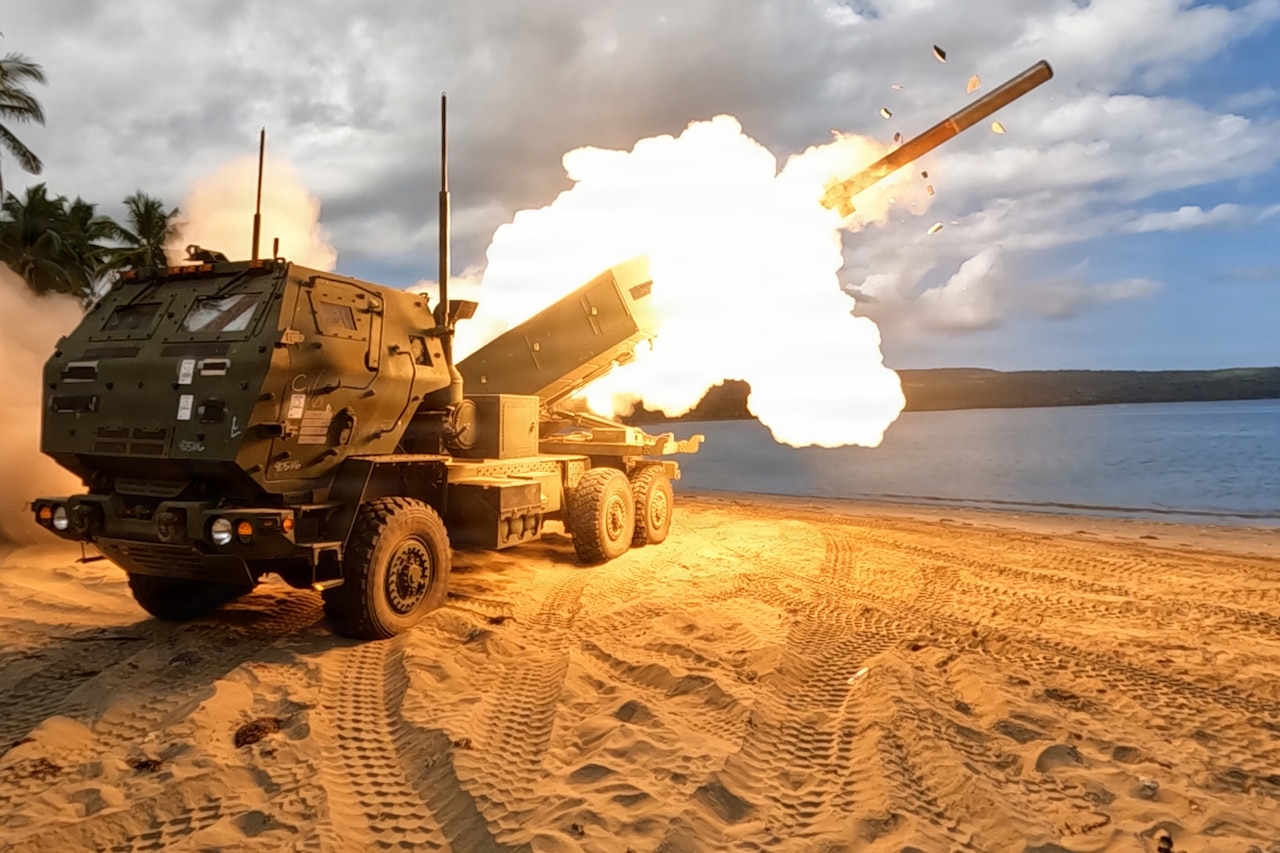
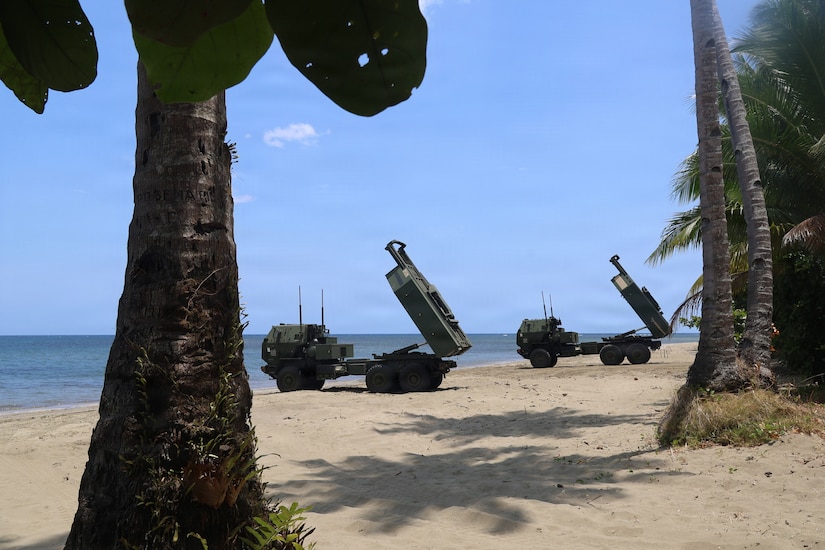
The training began with intelligence, surveillance and reconnaissance assets detecting a mock enemy amphibious vessel and providing intelligence to the C2 node for decision-making. As the vessel approached the coast, High Mobility Artillery Rocket Systems engaged targets from their position at the beachhead. 
As enemy assault amphibious vehicles and fast boats raced toward the beach in the training scenario, targets were met with fire from mortars, Stingers and anti-armor systems like the Javelin and tube-launched, optically tracked, wire-guided missiles.    

The event culminated with a final defensive line of direct-fire weapons from all participating nations engaging the last wave of targets, neutralizing the threat and successfully defending the beachhead. 

"We participated in Exercise Balikatan to strengthen interoperability with partner nations and our ally, Australia," said New Zealand Army Capt. Will Hutchinson, acting second-in-command of Combat Team Jackal. "The soldiers got a lot from working with a combined force and it's something we're looking to continue in the future." 
The counter-landing live-fire exercise and other military training events conducted during Balikatan 2026 built tactical proficiency, compatible capabilities and military-to-military coordination, exemplifying the "shoulder-to-shoulder" spirit of the exercise. 

"It's fitting that Balikatan in Tagalog means shoulder-to-shoulder. The counter-landing live fire showcases sophisticated capabilities and down at a low level, the soldier-to-soldier partnership with the Philippines Armed Forces," said Australian Army Lt. Col. Benjamin Woolmer, commanding officer of the 5th/7th Battalion, RAR. "Being able to share lessons with the Armed Forces of the Philippines and work shoulder-to-shoulder is a great end in itself."

National Guard Military Police Battalion Deploys in Support of Operation Epic Fury

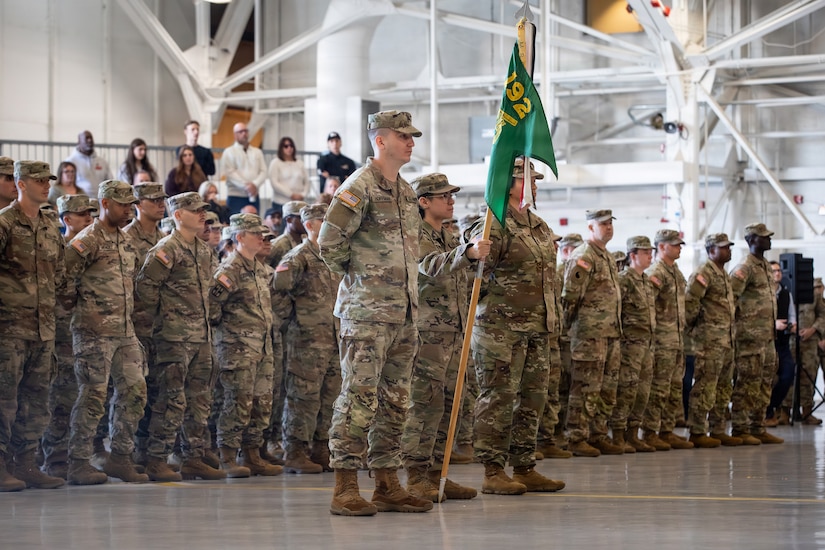
Men and women dressed in camouflage military uniforms stand in formation. A man at the front of the formation holds a wooden pole with a green flag attached to the top of it while two people in similar attire stand next to him.

Approximately 150 soldiers assigned to Headquarters and Headquarters Company, 192nd Military Police Battalion, Connecticut Army National Guard, participated in a deployment ceremony at Bradley Air National Guard Base, East Granby, Connecticut, yesterday.  

The 192nd was selected by the Pentagon to deploy on short notice to the Middle East to support Operation Epic Fury, U.S. Central Command's military campaign to destroy Iran's offensive missile capabilities, navy and nuclear infrastructure.  

"When the order came down on short notice, these soldiers didn't hesitate, didn't ask for more time and didn't look for a reason to say, 'no'," said Army Maj. Gen. Francis J. Evon Jr., Connecticut National Guard adjutant general. "They said, 'yes', packed their gear and got ready to move."  
 
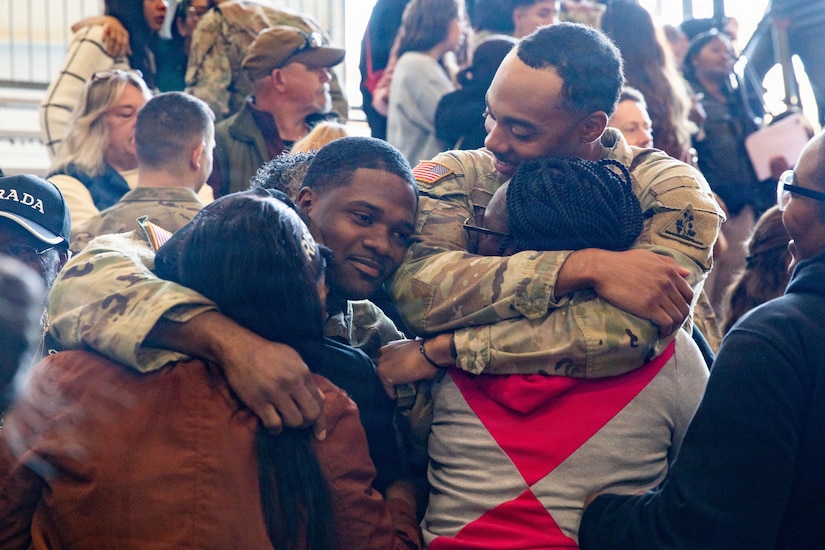
The battalion was issued orders to report to active duty for mobilization training March 20, and almost one month later, they're hugging their family goodbye as they embark overseas.  

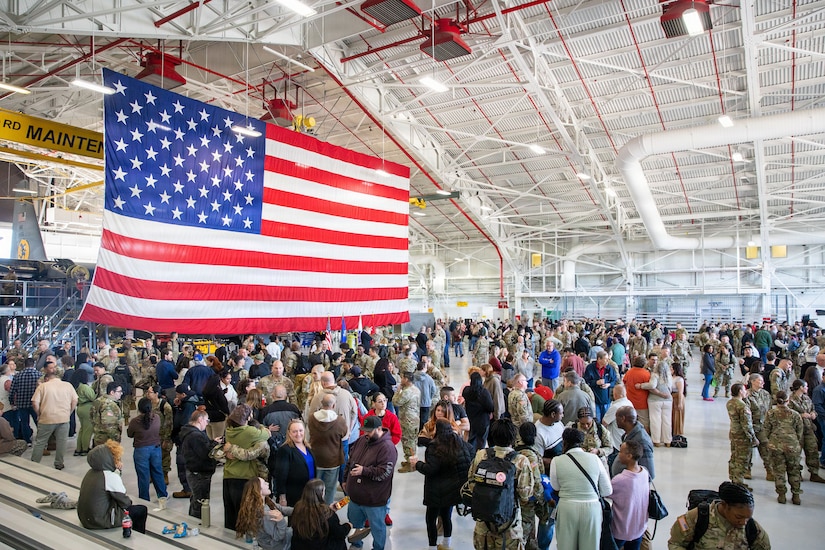
A crowd of people congregate in an aircraft hangar; some of them are wearing camouflaged military uniforms. A large American flag is hanging from the roof.
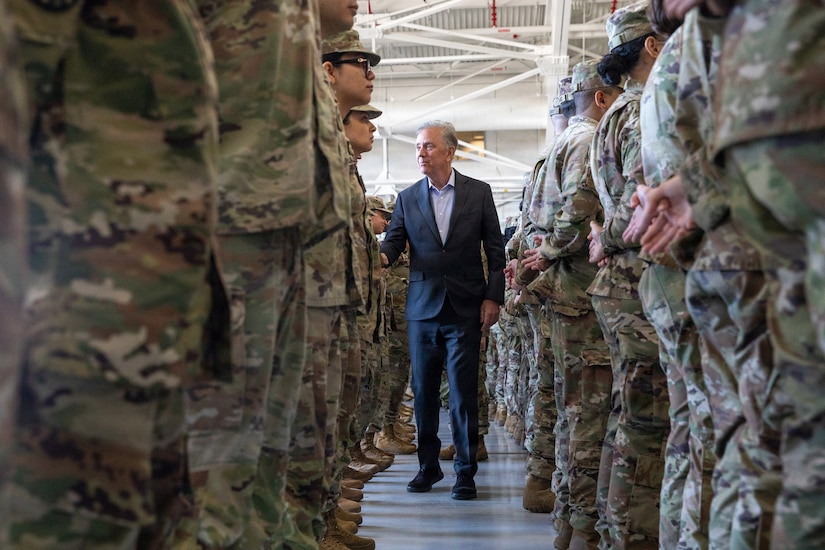
A man in a blue suit walks between a formation of men and women dressed in camouflage military uniforms.

"Most people will never fully appreciate what that movement actually looks like, what it costs a person to step away from a job, a family, a routine and the life they've built to answer that call," Evon said. "You should know that this unit wasn't selected by accident. The Army looked across the force, identified what the mission required and chose [this unit], 192nd [Military Police Battalion], because this unit had what it takes, and they were ready."  
 
The 192nd is scheduled to provide a multitude of support to U.S. military forces engaged in Operation Epic Fury, including mission command, staff planning, security, personnel services and logistical support.  

Two men in camouflage military uniform hug two women as others look on.

"We know that this will not be easy, but you are prepared," said Connecticut Lt. Gov. Susan Bysiewicz. "You have spent long hours training and have set the highest standard for character and integrity ... because of your sacrifice, our country is a beacon for freedom and equality worldwide."  
 
The battalion most recently deployed in 2020 to Guantanamo Bay, Cuba, where they provided battalion support to the detention facility. With this deployment to the Middle East, they join the approximately 500 other Connecticut National Guardsmen currently deployed overseas in support of various contingency operations.  
 
"Go forth and do great things as we all know that you will," Evon said. "Stay focused on the mission, keep each other safe and look out for one another. Connecticut looks forward to your safe return."

Training in Close Air Support Keeps Idaho Airmen 'Always Ready'

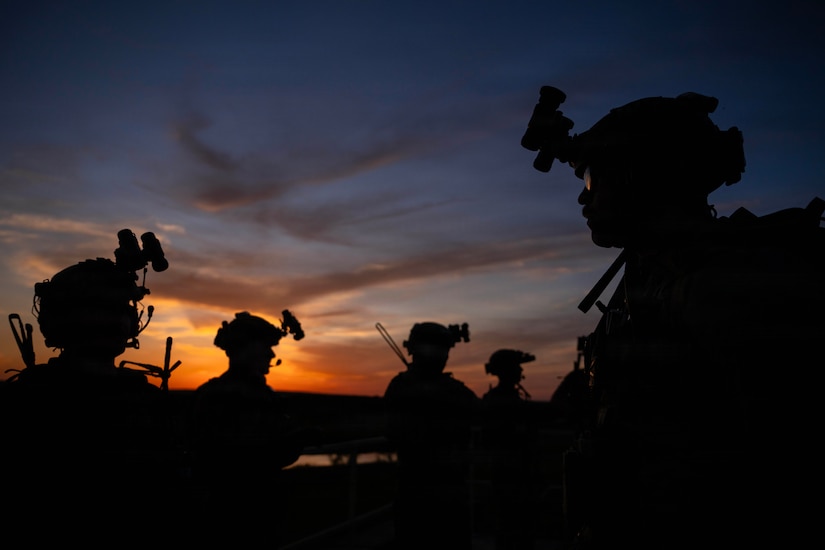
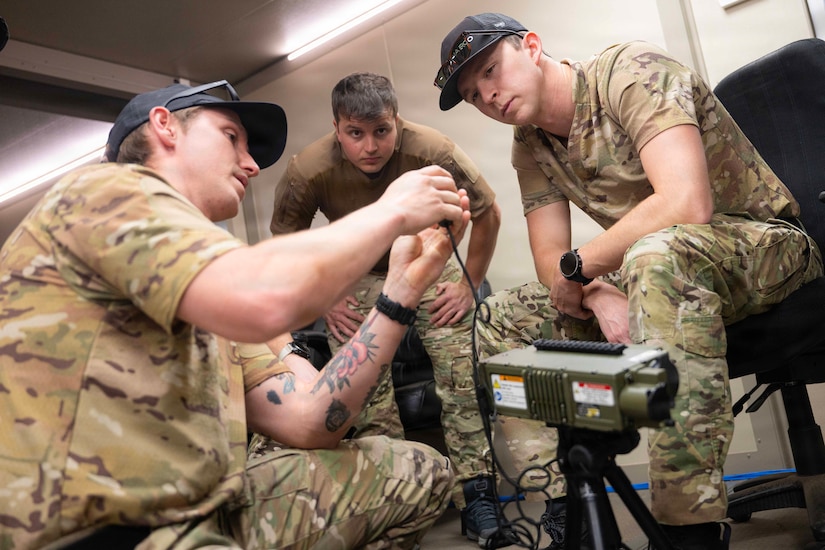
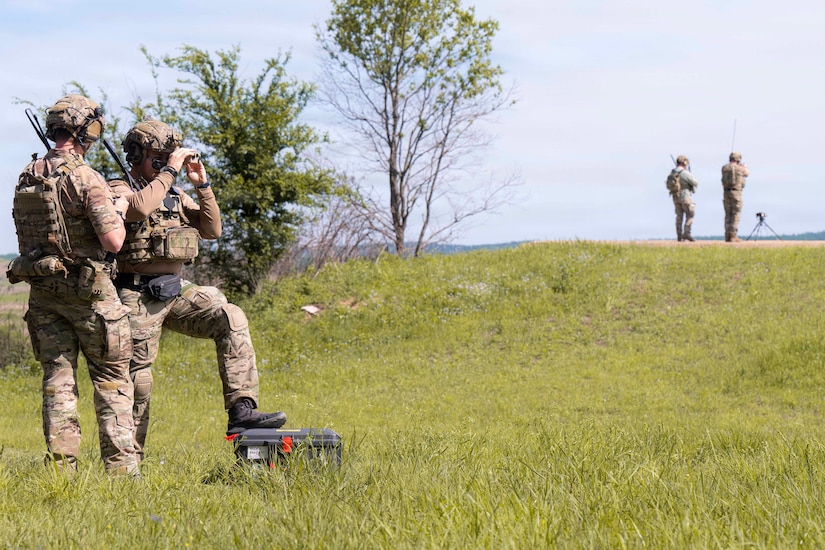
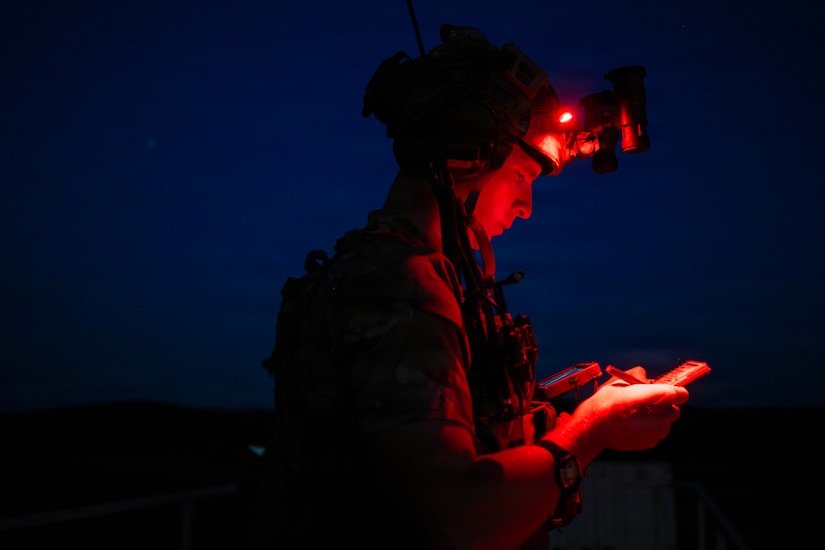
Airmen assigned to the 124th Air Support Operations Squadron, Idaho Air National Guard, conducted close air support training at the 188th Wing's Razorback Range at Fort Chaffee Joint Maneuver Training Center, Arkansas, April 20 and 21.

A silhouette of people wearing combat gear is shown against a sunset.

Razorback Range provides air support operations squadron personnel nationwide the ability to train for close air support in a unique, dynamic environment that is supported by the total force, including contract air. 

Combat lethality requires effective communication between ground forces and aircrews. Training at an unfamiliar place like the Razorback Range helps airmen rapidly adjust communication tactics, techniques and procedures. 

"We're the liaison between the ground force commander and the aircrew," said Air Force Master Sgt. Tyler Herlihy, a tactical air control party airman assigned to the 124th ASOS and the joint terminal air controller instructor for the Razorback Range exercise. "The nature of our job is very reactionary. So, we train to tackle complex, dynamic situations in simulated combat environments."

Three men wearing camouflage military uniforms familiarize themselves with a hand-held laser device.

Maintaining effective communication and adapting quickly are key, as executing close air support objectives often comes down to understanding which tactical assets are at play.

"Situational awareness is key for [joint terminal air controllers]," said Air Force Capt. Roger Knizat, a flight commander assigned to the 124th ASOS. "We must be aware of not only our targets, but of all friendly air and ground assets on the battlefield. These exercises allow us to set up communications networks in different environments to induce the chaos that can accompany talking to multiple air and ground assets at once."

Intelligence and mission planning often establish the who, what and where of a tactical threat. Tactical air control party airmen must then respond quickly and with precision to threats as they arise.

Two people wearing camouflage military uniforms and combat gear stand at the bottom of a small, grass-covered hill, with one looking through binoculars. There are two people in similar attire standing at the top of the hill.

"It's important we do our due diligence and focus on mission planning and objectives, but the game plan often goes out the window on first contact," Herlihy said. "When it comes to reinforcing fundamentals and having a good operational baseline, places like this range provide a great opportunity to prepare ourselves for those moments."

Focusing on fundamentals and tactics, techniques and procedures aligns with another core principle of the air support operations squadron — contingency planning.

A man wearing combat gear looks at a hand-held device while standing in the dark using only the red light coming from his helmet to illuminate his hands.

"[Tactical air control party airmen] are proficient mission planners," Knizat said. "We work contingencies into our training and into our plans. You cannot anticipate when something will go wrong in the real world. If you have a well-developed plan and all players are on the same sheet of music, bombs will still make it to their target."

The 124th ASOS emphasizes training at every level and in every environment to remain "always ready, always there."

Marines Debut New Ground Sensor Systems

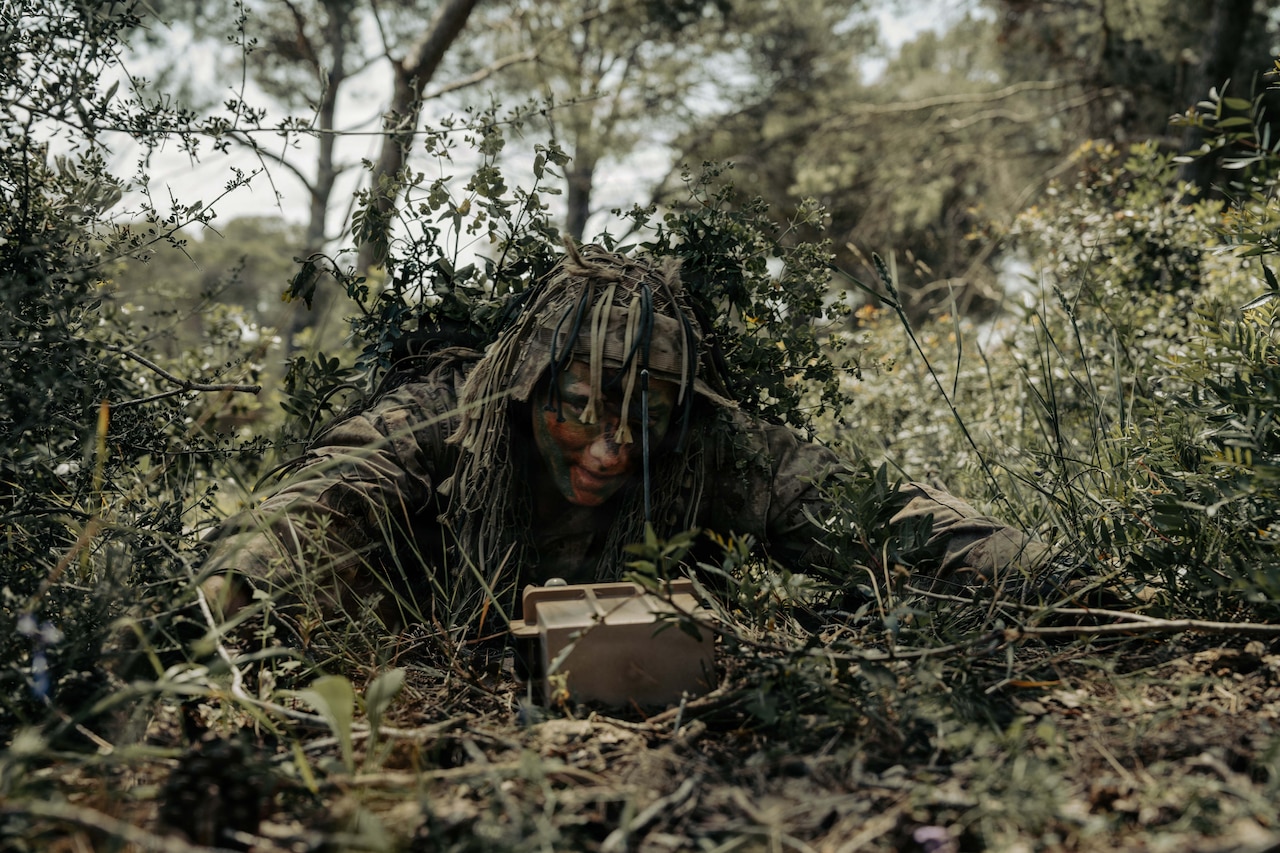
A man in a camouflage military uniform and face paint lies on the ground in the woods, looking at a piece of surveillance equipment.

Low crawling through the woods for long periods of time is nothing new to Marine Corps Cpl. Joshua Trutna. Splinters, fatigue and heat are all part of the job as a tactical remote sensor system maintainer assigned to the Ground Sensor Platoon, 2nd Intelligence Battalion, II Marine Expeditionary Force Information Group. 

What is new for Trutna is doing it alongside Tunisian special forces soldiers in the forests of northern Tunisia. 

Trutna gained a deeper understanding of what it means to defend a homeland during Exercise African Lion 26, as Tunisian special forces soldiers shared their experiences conducting real-world missions to protect their country from terrorist threats. 

"As tough as the training can be, there's a reason behind it," Trutna said. "[Tunisian special forces] are actually doing the mission."

This interaction with Tunisian forces is part of U.S. Africa Command's largest annual joint exercise, designed to strengthen collective security capabilities of the U.S., African nations and global allies. Co-led by U.S. Army Southern European Task Force, Africa from April 20 to May 8 and hosted in Ghana, Morocco, Senegal and Tunisia, the exercise involves over 5,600 personnel from more than 40 nations, using innovation to drive partner-led regional security. 

Marines assigned to the Ground Sensor Platoon trained with Tunisian forces on remote sensor systems used to detect movement and provide early warning in complex terrain. 

Throughout the exercise, Marines shared techniques on how to emplace, monitor and recover ground sensors in daylight and lowlight conditions. They also conducted infiltration and observation of named areas of interest with partner forces to build multinational readiness. 

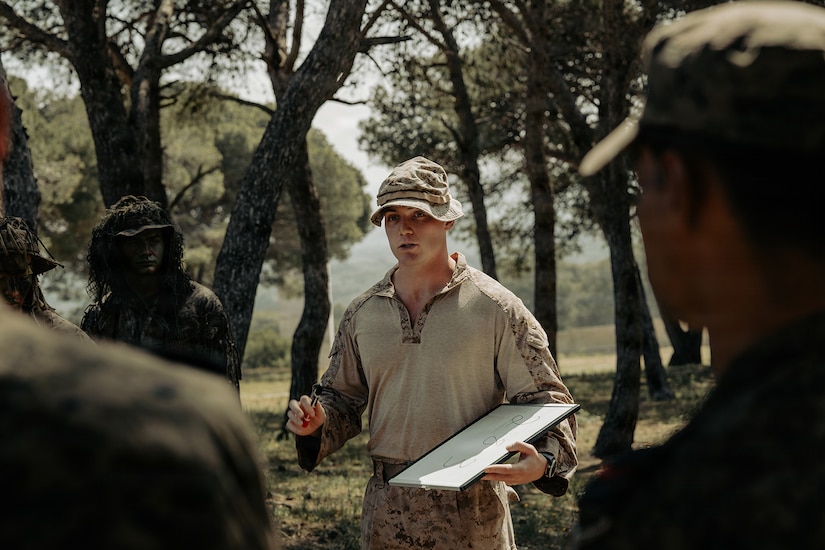
A man in a camouflage military uniform speaks to a group of people in similar attire while standing in the woods holding a dry-erase board.
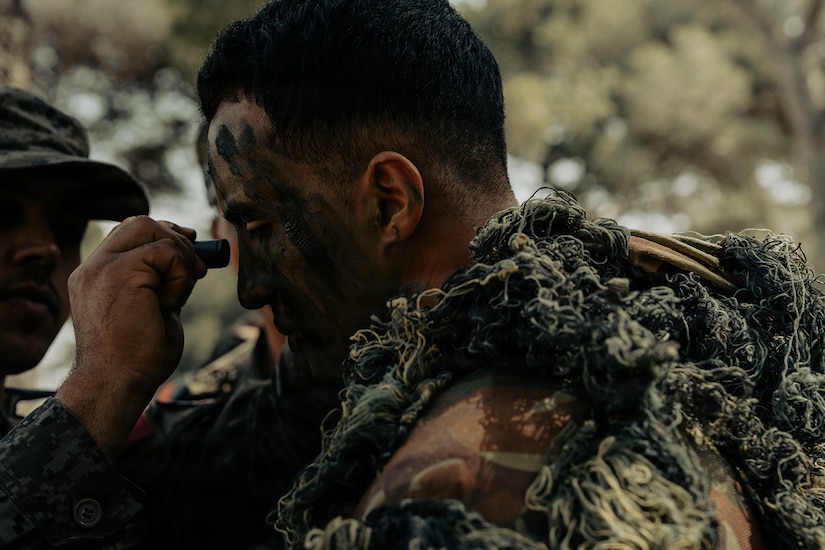
A man in a camouflage military uniform applies face paint to another man in similar attire in the woods.

Trutna connected with his counterparts as they worked their way through the dense terrain of the northern Tunisian forests. The shared experience gave Trutna a new perspective on the purpose behind the training and the common hardships endured by warfighters everywhere. 

"We all deal with the same things," he said. "Being tired, sitting in the field, waiting for something to happen."

Tunisia's position in North Africa creates distinct security challenges, as its vast and often remote terrain is difficult to monitor with traditional tools alone, which made the Marines' employment of ground sensors all the more essential. This training paved the way for Tunisian forces to receive faster, more reliable notification of terrorist threats. 

"These sensors give us another tool to understand what's happening in the battlespace," said Marine Corps 1st Lt. Joseph Kennedy, Ground Sensor Platoon commander. 

The Marines demonstrated how these systems can support border security efforts in complex environments. 

"Even covering a small area can provide information that helps us determine where movement is happening and how to respond," Kennedy said. 

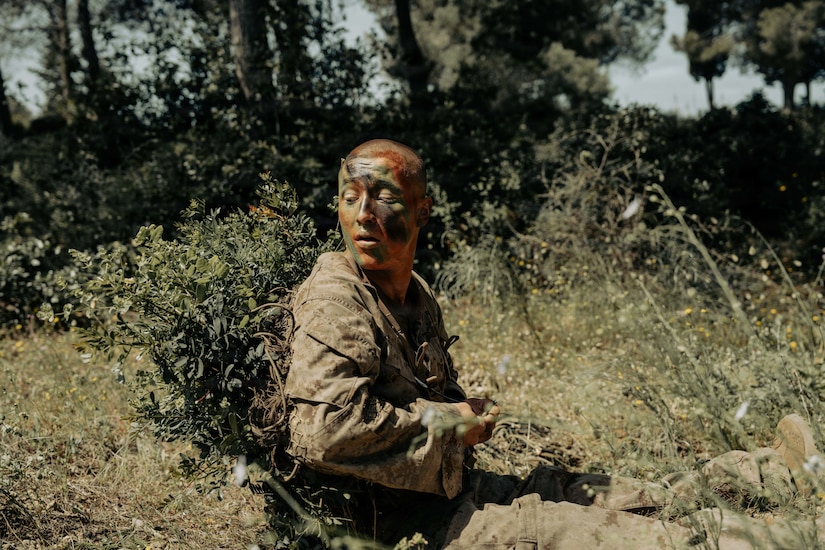
A man in a camouflage military uniform and face paint sits in a field trying to attach shrubbery to his body to help camouflage himself.

This training event also represented a significant milestone for the unit. According to Kennedy, the exercise marked the first deployment of the newest generation of ground sensor systems outside of the United States. Earlier this year, his platoon became the first Marine unit to receive the equipment, and they have continued to refine its employment in real-world environments. 

"It's a great opportunity to expose these sensors, not just to our partner forces, but also to other U.S. services that may not have this capability," Kennedy said. 

Trutna, Kennedy and the rest of the Ground Sensor Platoon said they now carry a clearer sense of why their expertise matters. In Tunisia's forests, they saw how their sensors and skills give partners the ability to spot threats before they strike.

Joint Interagency Task Force 401, Paratroopers Test New Counter-UAS

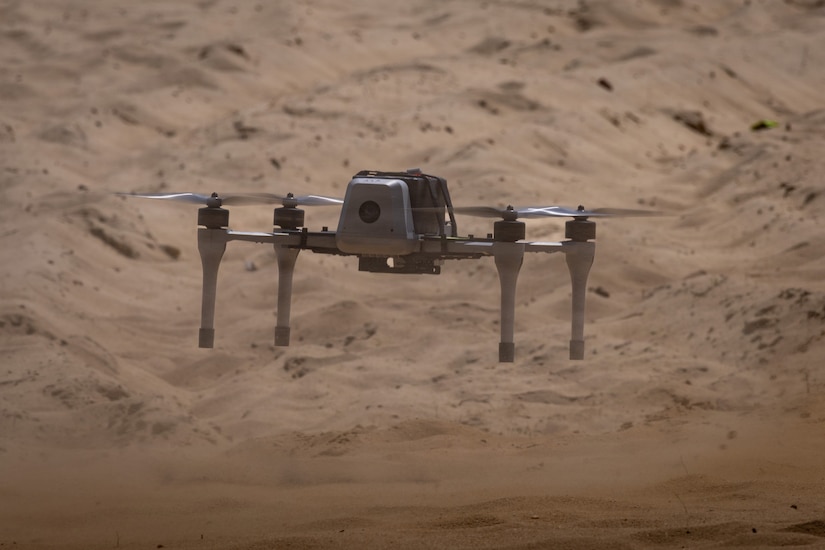
Paratroopers assigned to the 82nd Airborne Division recently took part in the inaugural training event with the Bumblebee V2 counter-drone system April 22, marking the first operational test of the prototypes purchased by Joint Interagency Task Force 401 earlier this year.

A small, unmanned drone with four propellers and a camera sits on the ground in a desert terrain before it takes off.

Held on the Salerno drop zone at Fort Bragg, North Carolina, the event served as a practical exercise for 20 young paratroopers to engage directly with the system and provide real-time feedback. The acquisition of the new system represented a rapid technology transfer from the battlefields of Europe, giving soldiers hands-on experience with critical tools to increase counter-drone capability across the joint force. 
 
"The [Bumblebee] V2 is a major leap forward because it doesn't rely solely on the skill of the drone operator," said Army Sgt. Maj. Kellen Rowley, Joint Interagency Task Force 401 senior enlisted advisor to the director. "Its automated target recognition allows the drone to lock on and engage an adversary drone autonomously, letting soldiers focus on situational awareness and tactics." 
 
Paratroopers practiced fundamentals essential to both using and defending against unmanned aerial systems. Soldiers learned to interpret sensor, radar and camera data and make split-second decisions about when to launch counter-drone interceptors. Training events like these, in coordination with the services, help ensure every soldier is prepared to face the rapidly evolving aerial threats on the modern battlefield. 
 
"Just as every soldier is trained in basic rifle marksmanship before handling live rounds, we want to ensure that they can master the fundamentals of UAS operation and employment of passive countermeasures before expecting them to operationally employ an air-to-air interceptor," Rowley said.

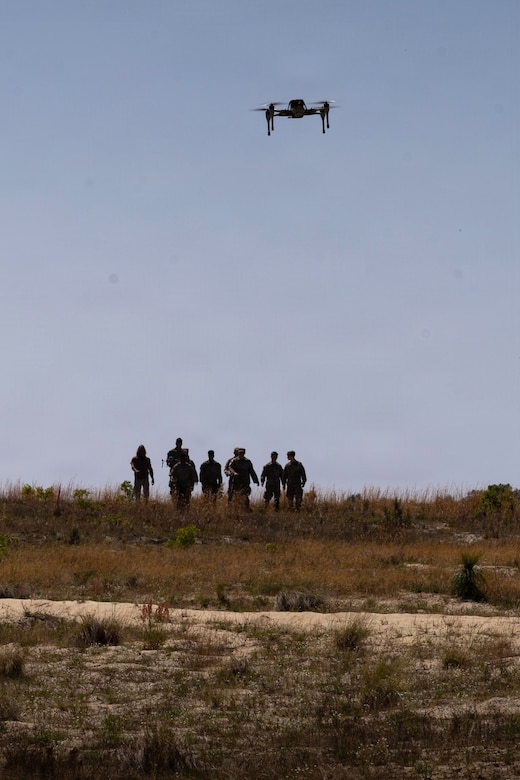
The silhouettes of several people standing in tall grass watch as a drone flies in a blue sky.
The Bumblebee V2, funded through a $5.2 million investment in February, is a first-person-view, multirotor drone built to meet National Defense Authorization Act standards. With advanced camera sensors, wide-angle and narrow-angle views, and up to an hour of flight on a single battery, the system provides a crucial kinetic option as part of a layered counter-UAS defense. 
 
"We are seeing prototypes of the V2, with updated cameras, sensors and software for automated target recognition. Its ability to operate all the system's components simultaneously gives us the tools to develop tactics, techniques and procedures in real time," Army Lt. Col. Alex Morse, task force acquisition lead, said regarding the platform's operational flexibility. 
 
The new system was first deployed in March as part of JIATF 401's initiative to accelerate the delivery of top-tier technology to warfighters. Counter-drone systems, like the Bumblebee, will soon be considered core battlefield tools, able to be utilized by soldiers with little to no prior drone experience. 
 
Army Brig. Gen. Matt Ross, director of JIATF 401, said his team has one measure of effectiveness: to rapidly deliver counter-drone capabilities to warfighters at home and abroad.  
 
"The Bumblebee V2 provides a cost-effective, reliable interceptor that can neutralize threats without endangering our own forces or surrounding infrastructure," Ross said. "On the modern battlefield, where drones are a constant threat, having a low-collateral kinetic option is not just an advantage, it is increasingly becoming essential for protecting our forces."

Army Medic Leads Life-Saving Response After Bear Attack in Alaska

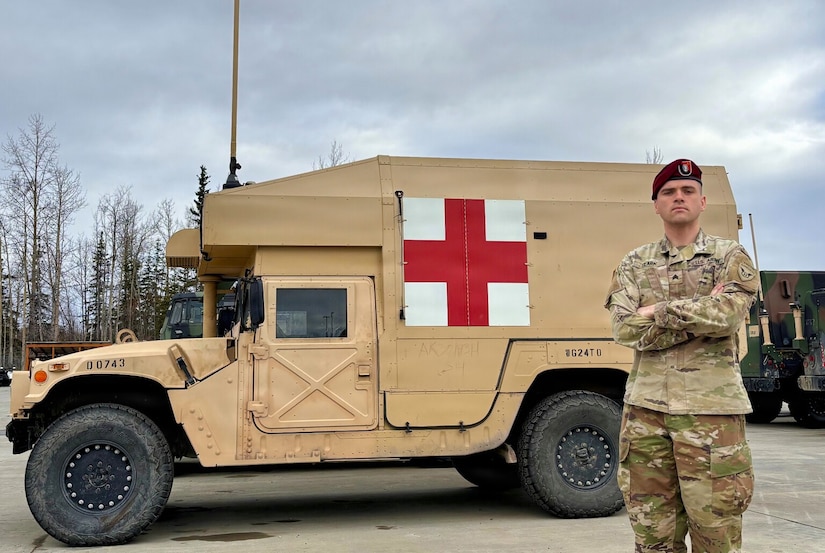
When a bear attacked two soldiers during a land navigation exercise in the rugged Alaskan wilderness, Army Sgt. Zachariah Clark was not on duty as a medic; he was a participant, navigating the same challenging terrain as his fellow soldiers. But when the call for help came, Clark's training, leadership and commitment to his team took over. Clark, a combat medic and team leader assigned to the 11th Airborne Division, was conducting land navigation as part of a battalion team leader development event when he received word that two soldiers had been injured in a bear mauling.

A man in a military camouflage uniform poses for a photo outside with his arms crossed, standing in front of a military medical vehicle.

"My first thought was ... 'They're alone, they're afraid, and they might be dying; I need to go get them,'" Clark recalled. 

Without hesitation, Clark rallied his battle buddy and other soldiers he encountered along the way, instructing them on bear safety and first aid as they moved through deep snow and dense woods.

"We started to push back, roughly to where we thought they might be. We didn't have an exact idea of where they were," he said. "As we were pushing through the rough terrain, I was finding groups of soldiers that hadn't been contacted or notified of the incident yet. I said, 'Hey, come to the sound of my voice. You follow me.'" 

Clark's experience in both military and civilian emergency medicine shaped his approach.  

"One of the lessons we learn is you're there to help someone on their worst day," he said. "Not rush into things, to not endanger yourself, but to also be proactive in your patient care." 

Upon reaching the scene, Clark quickly assessed the situation, triaged the casualties, and began directing other soldiers, none of whom were medics but had received combat lifesaver training prior to this training event.  

"As a medic, I prefer to work out of my aid bag, but being that I was conducting land [navigation,] I didn't have my aid bag with me. So, we were all working out of first aid kits. It's a unit standard that every soldier has a first aid kit on the left side of their fighting plate carrier. Having my first aid kit was essential that day," Clark said. 

He emphasized the importance of every soldier knowing how to use their first aid kit and being prepared for emergencies.  

"I highly recommend every soldier go through their first aid kit, practice pulling it out, know where everything is, and make sure it's up to the standard," he said. 

Clark's leadership extended beyond medical care. He organized the group for area safety, assigned tasks and ensured that everyone played a role in the response.  

"We went with what we had that day. We hustled. We moved to the casualties," he said. "Had we not done that, I don't know what would have happened to those casualties." 

As Air Force emergency medical services and security forces arrived, Clark coordinated the handoff and assisted with preparing the casualties for evacuation by helicopter. He and his team gave their own clothing to the injured soldiers to help prevent hypothermia, a critical consideration in Alaska's unpredictable spring weather. 

After the evacuation, Clark remained focused on accountability and recovery, ensuring all of the soldiers and equipment were accounted for before leading the group back through the challenging terrain to the start point. 

Reflecting on the experience, Clark said, "It is a privilege, and it is an honor to be able to take care of other soldiers and bring your friends home."  

He credits the Army's training and core values for guiding his actions.  

"If you can apply the warrior ethos to everything that you do every day that you show up, when big incidents happen, it'll be like muscle memory. You'll instinctively just know what it is that you have to do." 

Clark's advice to other soldiers is to take training seriously, be prepared and look out for one another.  

"The Army is a family, 100%. And those memories, with those people you have, will last for the rest of your life," he said.