Tuesday, June 09, 2026

War Department Leaders Observe Kansas City's Counter-Drone Preparations Ahead of World Cup

Joint Interagency Task Force 401 recently visited Kansas City, Missouri, to meet with federal, state, and local law enforcement and public safety partners ahead of the 2026 FIFA World Cup.  

The visit highlighted Kansas City's readiness and the interagency coordination required to protect facilities, fan areas and surrounding communities from unauthorized drone activity. JIATF 401 continues to share knowledge and best practices with World Cup host cities for countering illicit unmanned aircraft systems.  

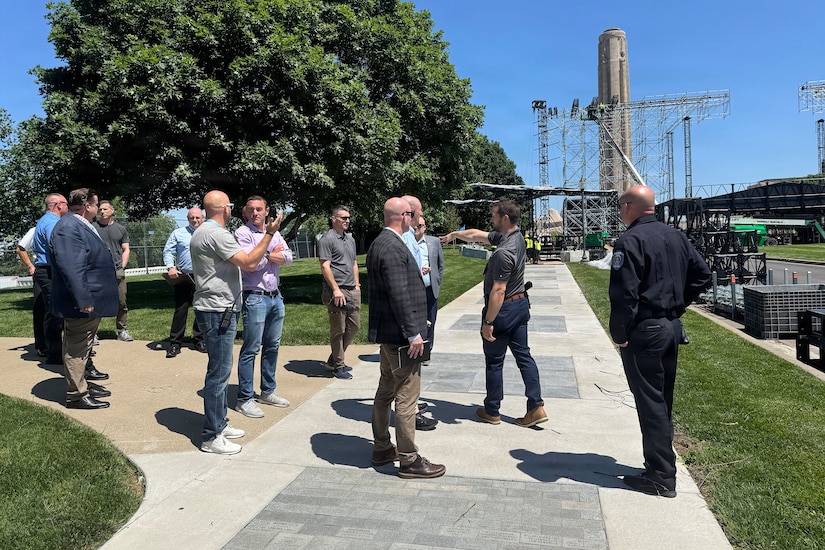
Men wearing casual attire stand in a group outdoors while talking. Two are gesturing.

Kansas City public safety partners demonstrated how they are integrating air domain awareness, real-time operations and drone response procedures into broader World Cup security planning.  

The visit included meetings with security personnel at Arrowhead Stadium and with local police, fire, emergency management, intelligence, aviation and federal law enforcement partners in fan zones. Representatives from the Department of Homeland Security, Federal Aviation Administration, Customs and Border Protection, FBI and Federal Air Marshals attended the visit, showcasing a whole-of-government effort in counter-drone preparations. 

"Kansas City is ready because our federal, state and local partners have been preparing deliberately and working together from the start," said Kansas City Police Department Maj. Greg Williams, who oversees the operational support division. "Our focus is on keeping fans, players, staff and the broader community safe, and that requires the kind of coordinated interagency effort we have built here." 

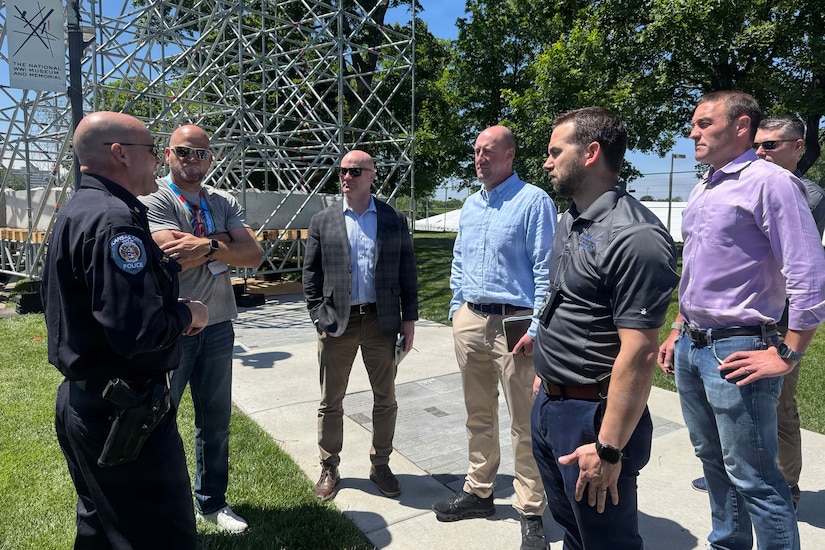
A police officer wearing a black uniform speaks to a group of men in casual attire outdoors.

The War Department is supporting World Cup counter-UAS preparations in coordination with the White House FIFA World Cup Task Force by enabling access to more than $100 million in counter-UAS capabilities. Additionally, JIATF 401 provided crucial input in DHS- and FBI-led site protection plans across the 11 host cities, supported law enforcement training at the FBI's National Counter-UAS Training Center and contributed to the War Department's portion of the Counter-UAS Master Plan. 

"Major national security events require high levels of coordination between the entire federal government and our local public safety partners," said Army Brig. Gen. Matt Ross, director of JIATF 401. "Kansas City's emphasis on a strong, layered, counter-drone defense will be crucial to the safety of fans and facilities at the World Cup."

Seabees Connect to Past During Exercise Baltic Operations 26

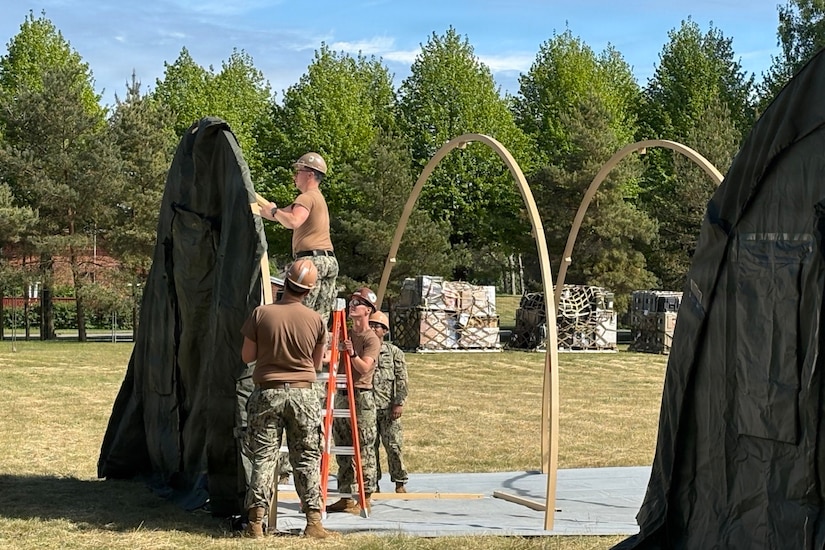
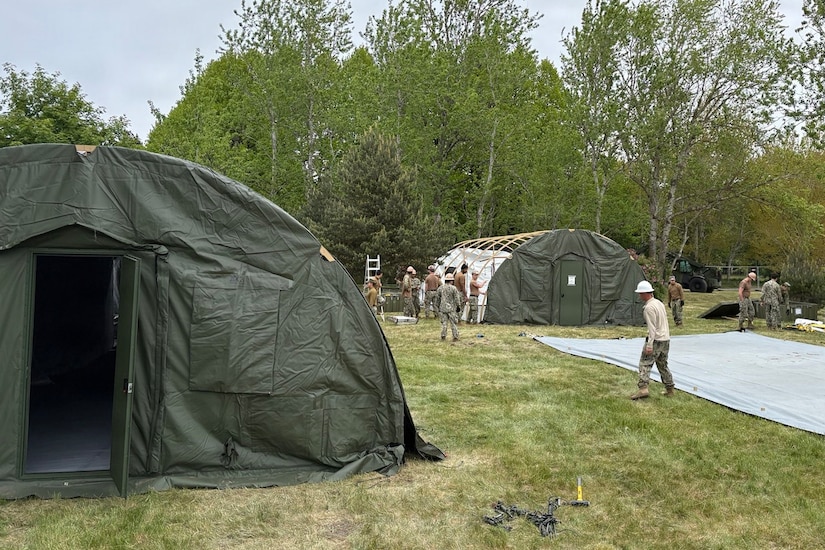
A man in a camouflage military uniform and hard hat stands on a ladder while putting up a large tent in a grassy area while several other people in similar attire hold the ladder and the tent frame.

Before Camp Turtle, Latvia, was a location, it was a mission. 

U.S. Navy construction personnel, also known as Seabees, arrived in Liepāja, Latvia, this month with equipment, tools and a familiar purpose: build what the force needs, where the force needs it. 

These sailors established expeditionary infrastructure in support of Exercise Baltic Operations 2026, helping stage, coordinate, sustain and support operations in one of Europe's most strategically significant maritime regions. 

Camp Turtle is a working site for the Seabees. Planning, logistics, labor and practical skill turn limited infrastructure into operational capability. Tents, tools, equipment and coordination spaces are part of the visible work. The larger mission is less visible but just as important: enabling naval forces to operate forward, remain flexible and support allied objectives across the Baltic Sea region. 

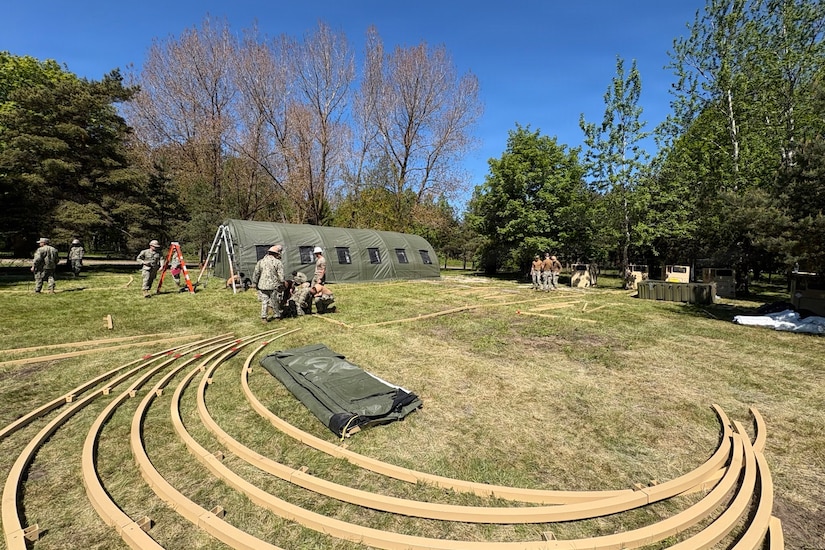
A dozen people in camouflage military uniforms construct large tents in a grassy area with trees in the background.; there are long pieces of curved wood lying on the ground in the foreground.
A dozen people in camouflage military uniforms construct large tents in a grassy area with large trees in the background.
"Camp Turtle represents what Seabees are built to do: arrive with a mission, assess what is needed, and turn a piece of ground into a place that supports the force," said Navy Lt. Thomas McDowell, 22nd Naval Construction Regiment operations officer. "Every part of the site contributes to readiness and helps enable the larger BALTOPS mission."

The name also carries meaning beyond the work taking place at the site. 

Camp Turtle draws from a local connection to U.S. naval history in the Baltic Sea. It honors the PB4Y-2 Privateer Turbulent Turtle, a U.S. Navy aircraft assigned to Patrol Squadron 26 that was lost over the Baltic Sea near Liepāja April 8, 1950. The aircraft and its crew became part of the early Cold War history tied to the waters off this Latvian port city. 

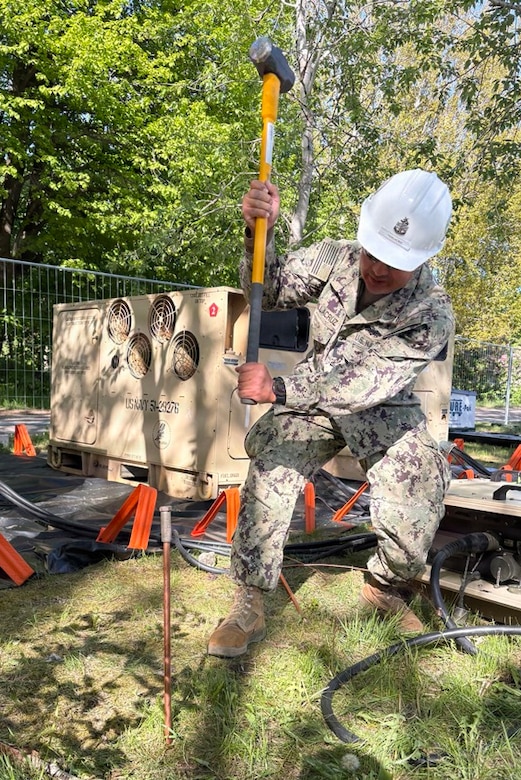
A man in a camouflaged military uniform and a white hard hat hammers a stake into the group in a grassy area as another man in similar attire observes; there is construction equipment in the background.

"The name connects today's work with the sailors who served in this region before us," McDowell said. "It reminds us that readiness is not only about what we build today but also about the legacy we carry forward."

Today, sailors are operating in Liepāja alongside allies and partners during BALTOPS 2026. The long-running maritime exercise strengthens allied readiness, interoperability and security throughout the region. 

Camp Turtle reflects naval heritage in action, connecting remembrance of past service with the readiness required for today's mission. 

During BALTOPS 2026, construction extends naval reach ashore. This infrastructure helps create the conditions for forces to operate, coordinate and sustain themselves beyond established facilities. 

The name Camp Turtle connects the site to a chapter of naval history rooted in the Baltic Sea. The work taking place there during the exercise carries that connection forward, linking remembrance with the practical demands of readiness. 

One Stitch at a Time: Aviator's Art Leaves Lasting International Impression

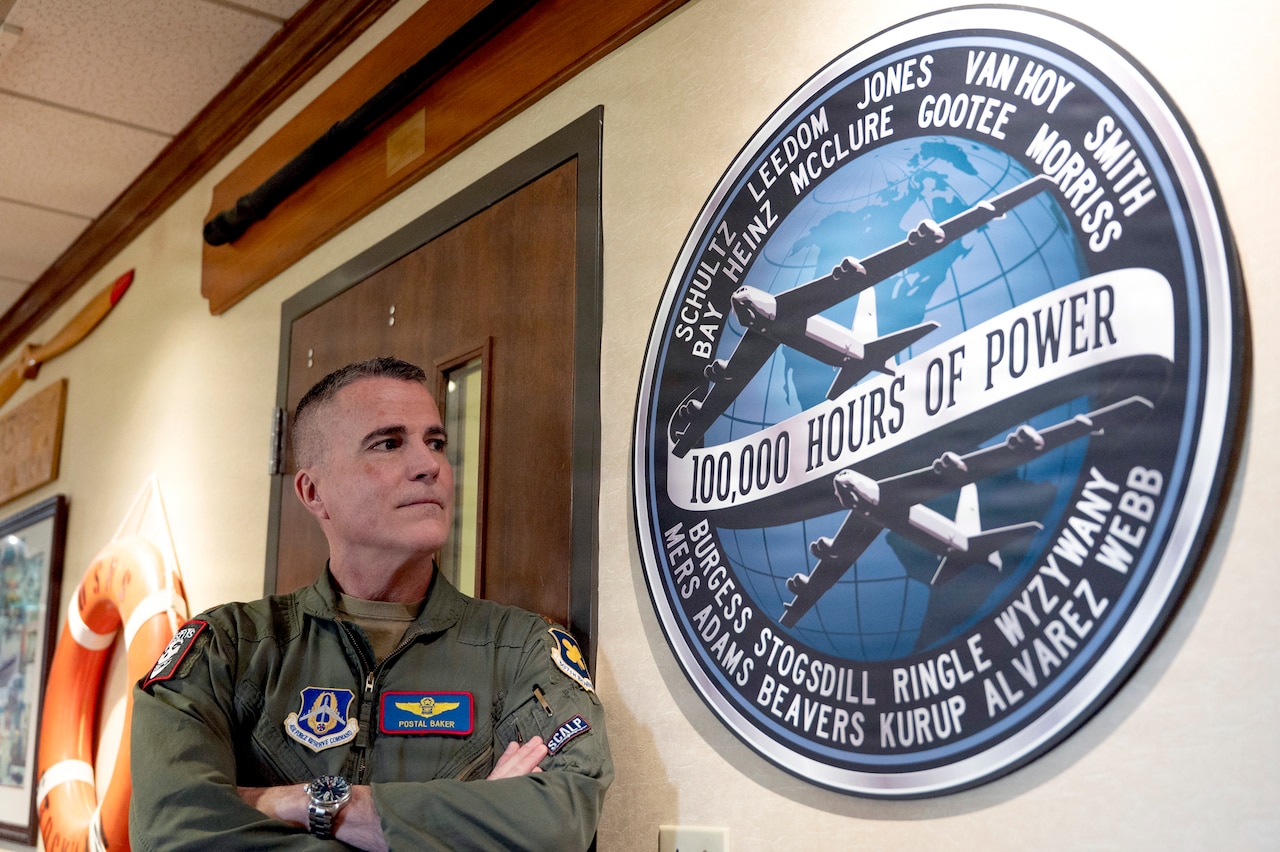
A man wearing a flight suit stands in a hallway with his arms crossed looking at artwork on the wall of two military aircraft and a ribbon in the middle that reads, “100,000 Hours of Power.”

Long before Air Force Maj. Kerry Baker stepped into the navigator seat of a B-52 Stratofortress, he was a student tasked with drawing a portrait of Abraham Lincoln for a school project. When his classmates saw his work, they asked him to draw theirs too. 

That childhood talent sparked a lifelong passion that he shares with aviation. 

Over the past two decades, Baker has become known as a premier artist for the B-52 community, designing hundreds of unit patches, nose art pieces and official heraldry that capture the heritage, morale and visual identity of the 307th Bomb Wing mission and beyond. 

"Proud is not a word that I use in describing what I've done, but internally I am proud of it," he said. "I'm very fortunate to have been given this opportunity, or this canvas on which to work." 

Now, the 307th Operations Support Squadron weapon systems officer is preparing to retire. 

But while Baker will soon leave the flight line behind, his legacy will remain stitched into the very fabric of the 307th Bomb Wing and the broader Air Force bomber community. 

"I had a top-down view of Kerry's artwork," said retired Air Force Lt. Col. Joseph Jones, former vice commander of the 307th Bomb Wing. "He is responsible for so much public relations and community engagement that can never be replaced." 

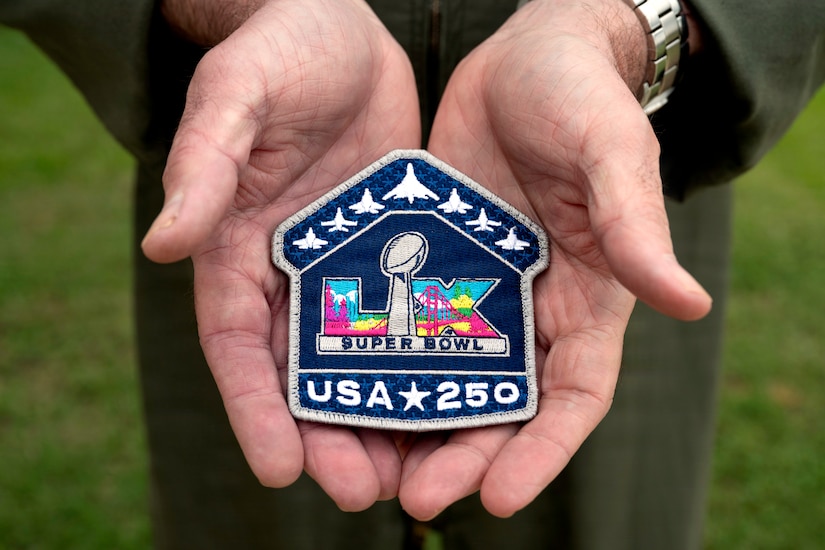
A pair of hands holds a patch with aircraft on the top that reads, “LIX Super Bowl, USA 250.”

From the Canvas to the Cockpit

Baker's path to the Air Force was unconventional. 

He earned a degree in studio art painting from Truman State University in Kirksville, Missouri, and was working for a civilian business until the events of Sept. 11, 2001, changed the trajectory of his life. 

Seeking to serve his country, he initially visited a Marine Corps recruiter before his life experience and college degree pointed him toward the Air Force. 

By November 2002, he was at officer training school and subsequently earned his wings. Driven by a desire for a balanced family life and a love for the airframe, he selected the B-52 Stratofortress.  

Baker served on active duty from 2003 to 2010 assigned to the 11th Bomb Squadron and the 20th Bomb Squadron before transitioning to the Air Force Reserve, joining the 93rd Bomb Squadron and later the 307th Operations Support Squadron. It didn't take long for his military career and his artistic talent to collide. 

"The first patch I designed was for my navigator training class," Baker said. "I knew nothing about the process, but I knew I didn't want to get too crazy with the design because it had to be embroidered. That was my first time designing something thoughtfully." 

When he arrived at the 11th Bomb Squadron, he drew an 8-foot-wide rendition of a B-52 that remained hanging in the hallway for years. That drawing established a reputation for him that quickly spread. 

By 2006, he was designing deployment patches for the 20th Bomb Squadron, tracking down vendors and ensuring his fellow airmen had their patches before walking out the door. 

Baker continued accepting requests and creating artwork for missions, often facilitating a platform to build relationships among the 307th Bomb Wing, other units, military branches and even countries. 

"He has been a vital part of our [War Department] and bomber community in fortifying global strategy and reach," said retired Air Force Brig. Gen. Robert Vanhoy II, former 307th Bomb Wing commander. "His talent bonded units and created conversations across nations."

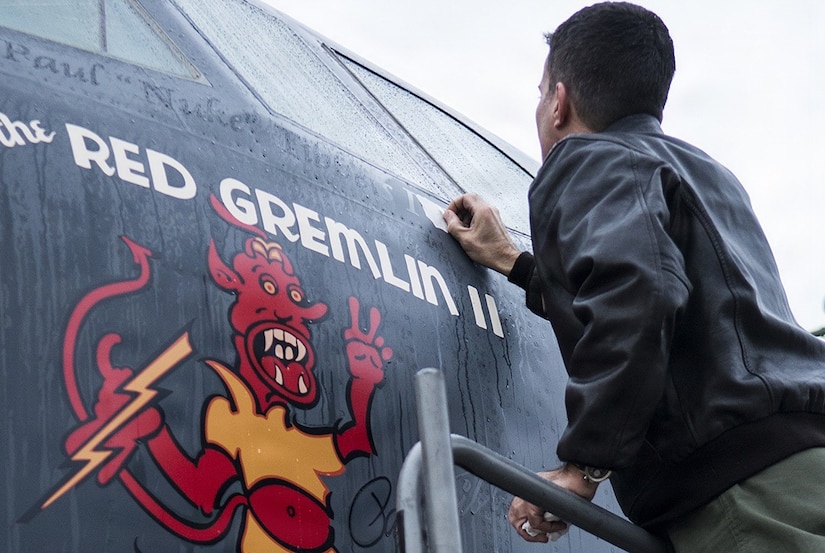
A man wearing a flight jacket peels paper off the side of a military aircraft while standing on a ladder.

Art That Honors the Past

In his vast portfolio, Baker said a few pieces hold a deeply personal significance. 

One of those is the "100,000 Hours of Power" patch designed in 2014 to commemorate a historic two-ship B-52 formation with more than 100,000 hours of collective flight time among the 20 aircrew members. 

"A patch is just a piece of cloth until you put it in someone's hand; then it becomes a memory," Jones said. "Baker is responsible for that." 

Baker also lent his talents to aircraft nose art.

In 2013, he designed "Red Gremlin II" for now retired Air Force Brig. Gen. Paul Tibbets IV, adapting the original World War II B-17 Flying Fortress nose art flown by Tibbets' grandfather.

The artwork was applied to the B-52 in which Tibbets completed his certification flight, and Baker later painted the design onto a leather bomber jacket for him.

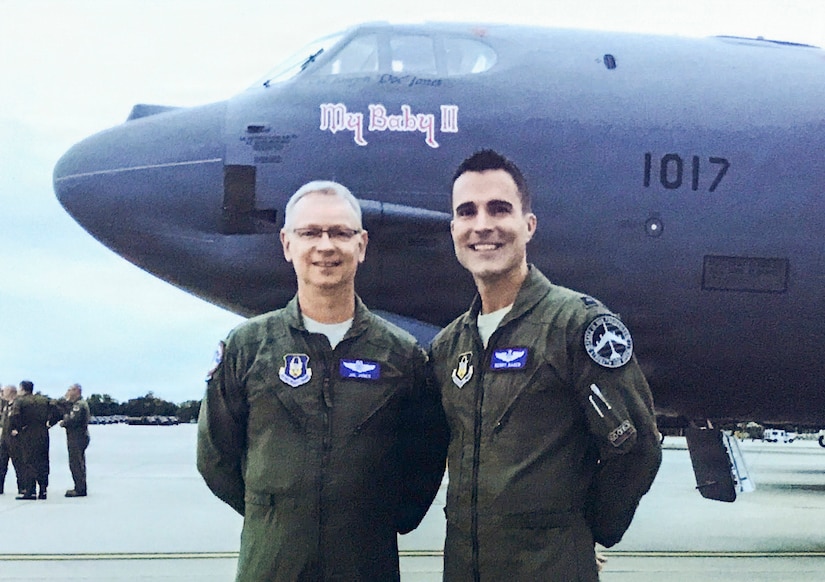
Another memorable project was "My Baby II," a commemorative design honoring the original 20th Bomb Squadron, which was shot down over Czechoslovakia in August 1944.

Since that project, Baker's artwork has become a staple of the unit's participation in NATO Days, the largest European security show in Ostrava, Czech Republic, that demonstrates the capabilities, cooperation and interoperability of NATO allies and partners.

Two men wearing flight suits pose for a photo in front a military aircraft with writing on the side that reads,” My Baby II.”

Leaving a Mark

As his retirement approaches, Baker reflected on his years of service and the unique mark he leaves behind. 

"Flying is great. I had a lot of fun flying ... but it's the people that I've built lifelong friendships with," he said. "When I came to the 307th [Bomb Wing], for me it was a bunch of combat aviators that really had an incredible sense of camaraderie. It felt like family right away." 

For the next generation of airmen harboring hidden creative talents, Baker offers a piece of parting advice. 

"Absolutely do not neglect it," he said. "Put it out there and let other people see it, and you'll have opportunities to do special projects that people enjoy and need." 

Long after Baker hangs up his flight suit, airmen walking the halls of the bomb wing and flight lines across the globe will continue to wear his artwork on their shoulders. 

Through his dedication to visual heritage, Baker ensured the pride, history and morale of the bomber community will endure, one stitch at a time.