Thursday, March 05, 2026

Marine Corps Improving Amphibious Warfare Ship Availability, Says Defense Leader

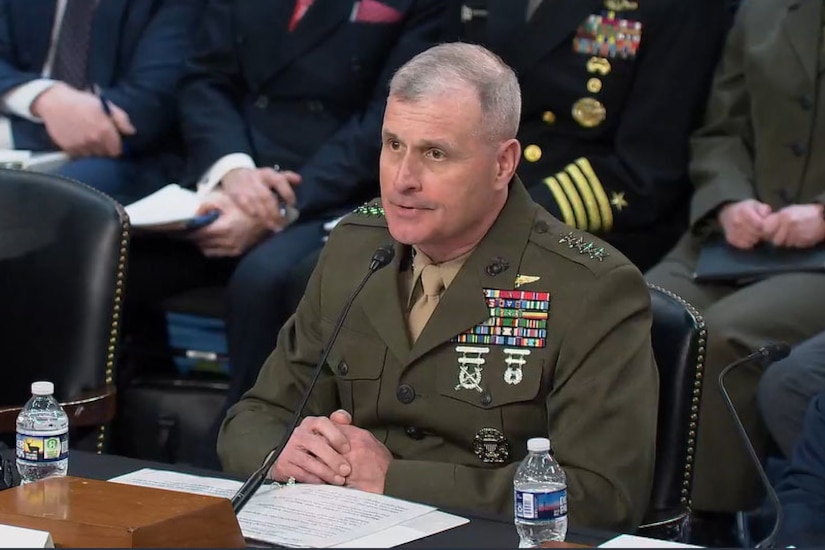
The Marine Corps is the nation's global response force, said Marine Corps Gen. Bradford J. Gering, assistant commandant of the Marine Corps, who, along with other service leaders, testified yesterday at a Senate Armed Services Committee hearing in Washington on joint force readiness. 
A man in a military dress uniform.is seated at a table speaking into a microphone.

The Marine Corps' traditional role as a crisis response force is embodied by the amphibious ready group and Marine expeditionary unit, he said. 

 "This sea-based capability provides our nation with decision space and options, changes the behavior of bad actors and delivers swift and decisive action when required," Gering said. 

These forces deploy from the East and West Coasts, along with one based in Japan. 

"These forward deployed forces provide a continuous presence, enable the joint force and contribute to deterrence with allies and partners," he added, noting that in partnership with the Navy, the Marine Corps is working to improve the availability of amphibious warfare ships, and significant progress has been made with the procurement of medium landing ships. 

"We need to continue to move forward with a sense of urgency in … amphibious warship readiness availability and littoral mobility. Despite these challenges, your Marines are ready," the general said. 

Once again, the Marine Corps met its recruiting mission last fiscal year and is on track to meet it again this year. 

Taking care of Marines and their families is a warfighting necessity that directly impacts readiness and retention, Gering said, noting that new barracks are under construction and child care incentives are underway. 

"Finally, I'm proud to report to you that for a third consecutive year, your Marine Corps has earned a clean audit opinion," he said. "This is a direct reflection [of] our commitment to fiscal stewardship and demonstrates our accountability for every taxpayer dollar." 

Army Vice Chief Says Department Ready to Meet Threats Worldwide

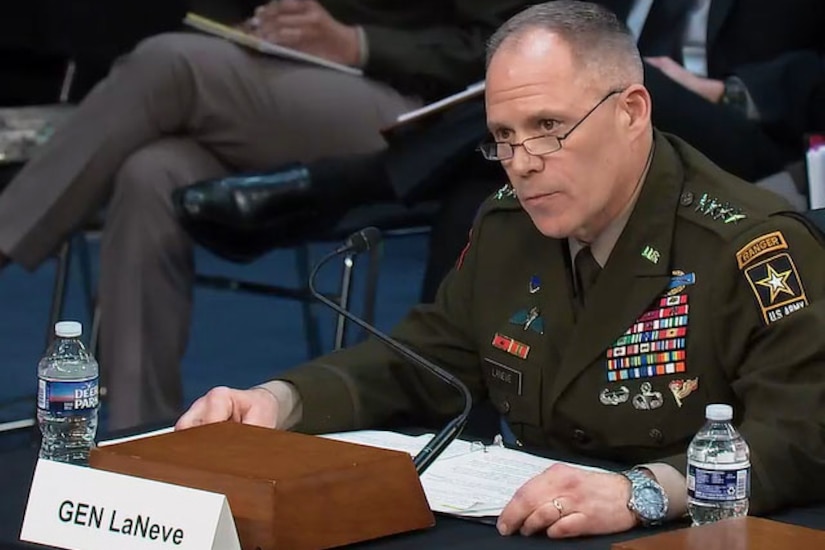
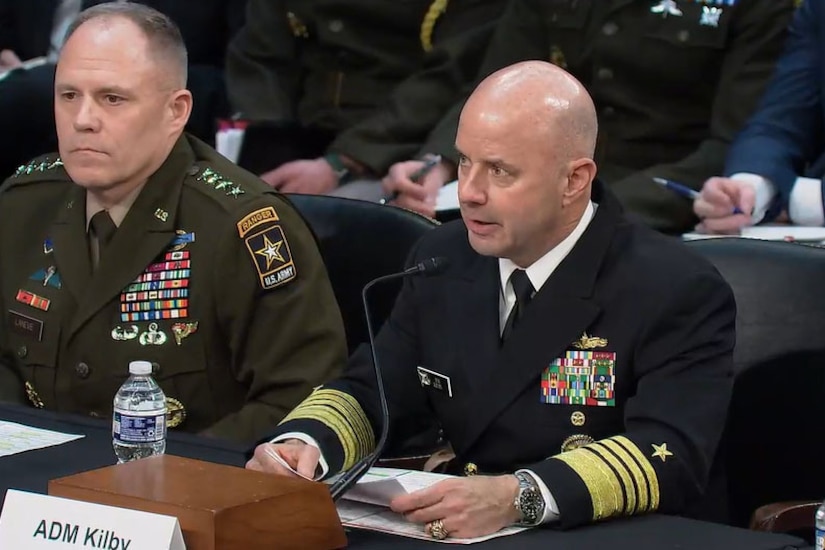
Every decision begins and ends with ensuring soldiers are ready to fight and win when called upon, said Army Gen. Christopher C. LaNeve, Army vice chief of staff, who, along with other service leaders, testified yesterday at a Senate Armed Services Committee hearing on joint force readiness.

A man seated at a table wearing a formal military uniform speaks into a microphone.

Today, more than 108,000 soldiers are deployed or forward-postured across 160 countries, securing America's interests in the Western Hemisphere, deterring aggression in the Indo-Pacific and responding to threats worldwide, he said.

Turning to regional specifics, he added, "In the Middle East, our soldiers are operating in a complex and dangerous environment, amid active conflict with Iran and its proxies. They're defending U.S. forces and partners, intercepting missiles and drones, and protecting critical infrastructure."

Supporting these efforts, sustainment formations are moving fuel, munitions and medical support across the theater, while command posts are integrating joint fires and intelligence to ensure rapid response to evolving threats in the U.S. Central Command area of responsibility, the general said.

"Brave Americans have been killed and wounded in the line of duty. Their loss is felt across our formations and in communities across this nation. To their families, we extend our deepest condolences and our enduring support," he said.

Shifting back to organizational structure, the department consolidated Army North and South in the Western Hemisphere into a single, unified headquarters responsible for homeland defense, while retaining the capacity to generate and deploy forces globally in response to crisis, LaNeve said.

In the Indo-Pacific, the Army maintains 91,000 troops and has committed $1.3 billion to the Pacific deterrence initiative, he said.

At home, soldiers at training centers solve complex problems and test the latest systems, he said.

The Army has restructured its acquisition processes to reduce the time between field experience and program decisions from years to months, the general said, citing several ground and aviation prototypes.

"After 36 years, I've never seen a unit readiness determined by a depot or its equipment alone. What I have seen repeatedly is how we treat our soldiers shapes whether we retain the experienced ones and whether the force we're building reflects the standards we claim to uphold," LaNeve said, adding the service is surpassing recruiting goals.

Air Force, Space Force Ready for All Warfighting Challenges

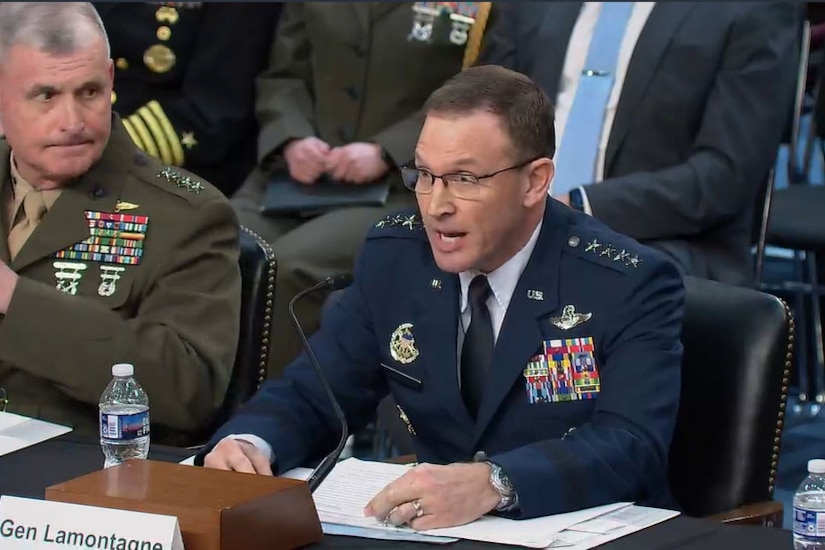
The Air Force's lethality depends on the professionalism of airmen and the capability of their equipment, said Air Force Gen. John D. Lamontagne, Air Force vice chief of staff, who testified yesterday at a Senate Armed Services Committee hearing on joint force readiness in Washington.

A man seated at a table wearing a formal military uniform speaks into a microphone.

"Airmen are our most precious resource. The active-duty, Air National Guard, reserve and civilian workforce are why the United States Air Force is effective at a moment's notice," Lamontagne said.

The Air Force updated its fitness policy to push airmen to new levels and ensure they are ready to stand shoulder to shoulder with its joint partners on the toughest battlefields, the general said.

The service is improving airmen's quality of life by updating dormitories and child development care centers.

"We strive to make the Air Force an unmatched place to serve," Lamontagne said, adding that recruiting goals are being met and retention numbers are strong.

The Air Force is increasing aircraft availability, which allows aviators to get the repetitions they need to build competence. The service is also recapitalizing its ground-based strategic deterrent, fighter, bomber and tanker aircraft, as well as the command-and-control architectures that bring them together, the general said.

At the tactical level, airmen are practicing agile combat employment and preparing to fight in exercises like Bamboo Eagle. Last summer, the Air Force deployed more than 400 aircraft and 15,000 personnel across 50 locations in the Pacific region, Lamontagne said.

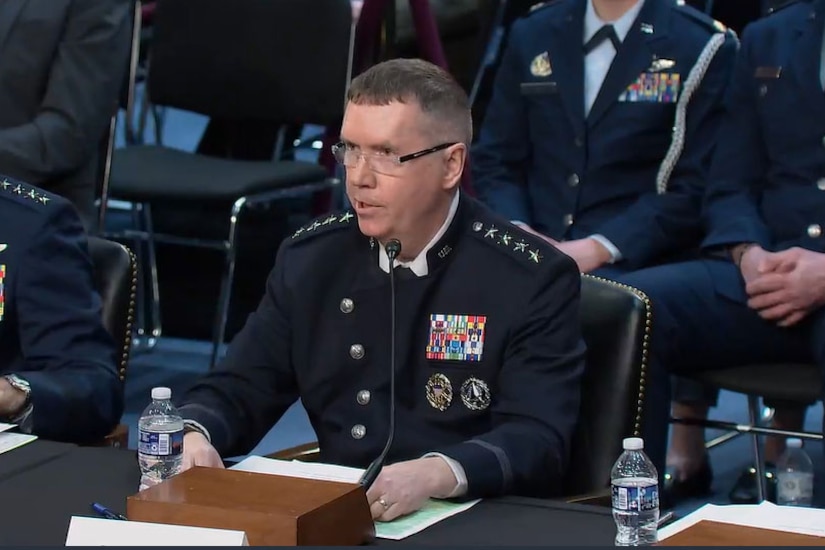
Space Force Gen. Shawn N. Bratton, vice chief of space operations, said his service, along with commercial partners, executed 170 launches this year.

A man seated at a table wearing a formal military uniform speaks into a microphone.

A new radar has upgraded optical surveillance systems to track adversarial activity on orbit better, he said, noting that additional systems will increase domain awareness.

Regarding readiness, Bratton said guardians must be ready at any time for any threat across the entire spectrum of conflict. They participated in a variety of exercises designed to ensure space superiority, and officer training courses now include training in space, cyber, intelligence and acquisitions.

"We will need to double in size in the coming years to meet identified operational needs, as well as significantly increase our training facilities. Even as we prepare for current warfighting challenges, we are aggressively looking ahead at capability requirements for the future force," he said.

DOW Identifies An Army Believed to Be Casualty

The Department of War announced the believed to be death of an Army Reserve Soldier who was supporting Operation Epic Fury.

Chief Warrant Officer 3 Robert M. Marzan, 54, of Sacramento, Calif., was at the scene of the incident on March 1, 2026, in Port Shuaiba, Kuwait, and is believed to be the individual who perished at the scene.  Positive identification of Chief Warrant Officer 3 Marzan will be completed by the medical examiner.  The Soldier was assigned to the 103rd Sustainment Command, Des Moines, Iowa.

For more information regarding Chief Warrant Officer 3 Marzan, members of the media may contact U.S. Army Reserve Command Public Affairs Office, Fort Bragg, N.C., at usarmy.usarc.usarc-hq.mbx.press-desk@army.mil.