Monday, April 27, 2026

Medal of Honor Monday: Navy Petty Officer 3rd Class Marvin G. Shields

Navy Petty Officer 3rd Class Marvin G. Shields has the distinction of being the only Seabee to ever be awarded the Medal of Honor.
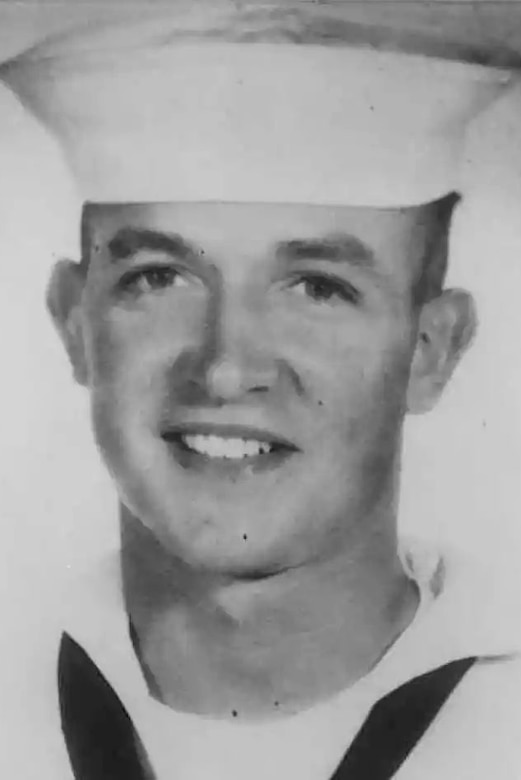
A man in a military dress uniform poses for a photo.

He was born Dec. 30, 1939, in Port Townsend, Washington, and joined the Navy Jan. 8, 1962. He wanted to be a Seabee, construction mechanic, as he was good with his hands and liked the outdoors, having worked for a gold mining company in Hyder, Alaska, in 1958, just after high school.

On Nov. 1, 1964, he was assigned to Seabee Team 1104, Naval Construction Battalion 11, which consisted of eight enlisted service members and one officer.

Shields and his team deployed to Saigon, South Vietnam, Feb. 1, 1965, and were later assigned to a newly established Army Special Forces camp at Dong Xoai, about 55 miles northwest of Saigon, arriving June 4, 1965, to assist in repair and construction.

On the night of June 9, 1965, the camp was bombed and attacked by approximately 2,000 Vietcong soldiers. Besides the Seabees, the camp was manned by only 11 Green Berets and about 200 South Vietnamese soldiers.

By morning, the camp was overrun.
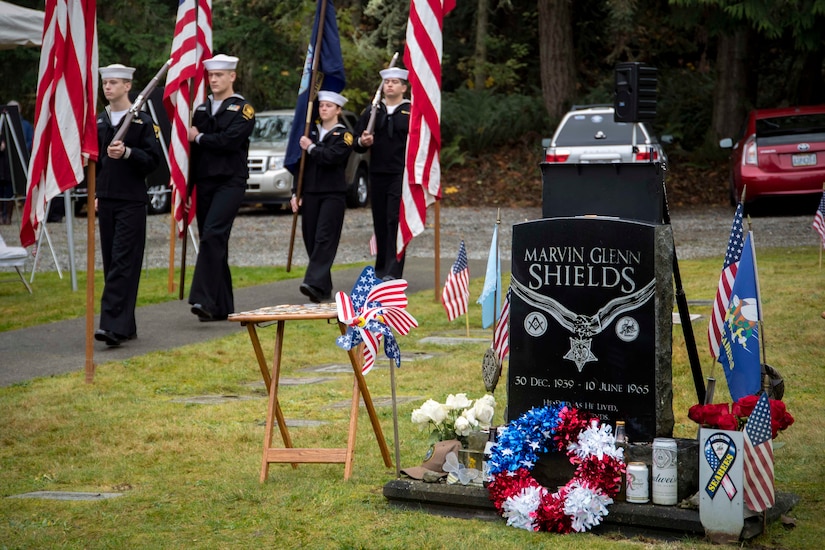
A military honor guard carries the American and Navy flags during a ceremony at a cemetery.

After being wounded by mortar fire, Shields fought alongside the Green Berets against the enemy, carrying ammunition to the firing line positions. Although wounded again by shrapnel and shot in the jaw, he helped a soldier and a Seabee carry a badly wounded special forces captain in charge of the camp to a safer position.

According to his Medal of Honor citation, Shields continued to resupply his fellow Americans with needed ammunition and returned enemy fire for approximately three hours. At that time, the Vietcong launched a massive attack at close range with flamethrowers, hand grenades and small-arms fire.

Wounded a second time during this attack, Shields helped carry a critically wounded man to safety and then resumed firing at the enemy for four more hours. When the commander asked for a volunteer to accompany him in an attempt to knock out an enemy machine-gun emplacement, Shields unhesitatingly volunteered for this extremely hazardous mission.
A bumblebee wielding a machine gun is depicted on a patch.

Proceeding toward their objective with a rocket launcher, they succeeded in destroying the enemy machine-gun emplacement and saved the lives of many of their fellow servicemen. However, Shields was mortally wounded by hostile fire while returning to his defensive position and died June 10, 1965. 
 
Two Seabees, Shields and Navy Petty Officer 2nd Class William C. Hoover lost their lives, and seven other Seabees were wounded in the battle. Three Green Berets were also killed, and many South Vietnamese soldiers were killed or wounded.
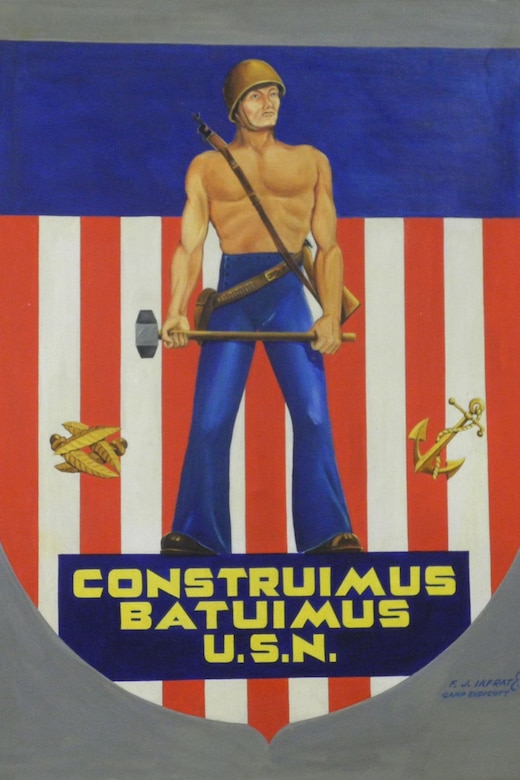
A poster shows a shirtless man with a helmet on, carrying a sledgehammer. Below the man reads, "Construimus Batuimus, U.S.N."
President Lyndon B. Johnson posthumously awarded Shields the Medal of Honor and presented it to his family Sept. 13, 1966. Shields is buried in Gardiner Cemetery in Gardiner, Washington, and his medal is displayed at the Seabee Museum and Memorial Park in North Kingstown, Rhode Island.

Shields' heroics during the Vietnam War continue to be appreciated. On Veterans Day in 2019, more than 100 service members, veterans and guests gathered at Gardiner Cemetery to honor him.

"It's a tremendous honor for Naval Facilities and Engineering Command Northwest to host this event every year," said Navy Capt. Chad Brooks, NAVFAC Northwest commanding officer. "We have great support from other units in the area, and it's a privilege every year to celebrate the Shields family and the Seabee community." 

"Of all of the opportunities I've had to share my thoughts at different events and ceremonies, being here today is by far the most humbling," said retired Navy Master Chief Petty Officer Doug Heiner, NAVFAC Northwest employee. "His Medal of Honor citation is the basis of legend and is retold every year as Seabee chief [petty officer] selectees are charged to keep our heritage alive."

The event included the placement of a Medal of Honor flower box on Shields' grave, as well as a 21-gun salute. 
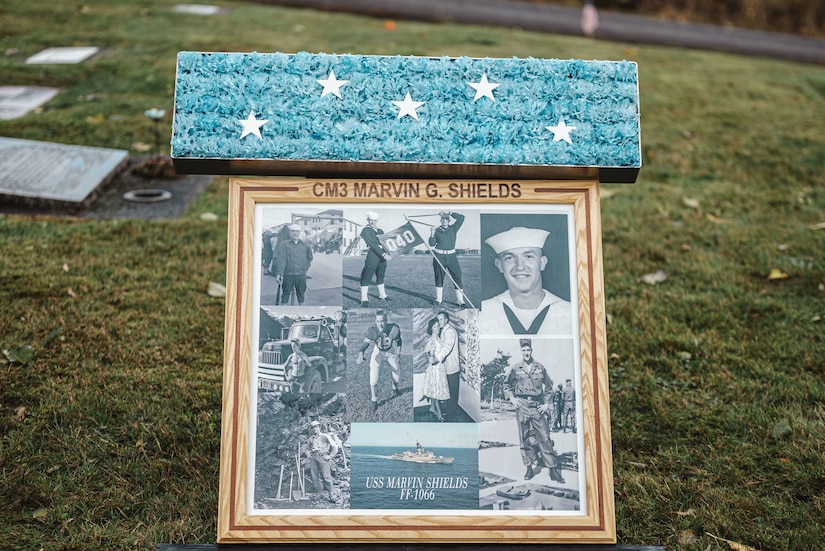
A commemoration plaque and ribbon are displayed in a cemetery.
 "Today was exceptionally moving and exceptionally thoughtful, and I'm very grateful for the Seabee family that continues to make this day very special for me and my family," said Joan Bennett-Shields, Marvin Shields' widow. "We couldn't do this without them." 
 
Camp Shields, a Seabee base in Okinawa, Japan, and the frigate USS Marvin Shields were named in his honor.

Navy Petty Officer 1st Class Ryan Batchelder contributed to this article.

From Battlefield Signals to Patriotic Soundtracks: The Evolution of Military Music in America

Long before the crack of muskets or the roar of artillery defined the battlefield, there was sound. Rhythmic, deliberate, and purposeful, music has accompanied warfare for thousands of years, shaping the movement of armies and the spirit of those who served within them. What began as a practical system of communication evolved over centuries into one of the most enduring symbols of military tradition. Today, that evolution can be heard in performances that range from the piercing notes of fifes and drums to the full, resonant power of modern military bands. The presence of both the Mountain Fifes & Drums and the 1st Marine Division Band at the San Dimas 2026 celebration reflects not only American history, but a much older human story rooted in discipline, coordination, and shared identity.

The origins of military music stretch back to the earliest organized societies. In ancient China, as early as the Zhou Dynasty, drums and gongs were used to coordinate troop movements and maintain order in battle. These instruments were essential tools for communication, capable of conveying commands across distances where voices could not carry (Van Aalst, 1884). Similarly, in ancient Greece, flutes were used to regulate marching pace, particularly among Spartan soldiers, whose discipline depended on synchronized movement (Anderson, 1966). The Romans developed one of the most sophisticated early systems of military signaling, employing instruments such as the tuba and cornu to transmit standardized commands for advancing, retreating, and maneuvering units on the battlefield (Goldsworthy, 2003). In each of these civilizations, music was not ornamental; it was functional, a means of imposing order on chaos.

As warfare evolved through the medieval and early modern periods, so too did military music. European armies increasingly relied on drums and horns to maintain formation and signal commands. By the seventeenth century, the fife and drum corps had become a defining feature of many military units, particularly in the British Army. The high-pitched fife could be heard over the din of combat, while the drum provided both rhythm and authority. These instruments were used not only in battle but also in camp life, marking daily routines such as reveille, meals, and lights out (McWhirter, 2016). Music had become both a practical necessity and a unifying force, reinforcing discipline and identity within the ranks.

When the American colonies entered into rebellion against Great Britain, they brought these musical traditions with them. The Continental Army relied heavily on fifers and drummers, many of whom were young boys, to relay commands and maintain order. On the battlefield, they signaled maneuvers and coordinated movements. In camp, they structured daily life and helped sustain morale. The sound of fifes and drums became inseparable from the experience of the Revolutionary War, echoing across fields where a new nation was being forged. These musicians did more than communicate; they embodied the resolve and unity of a disparate group of colonies striving toward independence (Camus, 1976).

The Mountain Fifes & Drums represent a living continuation of this tradition. By performing music from the eighteenth century on period instruments, they recreate not only the sounds of the Revolutionary War but also its spirit. Their presence serves as a reminder that many of the original musicians were themselves young, learning discipline and responsibility through their service. In this way, the group bridges past and present, allowing modern audiences to experience history not as a distant abstraction but as something immediate and tangible.

Following the Revolutionary War, military music in the United States began to evolve beyond its strictly functional roots. Advances in communication technology gradually reduced the need for musical signals on the battlefield, but the importance of music within military culture did not diminish. Instead, it expanded. Brass and woodwind instruments were incorporated into larger ensembles, giving rise to formal military bands. These groups played a central role in ceremonies, parades, and public events, helping to foster a sense of national identity and pride (Bowles, 2006). Music became a means of connecting the military with the civilian population, transforming from a tool of command into a symbol of shared values.

The United States Marine Corps played a significant role in this transformation. Founded in 1775, the Marine Corps quickly established a musical tradition that would grow in prominence over time. The United States Marine Band, often referred to as “The President’s Own,” became one of the nation’s most respected musical institutions, performing at official events and setting a standard for excellence (U.S. Marine Band, n.d.). Today, units such as the 1st Marine Division Band continue this legacy, representing the discipline, professionalism, and pride of the Marine Corps. Their performances are not merely entertainment; they are expressions of history, service, and national identity.

Despite the changes in instrumentation and function, certain elements of military music have remained constant across time. Whether on an ancient battlefield, a Revolutionary War encampment, or a modern parade ground, music has served to unify individuals into a cohesive whole. It has provided structure, reinforced discipline, and conveyed meaning beyond words. The rhythm of a drum or the call of a fife carries with it a sense of purpose that transcends generations.

The San Dimas 2026 celebration brings these traditions together in a powerful and symbolic way. The Mountain Fifes & Drums represent the origins of American military music, rooted in the struggle for independence. The 1st Marine Division Band represents its evolution into a modern expression of national pride and professional excellence. Together, they illustrate a continuous thread that runs from the earliest days of the nation to the present moment. Their performances are not simply a reflection of history; they are an active participation in it.

As the United States commemorates the 250th anniversary of its founding, the role of military music takes on renewed significance. The sounds that once guided soldiers through the uncertainty of battle now serve to bring communities together in remembrance and celebration. They remind us that history is not only something to be studied, but something to be experienced. In the rhythm of the drum and the melody of the fife, in the precision of a modern military band, the past speaks to the present. It calls us to remember where we have come from, to honor those who served, and to recognize the enduring power of unity through sound.

References

Anderson, W. D. (1966). Music and musicians in ancient Greece. Cornell University Press.

Bowles, E. A. (2006). The history of military music. In T. Sadie (Ed.), The new Grove dictionary of music and musicians. Oxford University Press.

Camus, R. (1976). Military music of the American Revolution. University of North Carolina Press.

Goldsworthy, A. (2003). The complete Roman army. Thames & Hudson.

McWhirter, C. (2016). Battle hymns: The power and popularity of music in the Civil War. University of North Carolina Press.

U.S. Marine Band. (n.d.). History of the United States Marine Band. https://www.marineband.marines.mil/About/Our-History/

Van Aalst, J. A. (1884). Chinese music. Kelly & Walsh.