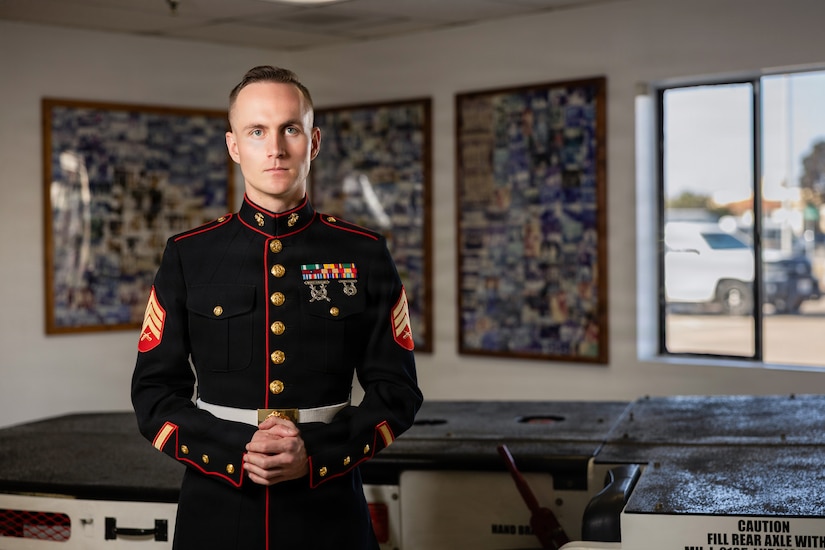
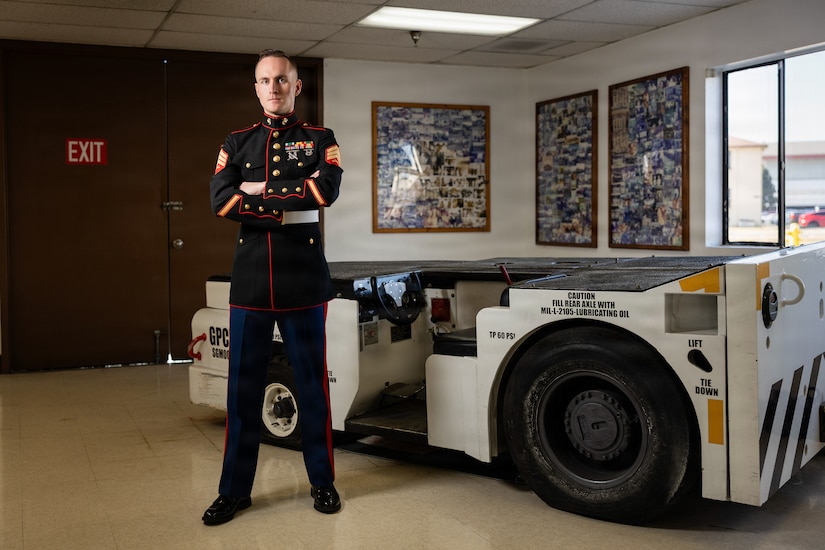
For 15 years, Marine Corps Staff Sgt. Andy Archer lived with a relentless, everyday companion — a pounding headache.
"I'd wake up with a headache and go to bed with a headache," Archer recalled.
He chalked it up to severe allergies or sinus issues, relying on
over-the-counter decongestants to get through his demanding days.
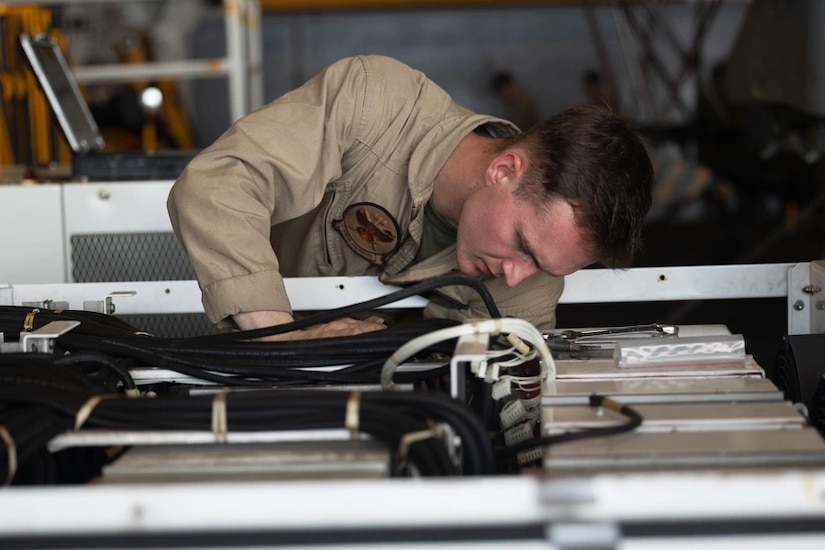
For Archer, a former drill instructor at Marine Corps Recruit Depot
Parris Island, South Carolina, and a current flight line mechanic at
Marine Corps Air Station New River, North Carolina, pushing through the
pain became part of his daily routine. But recently, Archer's vision
began to blur.
"I became nearsighted; it was bad," Archer said. "I thought I was getting old."
He finally mentioned the chronic pain to his doctor, a provider with Marine Centered Medical Home New River.
The doctor ordered an MRI that revealed a mass the size of a golf
ball, measuring roughly 4.4 centimeters, sitting directly in front of
his pituitary gland and pressing against his optic nerve.
Archer needed neurological care, and he needed it fast. It was
suggested that he go to the premier medical hub for complex cases:
Walter Reed National Military Medical Center in Bethesda, Maryland.
At Walter Reed, Archer consulted with Army Lt. Col. Charles Miller,
neurosurgeon, and Army Maj. J. Patel, anterior surgeon, both assigned to
the hospital's skull base team. The specialized surgical team mapped
out an innovative, minimally invasive procedure.
The surgeons planned to extract the massive brain tumor entirely through Archer's nose.
"Historically, most of these surgeries were done open, which is a
much more challenging procedure for the patient," Patel said. "Today, if
a tumor is the appropriate size and location, open surgery just isn't
necessary. Through the nose, we get the best access and the best chance
of complete removal."
The procedure required a highly synchronized collaboration between
two experts. Patel developed a plan to navigate the complex nasal
anatomy and create a clear surgical pathway. Archer had a severely
deviated septum, and Patel likened the fix to "removing the sheetrock
but leaving the studs" so that the nose wouldn't collapse.
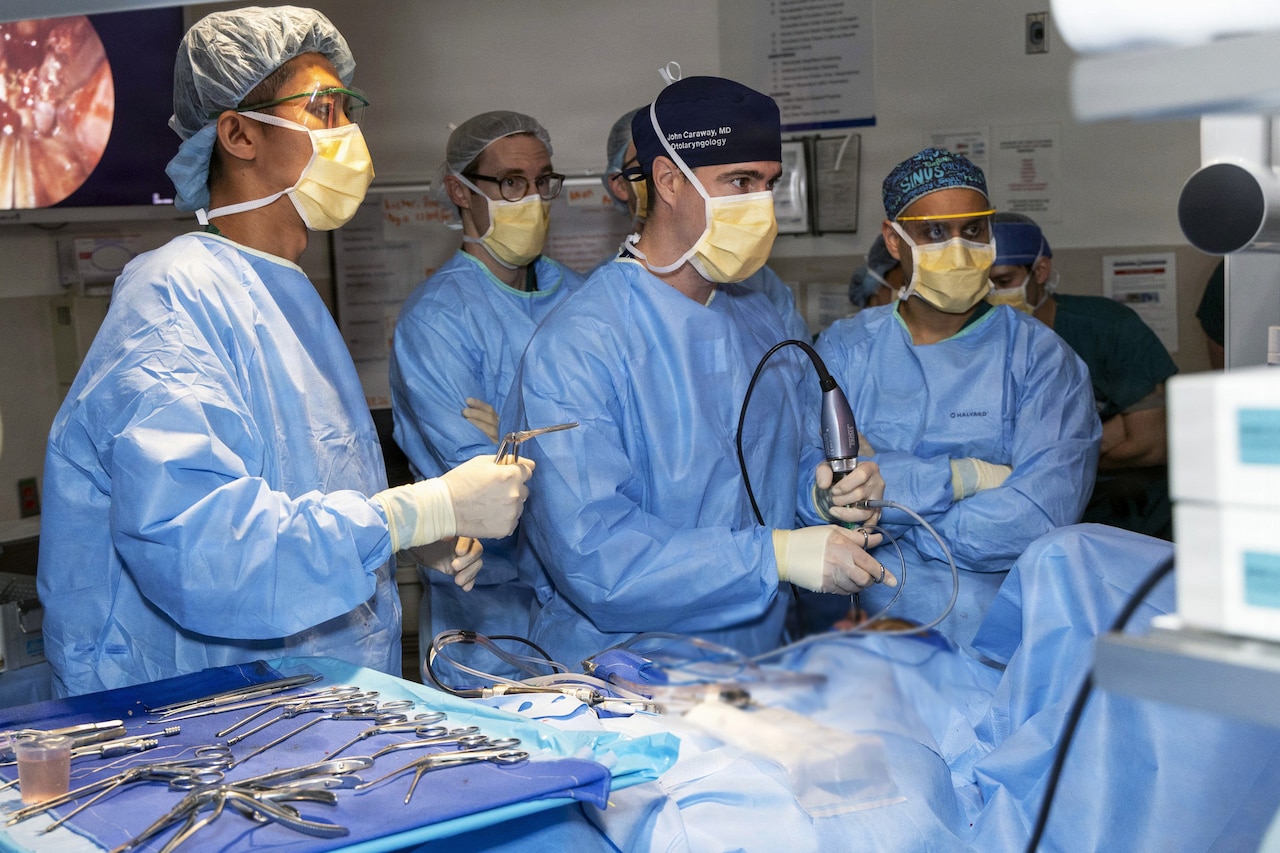
Once the pathway was clear, Patel used an endoscopic camera to
provide high-definition, close-up visualization on a surgical monitor.
This allowed Miller the crucial two-handed freedom to dissect and
extract the tumor safely.
"If he needs to get to critical structures, I can drive the camera
closer, so he has perfect visualization," Patel noted. "Dr. Miller takes
on these complex cases when many surgeons wouldn't want to risk the
complications or step out of their comfort zone. My skills in navigating
the nasal approach are only useful because he is skilled enough to
completely remove the tumor once we get there. Dr. Miller is very well
equipped to do these surgeries. It is a true team effort."
In July, the team successfully removed more than 99% of the benign
mass. Still, a microscopic fraction of the tumor remained wrapped
tightly behind Archer's optic nerve, that if removed, carried major
risks.
"You must ask, 'Is it worth giving the patient a stroke or
permanently changing their perfect vision just to get that last
millimeter?'" Patel said.
Prioritizing the patient's health, the team decided to leave that
final fraction, confident the tumor is highly unlikely to return.
"The biggest thing was to get the tumor out safely," Patel said. "A
minimally invasive approach through the nasal passages is more
challenging and we are mindful that [the tumor] has to be in a certain
spot to go through the nose."
To complete the surgery, the team performed a reconstruction of the
skull base, using a small graft taken from Archer's leg to seal the
area.
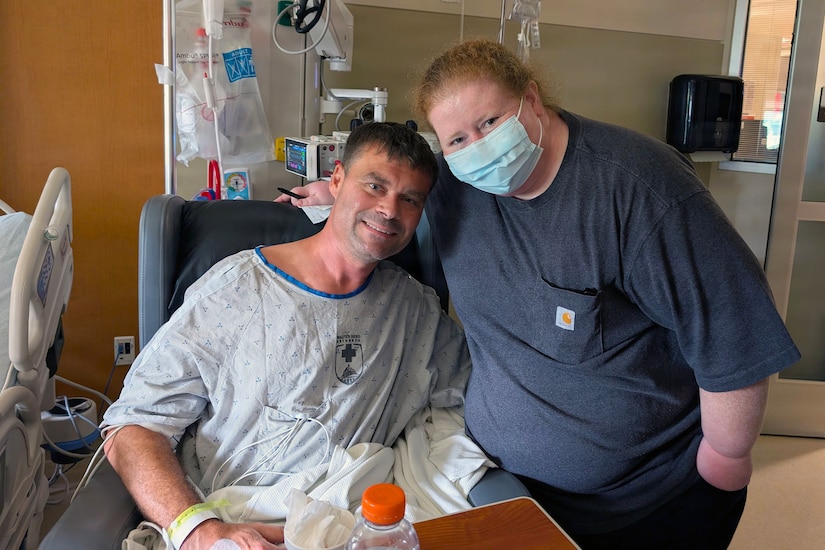
Just two days after surgery, sitting in the surgical intensive care
unit at Walter Reed, there were no visible signs that Archer had just
undergone major brain surgery.
Archer's vision had already started to clear, and while he was
dealing with expected post-operative headaches and leg soreness from the
graft, his spirits were high. He and his wife, Rebecca, have been blown
away by the hospitality and professionalism of the hospital staff.
"The care has been awesome," Archer said, giving special praise to
the nurses, as well as the physical and occupational therapy teams.
Rebecca echoed his sentiments, noting that the on-campus Navy Lodge
provided a comfortable, supportive environment for their recovery
process.
For surgeons Miller and Patel, and the Walter Reed skull base team,
Archer's remarkable outcome highlights a broader mission: ensuring
military beneficiaries know that they do not need to look to the
civilian sector for cutting-edge medical care.
"I don't think anyone else in the Defense Health Agency has this kind
of team performing these complex skull base surgeries," Patel said.
"Our goal is to make sure providers know this capability exists, so
patients have the best options. Most patients are happy to stay in
military healthcare."
Thanks to an observant Navy doctor, a collaborative surgical team and
the innovative capabilities of Walter Reed, Archer's toughest battle
appears to be behind him.







 Posts
Posts

