Showing posts with label aviation training. Show all posts

Friday, July 31, 2026

Face of Defense: Marine Caps Full-Circle Journey With Instructor of Year Honor

Marine Corps Sgt. Kade Prentice walked into a Portland, Oregon, recruiting office looking for a fresh start. Six years later, he stands at the head of a classroom at Naval Air Station North Island, California, in the same schoolhouse where he trained as a young Marine. Today, he teaches the next generation of technicians who keep Navy and Marine Corps aviation in the fight.
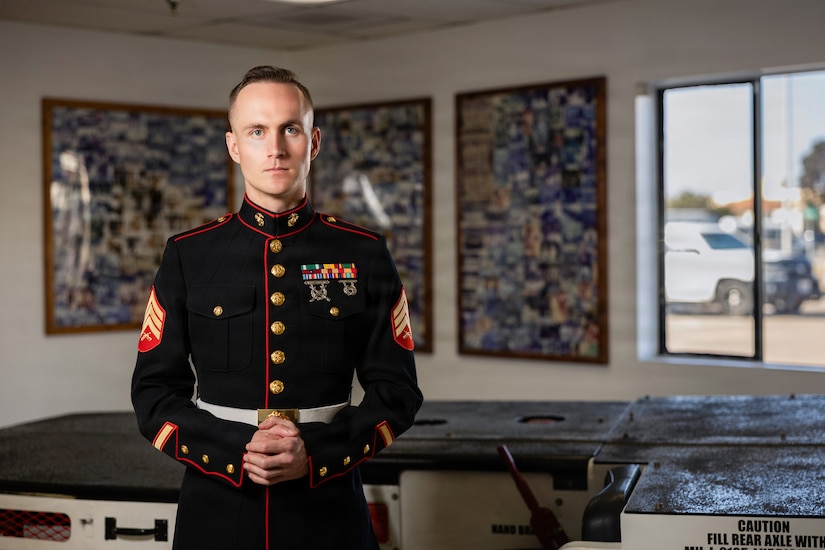
Marine Corps Sgt. Kade Prentice
A Marine stands in a room indoors, with framed photos on the wall behind him and a window.
Job: Aviation Support Equipment Instructor and Course Supervisor
Stationed: Naval Air Station North Island, Calif.
Unit: Center for Naval Aviation Technical Training Unit
Hometown: Happy Valley, Ore.
Prentice is an instructor and course supervisor at the Center for Naval Aviation Technical Training Unit North Island, a subordinate unit of the Center for Naval Aviation Technical Training and a learning center of Naval Education and Training Command.  

In fiscal year 2025, he was named the CNATT domain's Junior Instructor of the Year. The award caps a career that began in NETC's training pipeline, took him from a Marine aviation logistics squadron to a deployment with the 26th Marine Expeditionary Unit and brought him back to the schoolhouse where his own technical training began. 

From Happy Valley to the Pipeline
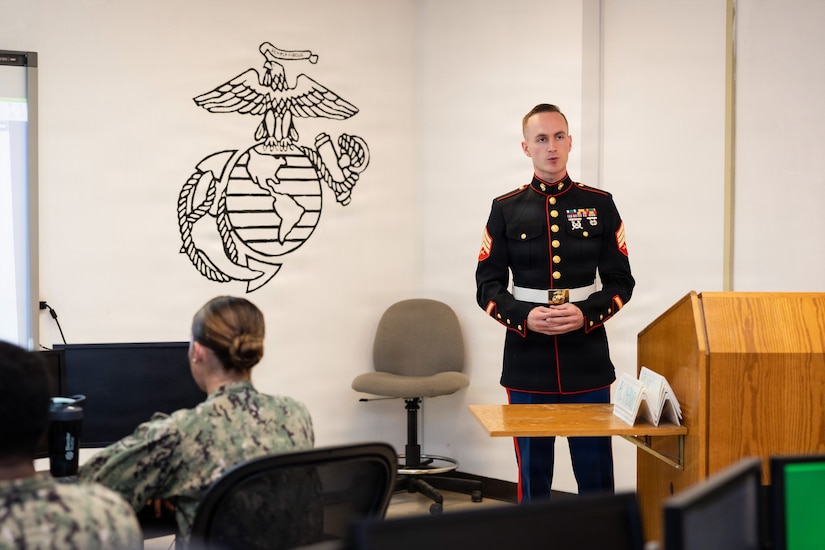
A Marine in a formal uniform stands in a classroom setting and speaks to people sitting at desks.

Prentice grew up in Happy Valley, Oregon, and graduated from Clackamas High School. He started college, but the math on a four-year degree did not add up. 

"I realized what continuing my education would cost, and I had always wanted to serve," he said. "I figured this was a good time to join the military and keep working on my education while I was in." 

His path to the recruiting office took longer than most, but the calculus was simple. 

"It was either take out the loans to finish my four-year degree or find a way to start my life," Prentice said. "Looking back on it, it felt like a no-brainer." 

In December 2019, he reported to Marine Corps Recruit Depot San Diego. After boot camp came Marine combat training at Camp Pendleton, California; the Aviation Support Equipment "A" school at Naval Air Station Pensacola, Florida; and the "C" school at CNATTU North Island, the same courses he now teaches. In February 2021, with the NETC pipeline behind him, he checked in to Marine Aviation Logistics Squadron 26 at Marine Corps Air Station New River, North Carolina, where he advanced to work center supervisor and earned qualifications as a production controller and full-systems collateral duty inspector. 

Tested at Sea

In December 2022, Prentice joined the 26th Marine Expeditionary Unit and deployed aboard the amphibious assault ship USS Bataan and the amphibious transport dock USS Mesa Verde. He served first as a work center supervisor aboard the Bataan before taking over as the support equipment noncommissioned officer in charge aboard the amphibious assault ship USS Mesa Verde. The Marine Corps promoted him to sergeant in January 2024.
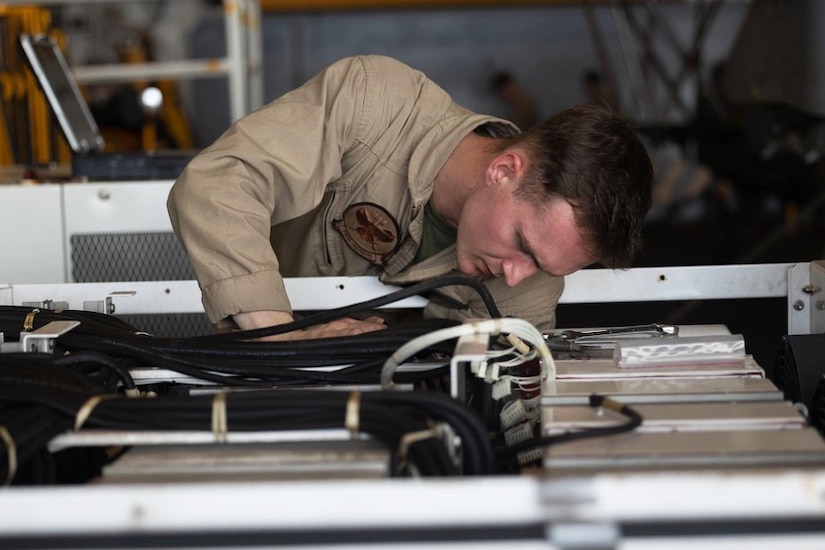
A Marine works on a piece of equipment with black cables on top of it.

Prentice credited the technical foundation he built in NETC schoolhouses with preparing him for the demands of deployment. His operational experience later inspired him to return to the classroom as an instructor. 

"Serving in these high-tempo operational environments highlighted the critical need for expertly trained Marines, which ultimately inspired my transition from the fleet to the classroom in August 2024," Prentice said. 

Back to the Schoolhouse
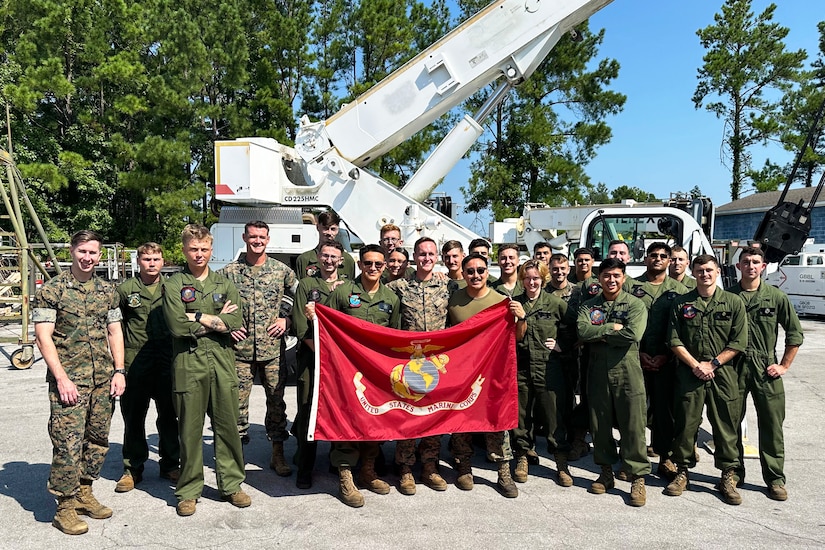
Marines stand as a group outdoors during daytime and smile for the camera, with two people in front holding a red Marine Corps flag.

That August, Prentice received orders to CNATTU North Island, the same schoolhouse he briefly attended as a student four years earlier. Within months, he was selected as a course supervisor, and by the end of the fiscal year, he had earned Junior Instructor of the Quarter and, ultimately, fiscal year 2025 Junior Instructor of the Year for the CNATT domain. 

The hardest part of being a Marine, he said, was never the technical material. 

"I was an awkward kid growing up. It was hard to stand in front of people and tell them what needed to be done," Prentice said. "I was not a leader before I joined, but I have grown into the role exponentially."

We as Marines are constantly told we have to hold a higher standard, and it gets ingrained into you. We are all individuals in the Marine Corps, but we all hold the title of Marine, and that is what binds us together. You just have to figure out what works for you in order to exemplify the title that you have earned."
Marine Corps Sgt. Kade Prentice

Prentice sees his job as building both the technical foundation and the confidence that makes it useful in the fleet. He recalled one junior Marine who arrived eager but was hesitant during practical applications. With extra time on the systems and targeted coaching, the change was hard to miss. 

"The initial awkwardness completely faded, replaced by a quiet, grounded confidence," Prentice said. "By the end of the course, not only had they mastered the technical expertise required for the fleet, but they were actively stepping up to assist their peers." 

Winning Junior Instructor of the Year is the proudest moment of Prentice's career, so far. It also serves as a reminder that the work he saw as routine was preparing Marines for the fleet. 

"Maybe what I feel is just a normal day is a lot more than that," Prentice said. 
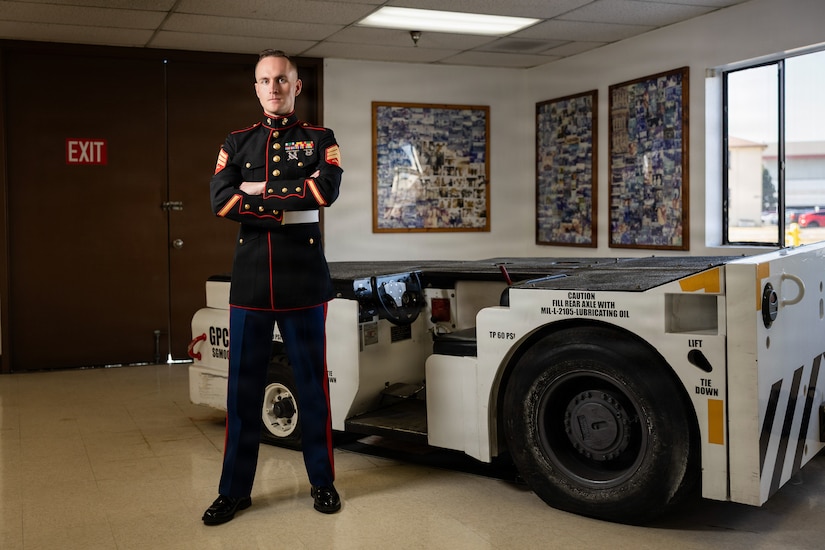
A Marine wearing a formal uniform stands with his arms crossed in a room near a short vehicle, with a window and framed pictures on the wall in the background.

He is about a year away from earning a bachelor's degree in business administration, and is weighing reenlistment, an officer package or a transition to the civilian sector. Prentice said NETC has given him the tools to succeed in any of those paths. 

"I have had a lot more days where I am so glad that I did this," he said, "than days where I am not."

Wednesday, July 29, 2026

Fort Rucker's Unmanned Advanced Lethality Course Ramps Up Tactical Drone Training

The Unmanned Advanced Lethality Course at Fort Rucker, Alabama, is pushing forward with a series of updates aimed at strengthening tactical proficiency and meeting student expectations, said Army Staff Sgt. Mario Rostran, the course's noncommissioned officer in charge, and Army Chief Warrant Officer 3 Robert Gatta, the course manager.

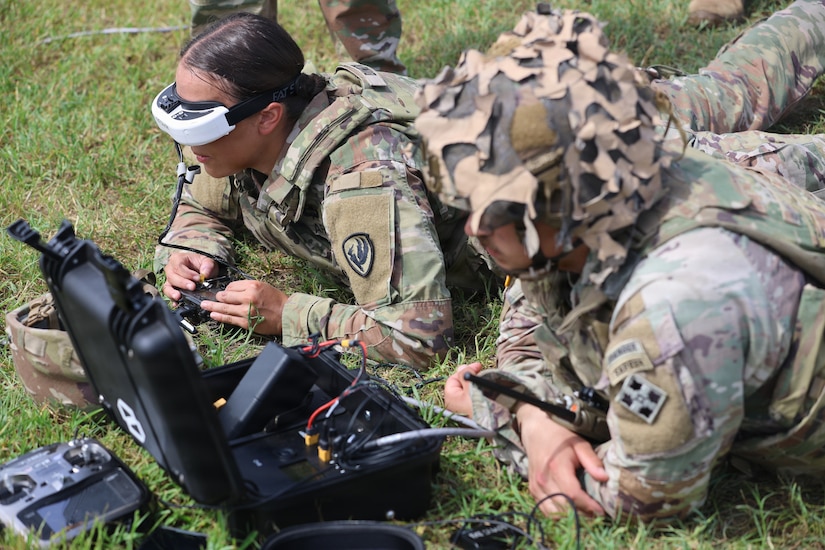
A woman wearing a camouflage military uniform and a tactical headset is lying in the grass in the prone position while a man in similar attire and a helmet looks at a computer screen.

Rostran said the leadership team is focused on refining instruction in response to student feedback to ensure the course delivers the advanced-level rigor it promises.

"We're continuing to improve the course," he said. "We're taking comments as we go and making sure [that] we're meeting the standards students expect. The goal is to make this the advanced course it claims to be."

Working alongside the team, Gatta is helping expand hands-on training and strengthen tactical application throughout the program.

"The most significant update is increasing the amount of physical, kinetic engagements from five to 12," he said. "We have been working to refine the overall course to run smoother and provide the most up-to-date data."

To meet the demand for advanced instruction, the course is shifting to a more tactical framework. Gatta noted the class will complete a culminating exercise this week at the drone training facility in Daleville, Alabama, marking a new experience for the students.

"This exercise will demonstrate a more real-world tactical environment and incorporate a close-quarters battle level of training, whereas previous emphasis has been heavily placed on outdoor live flights," he said. "Our current goal is to make the training more tactical in nature. I believe we have several solid plans to build on moving forward."

During this iteration of the course, students conducted live-engagement training using a purpose-built attributable system, the Shank 1.0, and C-4, a versatile plastic explosive. The event allowed students to apply lessons learned by flying the system, coordinating altitude and executing tactical employment against a designated target.

Army Sgt. 1st Class Riley Watts, assigned to Company A, 1st Battalion, 14th Aviation Regiment, spent months trying to enroll in the course. He said attending has given him a clearer view of how unmanned aircraft systems fit into the future of Army aviation.

"This is a great course to keep you relevant in today's force," Watts said. "Seeing how UAS is being implemented and utilized in today's Army is eye-opening, and it shows you how important it is to understand these systems."

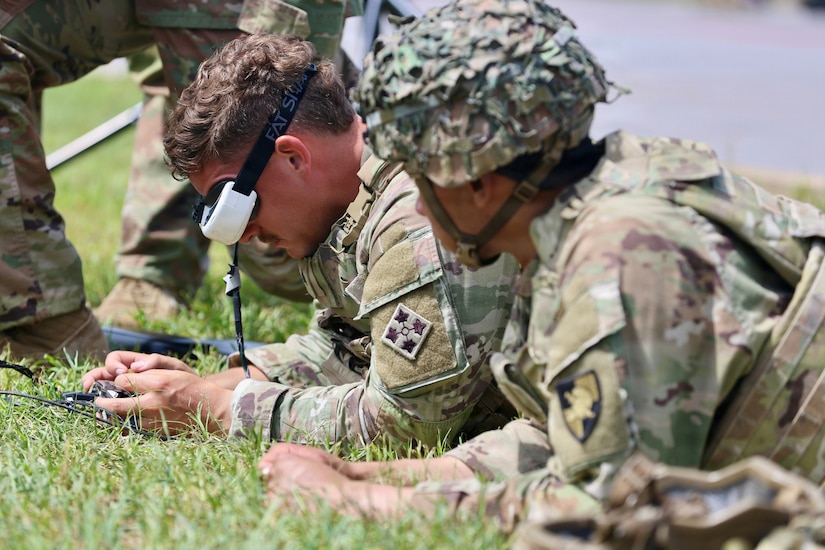
A man wearing a camouflage military uniform and a tactical headset operates a controller while lying in the grass alongside another man in similar attire who is watching.

Matthew Baldwin, a civil engineering major at the U.S. Military Academy, is attending to take tactical drone employment strategies back to the academy's future applied systems and tactics team. His leaders pushed to send two cadets to the course to expand their understanding of drone employment and to share that knowledge when they return.

Baldwin, who hopes to commission into the air defense artillery branch, said the course offers a perspective that will be important to future Army operations.

"One of the big questions is how to counter drones effectively," he said. "You're talking about sending a very expensive rocket to take out a cheap drone. Understanding drones from the operator's side, how they fly, what they look for, helps you understand how to counter them."

Although he arrived with limited tactical flying experience, he said the hands-on instruction has significantly boosted his confidence.

"I didn't know how to tactically fly. It's a completely different flying style," Baldwin said. "I feel better flying them, and now we're trying to develop a training program to help build other pilots on our team."

Beyond flying, Baldwin highlighted the value of the course's mission-planning segments.

"I've really appreciated the planning side, [the military decision-making process], troop-leading procedures, what goes into reconnaissance," he said. "I hadn't learned a lot of that yet. Going into my [fundamentals of small-unit operations] class and eventually into the Army, my knowledge base is definitely better now."

The Unmanned Advanced Lethality Course runs six times per fiscal year, providing recurring opportunities for soldiers seeking advanced UAS training. Upcoming course dates are Sept. 14-Oct. 2, and Nov. 2-20.