Showing posts with label force readiness. Show all posts

Friday, July 31, 2026

Hegseth: Department Success Buoyed by Courage, Spirit, Leadership

The War Department has had a lot of success in the past 19 months, said Secretary of War Pete Hegseth. And that's in no small part due to the dedication and training of the men and women in uniform who form the heart of the U.S. military.

But underwriting that success is presidential leadership from the very top, Hegseth told President Donald J. Trump today during a cabinet meeting at Camp David in Maryland.
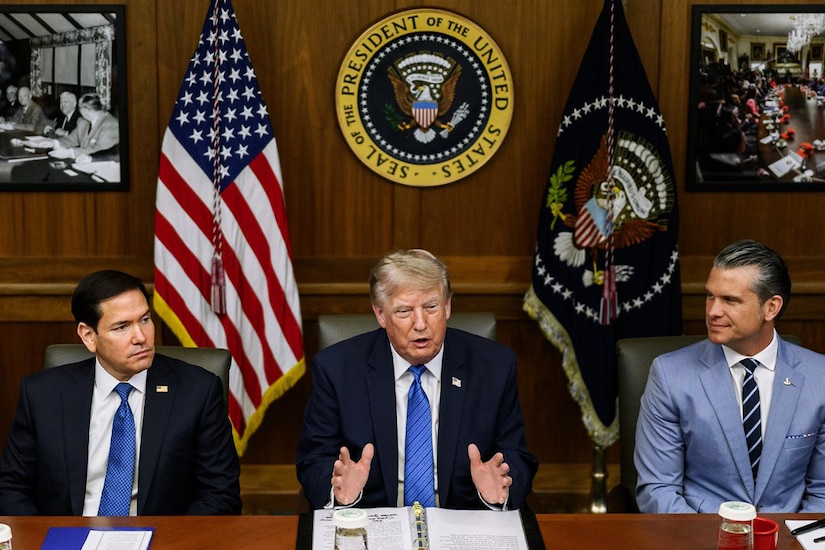
Three men in business attire sit next to each other at a table; behind them are an American flag and another flag.

"It's great Americans here and all around the country, and all around the world, who are the core of what keeps us safe," Hegseth said. "But in order to do that, you have to have a leader that's willing to put them in a position to do it."

The secretary listed three things Trump provides that make success possible for American warfighters: courage, a mandate to restore the warrior spirit and a generational investment in making the U.S. military the best it can be.

"I think people miss ... the courage it takes to seal the border, to say we're going to do it, and we're going to do it every single day, and we're going to do it on behalf of the American people," Hegseth said.
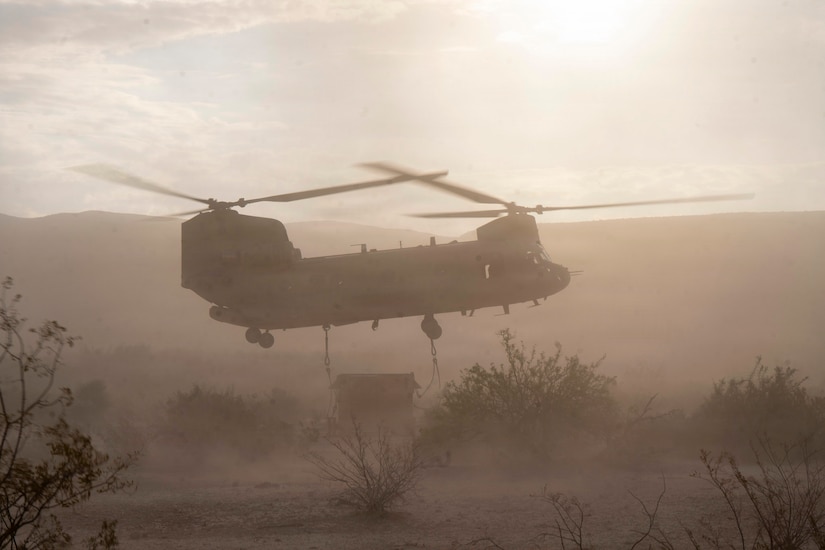
A large helicopter with a sling hanging from it hovers over a square piece of equipment in the dusty desert.

Since January 2025, American troops from all services, and with various skills, have been working first to gain and then maintain 100% operational control of America's southern border and to stop both drug traffickers and the flow of illegal immigration.

"[It takes] courage to bomb the Houthis and say we will maintain freedom of navigation," Hegseth said. "If you wonder why they're not involved in this conflict [in Iran], even though they're a proxy of Iran, it's because they've felt the weight of American power for 45 days, and you had the courage to do that."

In the Red Sea, Iran-backed Houthi forces had been attacking U.S. ships and those of other nations for years, disrupting legal commerce for all. In March 2025, the U.S. took steps to put an end to those attacks during Operation Rough Rider, when U.S. Central Command, at the direction of the president, began a series of attacks at key terrorist Houthi targets in Yemen. Two months later, the president announced that the Houthis agreed to a ceasefire.

Operation Midnight Hammer, the June 2025 mission to obliterate Iran's nuclear capability, also resulted in a ceasefire of the 12-day war, Hegseth noted, calling it a bold move no other president had dared to do.

"Other presidents had the option on their table to do [that], but they never pulled the trigger because of the complications, because of the challenges, because of the risk," he said. "Courage."

The secretary also cited presidential leadership and a willingness to take risks as key enablers for stopping the flow of illegal drugs in the Caribbean, the capture of Venezuelan leader Nicolás Maduro as part of Operation Absolute Resolve and the willingness to undertake the significant Operation Epic Fury, to ensure the Iranian regime will never have a nuclear weapon.

Embolden Spirit
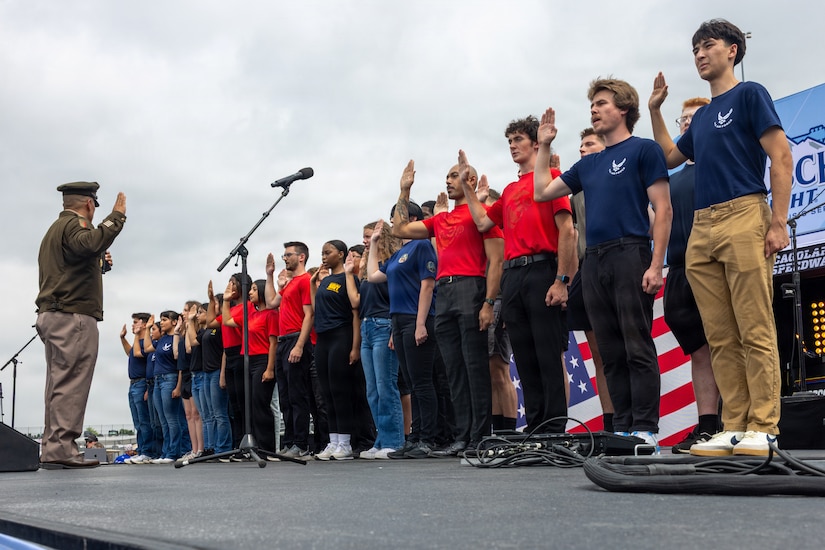
More than a dozen young people stand together on a stage and raise their right hands as a man in a formal military uniform stands in front of them with his own hand raised.

The secretary also credited the president with reinvigorating the spirit of the U.S. armed forces by providing a mandate to eliminate distractions in the force and refocus the warfighter on lethality, meritocracy, accountability, readiness and standards.

"You talk about spirit all the time, and you're right to do so," Hegseth told Trump. "When you rip out [diversity, equity and inclusion], when you rip out social engineering and social justice, and you put in merit; and then you untie the hands of commanders to be commanders, to enforce discipline and accountability, to get back to basics, then you get historic reenlistment inside our ranks."

The secretary said that reinvigorated spirit has caught on across the nation and ignited an interest in serving, adding that the U.S. military is reaping the benefits through increased enlistments and retention.

"Our best people ... are staying, because they want to be in that kind of department," he said. "And then [there is] the historic recruitment record amongst young Americans. Every month our department breaks records."

Investing in Now, Future
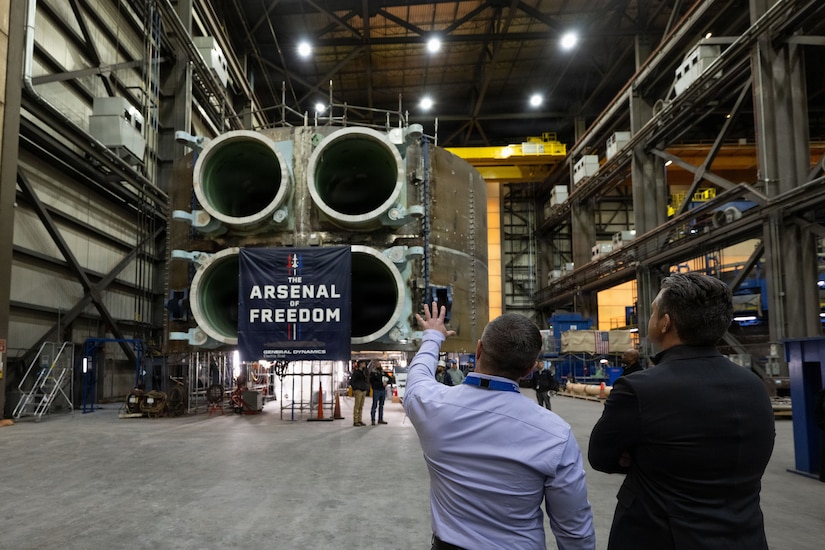
Two men stand near each other and look at a large piece of military hardware inside a large building. A sign hangs off the equipment that says, "The Arsenal of Freedom."

This year, the president has asked for $1.5 trillion to fund the U.S. military. However, Hegseth said it's not going to be business as usual for how that money will be spent, noting that Deputy Secretary of War Steve Feinberg will be responsible for ensuring the money is spent in a way that truly strengthens the department.

"This is a businessman in charge; this is the deputy secretary of our department, who's a turnaround guy, just like the president is — saying we will not fund ... the department the way we have in the past," Hegseth said.

In addition to funding, the secretary highlighted recent efforts to strengthen the defense industrial base, including being a better customer, which has resulted in America's industry partners reinvesting in themselves, ultimately driving down costs to the department.

"[There is] $75 billion in private investment from defense companies that are now investing in new plants, new equipment and new assembly lines, to build the munitions of the future faster than ever possible," the secretary told the president. "That's saving taxpayer dollars because the companies themselves are investing — the arsenal of freedom would never happen without you."

Thursday, July 16, 2026

DHA Official Says TRICARE Pharmacy Ensuring Essential Medication Delivery Worldwide

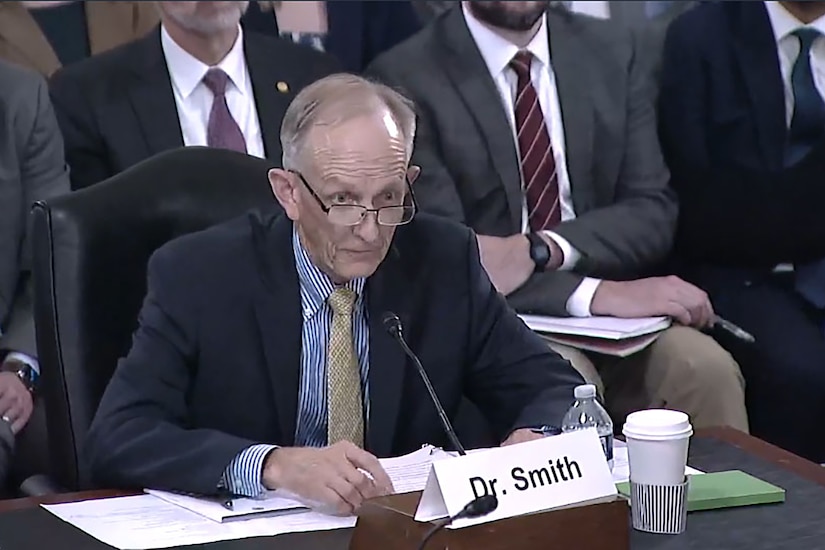
The War Department delivers one of the most comprehensive health benefits, through TRICARE, including an exceptional prescription drug benefit program, said David J. Smith, Defense Health Agency deputy director, during a Senate Armed Services Committee's personnel subcommittee hearing in Washington yesterday. 

A man wearing a suit seated at a table speaks into a microphone.

TRICARE covers most prescription drugs approved by the U.S. Food and Drug Administration. Those eligible for coverage include active duty, military retirees, their families, and National Guard and reserve component service members. Eligibility for TRICARE is determined by the sponsor's uniformed service and reported in the Defense Enrollment Eligibility Reporting System. 

"DHA is proud of the comprehensive worldwide pharmacy benefit it offers to our 9.5 million beneficiaries," Smith said. 

TRICARE currently offers at least one network pharmacy within a 15-minute drive for more than 98% of beneficiaries, and more than 99% are within a 30-minute drive of one of the network's thousands of pharmacies.

A hospital waiting area.
A pharmacy waiting area.
"The department is effectively managing this important health benefit that helps support force readiness, recruitment, retention and the health of our service members and their families," Smith said. "A resilient pharmacy program supports both beneficiary health and military readiness by ensuring reliable access to essential medications wherever the force operates." 

Smith also said that clinical effectiveness remains the primary determinant of TRICARE decisions. Comparative cost-effectiveness and lifecycle affordability are also evaluated to ensure that finite military health resources are used efficiently while maintaining high-quality care. 

Taxpayer savings were achieved through negotiated discounts for prescriptions. These savings help offset increasing pharmaceutical expenditures and preserve funding capability across the broader military health system enterprise. 

Pharmaceutical spending represents one of the fastest-growing components of the department's health expenditures. Continued growth in specialty pharmaceuticals, biologics and chronic disease therapies will require ongoing efforts to preserve affordability while maintaining high-quality care for beneficiaries, Smith added. 

The department also considers supply chain continuity and the ability to reliably support military requirements when evaluating long-term pharmaceutical management strategies.

Wednesday, December 10, 2025

Army Activates U.S. Army Western Hemisphere Command in Historic Transition Ceremony

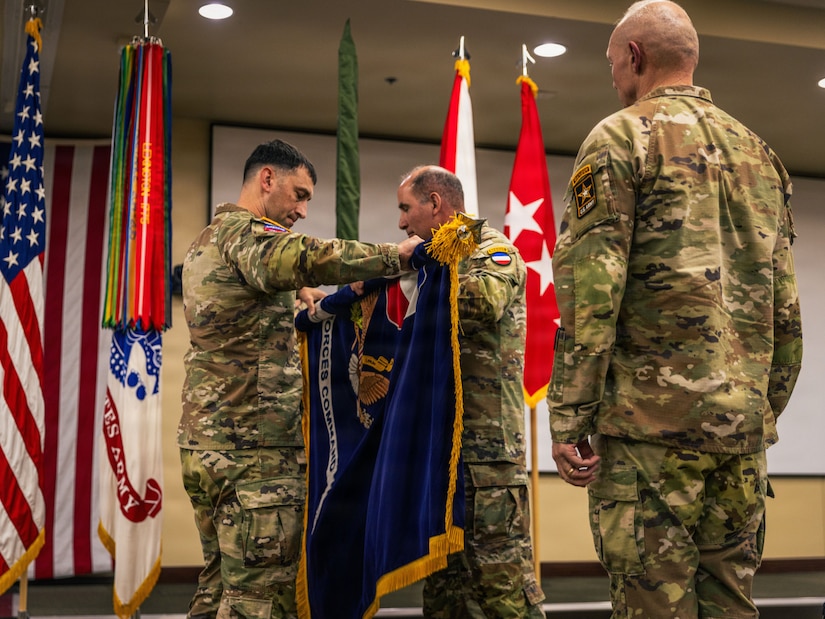
The Army activated the U.S. Army Western Hemisphere Command in a ceremony held Dec. 5 at Fort Bragg, North Carolina — uniting U.S. Army Forces Command, U.S. Army North and U.S. Army South into a single, four-star operational headquarters.

Two men wearing camouflage military uniforms roll up a dark blue flag with gold fringe as a man in similar attire watches in the foreground; the American flag and other military flags are behind them.

The ceremony also marked the casing of the U.S. Army Forces Command colors and the retirement of its commanding general, Army Gen. Andrew Poppas, who led the command since July 2022. 

"Today we become something new, but [U.S. Army Forces Command]'s spirit of readiness, resilience and warfighting strength will not fade. Rather, that spirit will radiate throughout the Army," said Poppas, who retired after more than 37 years of service.

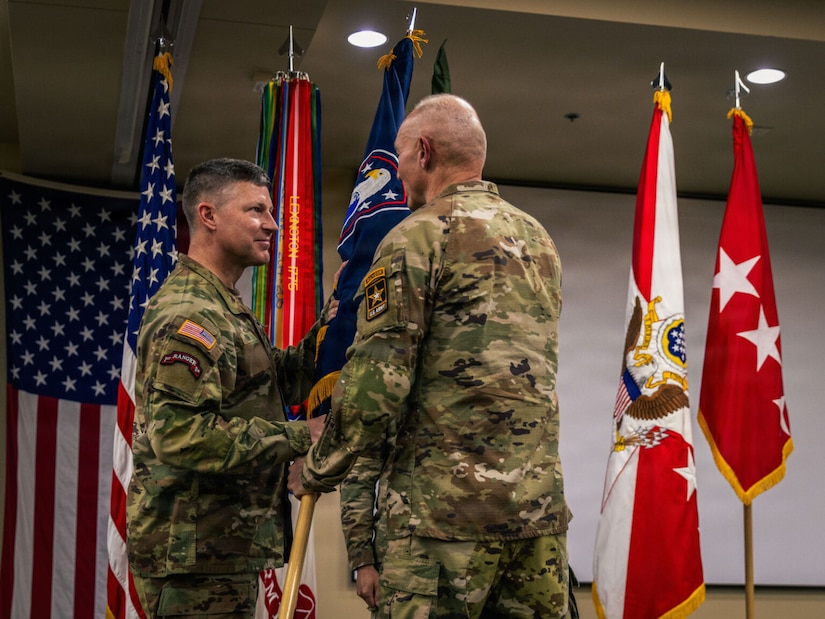
Army Gen. Joseph A. Ryan assumed command of West-Hemcom. He previously served as the Army's deputy chief of staff for Operations, Plans and Training.

The ceremony marked a significant moment in the Army's transformation as the establishment of West-Hemcom is part of a broader transformation campaign to modernize Army command structures and improve operational agility.

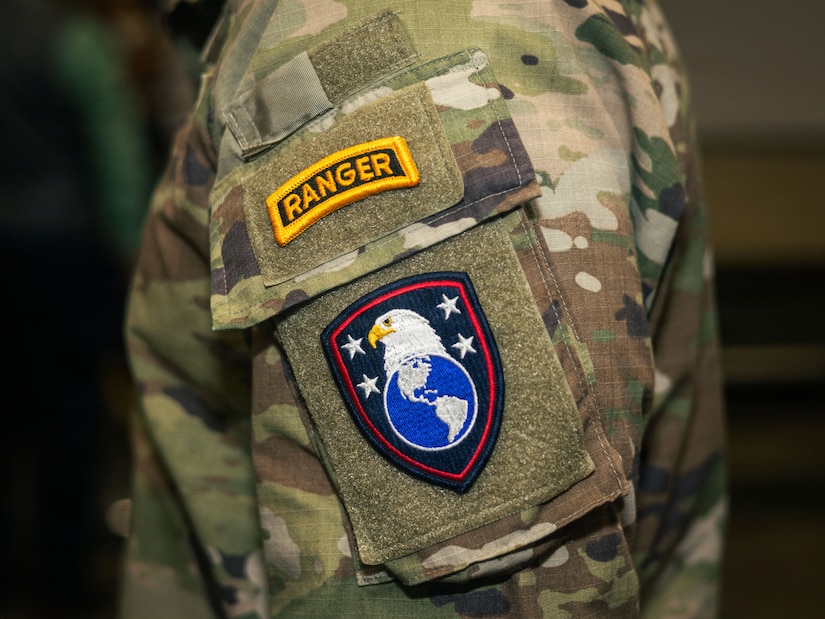
An up-close picture of the shoulder of a camouflage military uniform with a tab that says "Ranger" on top and a patch with an eagle head over a globe with four white stars depicted on a black background.

The newly established command is an operational warfighting theater command headquarters overseeing all Army plans, posture, operations and power projection in support of U.S. Northern and Southern Commands — and aligned with national strategic priorities. 

"Western Hemisphere Command is designed for speed, flexibility and relevance to effectively respond to challenges in our complex times," said Army Chief of Staff Gen. Randy George. "By consolidating these headquarters and aligning the theater, we will streamline processes, eliminate redundant efforts and free up talent and resources. This will allow us to better support our fighting formations." 

West-Hemcom unifies domestic-response capabilities from U.S. Army North, regional engagement expertise from U.S. Army South and large-scale readiness oversight from U.S. Army Forces Command. This integration delivers uninterrupted readiness, rapid force generation and expertise in homeland defense and civil support. It also enables the Army to respond more rapidly to crises and to continue building strong military alliances. 

"Today is much more than a change of command ceremony," Poppas said. "It's a major step toward the merger of three powerhouse Army headquarters into one operational, transregional team that will face the nation's top strategic priorities."

A man wearing a camouflage military uniform passes a guidon with a flag to another man in similar attire; the American flag and other military flags are behind them.

The activation of West-Hemcom is the first step in a conditions-based transformation. By February 2026, the new command will reach its initial operational capability and will be assigned to Southcom and Northcom to prepare to accept theater Army authorities and responsibilities. Following initial operational capability, U.S. Army North and U.S. Army South will inactivate. If all conditions are met, West-Hemcom will reach full operational capability by summer 2026. 

"Today, we continue in the Army's rich history of transformation — combining Forces Command, Army North and Army South — to form the United States Army Western Hemisphere Command," Ryan said. "The Army is making an enormous investment in this transformation, combining three important, effective and historically capable commands into one. It is our responsibility to deliver returns on that investment."