The War Department has had a lot of success in the past 19 months, said Secretary of War Pete Hegseth. And that's in no small part due to the dedication and training of the men and women in uniform who form the heart of the U.S. military.
But underwriting that success is presidential leadership from the very top, Hegseth told President Donald J. Trump today during a cabinet meeting at Camp David in Maryland.
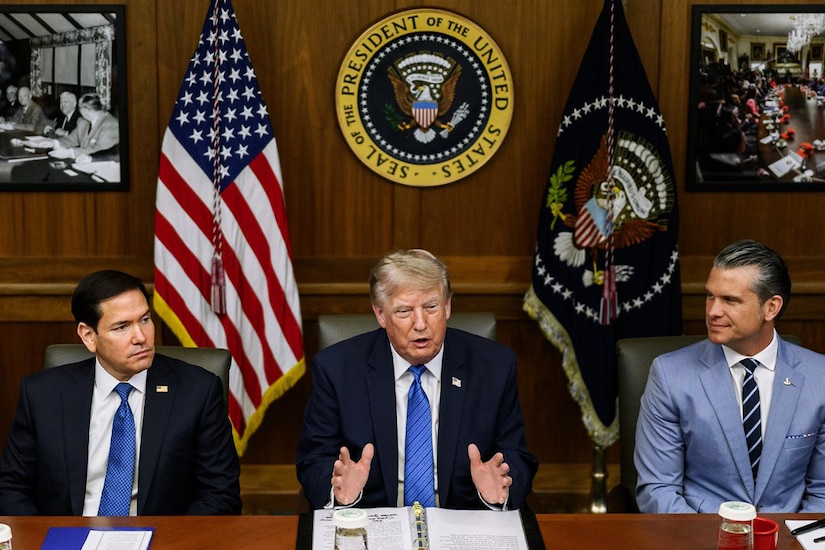
"It's great Americans here and all around the country, and all around the world, who are the core of what keeps us safe," Hegseth said. "But in order to do that, you have to have a leader that's willing to put them in a position to do it."
The secretary listed three things Trump provides that make success possible for American warfighters: courage, a mandate to restore the warrior spirit and a generational investment in making the U.S. military the best it can be.
"I think people miss ... the courage it takes to seal the border, to say we're going to do it, and we're going to do it every single day, and we're going to do it on behalf of the American people," Hegseth said.
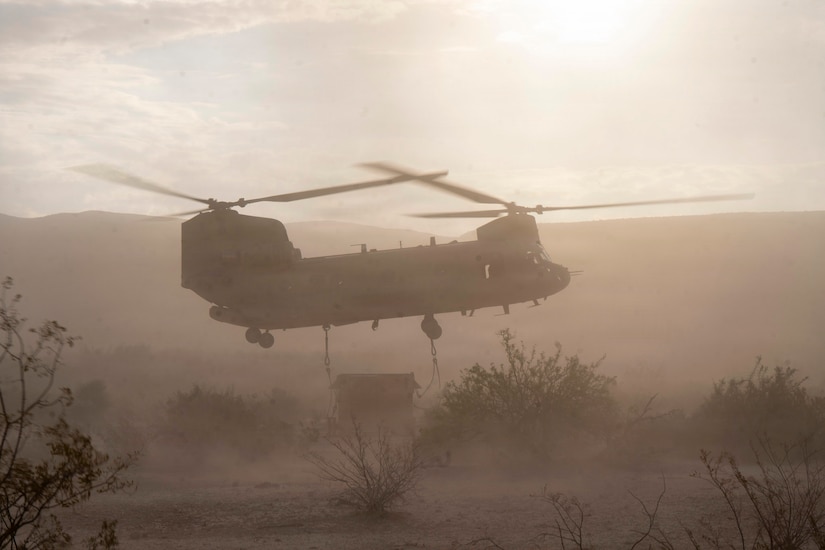
Since January 2025, American troops from all services, and with various skills, have been working first to gain and then maintain 100% operational control of America's southern border and to stop both drug traffickers and the flow of illegal immigration.
"[It takes] courage to bomb the Houthis and say we will maintain freedom of navigation," Hegseth said. "If you wonder why they're not involved in this conflict [in Iran], even though they're a proxy of Iran, it's because they've felt the weight of American power for 45 days, and you had the courage to do that."
In the Red Sea, Iran-backed Houthi forces had been attacking U.S. ships and those of other nations for years, disrupting legal commerce for all. In March 2025, the U.S. took steps to put an end to those attacks during Operation Rough Rider, when U.S. Central Command, at the direction of the president, began a series of attacks at key terrorist Houthi targets in Yemen. Two months later, the president announced that the Houthis agreed to a ceasefire.
Operation Midnight Hammer, the June 2025 mission to obliterate Iran's nuclear capability, also resulted in a ceasefire of the 12-day war, Hegseth noted, calling it a bold move no other president had dared to do.
"Other presidents had the option on their table to do [that], but they never pulled the trigger because of the complications, because of the challenges, because of the risk," he said. "Courage."
The secretary also cited presidential leadership and a willingness to take risks as key enablers for stopping the flow of illegal drugs in the Caribbean, the capture of Venezuelan leader Nicolás Maduro as part of Operation Absolute Resolve and the willingness to undertake the significant Operation Epic Fury, to ensure the Iranian regime will never have a nuclear weapon.
Embolden Spirit
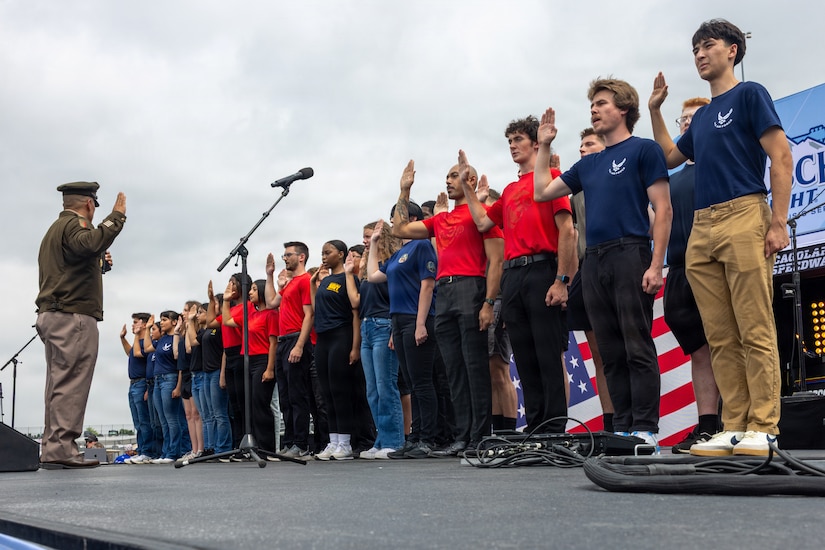
The secretary also credited the president with reinvigorating the spirit of the U.S. armed forces by providing a mandate to eliminate distractions in the force and refocus the warfighter on lethality, meritocracy, accountability, readiness and standards.
"You talk about spirit all the time, and you're right to do so," Hegseth told Trump. "When you rip out [diversity, equity and inclusion], when you rip out social engineering and social justice, and you put in merit; and then you untie the hands of commanders to be commanders, to enforce discipline and accountability, to get back to basics, then you get historic reenlistment inside our ranks."
The secretary said that reinvigorated spirit has caught on across the nation and ignited an interest in serving, adding that the U.S. military is reaping the benefits through increased enlistments and retention.
"Our best people ... are staying, because they want to be in that kind of department," he said. "And then [there is] the historic recruitment record amongst young Americans. Every month our department breaks records."
Investing in Now, Future
This year, the president has asked for $1.5 trillion to fund the U.S. military. However, Hegseth said it's not going to be business as usual for how that money will be spent, noting that Deputy Secretary of War Steve Feinberg will be responsible for ensuring the money is spent in a way that truly strengthens the department.
"This is a businessman in charge; this is the deputy secretary of our department, who's a turnaround guy, just like the president is — saying we will not fund ... the department the way we have in the past," Hegseth said.
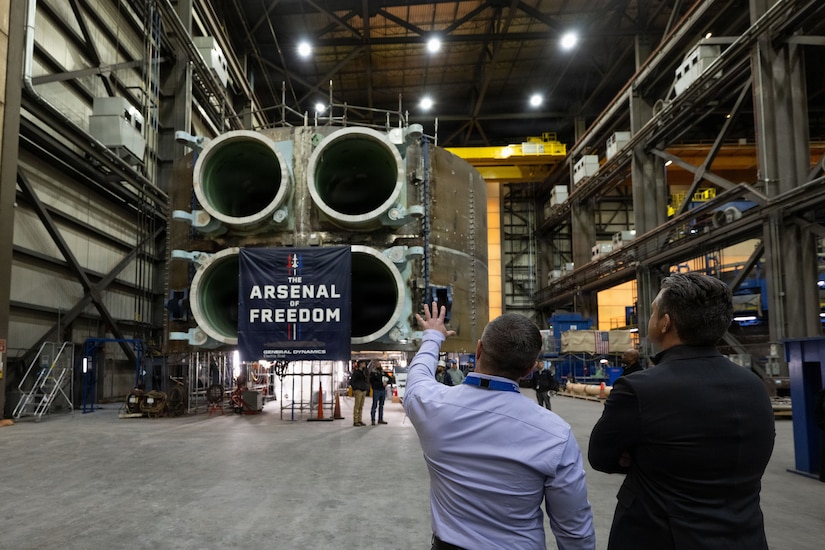
In addition to funding, the secretary highlighted recent efforts to strengthen the defense industrial base, including being a better customer, which has resulted in America's industry partners reinvesting in themselves, ultimately driving down costs to the department.
"[There is] $75 billion in private investment from defense companies that are now investing in new plants, new equipment and new assembly lines, to build the munitions of the future faster than ever possible," the secretary told the president. "That's saving taxpayer dollars because the companies themselves are investing — the arsenal of freedom would never happen without you."


 Posts
Posts

