Showing posts with label military health. Show all posts

Wednesday, September 09, 2026

Department Recognizes Suicide Prevention Programs for Supporting Warfighters

The War Department recognized unique and innovative suicide prevention programs during a ceremony in the Pentagon's Hall of Heroes, Sept. 2.
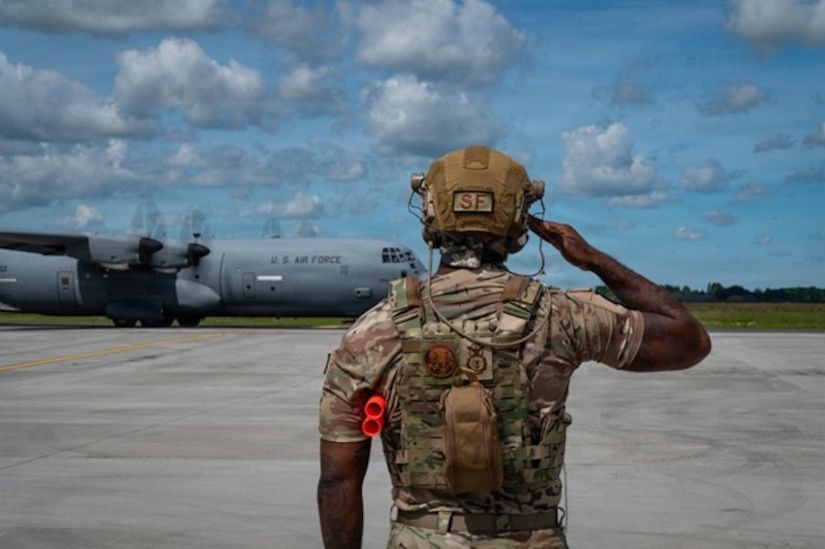
A person wearing a camouflage military uniform and hearing protection salutes while a large aircraft prepares for takeoff.

The 11 department and two Coast Guard programs were recognized for building partnerships, equipping leaders and peers, connecting people with resources, and creating environments in which service members and families could more readily seek support.

"It is not just what they did during the last Suicide Prevention Month," said Alicia Matteson, Defense Suicide Prevention Office acting director. "They represent sustained efforts, informed by data, informed by the needs of their particular communities that they are serving."

Keith Bass, assistant secretary of war for health affairs, praised each of the honorees before handing out the awards.

"Today, we honor outstanding individuals for their efforts. I was just absolutely in awe of the creativity and the passion," Bass said. "Thank you on behalf of the Military Health System."

Joining Bass and Matteson during the annual event were Tim Hoyt, Defense Health Agency chief mental health officer, and Coast Guard Rear Adm. Shane Steiner, Coast Guard deputy assistant commandant for workforce and family services.

September may be Suicide Prevention Month, Hoyt noted, "but the individuals and commands we recognize today did not limit their work to a single month, event or campaign. They invested in suicide prevention throughout the year."

Hoyt added that celebrating these efforts today conveys to the force that the department values a multilayered approach to suicide prevention, which includes:

  • Leaders who know and care for their people.
  • Commands who act before concerns become a crisis.
  • Programs that make support easier to access.
  • Teams that strengthen connection and belonging.

The recognized programs represent a vital part in fostering that sense of support and connection in military communities, the speakers underscored.

Bass said when someone seeks care in a military hospital or clinic, "we will wrap our arms around that individual. We're going to take care of them and we're going to take care of our families. We have to continue to push this awareness. Nobody's alone. We do this as a team to take care of our folks."
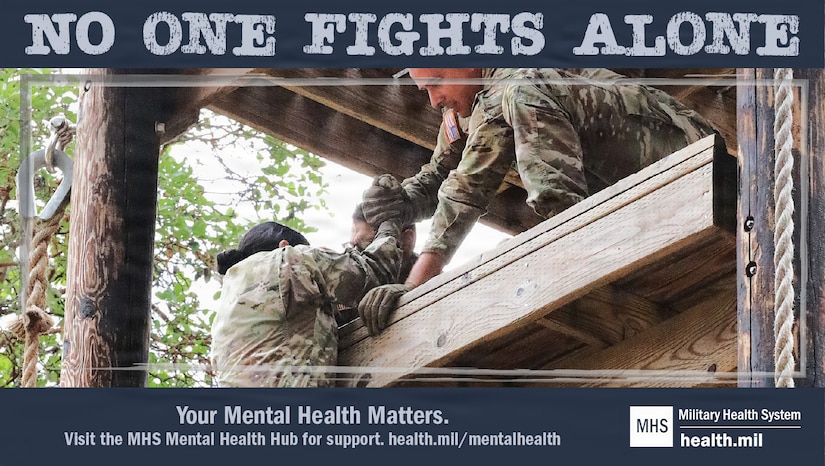
A person wearing a camouflage military uniform pulls a person in similar attire over an obstacle.

During the ceremony, leaders emphasized that hope resounded throughout each team's efforts to prevent suicide.

"Hope is a belief that things will get better. But it's more than that," Matteson said. "It is also having the agency to make it so. And sometimes we forget that piece. The agency to make it so needs to exist for individuals to have hope that things will get better."

Each program was recognized for its outstanding prevention efforts and was evaluated by the military services based on criteria provided by the Defense Suicide Prevention Office.

Honorees are:

  • 12th Combat Aviation Brigade, Katterbach Army Airfield, Germany. The brigade enhanced direct support of soldiers working in aircraft hangars with interactive walkabouts and physical resiliency notebooks. The unit also created an anonymous peer support group to help soldiers discuss stress without fear of career impacts.
  • 84th Training Command, Army Reserve, Fort Knox, Kentucky. The command executed a campaign that trained leaders to recognize early deviations in a soldier's normal state of being. To combat isolation among geographically dispersed soldiers, the command implemented sponsorship checklists, virtual touchpoints and chaplain-partnered events. The initiative also integrated holistic health and fitness principles into events.
  • Kentucky Army National Guard. The program created a modern suicide prevention music video that moves past traditional training briefings. This shareable video successfully connected soldiers and families to critical resources across the state.
  • Marine Corps Headquarters Battalion, 1st Marine Division, Camp Pendleton, California. The battalion normalized seeking mental health support by hosting more than 30 interactive events, including a resiliency lunch and learn series. They also provided incoming Marines with secure storage training and physical gun locks.
  • Marine Forces Reserve, Force Headquarters Group, New Orleans. This unit created "Vibes are Off," informal, rank-inclusive forums during which Marines can openly discuss stress. Their efforts drastically increased self-reporting and helped recruit 15 new peer prevention trainers.
  • Navy Medicine Readiness and Training Command, Portsmouth, Virginia. The command combined digital innovation with community outreach, launching a mobile app for mental healthcare and hosting basewide wellness fairs. They also partnered with Operation Homefront to provide support to more than 6,000 military children.
  • Navy Reserve Center Minneapolis. This center trained 400 Navy Reserve service members across 17 units on how to spot early signs of a mental health crisis. They collaborated with fitness leaders and chaplains to build spiritual and mental toughness.
  • Air Force Headquarters, Air Force District of Washington, Joint Base Andrews, Washington. The command trained more than 300 senior leaders in a supportive postcrisis framework and empowered airmen to share their personal resilience stories. They also taught leaders how to have comfortable, nonjudgmental conversations about secure firearm storage.
  • Westover Air Reserve Base, Massachusetts. The 439th Airlift Wing brought mental health support directly to high-risk career fields, doubling demand for coping sessions for firefighters and distributing secure storage tools. They also expanded unit-level help by training 22 resilience training assistants.
  • 172nd Airlift Wing, Air National Guard, Allen Thompson Airfield, Mississippi. Driven by the commander's clear support, the wing launched a gamified "Helping Hands" scavenger hunt in addition to mindfulness events. These activities showed airmen of all ranks how to make self-care a daily practice.
  • Buckley Space Force Base, Colorado. The base reached 25,000 community members through targeted leadership briefings, secure storage education and a veterans' suicide awareness ruck march. Base suicide response teams also support survivors by providing therapeutic art resources.
  • Coast Guard Base Boston/Leadership Development Center, New London, Connecticut. Operating at the local level, the base completed more than 260 outreach initiatives to support 4,000 personnel. The center then integrated these real-world lessons directly into training pipelines for 1,300 future Coast Guard leaders.
  • Coast Guard Station Golden Gate, California. The station used its unique bridge-recovery mission to secure a new physical bridge barrier and overhaul emergency response protocols. They also hosted an awareness walk for 400 first responders and provided daily, low-barrier support to the crew.

Thursday, July 16, 2026

DHA Official Says TRICARE Pharmacy Ensuring Essential Medication Delivery Worldwide

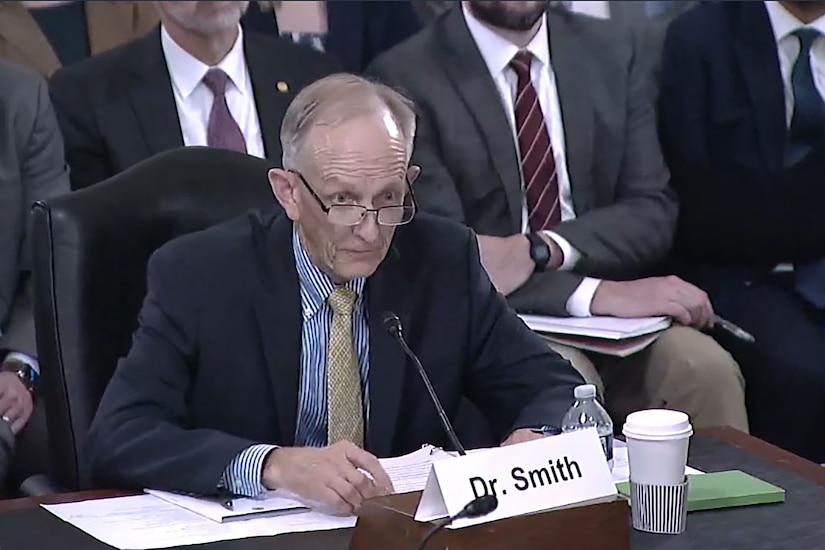
The War Department delivers one of the most comprehensive health benefits, through TRICARE, including an exceptional prescription drug benefit program, said David J. Smith, Defense Health Agency deputy director, during a Senate Armed Services Committee's personnel subcommittee hearing in Washington yesterday. 

A man wearing a suit seated at a table speaks into a microphone.

TRICARE covers most prescription drugs approved by the U.S. Food and Drug Administration. Those eligible for coverage include active duty, military retirees, their families, and National Guard and reserve component service members. Eligibility for TRICARE is determined by the sponsor's uniformed service and reported in the Defense Enrollment Eligibility Reporting System. 

"DHA is proud of the comprehensive worldwide pharmacy benefit it offers to our 9.5 million beneficiaries," Smith said. 

TRICARE currently offers at least one network pharmacy within a 15-minute drive for more than 98% of beneficiaries, and more than 99% are within a 30-minute drive of one of the network's thousands of pharmacies.

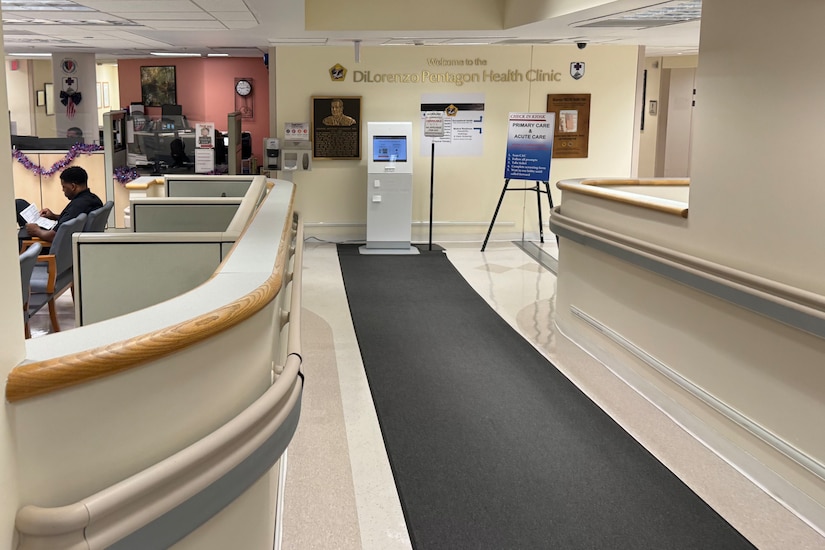
A hospital waiting area.
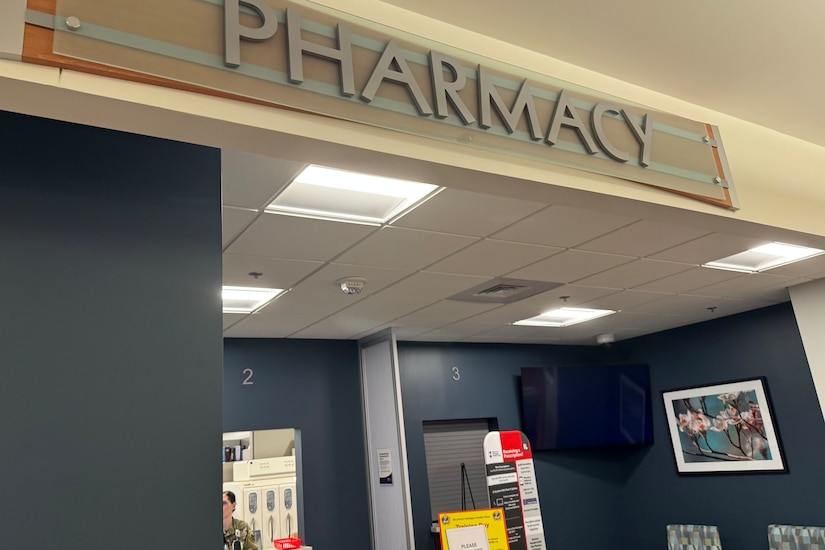
A pharmacy waiting area.
"The department is effectively managing this important health benefit that helps support force readiness, recruitment, retention and the health of our service members and their families," Smith said. "A resilient pharmacy program supports both beneficiary health and military readiness by ensuring reliable access to essential medications wherever the force operates." 

Smith also said that clinical effectiveness remains the primary determinant of TRICARE decisions. Comparative cost-effectiveness and lifecycle affordability are also evaluated to ensure that finite military health resources are used efficiently while maintaining high-quality care. 

Taxpayer savings were achieved through negotiated discounts for prescriptions. These savings help offset increasing pharmaceutical expenditures and preserve funding capability across the broader military health system enterprise. 

Pharmaceutical spending represents one of the fastest-growing components of the department's health expenditures. Continued growth in specialty pharmaceuticals, biologics and chronic disease therapies will require ongoing efforts to preserve affordability while maintaining high-quality care for beneficiaries, Smith added. 

The department also considers supply chain continuity and the ability to reliably support military requirements when evaluating long-term pharmaceutical management strategies.

Tuesday, September 25, 2012

Military Medical Care Helps Wounded Warrior Accomplish Life’s Tasks


Advances in military medical technology are helping one wounded warrior get back to life. Taylor Morris, a Navy Explosive Ordinance Disposal Technician, lost both legs, left arm and right hand in a bomb blast in Afghanistan, May 2012. The Iowa native is undergoing treatment and rigorous physical therapy at Walter Reed National Military Medical Center in Bethesda, Md.

Morris’ story is a common one among the wounded heroes who return home from Afghanistan and Iraq. The military’s health system has had to adapt to accommodate the needs of soldiers with severe injuries. The Warrior Care blog estimates close to 14,000 service members are recovering from the wounds of war every day, with hundreds of thousands battling the invisible wounds of post-traumatic stress disorder.

Morris’ therapy has helped him return to doing even the most mundane of chores, like making breakfast and working on his hand-eye coordination. The love story of Morris and his girlfriend, Danielle Kelly, went viral this week on websites like Buzzfeed and the Huffington Post. There’s even a video of the couple dancing at a friend’s wedding, demonstrating how far he’s come with his therapy.

Thursday, August 23, 2012

New Suicide Prevention Therapy Tackles Psychological Trauma


By Jeffrey Soares, USAMRMC Public Affairs

The protection and treatment of warfighters was a primary focus of the 2012 Military Health System Research Symposium held in Fort Lauderdale, Fla., Aug. 12-16, and the prevention of suicide among military personnel both during active duty and upon their return was of paramount importance to both researchers and attendees.

In a breakout session dealing with advances in military suicide and psychological health research Aug. 15, Dr. Laura Neeley of the Uniformed Services University of the Health Sciences in Bethesda, Md., offered insight regarding her study of Post Admission Cognitive Therapy, or PACT, for the prevention of suicide in military personnel with histories of trauma. 

Working with Dr. Marjan Holloway, Neeley’s research supports a link between psychological trauma and suicide-related behaviors.  Neely said PACT may help patients to cope effectively with suicidal thoughts and actions.

“The goal of our research,” Neeley explained, “is to develop and empirically evaluate a brief inpatient cognitive behavioral treatment for individuals with psychological trauma who have attempted suicide.”

The PACT program has three phases.  Phase I begins with an analysis of the patient’s current suicide attempt, and this leads into a cognitive conceptualization of the events leading up to the attempted suicide.  This involves retracing the thoughts of the individual to determine a mood set and behavior.  Phase II moves into cognitive restructuring, to review the negative automatic thoughts of the individual while looking for ways to modify these negative thoughts. 

Neeley said that when someone is in a highly emotional state, it is sometimes difficult to generate alternative ways of thinking, so she suggests the use of coping cards.  These cards contain positive statements that provide support to the person who may be in jeopardy of self-destruction.

“Patients can carry these cards in their pocket,” Neeley said, “and every time that they have an [event] that leads to an emotional reaction, they can take [one] out and read it to themselves, to start working on changing their thinking patterns, and working on emotional regulation.”

This second phase also includes the implementation of a hope kit, in which patients keep positive reminders inside of a box that they can pull out to remind themselves of the good things in life -- things worth living for.  These items can include photos, coping cards, journals, gifts or other things associated with good memories for the patient.

Finally, sessions in Phase III focus on relapse prevention and safety planning.

“In the final stage, we go through the suicide story again, but this time we rewrite it so the patient can incorporate her newly learned skills,” Neeley said.

In this stage, the patient must look for ways to challenge thoughts of negativity and suicide, and in doing so, should realize their own self-worth as well as the worthiness of people and things around them.

“We also have them create a safety plan for when they’re discharged,” Neeley said, “so that they know exactly what to do when they’re in crisis.”

Created by the patient, this safety plan not only contains certain scenarios of negative actions that the patient should watch for, but more importantly, it contains a list of positive reactions to use in order to squelch negative thoughts, as well as a list of contact persons who may help to calm down and reassure the patient.

Neeley said the patient’s own readiness to change may often provide a roadblock which is difficult to overcome. In the case of her clinical study patient, “We focused on changing her negative automatic thoughts, which related to a sense of poor self-efficacy, coping with trauma and other life domains.”

Neeley believes the results of this study support the need for evidence-based psychotherapy research for traumatized suicidal individuals.  Currently, her group is working on an inpatient cognitive behavioral treatment protocol for the treatment of trauma and suicide behavior.

Tuesday, August 21, 2012

Military and Civilian Partnerships Lead the Way with Trauma Care


By Jeffrey Soares, USAMRMC Public Affairs

At the 2012 Military Health System Research Symposium, an overriding philosophy is that strong partnerships lead to successful research.  No one knows this better than Dr. Thomas Scalea, physician-in-chief of the University of Maryland Shock Trauma Center, Baltimore, Md., whose group has teamed with the U.S. military to advance the study and treatment of severe injuries in both the military and civilian sectors.

Scalea said that the military-civilian partnership over the years has yielded a tremendous amount of “cross pollination” of clinical care, in mostly trauma and critical care scenarios.  What was born out of necessity on the battlefield has grown into a vital operation in saving lives daily, from bustling city streets to quiet neighborhoods, to ensure that severely wounded patients are treated as quickly as possible.

“Evacuation of casualties -- helicopter transport -- that was born in Korea and Vietnam has really morphed into the civilian sector in a big way,” Scalea said, “and we are now involved in a very large discussion on who ought to be transported by ground and who should get flown -- but all of that really started in the military.”

Today, Scalea’s shock trauma team uses medical concepts that originated in combat casualty care, and his tour of U.S. military operations overseas in Afghanistan has helped to shape his vision.

“The whole concept of damage control resuscitation was started on the battlefield,” Scalea said, “and all of that [research] has gone from the battlefield into civilian practice.”

The military’s system of critical care air transport, which rapidly transports battlefield victims to military hospitals, has helped to define the current practice of life-flighting civilian patients with serious wounds to hospitals via helicopter directly from accident scenes.

Of this method Scalea said, “I really got the idea for this when I was in Afghanistan.  I said, ‘We can do this, but we just need to use it in a different way.’”

Tourniquets, shunts, local haemostatic dressings, and various other medical items are also going from the battlefield, sometimes directly, into civilian practice.  Military doctors with their invaluable experience are coming out of the services and applying their knowledge in civilian sectors.

Scalea said the partnership between military and civilian medical practitioners was championed decades ago by R. Adams Cowley, founder of Maryland’s Shock Trauma Center.

 “It was R.A. Cowley who came back from [the war in] Korea with the concept that injury was a ‘time-sensitive’ disease, and he then coined the term ‘The Golden Hour.’ Crowley believed that there is a ‘golden hour’ between life and death, and if you’re critically injured, you have less than 60 minutes to live.  In his mind, he already had the concept of irreversible shock,” Scalea said.

He added that two strong examples of current innovative military-civilian medical research endeavors are comprehensive facial transplantation and reviewing genetic profiles to drive care and treatment.  Both of these avenues have seen great successes recently, and he remains confident that more successes will come from this unique collaboration.

Sunday, August 19, 2012

Conference Promotes, Enables Medical Research


By Jeffrey Soares, USAMRMC Public Affairs

The latest advancements in healthcare for warfighters and related cutting edge research, is the focus of the 2012 Military Health System Research Symposium that opened Aug. 13 in Fort Lauderdale, Fla. The four-day symposium, sponsored by the Office of the Assistant Secretary of Defense for Health Affairs, and organized by the U.S. Army Medical Research and Materiel Command, is a joint effort supported by the U.S. Army, Navy, and Air Force, and brings together scientific leaders and researchers from throughout the world.

“This is the first time that we are combining three previously separate conferences into one joint conference by the Army, Navy, and Air Force,” Col. Dallas Hack, chair of the MHSRS said. “We now have a broader range of topics. Before it was primarily trauma care, and now it is this, plus infectious disease, operational medicine, medical simulation and training and force health protection. The interest thus far has been truly amazing.”

The vision of the MHSRS is to offer an academic-based forum in which to discuss recent accomplishments and share knowledge regarding military research and development. The annual event, which has expanded rapidly over the last decade, provides an opportunity to exchange ideas on planning and developing future studies aimed at optimizing care for members of the uniformed services in operational settings

“This year, we have over 450 presenters, including podium speakers and poster presentations,” Hack said, “and we actually had to limit the number of submissions we could accept. We have nearly 1400 people registered, and we probably will see over 1500 when all is said and done. This year’s conference is shaping up to be the biggest one yet.”

Originally established 15 years ago as Advanced Technology Applications for Combat Casualty Care, the conference has helped to unify researchers who seek ways to aid the nation’s warfighters -- both on and off of the battlefield -- before, during and after deployment. To date, the research has been successful.

For example, the general concept of the Armed Forces Institute of Regenerative Medicine grew out of conversations during the 2006 ATACCC meeting, and during the same meeting, the Army and Navy agreed to collaborate on damage control resuscitation, which has greatly speeded up research in this particular area. At the 2001 conference, a discussion between researchers from the University of Florida and Walter Reed Army Institute of Research on the concept of traumatic brain injury biomarkers led to  research collaboration on the topic. This meeting resulted in the first ever blood test for TBI to enter Phase III clinical trials. In 2008, ATACCC was the site of a joint meeting to discuss spinal cord Injury medevac litter efforts, which led to three successful studies regarding the assessment of the effects of vibration, G-force, and shock on casualties during medevac transportation.

“The only reason to have a meeting like this is to provide output -- to ensure that new things happen in the research field because of all the information shared,” Hack said. "Our focus remains the same:  to protect, sustain, and treat the warfighter with the most current technology.”

Hack added he has seen an increase in the number of non-DoD personnel attending the conference, such as those from corporations, academia, and clinics, who come to learn more about new advances in the field. Another draw is that continuing education units are offered for many in attendance as well.

“I truly believe the non-DoD personnel are coming to this meeting because they recognize that the DoD is a leader in the field of this type of research,” Hack said, “and we’ve had some major breakthroughs lately.”

Because of the increased use of improvised explosive devices during conflicts overseas, one of the topics gaining much attention is TBI, and Hack said this has become a key area of research.

“Over the course of the war, we’ve had huge progress in the area of massive trauma and massive hemorrhage, and how to treat this,” he said. “Now we’re starting to see big advances in the area of TBI, and we can look forward to seeing brain injury care translating into larger clinical trials, and into practice within the next year or two. We’re looking at the long-term, chronic effects of brain injury, which is very different than past research where we only looked at the short-term effects.”

Since the results of research aimed at the warfighter make their way into civilian medical practice, millions across the world could reap the benefits of these breakthroughs. 

And this remains the silver lining of the annual MHSRS gathering.

“What continues to amaze me,” Hack said, “is the amount of support we get for this conference. So many folks throughout the year write or phone us to say how much they look forward to this meeting, and that it is the best medical meeting of the year.”

Monday, July 16, 2012

Take Action Now to Nominate Outstanding Female Physicians


The nomination process is underway for the 2013 “Building Stronger Female Physician Leaders in the Military Health System” awards program.  Now in its fourth year, the awards program is a great way to raise the public profile of women in military medicine, to recognize individuals for their outstanding accomplishments and to identify role models who will inspire and lead the next generation of female physicians.

Last year, six military doctors were honored. The senior award winner, Army Col. (Dr.) Anne Naclerio, currently heads the Army’s Women's Health Task Force. After receiving her award, Naclerio spoke to Health.mil and said when it comes to leadership, actions speak louder than words.

“I think a lot of leadership and mentoring is not what you say, but what you do. I have found that I have grown in leadership and mentorship through example.”

The time to take action to nominate the next group of female physicians from the Army, Navy, Air Force, Coast Guard and Public Health Services is now.  Applications are due to the appropriate service branch point of contact by Sept. 7, 2012. After reviewing nomination candidate packages, each service may forward up to five junior and three senior packages to the MHS Chief Human Capital Office. One junior winner per service and one overall MHS-wide senior winner will be selected. 

Learn more about the selection criteria and process.

Download the nomination form at http://www.health.mil/Libraries/MHS_Female_Physician_Awards_Documents/MHS_Female_Physician_Award_NominationForm_June_2012.docx.

Monday, April 21, 2008

New Report on Vets' Mental Health 'Very Consistent' with Military Findings

By John J. Kruzel
American Forces Press Service

April 17, 2008 - A study released today shows that nearly 20 percent of Iraq and Afghanistan veterans report symptoms of
post-traumatic stress disorder or major depression, findings that military health officials called "very consistent" with their own. During a media roundtable at the Pentagon this morning, officials said the report by the RAND Corporation, titled "The Invisible Wounds of War," helps clarify mental health hurdles the Defense Department is seeking to overcome.

"We're on a journey, and we've come a long way, ... but we've got a long way to go," said
Army Col. Loree Sutton, chief of the newly created Defense Center of Excellence for Psychological Health and Traumatic Brain Injury. "That's why we're so thankful to teams like the RAND team that have stepped up and helped us better understand our challenges."

Sutton called it "heartening" that the RAND report's conclusions are "very consistent" with previous studies by the
Army's Mental Health Advisory Team and other results published in a private medical journal. "We appreciate their efforts to inform our efforts," she added.

One of the study's findings is that just more than half of servicemembers reporting symptoms actually seek care for
post-traumatic stress disorder or major depression. For those who do seek help, only about half receive treatment that researchers consider "minimally adequate," the report states.

"Clearly, that's a finding that concerns us," Sutton said.

"It's very consistent with the civilian literature, as well as with our own assessment of the challenges in this area," she said. She cited "closing the gap" between knowledge and practice as a top priority. "We will redouble our efforts," she said.

Sutton said the
military health community has used $500 million appropriated in 2007 to fund more than 25 major new programs supported by more than 125 initiatives, many of which "get to the heart of that concern." She added, "We want to provide evidence-based care, the very highest quality care."

One reason many troops avoid psychological treatment, the RAND report says, is because they fear it will harm their careers.

"In general, respondents were concerned that treatment would not be kept confidential and would constrain future job assignments and
military careers advancement," the report said.

Sutton said the
military health community is attempting to transform military culture with regard to its approach to psychological care. Defense Secretary Robert M. Gates has bolstered these efforts, she said, by seeking to remove a question about health care history that appears on security clearance questionnaires.

"That's in the process of being revised right now," she said. "We think that that's going to be a big step forward to help our servicemembers understand that seeking care, in fact, is a sign of strength."

Joining Sutton at the roundtable was
Air Force Lt. Col. Michael Jaffee, director of the Defense and Veterans Brain Injury Center. Jaffee said the "big cultural challenge" also occurs in the combat theater, especially in servicemembers' attitude about seeking treatment for possible battlefield concussions.

"Our culture is so towards performance that we think we can shake it off; if we toughen up, we can get by it," he said. "It's very similar to the professional athlete who may not want to be taken out of the game.

"So it really speaks to that big cultural challenge," he said, "which is one of the main challenges in front of us."

While the healthcare community has a long road ahead, it took a step in the right direction over the past year by hiring nearly 8,000 additional mental health professionals and other staffers, Sutton said.

The colonel also highlighted the Center of Excellence, a state-of-the-art hub for psychological health and traumatic brain injury treatment that opened its doors in November. One of her main duties there, she said, is to assess the efficacy of the more than 150 new programs and initiatives, increasing funding for those that are most efficient and scrapping those that flounder.

Underscoring a sense of urgency in her mission, Sutton stressed the need for "less talk and a lot more action" in regard to mental health clinical care, education, training, research funding, and outreach. She said spreading the importance of military mental health care is an issue of national importance.

"It's a national educational campaign," she said. "Not just for those of us in the
military and the veterans community, but for our entire country."