Showing posts with label soldier resilience. Show all posts

Wednesday, October 07, 2026

Army Command Holds Mercury Rising Event to Strengthen Readiness

People dressed in athletic attire raise their hands up while standing in formation on a football field.

Soldiers assigned to the U.S. Army Network Enterprise Technology Command's Headquarters and Headquarters Company took part in the first "Mercury Rising" event of the new fiscal year at Fort Huachuca, Arizona, Oct. 2. 

Led by Army Capt. Ara L. Gahan, the company commander, and Army 1st Sgt. Ruben Chavez, the event combined physical training and professional development aimed to strengthen readiness, cohesion and individual accountability. 

"Mercury Rising/payday activities strengthen readiness by combining physical training, professional development, mandatory training and barracks inspections to reinforce standards, discipline and individual accountability," Gahan said. "Conducting these events together also builds camaraderie and unit cohesion by creating regular opportunities for soldiers to train, communicate and maintain pride in their appearance, living areas and organization."

A woman dressed in athletic attire stands in front of a formation of other people dressed in similar attire.

Mercury Rising is the command's approach to traditional payday activities, combining physical training, professional development, mandatory training and barracks inspections. 

Soldiers began with a physical training circuit designed to support the Army Fitness Test. They then competed in a timed team race carrying a 365-pound sandbag. 

The day also included professional development sessions for leaders covering suicide awareness and prevention, the sexual harassment and assault response and prevention and equal opportunity. In small groups, soldiers discussed their responsibilities for maintaining a professional, supportive environment. 

The physical challenge and professional development combination reflects the Army's focus on preparing soldiers to meet changing demands such as performing under pressure. Shared training and communication help build trust among teammates. Professional discussions reinforce knowledge and standards needed for disciplined, effective organization.

A man dressed in athletic attire holds a flag as he stands in front of a formation of other people dressed in similar attire.

The program also provides a recurring opportunity for leaders and soldiers to connect outside their daily duties. Unit leadership said the event supports the command's efforts to build the Army of 2030 through greater resiliency, adaptability and lethality. By bringing soldiers together to train, learn and uphold unit standards, Mercury Rising contributes to the preparedness and unity needed for the force to respond to future challenges.

Thursday, October 01, 2026

Face of Defense: Soldier Fights Back From Cancer Diagnosis to Become a Drill Sergeant and CrossFit Athlete

Sgt. 1st Class Samantha Lamirand was mid-career and moving fast when a routine test came back with two words: cervical cancer.

A person wearing exercise clothing rides a stationary bicycle while three other people in similar attire stand behind her.
Job: Drill Sergeant / Combat Engineer
Stationed: Round Rock Armed Forces Reserve Center, Texas
Unit: Company D, 1st Battalion, 355th Regiment
"I had these plans to do something big and grand with my life," she said. "It felt like everything just came to a screeching halt."

Today, Lamirand is a combat engineer, a drill sergeant and a competitive CrossFit athlete on the Army's Warrior Fitness Team. Five years ago, she was a Soldier navigating a health crisis at a difficult moment in her career.

Lamirand was in the middle of submitting a packet for a civil affairs assignment, one that required a full medical screening, when the results turned up something she never expected: human papillomavirus, or HPV, that had already progressed to cervical cancer.

"They told me one of my results came back different, positive or undecided, they weren't totally sure," she said. "So they had me get tested again, and when I got the call, they said, 'Hey, it turns out you have HPV.'"

Lamirand had no reservations about the lessons she learned from the experience and the impact it could have on others. "I'm not afraid to talk about it. People should know this stuff, because I didn't know it myself," she reflected. "The HPV vaccine wasn't even around yet when I was young, and it turned into cancer just like that."

A person wearing athletic clothing pulls on a thick rope outdoors on a bright day.

Her doctors recommended a loop electrosurgical excision procedure, a minimally invasive procedure used to remove abnormal, precancerous cells from the cervix. The procedure worked and the cancer never returned, but it left her with lasting effects that required ongoing pelvic floor therapy, something she still lives with today.

After her surgery, Lamirand requested a medical stabilization to stay at her current unit for a year so she could finish treatment with the doctors who already knew her case. Her orders, however, had her scheduled to move across the country to serve in Georgia. Lamirand's request for stabilization was not approved and she left active duty, disillusioned and demoralized.

"To be honest, I was just really angry," she said. "I think I was doing a lot of things in spite of a lot of people, which is not healthy." That anger became fuel for a while, but it had a shelf life. "Anger can only drag you so far. It worked at the time, but it doesn't work for very long."

What actually got her through was therapy. "I started going to behavioral health, I started seeing a therapist," she said. "I really believe in therapy. I think it's a great resource, and it really helps keep you grounded."

That's also where she started learning to invest in her own career. "I think if it wasn't for that diagnosis and some doors closing, I wouldn't have learned how to advocate for myself. Now I really am kicking down doors. No one's going to care more about you and your career than you."

Lamirand had accepted that she was getting out of the Army entirely. Then, during her transition briefings, a U.S. Army Reserve recruiter made her an offer she didn't expect. They wanted her, wanted her immediately in her chosen military occupational specialty, or MOS, and were prepared to give her a bonus to make it happen. Lamirand accepted the offer and joined Company D, 1st Battalion, 355th Regiment, beginning a new chapter in the Army Reserve.

"I got into a really healthy dynamic with the Reserve, where I had more flexibility," she said. During her first drill weekend, her unit gave her a coin for maxing her physical training test. It was a small gesture that meant a lot. "I drove home tearing up," she said. "This might be it. This might be the change I need."

That flexibility gave her room to chase something else: a spot on the Army's Warrior Fitness Team. Lamirand got her start as a teenager training to be a competitive surfer, when her parents' CrossFit habit rubbed off on her. It wasn't until she joined the Army Reserve, with the flexibility to actually train, that she made the team.

Four people wearing fitness clothing pose for a photo with their arms around each other in front of a large sign that says "FTX."

When an injury sidelined the team's commander, Capt. Catherine Cunningham, before a competition, Lamirand got the call to fill in alongside teammates she'd never even trained with before, Capt. Marie Docken and Staff Sgt. Kooper Fordyce of the Accessions Mission Support Battalion's Outreach Company, and Sgt. Michael Hagerman of the Chicago South Side Recruiting Battalion. Together, they took third place.

"Everything I had gone through, all the things I thought were setbacks, it finally brought me to this moment where I was very proud," she said.

That finish wasn't a one-time thing. Lamirand and her team most recently competed in the Pro Team Division at the Fittest Experience in Taylor, Texas, taking home another third-place podium finish and two individual event wins, along with an invitation to compete at the Fittest Experience Invitational later this year.

This September, Lamirand will step onto a new kind of course as one of six Soldier subject matter experts selected for "Field Tested," an Amazon-produced competition broadcast nationally on Twitch. Civilian competitors will take on Army-inspired physical and mental challenges, and Lamirand will coach them through it, sharing her own story on camera. 

"I hope it makes people want to take on the challenge themselves, whether that's finding a gym, talking to a recruiter, or just stepping outside their comfort zone," she said. "I love challenging myself, and I hope this encourages other people to do the same."

Lamirand is currently finishing her Bachelor of Science in Exercise Science at Middle Tennessee State University. Her advice to any Soldier facing a health setback is simple. "You're going to get back what you put in," she said. Her answer to anyone facing a hard diagnosis of their own doesn't waver.

"No one cares more about you than you," she said. "Any decision is better than no decision. Make a decision, commit to it, and don't let anyone's opinion deter you from what you think you should be doing." She thinks about it the way she thinks about everything now: long view, no regrets. "If I were 80-plus years old, sitting on a porch in a rocking chair, could I say with confidence that I lived to the fullest of my abilities, how I wanted to, and not how other people wanted me to?"

For Samantha Lamirand, the answer, finally, is yes.

Thursday, July 30, 2026

Army Chaplain Corps Celebrates 251 Years

As the United States celebrates 250 years of independence, the Army Chaplain Corps marks 251 years of service to the soldiers who have defended the nation since its founding.

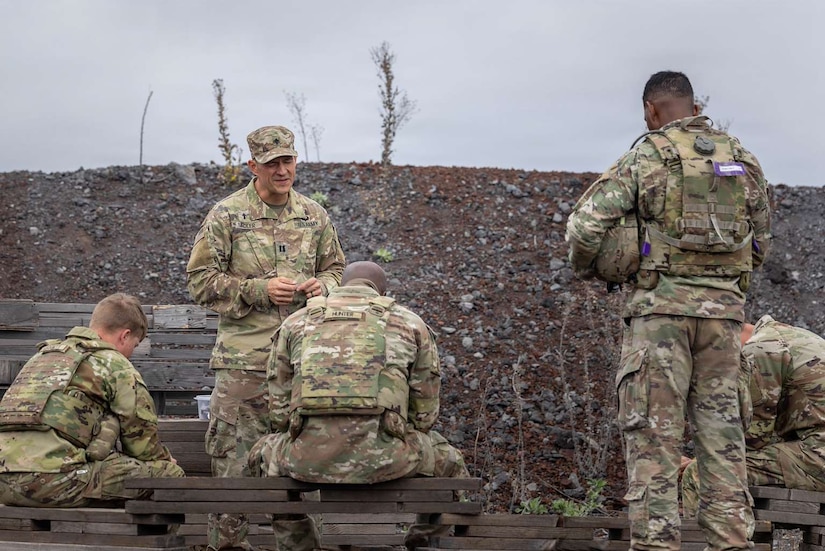
A man in a camouflage military uniform speaks to four other men in similar attire as they bow their heads outside.

The United States' strength has always depended on those willing to stand in its defense. A strong nation requires a strong Army, and a strong Army depends on soldiers who are prepared for the demands of service. Every soldier who raises a right hand and swears an oath to support and defend the Constitution accepts the responsibility of defending the ideals that have defined the country for two and a half centuries.

They leave behind their families, represent the nation around the world, and stand ready to answer when their country calls.

The U.S. is respected across the globe because of the men and women who wear the uniform. Through unmatched training, leadership, readiness, commitment and strength, the Army remains the most capable and formidable fighting force in the world. Yet ensuring readiness among soldiers has always required more than weapons and training.

Alongside physical strength and professional competence, resiliency is another facet of readiness that has been essential to the Army since its earliest days. Resilience grows through pastoral care, which helps soldiers navigate adversity with hope, courage and inner strength.

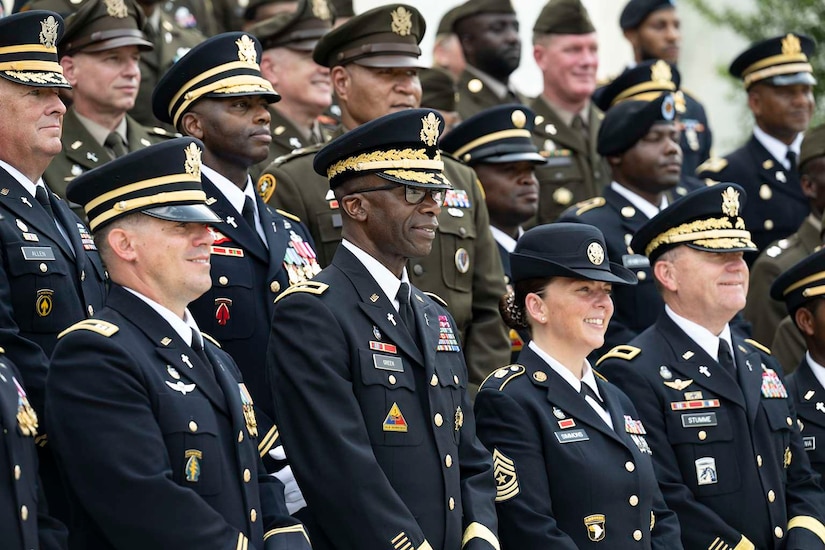
More than a dozen people in formal military uniforms stand in a group and pose for a picture outside.

At its core, pastoral care is the recognition that every soldier is more than a rank, a position, or a mission. Each soldier has a story that extends far beyond the uniform. Each soldier is a person who experiences the demands of duty, separation, uncertainty, hardship and loss.

For 251 years, the Army Chaplain Corps has provided faith-based, intentional support aimed at serving each soldier wholly, helping them find strength during difficult circumstances, build resilience for the challenges of battle and prepare to thrive in life beyond military service.

Army Chaplain Kit

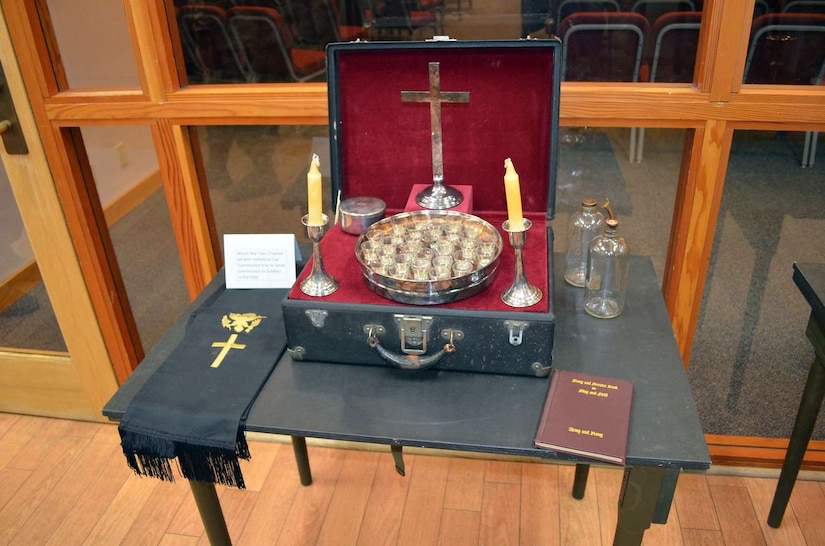
That ministry is represented by a familiar piece of Army equipment: the chaplain kit.

Candles, a cross and other religious materials are displayed on a table inside a room with wooden flooring.

Today's chaplain kits are designed to support soldiers wherever they serve, providing chaplains with the resources needed to conduct worship and perform religious services for a range of faith traditions.  

Yet these kits didn't begin as standard-issue military equipment. Their development reflects the Army's growing recognition that caring for soldiers' religious needs is an essential part of sustaining the force.

When the Army Chaplain Corps was established July 29, 1775, chaplains carried religious materials tucked into their personal equipment, making sacred space for soldiers wherever they marched.

As the nation and Army grew, so did the Chaplain Corps. Matching the needs of a dynamic force, the supplies that chaplains carried gradually became organized field kits called chaplain kits.

The contents evolved with each generation, adapting to new conflicts and emerging technologies across the force. Yet the purpose remained remarkably consistent: to ensure that chaplains were prepared to meet the needs of soldiers in any environment, no matter how demanding or far from home.

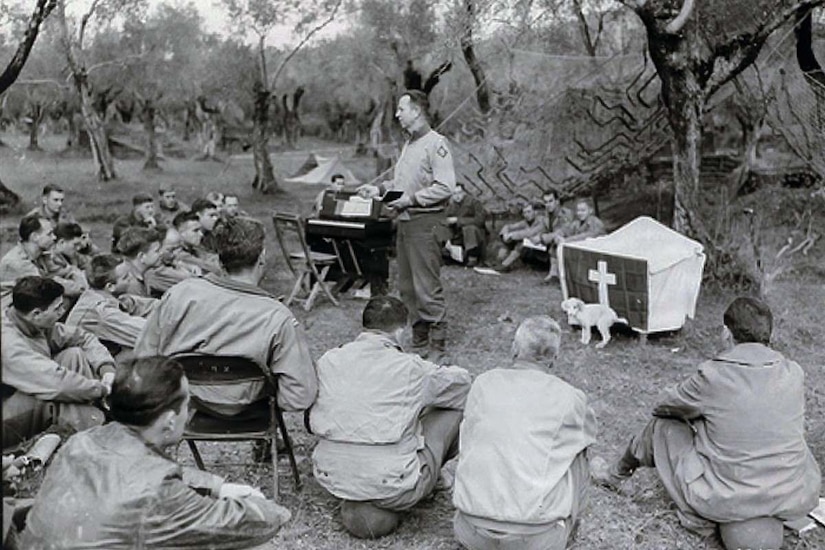
A man stands outside in a wooded area and speaks to more than a dozen seated men, some in chairs and others on the ground; behind him is a portable piano, a dog and a small religious altar.

For all their evolution, the most important elements of a chaplain's ministry have never been packed inside the kit. Kits provide the tools. Chaplains provide the care, each embodying an unwavering spirit to serve God and country.

Chaplains are there before a soldier leaves for a deployment, offering perspective during the uncertainty of what lies ahead. Chaplains remain connected to families as they navigate another separation. Chaplains sit beside hospital beds, listen during difficult late-night conversations, conduct funerals for the fallen and stand with units as they grieve the loss of one of their own. At each turning point, chaplains help soldiers and leaders face the challenges of service and find a way forward.

For 251 years, the Army Chaplain Corps has followed soldiers wherever the nation has called on them to serve. Today, it continues its mission with the same resolve that inspired its predecessors, the ever-evolving chaplain kit serving as a visible reminder of the promise to serve those who serve.