Army Capt. Daniel W. Lee Sr. was a platoon leader during World War II. He earned the Medal of Honor for valorous action in southeast France in 1944, during Operation Dragoon.
Lee was born June 23, 1919, in Alma, Georgia. His parents, Daniel M. Lee and Ida Hyres, were farmers. Lee and his six siblings grew up working on the family farm.
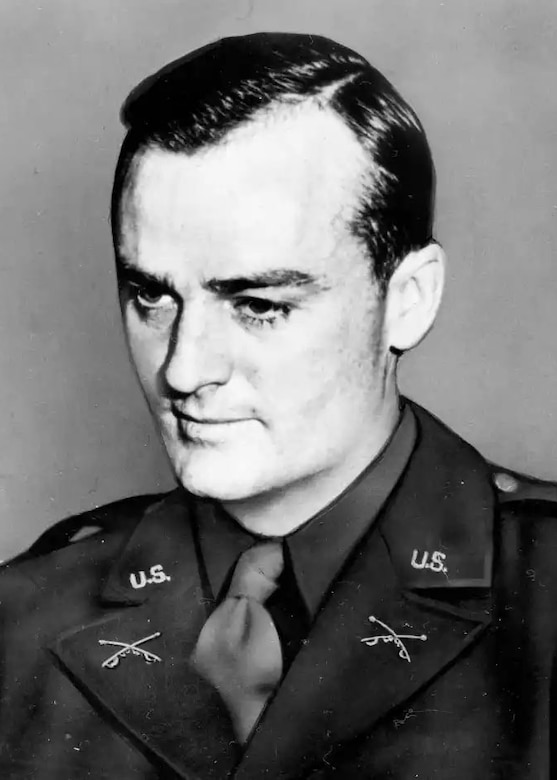
After graduating from Alma High School in 1937, Lee attended the University of Georgia, paying his way by working odd jobs; he worked for a professor, typed papers for fellow students and surveyed crops. He graduated in 1941 with a bachelor's degree in agriculture and began his career in soil management.
In December 1942, Lee married Sallie Davis, and they had three children after his service ended in World War II: Daniel W. Lee Jr., James and Elizabeth.
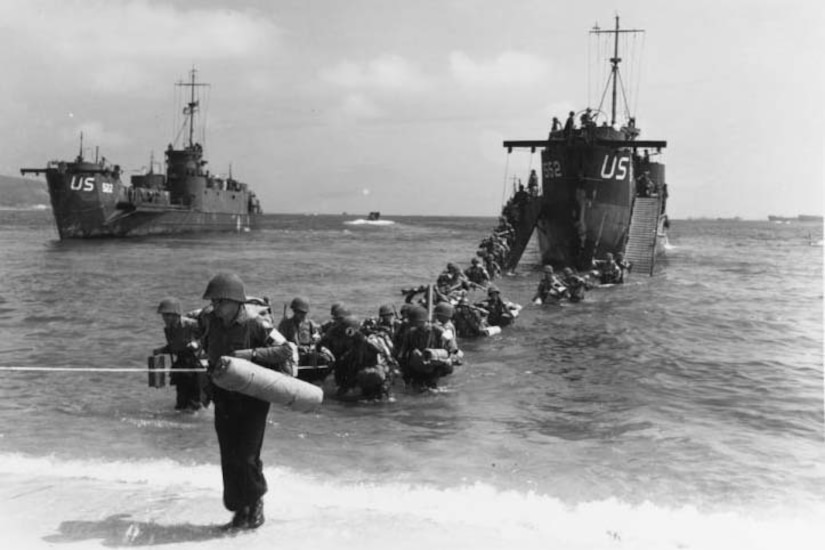
Shortly after being denied entry into the Air Force because he was colorblind, Lee was drafted into the Army in March 1942. He was commissioned a second lieutenant later that year, and his unit, the 117th Cavalry Reconnaissance Squadron, shipped to England for training. They arrived in northern Algeria in 1943, but by then, the enemy had already surrendered. His unit then engaged in combat during the Italian Campaign, from May to August 1944.
On Sept. 2, 1944, Lee was the leader of Headquarters Platoon, Troop A, 117th Cavalry Reconnaissance Squadron, 7th Army in Montrevel, France, when his Medal of Honor valor occurred.
According to the medal citation, the Germans had mounted an hourslong attack against the outnumbered Americans when Lee organized a patrol to knock out their mortars.
He led his men to the edge of town, neutralizing enemy riflemen on a ridge. Atop the ridge, he observed seven Germans manning two large mortars near an armored half-track about 100 yards down the slope.
Armed with a rifle and grenades, Lee left his men on the high ground and crawled to within 30 yards of the mortars, where the enemy discovered him and unleashed machine-gun fire — shattering his right thigh.
"Scorning retreat, bleeding and suffering intense pain, he dragged himself relentlessly forward," the citation reads.
Lee killed five Germans with rifle fire, and the others fled before he reached their position. While being fired on by an armored car, he took cover behind the German military vehicle and used a discarded German antitank weapon to neutralize the threat.
"Despite his wounds, he inched his way toward the car through withering machine-gun fire, maneuvered into range and blasted the vehicle with a round from the rocket launcher, forcing it to withdraw," the citation reads.
Lee struggled back to his men, where he collapsed from pain and loss of blood.
During a 2022 interview, Lee's daughter provided further details. Outnumbered, Lee's platoon surrendered, and the Germans took many of the American soldiers but left Lee because of his injuries.
"Dad told my brother that a German soldier made the decision to leave him there rather than kill him or take him, as he would not have made it. Dad was forever grateful," Beth Lee von Mersveldt said.
Lee was promoted to first lieutenant, and despite his severe wounds, chose to remain in the military. He transitioned to the Army Reserve, then known as the Organized Reserve Corps.
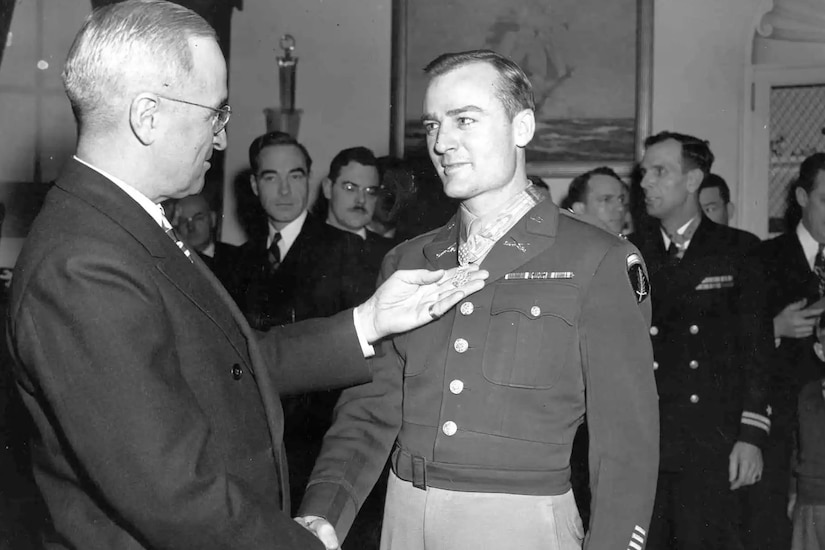
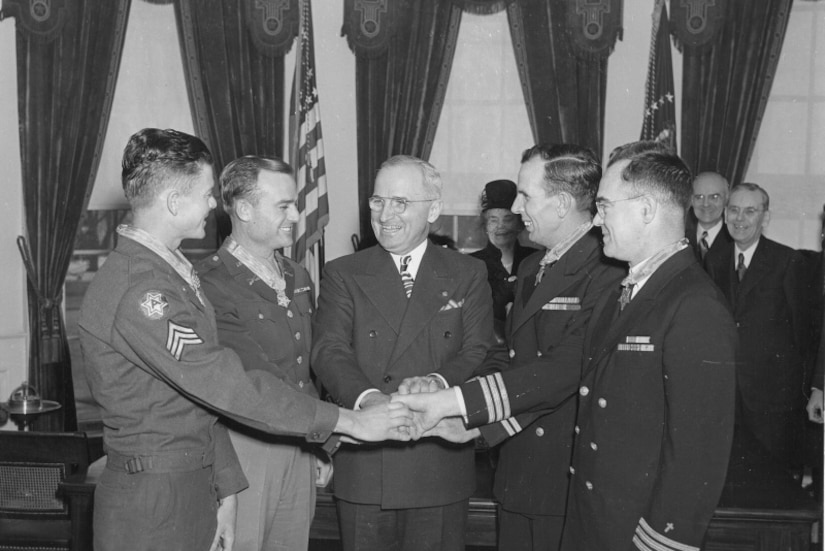
After his recovery, Lee worked for the Veterans Administration in Valdosta, Georgia, assisting returning veterans with accessing healthcare, education and other benefits.
He was recalled to service at the start of the Korean War in June 1950. He was promoted to captain and served as a combat training officer at Fort Knox, Kentucky, until 1952. Lee returned to civilian life, rising to the position of senior vice president of the Southwest Region of Military Service Company, the oldest division of EBSCO Industries.
Lee died Jan. 22, 1985, at the age of 65, and is buried in Rose Hill Cemetery in Alma. His wife, Sallie, eventually remarried; she died Oct. 1, 2016.
In April 1996, a bridge near his hometown was dedicated as the Daniel Warnell Lee Memorial Bridge.


 Posts
Posts


No comments:
Post a Comment