Oct. 1, 2026 The Department of War releases updates to Hostile Fire Pay (HFP) and Imminent Danger Pay (IDP), marking the first major adjustment to these special duty pays in more than two decades. The increased rates are designed to appropriately compensate Service members for the varying levels of operational risk they face while serving the United States around the world. The updated policy increases the monthly rate for HFP to $450 and the monthly rate for IDP to $275, effective October 1, 2026. Since October 2002, both HFP and IDP pay have been set at a flat monthly rate of $225. The new tiered model better reflects the differences between serving in an area where danger is possible and facing hostile fire. Application of the new rates:
If an IDP-designated area escalates into active combat, commanders can transition personnel from IDP to HFP immediately. This provides a clear and timely mechanism to acknowledge heightened risk levels. Consistent with Department policy, Service members may not receive both HFP and IDP for the same period of service. Service members and their families are encouraged to consult their command financial specialists or local finance offices for detailed information on how these changes will appear on the Leave and Earnings Statements (LES). Finance personnel will also be available to answer questions regarding individual entitlements and eligibility. The Department, under 37 U.S. Code § 351, is granted statutory authority to increase HFP to a maximum amount of $450 per month and IDP to a maximum amount of $275 per month, as authorized by Congress and outlined in federal law and the National Defense Authorization Act. The Secretary of War is authorized to establish any amount up to the statutory ceiling. The memorandum can be found here. |
Thursday, October 01, 2026
Statement by Chief Pentagon Spokesman, Sean Parnell, on the Department of War's Historic Increase to Hostile Fire and Imminent Danger Pay


Wednesday, September 09, 2026
Department Recognizes Suicide Prevention Programs for Supporting Warfighters
The War Department recognized unique and innovative suicide prevention programs during a ceremony in the Pentagon's Hall of Heroes, Sept. 2.
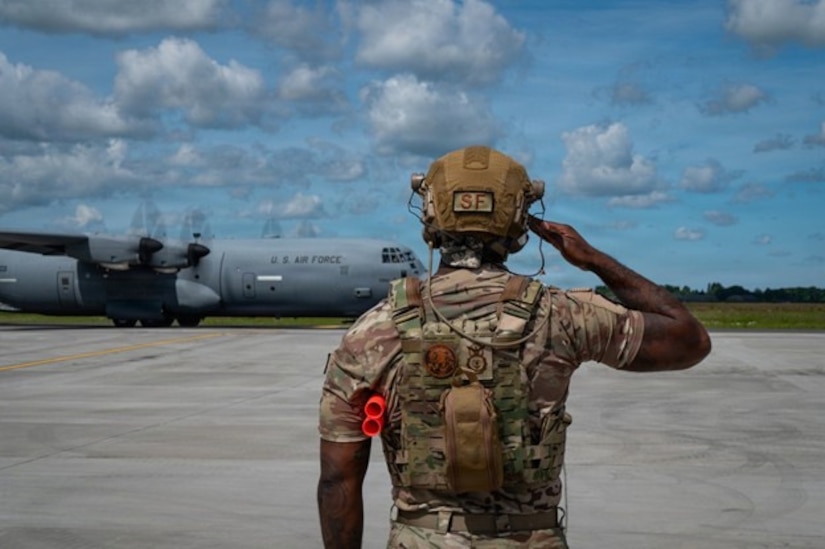
The 11 department and two Coast Guard programs were recognized for building partnerships, equipping leaders and peers, connecting people with resources, and creating environments in which service members and families could more readily seek support.
"It is not just what they did during the last Suicide Prevention Month," said Alicia Matteson, Defense Suicide Prevention Office acting director. "They represent sustained efforts, informed by data, informed by the needs of their particular communities that they are serving."
Keith Bass, assistant secretary of war for health affairs, praised each of the honorees before handing out the awards.
"Today, we honor outstanding individuals for their efforts. I was just absolutely in awe of the creativity and the passion," Bass said. "Thank you on behalf of the Military Health System."
Joining Bass and Matteson during the annual event were Tim Hoyt, Defense Health Agency chief mental health officer, and Coast Guard Rear Adm. Shane Steiner, Coast Guard deputy assistant commandant for workforce and family services.
September may be Suicide Prevention Month, Hoyt noted, "but the individuals and commands we recognize today did not limit their work to a single month, event or campaign. They invested in suicide prevention throughout the year."
Hoyt added that celebrating these efforts today conveys to the force that the department values a multilayered approach to suicide prevention, which includes:
- Leaders who know and care for their people.
- Commands who act before concerns become a crisis.
- Programs that make support easier to access.
- Teams that strengthen connection and belonging.
The recognized programs represent a vital part in fostering that sense of support and connection in military communities, the speakers underscored.
Bass said when someone seeks care in a military hospital or clinic, "we will wrap our arms around that individual. We're going to take care of them and we're going to take care of our families. We have to continue to push this awareness. Nobody's alone. We do this as a team to take care of our folks."

During the ceremony, leaders emphasized that hope resounded throughout each team's efforts to prevent suicide.
"Hope is a belief that things will get better. But it's more than that," Matteson said. "It is also having the agency to make it so. And sometimes we forget that piece. The agency to make it so needs to exist for individuals to have hope that things will get better."
Each program was recognized for its outstanding prevention efforts and was evaluated by the military services based on criteria provided by the Defense Suicide Prevention Office.
Honorees are:
- 12th Combat Aviation Brigade, Katterbach Army Airfield, Germany. The brigade enhanced direct support of soldiers working in aircraft hangars with interactive walkabouts and physical resiliency notebooks. The unit also created an anonymous peer support group to help soldiers discuss stress without fear of career impacts.
- 84th Training Command, Army Reserve, Fort Knox, Kentucky. The command executed a campaign that trained leaders to recognize early deviations in a soldier's normal state of being. To combat isolation among geographically dispersed soldiers, the command implemented sponsorship checklists, virtual touchpoints and chaplain-partnered events. The initiative also integrated holistic health and fitness principles into events.
- Kentucky Army National Guard. The program created a modern suicide prevention music video that moves past traditional training briefings. This shareable video successfully connected soldiers and families to critical resources across the state.
- Marine Corps Headquarters Battalion, 1st Marine Division, Camp Pendleton, California. The battalion normalized seeking mental health support by hosting more than 30 interactive events, including a resiliency lunch and learn series. They also provided incoming Marines with secure storage training and physical gun locks.
- Marine Forces Reserve, Force Headquarters Group, New Orleans. This unit created "Vibes are Off," informal, rank-inclusive forums during which Marines can openly discuss stress. Their efforts drastically increased self-reporting and helped recruit 15 new peer prevention trainers.
- Navy Medicine Readiness and Training Command, Portsmouth, Virginia. The command combined digital innovation with community outreach, launching a mobile app for mental healthcare and hosting basewide wellness fairs. They also partnered with Operation Homefront to provide support to more than 6,000 military children.
- Navy Reserve Center Minneapolis. This center trained 400 Navy Reserve service members across 17 units on how to spot early signs of a mental health crisis. They collaborated with fitness leaders and chaplains to build spiritual and mental toughness.
- Air Force Headquarters, Air Force District of Washington, Joint Base Andrews, Washington. The command trained more than 300 senior leaders in a supportive postcrisis framework and empowered airmen to share their personal resilience stories. They also taught leaders how to have comfortable, nonjudgmental conversations about secure firearm storage.
- Westover Air Reserve Base, Massachusetts. The 439th Airlift Wing brought mental health support directly to high-risk career fields, doubling demand for coping sessions for firefighters and distributing secure storage tools. They also expanded unit-level help by training 22 resilience training assistants.
- 172nd Airlift Wing, Air National Guard, Allen Thompson Airfield, Mississippi. Driven by the commander's clear support, the wing launched a gamified "Helping Hands" scavenger hunt in addition to mindfulness events. These activities showed airmen of all ranks how to make self-care a daily practice.
- Buckley Space Force Base, Colorado. The base reached 25,000 community members through targeted leadership briefings, secure storage education and a veterans' suicide awareness ruck march. Base suicide response teams also support survivors by providing therapeutic art resources.
- Coast Guard Base Boston/Leadership Development Center, New London, Connecticut. Operating at the local level, the base completed more than 260 outreach initiatives to support 4,000 personnel. The center then integrated these real-world lessons directly into training pipelines for 1,300 future Coast Guard leaders.
- Coast Guard Station Golden Gate, California. The station used its unique bridge-recovery mission to secure a new physical bridge barrier and overhaul emergency response protocols. They also hosted an awareness walk for 400 first responders and provided daily, low-barrier support to the crew.
Saturday, July 29, 2023
The Silver Star Medal: Honoring Heroism and Valor

Origin and History:
The Silver Star Medal traces its origins back to World War I. Originally established as the Citation Star on July 19, 1918, it served as an award to commend individuals for gallantry in action. Later, on February 22, 1932, the medal's name was changed to the Silver Star, and its criteria were expanded to include not only acts of gallantry but also instances of valor and heroism.
Development and Criteria:
Over the years, the Silver Star's criteria have evolved to recognize different levels of heroic actions and extraordinary service. The medal is awarded to members of the U.S. Armed Forces for acts of valor during combat operations against enemy forces. It may also be awarded to individuals who distinguish themselves through outstanding achievements in non-combat situations, involving exposure to great personal risk.
Examples of Honored Service Members:
Audie Murphy: The most decorated soldier in World War II, Audie Murphy received the Silver Star for his actions in Holtzwihr, France. Despite being outnumbered, he single-handedly held off a German infantry company, inflicting heavy casualties and allowing his unit to regroup and counterattack.
Douglas MacArthur: General Douglas MacArthur was awarded the Silver Star for his leadership and bravery during World War II. He organized a successful defense of the Philippines against the Japanese invasion, earning him this prestigious honor.
Mary Edwards Walker: Dr. Mary Edwards Walker, a pioneering female surgeon, was the only woman to receive the Silver Star during the Civil War. She risked her life to provide medical care to wounded soldiers on the battlefield and was recognized for her unwavering dedication.
Roy P. Benavidez: Green Beret Roy P. Benavidez was posthumously awarded the Silver Star for his actions in Vietnam. Despite being severely wounded, he saved the lives of eight fellow soldiers during a harrowing six-hour battle against overwhelming enemy forces.
Lori Piestewa: The first Native American woman to die in combat, Private First Class Lori Piestewa was awarded the Silver Star for her bravery in Iraq. She sacrificed her life to protect her comrades during an ambush in Nasiriyah.
Michael A. Monsoor: Petty Officer Second Class Michael A. Monsoor was posthumously awarded the Silver Star for his heroism in Iraq. He sacrificed himself by smothering a grenade with his body to save the lives of nearby teammates.
Conclusion:
The Silver Star Medal stands as a testament to the courage, valor, and selflessness displayed by service members throughout history. It serves as a tribute to those who have gone above and beyond the call of duty, often at great personal risk, to protect their fellow soldiers and uphold the values of the United States. As the Silver Star continues to be awarded for exceptional acts of heroism, it reminds us of the unwavering commitment and sacrifice made by those who wear the uniform in service to their country.
Wednesday, July 26, 2023
The Bronze Star Medal: A Symbol of Valor and Sacrifice

Origin and History:
The Bronze Star Medal traces its roots back to World War II. It was established on February 4, 1944, by Executive Order of President Franklin D. Roosevelt. Initially intended for awarding heroic or meritorious service in a combat zone, the criteria were later expanded to recognize exceptional achievements during peacetime as well.
Development and Criteria:
Over the years, the Bronze Star Medal's criteria have been refined to encompass a wide range of service and actions. Recipients must display valor, merit, or exceptional service while engaged in military operations involving conflict with an opposing force. The medal is awarded to members of all branches of the U.S. military, as well as foreign military personnel serving alongside U.S. forces.
Examples of Honored Service Members:
Audie L. Murphy: Audie Murphy, a young Texan, earned the Bronze Star Medal during World War II for his exceptional heroism. He single-handedly held off an entire German company with his machine gun while wounded, allowing his company to safely retreat. Audie later became the most decorated soldier in American history, receiving numerous awards for his courageous actions.
Chesty Puller: Lieutenant General Lewis "Chesty" Puller earned the Bronze Star Medal for his leadership and valor during the Korean War. Known for his remarkable battlefield prowess, Puller displayed extraordinary courage in several critical battles and is often regarded as one of the greatest combat leaders in Marine Corps history.
Tammy Duckworth: Major Tammy Duckworth, an Army National Guard helicopter pilot, received the Bronze Star Medal for her service during the Iraq War. Despite losing both her legs when her helicopter was shot down, she continued to serve her country and later became a U.S. Senator, demonstrating incredible resilience and dedication.
Michael P. Murphy: Lieutenant Michael P. Murphy posthumously received the Bronze Star Medal with Valor Device for his heroic actions during Operation Red Wings in Afghanistan. He selflessly exposed himself to enemy fire to transmit a distress signal, ultimately sacrificing his life to save his team members.
Jessica Lynch: Private First Class Jessica Lynch was awarded the Bronze Star Medal for her courage and determination during her captivity in Iraq. After her unit was ambushed, Lynch was taken prisoner, and she endured significant challenges until her rescue by U.S. Special Forces, exemplifying resilience and bravery.
Conclusion:
The Bronze Star Medal remains a symbol of honor and valor, recognizing the extraordinary contributions of service members during times of conflict and peace. As a testament to their selfless service and bravery, the Bronze Star Medal celebrates the courageous actions and sacrifices made by men and women who go above and beyond in their commitment to their country and fellow service members. It stands as a lasting reminder of the profound impact that individual acts of heroism and dedication can have in shaping history and safeguarding the values of freedom and democracy.


 Posts
Posts

