Showing posts with label multidomain operations. Show all posts

Wednesday, August 19, 2026

Learning With Every Launch: Inside Exercise Cold Raptor

After more than 50 micro-high-altitude balloon launches over the past year, a specialized team of soldiers assigned to the Multi-Domain Command – Europe learned no two flights are exactly alike, though every launch provides lessons the team can apply to the next one.
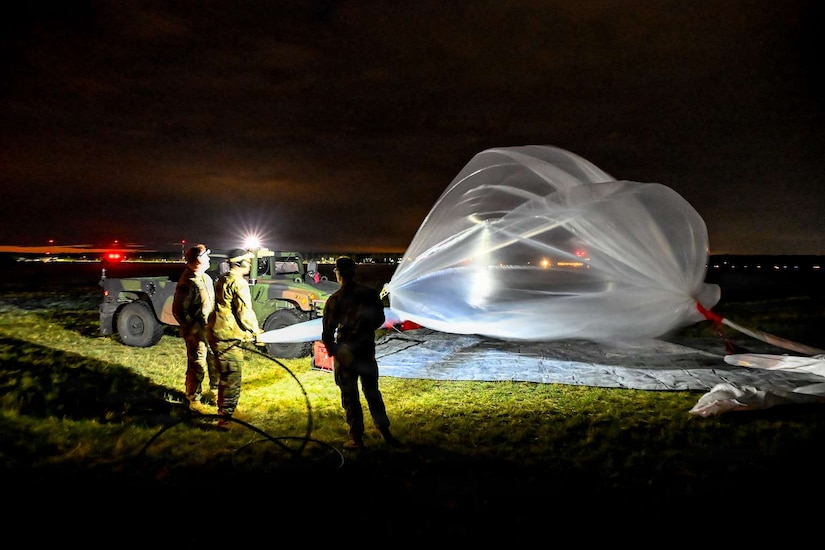
Three men wearing camouflage military uniforms control a large balloon at night in an open field.

The team recently conducted a week of balloon launches in Poland during Exercise Cold Raptor. The training supported NATO's Eastern Flank Deterrence Initiative, a NATO-led regional initiative supported by U.S. Army Europe and Africa that integrates emerging technologies to strengthen deterrence and readiness along NATO's eastern flank.

Cold Raptor gave soldiers hands-on experience launching, tracking and operating tactical balloons in a European environment while refining the procedures they will use during future missions.  

Decentralized Operations and Multidomain Readiness  

Soldiers assigned to the Extended Range Sensing and Effects Company, 2nd Multi-Domain Effects Battalion, conducted the training. Many on the team are qualified satellite communication systems operator-maintainers and are applying their signal expertise to emerging high-altitude systems.  

Army Sgt. Eric Atwater Jr., a signal sergeant, said the exercise tested the team's ability to operate from separate locations.  

"The purpose of Cold Raptor was to see how our launch team and our pilot team can operate from decentralized points," Atwater said. "We wanted to maintain communications while balloons go up in one location, while the flight trajectory is managed and monitored by another team off-site."  

For Army Sgt. Shakir Claxton, a fellow high-altitude balloon operator, improvement comes from repetition.  

"The biggest thing is getting us out in the field, setting everything up, making sure we have a solid timeframe we can work within and doing as many launches as we can," Claxton said. "The more repetitions we get, the better we get at the job."
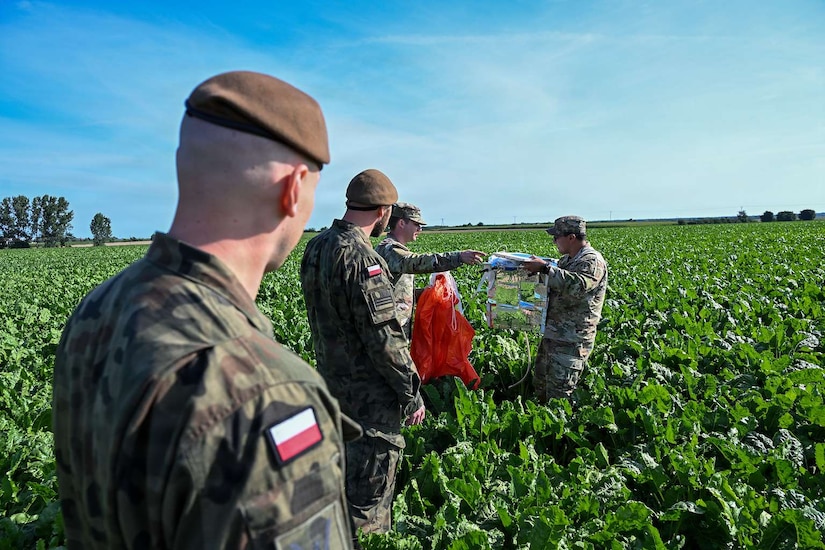
Men wearing camouflage military uniforms retrieve a military balloon from an open field.

The training also supported the company's broader multidomain mission. Claxton compared their capabilities to the three prongs of a trident, each contributing to the sensing mission.  

"We put up the balloons to give a certain kind of view of an area, while other parts of our company, like [unmanned aircraft systems] and [electronic warfare], work hand in hand on the sensing aspect," he said.  

Adapting to Changing Conditions  

During the exercise, the team conducted launches from Powidz, Poland. Some of the balloons ascended into the stratosphere, reaching altitudes between 60,000 and 70,000 feet — approximately 18,300 to 21,400 meters — while carrying experimental payloads designed to extend communications and improve domain awareness.  

Operating in the stratosphere requires precision. Teams must account for changing weather conditions while meeting strict aviation schedules.  

"We have specific windows when these balloons need to go up to meet mission requirements," Atwater said. "Whenever we're contacting airspace control, they're expecting these terminals to be in the air at specific times. If something goes wrong, you have to think quickly on your feet, troubleshoot and find the cause in a timely manner."  

Micro-high-altitude balloon technology continues to evolve and operating the experimental equipment throughout the week presented the team with real-world challenges. By troubleshooting problems as they occurred, soldiers successfully completed flights throughout the exercise and collected data to support continued experimentation.  

The lessons learned during Exercise Cold Raptor also contribute to a broader effort to strengthen deterrence along NATO's eastern flank. The Eastern Flank Deterrence Initiative is not a single unit or location, but a distributed system of capabilities operating across domains and nations. The concept aligns land forces with NATO's regional defense plans and connects mission command systems, networks and data so allied forces can share a common operating picture and make decisions faster. Exercises like this help determine how emerging technologies can contribute to the larger effort.
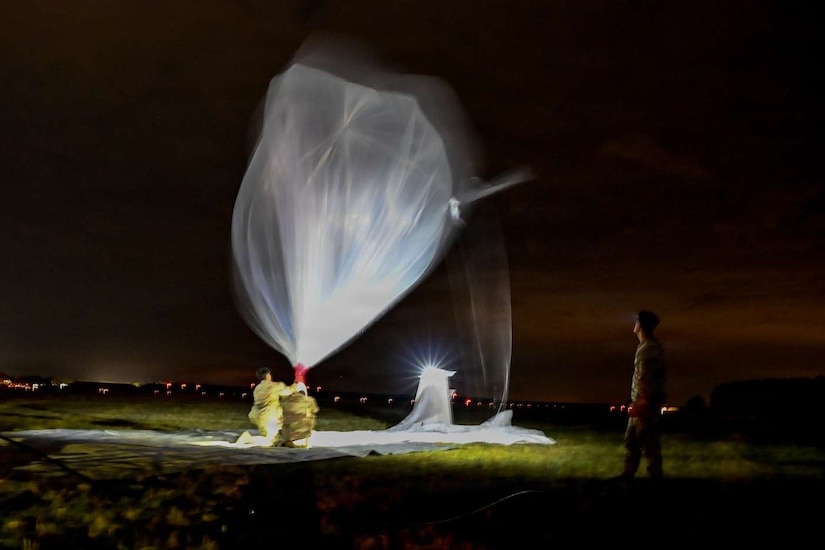
At night in an open field a person wearing a yellow safety suit holds onto a large balloon. Another person in a camouflage military uniform stands by to watch.

"The Eastern Flank Deterrence Initiative operationalizes all-domain deterrence for NATO through a data-enabled posture that harnesses the changes in the character of war," said Army Brig. Gen. Steven P. Carpenter, commanding general of Multi-Domain Command – Europe. "Experimentation with emerging technologies allows us to better understand the operational environment, refine how we integrate capabilities across domains and strengthen our ability to deter aggression alongside our NATO allies."  

Allied Interoperability and Airspace Coordination  

Launching from Poland required more than preparing the balloons and monitoring their flights. The team also coordinated closely with Polish authorities to ensure each launch met host nation airspace requirements.  

"Airspace coordination is a major priority with this kind of mission," Claxton said. "We have an excellent communication pipeline and a strong working relationship with our Polish partners."  

That coordination extended to the flight line, where the launches drew interest from Polish partner forces. Because Polish forces had not previously worked with this type of platform in Poland, U.S. soldiers provided hands-on demonstrations of the equipment and launch process. The demonstrations allowed Polish soldiers to see the technology up close and build a shared understanding of the capability.  

For the soldiers on the ground, helping develop the emerging capability carries responsibility and opportunity.  

"Initially trained as a 25 Sierra [satellite communication systems operator-maintainer], the Army already entrusted me to support established communications equipment," Atwater said. "Being introduced to something new and experimental is an honor. What feels like growing pains for us right now will end up being the foundation that future soldiers rely on."  

For him, the mission also connects to a childhood dream.  

"When I was a kid, I wanted to be an astronaut," Atwater said. "What I would say to my younger self is: you might not be the one going up to the stars, but you'll be the reason everyone looks to the sky and knows you sent something up to the very edge of space. They'll feel safer knowing you put it there."  

Tuesday, June 23, 2026

A Historic First: Marine Corps Reserve Integrates Multidomain Assets During Exercise

For the first time in its history, the Marine Corps Reserve is actively deploying multidomain collection assets during an integration course, marking a significant technological milestone for Integrated Training Exercise 3-26 at Marine Corps Air Ground Combat Center in Twentynine Palms, California. 

The Information and Intelligence Integration Course is a rigorous, three-day evolution that provides a progressive training opportunity for Marine Air-Ground Task Force 23 intelligence and information entities to rehearse complex tactics, techniques and procedures associated with advanced equipment operation, data exchange and battlespace awareness.  

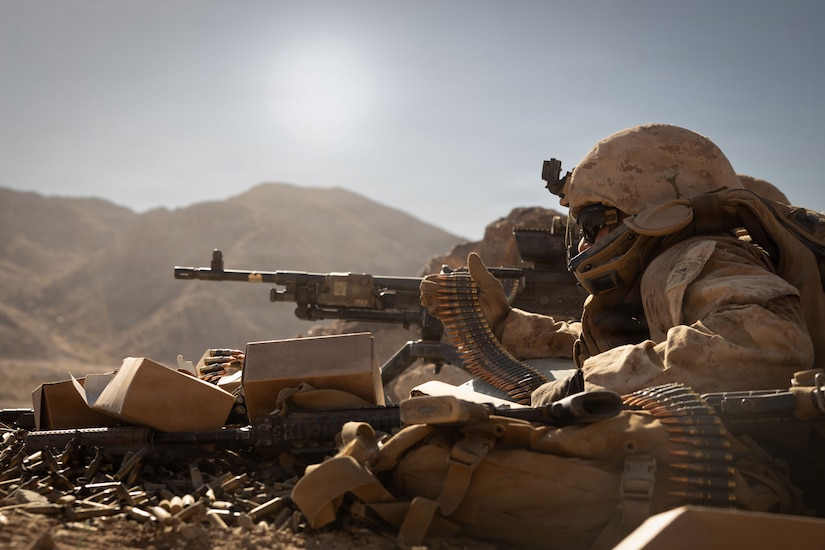
A man wearing a camouflage military uniform and a face mask holds a military rifle and a string of bullets in his hand; there are mountains in the background.

Historically, this level of multidomain integration has been challenging to replicate in reserve training environments. However, during the exercise, Marines are successfully bridging that gap, actively synchronizing signals intelligence and electronic warfare, limited expeditionary cyberspace operations and information maneuver elements into a single, cohesive intelligence picture. 

"As a commander, having a clear and immediate picture of the battlespace is everything," said Marine Corps Col. Aaron Awtry, commanding officer of the task force. "These new emerging technologies within the Marine Corps have fundamentally changed how we operate. They have greatly improved the speed and accurate flow of information from the tactical edge directly to the command operations center, allowing faster, more informed decisions to be made." 

Implementing these technologies in real-time through this new course demonstrates the rapid modernization of the reserve force as Marines keep pace with the evolving character of warfare and the demands of the future fight. 

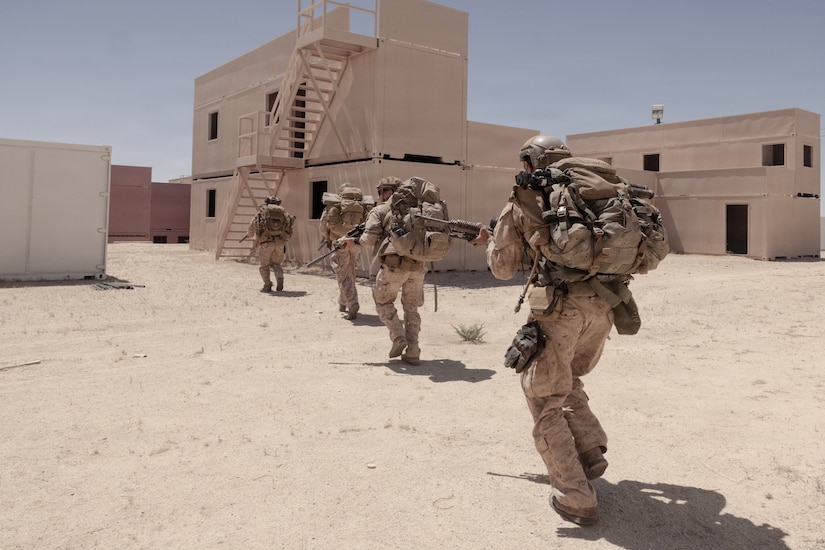
Four people in camouflage military uniforms walk across a desert terrain toward rows of empty shipping container buildings while carrying rifles.

The course goes through a combination of classroom instruction, detailed planning and dynamic lane training. Operating within a firing range, intelligence collectors and operators must actively scan the area, locate adversary signatures, and execute information-related activities in a simulated, contested environment. The task force's operations center is then tasked with managing these diverse collections, analyzing the incoming data, and producing actionable intelligence for commanders. 

"This gives reserve Marines an opportunity to use capabilities they will not have organically until future force design initiatives are implemented, while increasing our section's proficiency in signals intelligence and electromagnetic warfare integration and operations, said Marine Corps Chief Warrant Officer 2 Zachary Moore, a subject matter expert and instructor for the course's multidomain assets.  

Moore added the course gives units a unique opportunity to bring multiple capabilities into the scenario to coordinate, plan, collect and disseminate intelligence and information products.

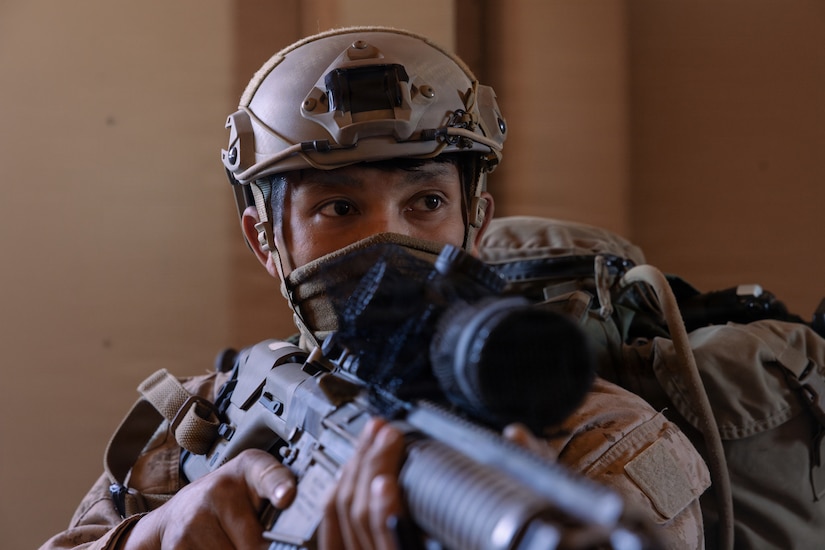
A man wearing a camouflage military uniform and a face mask looks to his left while holding a military rifle.
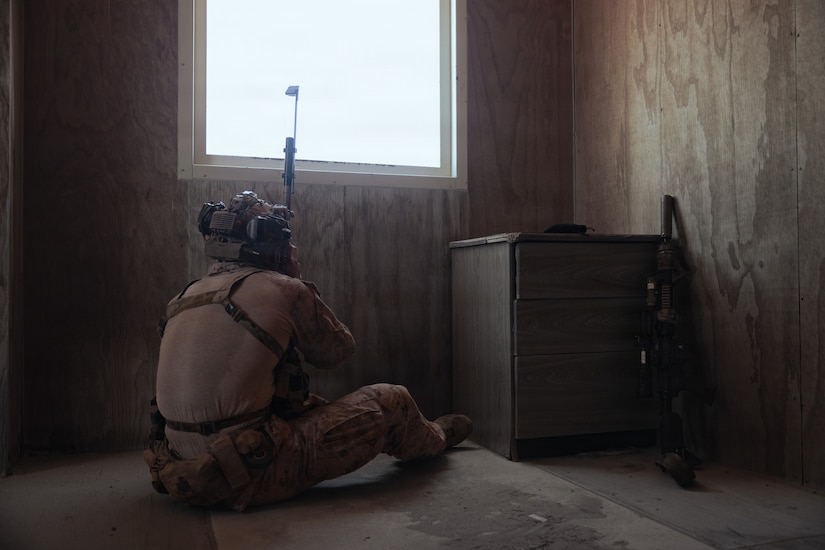
A person in a camouflage military uniform sits on the floor just below a window in a dimly lit room with a rifle in hand.
"Our 'no sensor left behind' approach helps Marines refine their craft, introduce new capabilities ahead of force structure and capability delivery, and better plan and conduct multidomain operations in increasingly contested environments," he said. 

The successful execution of the course sets conditions for information and intelligence support throughout the remainder of the exercise. As the character of warfare continues to evolve, the Marine Corps Reserve's ability to master these next-generation technologies ensures the Marine Corps remains a lethal, ready and agile force prepared to dominate in the complex, data-driven conflicts of tomorrow.

Monday, June 22, 2026

Allies Come Together in the Indo-Pacific for Exercise Valiant Shield 26

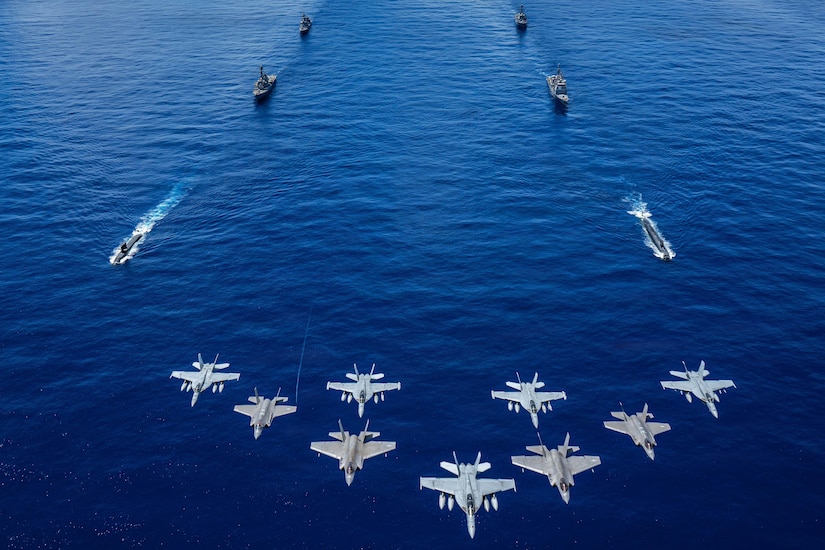
Nine military fighter jets fly in formation while two submarines and four large military ships sail in two rows in the ocean.

U.S. Pacific Command joint forces, along with allied and partner forces, kicked off Exercise Valiant Shield 2026 today in the Indo-Pacific region. 

The training exercise will run until July 1 and take place in the Northern Mariana Islands, Guam, Japan and at sea around the Mariana Islands Range Complex. 

Valiant Shield 26 is a multinational, biennial field training exercise focused on integrating interoperability training in a multidomain environment. This training builds real-world proficiency in sustaining joint forces through detecting, locating, tracking and engaging units at sea, in the air, in space, on land and in cyberspace. 

Exercises such as VS26 enable all U.S. forces and allies across the Indo-Pacific region to integrate and train in precise, lethal and overwhelming scenarios that demonstrate the strength and versatility of the joint and combined force.  

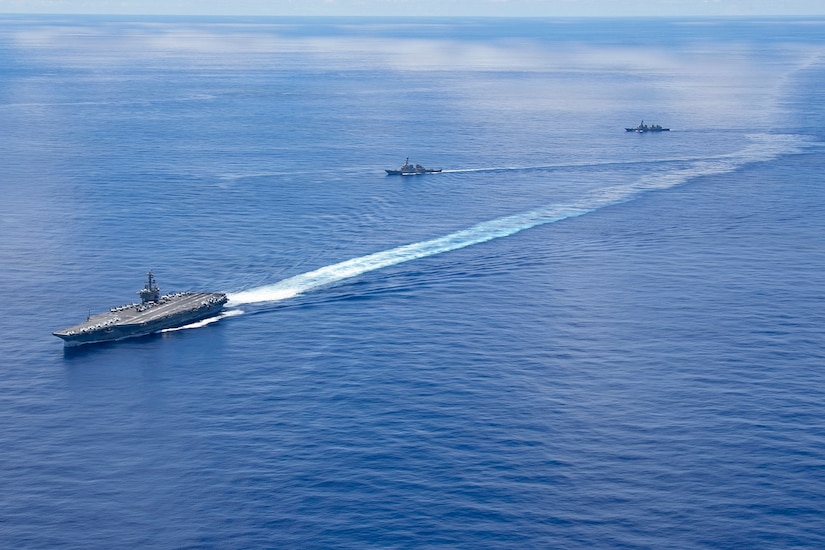
Three large military ships sail in the ocean.

With the involvement of U.S. Space Command and U.S. Transportation Command, VS26 is expanding the multidomain, cross-combatant command collaboration required for any large-scale exercise or operation. The exercise prepares the joint and combined force to rapidly respond to crises and contingencies across the spectrum of operations — from humanitarian assistance and disaster response to armed conflict. 

"Valiant Shield demonstrates our enduring commitment to a free and open Indo-Pacific," said Navy Adm. Steve Koehler, commander of U.S. Pacific Fleet. "Exercising advanced multidomain capabilities with our allies ensures we continue to seamlessly innovate and operate together, project combat power together and prevail over any challenge — together." 

The exercise assists U.S., allied and partner forces in developing regional and global power projection capabilities. Integrated training provides a full range of options to succeed in the defense of U.S. interests and those of like-minded nations around the world. 

This year marks the 11th iteration of Exercise Valiant Shield, which began in 2006. It is also the second time the Japan Self-Defense Forces has been heavily integrated in the planning and execution.   

Since 2024, Valiant Shield has become a multilateral joint field training exercise, further integrating allies and partners into the multidomain environment. While it started as a unilateral U.S. exercise, it has evolved to meet the demands of the security environment, incorporating new technologies and strategies.