Showing posts with label warrior games. Show all posts

Monday, June 22, 2026

Team Army Competitor Brings 'Never Give Up' Spirit to Warrior Games

For Army Capt. Vanessa Munro, arriving at the 2026 Warrior Games already feels like a victory. Before the first event began and before scores were posted, Munro's presence with Team Army was a reminder of how far recovery can reach when determination, support and purpose come together.
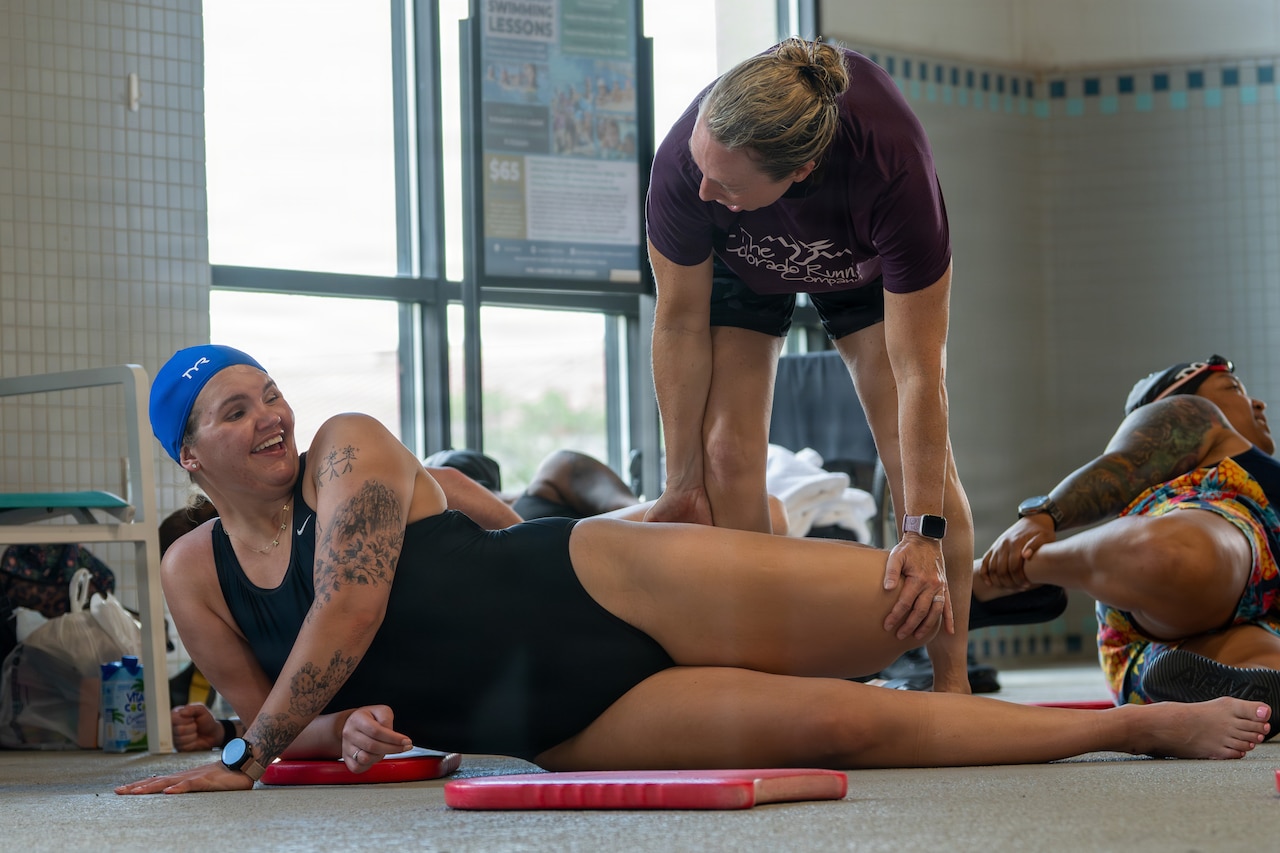
A woman wearing a black bathing suit and swim cap lies on a floor as she is being assisted by another woman in casual attire in an exercise that is lifting her left leg. There is a person also exercising to the right of the women.

Munro's victory is being part of a team again. After a tragic car accident in 2023 resulted in a severe traumatic brain injury, brain surgery and an extended coma, the road back has included months of hospitalization, intensive rehabilitation and daily work to regain strength, confidence and independence.

Now competing with Team Army, Munro is reconnecting with something she's missed: the camaraderie, joking, banter and shared support that come with being part of a team.

Munro's mother, Heidi, shared that the Warrior Games has given her daughter an opportunity to be surrounded by athletes and coaches who see her.

"She loves how everyone supports one another and how people treat her as capable, not disabled," Heidi said.

Munro was commissioned as a field artillery officer in 2018 after completing ROTC at the University of Washington. After four years in her branch, she was selected for the Army's Interservice Physician Assistant Program. Before the accident, she was also an elite athlete and Ironman competitor. Her soldiers often called her "The Iron Ma'am." After the accident, a new nickname emerged.

Heidi said as friends came in and out of Munro's inpatient room with Starbucks, sushi, cute clothes and colorful head coverings, they helped bring light into a difficult season. They bedazzled her wheelchair and walker, decorated her room and made sure her nails were painted. Before long, Munro became known as "The Bougie TBI Girl," a moniker she carries now that captures both parts of her story.

For Heidi and Kailee, Munro's childhood best friend and caregiver, that moniker is more than a phrase. It reflects how Munro has approached recovery from the beginning.

Even in a semiconscious state, Munro didn't want to be seen as disabled. Once she could walk, she refused to use the wheelchair. Then she refused the walker. About six months after the accident, she began walking a mile a day. The pace was slow, and the walks required breaks, but Munro kept asking to go.

On days when Heidi and Kailee were exhausted, Munro would look at them and say, "Outside time." From the beginning, they said, she refused to give up.
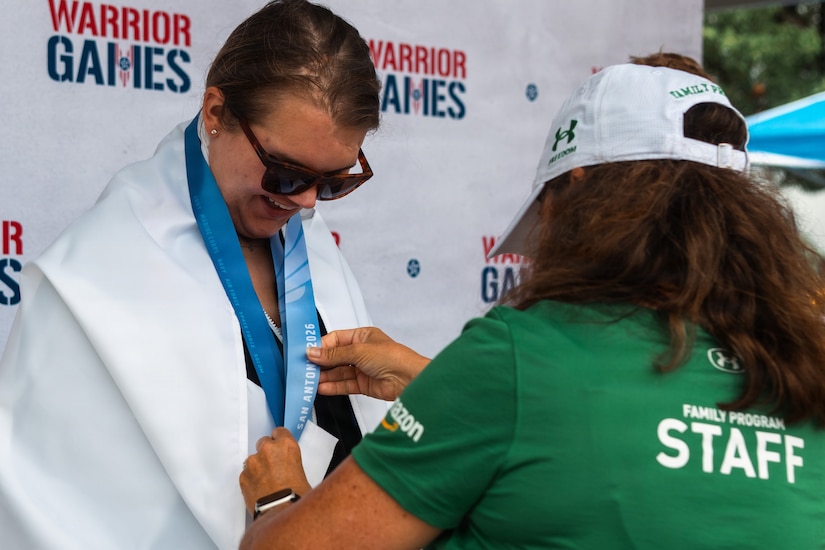
A woman wrapped in a white flag and wearing sunglasses receives a medal on a ribbon from another woman wearing casual attire.

Adaptive sports became another part of her recovery. Munro's first adaptive sport was skiing, which made her feel alive and free again. Her confidence grew after that first ski trip. Swimming came next, and once she connected with an adaptive swim coach, the pool became a place where she could focus on what she could do rather than what she couldn't do.

The adaptive triathlon later reintroduced Munro to competition, wearing a uniform, supporting others and being supported by a team.

Participation in various sports activities, plus the Warrior Games, has helped Munro reconnect with the athlete she was before her injury while continuing to discover who she is now.

Kailee said what people see during competition is only part of the story.

"What I've witnessed isn't just physical recovery; it's resilience," Kailee said. "I've watched Vanessa choose to keep showing up when it would have been easier not to. I've watched her rebuild pieces of herself one day at a time. The Warrior Games are incredible, but it's just the visible part of a recovery that's been happening every single day for years."

For Heidi, watching Munro compete has been deeply emotional. Two years ago, doctors told the family Munro would never walk or talk again. Seeing her at the Warrior Games just 30 months into recovery has filled her with hope.
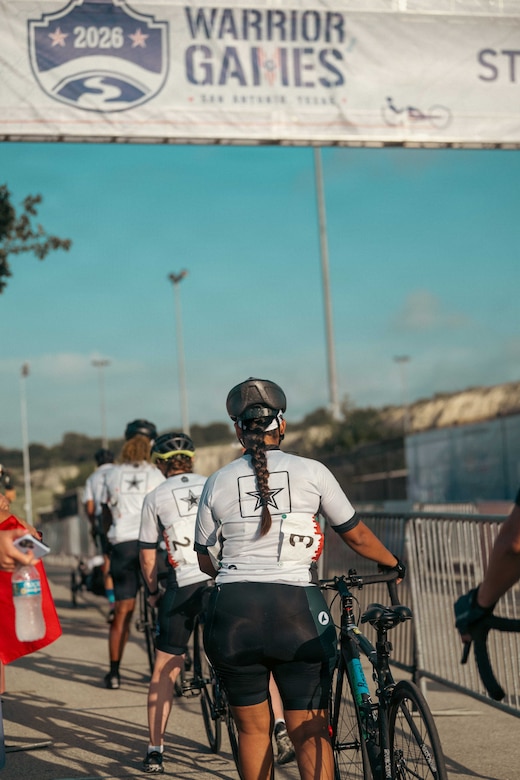
People wearing sports gear and helmets push their bikes to the starting line of a race.

"The real work has taken place in countless therapy sessions, difficult mornings, bouts of depression, setbacks and small victories that most people never see," Heidi said.

One of the most powerful moments came on the track.

"I cried at the track," Heidi said. "I watch her struggle to walk every day always afraid she'll trip over her own foot. I've never seen her run, so to watch her run the 200, with obvious difficulty and exhaustion, and to finish it to a standing ovation and the entire crowd cheering for her, that was the highlight of Warrior Games for me."

When Munro was shown videos of herself walking for the first time after her injury and asked what she thought about herself from the beginning of recovery until now, she chose three words: "Surprised. Excited. Inspired."

For Kailee, the hope is that Munro sees what those closest to her have seen all along.

"Recovery hasn't been about finding her way back to the exact person she was before," she said. "It's been about discovering who she is now, the same fierce, determined, funny, stubborn and compassionate person who inspired people before the accident."

Kailee said Munro's path looks different today, but her strength has never left her.

For Munro, her journey isn't about becoming less than she was before. It's about continuing to move forward, reclaiming pieces of herself and proving, one step and one competition at a time, that "never give up" is more than a motto.

It's how she got here.

Editor's note: Because Munro is still in recovery, some responses and additional context for this story were provided through her mother, Heidi, and her childhood best friend and caregiver, Kailee.

Thursday, June 18, 2026

Team Army Opens 2026 Warrior Games With Eight Powerlifting Medals

Team Army opened the first day of competition at the 2026 Warrior Games in San Antonio with wins in powerlifting, earning eight medals while demonstrating that the greatest victories often extend far beyond the podium. 

The powerlifting medalists included: 1st Lt. Jani Merritt, gold; Staff Sgt. Chelsea Scott, gold; Staff Sgt. Nate Mateo, gold; Sgt. Tukiau Salanoa-Tuioti, gold; Capt. Channda Mitchell, gold; Capt. Jake Malven, silver; retired Sgt. 1st Class Valerie Watkins, bronze and retired Capt. Tony Smith, bronze. 

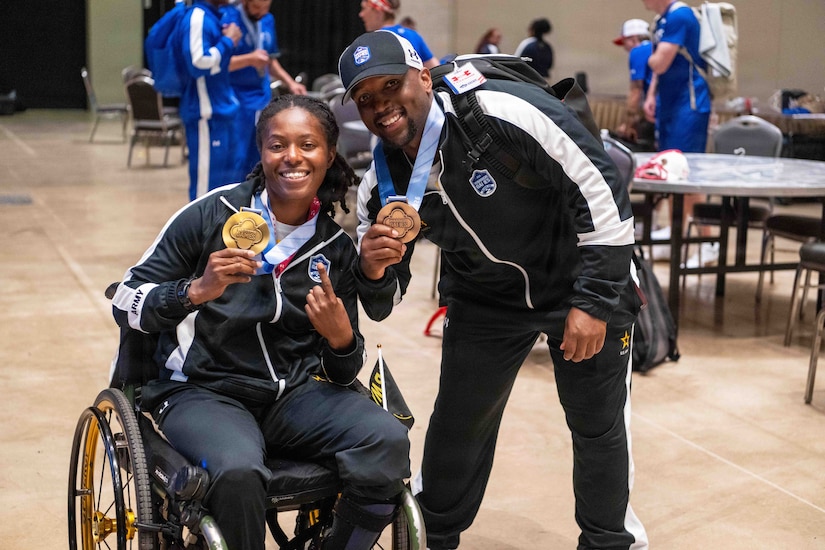
A woman in athletic attire sits in a wheelchair holding a medal around her neck while a man in similar attire leans next to her, also holding a medal, as they pose for a photo.

While the medals reflected exceptional performances on the platform, the stories behind them highlighted the perseverance, support and sense of community that define the Warrior Games experience as well as the Army Recovery Care Program's commitment to helping wounded, ill and injured soldiers recover and thrive. 

Mateo, a second-time Warrior Games competitor, said he shares his gold medal with family, who traveled nearly 24 hours from Saipan to cheer him on in San Antonio. He said seeing his family and friends in the stands served as a powerful reminder that recovery is rarely a journey taken alone.   

"My wife, Regina, and my family have been with me from the start," Mateo said. "I wouldn't have been where I am today if it wasn't for her. She’s been keeping me in the right state of mind and reminding me of all we have accomplished together through this journey." 

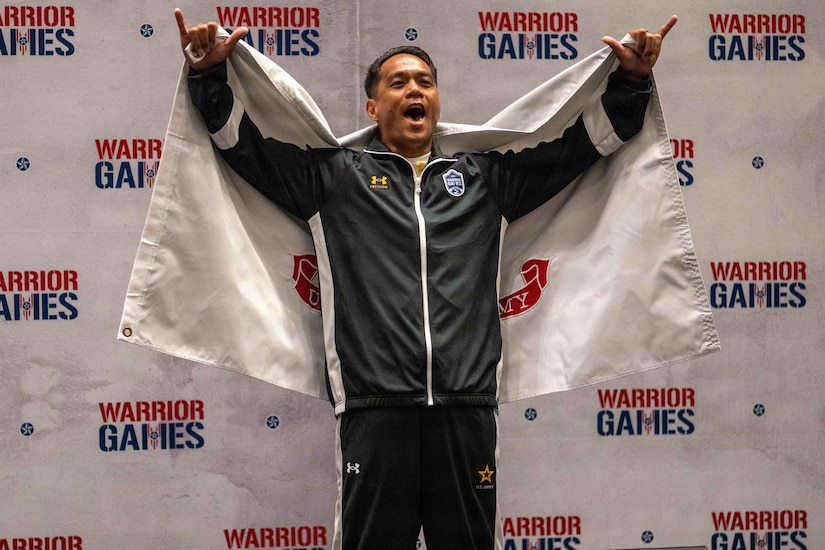
A man wearing athletic attire and an award medal lifts his arms in celebration while holding a service flag around his shoulders,

Returning to the Warrior Games with another year of training and experience behind him, Mateo said the lessons from coaches and teammates have prepared him mentally and physically while inspiring him to pay that support forward. 

"Everything I learned and experienced last year followed me into this year," he said. "This year, my goal is to return that favor by encouraging, mentoring and supporting everyone on Team Army." 

For first-time competitor Scott, a gold medal was meaningful, but the relationships forged throughout recovery proved even more valuable. 

"Winning a gold medal at my first Warrior Games is something I'm incredibly proud of, but what this experience represents goes far beyond the medal itself," she said. "Recovery can sometimes feel isolating, but being part of this team continuously reminds me that I'm not alone." 

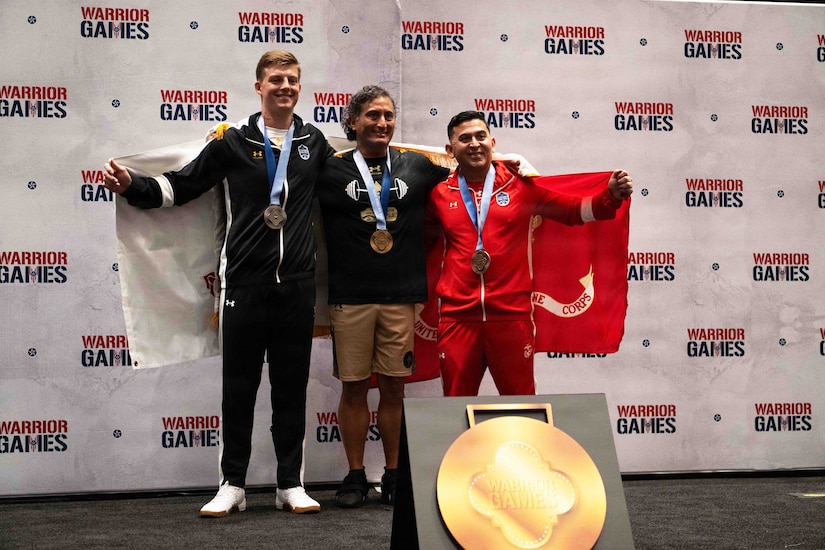
Three men wearing athletic attire and award medals hold service flags around their shoulders while standing and smiling for a photo.
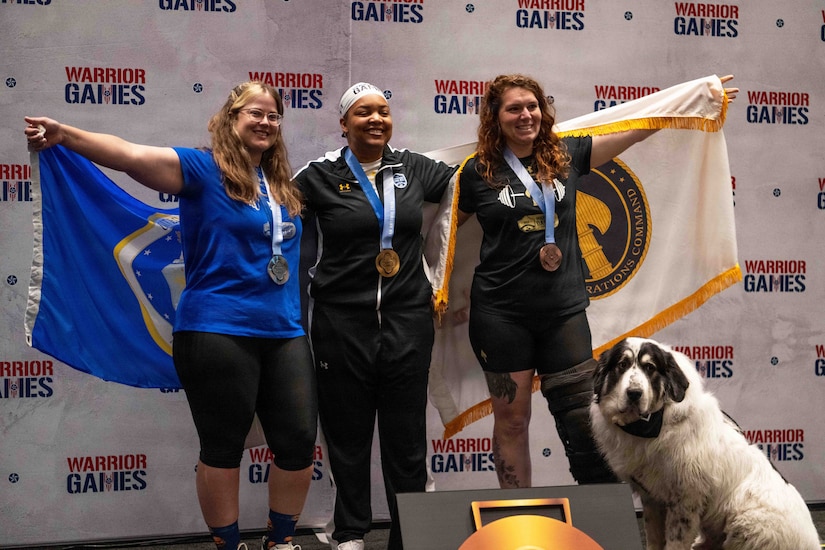
Three women wearing athletic attire and award medals hold service flags around their shoulders while smiling for a photo; a service dog is also posing with them.
Scott credits adaptive sports and the Army Recovery Care Program with helping her regain confidence and discover new ways to challenge herself as she navigates recovery. 

"They showed me that recovery is not just about healing, and it's certainly not linear," she said. "It's about finding new ways to grow, push your limits and continue doing the things you love." 

Smith also made his Warrior Games debut June 13, earning a bronze medal after overcoming doubts and trusting the preparation that brought him to the platform. 

"I was excited, but I was also nervous," he said. "After losing a significant amount of weight over the past few months, I was the lightest competitor in my division. There were definitely moments of doubt, but I trusted my training, my coaches and the support system that helped me get there." 

Looking beyond the medal itself, Smith said the Warrior Games reinforced lessons that will remain with him long after the competition ends. 

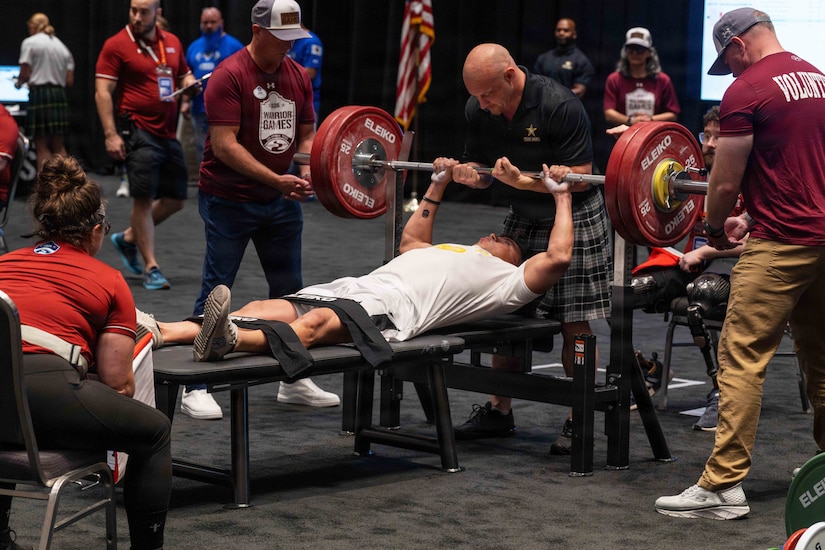
A man in athletic attire lies on a weight bench and grips a barbell, while three people in similar attire assist and a woman sits in a chair to observe; in the background, people in similar attire do similar activities.

"This journey taught me that recovery is a process, not an event," he said. "More than anything, I learned the importance of community. None of us accomplish things alone. While I'm proud of the bronze medal, I'm even more grateful for the lessons this experience has reinforced: trust the process, lean on your support system and never count yourself out." 

The Army Recovery Care Program uses adaptive sports and reconditioning activities to assist wounded, ill and injured soldiers build confidence, resilience and community throughout their recovery journeys. On the opening day of competition, Team Army's powerlifting performance reflected not only athletic achievement but also the determination to keep moving forward despite injury, illness and adversity. 

As the 2026 Warrior Games continue throughout the week, Team Army competitors will carry that same united spirit into every event, proving that while medals are earned on the field of play, recovery itself is the greatest victory.

Tuesday, June 16, 2026

Marine Corps Opens 2026 Warrior Games With Strong Showing

Team Marine Corps opened the competition at the 2026 Warrior Games June 13, with a strong showing in powerlifting and an exhibition pickleball competition, earning 10 medals and setting the tone for the week ahead. 

The opening day featured a powerlifting competition at the Henry B. González Convention Center in San Antonio, where Team Marine Corps athletes captured two gold, four silver and four bronze medals.

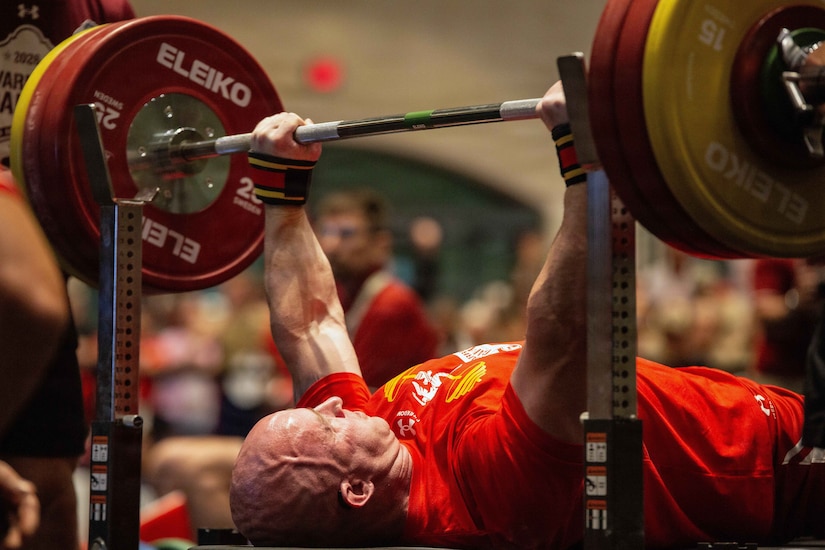
A close-up of a man in athletic attire as he prepares to bench press a large amount of weight during a competition, while other people in similar attire observe.
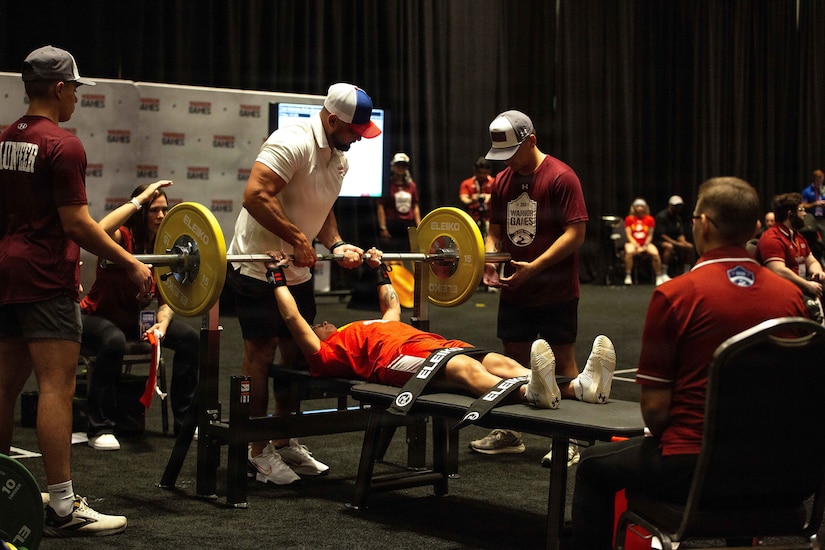
A woman in athletic attire prepares to bench press during a competition while her legs are strapped to the bench; there are several people in similar attire spotting her or observing.
Master Sgt. Stevan Ball earned a gold in the men's 97-kilogram division, while Staff Sgt. Brett Meil captured gold in the men's 107-kilogram division. For Meil, a Texas native, the victory came in front of a host of family members, including his wife and 20-month-old son.  

Earlier this week, Meil said participating in the Warrior Games is important because of the sense of belonging he finds among fellow competitors, making his gold-medal performance especially meaningful, being close to home. 

Ball, a communications chief recovering from multiple injuries, including a traumatic brain injury and dual hip surgeries, credits adaptive sports with helping to restore his purpose while also providing an avenue to display resilience throughout his recovery. 

Silver medals were earned by Staff Sgt. Marshal Ivy, Staff Sgt. Morgan Rempel, veteran Giavanna Vicario and Lance Cpl. Calbert Martinez. Bronze medals went to Capt. Gabriela Ortiz, Maj. Kim Yen Soto, Master Sgt. Modesto Garcia and Pfc. Baltazar Torresjara. 

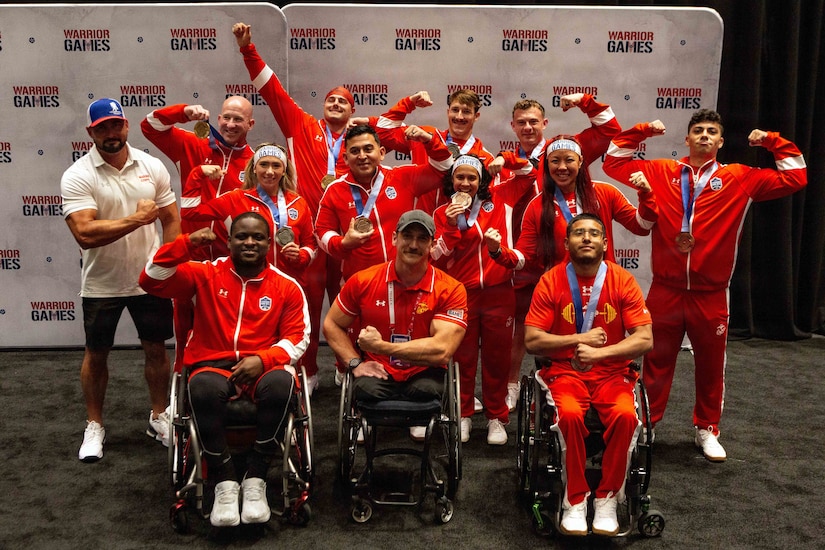
A dozen people in athletic attire pose for a photo with medals around their necks; most of them are either holding up the medal or flexing their muscles. The three men in the front row are sitting in wheelchairs.

In the women's 55-kilogram division, Vicario and Ortiz shared the podium for Team Marine Corps. Every Team Marine Corps woman who competed in powerlifting earned a medal during the opening day of competition. 

For Ortiz, the bronze-medal performance came during her first Warrior Games competition and in front of a hometown crowd. The San Antonio native was supported by her parents and members of her unit as she helped Team Marine Corps open the games with a strong showing. 

"It was amazing," Ortiz said. "All the females got a medal. That was the strongest thing I've seen." 

Vicario, competing in her second Warrior Games after earning 11 medals during the 2025 competition, said medaling in the first competition of the week meant a great deal and helped set the tone for the remainder of the event. 

Soto, Team Marine Corps' captain, also opened the week on the podium with a bronze-medal performance, while Garcia earned bronze in the men's 88-kilogram division. 

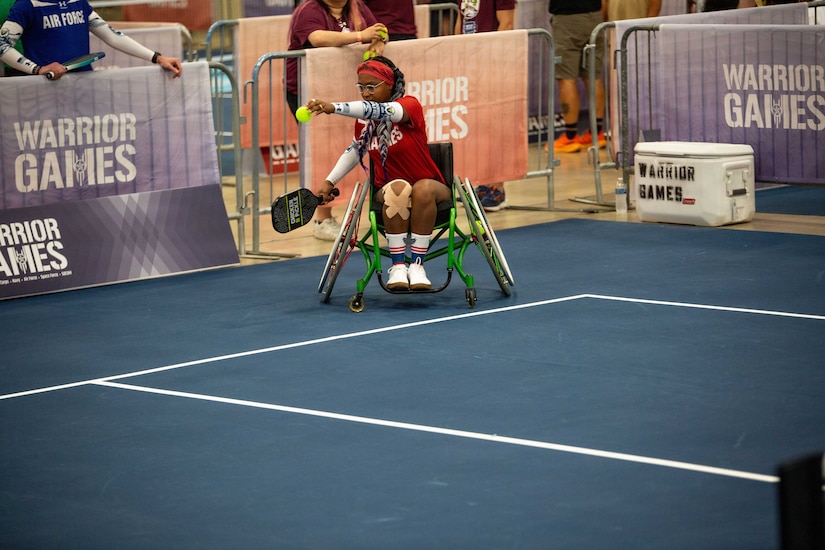
A woman in athletic attire sits in a wheelchair as she prepares to serve the ball during an indoor pickleball game.

In addition to powerlifting, Team Marine Corps athletes participated in the inaugural Warrior Games pickleball exhibition. The team featured retired Gunnery Sgt. Gabriela Carbajal, Lance Cpl. Yates Cooper Jr., veteran Arion Klein and Staff Sgt. Jacob Wolfe, a Marine Corps reservist. The exhibition marked the introduction of pickleball to the Warrior Games, highlighting the continued evolution of adaptive sports opportunities available to wounded, ill and injured service members and veterans. 

The day was not without adversity. Lance Cpl. Brandon Ndashi suffered an injury prior to the competition and was unable to participate. His teammates rallied around him while continuing to represent the Marine Corps with determination and competitive spirit throughout the day. 

The Warrior Games bring together wounded, ill and injured service members and veterans from across the War Department to compete in adaptive sports while promoting recovery, rehabilitation and camaraderie. Team Marine Corps athletes demonstrated those values throughout the opening day, experiencing recovery in real time while competing alongside fellow wounded, ill and injured service members and veterans.

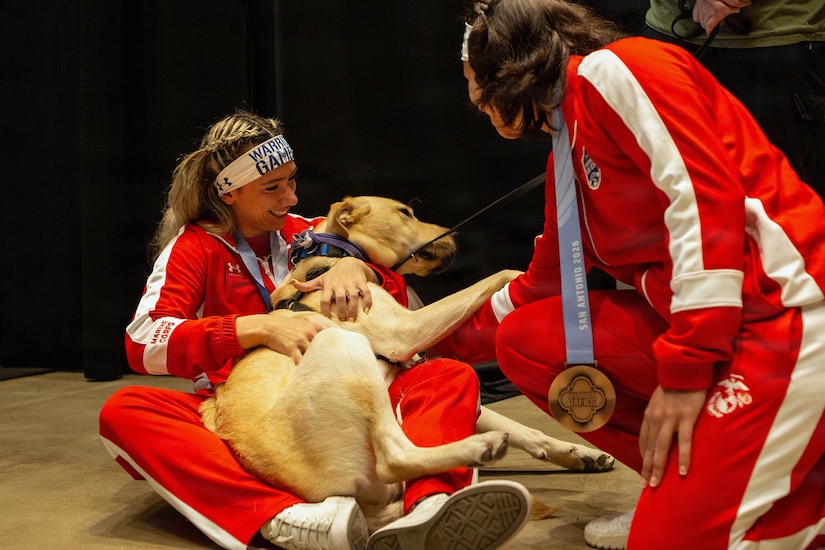
A woman in athletic attire pets a dog as the dog sits in her lap; another woman in similar attire with a medal around her neck kneels while also petting the dog.
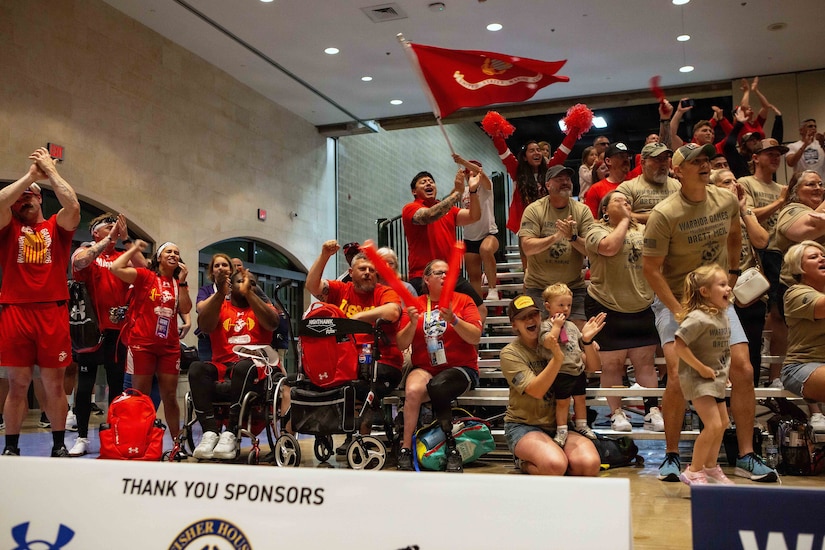
Dozens of men, women and children cheer from the bleachers of a gym; a man in the background is waving the Marine Corps flag.

Monday, June 15, 2026

Warrior Games Week Marks New Chapter for Army Veteran

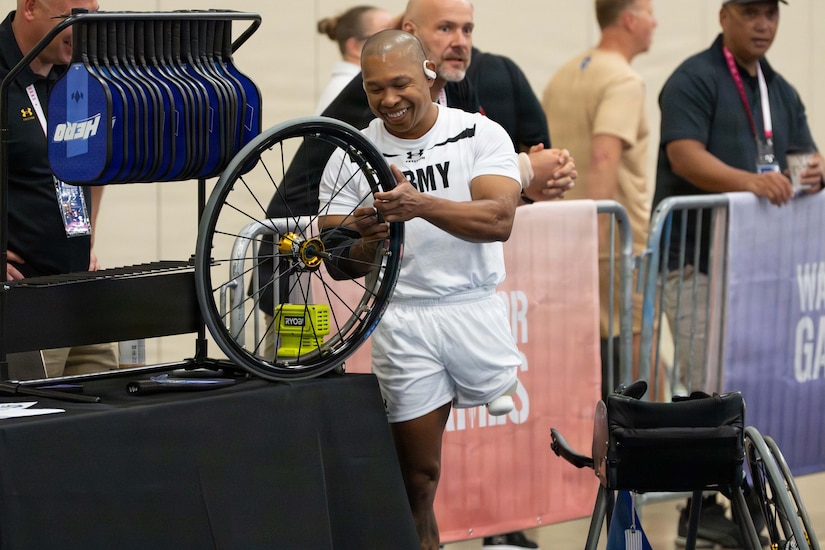
When retired Army Staff Sgt. Gene Calantoc lost his leg in 2020, he was introduced to adaptive sports and competed in the 2024 Warrior Games. Now, two years later, he's back as a stronger competitor. 

During his first games, Calantoc said he was still learning how to move through adaptive sports with speed, skill and confidence. This year, competing with Team Army at the 2026 Warrior Games, he returned with experience, a stronger voice on the basketball court and a deeper understanding of what recovery can become when family, teammates and purpose move with him.  

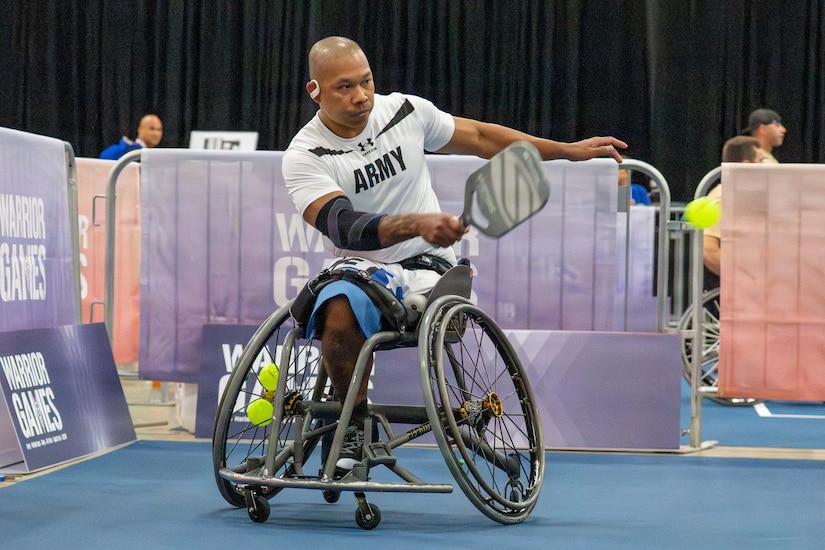
A man in athletic attire sits in a wheelchair and swings a pickleball racket.

Calantoc served 10 years in the Army, and in 2020, his life changed following a motorcycle accident that resulted in the loss of his left leg. His recovery began during the height of the COVID-19 pandemic, making an already difficult journey more challenging for him and his family.  

In 2024, Calantoc was assigned to a Soldier Recovery Unit at Brooke Army Medical Center in San Antonio, which is where he was introduced to adaptive sports. 

"I was quick and fast with my wheelchair, but I didn't know the game," he said. 

Since then, Calantoc has continued to play wheelchair basketball with the San Antonio Spurs and has attended adaptive sports camps to sharpen his skills. The added experience helped him become more vocal, confident and intentional during competition.  

"Now, I know what to do on the court," he said. "It's a lot of communication and knowing your role."  

His wife, Miho Calantoc, said the difference between 2024 and 2026 is visible. 

"He's less nervous than he was when he first competed," she said. "He's more verbal and communicates more with the team. He takes initiative in making sure the team is together."  

For Calantoc, adaptive sports have become more than competition. They help him stay active, connected and focused. His motto — "Stay true. When life knocks you down, rise stronger and keep moving forward" — reflects the mindset he continues to carry through recovery.  

A man in athletic attire stands on one leg next to a table and holds a wheelchair wheel.

"That motto is big for me," he said. "There's a day where I'll get depressed, but that's only one day. Every day is a new day."  

Following the 2026 Warrior Games, Calantoc plans to compete in the National Veterans Wheelchair Games in Detroit next month. He said adaptive sports help him remain connected to others.  

"I've got adaptive sports, and it keeps me busy," he said. "It keeps me smiling and enjoying life."  

Miho Calantoc said she has watched the way adaptive sports have changed her husband and their family.  

"It's amazing," she said. "We've been in a dark space, and adaptive sports brings him so much light. It's such a blessing to see the difference when he is competing and how brightly he shines."  

The week leading up to the Warrior Games also brought another milestone for the Calantoc family. They received an Americans with Disabilities Act-accessible home, a moment both Calantoc and his wife described as life-changing.  

"Thinking about it still makes me cry," Calantoc said. "I really wasn't expecting it."  

For the family, the home represents more than a new address. It represents safety, independence and relief after years of navigating a house that was not built for Calantoc's needs.  

"A lot of times, I'll take a shower [and] I'll slip and fall," Calantoc said. "This house our family received is really going to change my life; it's going to make it easier for me."  

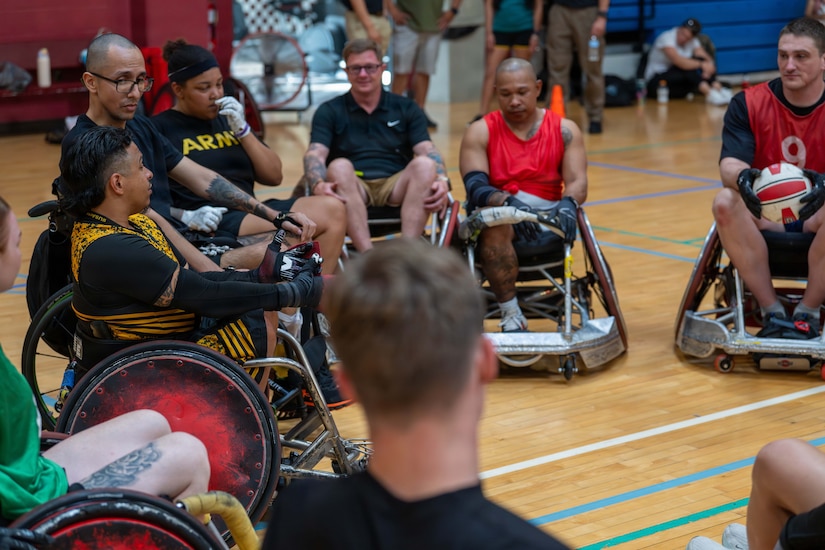
Nearly a dozen people in athletic attire sit in wheelchairs while gathering in a circle inside a gym.

Miho Calantoc said the home is an answered prayer from her side of the recovery journey as his spouse.  

"As a caregiver, there was a lot of worry from my end, especially in the restroom or bathtub," she said. "I know he's a very independent person. Just him being able to get back that independence is so heartwarming for him and for myself."  

For Calantoc, having his wife and children with him during the Warrior Games adds meaning to every event.  

"When my family is here, that's big support," he said. "I want to say 'thank you' to my wife and my kids [for] being here, supporting me. It's huge."  

Miho Calantoc said watching their father compete has become a lesson in resilience for their children.   

"They know Dad's got it, so we got it, too," she said. "He shows them that you can do anything when you put your mind to it."  

Calantoc said he tries to pass that same lesson on to others in the adaptive sports community.

He tells them, "Try all these adaptive sports. You don't know what you can do until you try it."

Warrior Games week represents more than competition for the Calantoc family. It's another step forward in a recovery journey that has touched their lives, a competitor returning with confidence and a family beginning a new chapter in a home built to support the independence he continues to reclaim.

Thursday, June 21, 2012

Secretary of Defense to Host Warrior Games Recognition Ceremony at Pentagon


Secretary of Defense Leon E. Panetta will host a Warrior Games Recognition Ceremony on Monday, June 25 at 1 p.m. EDT in the Pentagon Center Courtyard.  The event is open to the Pentagon community and will be broadcast live on the Pentagon Channel.  The inclement weather location for this ceremony is the Pentagon Library Conference Center, Room B6.

During the ceremony, Panetta will recognize 50 Warrior Games athletes representing more than 200 athletes from the five military services and U.S. Special Operations Command that competed during the 2012 Warrior Games held in Colorado Springs, April 30 - May 5, 2012.  Additional guest speakers include Gen. Raymond T. Odierno, Army chief of staff, and Charlie Huebner, chief of Paralympics for the United States Olympic Committee.

The U.S. Olympic Committee (USOC) with the support of the Defense Department hosts the annual Warrior Games, an Olympic-style competition between wounded, ill and injured military members and veterans.  Athletes compete for medals in seven categories:  swimming, archery, track and field, wheelchair basketball, sitting volleyball, shooting, and cycling.

Media interested in covering the event must call 703-697-5131 to attend.  Journalists without a Pentagon building pass will be picked up at the North Parking Entrance only.  Plan to arrive no later than 45 minutes prior to the event; have proof of affiliation and two forms of photo identification.

Friday, May 04, 2012

Team Navy Coast/Guard Wins Bronze in Archery, Advance in Wheelchair Basketball


By Lt. Michael Fallon, Chief of Naval Personnel Public Affairs

COLORADO SPRINGS, Colo. (NNS) -- Team Navy/Coast Guard's archers won the team's first medal in the second day of competition of the 2012 Warrior Games at the U.S. Air Force Academy in Colorado Springs, Colo. May 2, 2012.

Team Navy/Coast Guard was represented in the individual and team recurve and compound archery events. The recurve team, represented by Navy Culinary Specialist Seamen Judy Boyce, Navy Machinist's Mate 1st Class Mike Dayton, and retired Navy Electrician's Mate 2nd Class Joshua Rosenberg, defeated the Air Force team in the bronze medal round of competition. Their performance achieved Team Navy/Coast Guard's first medal of the games and has reaffirmed the spirit of the athletes.

"That we have three members, rise up as a team to earn [a bronze] medal speaks volumes. They watched each others' backs and won as a team," said retired Master Chief Wilson.

Dayton, who narrowly lost the individual recurve bronze event earlier in the day, was excited that it all came together in the team event. "I may not have won an individual medal, but it's all about the team."

That unity extended into the evening competition. In the second day of wheelchair basketball games, Team Navy/Coast Guard defeated Special Operations Command (SOCOM) by a margin of 16-5. With this win, Navy/Coast Guard is in contention for the medal matches on Friday.

Retired Electrician's Mate 3rd Class Henry Sawyer responded "It doesn't matter who we play -- we're gonna win!"

An optimistic attitude and a spirit of commitment have been the essence of Team Navy/Coast Guard at these Warrior Games.

The 35 warrior athletes are participating as Team Navy/Coast Guard, sponsored by Navy Safe Harbor, the Navy and Coast Guard's wounded warrior support program, a key component of the Department of the Navy's 21st Century Sailor and Marine initiative. The initiative is meant to maximize Sailor and Marine personal readiness, build resiliency, and hone the most combat-effective force in the history of the Department of the Navy.

The Warrior Games, hosted by the U.S. Olympic Committee's paralympics military program, provides an opportunity for wounded, ill, and injured service members to participate in competitive sports against members of other branches of service.

Thursday, May 03, 2012

Chairman Praises ‘Heroes of Military Medicine’


By Karen Parrish
American Forces Press Service

WASHINGTON, May 3, 2012 – The network of people, government and private organizations that tends to America’s wounded, injured and ill service members has achieved results over the last decade that are “absolutely remarkable,” the nation’s top military officer told an audience here yesterday.

Army Gen. Martin E. Dempsey, chairman of the Joint Chiefs of Staff, spoke last night at a “Heroes of Military Medicine” event hosted by the Center for Public-Private Partnerships at the Henry M. Jackson Foundation for the Advancement of Military Medicine.

“I do find heroes and military medicine to be a little redundant, actually. … Every time we think they can’t do more for us, they step up and find it,” the general said.

Earlier this week, Dempsey noted, he attended the opening ceremonies for the 2012 Warrior Games in Colorado Springs, Colo. The games, which continue through May 5, are a series of Olympic-style events in which wounded, ill and injured service members of all services, along with veterans, compete in archery, cycling, shooting, sitting volleyball, swimming, track and field and wheelchair basketball.

The Warrior Games, created in 2010, are a combined effort of the U.S. Olympic Committee and the Defense Department. The games are notable because of the courage of the competitors, who Dempsey said are “young men and women putting ability over disability.”

The chairman said attending both the games and the “heroes of medicine” gathering in the same week highlighted for him the connection between today’s service members, who survive combat injuries at rates never before seen, and the medical establishment that makes their survival possible.

“What I want you to know tonight is how much we, who wear the uniform today, appreciate what everyone is doing to pull together in the common cause of making sure that the young men and women who put themselves in harm’s way are cared for,” Dempsey said.