Showing posts with label recovery journey. Show all posts

Thursday, June 18, 2026

Team Army Opens 2026 Warrior Games With Eight Powerlifting Medals

Team Army opened the first day of competition at the 2026 Warrior Games in San Antonio with wins in powerlifting, earning eight medals while demonstrating that the greatest victories often extend far beyond the podium. 

The powerlifting medalists included: 1st Lt. Jani Merritt, gold; Staff Sgt. Chelsea Scott, gold; Staff Sgt. Nate Mateo, gold; Sgt. Tukiau Salanoa-Tuioti, gold; Capt. Channda Mitchell, gold; Capt. Jake Malven, silver; retired Sgt. 1st Class Valerie Watkins, bronze and retired Capt. Tony Smith, bronze. 
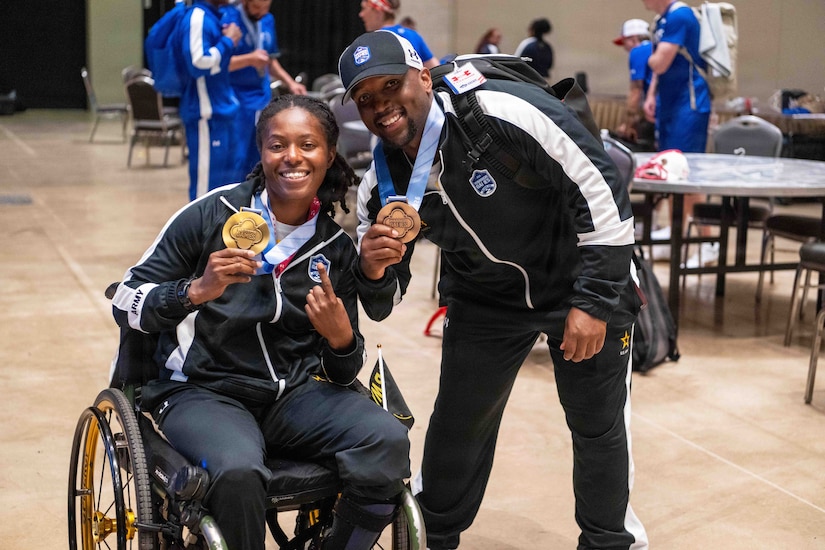
A woman in athletic attire sits in a wheelchair holding a medal around her neck while a man in similar attire leans next to her, also holding a medal, as they pose for a photo.

While the medals reflected exceptional performances on the platform, the stories behind them highlighted the perseverance, support and sense of community that define the Warrior Games experience as well as the Army Recovery Care Program's commitment to helping wounded, ill and injured soldiers recover and thrive. 

Mateo, a second-time Warrior Games competitor, said he shares his gold medal with family, who traveled nearly 24 hours from Saipan to cheer him on in San Antonio. He said seeing his family and friends in the stands served as a powerful reminder that recovery is rarely a journey taken alone.   

"My wife, Regina, and my family have been with me from the start," Mateo said. "I wouldn't have been where I am today if it wasn't for her. She’s been keeping me in the right state of mind and reminding me of all we have accomplished together through this journey." 
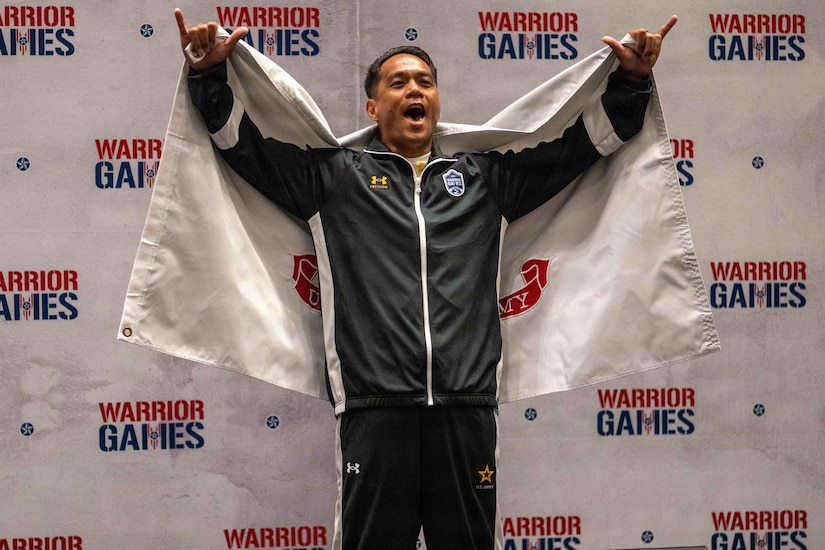
A man wearing athletic attire and an award medal lifts his arms in celebration while holding a service flag around his shoulders,

Returning to the Warrior Games with another year of training and experience behind him, Mateo said the lessons from coaches and teammates have prepared him mentally and physically while inspiring him to pay that support forward. 

"Everything I learned and experienced last year followed me into this year," he said. "This year, my goal is to return that favor by encouraging, mentoring and supporting everyone on Team Army." 

For first-time competitor Scott, a gold medal was meaningful, but the relationships forged throughout recovery proved even more valuable. 

"Winning a gold medal at my first Warrior Games is something I'm incredibly proud of, but what this experience represents goes far beyond the medal itself," she said. "Recovery can sometimes feel isolating, but being part of this team continuously reminds me that I'm not alone." 
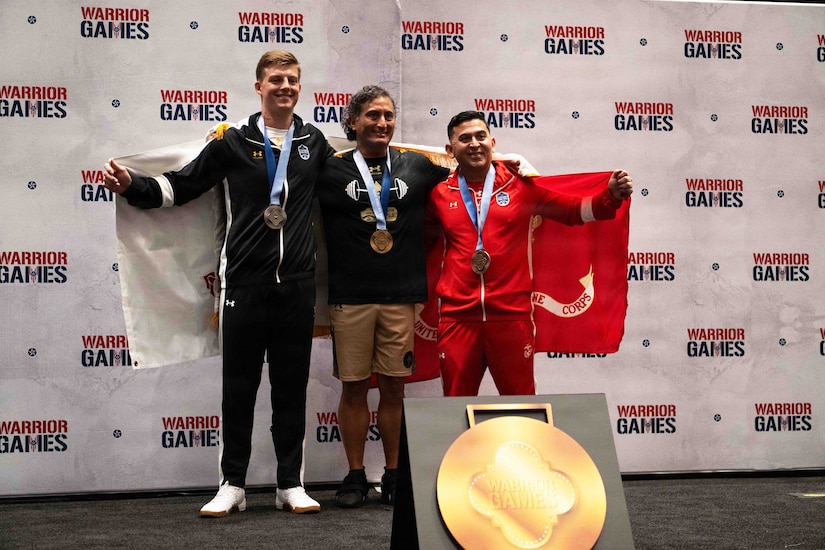
Three men wearing athletic attire and award medals hold service flags around their shoulders while standing and smiling for a photo.
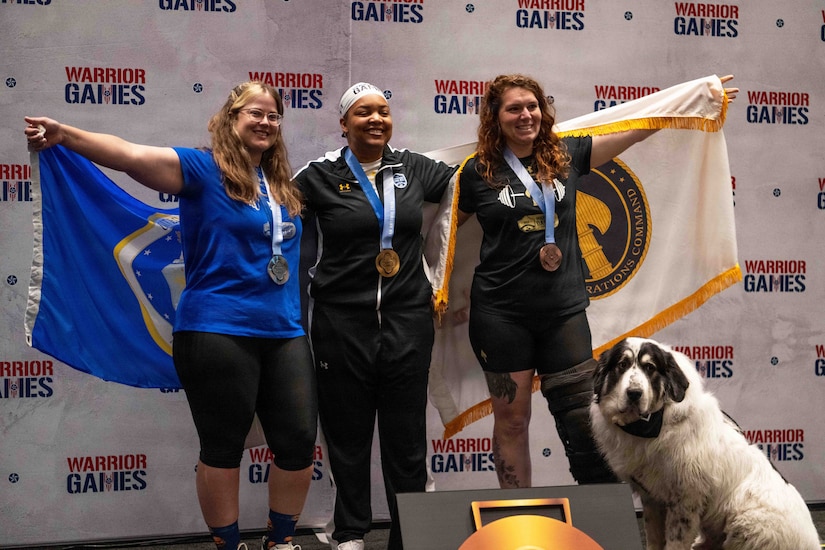
Three women wearing athletic attire and award medals hold service flags around their shoulders while smiling for a photo; a service dog is also posing with them.
Scott credits adaptive sports and the Army Recovery Care Program with helping her regain confidence and discover new ways to challenge herself as she navigates recovery. 

"They showed me that recovery is not just about healing, and it's certainly not linear," she said. "It's about finding new ways to grow, push your limits and continue doing the things you love." 

Smith also made his Warrior Games debut June 13, earning a bronze medal after overcoming doubts and trusting the preparation that brought him to the platform. 

"I was excited, but I was also nervous," he said. "After losing a significant amount of weight over the past few months, I was the lightest competitor in my division. There were definitely moments of doubt, but I trusted my training, my coaches and the support system that helped me get there." 

Looking beyond the medal itself, Smith said the Warrior Games reinforced lessons that will remain with him long after the competition ends. 
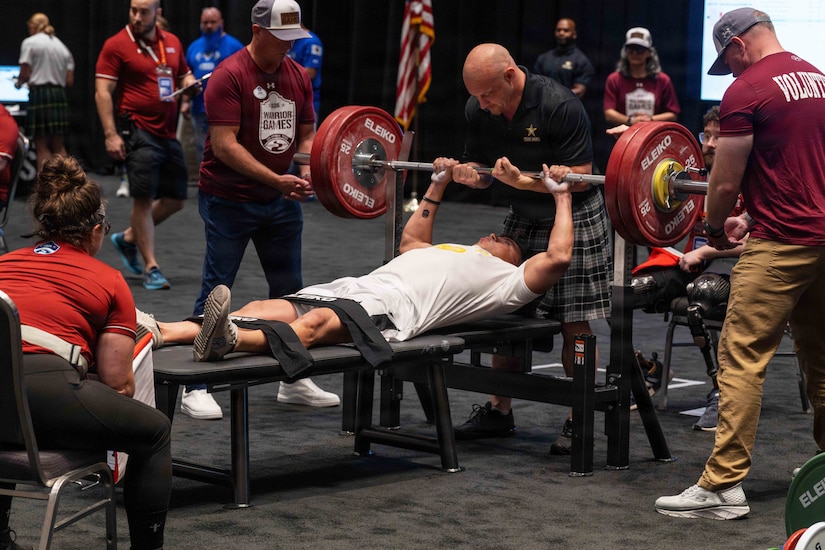
A man in athletic attire lies on a weight bench and grips a barbell, while three people in similar attire assist and a woman sits in a chair to observe; in the background, people in similar attire do similar activities.

"This journey taught me that recovery is a process, not an event," he said. "More than anything, I learned the importance of community. None of us accomplish things alone. While I'm proud of the bronze medal, I'm even more grateful for the lessons this experience has reinforced: trust the process, lean on your support system and never count yourself out." 

The Army Recovery Care Program uses adaptive sports and reconditioning activities to assist wounded, ill and injured soldiers build confidence, resilience and community throughout their recovery journeys. On the opening day of competition, Team Army's powerlifting performance reflected not only athletic achievement but also the determination to keep moving forward despite injury, illness and adversity. 

As the 2026 Warrior Games continue throughout the week, Team Army competitors will carry that same united spirit into every event, proving that while medals are earned on the field of play, recovery itself is the greatest victory.

Monday, June 15, 2026

Warrior Games Week Marks New Chapter for Army Veteran

When retired Army Staff Sgt. Gene Calantoc lost his leg in 2020, he was introduced to adaptive sports and competed in the 2024 Warrior Games. Now, two years later, he's back as a stronger competitor. 

During his first games, Calantoc said he was still learning how to move through adaptive sports with speed, skill and confidence. This year, competing with Team Army at the 2026 Warrior Games, he returned with experience, a stronger voice on the basketball court and a deeper understanding of what recovery can become when family, teammates and purpose move with him.  

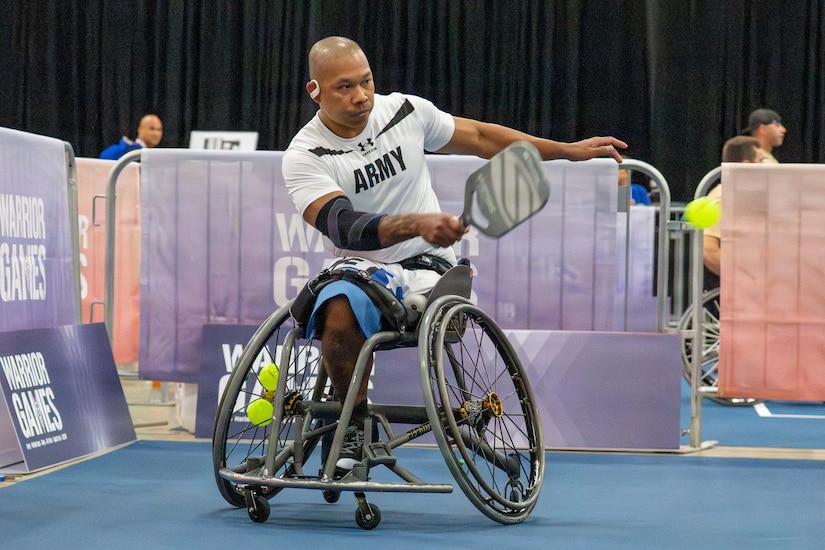
A man in athletic attire sits in a wheelchair and swings a pickleball racket.

Calantoc served 10 years in the Army, and in 2020, his life changed following a motorcycle accident that resulted in the loss of his left leg. His recovery began during the height of the COVID-19 pandemic, making an already difficult journey more challenging for him and his family.  

In 2024, Calantoc was assigned to a Soldier Recovery Unit at Brooke Army Medical Center in San Antonio, which is where he was introduced to adaptive sports. 

"I was quick and fast with my wheelchair, but I didn't know the game," he said. 

Since then, Calantoc has continued to play wheelchair basketball with the San Antonio Spurs and has attended adaptive sports camps to sharpen his skills. The added experience helped him become more vocal, confident and intentional during competition.  

"Now, I know what to do on the court," he said. "It's a lot of communication and knowing your role."  

His wife, Miho Calantoc, said the difference between 2024 and 2026 is visible. 

"He's less nervous than he was when he first competed," she said. "He's more verbal and communicates more with the team. He takes initiative in making sure the team is together."  

For Calantoc, adaptive sports have become more than competition. They help him stay active, connected and focused. His motto — "Stay true. When life knocks you down, rise stronger and keep moving forward" — reflects the mindset he continues to carry through recovery.  

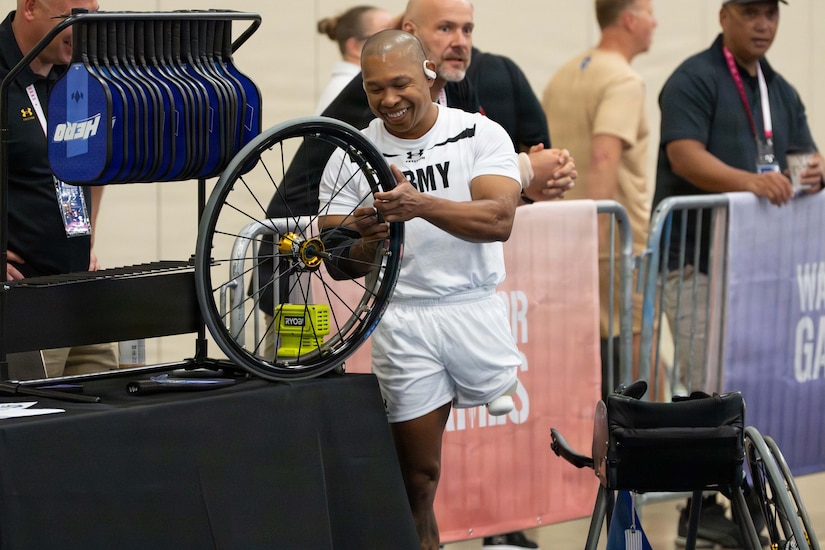
A man in athletic attire stands on one leg next to a table and holds a wheelchair wheel.

"That motto is big for me," he said. "There's a day where I'll get depressed, but that's only one day. Every day is a new day."  

Following the 2026 Warrior Games, Calantoc plans to compete in the National Veterans Wheelchair Games in Detroit next month. He said adaptive sports help him remain connected to others.  

"I've got adaptive sports, and it keeps me busy," he said. "It keeps me smiling and enjoying life."  

Miho Calantoc said she has watched the way adaptive sports have changed her husband and their family.  

"It's amazing," she said. "We've been in a dark space, and adaptive sports brings him so much light. It's such a blessing to see the difference when he is competing and how brightly he shines."  

The week leading up to the Warrior Games also brought another milestone for the Calantoc family. They received an Americans with Disabilities Act-accessible home, a moment both Calantoc and his wife described as life-changing.  

"Thinking about it still makes me cry," Calantoc said. "I really wasn't expecting it."  

For the family, the home represents more than a new address. It represents safety, independence and relief after years of navigating a house that was not built for Calantoc's needs.  

"A lot of times, I'll take a shower [and] I'll slip and fall," Calantoc said. "This house our family received is really going to change my life; it's going to make it easier for me."  

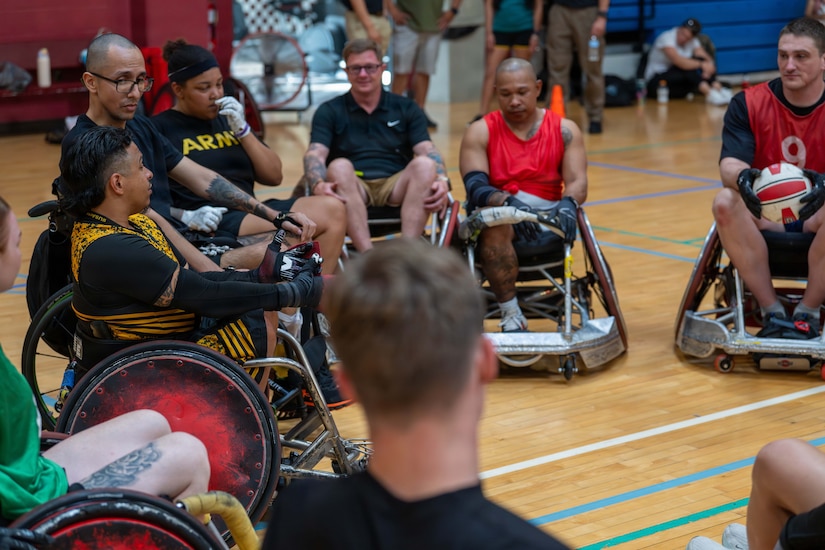
Nearly a dozen people in athletic attire sit in wheelchairs while gathering in a circle inside a gym.

Miho Calantoc said the home is an answered prayer from her side of the recovery journey as his spouse.  

"As a caregiver, there was a lot of worry from my end, especially in the restroom or bathtub," she said. "I know he's a very independent person. Just him being able to get back that independence is so heartwarming for him and for myself."  

For Calantoc, having his wife and children with him during the Warrior Games adds meaning to every event.  

"When my family is here, that's big support," he said. "I want to say 'thank you' to my wife and my kids [for] being here, supporting me. It's huge."  

Miho Calantoc said watching their father compete has become a lesson in resilience for their children.   

"They know Dad's got it, so we got it, too," she said. "He shows them that you can do anything when you put your mind to it."  

Calantoc said he tries to pass that same lesson on to others in the adaptive sports community.

He tells them, "Try all these adaptive sports. You don't know what you can do until you try it."

Warrior Games week represents more than competition for the Calantoc family. It's another step forward in a recovery journey that has touched their lives, a competitor returning with confidence and a family beginning a new chapter in a home built to support the independence he continues to reclaim.