Showing posts with label uss constitution. Show all posts

Wednesday, July 08, 2026

Point Mugu's Target Mission Shapes Navy Lethality

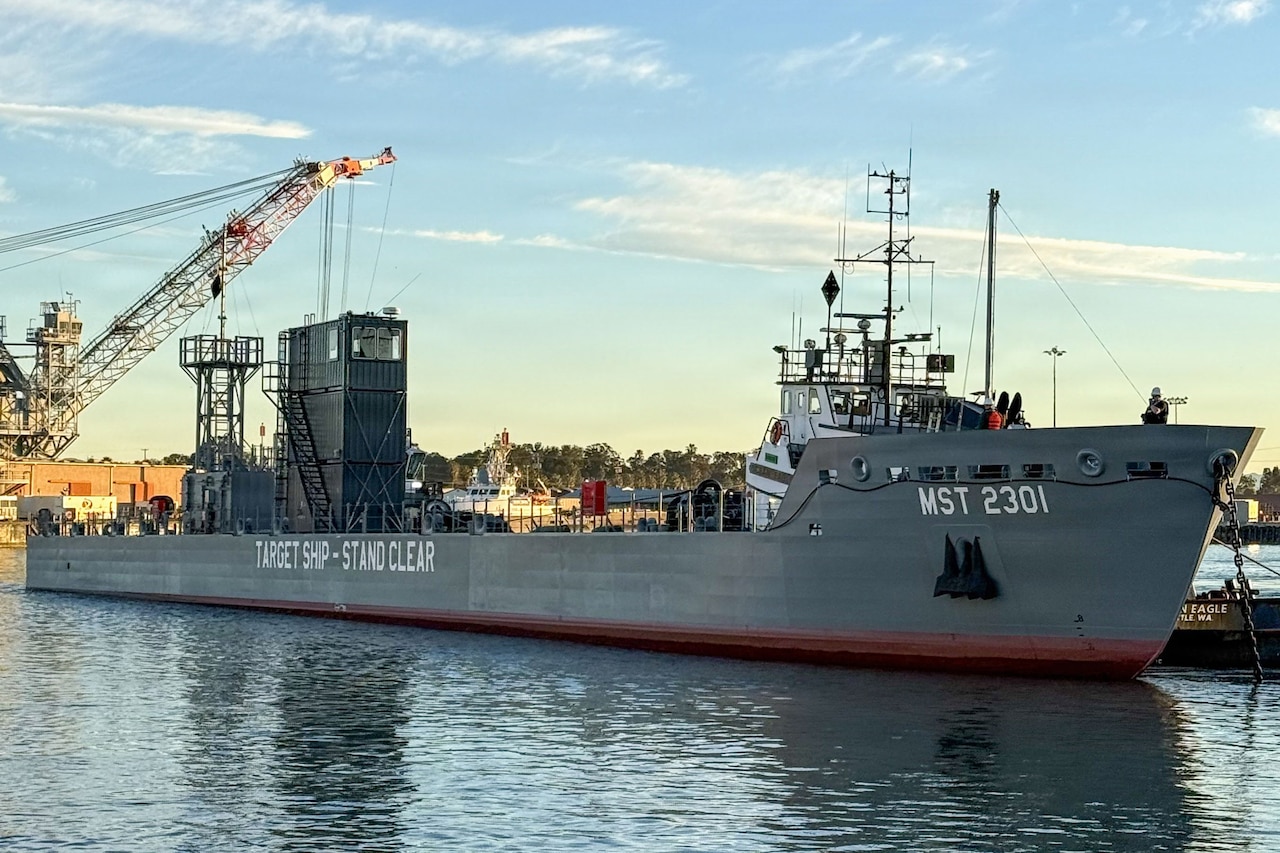
A large military ship is docked at a pier while a crane loads equipment onto the ship.

Personnel at Point Mugu, California, have been trying to sink the Navy fleet since 1946, and the fleet is better for it. 

The Naval Air Warfare Center Weapons Division's threat target systems department continues the legacy founded eight decades ago by building, fielding and operating the targets that give Navy's ships and aircraft a credible enemy to train against. 

This year, the department marks 80 years of aerial target operations at Point Mugu. The threats it builds today would be unrecognizable to the engineers who launched the first drones and pilotless aircraft in 1946. 

The mission would not. 

A Legacy Forged in War 

World War II delivered two lessons the Navy could not ignore. 

Germany's V-1 buzz bombs proved unmanned weapons could strike at scale. Japan's kamikaze attacks proved guided threats could reach ships faster than gunners could respond. The Navy needed to develop its own pilotless aircraft and guided missiles. More urgently, it needed to train crews to defeat them. 

In late 1945, the Navy established a pilotless aircraft unit at Naval Air Station Mojave, California, and began operating at a makeshift range at Point Mugu. The range location was selected from a survey of 26 candidate sites. Its advantages were precise: an unobstructed over-water range, reliable weather, proximity to Southern California's aerospace industry and nearby islands for instrumentation. 

On Oct. 1, 1946, the Naval Air Missile Test Center activated 5 miles south of Oxnard, California. The pilotless aircraft unit consolidated there to develop and test pilotless aircraft, drones and guided missiles over the Pacific Ocean. 

The first test weapon was a direct answer to the threat that prompted the program. The Republic-Ford JB-2 Loon, a derivative of Germany's V-1 buzz bomb, launched from Point Mugu's beach ramps throughout 1946 and 1947. 

In early 1947, the submarine USS Cusk fired a Loon, becoming the world's first missile launched from a submarine. The technology being studied at Point Mugu had become a weapon within a year of the center's activation. 

Early target drones followed. 

The KDD-1 Katydid, powered by a pulsejet engine, gave the Navy one of its first purpose-built aerial targets — a platform designed not to strike but to be struck — at Point Mugu. 

The principle embedded in that first drone has driven the program ever since: to train the fleet to win, you have to give it something worth defeating. 

As the Threat Grows, So Does the Target 
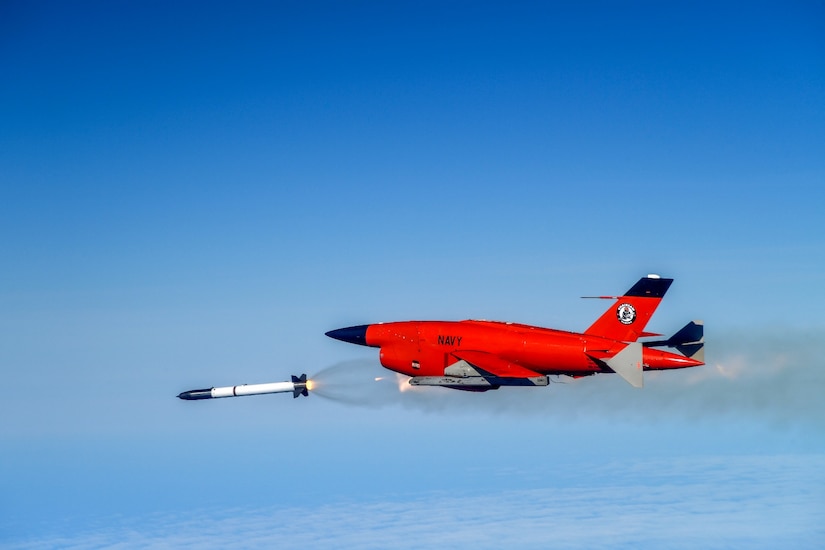
A drone fires a missile while flying in the air.

As adversary capabilities advanced, Point Mugu's targets kept pace. 

Surplus F6F Hellcat fighter aircraft, converted to remote-controlled drones, flew as test targets for early air-to-air missiles. In 1952, an AIM-7 Sparrow missile shot down a Hellcat drone above the sea range, marking the first recorded guided air-to-air missile intercept. The result validated the weapon. It also validated the method — give the missile a realistic target and you learn what it can actually do. 

The jet age raised the bar. QF-86 Sabre jet aircraft flew in pilot-optional mode as subsonic targets. Later, QF-4 Phantom IIs returned to Point Mugu as unmanned supersonic targets capable of unmanned operations that pushed missile systems to their limits. The same aircraft that had defined a generation of fleet air combat came back to be shot at. 

That is the arc of this mission. 

The program also flew supersonic targets. The AQM-37 Jay Hawk drone, air-launched from fighter aircraft, simulated high-speed threats at Mach 3 and altitudes above 60,000 feet. It debuted in the 1960s and flew for the final time during Exercise Gray Flag in 2025, after roughly six decades of service. 

Behind each target profile are engineers, technicians, operators and range teams who turn intelligence about emerging threats into something the fleet can fly, track and engage. 

Today, the warfare center's threat target systems department operates from three California locations at Point Mugu, Port Hueneme and Naval Air Weapons Station China Lake, with teams that deploy worldwide to support fleet training and live-fire exercises. The aerial target fleet spans the full threat spectrum, from small commercially derived drones to Mach 2.7 missiles. 

A DJI Phantom 4 Pro V2 drone supports counter-unmanned aerial system training from surface vessels, testing shipboard defenses against the class of small drone threats now common in littoral operations. 

For larger low-speed presentations, the systems department received 20 former MQ-1B Predator aircraft and redesignated them as NMQ-1B aircraft, giving the Navy a more capable target that can support threat-representative test events beyond the small UAS class.  

The BQM-34S Firebee aerial target system remains the fleet's heavy-lift aerial workhorse. Its payload capacity supports advanced weapons development, including serving as a surrogate launch platform for China Lake's solid fuel ramjet missile. 

The BQM-177A, the newest aerial target, replaced the BQM-74 Chukar and carries advanced electronic warfare payloads and wingtip pods that replicate subsonic cruise missile profiles. In a recent demonstration on the Point Mugu Sea Range, the BQM-177A flew as a test bed for the Experimental Platform for Intelligent Combat project. 

Two Naval Air Systems Command program offices sponsored the demonstration, which used an artificial intelligence system to validate autonomous flight control. The BQM-177A made tactical decisions and executed maneuvers without a remote operator. The capability is still in development. 

At the high end, the GQM-163A Coyote provides what no other U.S. target can: supersonic sea-skimming flight at Mach 2.6, with an advanced emitter signal simulator that replicates the electronic signature of an antiship cruise missile. The Coyote replaced the MQM-8G Vandal. 

Beyond the Skies 
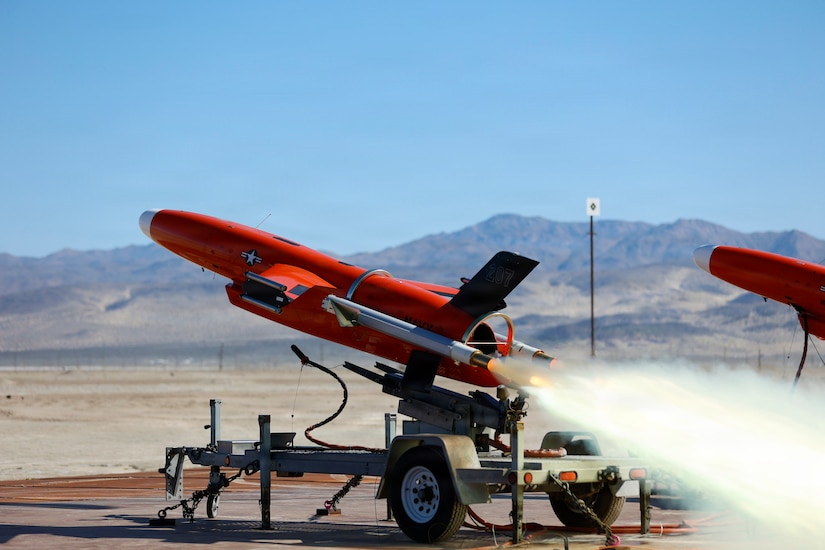
A missile launches from a trailer in the desert as smoke pours out the back; there are mountains in the background.

The team's mission does not stop at the water's edge. 

The High-Speed Maneuverable Surface Target drone replicates fast attack and fast onshore attack craft. During surface warfare advanced tactical training exercises, ships and embarked aircrews use the drone to validate anti-surface warfare tactics, techniques and procedures against a target that moves and maneuvers like the threat.  

The next test ship, a 260-foot vessel designated Mobile Ship Target 2301, arrived at Port Hueneme in January. NAWCWD teams are outfitting it for operational use, installing a government-developed remote-control system that will allow the vessel to operate safely during live-fire events. 

Its reconfigurable superstructure can be shaped to match specific adversary ship profiles, with installed emitters replicating that ship's electromagnetic environment. This ship is the primary platform for surface-to-surface and air-to-surface weapons testing. 

The newest seaborne addition is the Low-Profile Surface Target. The unmanned surface vehicle replicates the small adversarial ships that are increasingly encountered in littoral waters. One operator controls the lead vessel with up to seven others maintaining formation, presenting coordinated attack scenarios that mirror threats in contested maritime environments. 

"The targets we build and augment serve two missions. They act as the threat representative surrogate to test and evaluate the weapons and warfighting systems designed to defeat it, and they train the crews who will track, identify and pull the trigger," said Tom Dowd, Point Mugu Sea Range group director. "A ship or aircraft that hasn't faced a realistic threat in both contexts deploys with unanswered questions. [The threat target systems department] makes sure they get the answers right." 

The Teams Behind the Threat 

The targets are only as capable as the people who build, launch and operate them. 

TTSD teams deploy to every major range in the U.S. and abroad. They launched GQM-163A targets from Hebrides, Scotland, during NATO's Exercise Formidable Shield, operated across Atlantic training ranges and supported missions at the Reagan Space and Missile Test Range on Kwajalein in the Marshall Islands and ranges in Australia.  

During those exercises, allied navies use TTSD targets to test their own combat systems and train their crews alongside U.S. forces. At home, an operating procedures standardization program at Point Mugu trains target operators from commands across the Navy to common standards. 

The collaborative framework that drives target requirements is the Target Stakeholder Requirements Action Group. Through this group, the fleet and NAWCWD technical staff define and refine requirements together, ensuring the threats presented in training track with the evolving operational environment. The Low-Profile Surface Target emerged directly from that process: a specific answer to the Navy's training against small-boat threats. 

For the fleet, the value of that work is measured in seconds. 

"This training is indispensable for exercising a ship's layered defense, enabling personnel to achieve the technical mastery required to sense, synthesize and decide fast enough to win in an era where the speed of [decision-making] ruthlessly punishes delay," said Navy Capt. Matthew W. Foster, Naval Surface and Mine Warfighting Development Center deputy commander. 

The Threat That Holds 
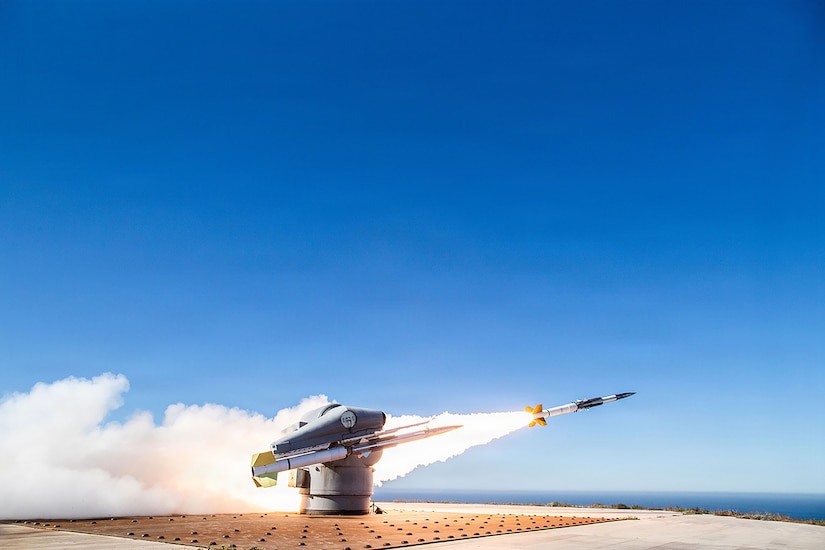
Training against a realistic threat builds something that a classroom cannot. A crew that has tracked an incoming Coyote at Mach 2.6 knows where its procedures hold and where they break, before that knowledge costs lives.

That is what TTSD has been building for 80 years. 

The platforms and the threats have changed over the years. Every generation of threat required a new generation of target. Every generation of target required the same thing: people at Point Mugu willing to build a more dangerous adversary so the fleet could learn to survive it. 

"Eighty years ago, this place existed for one reason: make sure we don't lose a warfighter to something they could have learned here. That mission doesn't change when the threat goes autonomous. It gets harder," said Dan CarreƱo, NAWCWD executive director. "And the people here have never backed down from a hard problem." 

That is the work TTSD inherited, and the work carries forward every time the fleet asks for a harder threat.

Tuesday, July 07, 2026

The USS Constitution Navigates Future

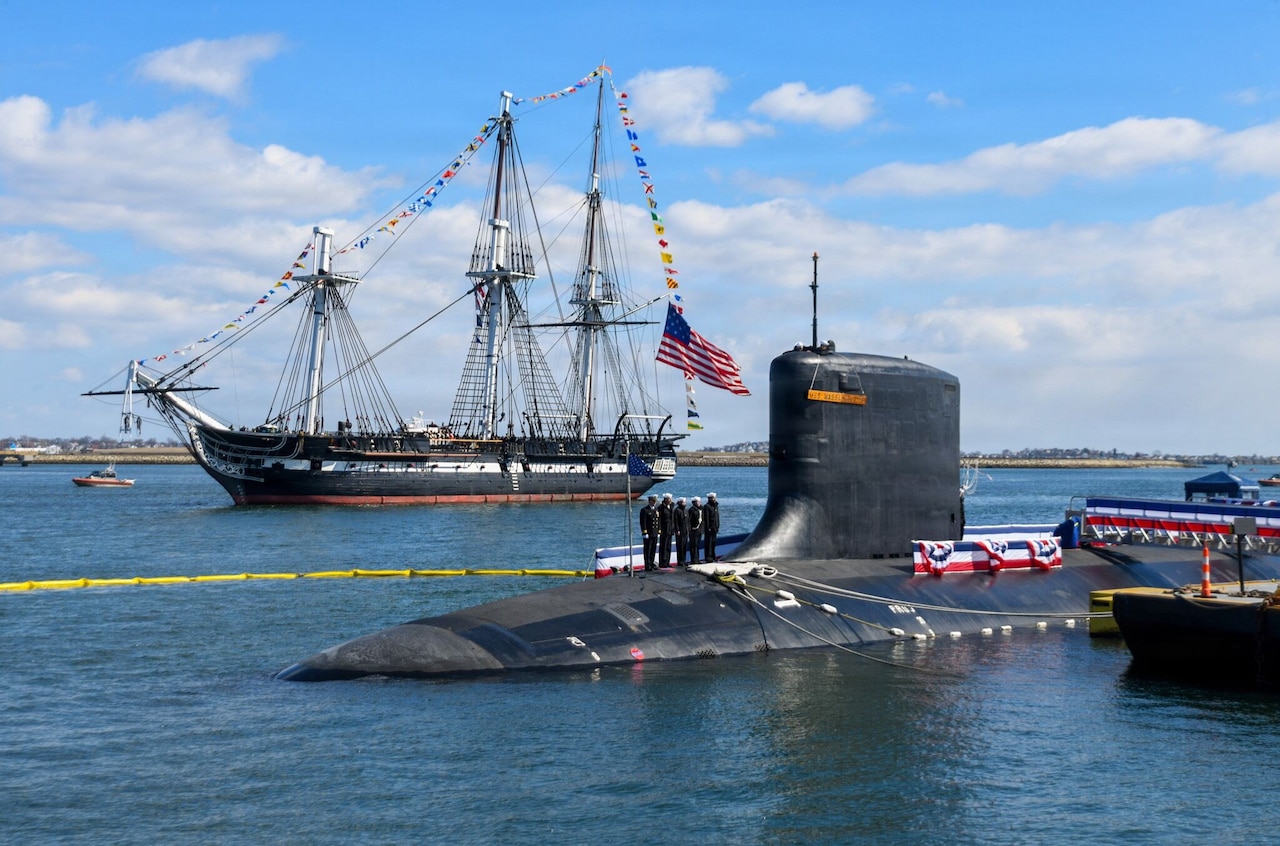
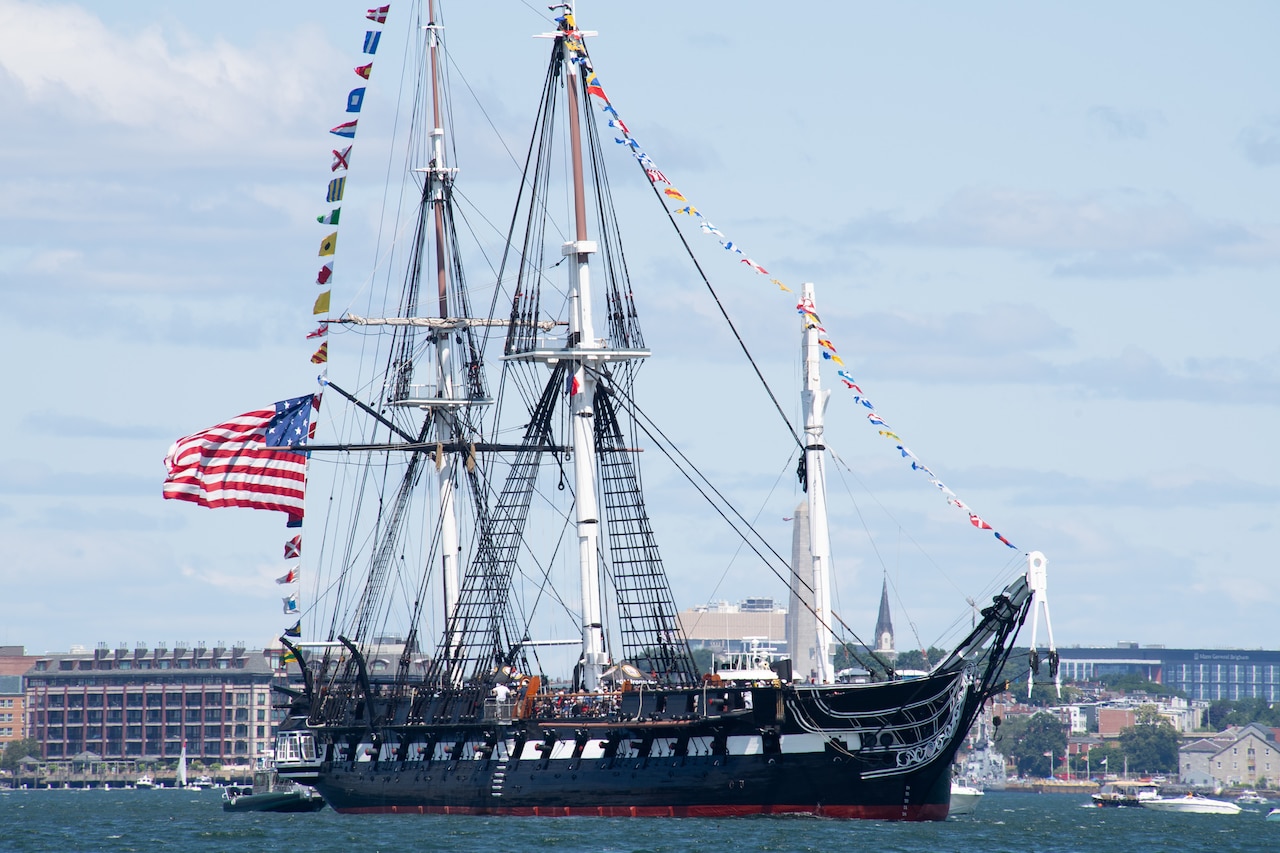
For more than two centuries, the USS Constitution has relied on the stars, the sea and traditional paper charts to navigate. But as the historic vessel prepares for nine America 250 fleet events in 2026, Old Ironsides is receiving a critical digital navigation upgrade courtesy of Naval Surface Warfare Center, Philadelphia Division.

A Revolutionary War-era ship with the American flag flying from the stern sails past a submarine moored to a dock as five people in military uniforms stand on the sub.

"NSWCPD delivers solutions that keep ships at sea and sailors mission ready, whether that ship was commissioned in 1797 or 2026," said Navy Capt. Ashley Wright, NSWCPD commanding officer. "[The] USS Constitution is a living symbol of our Navy's heritage, and this project shows how our engineers can tailor modern capability to meet a one-of-a-kind mission while preserving a national treasure."

The transition marks a significant milestone for the ship and the Navy. In December 2024, the National Oceanic and Atmospheric Administration officially sunset the distribution of paper charts, making electronic charting the standard for modern maritime navigation. Today, every commissioned surface and subsurface vessel in the Navy relies on a certified Electronic Chart Display and Information System.

NSWCPD serves as the in-service engineering agent for the navigation system across the surface and, more recently, the subsurface fleets. The system provides electronic charting and navigation information that helps ship operators maintain awareness of the vessel's position and movement. It represents a significant advancement over the manual plotting and chart updating processes traditionally associated with paper charts.

When the Constitution recently transitioned to become a Commander, Naval Surface Force Atlantic asset, the command required the historic ship to be equipped with ECDIS to ensure navigational safety during the highly anticipated America 250 fleet events. However, outfitting an 18th-century wooden-hulled frigate with 21st-century technology presented a unique engineering challenge.

A large 18th-century ship sails in a harbor on a cloudy day while flying the American flag; there are buildings in the background.

A traditional surface-ship installation is designed for modern naval vessels with complex operational requirements, established shipboard configurations and multiple layers of system resiliency. For the Constitution, that type of installation would have exceeded the ship's unique mission needs and posed challenges because of the vessel's historic design, limited space and preservation requirements.

To meet the requirement without altering the ship's historic integrity, the NSWCPD team developed a streamlined solution. Leveraging the flexibility of the systems engineering process, the team outfitted the Constitution with an emergency navigational laptop.

"We didn't need to reinvent the wheel. We needed to apply existing fleet technology in a smart way," said James Vaites, NSWCPD ship navigation system technical specialist. "The emergency navigational laptop we provided to [the] Constitution uses the same hardware and software carried as a critical backup across the modern surface fleet. For Old Ironsides, it gave us the real-time charting capability we needed in a compact, portable format that fit the ship's unique mission requirements."

The navigational laptop is the same technology provided to every ship in the surface fleet as a backup to its primary ECDIS, in the event of an operational or power failure. For the Constitution, however, it serves as the ideal primary tool — delivering the necessary real-time charting and safety data in a compact, unclassified and highly portable format.

By thinking beyond the traditional installation model, the NSWCPD team successfully met safety requirements, equipping the Navy's oldest commissioned warship afloat with its newest navigational standard and getting her underway on time for the nation's birthday celebrations.

The effort highlights NSWCPD's role in supporting current fleet readiness and the Navy's historic legacy. As the USS Constitution prepared to represent the Navy, Old Ironsides did so with the help of modern navigation technology adapted for one of the fleet's most unique ships.

Saturday, April 06, 2024

The United States Navy's First Six Frigates: Pioneers of American Naval Power

The United States Navy's inaugural six frigates epitomize a pivotal epoch in American naval annals, epitomizing the nation's aspirations for maritime preeminence and territorial sovereignty. Enacted under the aegis of the Naval Act of 1794, these vessels not only symbolized American naval power but also assumed critical roles in defending national interests and asserting maritime hegemony. This essay delves into the origins, construction, significant engagements, and notable sailors, including their distinguished first captains, while unraveling the enduring legacies and eventual destinies of these iconic frigates.

Origins and Construction:

 Following the conclusion of the American Revolutionary War, the nascent United States recognized the imperative of nurturing a formidable naval force to safeguard its burgeoning maritime interests. In response, Congress promulgated the Naval Act of 1794, authorizing the construction of six frigates imbued with versatility, agility, and formidable armaments, poised to confront enemy warships and safeguard American merchant vessels from the perils of the high seas.

  1. USS Constitution: Launched in 1797, the USS Constitution, under the command of Captain Samuel Nicholson and later Captain Isaac Hull, ascended to legendary status during the War of 1812. In a saga that resonated across the seas, the Constitution vanquished the British frigate HMS Guerriere in a remarkable feat of naval prowess, earning the moniker "Old Ironsides." Post-war, the Constitution served in myriad capacities, including coastal defense and training, before being enshrined as a museum ship, perpetuating its legacy as a venerable icon of American naval heritage.

  2. USS Constellation: Commissioned in 1797 under the stewardship of Captain Thomas Truxtun, the USS Constellation played a pivotal role in shielding American merchant vessels from French privateers during the Quasi-War with France. It engaged and triumphed over several French warships, including the Insurgente and the Vengeance, cementing its reputation as a stalwart defender of American maritime interests. The Constellation continued its service in various roles until its decommissioning in 1853.

  3. USS United States: Launched in 1797 and helmed by Captain John Barry, the USS United States etched its name in naval annals during the undeclared naval conflict with France. In a pivotal engagement, it seized the French frigate L'Insurgente off the coast of Guadeloupe, showcasing its mettle and fortitude on the high seas. Following decades of illustrious service, the United States was eventually dismantled and auctioned off in 1865.

  4. USS President: Commissioned in 1800 and initially commanded by Captain Thomas Truxtun, the USS President was embroiled in maritime skirmishes with British warships during both the Quasi-War and the War of 1812. Under the leadership of Captain John Rodgers, it continued its service until 1815 when it fell prey to the British frigate HMS Endymion during a fierce confrontation off the New York coast.

  5. USS Congress: Launched in 1799 and under the command of Captain James Sever, the USS Congress partook in naval operations against French privateers in the Caribbean and served as a flagship during diplomatic missions to North Africa. Following decades of valorous service, the Congress met its demise at the hands of Confederate forces during the Civil War, ensuring its legacy as a paragon of American naval fortitude.

  6. USS Chesapeake: Commissioned in 1799 and initially led by Captain James Barron and later by Captain Stephen Decatur, Jr., the USS Chesapeake traversed the tumultuous waters of the Quasi-War and the Barbary Wars. In a fateful encounter, the Chesapeake became embroiled in the notorious "Chesapeake-Leopard Affair" of 1807, when it was accosted and boarded by the British warship HMS Leopard. This incident triggered diplomatic tensions between the United States and Britain, highlighting the fragility of maritime relations during that era. Despite its trials, the Chesapeake continued its illustrious service until its eventual dismantling in 1819.

The United States Navy's inaugural six frigates, with their valorous exploits and illustrious crews, indelibly shaped American naval history. From safeguarding American merchant vessels to engaging in pitched naval battles, these vessels embodied the indomitable spirit of American maritime prowess and resilience. Though their eventual fates varied, their legacy endures as a testament to the United States' unwavering commitment to maritime security and global stability.

Monday, August 20, 2012

USS Constitution Sails for First Time since 1997


By Mass Communication Specialist 2nd Class Kathryn E. Macdonald, USS Constitution Public Affairs

CHARLESTOWN, Mass. (NNS) -- USS Constitution departed her berth from Charlestown, Mass. Aug. 19, to set sail for the first time since 1997, during an underway demonstration commemorating Guerriere Day.

The underway honored the 200th anniversary of Constitution's decisive victory over the HMS Guerriere during the War of 1812, marking the first time a United States frigate defeated a Royal Navy frigate at or nearly equal size. It's also the battle in which Constitution earned her famous nickname "Old Ironsides."

"I cannot think of a better way to honor those who fought in the war as well as celebrate Constitution's successes during the War of 1812 than for the ship to be under sail," said Cmdr. Matt Bonner, Constitution's 72nd commanding officer. "The event also ties our past and present by having the ship not only crewed by the outstanding young men and women who make up her crew, but also the 150 chief petty officer [CPO] selectees who join us for their Heritage Week."

More than 150 CPO selectees and CPO mentor chiefs assisted Constitution's crew in setting sails. CPO selectees participated in Constitution's annual CPO Heritage Weeks, a weeklong training cycle divided by two weeks that teaches selectees time-honored maritime evolutions, such as gun drills, line handling and setting sails. The training is also designed to instill pride in naval heritage in the Navy's senior enlisted leadership.

"I'm a boatswain's mate," said Chief (Select) Boatswain's Mate (SW) Michael Zgoda, assigned to USS Ingraham (FFG 61). "This is the foundation of my rate. Being able to learn from a variety of genuine chiefs and their different perspectives on leadership is overwhelming and important to the chief petty officer transition. I'm extremely honored to be a part of the group that can say they sailed the USS Constitution."

The ship got underway at 9:57 a.m. with tugs attached to her sides and 285 people on board, including special guests, such as the 58th, 59th, 62nd and 65th former commanding officers of Constitution; Rear Adm. Richard Breckenridge, Commander, Submarine Group Two; Rear Adm. Ted Branch, Commander, Naval Air Forces Atlantic; Vice Adm. William French, Commander, Navy Installations Command; retired Navy Capt. Thomas Hudner Jr., Medal of Honor recipient; and Dr. Phil Budden, Britain's Consul General to New England.

At 10:27 a.m., Budden and Bonner tossed a wreath into the ocean to honor and remember Constitution's battle with the HMS Guerriere.

When the ship arrived at President Roads, a body of water of Boston Harbor, the crew then set three sails from Constitution's main, mizzen and fore masts, and at 12:25 p.m., she detached from her tugs and sailed west under her own power for 17 minutes. She sailed at a maximum speed of 3.1 knots, at an average of two knots, and at a distance of 1,100 yards.

"As the ship's sail master, I felt a combination of pride and relief that the hundreds of man hours of training and planning over the past year all came together, and we were able to accomplish this goal," said Boatswain's Mate 1st Class (SW) Conrad Hunt. "I'm really proud that I can say I was a part of this historic occasion."

After tugs reattached to Constitution's sides, the ship headed to Fort Independence on Castle Island, where thousands of spectators waited to watch Constitution fire a 21-gun salute toward the fort at 1:14 p.m. Fort Independence is a state park that served as a defense post for Boston Harbor at one time.

Finally, the ship returned to her pier at 2:05 p.m. and everyone departed once the brow was safely set and the ship was clean. Constitution re-opened to the public for tours of the ship's history at 4 p.m.

"For me, this underway is representative of an incredible amount of work and dedication by not only the crew, but Maintenance and Repair Facility, Naval History and Heritage Command, and all of the partners coming together to make this happen," said Aircrew Survival Equipmentman 1st Class (AW/SW) Jason Keith, who is the longest serving crew member currently assigned to Constitution. Keith reported to the ship April 13, 2009 and will depart Aug. 31. "I've given tours to thousands of people, shined brass for hundreds of hours, and I've climbed the rigging to set and furl these sails over and over again. But sailing USS Constitution on Aug. 19, 2012 is one of the greatest honors I've had in my naval career, and I'm truly proud to be a part of this history."

The last time Constitution sailed under her own power was July 21, 1997 to honor the ship's 200th birthday. It was the first time the ship sailed in 116 years.

"When we sailed the ship, it became clear it was a different experience you can't have in port," said Lance Beebe, a crew member aboard Constitution's 1997 sail. "The ship comes alive, and you truly understand what she is all about. This new crew [2012 Sailors] just joined a group of crew members [1997 Sailors] that also got to experience Constitution under sail, and they became a significant part of her history as a result."

Constitution is the world's oldest commissioned warship afloat and welcomes more than 500,000 visitors per year. She defended the sea lanes against threat from 1797 to 1855, much like the mission of today's Navy. America's Navy: Keeping the sea free for more than 200 years.

Constitution's mission today is to offer community outreach and education about the ship's history.

Monday, May 28, 2012

USS Constitution Sailors to March in Washington D.C. Memorial Day Parade


By Seaman Michael Achterling, USS Constitution Public Affairs

CHARLESTOWN, Mass. (NNS) -- Sailors assigned to USS Constitution will be marching in the National Memorial Day Parade in Washington, D.C., May 28.

The parade celebrates all who have served in uniform, from the American Revolution to Operation Iraqi Freedom, and seeks to educate the public about the meaning of this national holiday.

"It is an honor to be able to march in the nation's Memorial Day Parade," said Cmdr. Matt Bonner, Constitution's 72nd commanding officer. "It is a great way for those who serve today to remember the people that have gone before us to defend our country. This year is especially symbolic for Constitution and her crew as we celebrate the 200th anniversary of the War of 1812 and the many gallant victories she earned keeping the seas free."

Presented by the American Veterans Center, the parade is held annually and is an opportunity for thousands of Americans to come together and honor those who have sacrificed on behalf of the United States.

The parade will showcase nearly 200 elements, including marching bands, active-duty and retired military units, youth groups and parade floats, as well as hundreds of veterans from World War II, Korea War, Vietnam War, Operation Desert Storm, and Operations Enduring Freedom and Iraqi Freedom.

"To be able to march in a parade with so many of my fellow service members is both a privilege and an honor," said Chief Culinary Specialist (SW) Brian Pettee, Constitution's officer in charge for the event. "Shaking hands, waving and interacting with the spectators makes this an incredible experience to take part in."

The National Memorial Day Parade will step off at approximately 2 p.m. at the corner of Constitution Avenue and 7th Street NW, and proceed west down Constitution, past the White House, ending at 17th Street at approximately 4 p.m.

Retired Air Force Maj. Gen. Chuck Yeager will be the Grand Marshal for the parade. Buzz Aldrin, Gary Sinise, and Joe Mantegna will also be participating in the parade. Musical performances will be provided by 2012 Miss America Laura Kaeppeler, Kris Allen, G. Love and Angie Johnson.

Constitution is the world's oldest commissioned warship afloat and welcomes more than 500,000 visitors per year. She defended the sea lanes against threat from 1797 to 1855, much like the mission of today's Navy. America's Navy: Keeping the sea free for more than 200 years.

Constitution's mission today is to offer community outreach and education about the ship's history. Currently, her crew is planning to commemorate bicentennial of the War of 1812 through public demonstrations and educational activities at eight Navy weeks across the U.S. in 2012.

Thursday, May 24, 2012

USS Constitution Sailors Depart for New York Fleet Week


By Seaman Michael Achterling, USS Constitution Public Affairs

CHARLESTOWN, Mass. (NNS) -- Sailors assigned to USS Constitution will be participating in New York Fleet Week, May 23-25.

Fleet Week New York 2012 is an annual event that provides an opportunity for the citizens of New York City and the surrounding Tri-State area to meet Sailors, Marines and Coast Guardsmen, as well as witness firsthand the latest capabilities of today's Navy, Marine Corps and Coast Guard and is being held May 23-30.

"New York City Fleet Week is one of the 1812 Bicentennial Commemoration signature events," said Cmdr. Matt Bonner, Constitution's 72nd commanding officer. "It is a wonderful opportunity to share Constitution's rich history and her mission today with Fleet Week's large audience and especially have the public meet the Sailors that make up her crew."

Constitution Sailors are expected to serve as the color guard detail for national recording artist Katy Perry, who will be performing a private concert to Fleet Week personnel. They'll also be giving interactive historical presentations of Constitution's history to the Boys & Girls Club of Harlem, Brooklyn, and Paramus High School in Paramus, N.J.

National media will focus on Constitution Sailors with appearances on "The View" and NBC's "Today Show."

"New York City Fleet Week is an impressive tradition, going back since 1984, that honors the Navy and Marine Corps," said Sonar Technician Submarine 1st Class (SS) Mark Comeiro of Constitution. "It's important for Constitution to participate this year due to the bicentennial of the War of 1812 celebration happening throughout the country. Our ship was a major naval presence then and Sailors carry on her legacy today, because in reality, the mission of today's Navy hasn't changed much from the past."

Navy ships participating in New York Fleet week are: USS Wasp (LHD 1), USS Mitscher (DDG 57), USS San Jacinto (CG 56), USS Roosevelt (DDG 80), USS Donald Cook (DDG 75), USS Gonzalez (DDG 66). USCGC Eagle (WIX 327), along with coalition ships, and many other tall ships from around the world will also be in attendance.

Many of the ships in attendance will be open for public visitation May 23-30, from 8 a.m. to 5 p.m.

Constitution is the world's oldest commissioned warship afloat and welcomes more than 500,000 visitors per year. She defended the sea lanes against threat from 1797 to 1855, much like the mission of today's Navy. America's Navy: Keeping the sea free for more than 200 years.

Constitution's mission today is to offer community outreach and education about the ship's history. Currently, her crew is planning to commemorate bicentennial of the War of 1812 through public demonstrations and educational activities at eight Navy weeks across the U.S. in 2012.

Thursday, May 17, 2012

Sailors Support Caps for Kids during Spokane Navy Week


By Mass Communication Specialist Kathryn E. Macdonald, USS Constitution Public Affairs

SPOKANE, Wash. (NNS) -- Sailors assigned to USS Constitution, USS Ronald Reagan (CVN 74) and Navy Operational Support Center (NOSC) Spokane gave Navy ball caps to children during a Caps for Kids event at Shriners Hospital for Children in Spokane, Wash. May 15.

Culinary Specialist 2nd Class (SW) Kevin Linney, assigned to Constitution, Quartermaster 3rd Class (SW/AW) Jennifer Boyle and Operations Specialist Seaman Greg Masters, assigned to Ronald Reagan, and Master-at-Arms 2nd Class (SW) Thomas Gowing and Quartermaster 2nd Class Brandon Pockell, assigned to NOSC Spokane, participated in the Navy Office of Community Outreach-sponsored event as part of Spokane Navy Week, May 14-20.

"We are so grateful the Sailors took time out of their day to visit our patients," said Kristin Monasmith, public relations specialist for Shriners Hospital for Children. "It's such a great treat for the kids. They absolutely love having the Sailors visit."

The idea for the Caps for Kids program originated at Children's Hospital, New Orleans in 1993 by Dr. Stephen Heinrich, a pediatric orthopedic surgeon.

"You can see the impact our presence makes on the smiling faces of the children we have the privilege to interact with," said Pockell. "The simple act of handing a ball cap and having a conversation with them makes a world of difference to these kids."

Caps for Kids became a national outreach effort in 2000. Since then, more than 500 commands and thousands of Sailors have donated ball caps to hospitals across the U.S. Most of the children who were given ball caps are dealing with long-term or lifelong health issues.

"When I handed the ball caps to the children, it gave me a great sense of pride," said Linney. "I hope that these ball caps will stay with these children for most of their lives and gives them pride in their military. They're just as important to us as what is going on in the world around us."

Spokane is the third of eight Navy Weeks Constitution Sailors are scheduled to participate in during 2012, celebrating the bicentennial of the War of 1812. The primary purpose of Navy Week is to increase Navy awareness by presenting the Navy to Americans who live in cities that normally do not have a significant naval presence. Spokane Navy Week will showcase the mission, capabilities and achievements of the U.S. Navy and provide residents the opportunity to meet Sailors firsthand.

Constitution is the world's oldest commissioned warship afloat and welcomes more than 500,000 visitors per year. She defended the sea lanes against threat from 1797 to 1855, much like the mission of today's Navy. America's Navy: Keeping the sea free for more than 200 years.

Constitution's mission today is to offer community outreach and education about the ship's history.