Showing posts with label defense industrial base. Show all posts

Tuesday, August 18, 2026

One War Department Unit Takes Next Step in Legacy of Innovation

Seven months ago, Secretary of War Pete Hegseth stood before a large crowd of Lockheed Martin employees in Texas, during the third stop of his nascent Arsenal of Freedom tour, to show his appreciation for the people behind the defense industrial base.
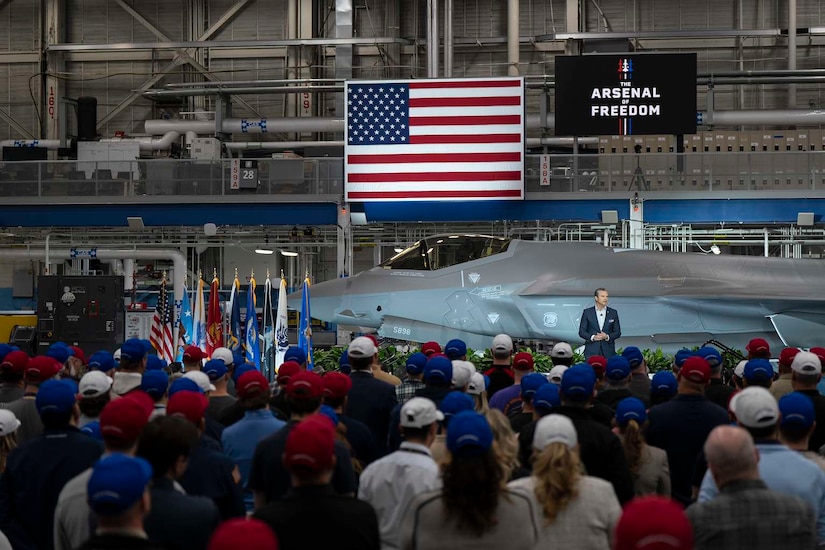
A man in business attire stands on a stage in a hangar and speaks to a large crowd of people in casual attire and baseball caps; behind him is a military aircraft, an American flag and a banner that reads, “Arsenal of Freedom.”

During his remarks, Hegseth made clear that supercharging the defense industrial base, which is one of the four lines of effort in the 2026 National Defense Strategy, is something the current administration and the War Department want to see happen at a rapid clip.

"We've got to go fast. The warfighters need it; they deserve it. We've got near-peer adversaries that are building at record speed," Hegseth said. "[This] Arsenal of Freedom tour is meant to speak to you and your peers, and to tell you to keep going."   

To facilitate that need "to go fast," the War Innovation Unit — formerly the Defense Innovation Unit and still abbreviated as DIU for contractual purposes — is working to cut through red tape with the defense industrial base.  

Founded in 2015, DIU is purpose-built to accelerate the War Department's adoption of commercial technology at speed and scale to lower cost and increase combat power. Since January, it has been working to answer Hegseth's call for the expedited acquisition of commercial capabilities across the services in several ways. 

Its latest initiative is the Bridge Program.   

Conceived and developed over the past year by Sarah Pearson — a former Navy officer, technology executive and current chief of strategic initiatives at DIU — the Bridge Program was created to drive long-term, systemic reform across the War Department.
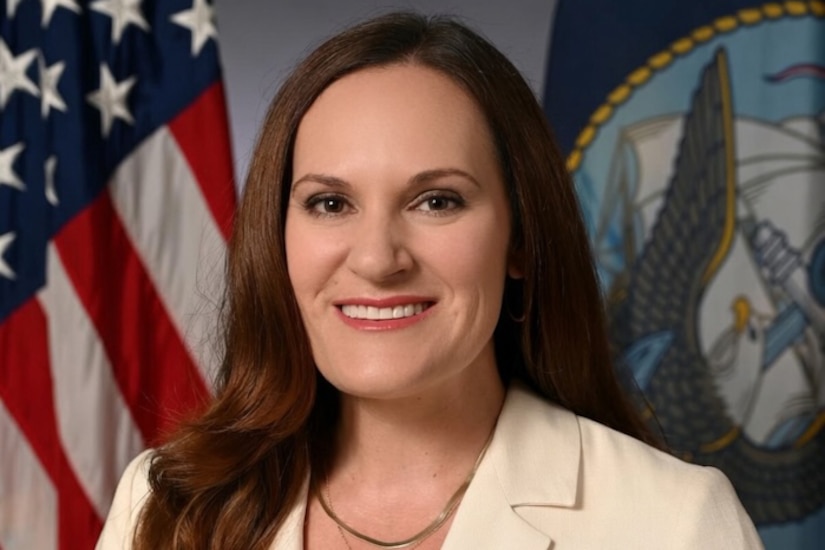
A woman in business attire poses for a portrait; behind her are the American flag and the U.S. Navy flag.

Throughout her career, Pearson has witnessed firsthand the hurdles nontraditional companies face when attempting to sell and scale commercial solutions for the military. 

Under her direction, the Bridge Program is now executing a targeted strategy to eliminate critical bottlenecks — specifically around security clearances, access to classified spaces, technology accreditations and testing.  

By dismantling these operational barriers, the program seeks to broaden the War Department's commercial engagement aperture, mitigate risks, accelerate capability development and maximize adoption rates to deliver best-in-class commercial technologies directly to the warfighter. 

The program's first line of effort focuses on evolving the model for classified space design, construction, accreditation and operation.  

By blending commercial technologies, process improvements, rapid contracting, policy and Congressional support, the department is jointly addressing each aspect of the value chain around classified infrastructure.  

"When successful, we will have demonstrated a new model, a model where classified infrastructure is resourced based upon usage and becomes operational within months — not years — of the need arising," Pearson said.  

Furthermore, she emphasized the critical importance of continued close collaboration within the War Department.  

"Our partners within three offices — the offices of the undersecretary of war for intelligence and security; acquisition and sustainment; and research and engineering — as well as the Defense Intelligence Agency, the Defense Counterintelligence Security Agency and the armed services have been the single greatest unlock in achieving the early success we've seen so far," Pearson said. 

DIU's Bridge Program, and the broader working group across the aforementioned organizations, had its first major contracting announcement last month, when President Donald J. Trump announced a $10 billion investment in Pennsylvania's defense industry July 16.  

The announcement included investment in four shared commercial classified facilities, one of which will be built in Pittsburgh — using the joint funding model that the Bridge Program is prototyping.  

Beyond Pittsburgh, the Bridge Program has contracted for nine additional commercially owned and operated sites across the U.S., including Austin, Texas; San Francisco; Boston; Charleston, South Carolina; Chicago; Cleveland; Louisville, Kentucky; and New York. 

Additional locations will be announced in the coming weeks.

The Bridge Program's second line of effort focuses on establishing the fastest and most trusted accreditation portfolio within the department — something Pearson said can't be accomplished without deep cybersecurity expertise — a thoughtful approach to risk and incorporation of the world's best artificial intelligence capabilities.

By using technology to enhance and accelerate DIU's authorization process, the Bridge Program team will condense timelines and enable greater throughput with fewer resources.

"We plan to shift the risk management framework process to the left in prototype development and build cybersecure solutions that the services can more easily field. Indexing toward accreditations for every program and sooner in development are critical to adoption," Pearson explained.

The third line of effort — test and evaluation — draws on DIU's core competency, prototyping commercially derived technologies inside the department's developmental and operational test infrastructure.

Through partnership, technology and new approaches, Pearson said DIU is building an end-to-end test approach for portfolio companies entering the prototype pipeline, with testing opportunities throughout the contract lifecycle.

The result is a process that stitches capability development together with existing and emerging test infrastructure, for both physical and digital applications.

As DIU continues to expand and implement the Bridge Program in support of Hegseth's call to revamp and expedite the acquisition process, Pearson said it will continue to lean on unprecedented partnership across the department, its history of pioneering new approaches and its deep conviction that the warfighters deserve the best capabilities available.

Monday, June 08, 2026

DOW Releases List of Chinese Military Companies in Accordance With Section 1260H of the National Defense Authorization Act for Fiscal Year 2021

Today, the Department of War released an update to the names of "Chinese military companies" operating directly or indirectly in the United States in accordance with the statutory requirement of Section 1260H of the National Defense Authorization Act for Fiscal Year 2021, which is available on the Public Inspection Issue of the Federal Register. After the Department conducted its due diligence, it identified 188 entities that meet the statutory requirements for inclusion on the most recent 1260H List.

The Department will update the list with additional entities as appropriate. The United States Government reserves the right to take additional actions on these entities under authorities other than Section 1260H. The list is available here.

About the Office of the Assistant Secretary of War for Industrial Base Policy (OASW(IBP))

The Assistant Secretary of War for Industrial Base Policy (ASW IBP) works with domestic and international partners to forge and sustain a robust, secure, and resilient industrial base enabling the warfighter, now and in the future.

Wednesday, March 25, 2026

Department of War and Lockheed Martin to Accelerate PrSM Deliveries, Putting Production on a Wartime Footing

The Department of War (DoW), in partnership with Lockheed Martin, today announced a new framework agreement to accelerate the production of the Precision Strike Missile (PrSM). The agreement is a direct outcome of Secretary Hegseth's mandate to move faster, put the defense industrial base on a wartime footing, and build the Arsenal of Freedom.

Under the agreement, Lockheed Martin will make targeted investments in advanced tooling, facility modernization, and critical testing equipment to slash production lead times. By focusing on these critical industrial base elements, the Department is ensuring this deep-strike capability can be delivered to the warfighter faster and more efficiently than ever before. This framework agreement also establishes the potential to negotiate a multi-year contract for up to seven years, should Congress authorize a multi-year contract in the future.

"Through this agreement, we are actively building the Arsenal of Freedom with speed and urgency," said Michael Duffey, Under Secretary of War for Acquisition and Sustainment. "By empowering industry to invest in the factory floor, we are building a decisive and enduring advantage for our warfighters to outpace any potential adversary." 

This initiative is a core component of the Department's broader Acquisition Transformation Strategy and the work of the Munitions Acceleration Council, executed in close collaboration with the Army and several DoW components, including the Economic Defense Unit.  By forging partnerships with industry leaders, the Department of War is ensuring that the Arsenal of Freedom and the industrial base remain robust, responsive, and capable of delivering speed, scale, and resilience needed to deter aggression and ensure the United States and its allies are prepared to prevail in any conflict.

Department of War and Honeywell Aerospace Forge Agreement to Surge Production of Critical Munitions Technology

The Department of War, in partnership with Honeywell Aerospace, today announced a framework agreement to surge production of critical components for America's munitions stockpile, including navigation systems, Honeywell Assure™ actuators, and electronic warfare solutions.  By providing a long-term, stable demand for critical munitions, the Department has unlocked a $500 million multi-year investment from Honeywell Aerospace to modernize and expand its manufacturing capacity, marking a key victory for the defense industrial base that directly answers President Trump and Secretary Hegseth's call to build a resilient and enduring Arsenal of Freedom.

This agreement is a direct outcome of the Department's Acquisition Transformation Strategy, which empowers direct engagement with key suppliers to ensure production capacity increases across the entire supply chain, not just at the prime contractor level. The result is a more robust and responsive industrial base, capable of equipping the American warfighter at the speed and scale necessary to deter and defeat any adversary.

Through this agreement, Honeywell Aerospace will accelerate the delivery of components that form the technological backbone of America's military advantage. Production will be ramped up for the navigation systems that guide precision munitions, the high-performance actuators that give our missiles their critical maneuverability, and the advanced electronic warfare solutions that dominate the battlefield.

"Our strategy is to provide the long-term demand signals that unlock private investment, and this half-billion-dollar commitment from Honeywell Aerospace demonstrates we are succeeding," said Michael Duffey, Under Secretary of War for Acquisition and Sustainment. "Thanks to the leadership of President Trump and Secretary Hegseth, we are building the deep and dominant Arsenal of Freedom our nation requires by ensuring our entire industrial base can deliver at speed and scale."

This agreement was made possible through close collaboration across the defense enterprise. The Department's Munitions Acceleration Council is working in concert with industry leaders, including prime contractors Lockheed Martin and RTX, to ensure demand signals flow down to critical suppliers like Honeywell Aerospace, enabling this landmark investment in the nation's security.

Tuesday, February 10, 2026

DOW Restructures Foreign Military Sales, Prioritizes Speed, Efficiency

In a video posted on social media today, Secretary of War Pete Hegseth announced that the War Department moved two agencies critical to getting American-made combat gear into the hands of allied and partner nations under the War Department's Office of Acquisition and Sustainment. 

"On Nov. 7, we laid out the Department of War's vision for strengthening the defense sales enterprise," Hegseth said. "Today, we're turning that vision into decisive action." 

Both the Defense Security Cooperation Agency and the Defense Technology Security Administration are part of how the United States helps partners and allies get access to American-made weapons and equipment. They will now fall under the Office of the Undersecretary of War for Acquisition and Sustainment, led by Michael P. Duffey, according to the memorandum. 

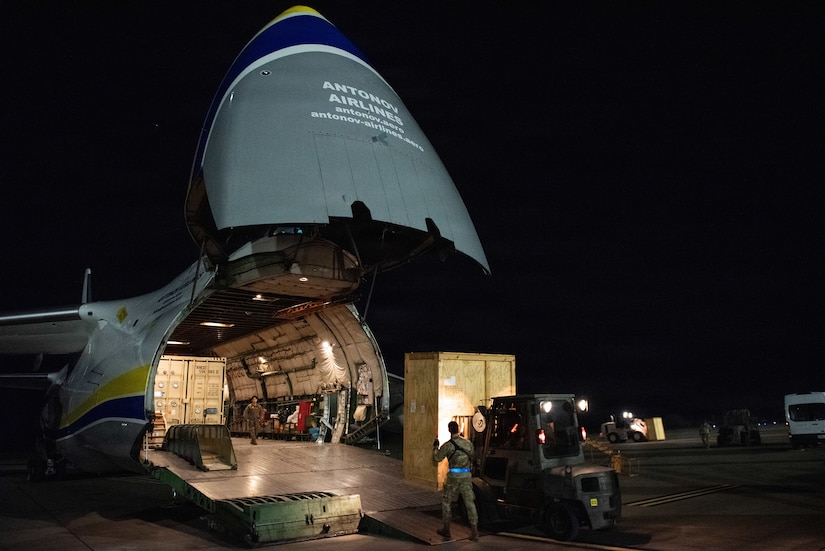
Airman push a container into the back of an open aircraft on a dark flight line.

The Defense Security Cooperation Agency, for instance, is largely responsible for facilitating the sale of U.S. weapons to partners and allies. However, the agency is also responsible for developing and planning the long-term partnerships and training opportunities that accompany those sales. The Defense Technology Security Administration is responsible for identifying and mitigating any risks associated with transferring technology to partners and allies. 

By moving both agencies under the department's Office of Acquisition and Sustainment, Hegseth aims to make weapons sales to allies and partners faster and more efficient, as well as help revitalize America's defense industrial base. 

"This executive order is our mandate: leverage America's record-breaking defense sales to revitalize our industrial base and support our partners," Hegseth said. "On nearly every overseas trip that I take, the demand is clear, every single time; our allies want to buy the world's most lethal weapons: American weapons." 

The realignment, Duffey said, has created a single coherent defense sales enterprise within the department, one that moves at the speed of war, but with the purpose of deterring aggression. 

People guide a forklift carrying a wooden box into the open nose of a large aircraft at night.

"Coupled with this new executive order, we're now positioned to leverage the total aggregated global demand for U.S. weapons to grow our nation's industrial might, while maintaining the American warfighters' technological edge," he added. 

Duffey noted that the changes will unlock foreign investment, power production lines, fuel investments in new American manufacturing plants and create thousands of new jobs in the U.S. 

"When we promise to provide American military capabilities, we must deliver," Hegseth said. "Thanks to President [Donald J.] Trump's leadership, these efforts are game changers for the way we do business with our allies and partners around the globe: more and better weapons delivered faster for our warfighters and our allies."

Tuesday, January 06, 2026

Department of War Establishes New Acquisition Model to More than Triple PAC-3 MSE Production in Partnership With Lockheed Martin

The Department of War (DoW), working in partnership with Lockheed Martin, today announced the signing of a landmark framework agreement that establishes a transformative new acquisition model to expand munitions production and procurement—one that delivers long-term demand certainty, incentivizing industrial investment to increase production, cut lead times, drive supply chain management efficiencies, while reducing upfront government facilitization and capacity investments.

This seven-year framework agreement with Lockheed Martin is a direct outcome of the Department's new Acquisition Transformation Strategy, as unveiled by Secretary of War Pete Hegseth in his Arsenal of Freedom speech at Fort McNair in November. As the Secretary stated, "We will stabilize demand signals. We will award companies bigger, longer contracts for proven systems so those companies will be confident in investing more to grow the industrial base that supplies our weapons systems more and faster."  

Under the framework agreement, Lockheed Martin will increase annual production of the PAC-3 Missile Segment Enhancement (MSE) interceptor from approximately 600 to 2,000, aligning industrial capacity to the long-term demand required by U.S. forces, allies and partner nations. The agreement also aligns the interests of Lockheed Martin, the government, and taxpayers, with Lockheed Martin supporting investments to scale the required production increases, while benefitting from the certainty of long-term, growing demand for the PAC-3 MSE. 

"This framework agreement marks a fundamental shift in how we rapidly expand munitions production and magazine depth, and how we collaborate with our industry partners," said Michael Duffey, Under Secretary of War for Acquisition and Sustainment. "Lockheed Martin's willingness to help pioneer this transformative acquisition model is a win-win for the taxpayer, our national security, and the rebuilding of the industrial base needed for the Arsenal of Freedom."

The framework agreement establishes the basis for negotiating a seven-year supply contract, subject to Congressional authorization and appropriations, that would increase PAC-3 MSE production to approximately 2,000 missiles per year, up from approximately 600 today. The agreement also provides for strict delivery accountability and allows both the Department of War and Lockheed Martin to share in any enhanced profitability resulting from new equipment and volume efficiencies. This facilitization strategy will be applied to multiple munitions procurement contracts over the next year, pending Congressional appropriations, to replenish our stockpiles, rebuild our military, reestablish deterrence and strengthen and grow our defense industrial base. 

The Department of War recognizes that supply chain facilitization is also required to support production capacity increases. As part of the framework agreement, the DoW will work with key suppliers of PAC-3 MSE to deliver seven-year subcontracts to ensure facilitization investments and the production capacity of components also expand to meet the increased demand for all-up-rounds.  

The PAC-3 MSE framework agreement advances the Department's acquisition transformation priorities and reflects the execution-focused work of the Department's Munitions Acceleration Council, as well as the strong partnership with Lockheed Martin. The Council was established to rapidly identify and remove structural barriers to scaling weapons production and to translate urgent operational demand into executable, long-term industrial capacity.