Showing posts with label Combat readiness. Show all posts

Friday, November 06, 2026

Soldiers assigned to 1st Brigade, 10th Mountain Division, tested their combat readiness during Exercise Mountain Peak at Fort Drum, N.Y., Oct. 20-29.  

Soldiers in tactical gear aim weapons while moving toward a red, concrete building as clouds of yellow smoke fill the background and a military vehicle sits in the foreground.

The large-scale, force-on-force event trains and validates soldiers to fight and win against America's adversaries while also leveraging constantly evolving tactics to better sustain units on the battlefield. 

Soldiers maneuvered through rugged terrain, conducted coordinated assaults and worked together to secure key objectives. The exercise tested more than tactical proficiency, requiring units to ensure they are ready to fight, endure, and survive on the modern battlefield. 

Throughout the exercise, observer controller trainers evaluated and coached units to ensure they were trained to standard. 

"Mountain Peak is an opportunity for soldiers to refine their techniques and put into place all the different systems they've been training," said Army Sgt. 1st Class Michael Ranger, an observer controller trainer assigned to 2nd Battalion, 2nd Infantry Regiment. "It gives them opportunities outside of their normal routine for them to work together, war-game and execute. We shadow and coach them so they can be effective in their mission set." 

The exercise included tactical operations designed to replicate the demands of large-scale combat, beginning with a forcible entry before transitioning into offensive operations and, ultimately, defensive operations. 

As the scenario evolved, soldiers seized and secured key terrain, maneuvered against an opposing force and established defensive positions to protect their gains. The progression challenged the brigade in a multidomain environment, forcing it to adapt to changing battlefield conditions, synchronize its capabilities and refine its tactics, while preparing to fight and win against a near-peer adversary. 

In addition to testing the unit's ability to conduct near-peer warfare, Mountain Peak allowed medical personnel to practice prolonged field care, strengthening their ability to sustain casualties when evacuation is delayed or timely access to higher levels of treatment is limited. 

The challenges they faced required medical teams to manage patients over extended periods while working with available personnel, equipment and supplies in austere field conditions. One such capability tested was Project Valkyrie, where medics used compatible donors on site for patient whole-blood transfers. 

"Project Valkyrie is setting the standard across all branches of service," said Army Staff Sgt. Dominic Vigar, a combat medic specialist assigned to 1st Battalion, 87th Infantry Regiment, 1st Brigade, 10th Mountain Division. 

Along with validating readiness, the brigade used Mountain Peak as an opportunity to assess developing best practices for employing its multi-functional reconnaissance company, as well as integrate intelligence and coordinate fires to support maneuver operations. 

The exercise also incorporated modern battlefield technologies, including unmanned aircraft systems and counter-UAS capabilities, allowing units to evaluate emerging threats, improve battlefield awareness and adapt to an evolving operational environment. 

Mountain Peak provided the brigade with an opportunity to assess its overall effectiveness before its upcoming Joint Readiness Training Center rotation in January 2027 and for future operational requirements. 

"Mountain Peak certifies us as ready to deploy whenever the nation calls," said Army Capt. Connor Bryan, the commander of Charlie Company, 2nd Battalion, 22nd Infantry Regiment, 1st Brigade, 10th Mountain Division. "We train here hard, working on our techniques, tactics and procedures, to ensure that when we go downrange, we're a well-oiled and rehearsed fighting machine."

Thursday, October 29, 2026

Army Mountain Division Takes on Panamanian Jungle

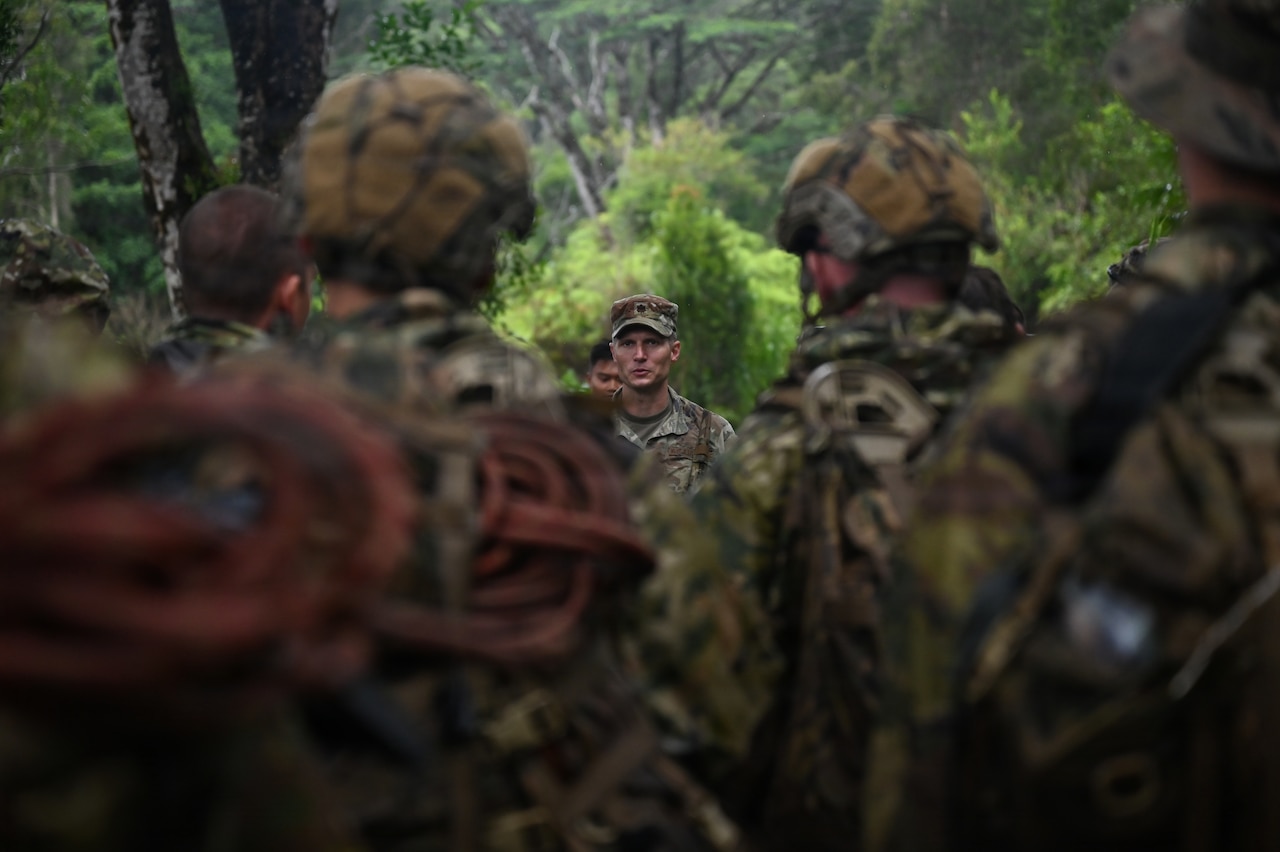
A man in a camouflage military uniform and tactical gear kneels in a jungle clearing and speaks to five people in similar attire gathered around him.

"Through the heat or cold of snow," the words of the 10th Mountain Division song reflect a legacy of perseverance through tough and demanding conditions. Earlier this month, the legacy took on a new environment as soldiers entered the jungles of Panama.

For the first time in decades, Black Hawk Company, 2nd Battalion, 4th Infantry Regiment, 3rd Mobile Brigade, 10th Mountain Division, attended the 12-day Jungle Operations Training Course – Panama as a unit. This opportunity allowed soldiers to develop leadership throughout the course while receiving instruction from experienced instructors, transforming the course into a collective training environment.

"You're attending the same classes, wearing the same uniform [and] eating the same chow," said Army 1st Sgt. Geoffrey Tate, company senior enlisted advisor. "Training together as an organic unit — it's beneficial to units because it gives leaders the chance to see their subordinate leaders and soldiers within their unit work in real time."

This experience offered opportunities for units to train together as a cohesive force, building lethality by teaching soldiers to adapt under pressure, rely on one another and work together to overcome challenges.

"One thing I've learned out here in the jungle that will stick with me is that it's an unforgiving terrain in an unforgiving environment," Tate said. "It really is a bonding experience, and maybe a little trauma bonding, but bonding nonetheless."

As soldiers faced the demanding course, leaders observed how they made decisions and communicated under pressure.

"The biggest lessons that I hope these soldiers learn is that they synthesize all of the tactics and techniques that they learn here," said Army Sgt. 1st Class Ero Wainio, jungle course senior survival instructor. "And that they're able to develop courses of action and standard operating procedures, which will enable them on their mission."

While combat training centers such as the National Training Center at Fort Irwin, California, and the Joint Readiness Training Center at Fort Polk, Louisiana, provide demanding field training environments, the jungle course gives units opportunities to train in an unknown environment not found in the United States.

"This environment is nothing like you'll encounter at JRTC, NTC or any training center that we currently have," Tate said.

For most units, training stays within their home station, leaving soldiers lacking experience in unfamiliar terrains.

"The course offers a lot of opportunities to identify strengths and improvements," Wainio said. "Because the environment is challenging, they get to see their organic leaders and their soldiers operating in an environment that they're unfamiliar with."

Moving through the jungle presents challenges that go beyond navigating through heavy vegetation and difficult terrain.

"The biggest difference that I've noticed, with training out in the jungle versus training at my home station, is that technology is not reliable in this environment," Tate said. "Communications aren't reliable in this environment."

A ground-level view of a military helicopter flying overhead.

These new challenges required soldiers to adapt in new ways. This experience gave Black Hawk Company the opportunity to identify areas for improvement, strengthen communication and build confidence in one another.

"The skills that they learn here, once jungle tested, help them understand that they can survive anywhere," Wainio said.

For Tate, seeing members of his unit endure the course firsthand was the most rewarding aspect of the experience.

"Coming out to Panama to train with my company has been a valuable experience," he said. "Watching them grow in the face of adversity and dealing with the stress of negotiating obstacles has been absolutely rewarding for me as a first sergeant."

Friday, September 04, 2026

Special Operations Forces Tackle Unseen Threat of Blast Exposure

The U.S. special operations forces community is actively tackling the invisible threat of repeated blast overpressure to protect warfighters' brain health without compromising combat readiness.

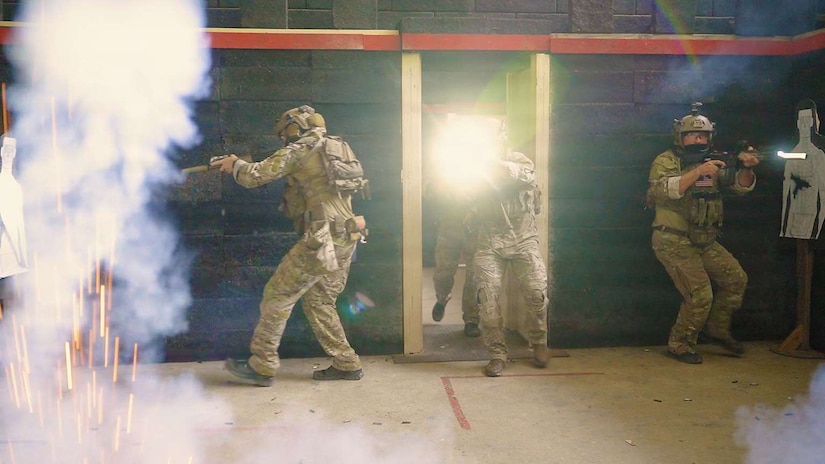
People in camouflage military uniforms and tactical gear walk through a door while having weapons drawn as a cloud of smoke and sparks cover the room.

This is important since, in just six months of initial entry training, a SOF soldier will fire thousands of small arms rounds, employ hundreds of flash-bang devices, and conduct dozens of explosive breaches. For these operators, low-level blast exposure of less than four pounds per square inch is not a rare incident, but rather a daily, unavoidable reality of their training and operational environments. 

Managing this risk factor presents a massive challenge. The scientific community suspects that cumulative, repeated blasts could cause long-term cognitive effects, yet there are currently no validated thresholds to guide medical decisions or return-to-duty timelines.  

Simply tracking the blasts is a logistical hurdle because current sensors are often bulky, competing for precious space on an operator's mission-essential gear. Furthermore, vendor data rarely synchronizes smoothly with standard military systems, and there is little agreement on how peak pressure and incident pressure meaningfully accumulate. 

"More importantly, current sensors only measure the blast wave itself, leaving a critical human gap with no event-linked cognitive, physiological or biomarker data for the operator standing in its path," said Army Sgt. Maj. Chris McNamara, 3rd Operations Support Group human weapon system director. 

To bridge these scientific and operational gaps, the SOF community launched aggressive, data-driven initiatives like the Elite Force Pilot Team. 

"This specialized task force is evaluating how to implement high-fidelity monitoring during high-risk training and operations," McNamara said. "Their goal is to ultimately standardize how leaders make risk and readiness decisions."

The objectives of the pilot team are to mitigate effects of blast overpressure by monitoring high-risk training and operations. They have used lessons learned to improve return-to-duty and return-to-shoot protocols and correlate blast overpressure to clinical outcomes by using evidence-based biomarkers. 

McNamara highlighted the operational reality of these efforts, noting that a delicate balance exists between collecting timely data and not disrupting the tempo of training. He emphasized the essential need to identify accurate and nonintrusive methods for collecting data on blast exposure, cognitive performance and biomarkers.

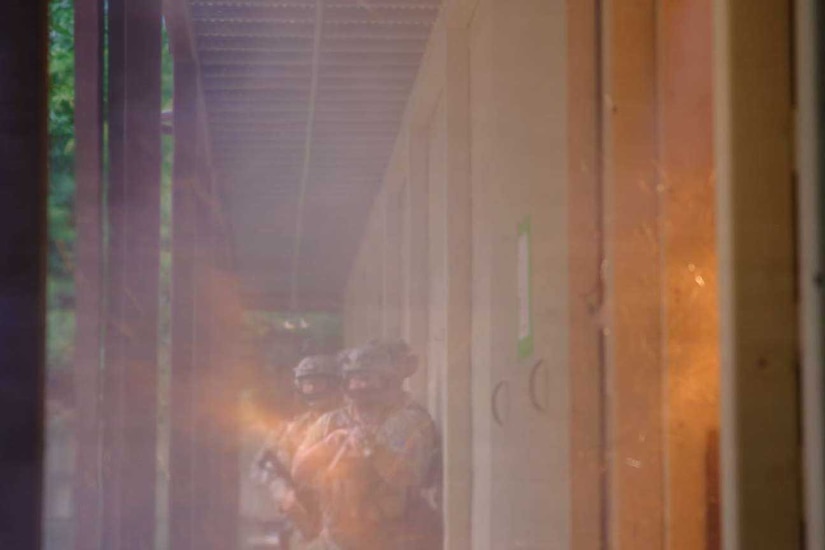
Three people in camouflage military uniforms and tactical gear walk in a hallway filled with smoke.
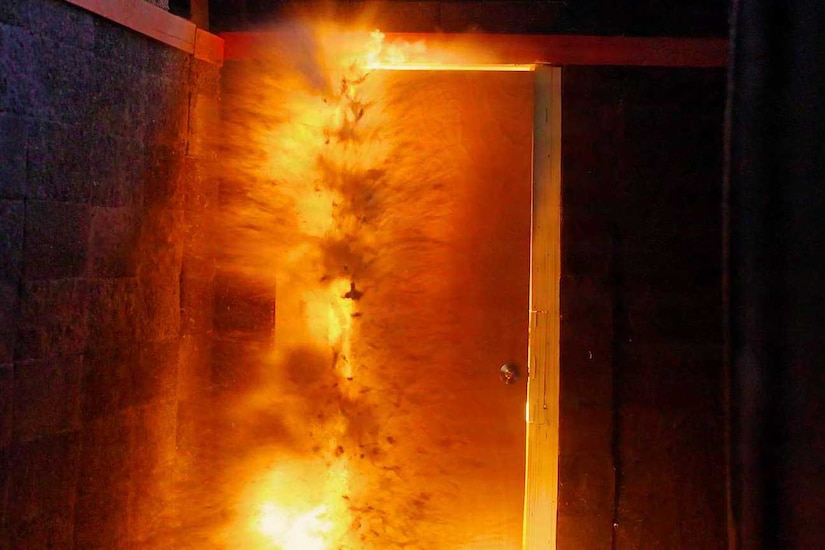
A door in a dark room is surrounded by fire piercing through the cracks.
"As the scientific community strives to find clarity in exposure measurement, leaders at all levels must simultaneously be equipped with relevant and effective risk-mitigation tools," said Kathy Lee, director of warfighter brain health policy at the Office of the Assistant Secretary of War for Health Affairs. 

Instead of waiting for universal medical standards to be finalized, SOF leaders are already implementing physical changes to training and equipment. One innovation is the multiuse charge housings for enhanced target effect, a flexible charge housing designed to optimize breaching operations while safeguarding service members.  

Made of nontoxic, inert materials, the system is dual purposed for sheet explosives and detonation cords. By using advanced 3D computer modeling and wave-shaping design techniques, the housing focuses blast energy toward the target, allowing for a lower net explosive weight. This optimization delivers identical target-defeat capabilities while reducing hazardous blast overpressure on the warfighter by 25-60%.  

The system is highly intuitive, significantly reduces charge preparation, builds time to maximize training efficiency and is currently being positioned for expanded military distribution. 

"Our priority is to field technology that treats the operator as our premier weapon system," said Chris Wilson, division lead for human weapon system at the U.S. Special Operations Command's Science and Technology Directorate. "Innovations like [the housing] prove we don't have to choose between lethality and safety. By using advanced engineering to shape the blast physics, we are actively lowering the physical toll on the human weapon system while keeping our operators sharp, lethal and in the fight longer." 

For SOF members, the firing ranges and facilities are being redesigned based on advanced modeling of blast waves. New construction materials are also being used that absorb shockwaves. 

Operators are also seeing improvements in their standard gear. This includes the increased use of updated weapon suppressors, heavy weapon simulators and strict helmet policies.  

Researchers are even using biometric instrumented head forms to measure exactly what happens inside a helmet during a blast, leading to improved helmet padding systems. For industrial hygiene monitoring, new hard-copy and mobile applications are being developed to streamline the recording of blast overpressure data directly in the field. 

Ultimately, the overarching warfighter requirement remains clear: a low-burden sensor with integrated power and interoperable data that clinicians can actually use to monitor health. 

By taking decisive action today, U.S. Special Operations Command is taking proactive steps to improve brain health, detect early warning signs and implement preventive measures to extend operational longevity, enhance mission readiness and ensure the long-term health of SOF warfighters. 

Tuesday, September 01, 2026

Airlift Wing Builds Mobility Readiness During Exercises

The 86th Airlift Wing supported Exercise Saber Junction 26 with joint air mobility operations alongside Army and Marine Corps forces at Ramstein Air Base, Germany, Aug. 24-30. 

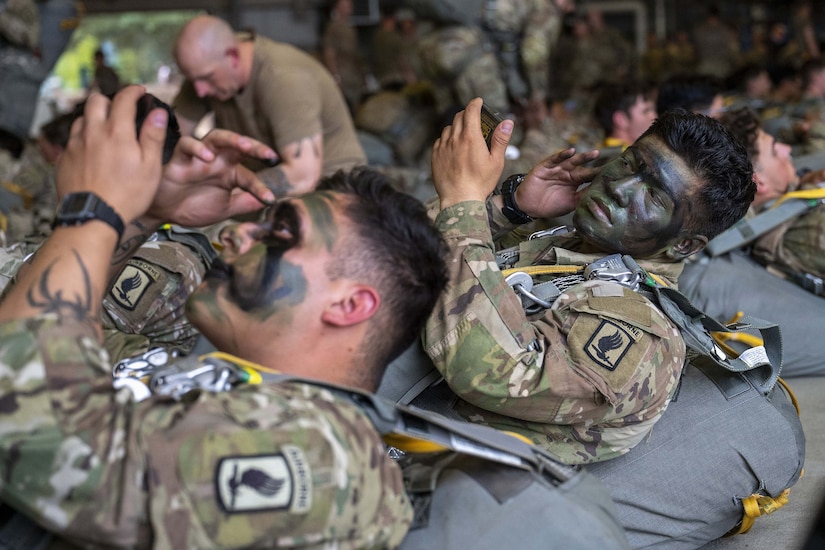
Two men wearing camouflage military uniforms put camouflage paint on their faces while lying in an aircraft hangar.

During the week, the wing executed distributed mission planning, patient movements, tactical airdrops and joint airborne operations, culminating in a joint forcible entry event that integrated Air Force C-130J and Marine Corps KC-130J Super Hercules crews with more than 600 paratroopers assigned to the 173rd Airborne Brigade. 

Saber Junction 26 is a U.S. Army Europe and Africa exercise that tests the airborne brigade's ability to rapidly deploy, conduct joint forcible entry and operate alongside allied and partner forces during large-scale combat operations. 

Leading into Saber Junction, the airlift wing conducted Exercise Agile Gateway, which began with a staging event at Chievres Air Base, Belgium, where, with 86th Communications Squadron support, an aircrew received its tasking and planned the mission from a distributed location. 

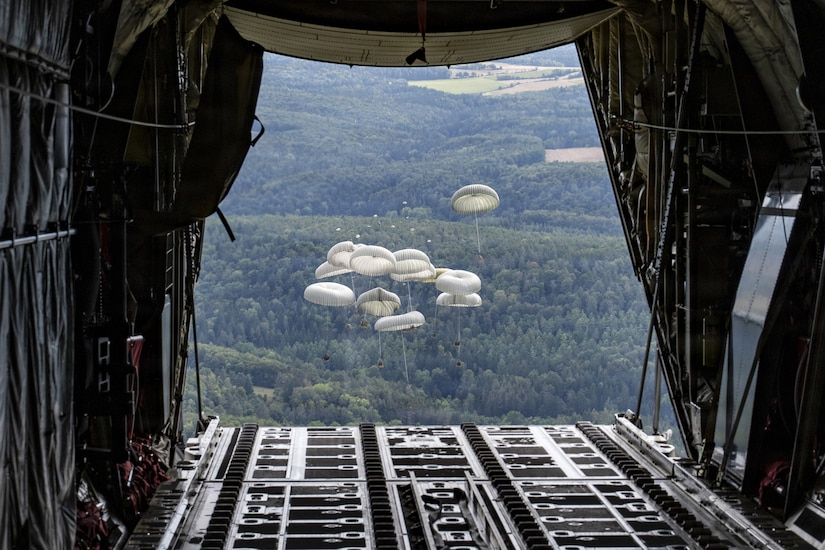
Packages parachute to the ground in a wooded area after being dropped from a military aircraft.

The following day, the 86th Aeromedical Evacuation Squadron responded to a simulated mass casualty event, transporting three simulated patients from Belgium to Germany. They were then transferred to a 76th Airlift Squadron C-21A Learjet during an engine-running offload/onload for a follow-on aeromedical evacuation. 

The transfer was one of three aeromedical evacuation training flights conducted throughout the week as the squadron exercised engine-running patient transfers, rapid alert response and simultaneous generation of its C-21A and C-37A Gulfstream fleets. 

"Agile Gateway and Saber Junction gave us an opportunity to test our agility and crisis-response capabilities in ways routine day-to-day missions can't," said Air Force Lt. Col. Kyle Gadoury, 76th Airlift Squadron assistant director of operations. "These exercises help ensure our squadron remains ready to support joint partners across Europe and Africa in high-tempo or contested environments." 

Following the patient transfer, the 86th Logistics Readiness Squadron conducted simultaneous hot-pit refueling and engine-running onload operations on the C-130J. 

These employment capabilities enabled the immediate transfer of patients and rapid onload and airdrop of sustainment cargo, setting the stage for the 173rd Airborne Brigade's upcoming operations at the Joint Multinational Readiness Center in Hohenfels, Germany. 

The training also demonstrated joint interoperability capabilities as 37th Airlift Squadron crews planned and operated alongside aircrews from Marine Aerial Refueler Transport Squadron 234, working through differences in terminology, procedures and aircraft capabilities before mission execution. 

"This week showed how our different capabilities can connect and build on one another," said Air Force Capt. Charles Khoshabjian, 37th Airlift Squadron weapons officer. "Working with the Marines reinforced the importance of identifying differences in terminology and procedures early so we can build shared understanding, integrate effectively and deliver combat power for the joint force." 

The wing's support for Saber Junction 26 peaked Aug. 26, when Air Force C-130Js and Marine Corps KC-130Js carried more than 600 paratroopers from Ramstein to the Joint Multinational Readiness Center. A C-37A also supported the mission as an airborne communications node, relaying the launch command between the airborne brigade and the airlift squadron. 

The mission brought together Air Force, Army and Marine Corps capabilities to strengthen interoperability and rehearse rapid force employment across the theater. 

"The joint forcible entry may be the culmination of our air mobility mission, but for the Army, it marks the start of the larger operation," Khoshabjian said. "What we deliver by air enables everything that follows on the ground." 

The integration across airframes, mission sets and military services reflects the broader role the airlift wing provides to the joint force. 

"No single capability defines what the 86th Airlift Wing brings to the fight," said Air Force Col. Matthew Wunderlich, 86th Operations Group commander. "By integrating our mobility capabilities with the joint force, we create the flexibility commanders need to respond across the theater. That integration is what turns individual capabilities into combat power."

Sunday, August 30, 2026

Sky Soldiers Train for Modern Conflict in Europe's Premier Crucible Event

More than 2,300 paratroopers assigned to the 173rd Airborne Brigade, along with more than 2,100 allied and partner forces from 10 nations are participating in Exercise Saber Junction 26 at the Joint Multinational Readiness Center in Hohenfels, Germany.

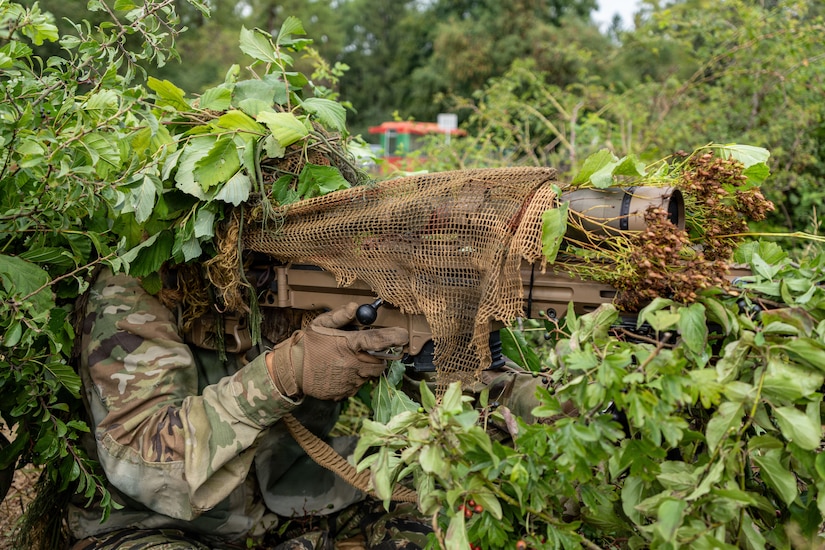
Two people wearing military combat gear walk through a forest.

Overseen by U.S. Army Southern European Task Force, Africa, the rotation is designed to validate warfighting readiness, strengthen NATO interoperability and prepare forces for large-scale combat operations across the European theater. 

Exercise Saber Junction 26 tests the brigade's ability to rapidly deploy, conduct joint forcible entry, execute offensive and defensive operations, and regenerate combat power in a contested environment. The exercise incorporates lessons learned from ongoing conflicts, including electronic warfare, unmanned aerial systems, dispersed maneuver and contested communications.  

Southern European Task Force, Africa serves as the division-level higher command for the rotation, integrating U.S. and allied formations, issuing division orders, maintaining the common operating picture, and rehearsing mission command essential for operations across Europe and Africa. 

"Saber Junction is where our soldiers and our allies prove they are ready for the demands of modern war," said Army Maj. Gen. Matthew W. Brown, Southern European Task Force, Africa commander. "This rotation is a crucible event — designed to expose gaps, accelerate learning and ensure that formations are trained and lethal. The 173rd continues to demonstrate that disciplined application of the fundamentals, ground-up innovation and persistence remain the hallmarks of a combat-credible force. The brigade is ready — and the lessons we gather here help our Army scale innovation at pace and strengthen NATO's collective readiness."

The exercise also highlights modernization efforts within the 173rd Airborne Brigade, including the work of the bayonet innovation team, the brigade's internal innovation cell comprised of paratroopers, engineers, warrant officers and technical specialists. The team designs, builds and fields low-cost, high-impact technologies such as first-person view drones, intelligence, surveillance and reconnaissance platforms, ground robots and artificial intelligence-enabled tools. It operates a facility that can produce drones in-house and integrates lessons from Ukraine, Joint Multinational Readiness Center rotations and multinational exercises to help the brigade adapt rapidly and strengthen NATO interoperability.

"Our standards are nonnegotiable: disciplined, lethal and relentless. Saber Junction is where we put those expectations to the test," said Army Col. Mark E. Bush, 173rd Airborne Brigade commander. "This exercise validates our ability to deploy at the time of need, fight and succeed regardless of the mission environment or enemy capability and posture the brigade for future operations. Through the character, competence and commitment of our Sky Soldiers, we will deliver overwhelming firepower, maneuver aggressively and accomplish the mission alongside our allies." 

Exercise Saber Junction 26 includes participants from Belgium, Bosnia and Herzegovina, Czech Republic, Germany, Hungary, Italy, Kosovo, Lithuania, Poland, Ukraine, and the United States. The exercise strengthens multinational interoperability and accelerates combined decision making across the European theater.

Tuesday, August 04, 2026

Air National Guard Squadron Sharpens Readiness in Jungle Terrain

A man in a camouflage military uniform speaks to a group of other people in similar attire while standing in the jungle.

Wind moves through the trees at Schofield Barracks' East Range as leaves crunch underfoot and boots sink into mud. Humidity clings to uniforms as security forces airmen navigate steep terrain, flowing water and unfamiliar surroundings, trading the familiar landscape of the Midwest for the jungle terrain of Oahu, Hawaii.

For two weeks, July 13-27, airmen assigned to the Ohio Air National Guard's 178th Security Forces Squadron challenged themselves through annual training designed to strengthen small-unit tactics, decision-making and expeditionary readiness.

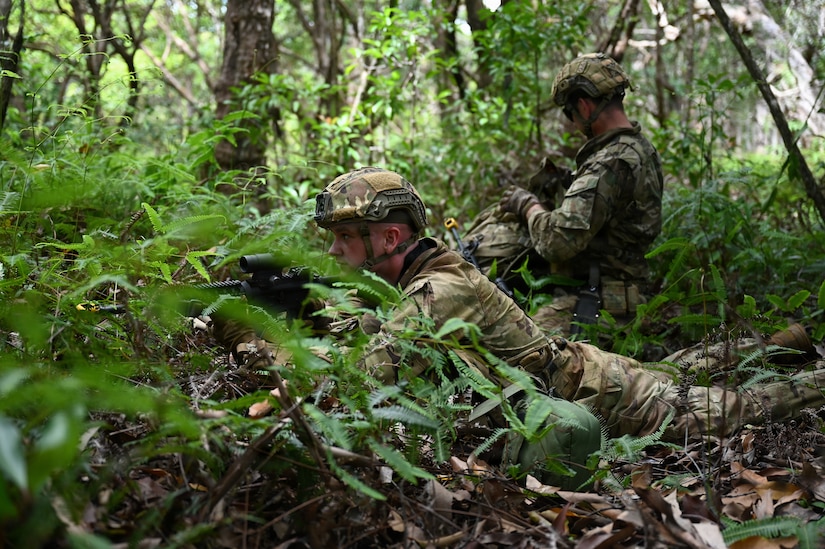
The training combined classroom instruction with hands-on field exercises, including jungle familiarization, dismounted patrolling, ambush training, land navigation and rope systems. The realistic environment challenged airmen to apply what they learned while operating in unfamiliar terrain.

This was part of an 18-month effort by the squadron to increase its focus on small-team operations and prepare airmen to make tactical-level decisions in increasingly decentralized environments that will be needed in the future, said Air Force Maj. Eric Minshaw, 178th Security Forces Squadron commander.

The jungle environment quickly became one of the most valuable instructors.

"The terrain and the environment have been perfect," Minshaw said. "It certainly has been the greatest challenge that we've faced out here, just navigating through the water and elevation changes."

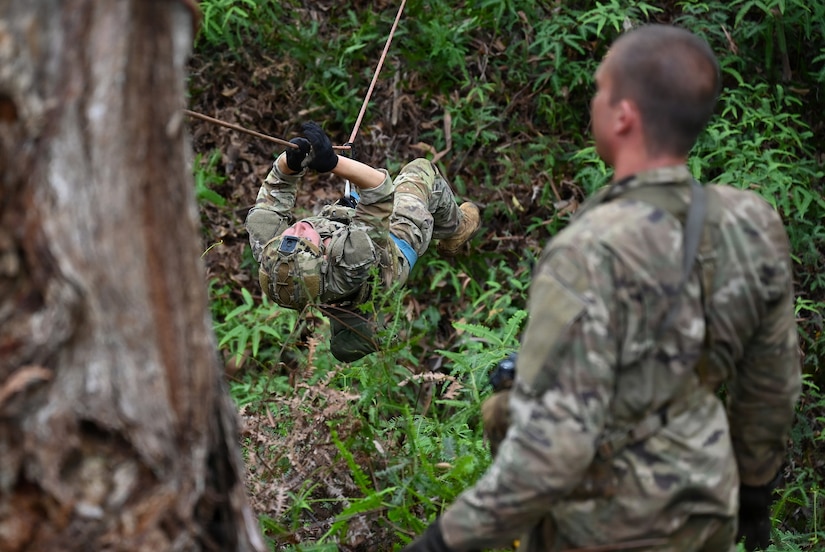
A person in a camouflage military uniform uses a rope to cross an area in the jungle as another person in similar attire observes.
A man in a camouflage military uniform and helmet lies on the ground in the jungle aiming a rifle; there is another man in similar attire checking his equipment in the background.
For Air Force 1st Lt. Kyle Mackerig, a guest jungle instructor assigned to the 820th Base Defense Group at Moody Air Force Base, Georgia, the training provided an opportunity to share knowledge gained through his experience operating in jungle environments.

Mackerig graduated from the Army Jungle Operations Training Course in May 2025 and joined the 178th SFS to help airmen develop the skills necessary to operate in jungle terrain.

The goal extended beyond simply learning how to navigate. The training challenged airmen to remain effective when conditions were unfamiliar, and the path forward was uncertain.

"The jungle is the classroom, not the objective," said Air Force Master Sgt. Bradley Akers. "Our purpose is to push our airmen beyond their comfort zones in one of the world's most demanding environments, reinforcing disciplined leadership, teamwork and adaptability. Those are the qualities that make them more capable defenders, regardless of where the mission takes them."

That challenge took many forms throughout the two weeks. Airmen hiked through steep terrain and mud, navigated waterways and practiced moving through the jungle while carrying their equipment.

During one exercise, they made their way to a river and moved chest-deep through the water, testing whether their packs could float and learning how to operate in and around a water obstacle. They emerged from the river covered in mud, carrying another lesson from an environment far removed from what they typically encounter in Ohio.

For Air Force Staff Sgt. Macy Flannery, squadron member, the experience also provided an opportunity to strengthen the bonds within her team. Flannery, who is in her fifth year of service, said the training challenged them to work together while learning basic survival skills and small-unit tactics.

"It's been a good bonding experience for our team," she said. "We're going through it all together and having to do a lot of teamwork for our different training experiences."

Mackerig said the teamwork he witnessed throughout the training gave him a new appreciation for the squadron.

"The biggest thing that surprised me about working with the [National] Guard, and in particular the 178th, is how tight-knit they are, how much of a family they are," he said. "Everyone feels welcome here, even from being an outsider."

That sense of teamwork became evident throughout the training, as airmen and noncommissioned officers looked after one another and shared skills developed through previous training and experience.

"We've got a great team," Minshaw said. "The NCOs that we have and the instructor cadre that have come in [are] absolutely top shelf."

From checking water supplies and applying sunscreen to sharing specialized skills and helping teammates navigate difficult terrain, the small actions demonstrated the team's commitment to one another, he said.

"It's really awesome to see the team come together" and use some of the special skills they have in the training environment and then teach their teammates, Minshaw said, adding that the ultimate value of the training lies in what airmen take with them when they leave. Training environments like this allow airmen to discover their limits in a controlled setting, giving them the confidence to face future challenges.

"It's better to find ... your breaking points and move past those in a training environment like this, rather than to be caught flat-footed in our operational environment," Minshaw said.

As the airmen leave the mud, water and steep terrain of Schofield Barracks, the lessons learned in the jungle will follow them. The physical challenges, tactical problems and moments of uncertainty provided more than a test of endurance. It allowed them to build confidence, strengthen teamwork and develop the ability to make decisions in unfamiliar environments.

Tuesday, July 28, 2026

Airmen Participate in the World's Largest Multiday March

Orange and green flags hung from storefronts, balconies and streetlights as lawn chairs lined neighborhood streets in Nijmegen, Netherlands. Restaurants, hotels and camps filled with visitors from around the world, and nearly every conversation with a local began with them asking if they were there for the march.
 
For a team of airmen assigned to the 39th Air Base Wing, Incirlik Air Base, Turkey, the answer was "yes."

A dozen people wearing camouflage military uniforms stand in a group while holding an American flag.

 
From July 21-24, they marched alongside thousands of military and civilian participants in the 108th International Four Days Marches, known locally as the Vierdaagse, or "Walk of the World." The event — one of the Netherlands' longest-standing military traditions — brought together 47,000 registered participants, including 6,455 military members representing 38 nations, for nearly 100 miles of marching. 
 
The Incirlik Air Base team was led by Air Force Capt. Nicholas Niazian, 39th Air Base Wing executive officer, and it joined more than 500 U.S. military participants from the Air Force, Army, Marine Corps, Navy and Coast Guard. For the airmen, the march represented more than an endurance event; it served as an opportunity to demonstrate the physical readiness, mental resilience and teamwork required to execute the wing's mission anywhere in the world. 
 
Niazian first learned about the Four Days Marches while stationed at Spangdahlem Air Base, Germany, five years ago. The thought of it stayed with him, and after arriving at Incirlik Air Base, he immediately started assembling a team. 
 
"I'm a huge supporter of what we do every day by serving alongside our allies," Niazian said. "When I learned there was an event where military members from NATO nations come together to march, built around determination, grit and camaraderie, I knew I had to do it." 

A group of people wearing camouflage military uniforms march in the dark, illuminated by green light.

 
Throughout the week, the team of 12 lived alongside military participants from across the globe at Kamp Heumensoord. This temporary Dutch military camp serves as home to thousands of military marchers each year. Between long days on the route, the camp became a place to recover, exchange stories and build friendships with the other service members. 
 
After arriving at the camp July 19, the airmen in-processed, made their beds and transformed their assigned sleeping areas into makeshift homes for the week. American flags, squadron stickers and unit memorabilia decorated the tents while rucksacks were packed, boots were checked one last time and feet were taped in preparation for the challenge ahead. 
 
Opening ceremonies, receptions and long-standing customs brought together service members from around the world before the first mile was ever walked. Participants traded unit patches, shared meals and built friendships between the rows of tents, creating connections that extended beyond uniforms, languages and nationalities. 
 
Those traditions reflect the military heritage that has defined the event for more than a century.

Founded in 1909 as a military readiness march for Dutch service members, the march has grown into the world's largest multiday walking event, while remaining deeply connected to its military roots. Today, military members from around the world continue that tradition by marching shoulder to shoulder, reinforcing the relationships that contribute to regional stability across Europe. 
 
Before sunrise July 21, reveille echoed through the air as thousands of military participants prepared to step off. Boots were laced, rucksacks were shouldered and participants departed for their designated starting locations, beginning the first of four consecutive days marching through Nijmegen and the surrounding area. 

A man wearing a camouflage military uniform high-fives a boy as he marches along a city route with other people in similar attire.

 
Each day, the 39th Air Base Wing team marched approximately 25 miles through small villages, farmland and city streets before returning to camp to prepare for the next day's route. 
 
Along the way, an estimated 2.5 million spectators transformed the march into a citywide celebration. Streets were lined with cheering families, music echoed through neighborhoods and residents handed out water, snacks and words of encouragement from front yards and sidewalks. Live music and performances energized participants throughout the route, especially during the final day's march into Nijmegen. 
 
Just before the final stretch to the finish line, the team received one last boost when they were invited onto a large stage to celebrate with performers, DJs and fellow participants. 
 
"I looked back at the team and said, 'We're getting on that stage,'" said Air Force Tech. Sgt. Blair Pembleton, 39th Security Forces Squadron military working dog trainer. "Without hesitation, the entire team climbed onstage, waving our flag and dancing alongside the other teams. It gave us the push we needed to finish those last few miles." 
 
While the crowds helped lift spirits, completing nearly 100 miles over four days with a 20-pound rucksack remained a demanding test of physical endurance, mental resilience and teamwork. 
 
By the end of each day, sore feet, aching shoulders and tired legs had become routine. Blisters were treated, uniforms were hand-washed and rucksacks were repacked before participants climbed into their bunks, only to wake before sunrise to do it all again. 
 
"We chose to take on something difficult together as a team," said Air Force Staff Sgt. Fabrizzio Ulate, 39th Security Forces Squadron training instructor. "Every one of us had moments when we needed help and every one of us had moments when we were able to help someone else. Whether it was sharing food, water or supplies, or simply encouraging someone through a tough stretch, we got to the finish line together." 
 
Beyond testing endurance, the march demonstrated that interoperability begins with people. By marching side by side with Dutch and other allied forces, living together at Kamp Heumensoord, and sharing the challenges of the event, the 39th Air Base Wing team strengthened bonds that enable multinational forces to operate as a single, cohesive team when called upon. 
 
"It didn't matter which country's team you were walking with," said Air Force Tech. Sgt. Melissa Gunderson, 39th Security Forces Squadron standards and evaluations noncommissioned officer in charge. "As soon as 'Country Roads' or '500 Miles' came on, the whole road turned into one big singalong. It made the miles go by a little faster and made an already unforgettable experience even more fun."

On the fourth and final day, after more than 215,000 steps, the team entered Nijmegen for the traditional finish along the Via Gladiola. Streets were packed with cheering spectators as participants were showered with gladiolus flowers, a long-standing symbol of strength, perseverance and victory. 
 
Military participants who successfully completed all four days earned the bright yellow Vierdaagse Cross, recognizing the successful completion of nearly 100 miles on foot. 
 
For the 39th Air Base Wing team, the Four Days Marches was more than a fitness event. They demonstrated the resilience required to project power, deter aggression and ensure regional stability across the European theater. More than 80 years after the liberation of the Nijmegen region, U.S. service members honored that legacy, reinforcing that the NATO alliance's greatest strength is built not only through combined operations, but through the friendships forged between those who serve.

Monday, July 27, 2026

Air Force Wing Enhances Readiness, Resilience During Exercise Beverly Sentinel

Running from July 21-23 at Kunsan Air Base, South Korea, Exercise Beverly Sentinel 26-4 demonstrated the 8th Fighter Wing's commitment to readiness and force preparedness.

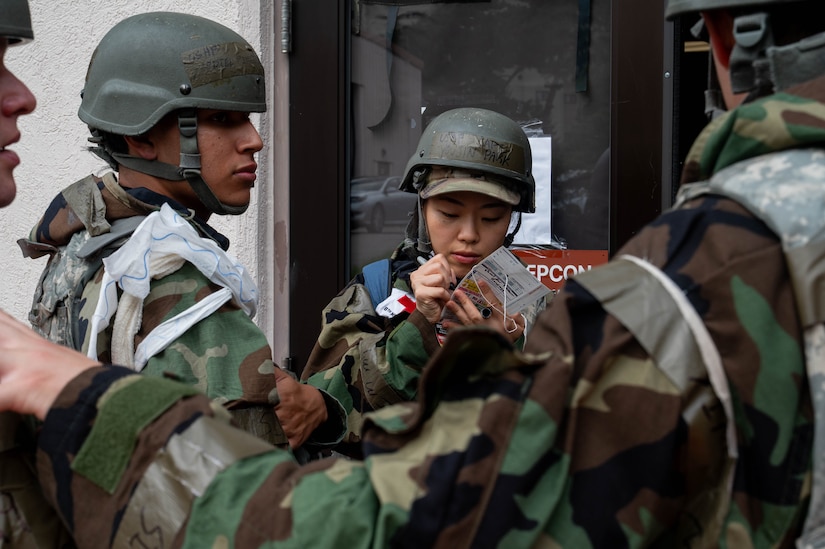
A woman in a camouflage military uniform and helmet writes on a piece of paper while standing outside a building; there are three people in similar attire standing in front of her.

Through intense exercise scenarios, airmen sharpened their specialized skills and practiced critical decision-making under pressure, maintaining an operational tempo required to sustain combat operations in a contested environment.

During the exercise, airmen focused on ability to survive and operate training scenarios, an essential component toward exercising the wing's ability to defend the base and sustain mission-critical operations.

"Ensuring operational continuity in a contested environment is not optional," said Air Force Col. John DeLion, 8th Fighter Wing commander. "By implementing these realistic training scenarios, we enhance the resilience and readiness required of our members to project combat airpower and execute the [wing's] mission under any conditions."

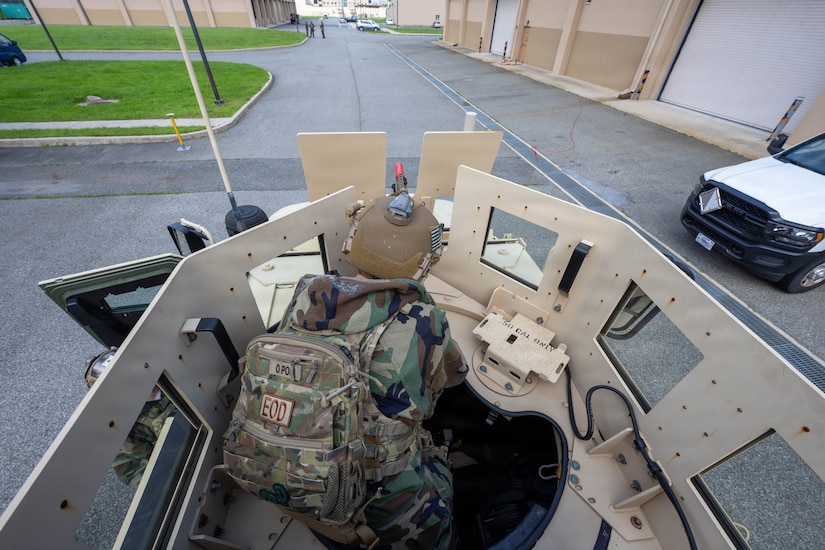
A person in a camouflage military uniform aims a rifle while on top of a military vehicle.

Each unit bolstered mission-essential skills while refining lifesaving techniques and strategies, including tactical combat casualty care, opposition force response, post-attack reconnaissance and emergency response procedures.

Air Force Senior Airman Dylan Hayes, 8th Security Forces Squadron base defense operations center operator, was one of many airmen during the exercise who understood the value of this training for the team.

"Continuous, high-tempo training builds strong muscle memory that you can fall back on when stress and pressure begin to set in," he said. "This exercise prepares individual airmen at Kunsan for real-world combat by forcing them to survive, operate and defend the installation under simulated, high-intensity enemy attacks."

Hayes was one of four 8th SFS members assigned to patrol the installation inside a Humvee, providing surveillance and force response measures from simulated attacks at ground level with opposing forces and from above with unmanned aircraft systems.

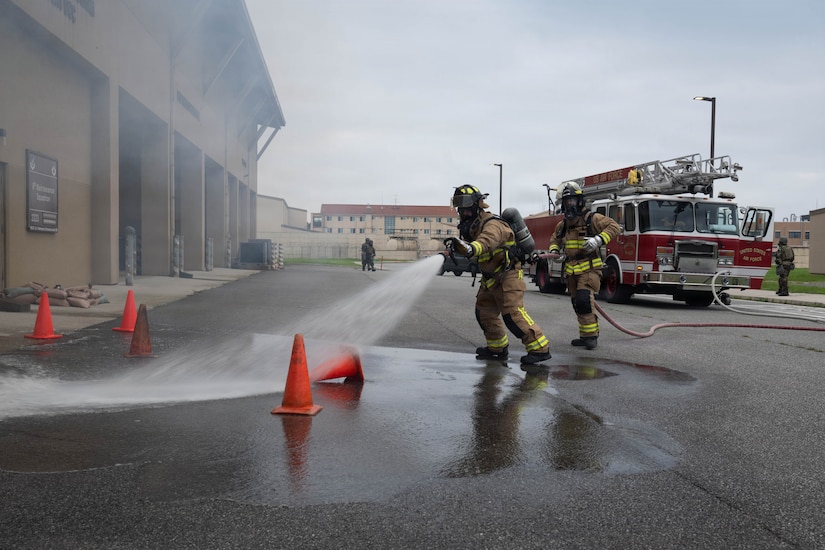
A person in a firefighter uniform uses a hose to spray water outside a building as another person in similar attire holds the hose.

Additionally, the exercise demonstrated joint force operations by showcasing services working side by side to defend the base, integrating their capabilities into a unified, layered defense against potential threats.

"My unit and the [8th Civil Engineer Squadron emergency management flight] work on airfields, and both can be attacked by the enemy simultaneously," said Marine Corps Sgt. Jesus Duran, a chemical, biological, radiological and nuclear defense specialist assigned to the Marine Wing Support Squadron 171. "Practicing how to respond to said attacks together definitely teaches us how each other operates and responds to these emergencies."

Duran participated as the Marine Corps CBRN cell counterpart for the base's emergency operations center, reporting potential hazards in response to simulated threats, providing recommended courses of action to base leaders and relaying that information to ground CBRN teams to execute.

"How the airmen have dedicated CBRN teams and equipment bags at the ready — it taught me how to be more efficient, and I want to bring this system back to my Marines," he said. "Bringing more branches together to train can only strengthen our capability as a military whole."

Integrating with other services during exercises like this validates the training as not an individual task but a joint imperative required to sustain combat operations under pressure.

As the exercise concluded, the readiness built under pressure remained for the team, weaving its way through the everyday lives of the base's service members while bolstering the wing's posture.

"We execute these exercises routinely to stress-test our airmen and systems, identifying the friction points and adapting our tactics with the lessons we learned," DeLion said. "We stress-test our processes in peacetime, to be ready when called upon."

Tuesday, June 30, 2026

Exercise Venom Forge Strengthens Partnerships, Boosts Combat Readiness

 June 30, 2026 | By Air Force Staff Sgt. Jake Jacobsen, 432nd Wing

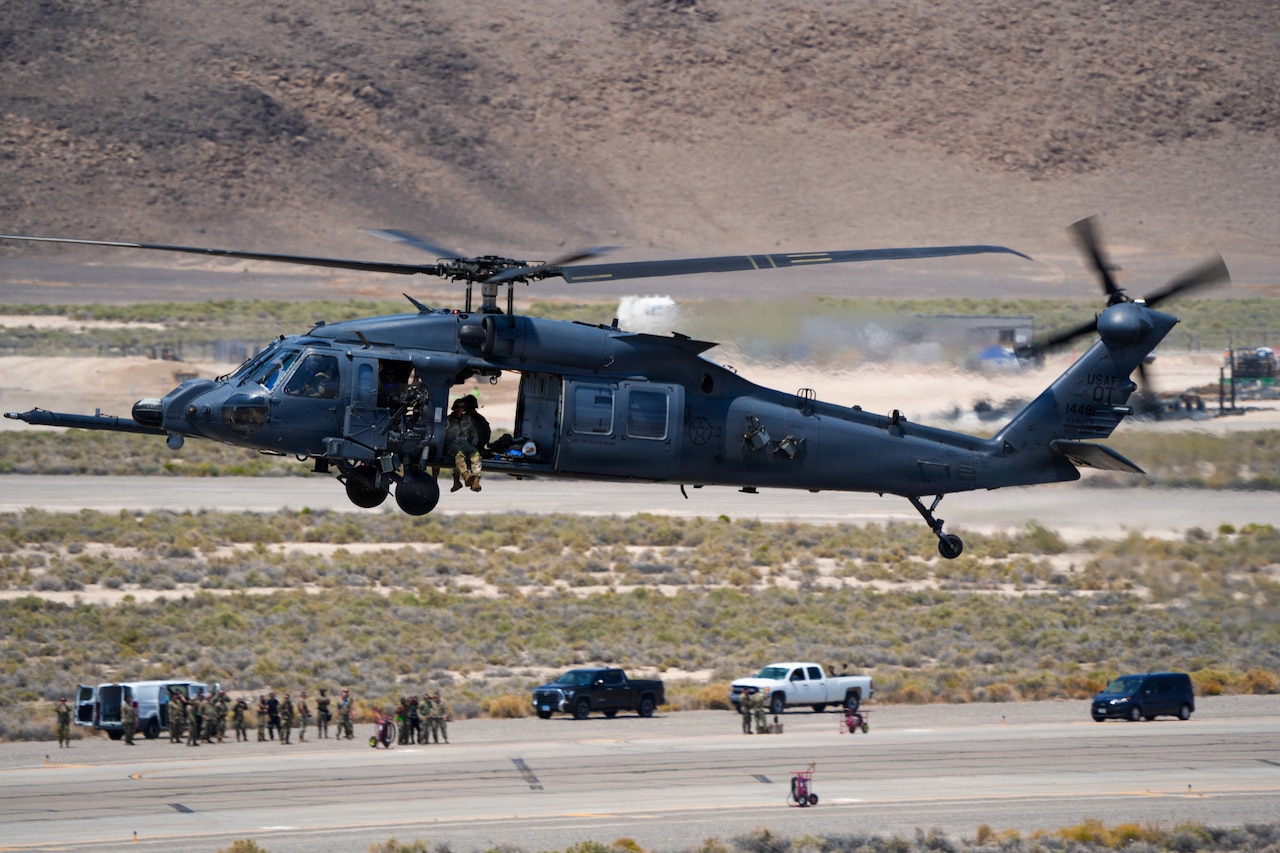
A military helicopter hovers above a flight line as people in military camouflage uniforms stand around on the ground.

An integration exercise designed to develop new tactics, techniques and procedures, combined support from five wings, seven groups and 17 squadrons across a multitude of operations and support at Creech Air Force Base, Nevada, June 17.

Dubbed Venom Forge, this exercise implemented lessons derived from the 57th Maintenance Group's inaugural Agile Maintenance Leadership Course to develop tactical-level maintenance leaders who can build mission-type orders, manage risk, communicate under friction, generate aircraft and create the conditions for combat airpower to happen.

In preparation for the event, mission partners completed a multiplatform hot-pit refueling site certification on base, helping enable contingency hot-pit and integrated combat turn training for multiple fighter platforms. The effort created a foundation for future agile combat employment training iterations.

"Creech [Air Force Base's] support was critical because it gave the capstone an unfamiliar environment and helped turn the course concept into executable training," said Air Force Maj. Yoarmerby Gomez, 57th Maintenance Group maintenance tactics officer. "This exercise required more than ramp space. It required access, support equipment, airfield operations, fuels support, fire emergency services, safety, security, medical response planning, host-base coordination and leadership buy-in."

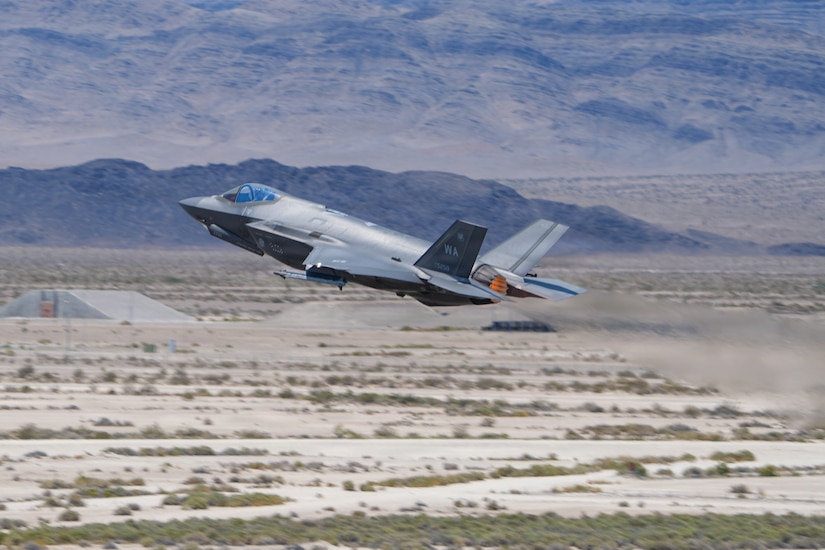
A military jet flies over desert terrain.

To execute the exercise, organizations from the 57th Wing, 99th Air Base Wing, 53rd Wing, 355th Wing and 432nd Wing came together to give students a realistic stage to experience how maintenance decisions affect logistics. The students learned how movement timelines affect aircraft generation, how medical and emergency-response planning affects mission risk, and how base constraints shape execution.

The base provided further support with equipment required for execution, facilitation of access across the installation and aided aircraft integration and operations not part of normal day-to-day mission operations.

"[The base] provided the right balance of proximity, realism and operational value," Gomez said. "It is close enough to Nellis [Air Force Base] to support a controlled hub-to-spoke training model but separate enough to force students to coordinate with a real host base instead of relying on home-station assumptions."

To further test units involved, an inject involving members suffering from simulated heat stroke was enacted, allowing medical teams on HH-60W Jolly Green II helicopters to integrate critical care air transport while aggressor units conducted hot-pit integrated combat turns on F-35A Lightning IIs and F-16C Fighting Falcons.

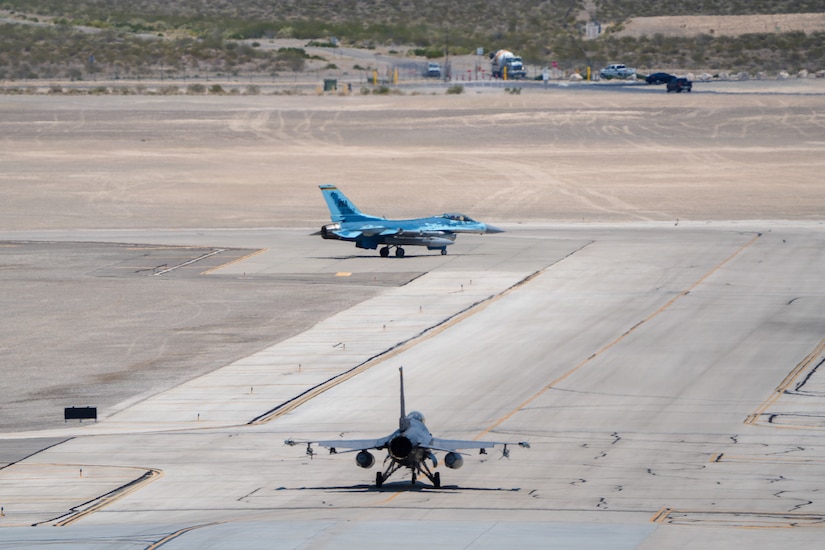
Two military jets taxi on a flight line.

"What made Venom Forge unique was that every organization had its own reason to be there," Gomez said. "One of the clearest examples of the training value was the level of deconfliction required on the airfield. At one point, F-35s and F-16s were being refueled and rearmed while two HH-60s were entering the airspace. These elements of controlled chaos were exactly what we wanted the students to experience. It forced multiple agencies to communicate, deconflict and execute safely in a dynamic environment."

The certification and partnership conducted during the exercise enabled a repeatable foundation for future iterations. These next events could include more students, additional mission partners, different aircraft and more deliberate deconfliction across multiple simultaneous operations.

"For the students, Venom Forge showed that aircraft generation is not just a maintenance action," Gomez said. "Thanks to this exercise, we now have a scalable course model, a stronger relationship with [the base], a multiagency training framework and a better understanding of what it takes to generate combat airpower from a spoke location."

Tuesday, March 26, 2024

The United States Military Combat Readiness Medal: Recognizing Preparedness and Excellence

The United States Military Combat Readiness Medal (MCRM) stands as a testament to the dedication, readiness, and excellence exhibited by military personnel in the face of potential combat situations. Established to honor those who maintain a high level of readiness for deployment and respond effectively to operational challenges, the medal holds significance as a symbol of preparedness and commitment to service. This essay delves into the history, criteria, significance, and impact of the United States Military Combat Readiness Medal.

History: 

The United States Military Combat Readiness Medal traces its origins back to the Vietnam War era. It was first established on August 1, 1967, through Executive Order 11545 by President Lyndon B. Johnson. Originally known as the "Readiness Medal," its purpose was to recognize members of the U.S. Armed Forces who demonstrated exceptional readiness and proficiency in their duties, particularly in preparation for combat operations. Over the years, the criteria for awarding the medal have evolved to adapt to changing military requirements and operational environments.

Criteria: 

The eligibility criteria for the United States Military Combat Readiness Medal are stringent and require individuals to demonstrate a high level of readiness and proficiency in their assigned duties. To qualify for the medal, service members must have performed duties involving participation in a significant military operation or combat readiness exercise. These exercises may include training missions, field maneuvers, or other operational deployments aimed at enhancing combat preparedness and effectiveness.

Additionally, recipients must have successfully completed their assigned tasks while maintaining a high standard of proficiency and readiness. This includes demonstrating exceptional leadership, teamwork, and adaptability in challenging and dynamic environments. The medal may be awarded to both active-duty and reserve component personnel of the U.S. Armed Forces, including members of the Army, Navy, Air Force, Marine Corps, and Coast Guard.

Significance: 

The United States Military Combat Readiness Medal holds significant importance as a symbol of readiness, preparedness, and excellence in the U.S. military. It serves to recognize the dedication and commitment of service members who continuously strive to maintain a high level of combat readiness and proficiency in their respective roles. By awarding the medal, the military acknowledges the vital role played by individuals in ensuring operational readiness and effectiveness, thereby enhancing the overall readiness posture of the armed forces.
Furthermore, the medal serves as a source of pride and honor for recipients, representing their contributions to the nation's defense and security. It embodies the core values of the military, including duty, honor, courage, and sacrifice, and serves as a visible reminder of the commitment to service and excellence exemplified by service members.

Impact:

The impact of the United States Military Combat Readiness Medal extends beyond the individual recipients to the broader military community. By recognizing and rewarding excellence in combat readiness and proficiency, the medal motivates service members to maintain high standards of performance and preparedness. It fosters a culture of readiness and professionalism within the armed forces, encouraging continuous training, education, and skill development to enhance operational effectiveness.

Moreover, the medal serves as a morale booster for service members, boosting their sense of pride, accomplishment, and camaraderie. It instills a sense of unity and purpose among military personnel, reinforcing their commitment to the mission and strengthening the overall cohesion of the armed forces.
In conclusion, the United States Military Combat Readiness Medal stands as a symbol of readiness, proficiency, and excellence in the U.S. military. Established to recognize the contributions of service members to combat readiness and operational effectiveness, the medal honors the dedication, commitment, and sacrifice of those who serve in defense of their country. As a visible emblem of preparedness and commitment to service, the medal inspires pride, motivation, and unity among military personnel and reinforces the core values of the armed forces.ntroduction: The United States Military Combat Readiness Medal (MCRM) stands as a testament to the dedication, readiness, and excellence exhibited by military personnel in the face of potential combat situations. Established to honor those who maintain a high level of readiness for deployment and respond effectively to operational challenges, the medal holds significance as a symbol of preparedness and commitment to service. This essay delves into the history, criteria, significance, and impact of the United States Military Combat Readiness Medal.

History: The United States Military Combat Readiness Medal traces its origins back to the Vietnam War era. It was first established on August 1, 1967, through Executive Order 11545 by President Lyndon B. Johnson. Originally known as the "Readiness Medal," its purpose was to recognize members of the U.S. Armed Forces who demonstrated exceptional readiness and proficiency in their duties, particularly in preparation for combat operations. Over the years, the criteria for awarding the medal have evolved to adapt to changing military requirements and operational environments.

Criteria: The eligibility criteria for the United States Military Combat Readiness Medal are stringent and require individuals to demonstrate a high level of readiness and proficiency in their assigned duties. To qualify for the medal, service members must have performed duties involving participation in a significant military operation or combat readiness exercise. These exercises may include training missions, field maneuvers, or other operational deployments aimed at enhancing combat preparedness and effectiveness.

Additionally, recipients must have successfully completed their assigned tasks while maintaining a high standard of proficiency and readiness. This includes demonstrating exceptional leadership, teamwork, and adaptability in challenging and dynamic environments. The medal may be awarded to both active-duty and reserve component personnel of the U.S. Armed Forces, including members of the Army, Navy, Air Force, Marine Corps, and Coast Guard.

Significance: The United States Military Combat Readiness Medal holds significant importance as a symbol of readiness, preparedness, and excellence in the U.S. military. It serves to recognize the dedication and commitment of service members who continuously strive to maintain a high level of combat readiness and proficiency in their respective roles. By awarding the medal, the military acknowledges the vital role played by individuals in ensuring operational readiness and effectiveness, thereby enhancing the overall readiness posture of the armed forces.
Furthermore, the medal serves as a source of pride and honor for recipients, representing their contributions to the nation's defense and security. It embodies the core values of the military, including duty, honor, courage, and sacrifice, and serves as a visible reminder of the commitment to service and excellence exemplified by service members.

Impact: The impact of the United States Military Combat Readiness Medal extends beyond the individual recipients to the broader military community. By recognizing and rewarding excellence in combat readiness and proficiency, the medal motivates service members to maintain high standards of performance and preparedness. It fosters a culture of readiness and professionalism within the armed forces, encouraging continuous training, education, and skill development to enhance operational effectiveness.

Moreover, the medal serves as a morale booster for service members, boosting their sense of pride, accomplishment, and camaraderie. It instills a sense of unity and purpose among military personnel, reinforcing their commitment to the mission and strengthening the overall cohesion of the armed forces.
Conclusion: In conclusion, the United States Military Combat Readiness Medal stands as a symbol of readiness, proficiency, and excellence in the U.S. military. Established to recognize the contributions of service members to combat readiness and operational effectiveness, the medal honors the dedication, commitment, and sacrifice of those who serve in defense of their country. As a visible emblem of preparedness and commitment to service, the medal inspires pride, motivation, and unity among military personnel and reinforces the core values of the armed forces.