The U.S. special operations forces community is actively tackling the invisible threat of repeated blast overpressure to protect warfighters' brain health without compromising combat readiness.
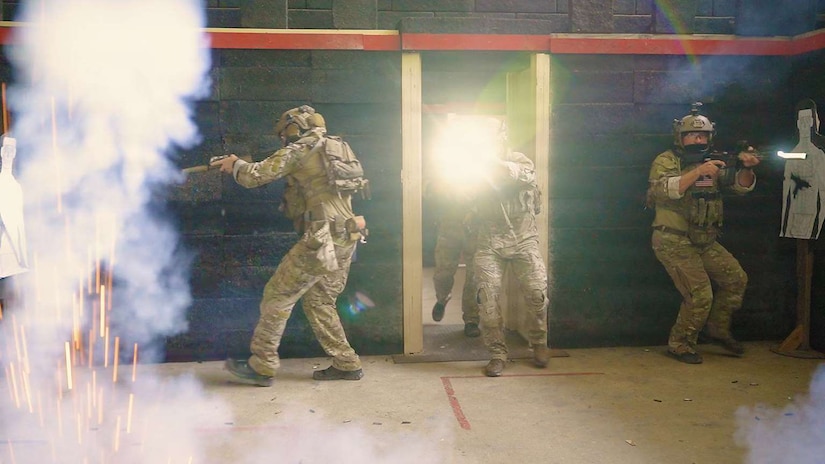
This is important since, in just six months of initial entry training, a SOF soldier will fire thousands of small arms rounds, employ hundreds of flash-bang devices, and conduct dozens of explosive breaches. For these operators, low-level blast exposure of less than four pounds per square inch is not a rare incident, but rather a daily, unavoidable reality of their training and operational environments.
Managing this risk factor presents a massive challenge. The scientific community suspects that cumulative, repeated blasts could cause long-term cognitive effects, yet there are currently no validated thresholds to guide medical decisions or return-to-duty timelines.
Simply tracking the blasts is a logistical hurdle because current sensors are often bulky, competing for precious space on an operator's mission-essential gear. Furthermore, vendor data rarely synchronizes smoothly with standard military systems, and there is little agreement on how peak pressure and incident pressure meaningfully accumulate.
"More importantly, current sensors only measure the blast wave itself, leaving a critical human gap with no event-linked cognitive, physiological or biomarker data for the operator standing in its path," said Army Sgt. Maj. Chris McNamara, 3rd Operations Support Group human weapon system director.
To bridge these scientific and operational gaps, the SOF community launched aggressive, data-driven initiatives like the Elite Force Pilot Team.
"This specialized task force is evaluating how to implement high-fidelity monitoring during high-risk training and operations," McNamara said. "Their goal is to ultimately standardize how leaders make risk and readiness decisions."
The objectives of the pilot team are to mitigate effects of blast overpressure by monitoring high-risk training and operations. They have used lessons learned to improve return-to-duty and return-to-shoot protocols and correlate blast overpressure to clinical outcomes by using evidence-based biomarkers.
McNamara highlighted the operational reality of these efforts, noting that a delicate balance exists between collecting timely data and not disrupting the tempo of training. He emphasized the essential need to identify accurate and nonintrusive methods for collecting data on blast exposure, cognitive performance and biomarkers.
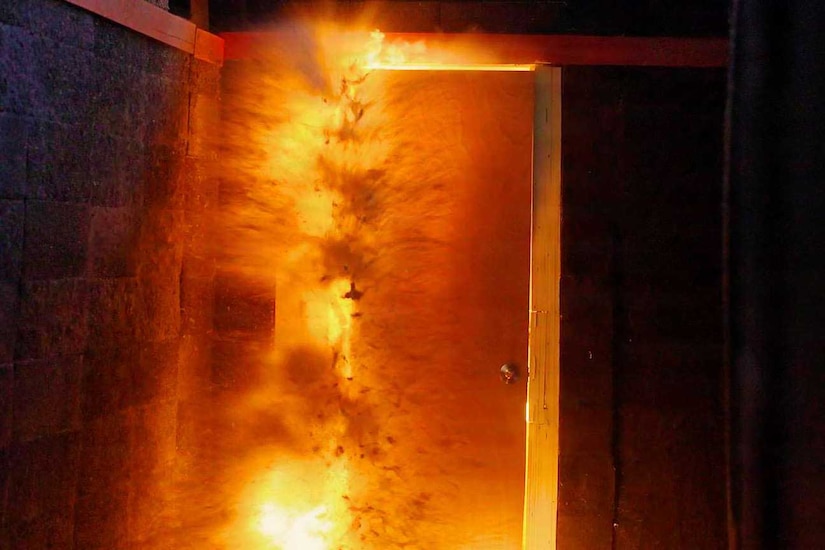
Instead of waiting for universal medical standards to be finalized, SOF leaders are already implementing physical changes to training and equipment. One innovation is the multiuse charge housings for enhanced target effect, a flexible charge housing designed to optimize breaching operations while safeguarding service members.
Made of nontoxic, inert materials, the system is dual purposed for sheet explosives and detonation cords. By using advanced 3D computer modeling and wave-shaping design techniques, the housing focuses blast energy toward the target, allowing for a lower net explosive weight. This optimization delivers identical target-defeat capabilities while reducing hazardous blast overpressure on the warfighter by 25-60%.
The system is highly intuitive, significantly reduces charge preparation, builds time to maximize training efficiency and is currently being positioned for expanded military distribution.
"Our priority is to field technology that treats the operator as our premier weapon system," said Chris Wilson, division lead for human weapon system at the U.S. Special Operations Command's Science and Technology Directorate. "Innovations like [the housing] prove we don't have to choose between lethality and safety. By using advanced engineering to shape the blast physics, we are actively lowering the physical toll on the human weapon system while keeping our operators sharp, lethal and in the fight longer."
For SOF members, the firing ranges and facilities are being redesigned based on advanced modeling of blast waves. New construction materials are also being used that absorb shockwaves.
Operators are also seeing improvements in their standard gear. This includes the increased use of updated weapon suppressors, heavy weapon simulators and strict helmet policies.
Researchers are even using biometric instrumented head forms to measure exactly what happens inside a helmet during a blast, leading to improved helmet padding systems. For industrial hygiene monitoring, new hard-copy and mobile applications are being developed to streamline the recording of blast overpressure data directly in the field.
Ultimately, the overarching warfighter requirement remains clear: a low-burden sensor with integrated power and interoperable data that clinicians can actually use to monitor health.
By taking decisive action today, U.S. Special Operations Command is taking proactive steps to improve brain health, detect early warning signs and implement preventive measures to extend operational longevity, enhance mission readiness and ensure the long-term health of SOF warfighters.


 Posts
Posts


No comments:
Post a Comment