Showing posts with label pow/mia. Show all posts

Thursday, June 25, 2026

Families of Vietnam War Missing Gather to Hear Updates, Share Stories

The bedrock of the warrior ethos is that Americans never leave behind a fallen comrade, said Anthony Tata, undersecretary of war for personnel and readiness.
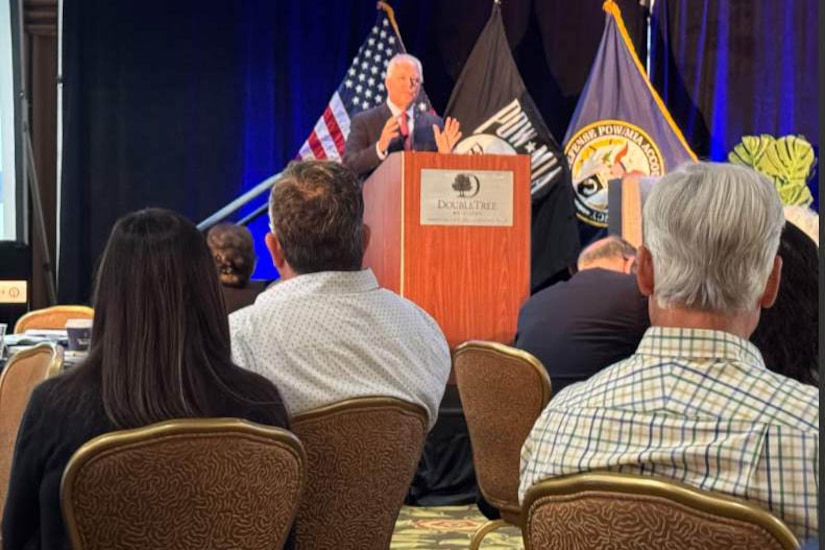
A man standing behind a lectern on a stage speaks to an audience.

Tata spoke today in Arlington, Virginia, to members of families who lost loved ones during the Vietnam War. The event was sponsored by the Defense POW/MIA Accounting Agency. 

"The Vietnam War may have ceased more than half a century ago, but I know that for all of you, it's never really ended, and you have spent decades carrying your silent vigil, a silent vigil for your unaccounted-[for] fathers, mothers, brothers, sisters, family and friends, and waiting for answers. Know that this War Department is focused on helping you find them," Tata said.
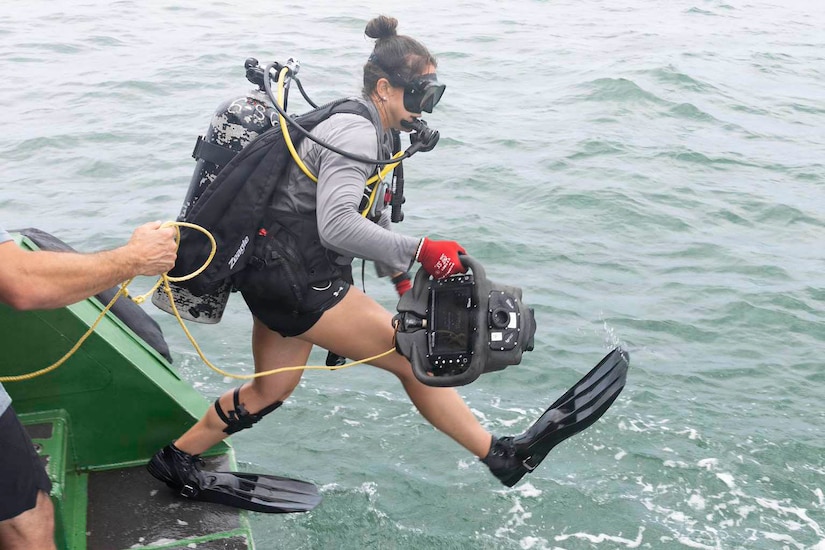
A woman wearing scuba gear jumps out of a boat into water.
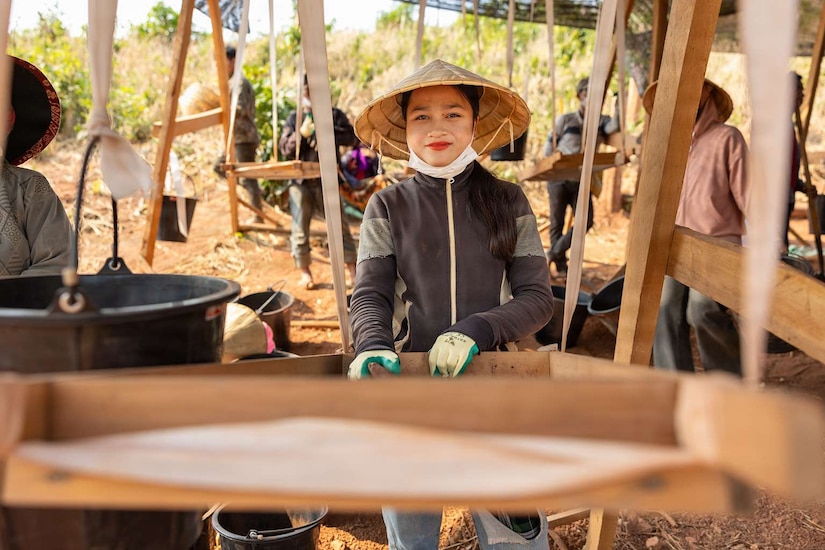
A woman wearing a conical hat stands in front of a wood tray.
The undersecretary applauded the work that teams are doing in the field around the world searching for remains, as well as the scientists who make the identifications in the laboratories at Hickam Field and Pearl Harbor in Hawaii, and Offutt Air Force Base in Nebraska. 

The DPAA mission is personal, Tata said, noting his own combat service and remembering his comrades who never made it home alive.  

Kelly K. McKeague, director of DPAA, said his agency has been working to recover remains from the Vietnam War since 1985 and that DPAA-trained Vietnamese recovery teams have located the remains of many missing Americans.
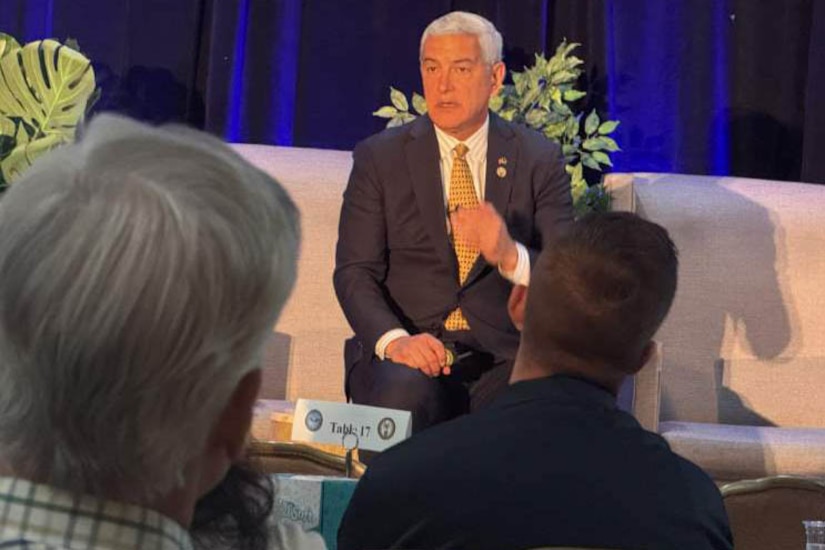
A man seated on a stage speaks to an audience.

Communicating and connecting is just as important as it is with accounting for your loved ones, McKeague said. 

"This is that sacred obligation, that moral imperative that we have told you for years, that we live it, we don't just talk it. We live it simply because we know your loved ones made the supreme sacrifice, you deserve those long-sought answers and that's why we're here," he said. 

While DPAA has been searching for service members from all wars dating to World War II, the agency has prioritized finding the missing from the Vietnam War since firsthand witnesses in several nations where operations took place are aging and dying, McKeague said.
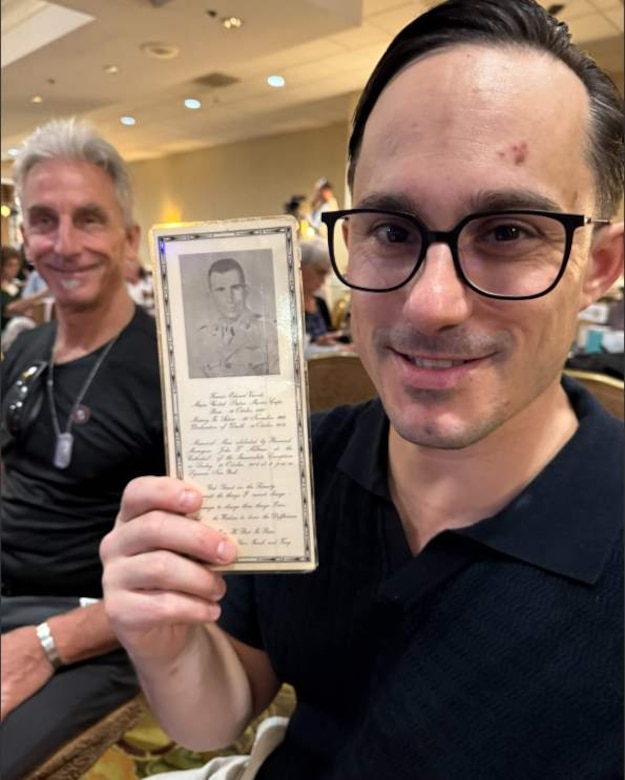
A man holds up a leaflet with a photo of a man and some cursive writing while another man looks on.

Justin O'Connell, grandson of Marine Corps Maj. Francis Edward Visconti, held a picture of his grandfather, who died Nov. 22, 1965, when his UH-34D helicopter crashed during a night flight in a storm in South Vietnam.  

He and three others on that flight are still missing. Next to O'Connell was his uncle, Tony Visconti, who was wearing an extra set of his brother's identification tags. 

Susan Lilly Harvey's brother, Army 1st Lt. Lawrence Lilly, went missing in Southeast Asia when his Cobra helicopter went down. She said she's been coming to these gatherings every year for 40 years. 

Raymond L. Echevarria Jr.'s father, Army Sgt. Maj. Raymond L. Echevarria Sr., and two other soldiers went missing in Laos following a firefight with Viet Cong. An interpreter escaped to relay what happened. 

Last year, 231 missing service members were accounted for, including eight from the Vietnam War, with the remainder from World War II and the Korean War. Most of the recovery sites are in Europe and Southeast Asia. There are currently 1,565 missing U.S. personnel from the Vietnam War. 

Monday, September 21, 2015

Table set to remember

by Senior Airman Deana Heitzman
31st Fighter Wing Public Affairs


9/18/2015 - AVIANO AIR BASE, Italy -- "We call your attention to this small table, which occupies the place of dignity and honor," reads Tech. Sgt. Maurice Carbajal, 31st Communications Squadron knowledge management center NCO in charge, while members of the base honor guard sharply pop to attention.

When this line is read from the historic script, the Prisoners of War/Missing in Action table ceremony begins, kicking off Aviano Air Base's POW/MIA Remembrance Week.

"They are unable to be with their loved ones and families today, so we join together to pay a humble tribute to them," Carbajal continued with the script.

According to the Defense POW/MIA Accounting Agency, there are 83,114 service members who are still unaccounted for since World War II. Across many military installations, attendees honor these service members by displaying a "missing man table" in dining facilities and during official ceremonies.

"This table symbolizes the fact that members of our Armed Forces are missing from our ranks. We call them POWs and MIAs," Carbajal continued.

During the ceremony, honor guard members presented symbolic items to those who are missing, while the narrator explained the meaning.

"The single red rose in the vase signifies the blood they have shed to ensure the freedom of our beloved United States of America," Carbajal read.

With five different service hats placed on a round table draped in white, they are adorned with a single red rose, a bread plate with a salted lemon, an inverted glass and an empty chair.

"The slice of lemon on the plate reminds us of their bitter fate. The salt, when sprinkled onto the plate, reminds us of the countless fallen tears of families as they wait," Carabajal continued to read. "The glass is inverted--they cannot toast with us this day. The chair is empty--they are not here. The candle is reminiscent of the light of hope, which lives in our hearts to illuminate their way home."

The ceremony ended with an excerpt for all the missing comrades to return to their ranks and their families.

"Seeing this table gave me the opportunity to honor not only those who are still missing, but the families who are still waiting for their loved ones to come home," said Carbajal. "I always tear up thinking about how my children would feel if they would constantly be waiting for me to come home."

Annually, the Air Force Sergeants Associations hosts various events leading up to National POW/MIA Recognition Day, the third Friday in September. This year, Team Aviano came together with a memorial run, retreat and the table ceremony to remember fellow service members.

Monday, August 10, 2015

Soldier Missing From Korean War Accounted For


The Department of Defense POW/MIA Accounting Agency (DPAA) announced today that the remains of a serviceman, missing from the Korean War, have been identified and will be returned to his family for burial with full military honors.

Army Cpl. Nehemiah E. Butler Pocomoke City, Maryland, will be buried today in Arlington National Cemetery. In late December 1950, Butler and elements of Company C, 19th Infantry Regiment (IR), 24th Infantry Division (ID), were deployed near Seoul, South Korea, when their unit was attacked by enemy forces. During the attempt to delay the enemy forces from advancing, Butler was separated from his unit while moving towards a more defensible position. Butler was reported missing Jan. 1, 1951.

On July 19, 1951, a Republic of South Korea military officer told U.S. Army Graves Registration Services (AGRS) personnel about the remains of a U.S. serviceman, who, died and was buried near the village of Chik-Tong-ni. The AGRS team located the remains. Due to lack of documentation, the remains were declared unidentified. The remains were interred as unknown at the U.N. Military Cemetery in Tanggok, and were later disinterred and transferred to the Central Identification Unit (CIU) in Kokura, Japan. In 1955, the remains were transferred to the National Memorial Cemetery of the Pacific (NMCP), commonly known as the “Punchbowl”.

In 2009, the Department of Defense (DoD) re-examined records and concluded that with advances in technology, the possibility of identification of some of these unknowns buried in the Punch Bowl now existed.

In the identification of Butler’s remains, scientists from the DPAA and the Armed Forces DNA Laboratory (AFDIL) used circumstantial evidence, dental and chest radiographs comparison, and mitochondrial DNA analysis, which matched his sister.
Today, more than 7,800 Americans remain unaccounted for from the Korean War. Using modern technology, identifications continue to be made from remains that were previously turned over by North Korean officials or recovered from North Korea by American recovery teams.