Showing posts with label military healthcare. Show all posts

Monday, September 21, 2026

Military Spouse Commission Holds First Meeting, Identifies Top Issues

The Military Spouse Commission held its first meeting today at the White House. 

The commission, which President Donald J. Trump established via executive order Aug. 3, is tasked with advising and assisting the president on policies that affect military spouses and families.
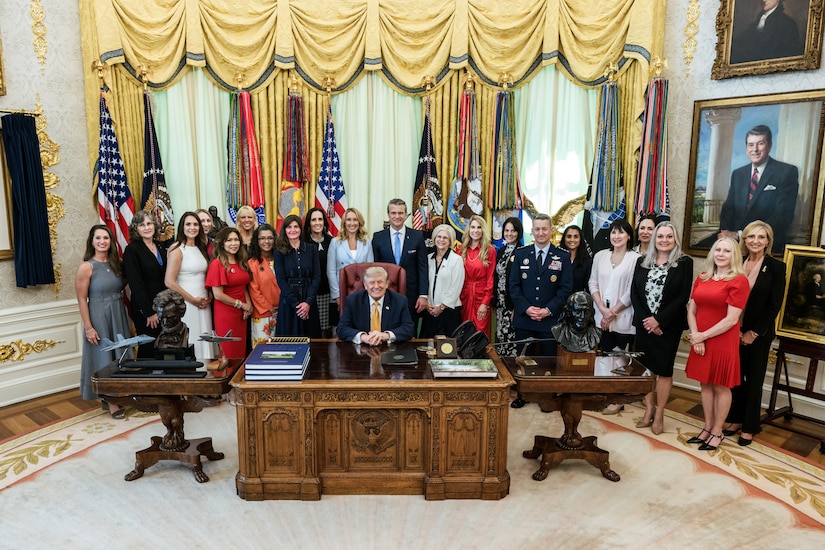
A man in business attire sits at a large wooden desk inside an office, surrounded by roughly two dozen men and women.
 

Secretary of War Pete Hegseth, who attended the meeting as a guest, spoke briefly to the roughly 20 attendees. 

“A lot of things that need to happen in our department happen with the stroke of a pen from either your husbands, at [their] level, and if not, up at the office of secretary of war level; and we are prepared to wield that pen,” Hegseth told the commission, which comprises the spouses of the War Department’s most senior military leaders.   

His wife, Jennifer Hegseth, chairs the commission and spoke about its establishment. 

“We're here to help President Trump improve the lives of America's nearly 1 million military spouses, which you all are a part of. And as you know firsthand, military spouses make a sacrifice for our nation together with the sacrifice of your warrior,” she said. 

She went on to explain that the commission will work to tackle big issues like employment, housing, education and healthcare, as well as micro issues that also need addressing. 

“Many of those solutions will be new, but some already exist and have gotten stuck in the bureaucracy — and we'll find those too,” she said. 

Jennifer Hegseth noted that some of those issues will need to be revived from past efforts to fix them, and that some solutions will require Congressional legislation.  

“We will work to find solutions to all of them, so thank you all again for being willing to serve,” she said. 

Each commission member then introduced themself and spoke about the issues that they prioritize the most. As the meeting continued, it became clear that the three most referenced issues were: healthcare, employment and housing. 

Donna Caudle, the wife of the chief of naval operations, said that as a licensed healthcare professional, she has seen firsthand and heard from countless Navy families about the challenges they face when accessing healthcare. 

“I look forward to working with the commission to help President Trump improve continuity of care and capacity, reduce appointment wait times, and close the gaps in specialty care and mental health services for our military families,” she added. 

Debbie Schiess, the wife of the chief of space operations for the Space Force, said she would love to see legislation that allows spouses who are licensed in any state to practice on federal installations.  

“This would tackle two issues at once: aiding in spouse employment and increasing our mental health providers,” she said. 

Regarding employment, Angie Perryman — who’s married to Master Chief Petty Officer of the Navy John Perryman — explained that spousal employment is near and dear to her. 

“I've been a full-time federal employee with the Department of War for almost 20 years as a licensed clinical social worker, and I know firsthand that military spouse employment is not simply about finding a job; it's about preserving a career,” Angie Perryman said. 

She noted the importance of allowing spouses to maintain their jobs despite frequent changes of location. 

“My goal is to help make military-directed moves as close to career-neutral as possible through portable work, remote work, meaningful license, portability, and employment policies that allow spouses to build careers that move with their families,” she further explained. 

Katrina Isom, the wife of the senior enlisted advisor to the chairman of the Joint Chiefs of Staff, explained that experiencing numerous moves over her husband’s nearly 40-year career has led her to focus on the quality of military housing. 

“During our time in the military, I've seen and experienced firsthand the struggles of increasing costs of housing, and the challenges of ensuring [the basic allowance for housing] meets the needs of our service members. As a member of this commission, I look forward to helping ensure that we are doing everything possible to ensure the housing needs of our military members is adequately met,” Isom said.

A silhouette of two adults and two children standing with their backs to the camera, holding hands while watching the sun set over a beach.

Following all the introductions, the secretary of war had high praise for the quality of talent among the commission members, as well as the 544 years combined of active-duty spouse experience the members share. 

“What an incredible background of human beings — Americans who gave the entirety of your lives to the whims of where the government sent your family,” he said. “And the least we can do is try to look back on that [time] and give.” 

The commission is scheduled to meet monthly at the White House.

Wednesday, December 31, 2025

Army Surgery Resident Develops Groundbreaking Life Support System, Named to Forbes '30 Under 30 Healthcare 2026' List

In the ever-evolving landscape of health care, few stories resonate with the promise of innovation and dedication quite like that of Army Capt. Bradley Pierce.  

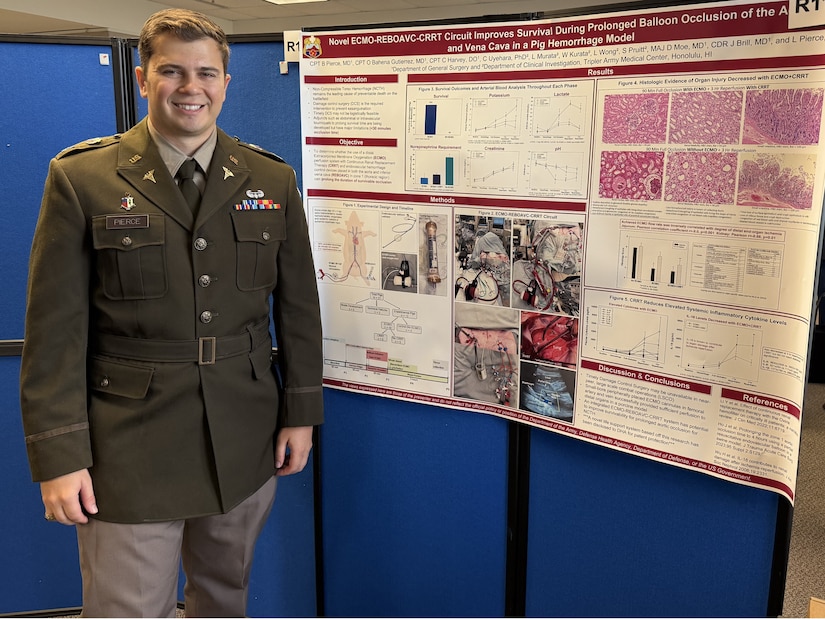
A man wearing an Army dress uniform smiles as he stands next to a display board.

Pierce is a general surgery resident at Tripler Army Medical Center in Honolulu who was recently recognized on the Forbes "30 Under 30 Healthcare 2026" list for his groundbreaking development of a life support system to enhance patient survival rates following traumatic abdominal hemorrhage. This pioneering system holds significant potential for application in emergency rooms and rural treatment facilities, demonstrating how military medicine can lead the way in health care innovation. 

A Journey Rooted in Service and Science  

His upbringing profoundly influenced Pierce's journey into health care. Growing up with an Army physician father and a scientist mother, he was immersed in the world of medicine and science from an early age. 

"Health care always felt familiar," Pierce said. 

His father's career showcased the human side of medicine, emphasizing its mission-driven nature, while his mother's scientific background instilled in him a passion for analytical thinking and problem-solving. This unique blend of experiences naturally steered Pierce toward military medicine, a field that combines clinical care with service in challenging environments. 

A pivotal moment that solidified his path occurred during high school when he shadowed physicians and surgeons. Witnessing the intricate balance of technical skill and calm decision-making in high-stakes situations illuminated the profound impact of medicine. 

"Those experiences clarified that I wanted a career where I could think critically, work with my hands and directly improve outcomes for people in vulnerable moments," Pierce explained. 

Mentorship and Inspiration  

Throughout his career, Pierce has been fortunate to have mentors who have guided him. One of his most significant role models is Dr. Thomas Fogarty, a pioneering figure in medical innovation known for inventing the Fogarty balloon catheter. Pierce admires Fogarty's courage to innovate, despite skepticism, and his ability to transform concepts into practical solutions that enhance patient care. 

"Learning from him has been inspirational on how to persevere through uncertainty," Pierce said.

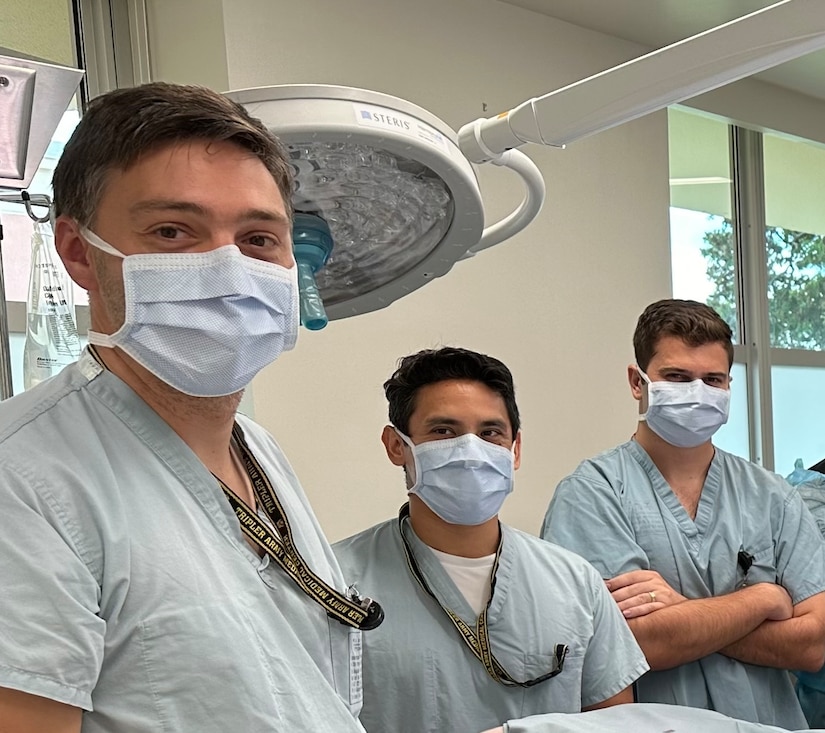
Three doctors wearing face masks pose for a photo in an operating room.

Achievements and Future Aspirations  

Among Pierce's proudest accomplishments is the completion of initial preclinical testing for a novel heart-lung-kidney life support system designed to treat internal bleeding, a project now submitted for patent protection. 

"This milestone reflects over a decade of deliberate preparation," said Pierce, crediting the support of his colleagues and the Department of Clinical Investigations at Tripler for their collaborative efforts that led to this breakthrough. 

Pierce measures the impact of his work by its potential to improve patient outcomes, particularly in high-stakes situations where timely intervention is critical. He emphasizes that success is not solely determined by traditional metrics, but by the meaningful differences made in patients' lives. 

"The ultimate measure of success is lives improved or saved once they reach patients," Pierce said. 

The Army upholds a robust regulatory framework that ensures exceptional standards of operations and accountability, exceeding those generally established in civilian sectors, such as the Health Insurance Portability and Accountability Act for patient privacy and the Occupational Safety and Health Administration for workplace safety. Furthermore, the Army adheres to War Department guidelines and Army-specific regulations that emphasize readiness and preventive medicine. 

The Future of Health Care: Challenges and Innovations  

As Pierce looks to the future, he identifies pressing challenges in health care, including the growing mismatch between demand and capacity. 

"Patient populations are increasing in size and complexity, while health care systems are being asked to do more with fewer resources," Pierce said. 

Addressing these challenges will require innovative solutions that enhance care delivery without adding complexity. 

Pierce believes that technology will play a crucial role in shaping the future of health care. He envisions a landscape where thoughtfully designed technologies can extend clinicians' capabilities, automate routine tasks and facilitate complex care outside traditional hospital settings. 

"The future will be defined by how well we integrate digital intelligence with practical, deployable medical devices that can act when patients need care the most," Pierce said. 

Advice for Aspiring Health Care Leaders  

Pierce advises aspiring young professionals who want to make a difference in health care to seek out strong mentors and focus on areas in need of improvement. He underscores the importance of staying close to clinical realities and challenging assumptions. 

"Progress in health care is often incremental, but sustained curiosity, humility and persistence can lead to changes that truly improve how care is delivered," he said. 

As he continues his surgical residency and works on advancing his current projects, Pierce remains committed to building solutions that address real clinical needs. 

"My primary goal is to complete surgical residency and ensure that each project remains grounded in practical, scalable and clinically relevant solutions," he said. 

A Legacy of Innovation and Teamwork  

Pierce's journey exemplifies the intersection of military service and health care innovation. His commitment to improving patient outcomes through technology, alongside a deep appreciation for mentorship and collaboration, positions him as a leader in the field.  

As he envisions his work evolving over the next five years, Pierce is determined to bridge the gap between innovative ideas and real-world impact, ensuring that the future of health care is not only innovative but also accessible and effective for all patients.