Showing posts with label combat medicine. Show all posts

Wednesday, September 02, 2026

Army Artillery Brigade Builds Tactical Proficiency

 Sept. 2, 2026 | By Army Capt. Lydia Laga, 75th Field Artillery Brigade

Warfighting mastery is forged through the relentless, daily grind of tough, realistic training, fueled by the dedication of soldiers who refuse to let constraints define their readiness.
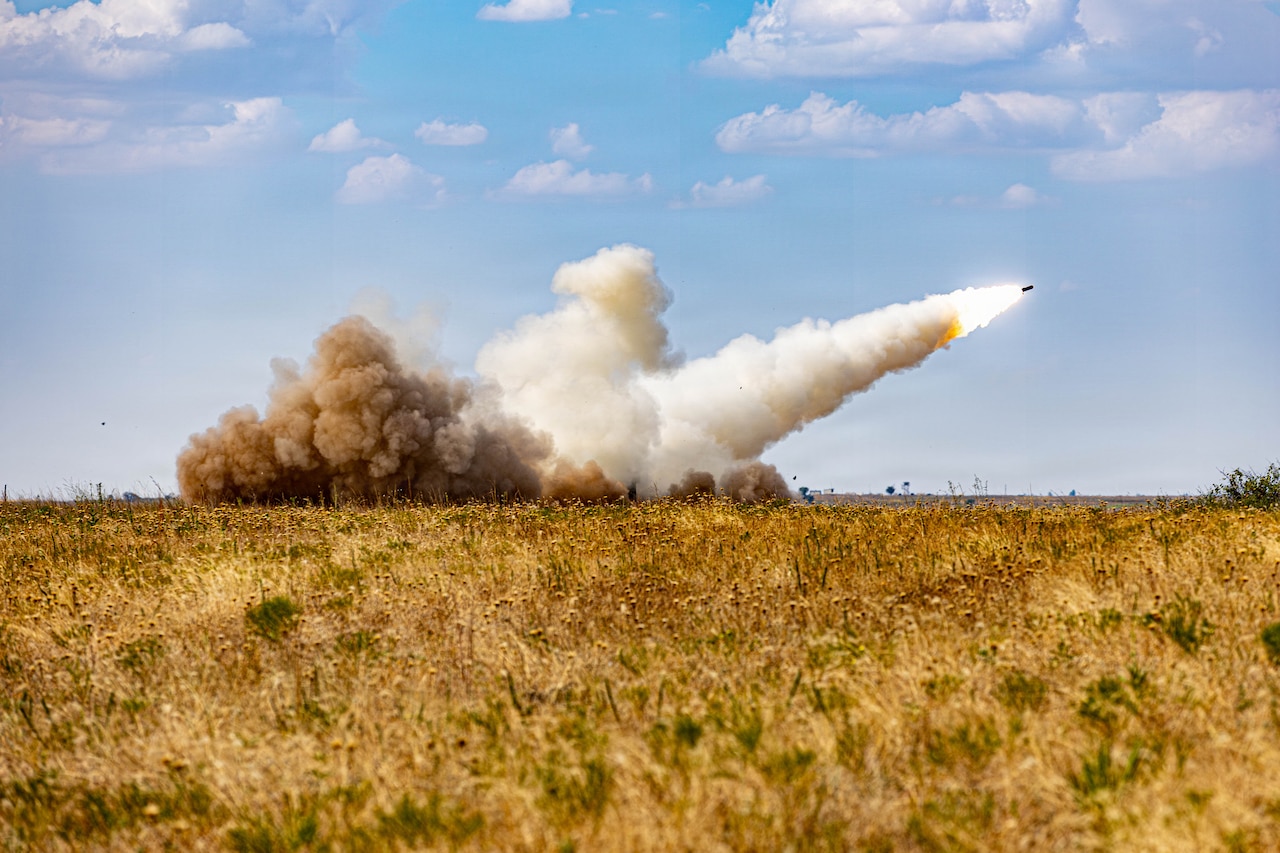
A rocket takes off from a field, shooting smoke and kicking up a cloud of dust behind it.

This is the standard of the 75th Field Artillery Brigade, and it was on full display in late August as the 2nd Battalion, 4th Field Artillery Regiment, took to the Fort Sill, Oklahoma, training areas to execute Artillery Table VI section qualifications and validate their Role 1, initial medical support for combat operations capabilities.

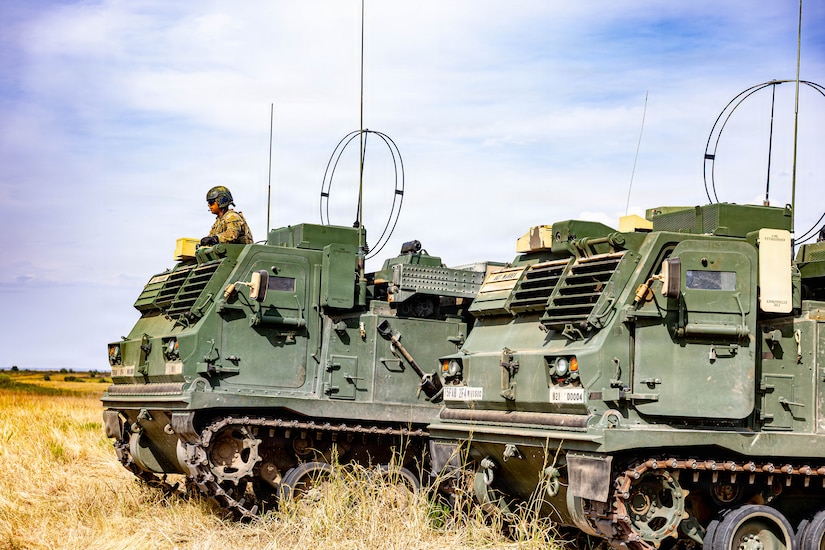
In the high-tempo environment of large-scale combat operations, the M270A1 Multiple Launch Rocket System is a devastating instrument of tactical lethality. But the platform's capability is only as good as the crew inside. Rather than treating the qualification as a routine exercise, the battalion used it to build adaptability and grit under pressure, particularly as soldiers navigated real-world manning and maintenance constraints.

For unit leaders, the focus was clear: build tactical proficiency from the ground up by investing in soldiers and empowering junior leaders.

"I feel that my battery did very well on this certification/qualification considering some of our maintenance and manning constraints," said Army Capt. Rachele Smith, Bravo Battery commander. "We have mostly new leaders within our formation and some soldiers stepping up to fill chief and gunner roles, so this was their first time having their feet to the fire."

Smith's approach was unyielding, pushing her platoon leaders to treat every simulated and live-fire iteration with absolute tactical realism.

"Our goal was to keep this training as tactical and realistic to how we'd fight as possible, so I was hard on the platoon leadership to stick to our hit times and key tasks," she explained. "The great part about these section qualifications is that it builds the training foundation for the battery and allows us to progress into our platoon and battery collective training in the upcoming months."
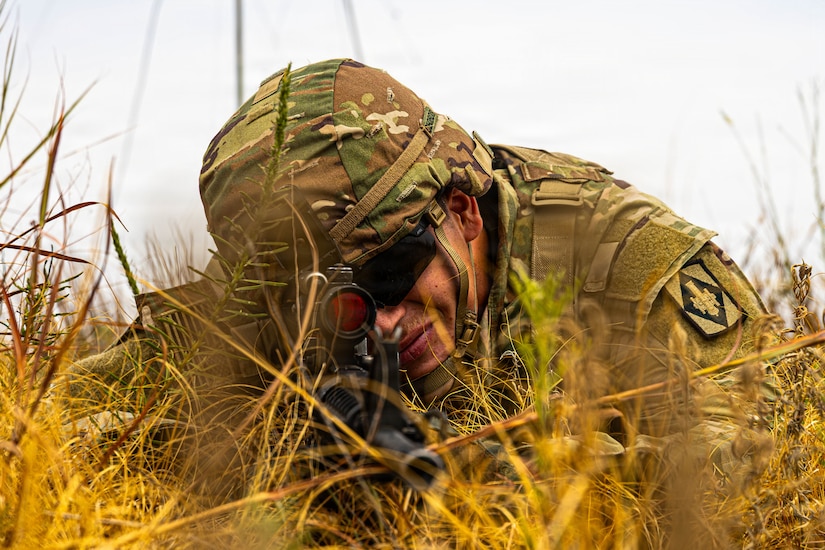
A man wearing a camouflage military uniform lies on the ground in a grassy field aiming a rifle.
A man wearing a camouflage military uniform stands in the open hatch of a military vehicle that is sitting in a field; there is another vehicle beside the first one.
This commitment to incremental growth embodies the III Armored Corps' training guidance, refining lethality and mastering the fundamentals of combat. By letting junior soldiers step up into critical roles, the unit turned potential constraints into a powerful opportunity for leader development.

While the firing batteries refined their lethality downrange, the battalion's Headquarters and Headquarters Battery validated medical readiness, another critical element of survival on the modern battlefield.

Under the cover of darkness Aug. 27, the battalion's medical section established an aid station in the training area, treating simulated blast trauma and severe hemorrhages under unscripted, chaotic conditions.

Like the firing crews, the medical team had to overcome the challenge of a fresh roster to build a cohesive capability.

"Role 1 training is beneficial to our medical section because it allows us to train as we would fight," said Army 1st Lt. Monique Pilcher, battalion field medical assistant and medical exercise training lead. "It builds our ability to rapidly establish, operate and sustain a Role 1 capability while developing proficiency in casualty treatment, triage, evacuation, medical logistics and team coordination."

For Pilcher, success during the nighttime validation came from exhaustive rehearsals and trusting her young medics to carry out their duties.

"Most importantly, it gives our soldiers the opportunity to rehearse their individual responsibilities as part of a cohesive medical team, so when we encounter a real-world casualty or [mass casualty], we can respond quickly, confidently and effectively," she said. "Rehearsals were very important due to having a brand-new team of medics training for the first time."
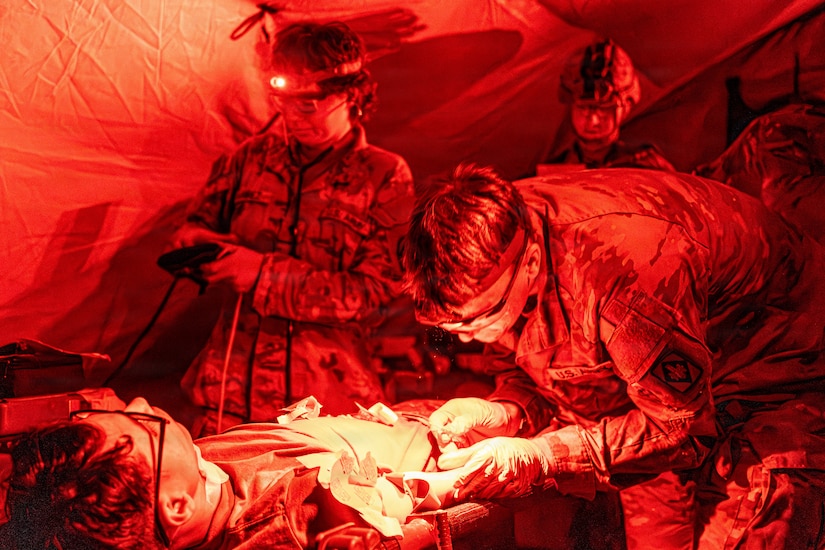
A man wearing a camouflage military uniform checks on a simulated patient in a tent at night; there are three other people in similar attire working in the background.

From the fire direction centers transmitting data-centric missions to the signal specialists securing the tactical networks, and the medical teams operating under limited visibility, the unit demonstrated what cohesive readiness looks like. It is a shared burden carried by every soldier who stepped up to fill a larger role and every leader who mentored them through the process.

The battalion now shifts focus to Artillery Table XII platoon collective qualifications, building on a foundation of hard work and professionalism from its crew members. While this recent qualification focused on individual launcher sections and fire direction centers, the next one elevates the training to a collective qualification.

In this phase, these independent sections must integrate, move, communicate and survive together as cohesive, synchronized platoon-sized elements under tactical command, transforming individual weapon systems into a unified force multiplier. The road to warfighting mastery is long, but as Smith noted, the unit is taking it "day by day to make small incremental changes over time."

Wednesday, December 31, 2025

Army Surgery Resident Develops Groundbreaking Life Support System, Named to Forbes '30 Under 30 Healthcare 2026' List

In the ever-evolving landscape of health care, few stories resonate with the promise of innovation and dedication quite like that of Army Capt. Bradley Pierce.  

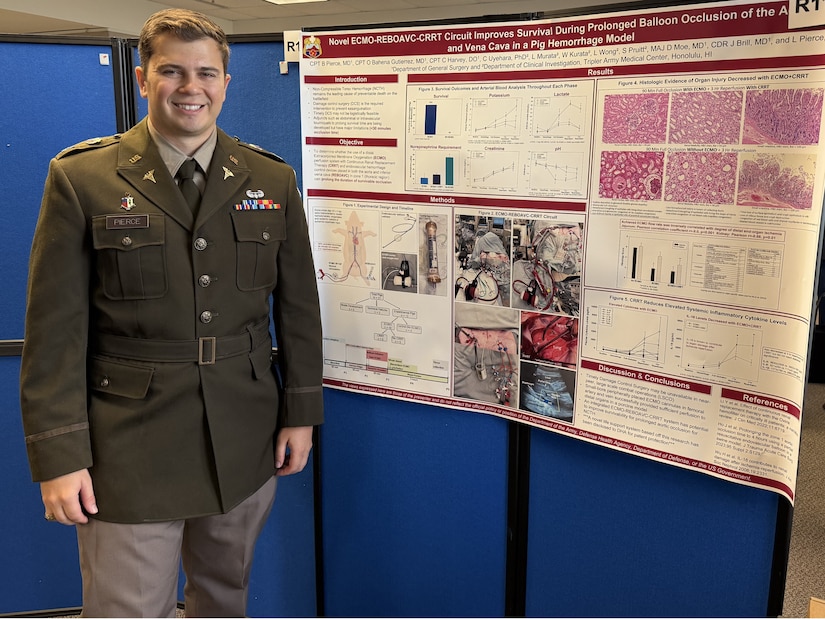
A man wearing an Army dress uniform smiles as he stands next to a display board.

Pierce is a general surgery resident at Tripler Army Medical Center in Honolulu who was recently recognized on the Forbes "30 Under 30 Healthcare 2026" list for his groundbreaking development of a life support system to enhance patient survival rates following traumatic abdominal hemorrhage. This pioneering system holds significant potential for application in emergency rooms and rural treatment facilities, demonstrating how military medicine can lead the way in health care innovation. 

A Journey Rooted in Service and Science  

His upbringing profoundly influenced Pierce's journey into health care. Growing up with an Army physician father and a scientist mother, he was immersed in the world of medicine and science from an early age. 

"Health care always felt familiar," Pierce said. 

His father's career showcased the human side of medicine, emphasizing its mission-driven nature, while his mother's scientific background instilled in him a passion for analytical thinking and problem-solving. This unique blend of experiences naturally steered Pierce toward military medicine, a field that combines clinical care with service in challenging environments. 

A pivotal moment that solidified his path occurred during high school when he shadowed physicians and surgeons. Witnessing the intricate balance of technical skill and calm decision-making in high-stakes situations illuminated the profound impact of medicine. 

"Those experiences clarified that I wanted a career where I could think critically, work with my hands and directly improve outcomes for people in vulnerable moments," Pierce explained. 

Mentorship and Inspiration  

Throughout his career, Pierce has been fortunate to have mentors who have guided him. One of his most significant role models is Dr. Thomas Fogarty, a pioneering figure in medical innovation known for inventing the Fogarty balloon catheter. Pierce admires Fogarty's courage to innovate, despite skepticism, and his ability to transform concepts into practical solutions that enhance patient care. 

"Learning from him has been inspirational on how to persevere through uncertainty," Pierce said.

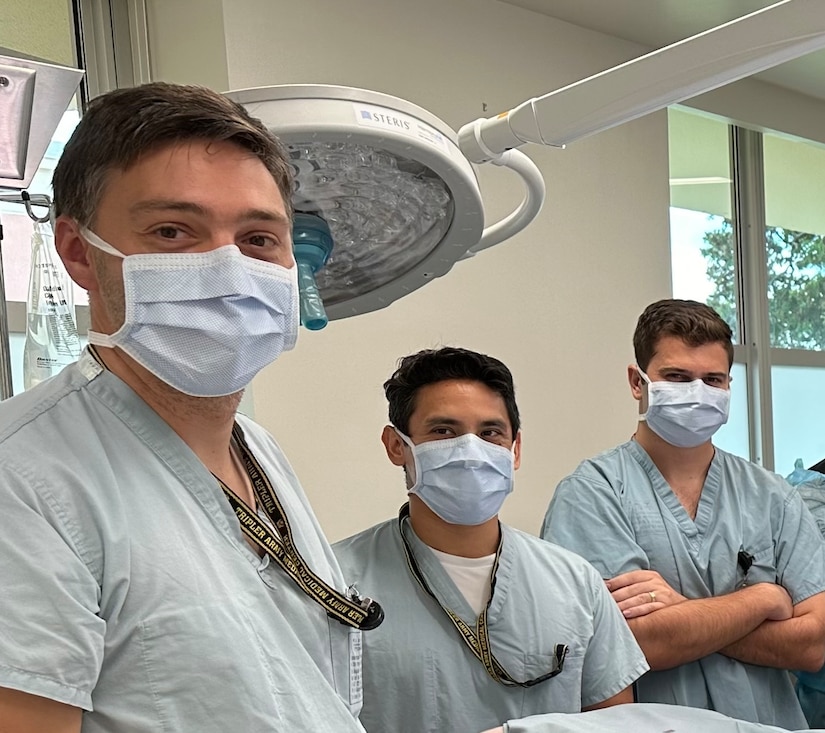
Three doctors wearing face masks pose for a photo in an operating room.

Achievements and Future Aspirations  

Among Pierce's proudest accomplishments is the completion of initial preclinical testing for a novel heart-lung-kidney life support system designed to treat internal bleeding, a project now submitted for patent protection. 

"This milestone reflects over a decade of deliberate preparation," said Pierce, crediting the support of his colleagues and the Department of Clinical Investigations at Tripler for their collaborative efforts that led to this breakthrough. 

Pierce measures the impact of his work by its potential to improve patient outcomes, particularly in high-stakes situations where timely intervention is critical. He emphasizes that success is not solely determined by traditional metrics, but by the meaningful differences made in patients' lives. 

"The ultimate measure of success is lives improved or saved once they reach patients," Pierce said. 

The Army upholds a robust regulatory framework that ensures exceptional standards of operations and accountability, exceeding those generally established in civilian sectors, such as the Health Insurance Portability and Accountability Act for patient privacy and the Occupational Safety and Health Administration for workplace safety. Furthermore, the Army adheres to War Department guidelines and Army-specific regulations that emphasize readiness and preventive medicine. 

The Future of Health Care: Challenges and Innovations  

As Pierce looks to the future, he identifies pressing challenges in health care, including the growing mismatch between demand and capacity. 

"Patient populations are increasing in size and complexity, while health care systems are being asked to do more with fewer resources," Pierce said. 

Addressing these challenges will require innovative solutions that enhance care delivery without adding complexity. 

Pierce believes that technology will play a crucial role in shaping the future of health care. He envisions a landscape where thoughtfully designed technologies can extend clinicians' capabilities, automate routine tasks and facilitate complex care outside traditional hospital settings. 

"The future will be defined by how well we integrate digital intelligence with practical, deployable medical devices that can act when patients need care the most," Pierce said. 

Advice for Aspiring Health Care Leaders  

Pierce advises aspiring young professionals who want to make a difference in health care to seek out strong mentors and focus on areas in need of improvement. He underscores the importance of staying close to clinical realities and challenging assumptions. 

"Progress in health care is often incremental, but sustained curiosity, humility and persistence can lead to changes that truly improve how care is delivered," he said. 

As he continues his surgical residency and works on advancing his current projects, Pierce remains committed to building solutions that address real clinical needs. 

"My primary goal is to complete surgical residency and ensure that each project remains grounded in practical, scalable and clinically relevant solutions," he said. 

A Legacy of Innovation and Teamwork  

Pierce's journey exemplifies the intersection of military service and health care innovation. His commitment to improving patient outcomes through technology, alongside a deep appreciation for mentorship and collaboration, positions him as a leader in the field.  

As he envisions his work evolving over the next five years, Pierce is determined to bridge the gap between innovative ideas and real-world impact, ensuring that the future of health care is not only innovative but also accessible and effective for all patients.