Showing posts with label blood transfusion. Show all posts

Thursday, July 23, 2026

Navy Nurse Awarded for Pediatric Trauma Care Research, Improvements

A nurse assigned to the Naval Medical Center Camp Lejeune in North Carolina is being recognized for her research and process improvement efforts in pediatric trauma care.
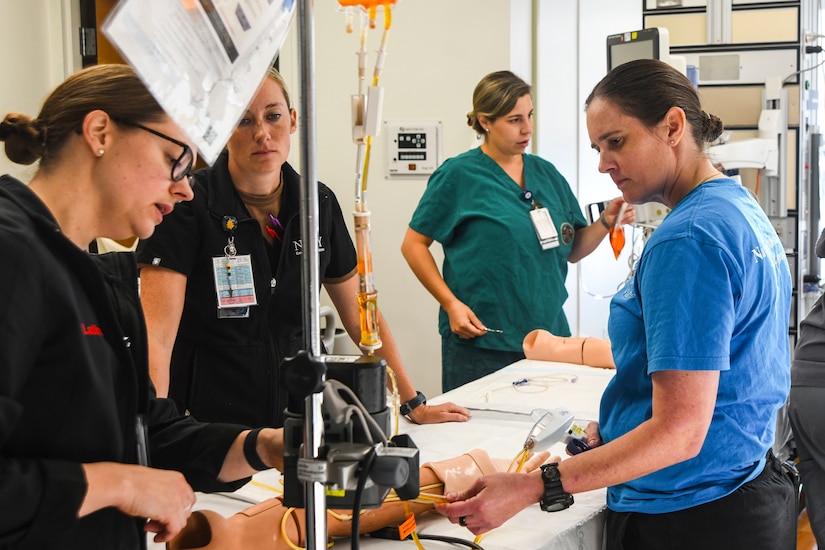
Four women wearing medical attire stand over an IV training arm with medical equipment attached; one provides instruction while the others observe.

Navy Cmdr. Emily Latimer, an emergency clinical nurse specialist, was recently awarded the Defense Health Agency Nursing Award for Evidence-Based Practice. Latimer spearheaded a project to examine methods for administering blood specifically to pediatric trauma patients. 
 
According to Latimer, giving blood to a pediatric patient requires a different volume, specific needles or a smaller IV — meaning that blood systems used for adult patients don't always transition well for children. Latimer said she was inspired to pursue this project by past cases of critically ill children.
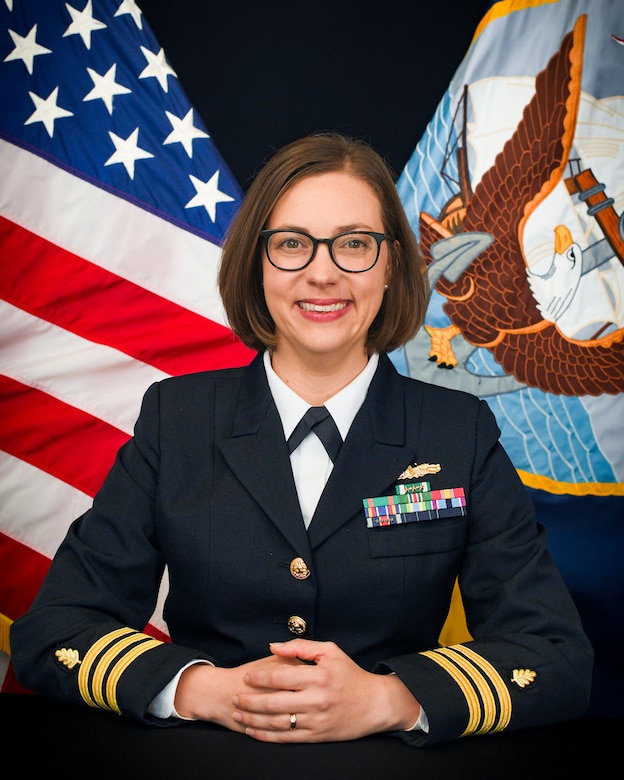
A woman wearing a formal military uniform poses for a portrait with an American flag and a Navy flag in the background.

"In a military treatment facility, a huge portion of our patients are pediatrics. For example, at our emergency department here, 25% of our patients are pediatrics. Being able to provide the care and, hopefully, be a source of trust and stability for their families – that's taking care of our military community," she said. 
 
Latimer and her team procured grant funding to purchase a manual blood infusion system for pediatric trauma patients, and nurses and paramedics tested the system for several weeks. Findings showed that a system designed to administer blood to pediatric patients was easier and faster for users and should be a component that trauma centers consider obtaining to ensure pediatric readiness capabilities. 
 
"Our job is to take care of vulnerable patients, and if we're finding ways to make improvements, we are doing our job to make things better for our patients," Latimer said. "Ultimately, if we are getting recognized for this work, that means the work we are doing is meaningful. It gives us an opportunity and a venue to share what we learned, so that maybe other people can implement similar solutions." 
 
Latimer noted that research on pediatric care is vital to the readiness component of military medicine.

"As much as our deployment training is focused on preparing to receive adult patients, in many deployed settings, we do take care of sick kids. Having the skills, the comfort and the experience with sick children in a military treatment facility prepares our healthcare workers for deployment medicine," she said.
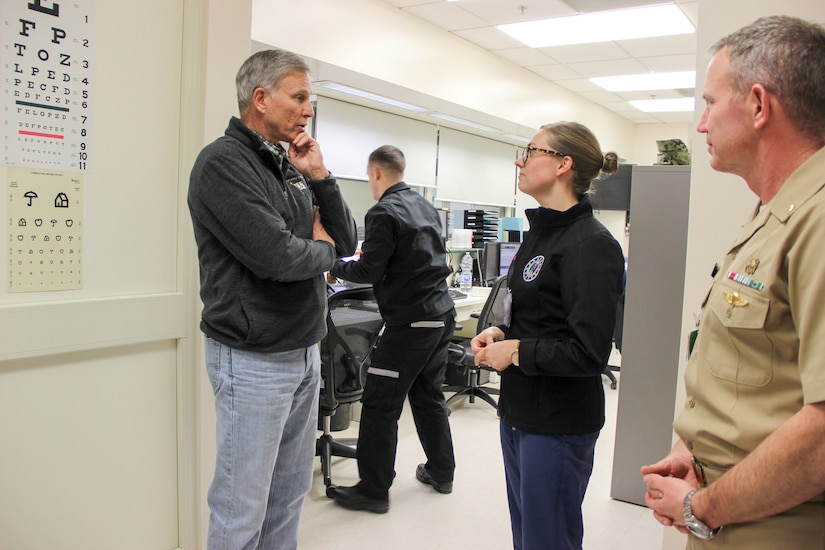
A man wearing casual attire speaks to a woman dressed in casual attire inside a medical facility.

Latimer was also awarded the Pediatric Readiness Improvement Award through the Emergency Nurses Association, recognizing her work on the blood project and other improvements for critically ill pediatric patients, such as medication and safety audits.  

However, Latimer does not take credit for the accolades; instead, she proudly attributes the success to her research team. 
 
"So much of this was a group effort," she said. "I feel really lucky that I was able to work with people that have such expertise and care and were willing to take time out of their day-to-day tasks to spend time dedicated to these projects." 
 
Latimer, a native of Lake Charles, Louisiana, has served 16 years in the Navy and will soon embark on her next journey as the department head for corpsman trauma training at University Hospitals Cleveland Medical Center in Cleveland.

Wednesday, October 21, 2015

‘A blood transfusion saved my life’


By Staff Sgt. Debbie Lockhart, 50th Space Wing Public Affairs / Published October 19, 2015

SCHRIEVER AIR FORCE BASE, Colo. (AFNS) -- Many children dream of taking a trip to Disneyland, and in 2001, 1st Lt. Fanita Schmidt's family set off to make it a reality. But the family's dream suddenly turned into a nightmare when Arizona winds blew their minivan off the road, causing the vehicle to roll down a hill.

"I lost my brother that day," said Schmidt, a 4th Space Operations Squadron orbital analysis engineer. "My sister's knee cap was sliced off, my father's ribs broke ... everyone was hurt."

Schmidt was immediately knocked unconscious. She suffered six broken bones above the hip and lost a large amount of blood.

"Because I passed out, I wasn't able to control my body, which is why I had so many more injuries than the others," she said.

Due to the extent of her injuries, Schmidt was airlifted to a hospital in Las Vegas, Nevada, where she could be properly cared for. Her outlook was grim at the time, she said, but doctors knew what they needed to save her life: blood.

"I was told I had less than a few hours to get a blood transfusion so that I could live," Schmidt said. "If that wasn't available to me, I would've died."

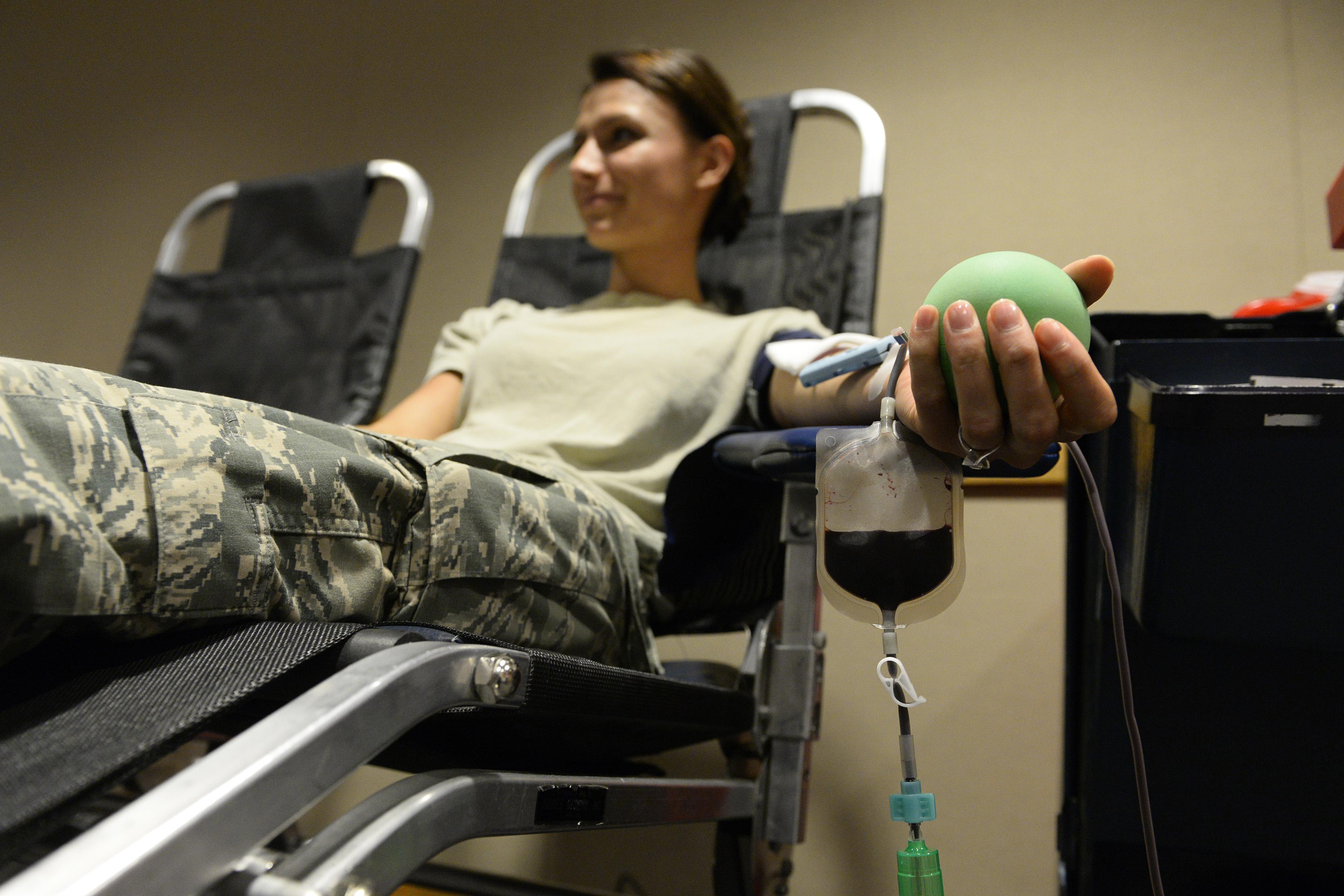
Schmidt received a blood transfusion that helped save her life, and now, 14 years later, she said she pays it forward by donating blood every chance she gets.

"I try to go to all the blood drives I can," she said. "I've even stopped myself from getting tattoos so I am actually able to donate."

According to the Red Cross, "although an estimated 38 percent of the U.S. population is eligible to donate, less than 10 percent actually do each year."

Schmidt encourages everyone who is physically able to donate blood.

"I do understand that it is a scary process for a lot of people to actually sit in that chair, have a needle put in and feel like a part of you is draining out, but you have to understand that it just takes a small part of you to make a whole of someone else," she said.

The Red Cross says one pint of blood is taken during a blood donation, which can save up to three lives.

"I was a child when a blood transfusion saved my life, and look where I am now," Schmidt said.

Schmidt insists that all it takes is time and courage to become someone's hero -- something she learned by watching her father.

"My father graduated from the first class of the Air Force Academy in 1959," she said. "He was a fighter pilot and he actually saved a lot of peoples' lives -- maybe not by donating blood -- but he earned four Distinguished Flying Crosses, so he's a true hero."

Her father's legacy inspired her to follow in his footsteps and serve in the Air Force, she said.

"If you have the physical, mental and psychological capability to serve and help others, then why not do it?" she asked. "And that correlates to donating blood -- I really do believe that even if you don't get the chance to go into a cockpit, you can still save someone's life."

Donating blood is a safe process and typically takes about 10 minutes, according to the Red Cross.

"We couldn't save lives without our donors," said Army Lt. Col. Jason Corley, the Armed Services Blood Program deputy director of operations. "As a program, we have saved thousands of lives this year and that happened because of our donors’ support. They are the silent heroes.'"