Showing posts with label aeromedical evacuation. Show all posts

Saturday, June 27, 2026

Joint Task Force Southern Border Conducts Medevac in Arizona Mountains

Service members assigned to Joint Task Force Southern Border conducted an aeromedical evacuation after receiving a request to assist a civilian who was experiencing a medical emergency while supporting border barrier construction in a remote mountainous area of southern Arizona, June 17. 
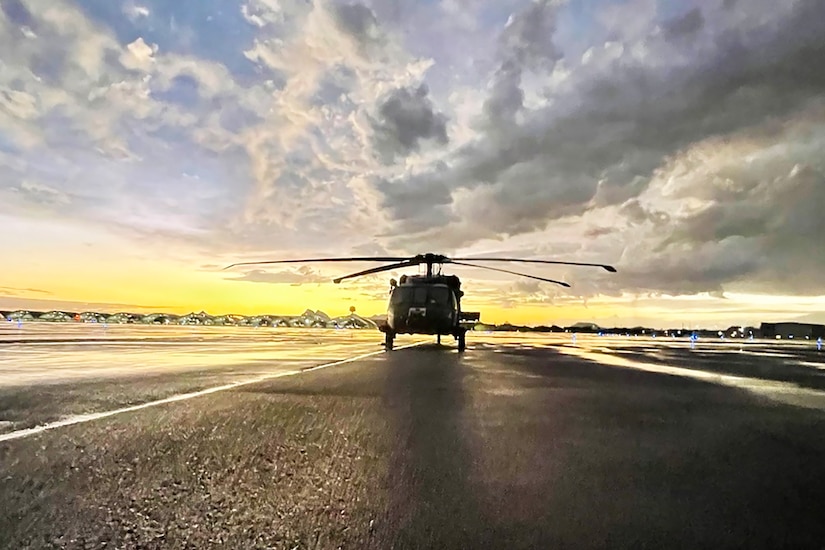
A military helicopter sits on a flight line under a blue sky with clouds at dusk.

This medevac highlights the unique military capabilities that Joint Task Force Southern Border brings in support of U.S. Customs and Border Protection as a part of Operation Ardent Vanguard. 

The task force received the request in the early afternoon, when officials reported that a civilian contractor required urgent medical assistance while in a mountainous terrain inaccessible to conventional emergency response vehicles. 

The service members coordinated with CBP personnel and approved the launch of a War Department medical evacuation aircraft. Initial reports indicated that first responders were hiking to the patient's location while working to determine an exact position. 

"JTF-SB responded to this mission, preserving the life of the civilian upon request of the CBP," said Army Master Sgt. Andrew VanMeter, the chief medical noncommissioned officer for the task force. 

VanMeter said that, although the remote location was inaccessible to civilian aeromedical and ground teams, the Joint Task Force Southern Border was uniquely qualified for the mission because of the patient's remote location and the lack of landing zones. 

The medical evacuation aircraft arrived on station, established visual contact with personnel on the ground and then conducted hoist operations. Aircrews successfully recovered the patient from the mountainside and began transport toward definitive medical care. 

During the flight, adverse weather conditions in Tucson, Arizona, required adjustments to the patient transfer plan. The aircraft landed at an alternate location, where the patient was transferred to civilian emergency medical services for continued transportation to a local hospital. 
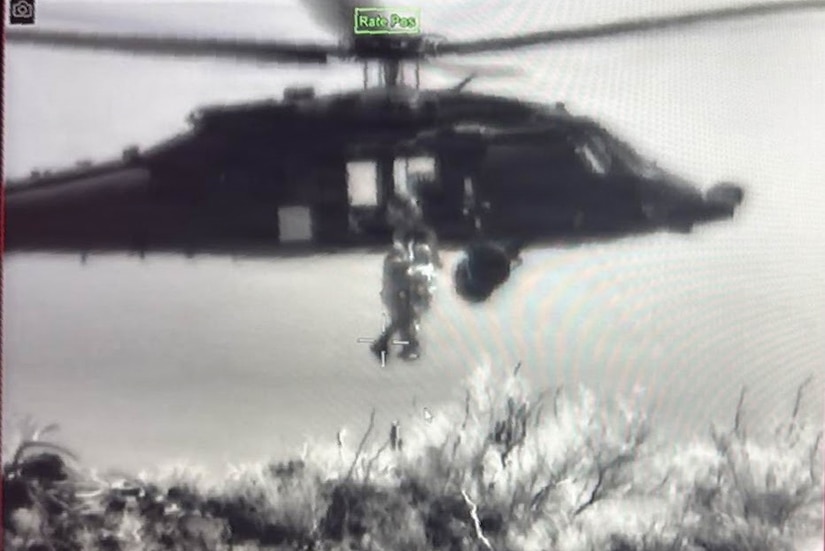
A grainy, black-and-white image of a helicopter hovering over water with two people dangling from it and a third person assisting as they are hoisted into the aircraft.

Army Sgt. 1st Class Christian Castillo, a flight medic assigned to Foxtrot Company, 3rd Battalion, 501st Assault Helicopter Battalion, said hoist rescues require a significantly different approach than traditional medical evacuation operations. 

"Unlike a standard medevac call, where we can land the aircraft, and I can access all my gear, a hoist requires inserting with minimal equipment," Castillo said. "Because of that limitation, my mindset immediately shifts to executing the foundational knowledge of tactical combat casualty care." 

Castillo said successful hoist operations depend on extensive preparation before an emergency happens. 

"Executing a 160-foot hoist mission requires a layered approach to training, well before the actual mission occurs," he said. "It involves consistently practicing hoist operations during routine training flights and conducting integrated training with the ground forces."

The team also conducted a thorough analysis of the operational area beforehand to anticipate the environmental and tactical conditions it could encounter on scene. 

The most unique aspect of this mission was the crew dynamic; this was the first operational flight for the crew's junior pilot after completing his training with the unit. As for the personnel in the back of the aircraft, Castillo and Army Spc. Kierstann Knowles, the crew chief, had previously executed a hoist rescue together. They said that shared experience was critical.

The mission highlights Joint Task Force Southern Border's ability to rapidly integrate with federal, state and local partners, its readiness, aviation capabilities, and its commitment to preserving life and enabling mission success along the southern border.

Friday, January 02, 2026

449th AEG Airmen Test Readiness During Exercise Pale Serpent

Airmen assigned to the 449th Air Expeditionary Group, in conjunction with Army, Marine Corps and Navy partners, conducted readiness training at Camp Lemonnier, Djibouti, during Exercise Pale Serpent, Dec. 26–29, 2025.

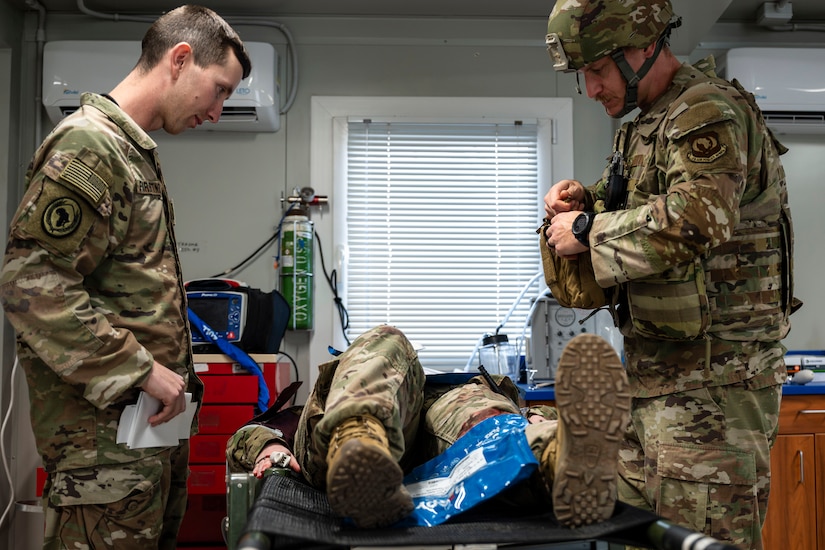
Two soldiers look down at a soldier lying on a medical bed.

The joint exercise prepared units to respond to real-world contingencies across East Africa. 

The exercise placed different 449th elements into parallel training scenarios designed to test how each mission set could operate in a high-tempo environment, from trauma care to aeromedical evacuation. 

At Chabelley Airfield, Djibouti, Air Force medical personnel assigned to the 776th Expeditionary Air Base Squadron treated simulated casualties inside the installation's medical treatment facility alongside partner medical teams, practicing trauma care, triage and patient stabilization. 

"Triage took place outside, and then we were assigning casualties into the appropriate rooms," said Air Force Tech. Sgt. Gracie Livengood, 776th Expeditionary Air Base Squadron, aerospace medical service technician. "The most immediate patients came into the trauma bay, and we treated them while delayed and minimal patients were handled in the other bays." 

The scenario forced medics to manage multiple patients at once while working through limited space, equipment and personnel, requiring constant communication and rapid decision-making across the treatment teams.

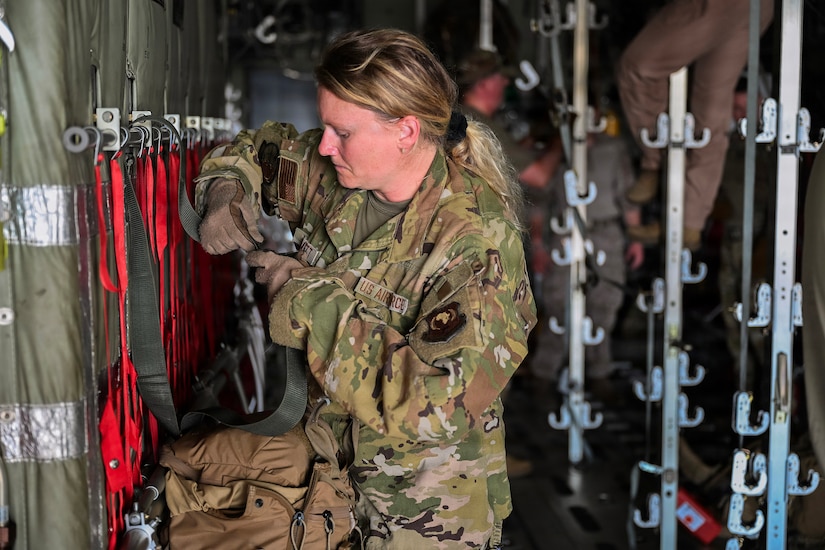
An airman works on adjustable wall fixtures as fellow service members work in the background.

"This training helps us get prepared if an actual emergency happens," Livengood said. "It ensures our skills are up to date, that we're doing everything properly and that we have the equipment we need to provide the best quality of care." 

Livengood said the exercise also highlighted the importance of teamwork in high-stress medical situations. 

"There are always challenges, especially when we're relatively short-staffed for a mass-casualty exercise," Livengood said. "But everyone did really well, helping each other out, moving from bed to bed and making sure people were taken care of." 

While medical teams trained at Chabelley, aeromedical evacuation personnel assigned to the 10th Expeditionary Aeromedical Evacuation Flight conducted parallel readiness training at Camp Lemonnier, preparing to move patients from the expeditionary medical facility to higher levels of care. 

During Pale Serpent, the 10th EAEF employed its full aeromedical evacuation capability, including a critical care air transport team consisting of a physician, critical care nurse and respiratory therapist, along with two flight nurses and four aeromedical technicians.

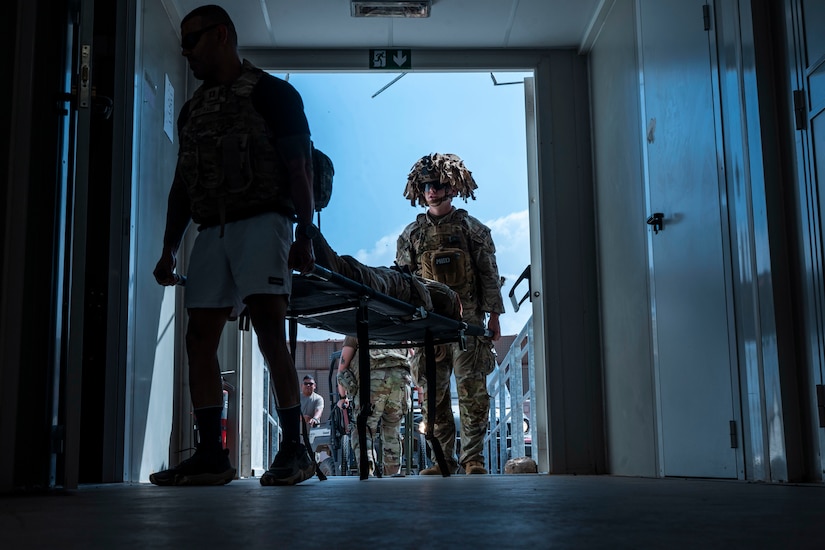
Two soldiers bring a person into a building on a gurney.

"Having aeromedical evacuation capabilities in this region is important so we can quickly move patients to a higher echelon of care," said Air Force Maj. Christina Newby-Martinez, 10th EAEF commander. "We're trained to provide the capability to rapidly move large numbers of patients by air during mass casualty events, which ensures timely redistribution of casualties to appropriate medical facilities." 

When this capability is integrated with critical care air transport teams specialized in transporting critically ill patients who require advanced, intensive and continuous medical care en route, there is a seamless transition of care across the full spectrum of patient acuity, Newby-Martinez explained. 

Exercises like Pale Serpent are essential for preparing crews to operate under pressure. 

"Training like Pale Serpent tests how quickly our teams can respond, pushes them to work outside of their normal crew complement and forces them to be ready for the unknown injuries that could arrive on an aircraft," Newby-Martinez said. "It also helps us see where we need to improve communication when we're working in a multi-service environment." 

Although 449th AEG elements trained in different locations, their efforts strengthened their ability to respond immediately and effectively to mass-casualty emergencies, reinforcing crisis readiness at one of U.S. Africa Command's most operationally critical hubs in East Africa.