Showing posts with label UH-60 Black Hawk. Show all posts

Wednesday, October 14, 2026

Lightning Academy Bolsters Army Fast Rope Training

A person in a camouflage military uniform slides down a rope hanging from a hovering military helicopter; three other people in similar attire are operating the aircraft.

Air sweeps across the Schofield Barracks training area in Hawaii from a UH-60 Black Hawk helicopter hovering in place, from which Army Capt. Liam Davenport leverages the past three days of progressive training, sending soldiers down two fast ropes to the ground during the culminating event of the Fast Rope Insertion/Extraction System Master Course.

The course, conducted Oct. 5-7, supports the 25th Infantry Division's dedicated effort to increase the number of qualified system masters throughout the formation. Expanding their expertise provides units with personnel capable of safely controlling fast-rope operations, giving commanders another option to rapidly insert and maneuver soldiers and equipment across restrictive terrain in the Pacific region.

Dense jungles, water obstacles and limited helicopter landing zones can restrict how forces move.

"In the Pacific, getting to the objective can be as challenging as the mission itself," said Army Staff Sgt. Eljay Basug, a course senior instructor assigned to Lightning Academy, 25th Infantry Division.

The fast-rope system provides an alternative when those conditions prevent an aircraft from landing, allowing units to rapidly insert personnel closer to an objective and lower equipment into otherwise difficult-to-access areas.

The three-day course develops that expertise through progressive instruction. Students begin with classroom training covering their duties and responsibilities, operational procedures, equipment and knots before conducting introductory descents from a low platform. 

The course advances to a 40-foot tower, conducting day and night training iterations, mass exits and descents with equipment before transitioning to live aircraft operations. The progression allows students to build confidence and demonstrate the fundamentals at increasing heights before applying them from an aircraft.

"With [fast rope insertion/extraction], it allows units to bypass those obstacles and insert closer to the objective," Basug said. "It gives unit commanders a greater reach, greater flexibility [and] greater speed to accomplish the mission."

Expanding that capability requires more than increasing the number of soldiers who can descend a fast rope. While a basic roper has the individual skills to descend, a master provides the expertise needed to enable the operation. These masters inspect personnel and equipment, enforce safety standards and control the insertion.

Davenport, the air assault, rappel master and fast rope insertion/extraction system officer in charge assigned to Lightning Academy, 25th Infantry Division, said those responsibilities distinguish a master from a basic roper.

"The FRIES master is the one in the aircraft," he said. "He's on the comms with the pilot in command and the crew chiefs, verifying that they're over the target grid, verifying the calls [and] making sure that the ropers are good to go."

Unlike rappelling, which is taught during air assault training, fast ropers are not physically attached to the rope during their descent. Once on the ground, they can quickly clear the insertion point and transition to their follow-on mission.

A person in a camouflage military uniform slides down a rope hanging from a hovering military helicopter.

"With fast roping specifically, it's getting in and out of objectives," Davenport said. "Whether that be a target building, open field, or even a ship."

Bolstering qualified FRIES masters across the division aims to push that expertise closer to the formations that may need it. Davenport said a future goal is for organizations throughout the 25th Infantry Division to have qualified masters capable of supporting fast rope training within their own formations.

Developing that expertise at the unit level increases the division's capacity to maintain and employ the capability beyond the schoolhouse, giving commanders additional options for moving forces based on the mission and terrain.

For the 25th Infantry Division, increasing the number of masters builds the personnel and expertise required to employ fast-rope operations across the formation. Distributing that expertise gives commanders greater flexibility to maneuver soldiers and equipment, overcome restrictive terrain and reach objectives throughout the Pacific.

Tuesday, July 14, 2026

Skyfall Simulation: NATO Partners Rehearse Downed Aircraft Response

Kosovo Force Regional Command East's Task Force Aviation and multinational partners conducted a downed aircraft exercise June 25 near Camp Bondsteel, Kosovo, rehearsing search and rescue, medical evacuation and aircraft recovery procedures following a simulated UH-60 Black Hawk helicopter hard landing.

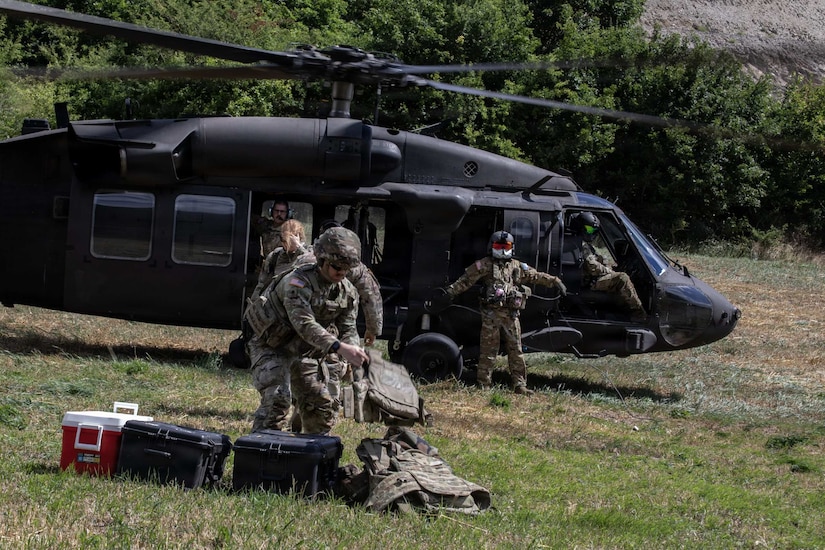
A man in a camouflage military uniform grabs gear from the ground in an open field as another person in similar attire takes gear to a helicopter sitting in the field in the background.

The realistic scenario challenged the NATO-led command's aviation, medical, maintenance and security personnel to coordinate a rapid response across the force's multinational footprint, reinforcing their ability to respond to real-world emergencies.

The exercise unfolded in deliberate phases. After an overdue aircraft report from Task Force Aviation's tactical operations center, aviation crews initiated an aircraft search and directed Tennessee Army National Guard medevac aviators to the aircraft's last known location.

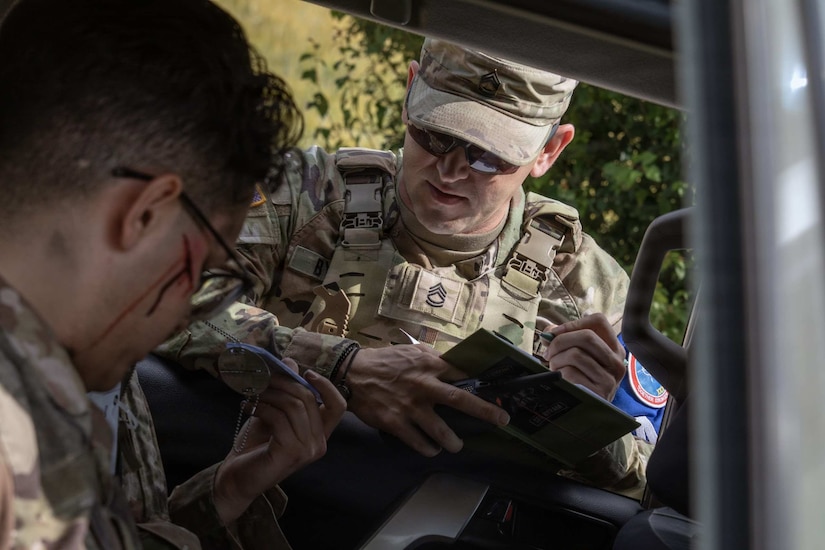
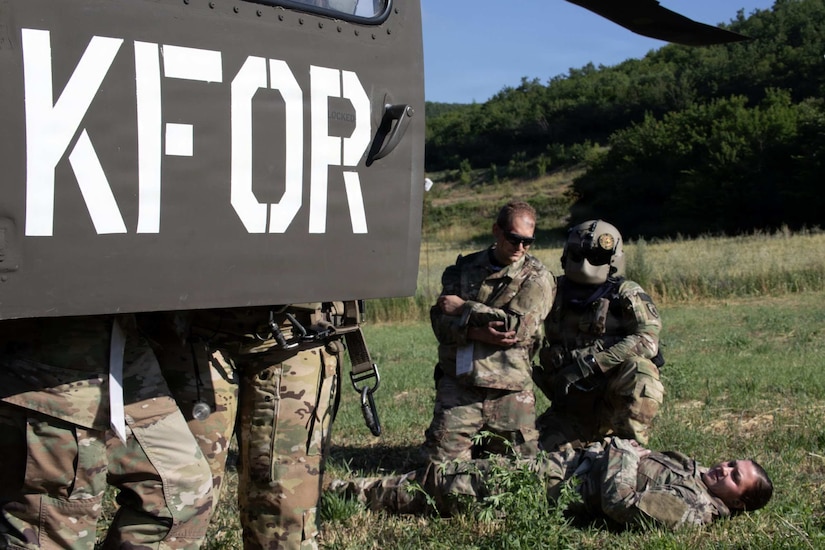
Shortly after, medevac crews arrived. Flight medics triaged wounded personnel while two patients were airlifted, and two others were transported by ambulance to the Camp Bondsteel medical facility.

A man in a camouflage military uniform writes in a notebook while talking to another man in similar attire sitting in car.

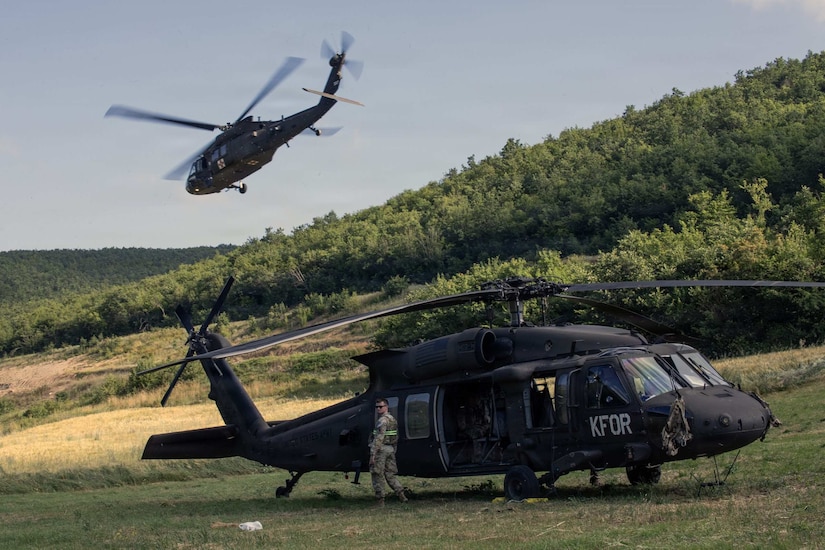
Finally, the downed aircraft recovery team, with maintenance specialists aboard another UH-60 Black Hawk, assessed whether the downed aircraft could be repaired on-site, recovered or required removal.

Unit leaders said the exercise tested command-and-control procedures and coordination across the force.

"We have a bunch of different battle drills within our [tactical operations center], one of which is an overdue aircraft procedure," said Army Capt. Alex Aleu, observer, controller and trainer for the exercise. "The exercise tested communications, battle tracking and the flow of critical information from our TOC up to the brigade joint operations center and back down to maneuver elements."

The training emphasized command relationships and the timing required to coordinate a rapid response.

"When you do an incident rehearsal with aviation, there are certain benchmarks you have to hit," said Army Chief Warrant Officer 4 Jimmy Huck, 53rd Infantry Brigade Combat Team aviation officer, adding that aviation assumes a 15-minute ready posture, tasking medevac assets first while notifying the brigade joint operations center to mobilize military police, maneuver quick-reaction forces and local law enforcement, when necessary.

A military helicopter takes off from a field while another helicopter is still on the ground.

Army Capt. Kevon Harris, Huck's brigade aviation counterpart, stressed the JOC's role.

"The JOC also alerts the brigade commander of all resources that are shifted to assist with a scenario of this kind," he said, noting that within four hours the exercise had all elements in place and patients were routed to appropriate care, a standard he called a success.

Medical response was another key focus of the exercise. Army 1st Lt. Lauren Sokolowski, 53rd Infantry Brigade Combat Team brigade medical officer, highlighted the importance of standardized casualty reporting and movement.

"Our job in medical operations is to facilitate nine-line medevac requests, making sure ground and air assets are tracking and helping with casualties," Sokolowski said, adding the exercise refined medical equipment and hands-on skills for both medics and nonmedical soldiers tasked with casualty cards and basic life support.

Two people in camouflage military uniforms tend to another person in similar attire lying on the ground in a field.

Interoperability remained a recurring theme. Aviation crews from multiple Army National Guard units simulated the downed flight crew; Colorado and Tennessee guardsmen performed the casualty lift; and quick-reaction and security responsibilities flowed between the Florida Army National Guard's 715th Military Police Company and the Latvian armed forces.

Meanwhile, the aircraft recovery team arrived with maintenance personnel to evaluate structural damage and develop a recovery plan — a deliberate, safety-first sequence that ensures the right technicians, tools and approvals are in place before recovery operations begin.

The exercise also underscored the value of rehearsal. Aleu said the training is an annual requirement that gains complexity in theater, offering opportunities to integrate NATO partners and host-nation responders in ways not possible at home.

"We practice this stuff stateside, but it's definitely more encompassing here with all the entities that can have a piece and play in the exercise," he said.

By day's end, the scenario gave the command vital practice in lifesaving timelines, multinational coordination and the logistics of aircraft recovery that are all core components of maintaining a safe, secure environment and protecting the people of Kosovo. These rehearsals keep the force ready when lives depend on speed, precision and teamwork.

Thursday, January 22, 2026

Alaska Army National Guardsmen Conduct a Nighttime Medical Evacuation

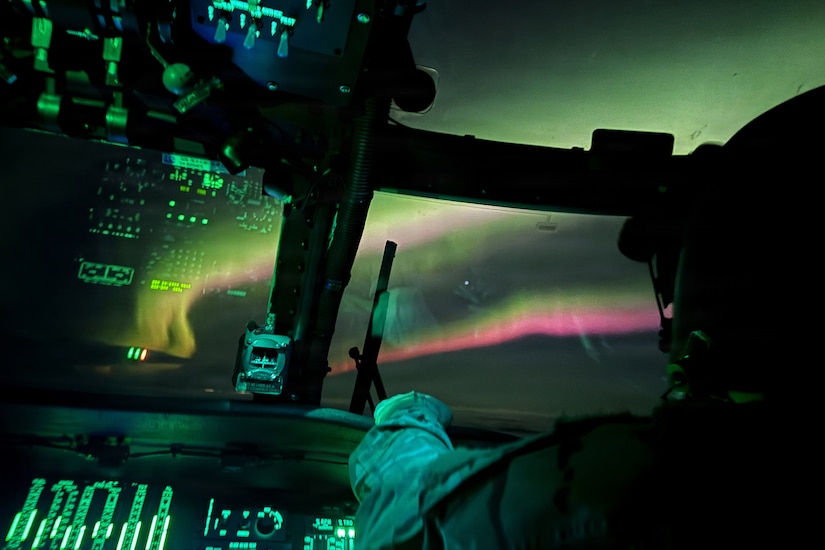
Alaska Army National Guardsmen assigned to the 207th Aviation Troop Command medically evacuated an individual Jan. 21 from Southwest Alaska. 

A helicopter pilot wearing a military uniform reaches his arm up toward the cockpit. In the night sky, a ribbon of soft colorful lights can be seen.

In response to a request for assistance from medical staff at Kanakanak Hospital, Dillingham, Alaska, the Alaska Rescue Coordination Center opened a medevac mission for an individual experiencing a medical emergency. 

Daylight restrictions prevented local civilian air ambulance services from conducting the mission.  

The Alaska Army National Guard accepted the mission and dispatched a UH-60L Black Hawk helicopter, based in Bethel, Alaska. 

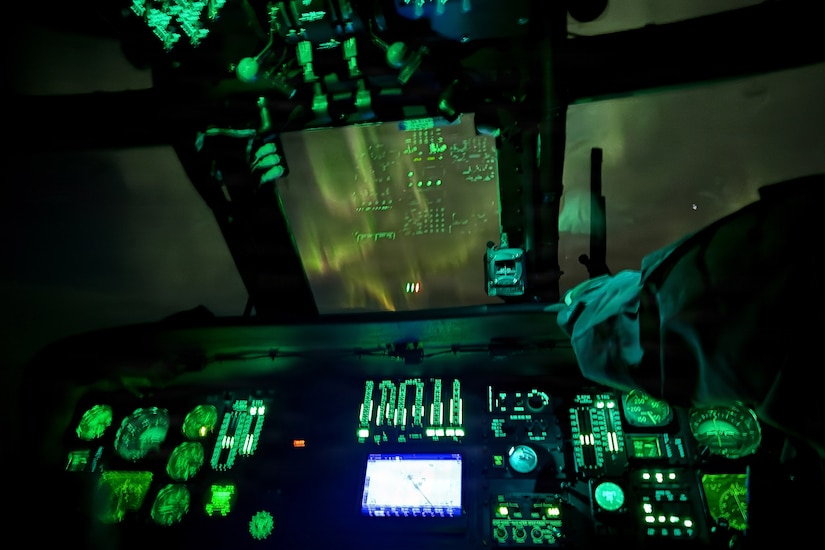
Using night-vision goggles, Alaska Army National Guard Black Hawk aviators Chief Warrant Officer 3 Bryan Kruse, Chief Warrant Officer 3 Colten Bell and Chief Warrant Officer 3 Nick Lime, with Bethel Fire Department medics Kelly Parker and Lauren Konig aboard, flew about 180 miles southeast to New Stuyahok, Alaska.

A helicopter pilot wearing a military uniform reaches his arm up toward the cockpit. In the night sky, a ribbon of soft colorful lights can be seen.

The Black Hawk crew arrived on scene and loaded the patient for transport to Dillingham, about 50 miles southwest. Parker and Konig rendered medical aid to keep the patient stable en route. 

Upon arrival in Dillingham, the patient was transported and released to Kanakanak Hospital staff. 

The effort continued the Alaska Army National Guard's ongoing relationship with western Alaska communities. 

The Alaska Army National Guard frequently supports emergency response operations across the state in partnership with the Alaska State Troopers, Alaska Rescue Coordination Center and local agencies. The Black Hawk crew, based in Bethel, Alaska, is not a designated rescue asset with hoist capabilities or paramedic teams. Despite that, the crew is crucial in supplementing traditional emergency services that are not often available in western Alaska, an area where rural communities are not connected by roads.