Showing posts with label Medal Honor. Show all posts

Monday, June 08, 2026

Medal of Honor Monday: Army 2nd Lt. Walter D. Ehlers

Army 2nd Lt. Walter D. Ehlers served in Europe and North Africa as an infantryman during World War II.
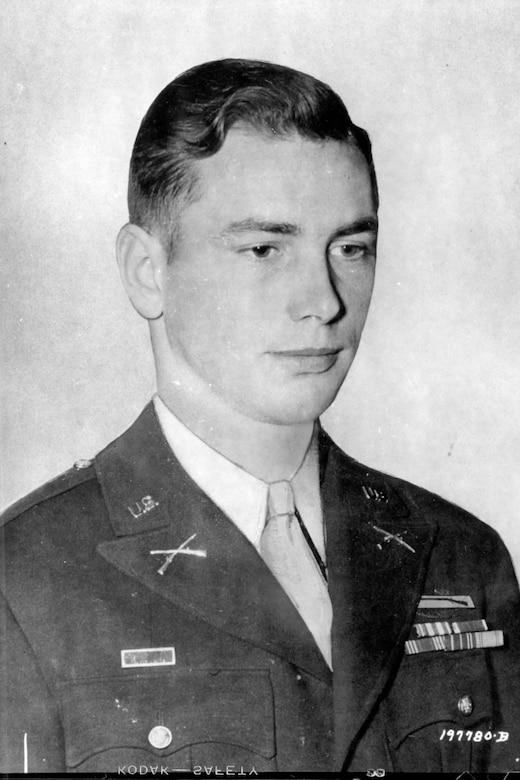
A man wearing an Army dress uniform poses for a photo.

He was born, May 7, 1921, on a farm in Junction City, Kansas, to John and Marie Ehlers. He married Dorothy Decker in 1955. They had three children and many grandchildren. 

Ehlers and his older brother Roland enlisted in the Army in October 1940 and completed basic training at the Presidio of San Francisco. 

They served together in the 1st Infantry Division, fighting in North Africa from November 1942 to May 1943, and in Sicily in July and August 1943. 

After Sicily, the brothers were split up and assigned to different units to lessen the chance that both would be killed. Both were squad leaders with the rank of sergeant during the June 6, 1944, D-Day landings on Omaha Beach in Normandy, France.

The landing craft that Roland was on was hit by a German artillery round, just as it hit the beach, killing him and his entire squad.
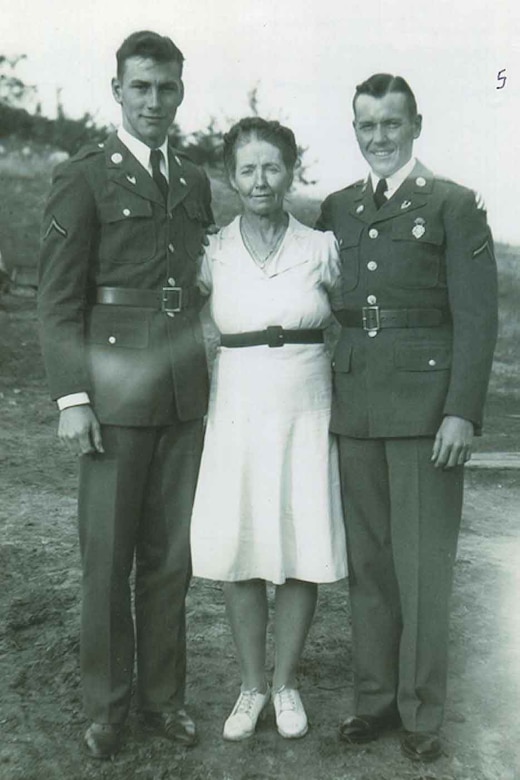
Two men wearing military uniforms and a woman pose for a photo.

That day, Ehlers led his squad — 3rd Squad, 3rd Platoon, Company L, 3rd Battalion, 18th Infantry — across the beach and up a bluff, where they captured German machine gunners manning a pillbox. 

On June 9, 1944, Ehlers was leading his squad through a field when they were ambushed by German machine guns. Ehlers ran around the German flank, killing a number of them. 

The next day, his squad crossed an open field toward enemy positions. When the Germans opened fire, Ehlers and his automatic rifleman jumped up out of cover and began shooting into enemy positions, drawing all attention to themselves while the rest of the men escaped. Although he was wounded, Ehlers carried a wounded comrade to the rear for treatment. 

His Medal of Honor is for valor on those two days. 

Shortly thereafter, Ehlers was promoted to staff sergeant and then to second lieutenant, in recognition of his leadership. In March 1945, he led his platoon across the Rhine River at the bridge over Remagen, Germany. The following month, he was wounded in the leg and hip by friendly fire. 

His Medal of Honor was presented to him by Army Lt. Gen. John C.H. Lee in Paris. Lee had also made the D-Day landings.
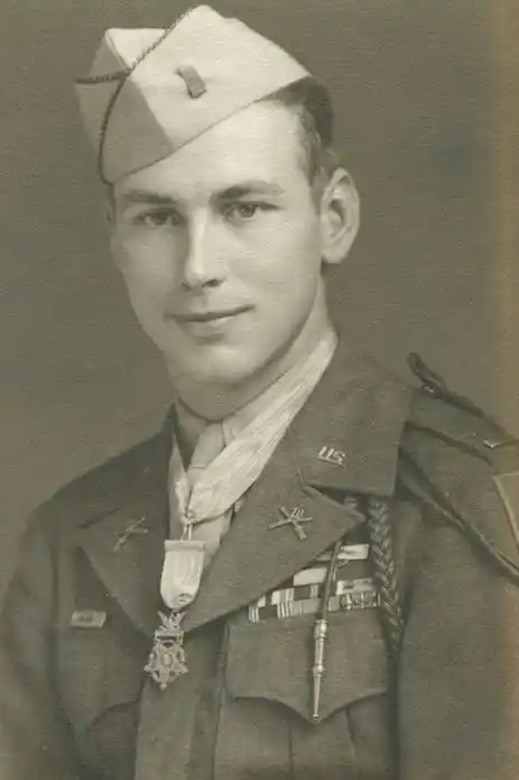
A man wearing a military uniform and a medal around his neck poses for a photo.

After World War II ended, Ehlers moved to California and worked for the Veterans Administration. 

On June 6, 1994, marking the 50th anniversary of the D-Day invasion, Ehlers returned to France and gave a speech on Omaha Beach. President Bill Clinton and Queen Elizabeth were also in attendance. 

"I pray that the price we paid on this beach will never be mortgaged, that my grandsons and granddaughters will never face the terror and horror that we faced here," Ehlers said in his speech. "But they must know that without freedom there is no life, and that the things most worth living for may sometimes demand dying for."  

Ehlers appeared in the 1955 film "The Long Gray Line," starring Tyrone Power. Power served in the Marine Corps during World War II. 

Ehlers died Feb. 20, 2014. He was the last surviving Medal of Honor recipient who participated in the D-Day landing in Normandy. 

He is buried at Riverside National Cemetery in Riverside, California. His medal is on display at the National WWII Museum in New Orleans. 

Monday, June 01, 2026

Medal of Honor Monday: Army Pfc. Charles N. DeGlopper

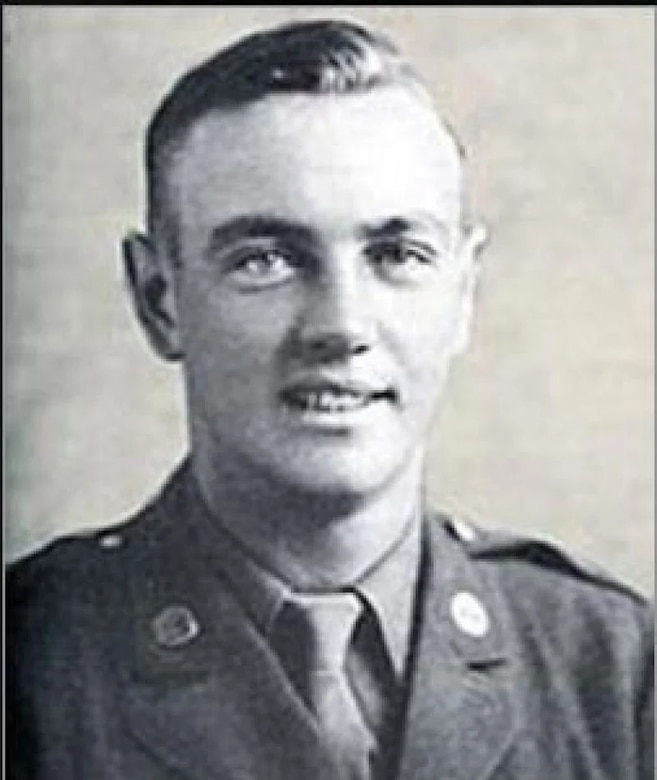
Army Pfc. Charles N. DeGlopper served as a paratrooper during World War II in North Africa and Italy. However, it was for his selfless actions in France, three days after D-Day, that earned him the Medal of Honor posthumously.

A man in a formal military uniform smiles for a portrait.

DeGlopper was born in Grand Island, New York, Nov. 30, 1921, to Charles and Mary DeGlopper. He grew up on a cattle farm and was the youngest of his siblings: John, Robert and Lillias. DeGlopper attended a one-room school until eighth grade, then graduated from Tonawanda High School in 1941.  

He didn't play sports in high school; instead, he joined a bachelors' club for cooking and sewing with his childhood friend Harold Long, according to Long during a 2022 interview with Niagara Frontier Publications.  

"We had a great time. The teacher always said, 'We've got to teach you sewing.' But we wanted to cook. That's how I got to know Charlie," Long recalled. 

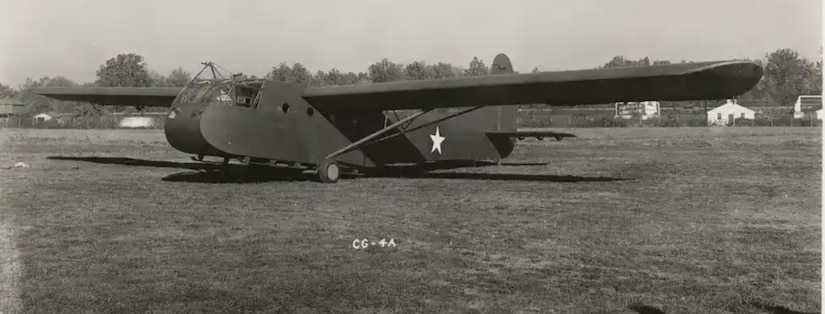
DeGlopper enlisted in the Army in November 1942 when he received his draft notice. It was difficult to fit the 6-foot-7-inch-240-pound private in uniform, since he wore size 15 boots. Following basic training at Camp Croft, South Carolina, he boarded a ship in April 1943, serving with Company C, 325th Glider Infantry Regiment, 82nd Airborne Division.

A black-and-white photo of a World War II-era glider sitting in a grassy field.

On June 9, 1944, after crash-landing his glider near the Normandy town of Sainte-Mère-Église, France, he was advanced with the forward platoon to secure a bridgehead across the Merderet River at La Fière, France. 

"At dawn, the platoon had penetrated an outer line of machine guns and riflemen, but in so doing had become cut off from the rest of the company. Vastly superior forces began a decimation of the stricken unit and put in motion a flanking maneuver, which would have completely exposed the American platoon in a shallow roadside ditch where it had taken cover," his Medal of Honor citation reads. 

Detecting this danger, DeGlopper volunteered to support his comrades by firing his automatic rifle while they attempted a withdrawal through a break in a hedgerow. 

With disregard for his own safety in a concentration of enemy automatic weapons fire, he walked from the ditch onto the road in full view of the Germans. He sprayed the hostile positions with assault fire. 

"He volunteered to cover the movement of his buddies to more advantageous terrain. Standing at 6'7" tall, it was hard for him not to be conspicuous. He certainly knew that he would be an easy target for the Germans, for the Nazis. Yet, with remarkable bravery, he acted above and beyond the call of duty to protect his fellow soldiers and accomplish the mission," said Army Maj. Gen. David Conboy, who served as the guest speaker during a 2024 ceremony to dedicate a park to DeGlopper in his hometown.  

Although wounded twice, DeGlopper continued firing. Kneeling in the roadway, weakened by his wounds, he leveled his weapon against the enemy and fired burst after burst until he was killed.  

He was successful in drawing the enemy action away from his fellow soldiers, who continued the fight from a more advantageous position and established the first bridgehead over the river.  

In the area where he made his intrepid stand, his comrades later found the ground strewn with dead Germans and many machine guns and automatic weapons.  

On March 10, 1946, DeGlopper's father received the Medal of Honor from Army Maj. Gen. Leland S. Hobbs at Trinity Evangelical United Brethren Church in Grand Island. 

Hobbs had commanded the 30th Infantry Division at Normandy. 

"He did all he could. We did all we could. Nothing more could be done. Charles DeGlopper did not fear fear. He admitted it. It should be a lesson to all of us," said Hobbs at the ceremony, according to the March 11, 1946, newspaper "The Buffalo News."

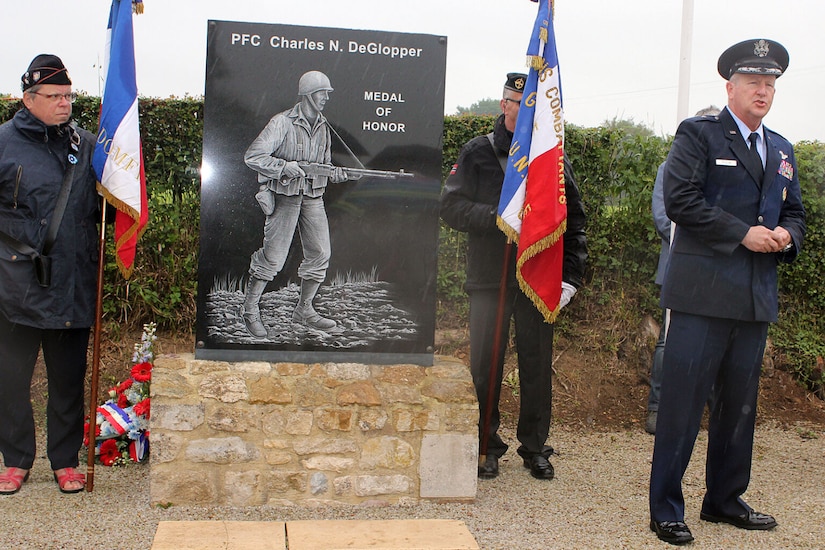
A man in a formal military uniform speaks outdoors in front of a plaque featuring a soldier holding a weapon. Behind him are two men in similar attire, holding flags on each side of the plaque.

His legacy lives on in his hometown and throughout the Army. 

On Dec. 3, 1947, the Army Transport Englin Victory was renamed the Pvt. Charles N. DeGlopper at the Brooklyn Army Base in Brooklyn, New York. A road at Fort Bragg, North Carolina, is named for him, and in January 2015, the Fort Bragg Air Assault School was dedicated and renamed the DeGlopper Air Assault School.  

The Army Reserve Training Center in Tonawanda, New York, is named the Charles DeGlopper Center. On June 9, 2024, 80 years after he paid the ultimate sacrifice, his hometown dedicated the DeGlopper Memorial Park with a rifle salute and a military helicopter flyover. 

DeGlopper is buried in Maple Grove Cemetery in Grand Island.

Monday, March 16, 2026

Medal of Honor Monday: Navy Petty Officer 1st Class Francis Pierce

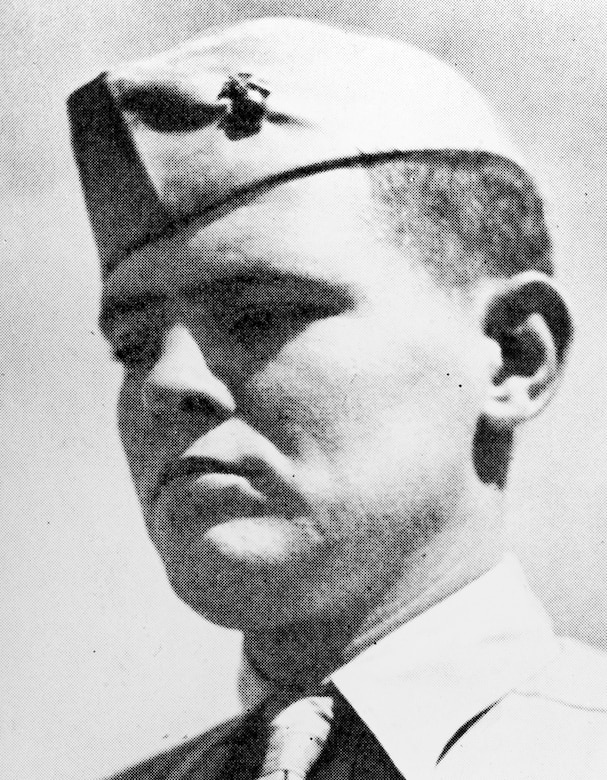
As the chaos of World War II's Battle of Iwo Jima unfolded, Navy Petty Officer 1st Class Francis Junior Pierce refused to leave any wounded men behind. The hospital corpsman showed fearlessness throughout the turmoil. That valor led him to receive the Medal of Honor. 

A man in a military cap looks stoic while looking toward the ground.

Pierce was born Dec. 7, 1924, in Earlville, Iowa, to Frank and Rose Pierce. He grew up on a farm and had a younger brother named Donald.

Pierce turned 17 the day Pearl Harbor was attacked by Japan, which thrust the U.S. into World War II. Shortly thereafter, he enlisted in the Navy to do his part for the war effort.

After completing training to be a hospital corpsman, Pierce served the early part of the war at various duty stations in the Carolinas. He rose to the rank of pharmacist's mate before being transferred in January 1944 to the newly activated 4th Marine Division in Camp Pendleton, California. Soon after, the unit was deployed to the Pacific.

Pierce's first time in combat was in February 1944 during the Marshall Islands campaign, when the division landed on Roi-Namur, a small island in the Kwajalein Atoll. During that battle, Pierce saw fighting that made him reject the corpsman's code to remain unarmed. Going forward, he was never without a submachine gun. According to naval historians, he "used it so effectively that the Marines nicknamed him 'the Angel with a Tommy Gun.'"

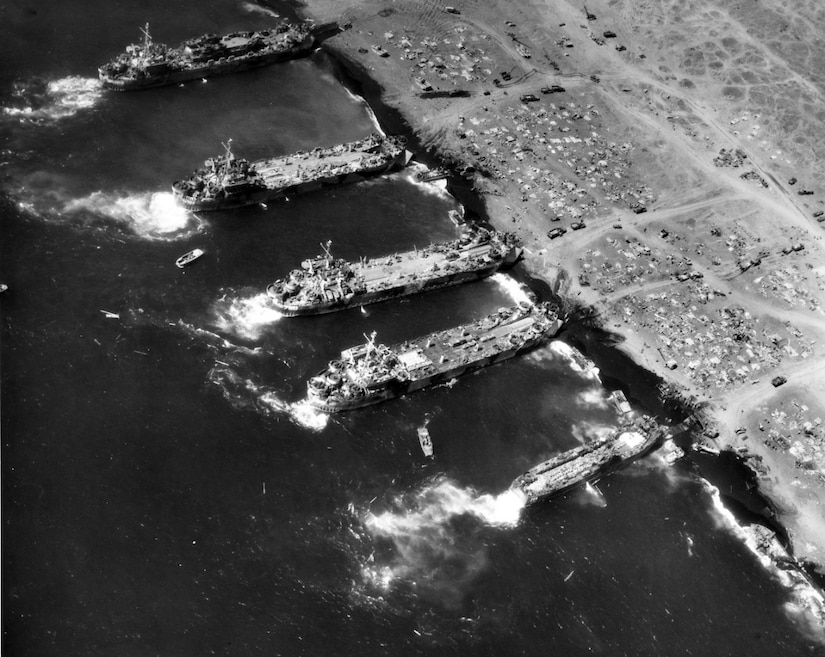
An aerial view of four large ships beached along a shoreline to deliver supplies.

For the rest of the year, Pierce's unit, the 2nd Battalion, 24th Marines, remained almost continuously in combat, fighting on the islands of Saipan and Tinian in the Mariana Islands chain.

Their next stop — Iwo Jima, a tiny volcanic island that, if taken from the enemy, would put Allied aircraft in striking distance of the Japanese mainland. It became the bloodiest campaign of the war for the Marine Corps, a monthlong battle in which 27 men later received Medals of Honor for their heroics, including Pierce.

Throughout the battle, Pierce carried out dangerous volunteer missions that put him under near-continuous enemy fire. He became an expert on the terrain, going back and forth about 25 miles of the landscape to memorize details and draw a map marking enemy forces he'd encountered.

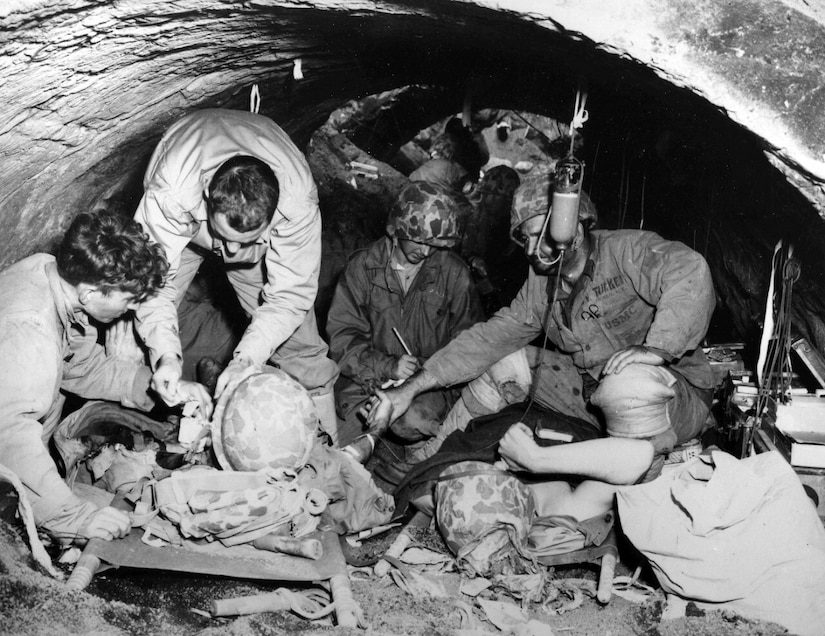
Four men stand or kneel above two men on stretchers, giving them aid. All are in a small concrete shelter not high enough to stand up in.

On March 15, 1945, Pierce was in a group of medics who were carrying two wounded Marines to an aid station when they got caught in heavy enemy fire that injured a corpsman and two stretcher bearers. Pierce quickly took charge and carried the newly wounded men to a shelter, where he gave them first aid and directed them toward an evacuation route.

Pierce then stood out in the open and blasted his weapon toward the enemy to draw their fire, giving six other stretcher bearers a chance to reach cover. From there, he focused on the Marines who'd been injured before the latest chaos erupted.

As Pierce was attending to the profuse bleeding of one of the Marines, the victim was struck again by a bullet from an enemy hiding in a cave about 20 yards away. With no concern for his own safety, Pierce put himself in harm's way to draw out the attacker and kill him using the last of his ammunition.

Now unarmed, Pierce lifted the wounded Marine onto his back before moving across 200 feet of open, bullet-strewn terrain to get him to safety. It was a harrowing trip, but Pierce pushed through his exhaustion — as well as warnings from his peers — to go back across the same fire-swept path to rescue the second Marine. That effort paid off, and they both reached safety.

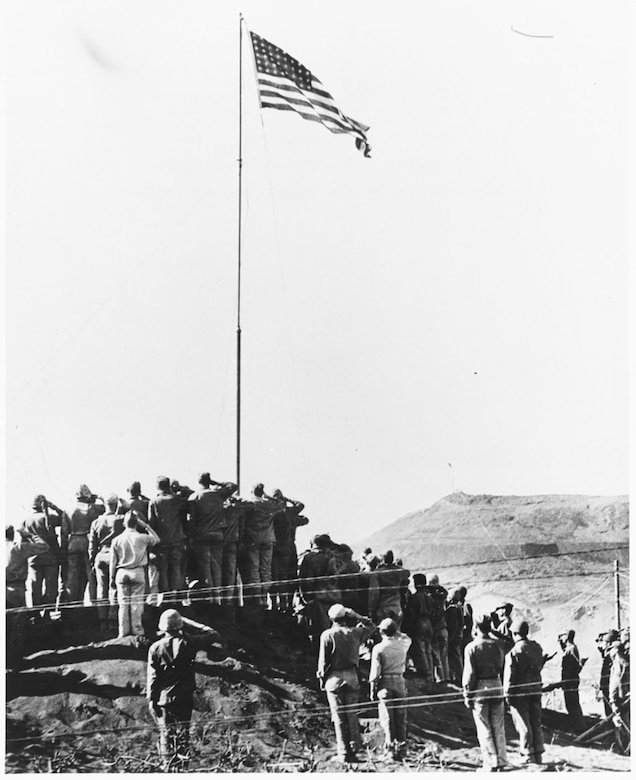
Dozens of men stand on a small, desolate hill to salute an American flag that’s been raised on a tall flagpole.

The next day, Pierce led a combat patrol to a sniper's nest. As he was attending to a stricken Marine, he was shot in the shoulder and suffered shrapnel injuries. Pierce refused aid for himself, though, instead directing others to continue attending to the wounded Marine's treatment while he laid down cover fire for their protection.

Pierce's fearless actions inspired his entire battalion. He was initially awarded a Silver Star and the Navy Cross, but they were later combined and replaced by the Medal of Honor.

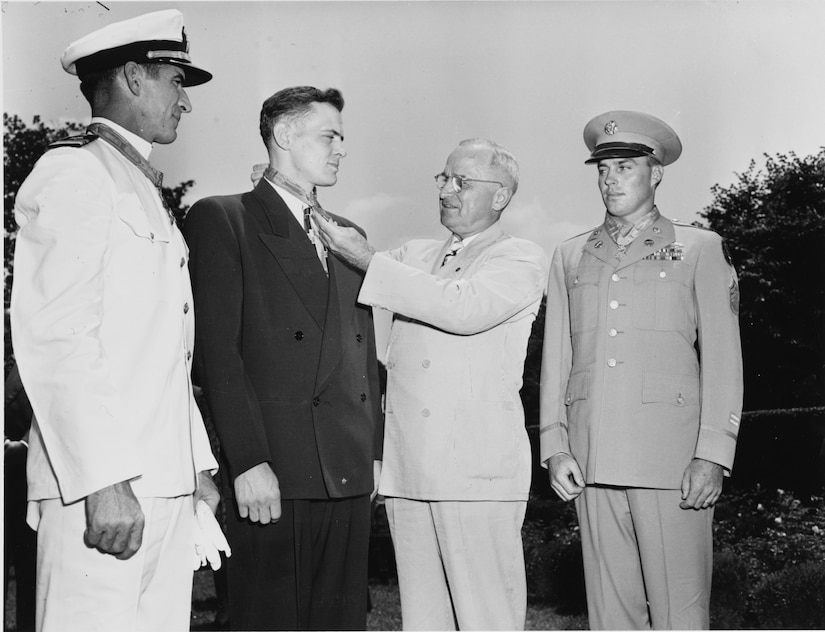
Pierce received the nation's highest honor for valor on June 25, 1948, from President Harry S. Truman during a White House ceremony. The medal was also bestowed upon Army Staff Sgt. John R. Crews and Navy Lt. Cmdr. Jackson Charles Pharris that day.

Aside from Pierce, three other pharmacist's mates were awarded the Medal of Honor for their actions on Iwo Jima: Navy Petty Officer 3rd Class Jack Williams, Navy Petty Officer 2nd Class George Wahlen and Navy Petty Officer 1st Class John Willis. 

Three men in formal military uniforms stand together, with a man in business attire standing in the center, who places a medal around the neck of the man in the middle.

Pierce was discharged from the Navy in 1945 and worked for a short time as a logger back in his home state. Later that year, however, he moved to Grand Rapids, Michigan, to finally meet Lorraine Decker, with whom he'd been corresponding throughout the war, according to the Grand Rapids Press newspaper. The pair married in August 1946 and had two sons.

Pierce went to work as an officer for the Grand Rapids Police Department, working his way up the ranks from beat patrolman to deputy chief by the time he retired in 1982. The Grand Rapids Press said among his many duties, he was the city's bomb disposal expert.

After Lorraine Pierce died in the 1970s, Pierce spent his remaining years with his second wife, Madelyn, before succumbing to lung cancer on Dec. 21, 1986, at age 62.

Pierce is buried in Holy Cross Cemetery in Grand Rapids.

In 2003, toy maker Hasbro released a commemorative G.I. Joe figurine of Pierce. To date, he's the only hospital corpsman to be honored with his own action figure.