Showing posts with label HH-60W Jolly Green II. Show all posts

Thursday, February 12, 2026

Air Forces Southern Airman Integral to Rescue Off Coast of Mexico

 Feb. 12, 2026 | By Andrea Jenkins, Air Forces Southern

Air Force rescue aircrews assigned to the 563rd Rescue Group, supported by Air Forces Southern, conducted a long-range water rescue of a civilian aboard a tanker in the Pacific Ocean off the coast of Mexico, Feb. 5.
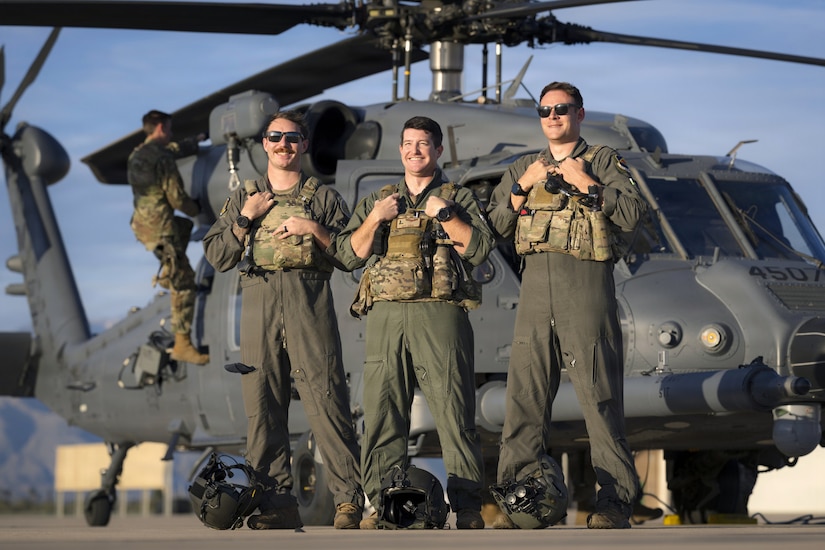
Three men wearing flight suits pose for a photo in front of a helicopter. A man in similar attire is climbing up the side of the helicopter in the background.

The mission underscored how training, experience and cross-unit integration enable Air Force rescue forces to respond when time, distance and personnel availability converge. 

The mission began when the Air Force Rescue Coordination Center received a request for assistance from the crew of the Maran Gas Olympias, a Greek-flagged liquefied natural gas tanker operating more than 340 nautical miles offshore. A civilian aboard the vessel was experiencing a serious medical emergency that required immediate advanced medical care. 

Because of limited helicopter pilot availability, 563rd Rescue Group leaders reached out to Air Force Lt. Col. Jeff Budis, chief of exercises and airshows assigned to the Air Forces Southern operations directorate. An HH-60W Jolly Green II pilot with over 2,000 flight hours, Budis was asked to integrate into the operation based on his extensive rescue experience. While assigned to Air Forces Southern, Budis maintains his rescue pilot qualifications and continues flying with the rescue group to remain mission-ready. 

"This mission is a shining example of what rescue does," Budis said. "Being ready to go at the drop of a hat — that's why we train the way we do. These missions are unpredictable. They don't come around often, but when they do, you have to be ready; training is what makes that possible." 

Budis served as an aircraft commander and supporting flight lead, overseeing mission planning and execution, including fuel planning, risk management and long-range overwater coordination.
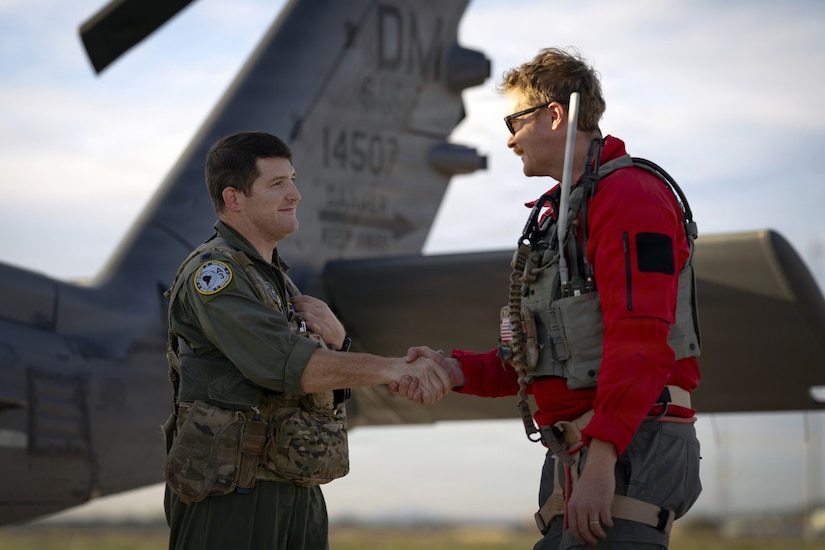
Two men in flight suits shake hands in front of an aircraft.

"The call wasn't about where I was assigned — it was about having the right experience available when it was needed," he said. "My role was to integrate into the team and help execute the mission safely." 

Two HH-60W helicopters assigned to the 55th Rescue Squadron, supported by an HC-130J Combat King II, launched toward the vessel. The extended distance required detailed mission planning, multiple helicopter air-to-air refueling events, and close coordination among aircrews, pararescue teams and tanker crews. The 79th Rescue Squadron HC-130J Combat King II conducted refueling events, transferring more than 13,000 pounds of fuel to extend the helicopter's range and time-on-station. 

"Flying hundreds of miles over open ocean is inherently high risk," Budis said. "If anything goes wrong during air refueling, you're suddenly talking about more survivors than the one you were sent to save." 

Once on scene, 48th Rescue Squadron pararescue personnel boarded the vessel and assessed the patient, determining he required evacuation for higher-level care. While the primary medical team conducted the initial assessment, supporting aircraft managed fuel and timing constraints to ensure the mission could continue safely. 

"They packaged the patient on the bow of the ship, hoisted him off and we flew through the night to Cabo San Lucas, [Mexico]" Budis said. "From there, he was transferred to Mexican medical authorities for continued treatment."
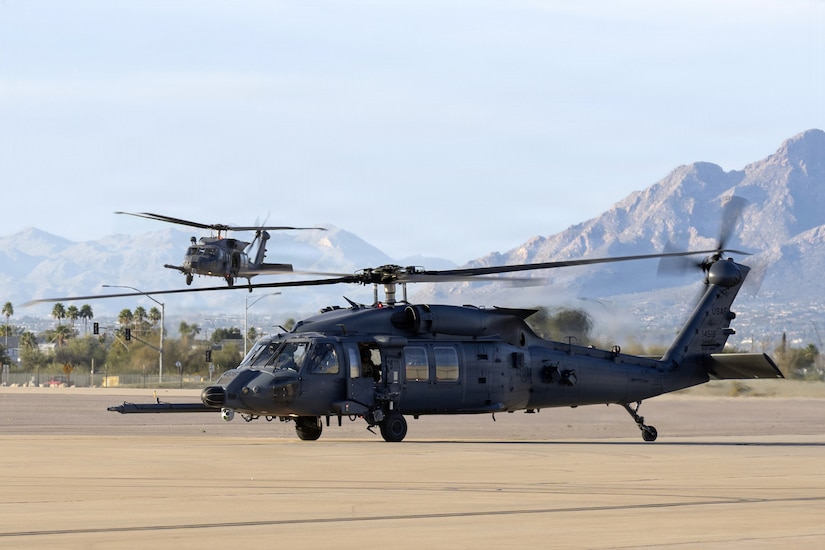
A helicopter hovers over a tarmac while another hovers in the background. There are mountains and a city in the distance.

The patient was transported ashore in stable condition. 

Air Force Capt. Nate Delaney, chief of plans and exercises and HH-60W pilot assigned to the 55th Rescue Squadron, who flew alongside Budis during the mission, said the operation highlighted the strength of standardized training and trust across the rescue enterprise. 

"Even when crews don't fly together every day, the standards are the same," Delaney said. "Everyone understood their role, trusted the plan and focused on one thing — getting the patient the care he needed and bringing the team home safely."

"We fly with different people all the time, but we all train to the same standards," he added. "That's what allows us to trust each other and execute every mission safely; it comes down to standards and training," Budis said. "We fly with different people all the time, but we all train to the same standards, so we know what to expect and how to trust each other." 

For Budis, missions like this directly inform his work overseeing exercises and training across the U.S. Southern Command area of responsibility.
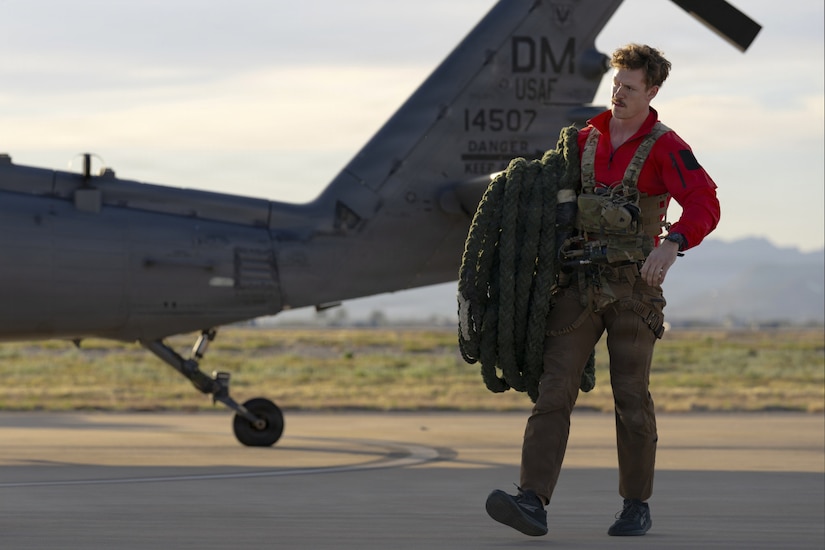
A man wearing flight gear carries a big rope wrapped around his right shoulder. There is the tail of an aircraft in the background.

"Everything I do in exercises is informed by real missions like this," Budis said. "It's easy to draw from real experience when planning and training." 

At the end of the day, he said the mission reflects the core principle that drives the Air Force rescue community. 

"These things we do, that others may live," Budis said. 

Friday, September 26, 2025

Maritime Medical Response: 129th Rescue Wing Stabilizes Mariner 700 Nautical Miles Offshore

Sept. 25, 2025 | By Air Force Master Sgt. Joseph Prouse, 129th Rescue Wing

A Guardian Angel pararescue team assigned to the 129th Rescue Wing, California Air National Guard, stabilized a Filipino mariner aboard the Panamanian-flagged cargo ship Grand Vega after reports of stroke-like symptoms during a two-day search and rescue operation approximately 700 nautical miles off the California coast. 

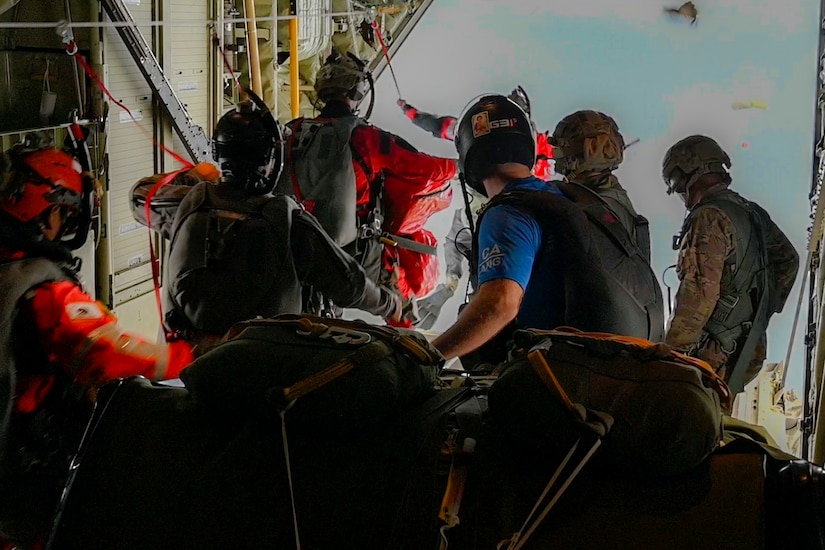
Four people stand at the door of an open aircraft and prepare to jump.

U.S. Coast Guard District 11 relayed the alert in coordination with the Air Force Rescue Coordination Center. The Grand Vega was crewed primarily by Filipino mariners. 

The wing launched an HC-130J Combat King II on Sept. 18, carrying five Guardian Angel team members — pararescuemen and a combat rescue officer — to plan for various sea state contingencies and ensure the team could access the ship upon arrival. Pre-mission planning emphasized multiple insertion options for varying sea states to ensure patient care would not be delayed by conditions. 

Four pararescuemen conducted a maritime parachute insertion with a boat package, accessed the vessel, and moved below deck to assess and stabilize the patient for transfer. A follow-on recovery package launched from Moffett Air National Guard Base the next morning. The package included one HH-60G Pave Hawk and one HH-60W Jolly Green II, while an additional HC-130J provided command-and-control and air-to-air refueling support. 

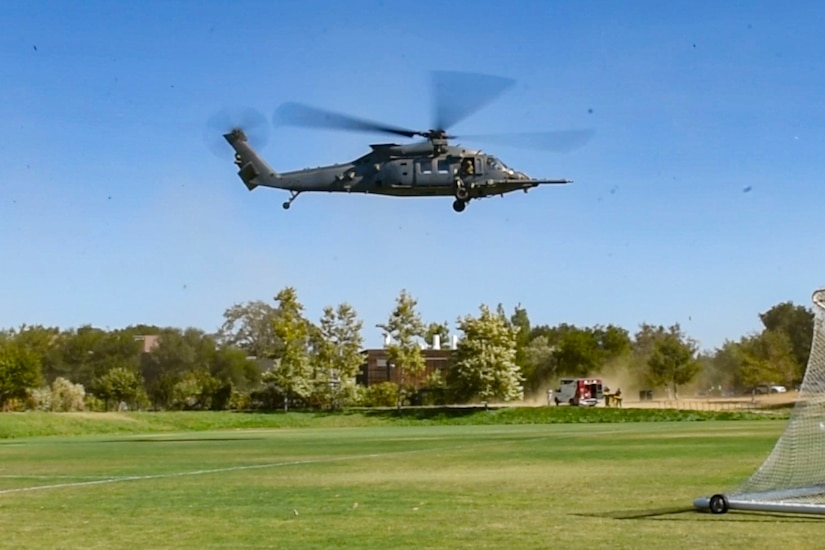
A helicopter hovers in a blue sky over a grassy field with trees in the background and a soccer goal in the foreground.

"This mission demonstrates disciplined planning, swift insertion and expert patient care at an extreme distance," said Air Force Maj. Coda Brown, 129th Operations Group. "Our Guardian Angel teams, rotary-wing crews and HC-130J aircrews integrate seamlessly with the U.S. Coast Guard to save lives when both minutes and miles matter."  

Brown noted that interagency cooperation is critical to maritime safety and security in the Pacific region. 

The patient was hoisted to a helicopter and transported to Stanford Hospital, where local paramedics were staged at the landing zone to complete the handoff for a higher level of care. Officials said the rapid transfer is expected to improve the patient's outcome. 

"I am incredibly grateful to be part of this mission, but most importantly, I am happy the patient received the care he needed, and all members returned home safely," said a pararescueman with the 131st Rescue Squadron. 

Unit officials said the operation is recorded as the wing's first life saved with the HH-60W and possibly the final life saved with the HH-60G, marking a conversion milestone for the 129th Rescue Wing. Unit leaders said this achievement underscores the wing's ongoing commitment to modernizing its fleet and maintaining high operational readiness, adding that the response reinforces the 129th Rescue Wing's enduring ties with key partner nations and allies, including the Philippines, and demonstrates the unit's commitment to saving lives. The mission's strategic effects build Pacific proficiency and validate the wing's vital role in the region. 

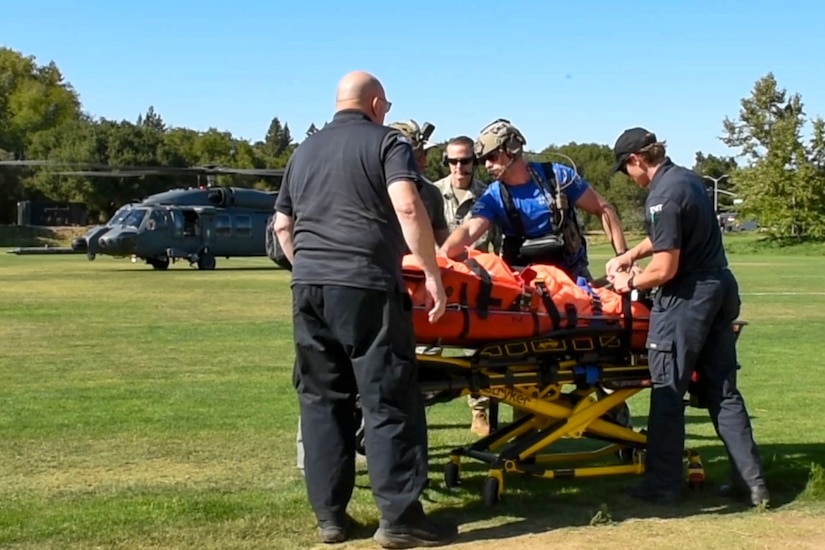
Five people secure a person to a medical transport stretcher in a grassy field with a helicopter behind them.

Behind the scenes, maintainers, weather and intelligence professionals, aircrew flight equipment specialists, logistics personnel, communications experts, command post staff and medical specialists enabled the response. 

The 129th Rescue Wing provides worldwide combat search and rescue, as well as civil search and rescue capabilities. The wing operates HH-60G/HH-60W helicopters, HC-130J aircraft and Guardian Angel teams in support of joint and interagency partners, including the Coast Guard. 

The mission marks the wing's 1,169th life saved.