Thursday, March 19, 2026

Fit to Fight, Fit to Finish: 18-Time Marathoner Models Air Force Readiness

The sound of pounding feet on asphalt synchronized to Air Force Senior Master Sgt. Tiffany Hallmark's heartbeat as she crossed the mile 20 mark. Doused in sweat, stomach involuntarily empty since mile 7, Hallmark anguished through the final 6.2 miles toward the finish line. In her 18th marathon, she knew the feeling of triumph would follow this pain.
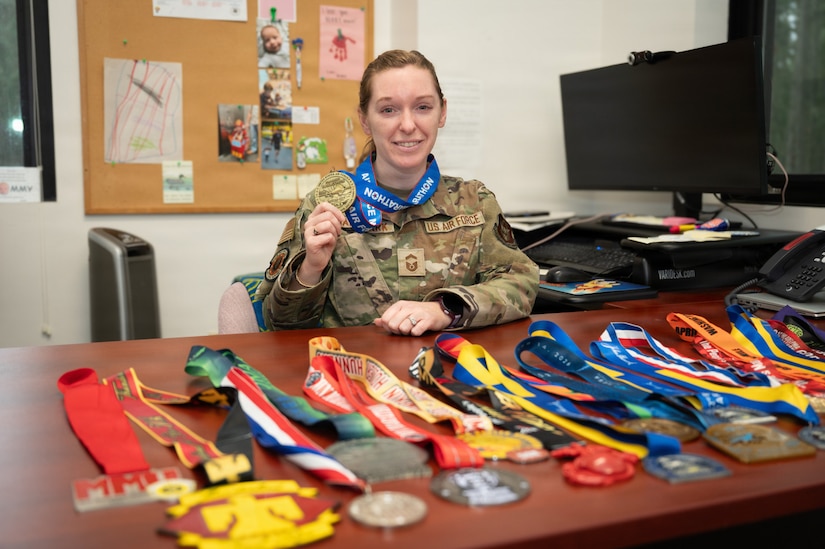
A woman wearing a camouflage military uniform sits at a table with multiple racing medals and awards. The woman is holding up one of the medals as it hangs around her neck.

"At some point in every one of those races I've wanted to walk off the course," she explained. "And I can tell you there have been many points in my military career when it'd been like that ... but it's about being able to persevere through those hard things while also concentrating on what you're in right now." 

This mental resilience has been crucial during her diverse Air Force career. She credited her success to mindfulness and treating professional challenges like miles in a race. 

"When you're running, it's about concentrating on the mile you're running right now," Hallmark said. "I know I have 20 miles left, but I am only going to think about mile 6. And so, in the military, I've really tried to do that."

That focus is the bedrock of a grueling training regimen that precedes every race. Preparing for a marathon is a monthslong commitment involving more than just long-distance runs.

A woman wearing athletic gear jogs around a track.

Hallmark's typical training week consists of speed workouts, tempo runs to build endurance, recovery days, cross-training and one progressively longer run that can last for hours — all supported by a strict focus on nutrition and hydration. Her daily running habit evolved into a more balanced and sustainable approach to fitness. 

"Before I had my kids, I was running 80-90 miles a week and the amount of food you have to eat for that is ridiculous," she confessed. "Even though I was eating what most people would consider, for my weight and size, an insane amount of food … it was not enough."

Running has always been a constant in Hallmark's life, something she can rely on. But finding the balance of fitness that works for her body, mind and busy schedule was a challenge. Now, she compares her running routine to being as normal as having a morning coffee. 

"Now that I have a coach helping me, I am running 55 miles a week," she said. "My weight maintains, and I feel strong on my runs."

A woman wearing athletic gear bends down to tie her sneakers.

That philosophy of finding a balanced, effective approach extended directly to her work. As the chief of cyber operations for the 446th Force Support Squadron at Joint Base Lewis-McChord, Washington, her leadership focuses on her people. Air Force Senior Master Sgt. Dwyane Williams, her noncommissioned officer in charge, praised her mentorship.

"Hallmark exemplifies the Air Force core values, and she motivates us in more than just fitness," Williams said. "She is a great asset to the team." 

Her holistic approach to readiness embodies a recent shift in the service. The Air Force introduced new standards and scoring models to its Physical Fitness Readiness Program. This new program is designed to better prepare airmen for modern challenges and to help them stay healthy for their entire careers. 

For Hallmark, this focus on the whole person has always been her primary mission.

A woman wearing athletic gear jogs around a track.

"We are all giving something to the military, but I want to help my people become the best version of themselves too," she explained. "I am passionate about that, about taking care of people — that's what I want to do every day." 

In the end, Hallmark said every finish line crossed serves as a powerful reminder. That feeling of hard-won triumph as she crossed the finish line of that 18th marathon is what she strives to replicate in her squadron. By showing her people how to endure the race with a steady pace, she ensures they are not only fit to fight, but ready to finish strong, delivering the resilient and combat-ready airmen the Air Force needs to succeed. 

Wednesday, March 18, 2026

101st Airborne Division Tests Next-Generation Drones During Live-Fire Exercise

The 101st Airborne Division tested its ability to integrate unmanned aircraft systems to support ground forces during a live-fire exercise, March 12 at Fort Campbell, Kentucky.

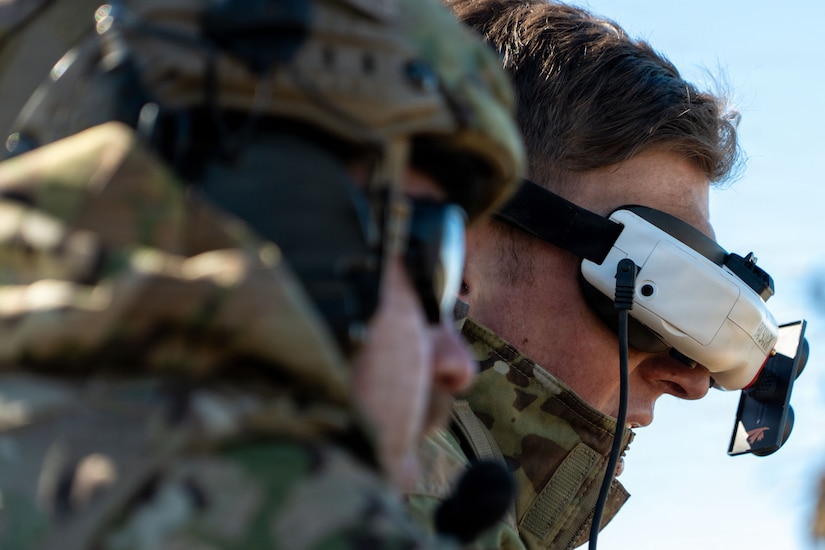
A close-up image of a man wearing a camouflage military uniform with a drone headset on. There is another man in similar attire in the foreground.

"We are no strangers to innovation here on Fort Campbell," said Army Brig. Gen. Travis McIntosh, deputy commanding general of operations for the division. "Drones are reshaping the geometry of the battlefield in real time and we must adjust. Distance and sanctuary no longer provide the protection they once did, and mass and speed of decision-making will increasingly be enabled by autonomy and [artificial intelligence]. This event tested and proved these assumptions for us."

Advancing Secretary of War Pete Hegseth's directive for drone dominance, the division used UAS operators assigned to its 1st Mobile Brigade Combat Team, 2nd Mobile Brigade Combat Team and 101st Combat Aviation Brigade to fly multiple UAS alongside the 5th Special Forces Group.

The sortie, which consisted of an MQ-1C Gray Eagle, C100 small UAS and Attritable Battlefield Enabler 1.01 drone, provided aerial clearance for the Special Forces soldiers during the exercise.

"Drones are a great tool for over-the-hill reconnaissance," said Army Spc. Basil Holland, an infantryman and small UAS operator assigned to the 1st Battalion, 502nd Infantry Regiment. "They have a lot of ability to identify short- and medium-range targets and get eyes on whatever you need. It's proven to be super useful."

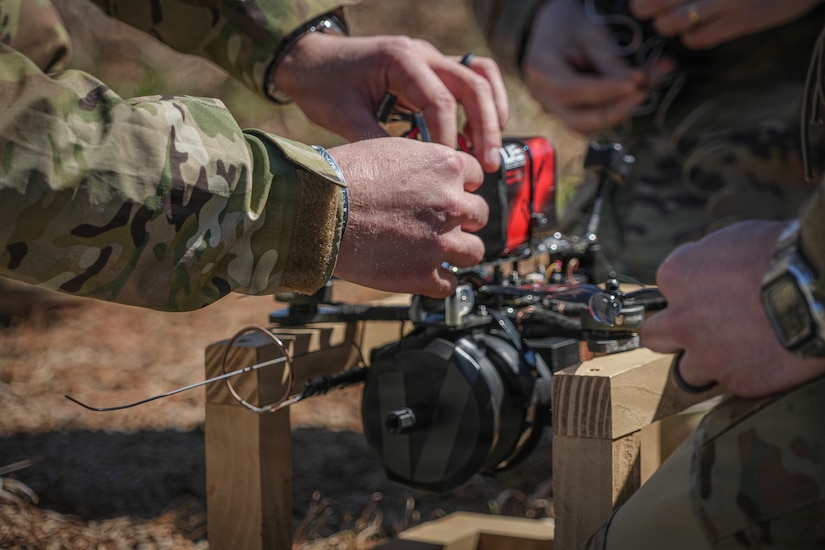
A close-up image of a person's hands as they work on a drone that is sitting on two pieces of wood outside. There are two other people kneeling around the drone.

U.S. Army Reserve Command representatives attended to learn more about how the 101st incorporates emerging technologies.

"We wanted to get a clear understanding of how the big Army is integrating UAS," said Sammy Stevens, a counter-UAS lead planner for USARC. "We want to try and replicate their efforts with the [Army] Reserve. During counterinsurgency operations, everyone was used to looking down to identify improvised explosive devices; now we have to look up in the air."

Partnering with USARC highlights the division's commitment to improving lethality for the entire Army.

"The 101st has been very gracious in supporting us," said Army Master Sgt. Bryan Pettaway, USARC senior enlisted advisor for operations and logistics. "By showing us what has worked, and what hasn't, they have helped us avoid those same mistakes."

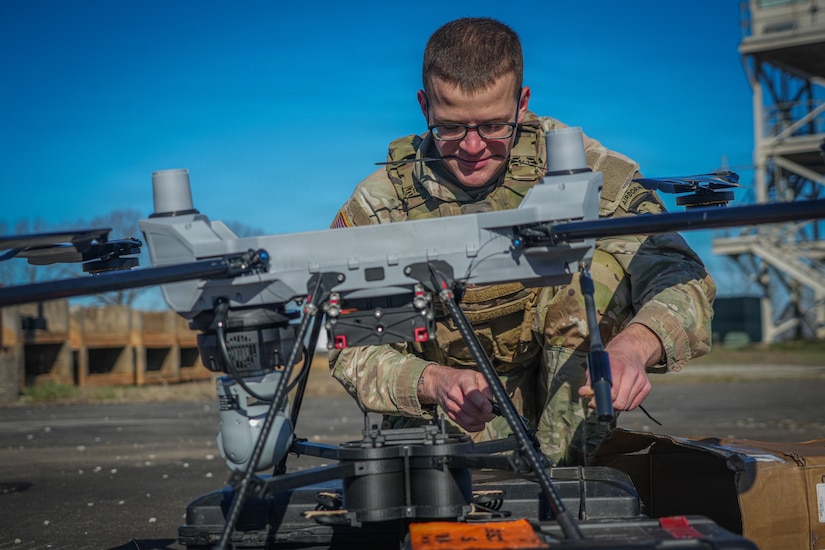
A man wearing a camouflage military uniform kneels as he works on a drone outside. There is equipment around the man, and a large tower is in the background.

The exercise validated the division's ability to operate UAS in a kinetic, multidomain setting. This successful pairing of systems and soldiers ensures the 101st Airborne Division remains at the forefront of Army transformation efforts.

"Today's demonstration was a direct answer to the secretary of war's directive," said Army Chief Warrant Officer 2 Page Frazier, the exercise coordinator and member of the 101st Robotics and Autonomous Integration Directorate. "We did some unorthodox things and always made first contact with a machine. ... And I don't think any other exercise has done that. We leveraged modern technology to set conditions for a safe employment of a ground force."

"I am superbly proud of the teamwork, from both the operational and institutional sides of the Army, as well as the conventional [forces] and Special Forces on Fort Campbell," McIntosh said. "This exercise demonstrates one of the many ways we will dominate in tomorrow's fight."

Leaders Address War in Ukraine, Russia Threat

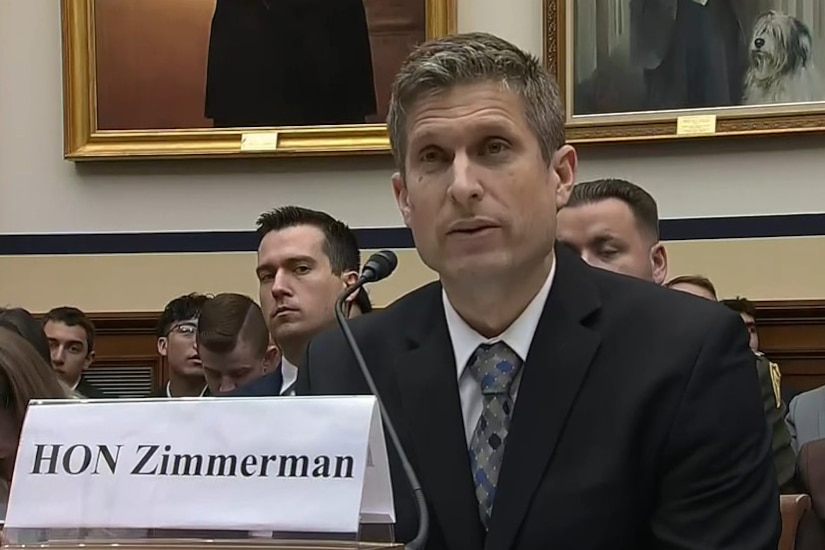
President Donald J. Trump's administration is negotiating with Russia and Ukraine to secure a durable peace based on credible security guarantees, beginning with a strong Ukraine and Europe, said Daniel L. Zimmerman, assistant secretary of war for international security affairs, during a House Armed Services Committee hearing today.

A man in a suit, seated at a table, speaks into a microphone.

It is important that allies act urgently to provide Ukraine with the necessary resources for deterrence and defense. Over 20 European nations have pledged more than $4 billion to the Prioritized Ukraine Requirements List Initiative so far, he said.

"Russia still retains deep reservoirs of military and industrial power and the national resolve to sustain protracted war. Moreover, Russia has the world's largest nuclear arsenal and invests in capabilities, which could be used coercively just short of nuclear confrontation," Zimmerman said.

"The U.S. stands with NATO, but if burden sharing becomes misaligned or thinly spread, this is not healthy for an alliance, and we want NATO to be as strong as it can be for the long term," he said.

A man in a dress uniform, seated at a table, speaks into a microphone.

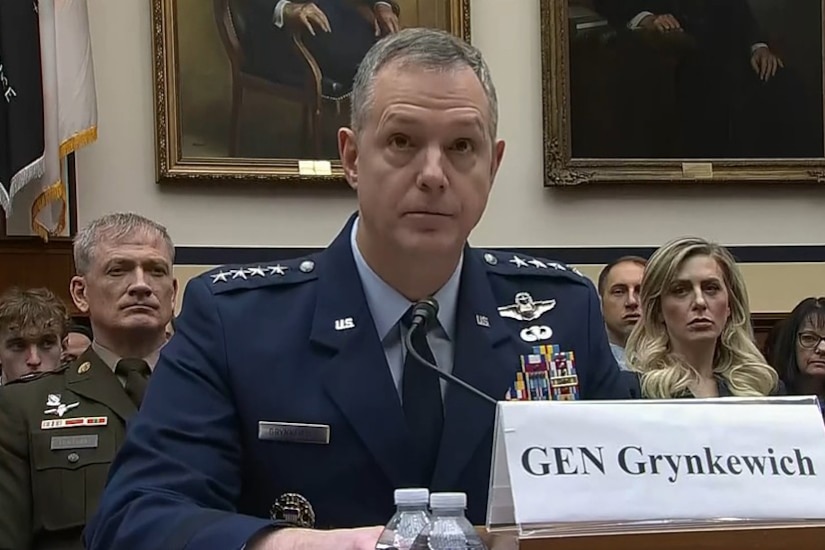
Expanding on these concerns, Air Force Gen. Alexus G. Grynkewich, commander, U.S. European Command and NATO supreme allied commander Europe, testified that the United States faces a complex and evolving global security environment.

"Growing cooperation between Russia, North Korea, Iran and the People's Republic of China has increased military risk across multiple theaters and domains," Grynkewich said.

In Europe, North Korean troops and materiel, Iranian drone technology and Chinese economic support enable Moscow to sustain its war in Ukraine, the general added.

"Despite significant losses in Ukraine, Russia retains the capability and the capacity to threaten U.S. interests with its large and increasingly diverse nuclear stockpile, asymmetric capabilities and competent ground, air and maritime forces," Grynkewich said.

National Guard Airlift Wing Completes 38th Year of Antarctic Support

The New York Air National Guard's 109th Airlift Wing concluded its 38th year supporting American scientific research in Antarctica during the 2025–2026 Operation Deep Freeze season, March 11.
Three people driving large pieces of construction equipment with cargo attached drive toward a military aircraft sitting on a snowy tarmac. There is a long power cord attached to the aircraft.

The airlift wing deployed roughly 200 airmen throughout the season in support of Operation Deep Freeze, the War Department's annual mission to sustain the U.S. Antarctic Program. 

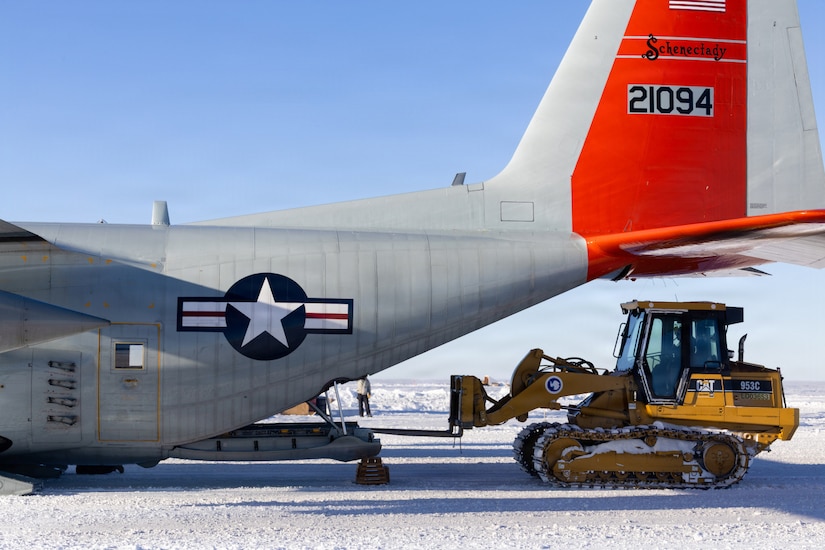
The wing operates the ski-equipped LC-130H Hercules, the largest aircraft in the world capable of landing on snow and ice using skis. This unique capability allows the 109th to deliver heavy airlift to remote locations across Antarctica.

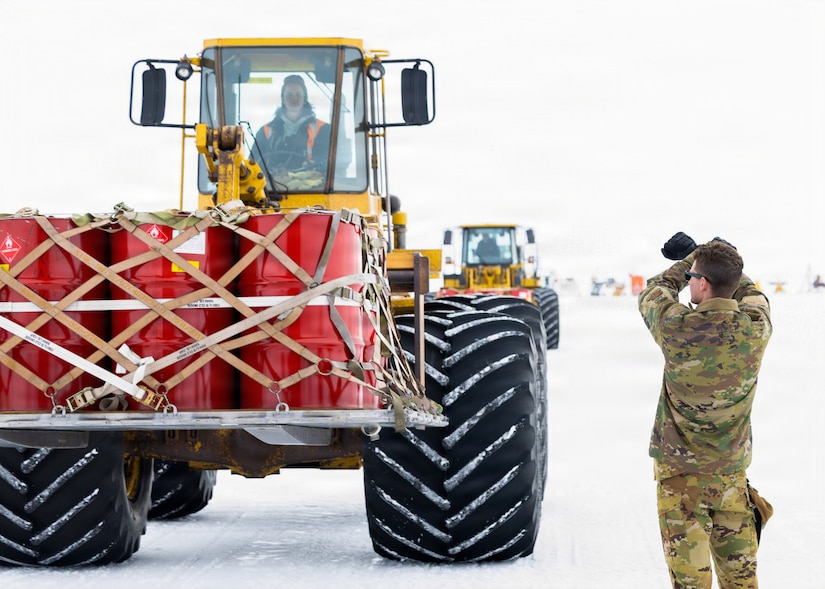
A man in a camouflage military uniform signals for a person driving a large piece of construction equipment with cargo attached to stop on a snowy tarmac. There is another piece of equipment with cargo in the background.

Aircrews and support personnel operated primarily from McMurdo Station, the largest of the U.S. year-round stations and the largest station on the continent. It is the central logistical hub for the U.S. Antarctic Program, supporting research on the continent and at the National Science Foundation's Amundsen-Scott South Pole Station. The station was established Dec. 18, 1955, and opened in 1956 as part of Operation Deep Freeze. 

During the season, the wing flew 63 missions to Amundsen-Scott South Pole Station and 17 missions to the West Antarctic Ice Sheet Divide in support of continued scientific operations and camp drawdown activities. Aircrews also conducted nine aeromedical evacuation missions to Christchurch, New Zealand. No airdrop missions were conducted this season.

A person uses a large piece of construction equipment to load cargo onto a military aircraft sitting on a snowy tarmac.

LC-130H aircraft flew over 900 hours on the continent, with an additional 130 hours supporting deployment and redeployment operations. 

Throughout the season, the 109th transported 1,086 passengers, delivered 1 million pounds of fuel and moved 2.6 million pounds of cargo in support of the operation. Missions focused primarily on sustainment operations at the South Pole and the ice sheet divide camp drawdown.

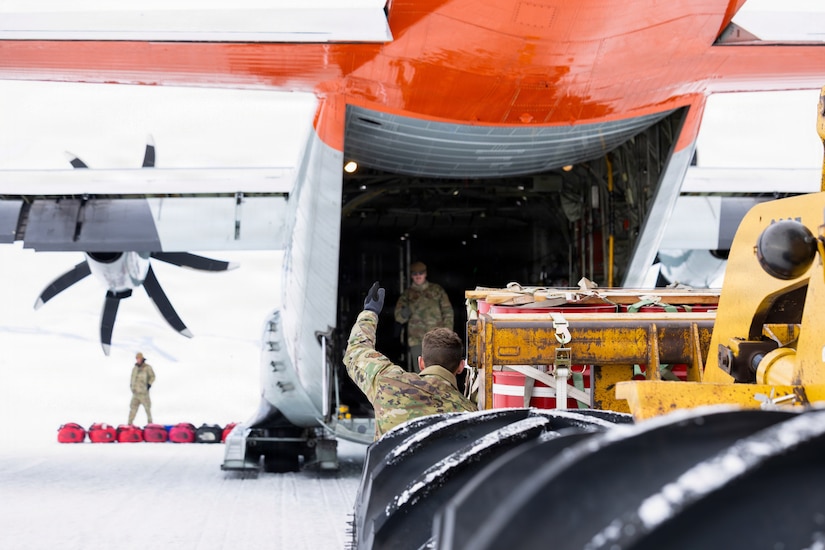
A man in a camouflage military uniform guides a loader with cargo into the back of a military aircraft sitting on a snowy tarmac. There is another man in similar attire standing in the aircraft.

"The success of this season reflects the dedication and professionalism of our airmen,” said Air Force Col. Steven Slosek, commander of the 109th Airlift Wing. "Operating in one of the most challenging environments requires teamwork, precision and adaptability. Their efforts ensured the successful completion of this year's Operation Deep Freeze mission." 

The operation remains one of the War Department's most demanding recurring missions. The airlift wing continues to provide the only heavy airlift capability in the world able to conduct tactical landings on snow and ice, enabling year-round scientific research operations throughout Antarctica. 

Tuesday, March 17, 2026

Coast Guard Cutter Rescues Man Stranded on Lake Huron

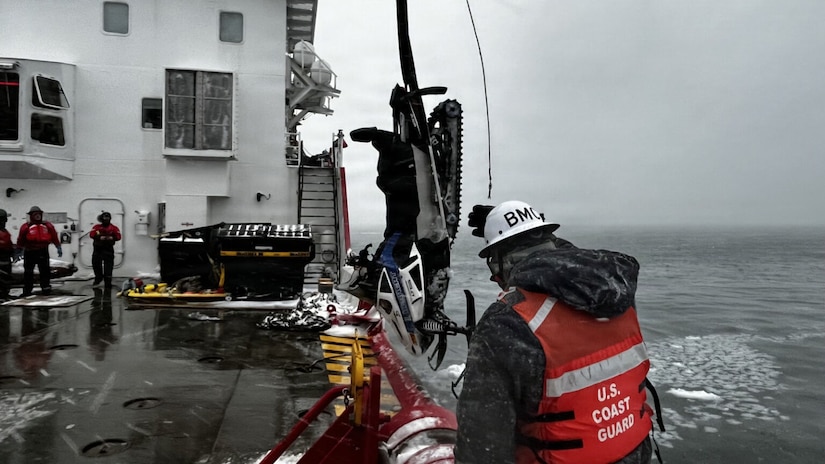
On March 15, the crew of the Coast Guard cutter Mackinaw reached and rescued a 55-year-old man who became stranded on Lake Huron ice near Mackinac Island, Michigan. The man is in stable condition.

A snowmobile is hoisted onto a Coast Guard cutter that is in open waters and winter conditions.

"Today's response was a phenomenal team effort in saving a person in distress," said Coast Guard Lt. William Erekson, assistant operations officer assigned to the Mackinaw. 

The man, lost while operating a snowmobile, was found approximately one mile west of Sunset Rock, Michigan.  

Upon receiving notification of a person in distress, Coast Guard Sector Northern Great Lakes redirected the Mackinaw toward the man's last known location. The crew coordinated with the local fire department and its first responders to gather information. Because of blizzard conditions, aerial rescue attempts were unsuccessful.

A man wearing protective winter gear is being assisted by two people in similar attire across ice during a rescue operation.
A man wearing protective winter gear stands next to a snowmobile on a floating piece of lake ice.
While en route, the cutter Mackinaw reported a sighting of the man and deployed its rescue team. The team found the man and recovered his snowmobile, bringing both aboard the ship. On the cutter, the man received first-level medical care, stabilizing his condition. 

"All hands played a pivotal role, to include a challenging ice rescue deployment in harsh weather, seamless shipwide execution, and superb coordination with Coast Guard Sector Northern Great Lakes. This case is a powerful reminder that, when lives are on the line, the Coast Guard stands ready to respond," Erekson said. 

Monday, March 16, 2026

Joint Task Force Southern Border Marks One Year of Success, Bolstering Southern Border Security Through Integrated Operations

Joint Task Force Southern Border reached its one-year anniversary, March 14, underscoring a year of agile, full-scale and partner-focused missions supporting the Department of Homeland Security's southern border mission.

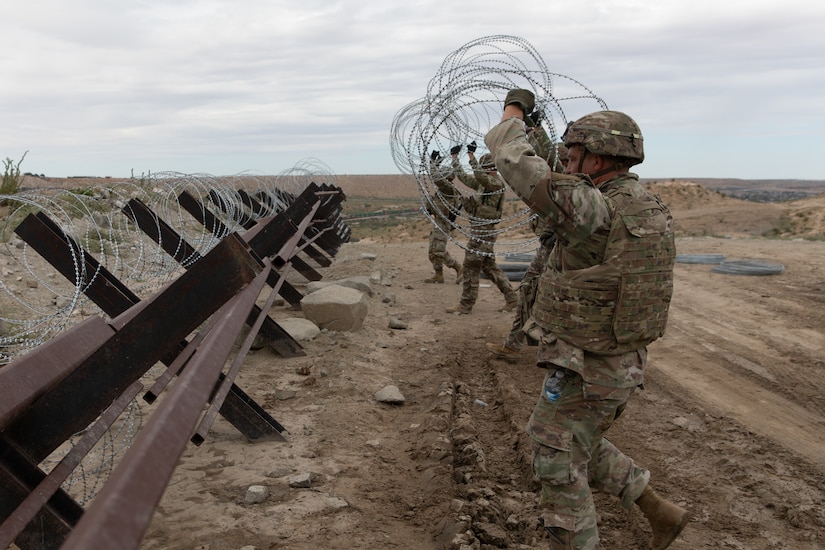
People wearing military camouflage uniforms move concertina wire over a barrier fence in a desert terrain.

Soldiers assigned to the 10th Mountain Division in Fort Drum, New York, deployed to Fort Huachuca, Arizona, to establish the new task force, March 14, 2025, under the authority of U.S. Northern Command. The 101st Airborne Division from Fort Campbell, Kentucky, assumed control of the JTF-SB mission following a transfer of authority from the 10th Mountain Division, Oct. 10, 2025.

JTF-SB's mission is to safeguard U.S. territorial integrity and protect the American people. The task force achieves this by increasing situational awareness along the southern border, accelerating response capabilities and supporting federal law enforcement partners so they can focus on frontline duties.

One Year of Impact: Unified Operations, Measurable Results

Over the past year, JTF-SB service members provided consistent watch across 1,954 miles of the U.S.-Mexico border, conducting remote and mobile detections spanning from river crossings to high-traffic urban corridors. Through synchronized planning, rapid mobility and persistent presence, JTF-SB has enhanced southern border security by expanding detection and monitoring, improving data sharing that enabled U.S. law enforcement partners to increase apprehensions while also improving the warfighting readiness of assigned units.

Key accomplishments and operational highlights from the past year include:

  • JTF-SB has assisted DHS in achieving historically low levels of individuals attempting to illegally cross our southern border and an equally historic effectiveness in arresting or turning back those that do.
  • More than 20,000 service members have honorably served under JTF-SB since its establishment.
  • Approximately 22,000 enhanced detection and monitoring missions were conducted, enabling greater awareness of illegal crossings from Mexico into the United States. Of these, almost 3,000 were joint patrols alongside U.S. Customs and Border Protection agents, and over 800 were mirrored patrols on both sides of the southern border with CBP and the Mexican Secretariat of National Defense.
  • More than 84,000 security site missions were conducted, providing continuous detection and monitoring across key areas of the southern border. These missions leveraged advanced sensor-borne technology, including fixed and mobile ground sensors and long-range systems, to deliver greater situational awareness.
  • Aviation assets have executed nearly 1,600 aerial observation flight missions and 220 unmanned aerial missions, monitoring areas of interest and providing overwatch for personnel on the ground.
  • Nearly 6,000 signs and 2,000 buoys have been installed along 656 miles of the southern border to clearly demarcate the five recently created national defense areas.
  • Over 51,000 rolls of concertina wire were delivered and are actively being emplaced into key areas in conjunction with CBP. This supports barrier reinforcement along the southern border, the largest of its kind in U.S. history, adding a layer of deterrence in areas most needed to deter and deny illegal crossings.
  • Units are conducting real-world testing of new equipment and technology, including the TRV-150C tactical resupply vehicle; the infantry squad vehicle that Marines trained on for the first time in an operational environment; an unmanned surface vessel and solar-powered maritime detection device; and various kinetic and nonkinetic counter-unmanned aerial systems.

These results reflect a year of disciplined execution and unified effort across federal, state and local partners.

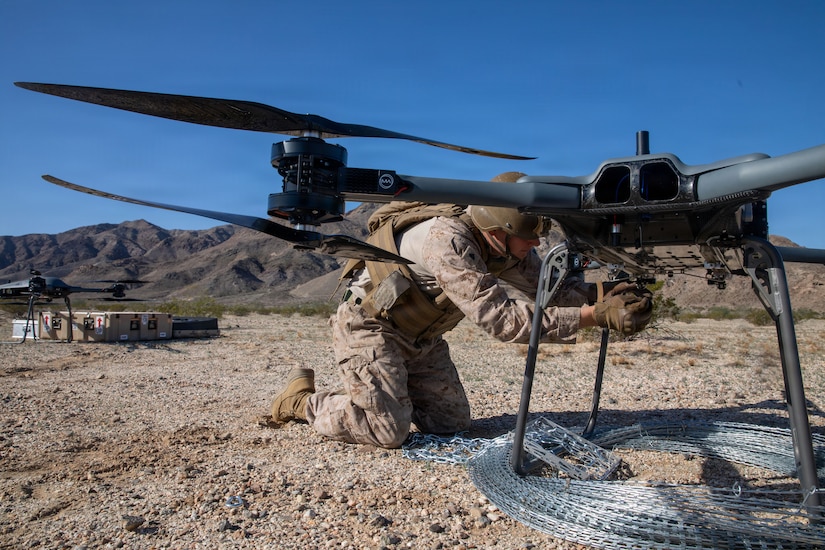
A man wearing a camouflage military uniform works on a drone in mountainous desert terrain.

"During this first year, Joint Task Force-Southern Border and partners have proven what a whole-of-government approach to our nation's southern border can accomplish," said Army Maj. Gen. David Gardner, commanding general of the JTF-SB and 101st Airborne Division. "Our joint teammates and partners have strengthened border security through unity of effort, accelerated decision-making and enhanced detection capability. While the environment is complex, our mission is clear: to secure the homeland with precision, professionalism and respect for the rule of law."

Entering its second year, JTF-SB remains dedicated to its mission, strengthening integration, advancing data-driven operations and supporting CBP and partner agencies with professionalism and adaptability.

"Our mission continues and our commitment is unwavering," Gardner said. "We will keep evolving, supporting our partners and protecting the American people."

Medal of Honor Monday: Navy Petty Officer 1st Class Francis Pierce

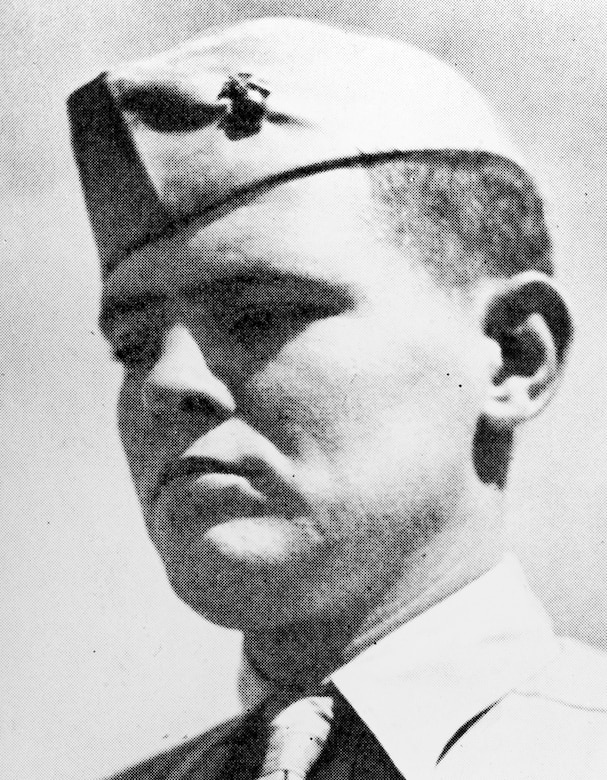
As the chaos of World War II's Battle of Iwo Jima unfolded, Navy Petty Officer 1st Class Francis Junior Pierce refused to leave any wounded men behind. The hospital corpsman showed fearlessness throughout the turmoil. That valor led him to receive the Medal of Honor. 

A man in a military cap looks stoic while looking toward the ground.

Pierce was born Dec. 7, 1924, in Earlville, Iowa, to Frank and Rose Pierce. He grew up on a farm and had a younger brother named Donald.

Pierce turned 17 the day Pearl Harbor was attacked by Japan, which thrust the U.S. into World War II. Shortly thereafter, he enlisted in the Navy to do his part for the war effort.

After completing training to be a hospital corpsman, Pierce served the early part of the war at various duty stations in the Carolinas. He rose to the rank of pharmacist's mate before being transferred in January 1944 to the newly activated 4th Marine Division in Camp Pendleton, California. Soon after, the unit was deployed to the Pacific.

Pierce's first time in combat was in February 1944 during the Marshall Islands campaign, when the division landed on Roi-Namur, a small island in the Kwajalein Atoll. During that battle, Pierce saw fighting that made him reject the corpsman's code to remain unarmed. Going forward, he was never without a submachine gun. According to naval historians, he "used it so effectively that the Marines nicknamed him 'the Angel with a Tommy Gun.'"

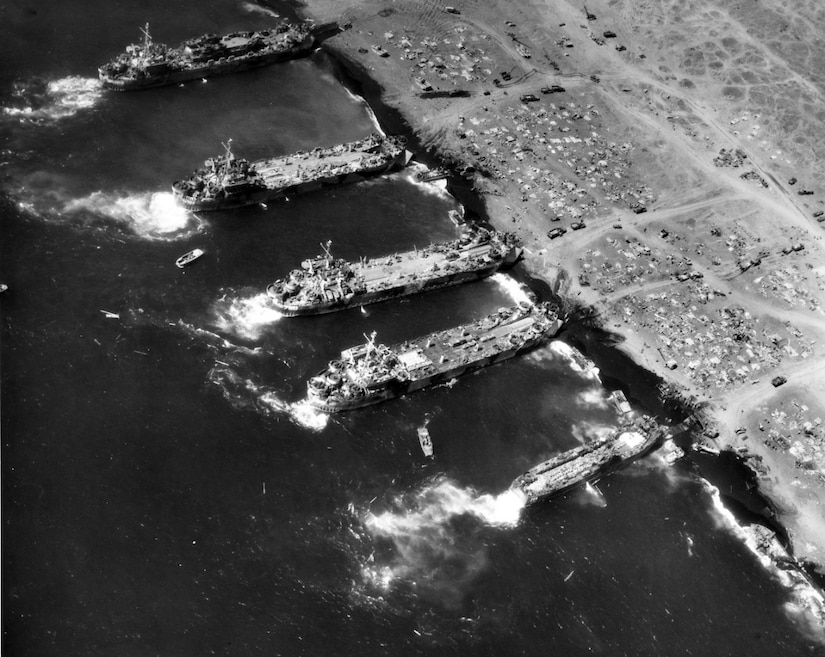
An aerial view of four large ships beached along a shoreline to deliver supplies.

For the rest of the year, Pierce's unit, the 2nd Battalion, 24th Marines, remained almost continuously in combat, fighting on the islands of Saipan and Tinian in the Mariana Islands chain.

Their next stop — Iwo Jima, a tiny volcanic island that, if taken from the enemy, would put Allied aircraft in striking distance of the Japanese mainland. It became the bloodiest campaign of the war for the Marine Corps, a monthlong battle in which 27 men later received Medals of Honor for their heroics, including Pierce.

Throughout the battle, Pierce carried out dangerous volunteer missions that put him under near-continuous enemy fire. He became an expert on the terrain, going back and forth about 25 miles of the landscape to memorize details and draw a map marking enemy forces he'd encountered.

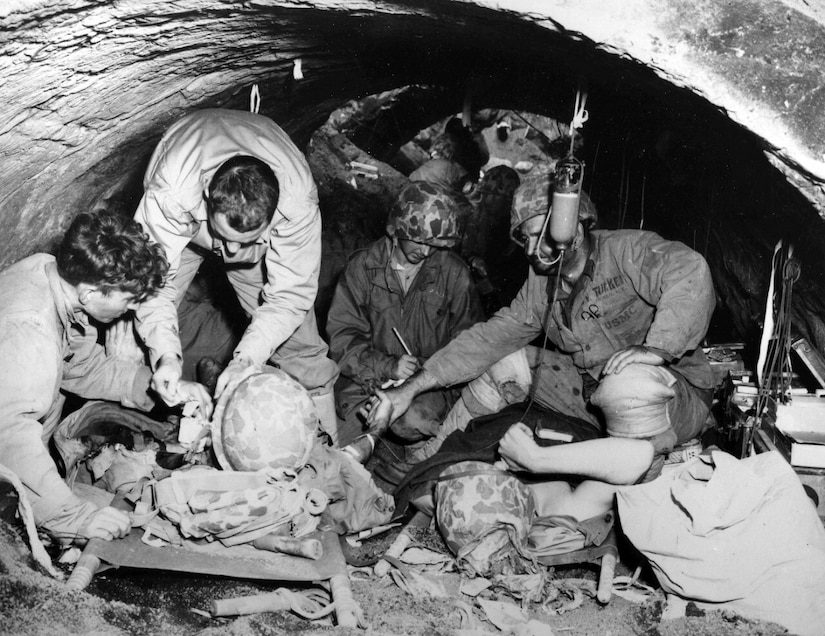
Four men stand or kneel above two men on stretchers, giving them aid. All are in a small concrete shelter not high enough to stand up in.

On March 15, 1945, Pierce was in a group of medics who were carrying two wounded Marines to an aid station when they got caught in heavy enemy fire that injured a corpsman and two stretcher bearers. Pierce quickly took charge and carried the newly wounded men to a shelter, where he gave them first aid and directed them toward an evacuation route.

Pierce then stood out in the open and blasted his weapon toward the enemy to draw their fire, giving six other stretcher bearers a chance to reach cover. From there, he focused on the Marines who'd been injured before the latest chaos erupted.

As Pierce was attending to the profuse bleeding of one of the Marines, the victim was struck again by a bullet from an enemy hiding in a cave about 20 yards away. With no concern for his own safety, Pierce put himself in harm's way to draw out the attacker and kill him using the last of his ammunition.

Now unarmed, Pierce lifted the wounded Marine onto his back before moving across 200 feet of open, bullet-strewn terrain to get him to safety. It was a harrowing trip, but Pierce pushed through his exhaustion — as well as warnings from his peers — to go back across the same fire-swept path to rescue the second Marine. That effort paid off, and they both reached safety.

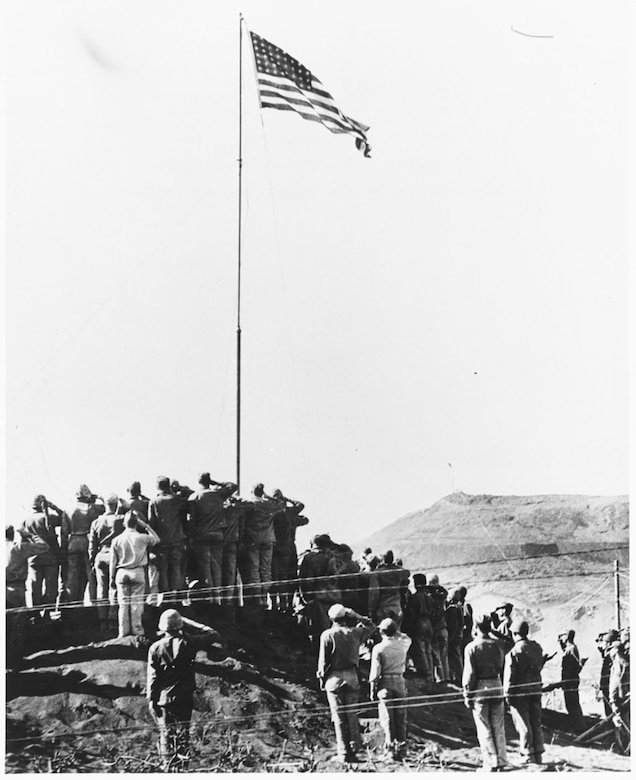
Dozens of men stand on a small, desolate hill to salute an American flag that’s been raised on a tall flagpole.

The next day, Pierce led a combat patrol to a sniper's nest. As he was attending to a stricken Marine, he was shot in the shoulder and suffered shrapnel injuries. Pierce refused aid for himself, though, instead directing others to continue attending to the wounded Marine's treatment while he laid down cover fire for their protection.

Pierce's fearless actions inspired his entire battalion. He was initially awarded a Silver Star and the Navy Cross, but they were later combined and replaced by the Medal of Honor.

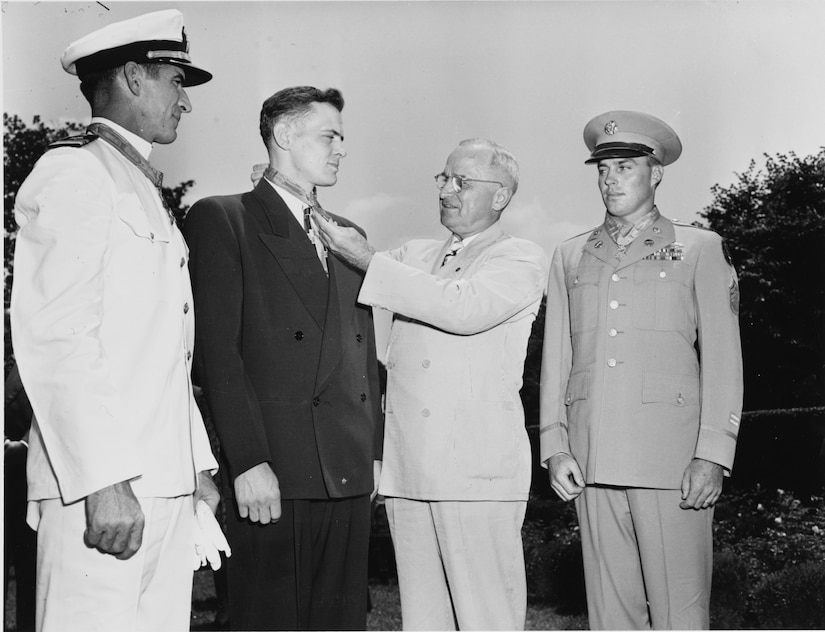
Pierce received the nation's highest honor for valor on June 25, 1948, from President Harry S. Truman during a White House ceremony. The medal was also bestowed upon Army Staff Sgt. John R. Crews and Navy Lt. Cmdr. Jackson Charles Pharris that day.

Aside from Pierce, three other pharmacist's mates were awarded the Medal of Honor for their actions on Iwo Jima: Navy Petty Officer 3rd Class Jack Williams, Navy Petty Officer 2nd Class George Wahlen and Navy Petty Officer 1st Class John Willis. 

Three men in formal military uniforms stand together, with a man in business attire standing in the center, who places a medal around the neck of the man in the middle.

Pierce was discharged from the Navy in 1945 and worked for a short time as a logger back in his home state. Later that year, however, he moved to Grand Rapids, Michigan, to finally meet Lorraine Decker, with whom he'd been corresponding throughout the war, according to the Grand Rapids Press newspaper. The pair married in August 1946 and had two sons.

Pierce went to work as an officer for the Grand Rapids Police Department, working his way up the ranks from beat patrolman to deputy chief by the time he retired in 1982. The Grand Rapids Press said among his many duties, he was the city's bomb disposal expert.

After Lorraine Pierce died in the 1970s, Pierce spent his remaining years with his second wife, Madelyn, before succumbing to lung cancer on Dec. 21, 1986, at age 62.

Pierce is buried in Holy Cross Cemetery in Grand Rapids.

In 2003, toy maker Hasbro released a commemorative G.I. Joe figurine of Pierce. To date, he's the only hospital corpsman to be honored with his own action figure.

Sunday, March 15, 2026

DoW Identifies Air Force Casualties

The Department of War announced the death of six Air Force Airmen who were supporting Operation Epic Fury.

Maj. John A. Klinner, 33, of Auburn, Ala.; Capt. Ariana G. Savino, 31, of Covington, Wash.; and Tech. Sgt. Ashley B. Pruitt, 34, of Bardstown, Ky., were assigned to the 6th Air Refueling Wing, MacDill Air Force Base, Fla. and Capt. Seth R. Koval, 38, of Mooresville, Ind.; Capt. Curtis J. Angst, 30, of Wilmington, Ohio; and Tech. Sgt. Tyler H. Simmons, 28, of Columbus, Ohio were assigned to the 121st Air Refueling Wing at Rickenbacker Air National Guard Base, Columbus, Ohio.

The six Airmen died on March 12, 2026, in the crash of a KC-135 in western Iraq. The incident is under investigation.

For information regarding Maj. John A. Klinner, Capt. Ariana G. Savino, and Tech. Sgt. Ashley B. Pruitt, members of the media may contact the 6th Air Refueling Wing, Public Affairs, at MacDill Air Force Base, Fla., at (813) 828-2217 or by email at 6.ARW.PA@us.af.mil.

For information regarding Capt. Seth R. Koval, Capt. Curtis J. Angst and Tech. Sgt. Tyler H. Simmons, members of the media may contact the Ohio Air National Guard Public Affairs office at (614) 506-3490 or by email at heidi.m.griesmer.nfg@army.mil or ng.oh.oharng.mbx.pao@army.mil.

Friday, March 13, 2026

Navy Explosive Ordnance Techs Strengthen Homeland Defense During Arctic Edge 2026

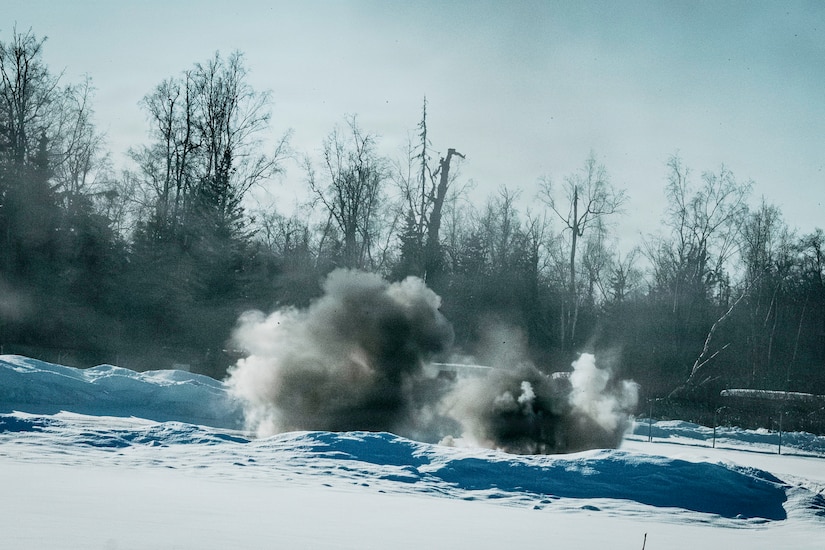
Navy explosive ordnance disposal technicians assigned to Explosive Ordnance Disposal Mobile Unit 11 participated in Arctic Edge 2026, Feb. 23 to March 5. 

Two clouds of smoke rise from a snow-covered ground.

Arctic Edge 2026, led by the North American Aerospace Defense Command and U.S. Northern Command, is a homeland defense exercise focused on improving readiness, demonstrating capabilities and strengthening joint and allied forces interoperability in the Arctic. 

"This year, our primary objective was to integrate with other EOD entities in new environments," said Navy Chief Petty Officer Quinn Gaubatz, chief explosive ordnance disposal technician. "Subject matter expert exchanges help us better our tactics, techniques and procedures through collaboration of our strengths, especially in the challenging conditions that [Arctic Edge] provided." 

Throughout the exercise, EODMU-11 operated alongside joint EOD forces and other military units on Kodiak Island, Alaska, and at Joint Base Elmendorf-Richardson in Anchorage, Alaska. 

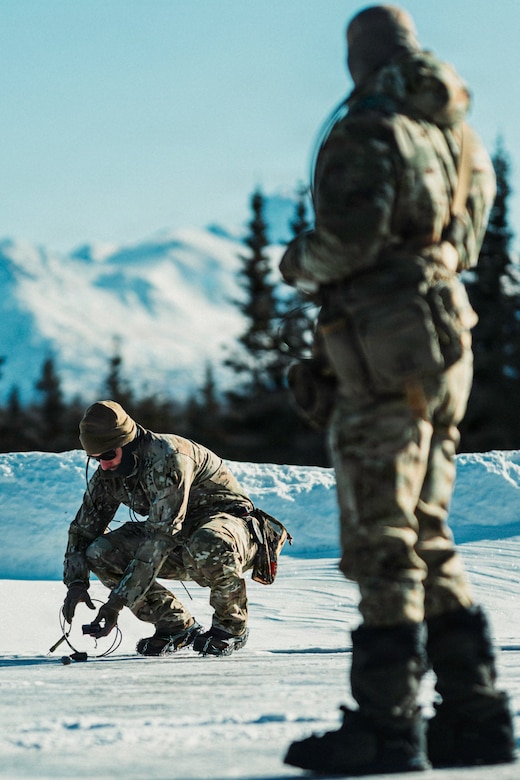
A man wearing a camouflage winter military uniform lays wire onto a snow-covered ground.

On Kodiak Island, EODMU-11 technicians conducted remote operated vehicle operations during a force protection drill, partnering with 1st EOD Company, 7th Engineer Support Battalion, 1st Marine Logistics Group, Unmanned Undersea Vehicles Squadron 1, Naval Information Warfare Center personnel, and U.S. Coast Guard elements assigned to the island to assess, neutralize and recover simulated underwater threats. 

"Demanding environments such as Kodiak create great opportunities to stress test our gear," said Navy Petty Officer 2nd Class Luke Rebeor, an EOD technician. "Operating our ROV systems in training alongside joint counterparts helped us accomplish homeland defense objectives together." 

During the drill, ROV operations expanded and supported joint EOD capabilities by providing an essential standoff area in underwater environments in a potentially high-risk reconnaissance and ordnance disposal mission. 

At JBER, EODMU-11 conducted joint airfield clearance and unexploded ordnance disposal drills with Air Force EOD technicians assigned to the 673rd Expeditionary Civil Engineer Squadron, simulating threats to critical infrastructure under extreme cold weather conditions. 

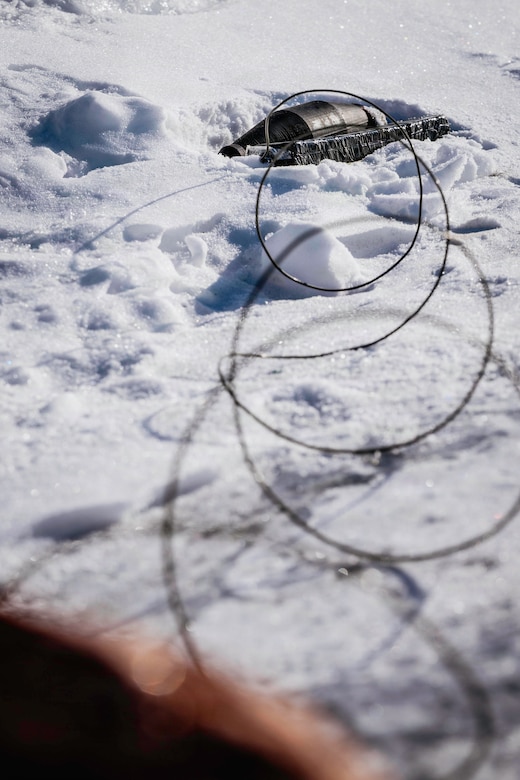
A military warhead sits on a snow-covered ground next to a block of a military explosive.
A man wearing a winter camouflage military uniform lays wire onto a snow-covered ground. Another man in similar attire stands and watches.
  

"Operating in the Arctic requires some adaptation," Gaubatz said. "Standard explosives and techniques work differently in colder climates, so practicing our skills and techniques in Alaska provided an extremely valuable training opportunity." 

Defending the U.S. is inherently linked to the joint force's ability to operate effectively across the entire Northcom area of responsibility — including the Arctic. Navy EOD's presence in Alaska during Arctic Edge ensured expeditionary competence in support of homeland defense as the strategic importance of the Arctic domain expands.

Soldiers Assist Air Force Squadron With Drone Warfare Training

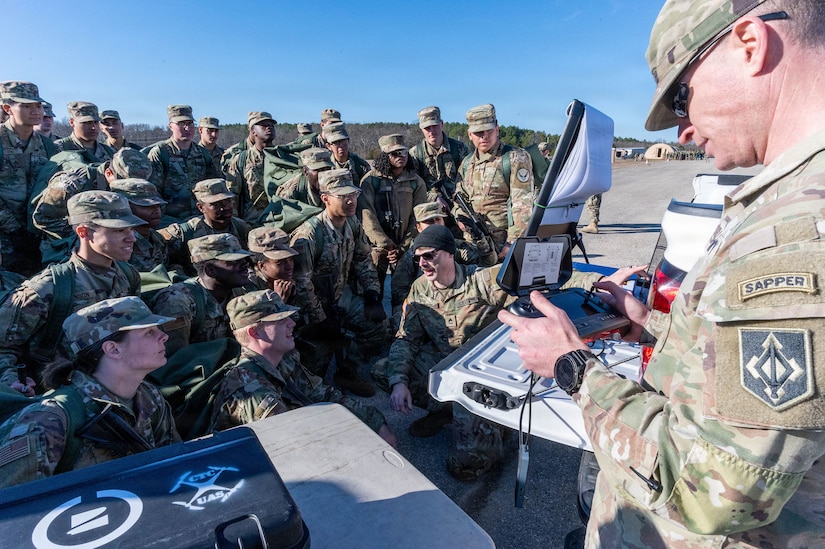
More than 200 airmen training with the Air Force's 368th Training Squadron spent Feb. 27 at Fort Leonard Wood, Missouri, learning about unmanned aerial systems during an exercise designed to cultivate Air Force airmindedness and the warrior ethos. 
 
The training squadron, based at Fort Leonard Wood, provides initial skills and advanced level training in the areas of ground transportation, engineering, emergency management and pavements and construction equipment. 

A man in a camouflage military uniform uses a remote control to pilot a drone while another man in similar attire crouches as he speaks to a group of people in camouflage military uniforms gathered outside.

 
According to Air Force Tech. Sgt. Christopher Moss, a specialty code instructor assigned to the training squadron, airmen at various specialty schools on base usually train separately, but this day was unique because it brought them all together. 
 
"It allows them to integrate with our other schoolhouses, bringing them together as one force instead of each person learning just their craft," Moss said. "Producing more well-rounded airmen for the force." 
 
Air Force Capt. Nathan Elking, 368th Training Squadron director of operations, said the unique training event is called Bracer Forge and is an operational readiness exercise. 
 
"It is a continuation of the training airmen receive at basic training," Elking said. "Both exercise initiatives are designed to instill airmindedness and warrior ethos in our airmen." 
 
The squadron's exercise topics vary, but the current unmanned aerial system focus was driven by the unit's specialty codes, which according to Elking play a key role in airfield damage assessment and rapid airfield damage recovery. 
 
"Before each iteration of Bracer Forge, we provide the participating airmen with an operation order for the day and reporting instructions with a training scenario to recover a damaged airfield," he said. 
 
Squadron instructors prepared four stations for the airmen to rotate through. 

A man in a camouflage military uniform speaks to a group of people in similar attire holding rifles while they stand in a tent.

 
At the airfield damage assessment challenge, Elking said teams conducted an assessment on a simulated airfield and relayed the information to their teammates in an emergency operations center. 
 
"The airmen in the EOC were tasked with creating a map of the airfield using the details their counterparts called in over the radio," he said. 
 
While at the UAS reporting challenge, teams established defensive fighting positions and reported UAS activity to their teammates in the EOC by consolidating the information into a report to send up. 

The other two stations were a high intensity physical fitness event and a UAS capabilities overview. Soldiers assigned to the Maneuver Support Center of Excellence Combat Training Company gave the UAS portion of the training. 
 
"We are not subject matter experts on counter-UAS and UAS employment. Being able to leverage our Army partners at [center of excellence] played a significant role in the exercise's success," Elking said. 
 
According to Army Sgt. 1st Class Austin Priebe, Combat Training Company UAS chief, his mission was to introduce small UAS threats, and teach the basics of identifying, reacting to and reporting small UAS threats. 

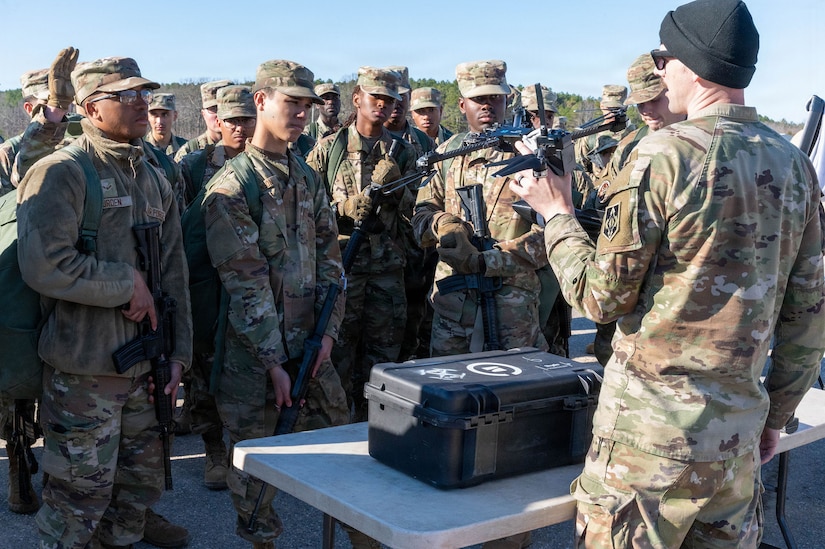
A man in a camouflage military uniform holds a drone while speaking to a group of people in similar attire gathered outside. In front of the man is a black case sitting on a table.

 
Priebe said most trainees he instructs have watched or controlled a simulated UAS in video games, but being able to experience a UAS in person, see and hear a drone up close, is "essential to prepare service members for what they will see in current and future conflicts." 
 
"We conducted practical exercises on scanning for [small] UAS, completing a report and showed the airmen what they look like from an elevated viewpoint," Priebe said. 
 
This was the training company's first time facilitating interservice UAS training. 
 
"I've largely been focused on enabling training and instruction to the Army units here on Fort Leonard Wood since the inception of our UAS program this past fall," Priebe said. 
 
As the battlefield changes rapidly, so does our training requirements. If our organization can provide more realistic and in-depth training to our brothers and sisters in other branches, we only stand to benefit as a military." 

Priebe said his team is looking forward to conducting more interservice training events in the future. 
 
At the end of the day, the exercise was a catalyst for innovation, Elking said. 
 
"By exposing airmen to the dual nature of UASs — both as a threat to counter and a tool to master — we challenge them to rethink their mission sets and pioneer new solutions for the modern battlefield," he said.

George Washington Announces His Farewell to Arms

The general's resignation was not a conclusion but a defining moment in our nation's history. Many regard it as a foundational act of statesmanship, setting a powerful precedent for civilian control over the military. Gen. George Washington, commander of the Continental Army, formally resigned his commission, Dec. 23, 1783, in Annapolis, Maryland, where he delivered his farewell address to the Continental Congress.

Depicted in a painting is a crowd gathered behind a man in uniform reading a document to men seated and standing, while women watch from a balcony.

Washington led the Americans to victory over the British from June 15, 1775, until the war ended Sept. 3, 1783, with the Treaty of Paris. The treaty formally recognized the independence of the U.S., set its boundaries, provided provisions on fishing rights, property restitution for loyalists and the return of prisoners of war. 

"Having now finished the work assigned me, I retire from the great theatre of action, and bidding an affectionate farewell to this august body, under whose orders I have so long acted, I here offer my commission and take my leave of all the employments of public life," he said at the conclusion of his address.

Britain's King George III reportedly said that if Washington resigned, he would be the greatest man in the world. 

Historically, a triumphant general would seize power. Examples abound. For instance, in 44 B.C., Julius Caesar was named dictator for life after defeating his rivals in battle. In 1804, after winning a series of battles, Napoleon Bonaparte proclaimed himself emperor of France. 

Later, Washington attended the Constitutional Convention in 1787, where he was unanimously elected as its president. The other delegates found Washington's mere presence to be crucial to the success of the endeavor. He was held in high esteem.

A $5,000 bill in green color features a man reading to a crowd of people from a document.

Following the ratification of the Constitution, Washington was unanimously elected to be the first U.S. president. Sworn in April 30, 1789, he served two terms before voluntarily giving up power for the last time. 

Department of War Awards Independent School District No 57 of Garfield County (Enid Public Schools) a $22M grant for Eisenhower Elementary School at Vance Air Force Base, Oklahoma

The Department of War, Office of Local Defense Community Cooperation, today awarded Independent School District No 57 of Garfield County (Enid Public Schools) a $22 million grant as the federal share of a larger $28.2 million project to construct a new Eisenhower Elementary School at Vance Air Force Base, Oklahoma.

This project will address facility capacity and condition deficiencies that placed Eisenhower Elementary School as #65 on the 2019 Deputy Secretary of Defense "Public Schools on Military Installations Priority List" (Priority List). Upon completion, 350 students in kindergarten through fifth grade will be supported annually through this project.

Funding for this grant is provided under the Department's Public Schools on Military Installations Program. In making these funds available, the Office of Local Defense Community Cooperation must give priority consideration to military installations that have schools with the most serious facility capacity and condition deficiencies, as determined by the Priority List.

A multi-disciplined Federal Evaluation Team, with representatives from the Assistant Secretaries of the Air Force, Army, Navy, and the Office of Local Defense Community Cooperation reviewed the school project to ensure the award appropriately addresses the noted facility capacity and condition deficiencies.

In correcting the identified facility condition and capacity issues at the Eisenhower Elementary School, this grant keeps faith with service members, improves the quality of education for defense-connected students, aids in the recruitment and retention of vital skills at Vance Air Force Base, and enhances partnerships between the community and the installation.

Blue Angels Mark 80 Years, Certified for 2026 Airshow Season

The U.S. Navy flight demonstration squadron, the Blue Angels, successfully completed its annual certification for the 2026 airshow season Feb. 23, marking the squadron's 80th anniversary. The "airshow-ready" designation was granted after the team completed its demanding winter training, ensuring it meets the highest safety and performance standards before embarking on the 2026 season.

Since its founding in 1946, the Blue Angels have served as ambassadors of naval aviation. Navy Rear Adm. Max McCoy, chief of naval air training, gave final approval for the team's 80th season after observing its last practice demonstration in El Centro, California.

A man in a military flight suit looks to his right, as two military aircraft are seen in the distance above.

"Earning this certification is always an honor, but it carries special weight this year as we prepare to celebrate the squadron's 80th anniversary," said Navy Capt. Adam Bryan, Blue Angels commanding officer. "This team has worked incredibly hard to be ready to honor that legacy and represent the men and women of the U.S. Navy and Marine Corps. We are eager to get the season started."

This year's certification was overseen with a unique understanding of the squadron's mission, as McCoy is the first former Blue Angel to oversee the flight demonstration squadron as the chief of naval air training. McCoy was assigned to the squadron in 2001 and 2005.

"For 80 years, the Blue Angels have represented the absolute pinnacle of naval aviation, and this anniversary is a testament to a legacy of excellence that few organizations ever achieve," McCoy said. "Certification for this historic season was exceptionally rigorous because the standard must be met. This squadron demonstrated unwavering precision and commitment, proving they are not only ready to fly, but ready to continue the Blue Angel legacy with the honor it deserves."

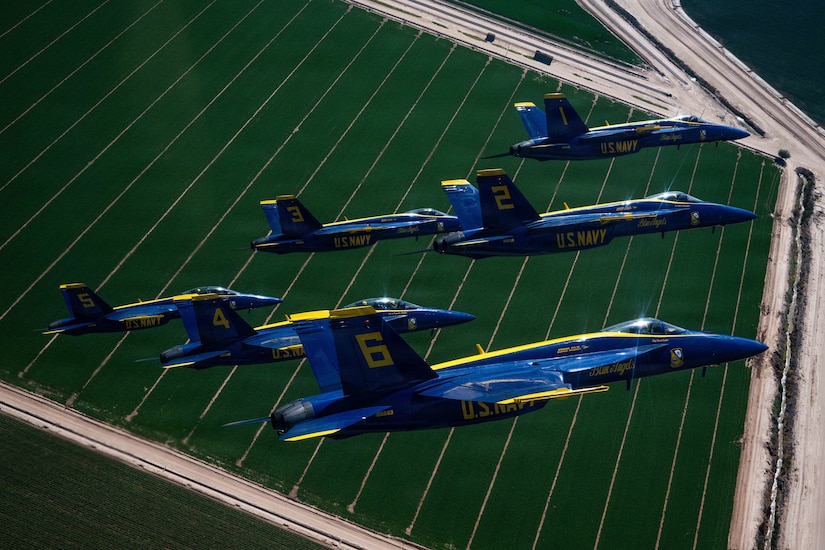
Six blue and yellow military jets fly in formation over a green field.

With its certification complete, the Blue Angels will now begin its season tour across the United States. The Blue Angels team consists of 158 active-duty sailors and Marines, including pilots, aircrew, maintainers and support personnel.

The Blue Angels will host the last show of the season, the Blue Angels Homecoming Air Show at its home base, Naval Air Station Pensacola, Florida, Nov. 6.

Wednesday, March 11, 2026

Mobile Museums Bring Freedom 250 to Military Communities

 March 11, 2026 | By U.S. Army Public Affairs

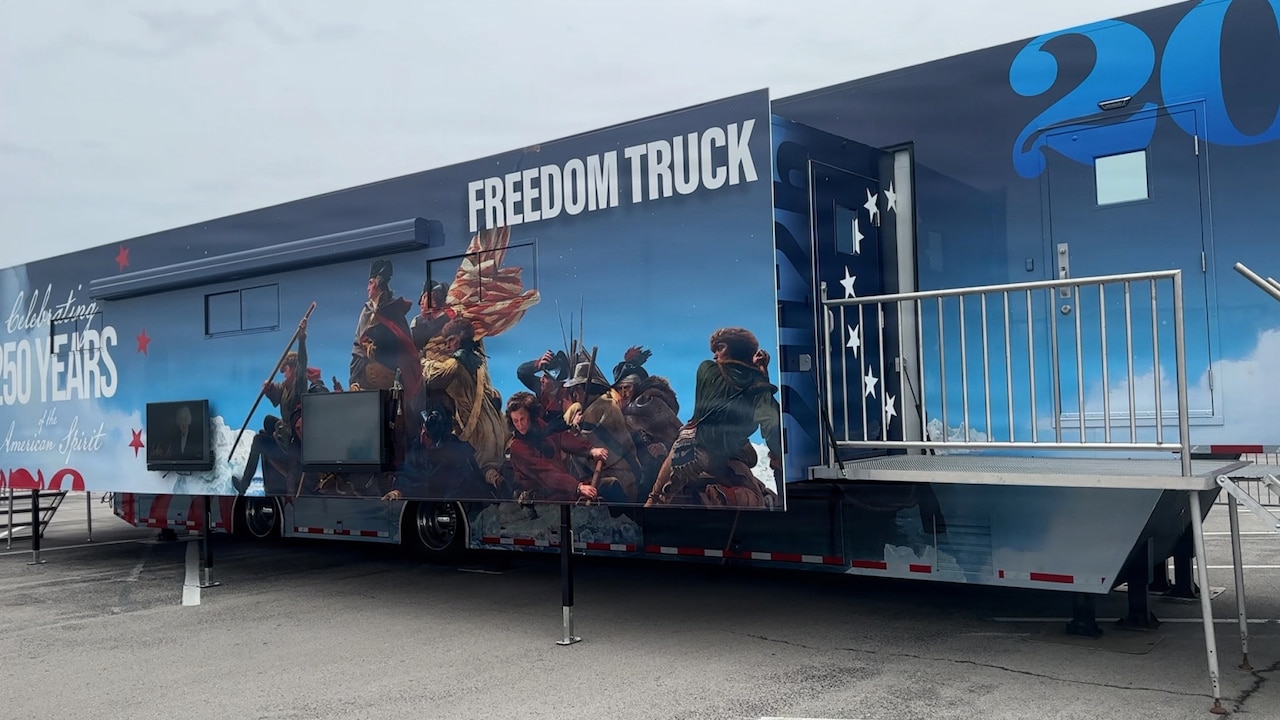
A fleet of six mobile museums, known as "freedom trucks," is traveling throughout 2026, bringing the story of American independence to students, families and citizens in every corner of the country.

A trailer with “Freedom Truck” written on the side is sitting in a parking lot. A historic battle scene is painted on the side of the trailer.

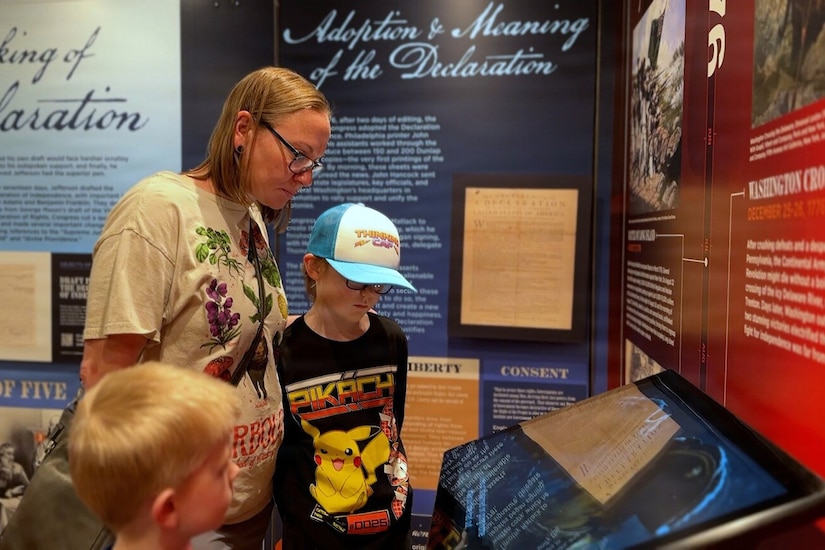
With interactive and inspiring content for visitors of all ages, the exhibits tell the extraordinary story of how the 13 colonies declared independence, defeated the British Empire and secured American sovereignty 250 years ago. Engaging elements such as quizzes, a kiosk to sign your name digitally to the Declaration of Independence and a wall of 50 American heroes allow users to celebrate the remarkable achievements the nation has made. 

The Freedom 250 initiative is a historic, once-in-a-generation opportunity to reflect on the country’s founding principles, while rallying communities around the values that built the United States and the American dream. Every Freedom 250 event is unique and part of a national movement to celebrate America and set the tone for the next 250 years.

A woman and two children observe a historical display in a mobile museum.
A tablet is displayed in a room with historical artwork on the walls.
Hundreds of events like the freedom truck visits are taking place throughout the country and overseas, as part of the yearlong celebration. Information on all these events is available here.

March 10 - 12 | Fort Bragg, North Carolina 
John L. Throckmorton Library 
3346 R Miller St., Fayetteville 
10 a.m. - 6 p.m. 

March 27 - 28 | Middletown, Virginia 
Wayside Inn 
7783 Main St. 
10 a.m. – 5 p.m. 

March 27 - 28 | Slippery Rock, Pennsylvania 
326 Elm St. 
10 a.m. - 5 p.m. 

April 3 - 12 | Phoenix 
Maricopa County Fair 
Arizona State Fairgrounds 
1826 W. McDowell Road 

April 22 - 24 | Newland, North Carolina 
Avery County Community Event 
Avery County Fairground 
661 Vale Road 

April 23 - 26 | Hillsdale, Michigan 
Hillsdale College "Central Hall Palooza" 
33 E. College St. 

May 11 - 25 | Urbandale, Iowa 
Living History Farms 
11121 Hickman Road 

July 7 - 15 | Summerfield, North Carolina 
Revolution Academy 
3800 Oak Ridge Road 

July 26 – Aug. 10 | Columbus, Ohio 
Ohio State Fair, Ohio Expo Center 
717 E. 17th St. 

Aug. 7 - 8 | West Branch, Iowa 
Hoover Hometown Days 
Main Street 

Aug. 10 - 23 | Lebanon, Tennessee 
Wilson County Fair: Tennessee State Fair 
945 E. Baddour Parkway 

Aug. 19 - 31 | Louisville, Kentucky 
Kentucky State Fair 
Kentucky State Expo Center 
937 Phillips Lane 

Aug. 25 - 30 | Brigham City, Utah 
U.S. 250 Tour 
Brigham Academy 
58 N. Main St. 

Sept. 25 – Oct. 18 | Dallas 
The State Fair of Texas 
925 S. Haskell Ave. 

Sept. 30 – Oct. 12 | Tulsa, Oklahoma 
Tulsa State Fair 
4145 E. 21st St. 

Oct. 1 - 12 | Winston-Salem, North Carolina 
Carolina Classic Fair 
421 27th Street Northwest 

Oct. 1 – Nov. 1 | Phoenix 
Arizona Exposition & State Fair 
1826 W. McDowell Road

Portraits line the wall of a mobile museum.

The freedom truck mobile museums were created in partnership with the Prager University Foundation and Hillsdale College and made possible by the Institute of Museum and Library Services. Dates are subject to change. 

DoW Identifies Army Casualty

The Department of War confirmed the death of an Army Reserve Soldier who was supporting Operation Epic Fury.

Chief Warrant Officer 3 Robert M. Marzan, 54, of Sacramento, Calif., previously listed as believed to be deceased, has been positively identified by the medical examiner. Chief Warrant Officer 3 Marzan was killed in action during an unmanned aircraft system attack on March 1, 2026, in Port Shuaiba, Kuwait. The incident is under investigation.

The Soldier was assigned to the 103rd Sustainment Command, Des Moines, Iowa.

For more information regarding Chief Warrant Officer 3 Marzan, members of the media may contact U.S. Army Reserve Command Public Affairs Office, Fort Bragg, N.C., at usarmy.usarc.usarc-hq.mbx.press-desk@army.mil.

Tuesday, March 10, 2026

Army Tests APEX Counter-UAS Round in Arizona

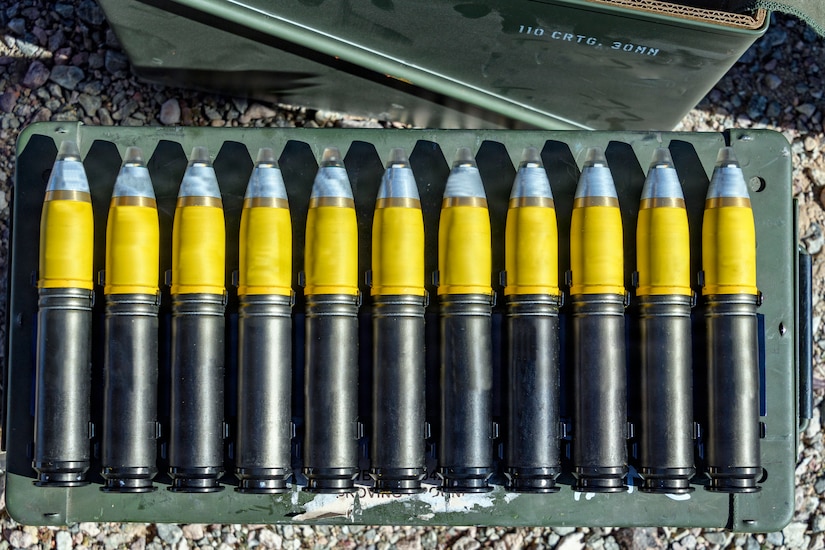
The Yuma Test Center at U.S. Army Yuma Proving Ground, Arizona, recently tested a new 30 mm Aviation Proximity Explosive round, primarily developed for firing from the AH-64 Apache helicopter.

A small circle of black smoke radiates from a military round that explodes near a target on a range.

The APEX closely resembles the fielded M788 training round and M789 high explosive dual-purpose round. 

Walter McCormick, a test officer at the proving ground, explained that the APEX is designed to integrate with the existing M230 gun already mounted on the Apache. 

"The APEX round was developed to be a [fragmented] round that would [explode] in front of the [unmanned aerial system] and make a [small] pattern that would take out a UAS," McCormick said, adding that the need for counter-UAS solutions is urgent. 

In recent years, the UAS has become the weapon of choice on the battlefield, as seen in Ukraine and Russia. Army Secretary Daniel Driscoll is pushing for the Army to focus its efforts on UAS and counter-UAS technology. In fact, the Yuma Test Center has been designated as the primary, dedicated interagency counter-small UAS test and training range.

During testing, the center performed two subtests: the first to assess and compare it with the legacy M789 rounds, and the second test was to engage a UAS. Crews fired approximately 1,200 rounds across the two variants at both short and long ranges.

"We engaged a couple [of] different UASs and a few different ground targets," McCormick said.

Eleven large munition rounds are lined up on a case outside.

Yuma Proving Ground has nearly 2,000 square miles of restricted airspace and year-round sunshine, which makes it ideal for aerial testing.

"They have done ground testing at other ranges. The problem is they don't have the land or airspace to do aerial firing from a helicopter. So, that's a big benefit. Plus, all the unique instrumentation YPG offers," McCormick said.

During the APEX test, the proving ground used its full arsenal of support capabilities to collect data, including air-to-ground assets such as chase pilots from UH-60 Black Hawk helicopters flying overhead for scoring, tracking mounts, telemetry, high-speed video, still photographers and data collectors.

These assets are readily available to industry partners testing at the proving ground.

"The Black Hawk was used primarily for overhead [scoring], so we can assess where rounds are impacting based on [the] firing point of the aircraft. The other benefit of surrounding ground camera angles was having a 360-[degree] view of the situation," McCormick said.

The next step for the APEX is to undergo airworthiness release based on the current test results. This will provide a safety release for the APEX to be fired from Apaches by soldiers when rounds are available. The airworthiness release is a milestone on the road toward materiel release and fielding.

260th Special Purpose Brigade Activated to Strengthen Security in the Nation's Capital

The District of Columbia National Guard activated the 260th Special Purpose Brigade at the D.C. Armory, March 7. It is the only brigade in the Army specifically designed to coordinate military support to civil authorities and protect critical infrastructure in the nation's capital.

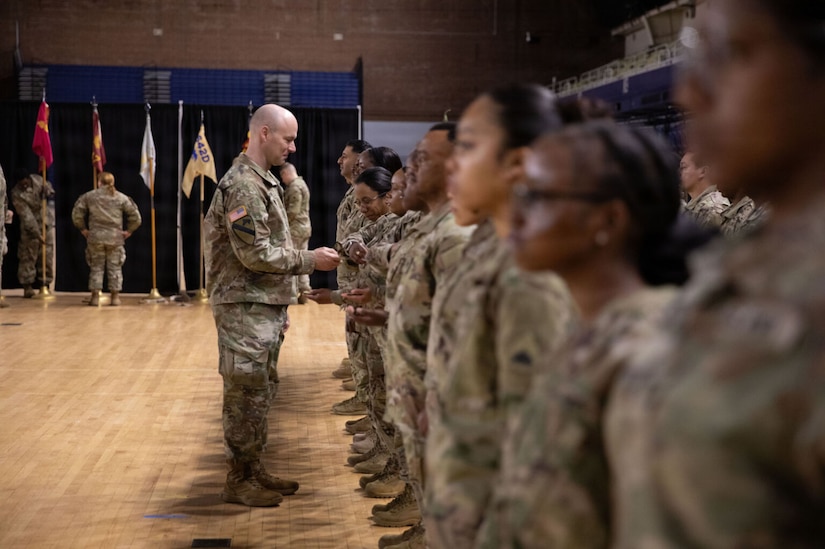
A group of people dressed in camouflage military uniforms stand at attention as a man also dressed in similar attire hands them a coin.

The brigade was created in response to Executive Order 14339 and a subsequent directive from the secretary of war. These called for the immediate establishment, training and equipping of a dedicated National Guard unit. The goal is to support public safety operations and strengthen coordination between military forces and civilian security partners in the district.  

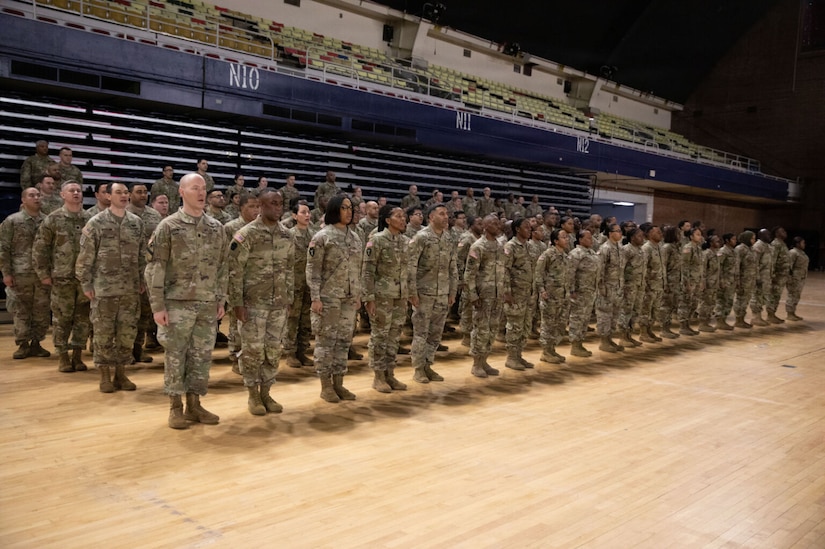
Army Brig. Gen. Craig Maceri, land component commander for the D.C. National Guard, presided over the activation ceremony. Soldiers stood in formation as the brigade's colors were uncased — a military tradition that signals a unit's formal activation and readiness for duty.  

"The activation of the 260th Special Purpose Brigade represents the deliberate execution of national guidance," Maceri said. "This unit provides the critical command and control structure that enables us to execute a broad spectrum of scalable operations while effectively integrating with our federal and district partners."  

The brigade will coordinate military support to civil authorities and enabling National Guard forces to rapidly integrate with federal and local agencies responsible for safeguarding the capital.

A group of people dressed in camouflage military uniforms stand in formation.

Washington presents a unique operational environment, including the constitutional institutions of the federal government, foreign embassies and national monuments, as well as millions of visitors each year. Protecting that environment requires close coordination between military forces and civilian agencies during major national events, security operations and emergencies.  

Among the brigade's key partners is the U.S. Marshals Service, which regularly works alongside the D.C. National Guard during security operations in the capital.  

"Partnerships like this are essential in Washington," U.S. Marshal Jurgen Soekhoe said. "The 260th Special Purpose Brigade brings a level of coordination and readiness that allows federal law enforcement and the National Guard to operate as a unified team when security demands it."  

Army Col. Lawrence Doane, commander of the 260th Special Purpose Brigade, said the brigade structure ensures continuous coordination with partner agencies. It also allows the brigade to expand rapidly when missions require additional forces.

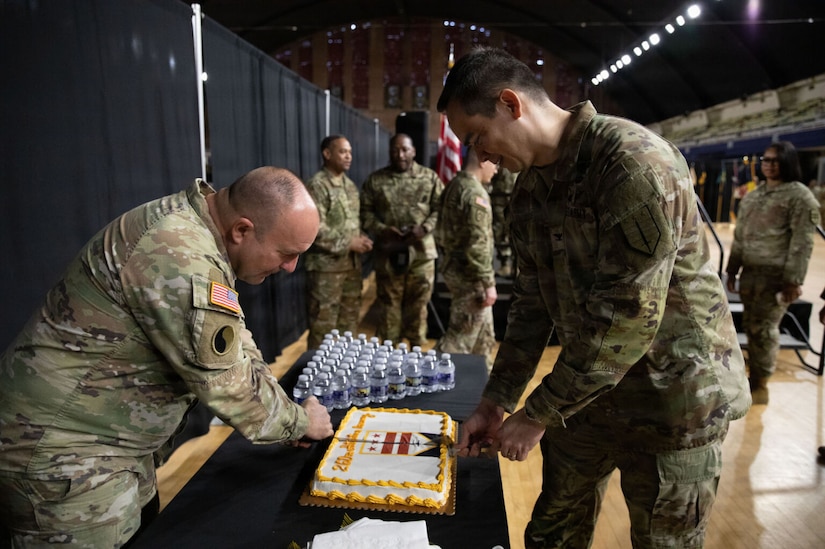
A man dressed in a camouflage military uniform cuts a cake as another man in similar attire looks on.

"This brigade gives us an operational foundation for unity of effort," Doane said. "It ensures continuity of planning and coordination so that when the situation changes, we can respond quickly and with clarity."  

The brigade also reflects the unique federal role of the D.C. National Guard, which reports directly to the president, not a state or territory governor. This structure places the organization at the center of national-level security planning for the capital.  

The unit's new patch connects the brigade's modern mission with its historic lineage. The design features three red stars and two red bars drawn from the District of Columbia flag, itself derived from the coat of arms of George Washington's family.  

The brigade carries forward the heritage of the 260th Military Police Command, a D.C. National Guard headquarters brigade that, for decades, coordinated military police operations supporting civil authorities and emergency response across the district, until its inactivation in 2011. Its lineage reflects a long-standing mission of integrating National Guard forces with federal and local partners to protect critical institutions and maintain security in the nation's capital.

A man wearing a military camouflage uniform, stands while looking down. Other men in the foreground stand at attention.

At the patch's center is an upright, unsheathed sword representing the brigade's role in providing security for all who live, work and visit the nation's capital.  

"This new patch reflects something bigger," Doane said. "It represents our commitment to protecting every person who sets foot in the nation's capital."  

With the uncasing of its colors, the 260th Special Purpose Brigade begins its mission as a dedicated force. It will support public safety, infrastructure protection and coordination between civilian and military agencies in Washington.