Showing posts with label vietnam war. Show all posts

Thursday, June 25, 2026

Families of Vietnam War Missing Gather to Hear Updates, Share Stories

The bedrock of the warrior ethos is that Americans never leave behind a fallen comrade, said Anthony Tata, undersecretary of war for personnel and readiness.
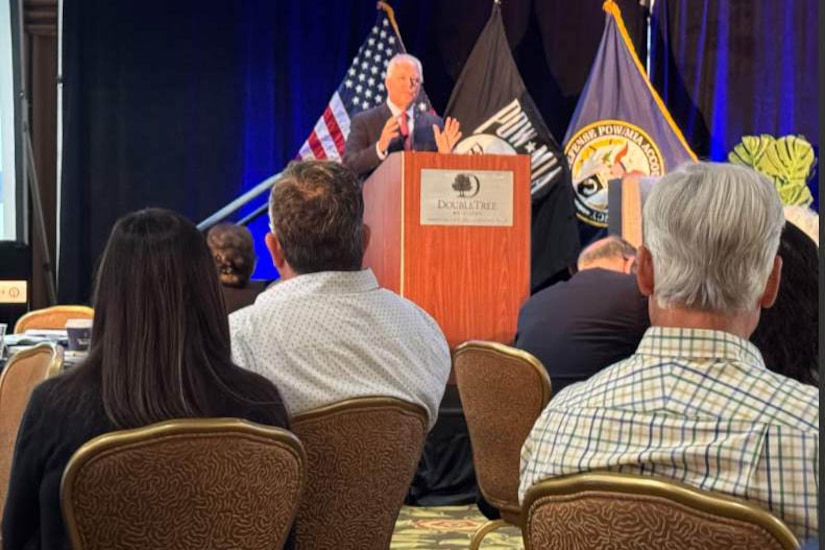
A man standing behind a lectern on a stage speaks to an audience.

Tata spoke today in Arlington, Virginia, to members of families who lost loved ones during the Vietnam War. The event was sponsored by the Defense POW/MIA Accounting Agency. 

"The Vietnam War may have ceased more than half a century ago, but I know that for all of you, it's never really ended, and you have spent decades carrying your silent vigil, a silent vigil for your unaccounted-[for] fathers, mothers, brothers, sisters, family and friends, and waiting for answers. Know that this War Department is focused on helping you find them," Tata said.
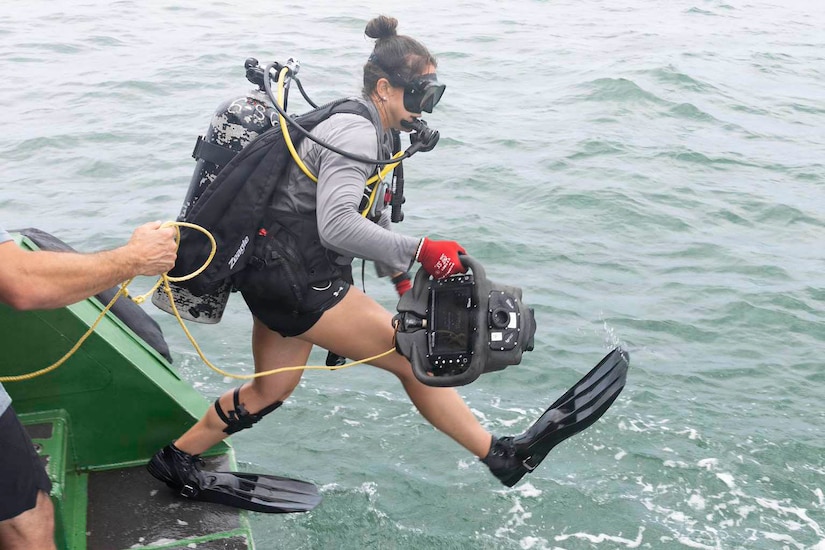
A woman wearing scuba gear jumps out of a boat into water.
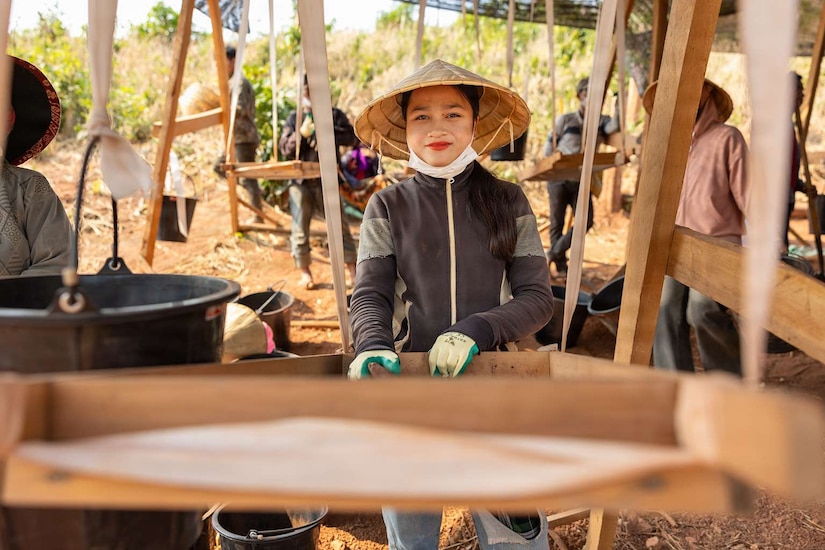
A woman wearing a conical hat stands in front of a wood tray.
The undersecretary applauded the work that teams are doing in the field around the world searching for remains, as well as the scientists who make the identifications in the laboratories at Hickam Field and Pearl Harbor in Hawaii, and Offutt Air Force Base in Nebraska. 

The DPAA mission is personal, Tata said, noting his own combat service and remembering his comrades who never made it home alive.  

Kelly K. McKeague, director of DPAA, said his agency has been working to recover remains from the Vietnam War since 1985 and that DPAA-trained Vietnamese recovery teams have located the remains of many missing Americans.
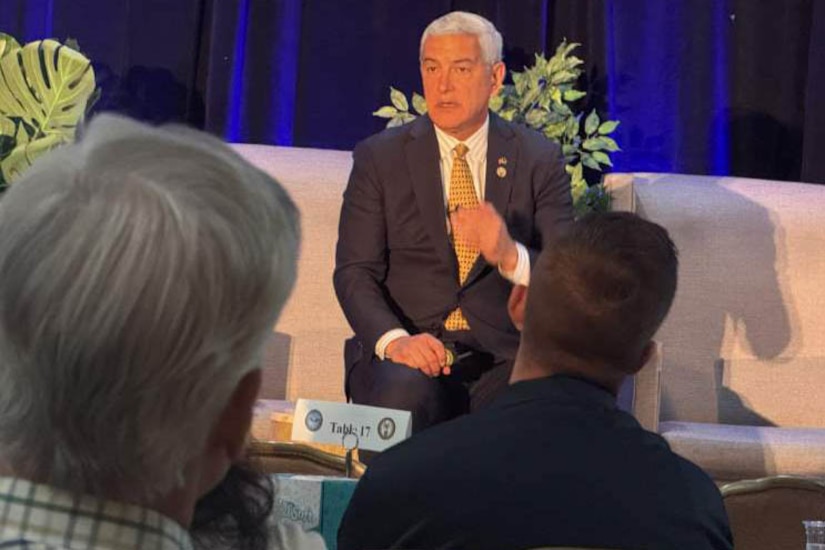
A man seated on a stage speaks to an audience.

Communicating and connecting is just as important as it is with accounting for your loved ones, McKeague said. 

"This is that sacred obligation, that moral imperative that we have told you for years, that we live it, we don't just talk it. We live it simply because we know your loved ones made the supreme sacrifice, you deserve those long-sought answers and that's why we're here," he said. 

While DPAA has been searching for service members from all wars dating to World War II, the agency has prioritized finding the missing from the Vietnam War since firsthand witnesses in several nations where operations took place are aging and dying, McKeague said.
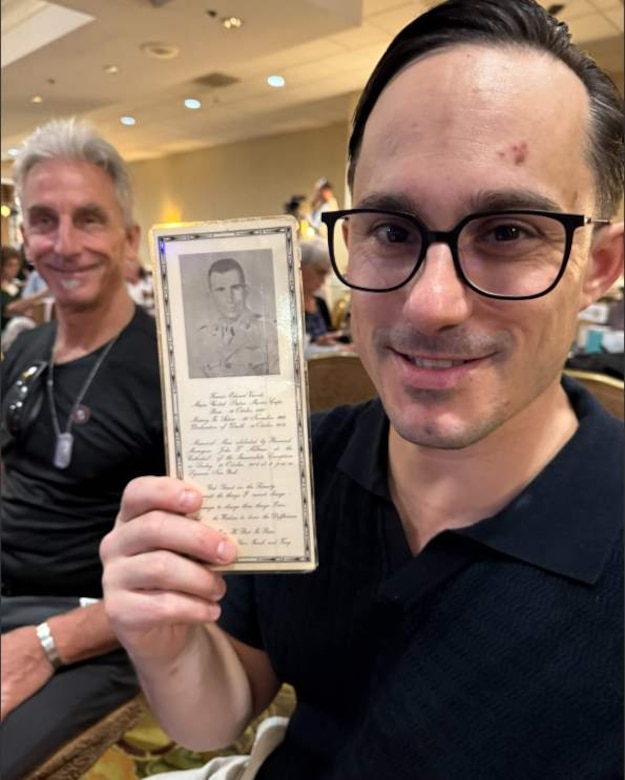
A man holds up a leaflet with a photo of a man and some cursive writing while another man looks on.

Justin O'Connell, grandson of Marine Corps Maj. Francis Edward Visconti, held a picture of his grandfather, who died Nov. 22, 1965, when his UH-34D helicopter crashed during a night flight in a storm in South Vietnam.  

He and three others on that flight are still missing. Next to O'Connell was his uncle, Tony Visconti, who was wearing an extra set of his brother's identification tags. 

Susan Lilly Harvey's brother, Army 1st Lt. Lawrence Lilly, went missing in Southeast Asia when his Cobra helicopter went down. She said she's been coming to these gatherings every year for 40 years. 

Raymond L. Echevarria Jr.'s father, Army Sgt. Maj. Raymond L. Echevarria Sr., and two other soldiers went missing in Laos following a firefight with Viet Cong. An interpreter escaped to relay what happened. 

Last year, 231 missing service members were accounted for, including eight from the Vietnam War, with the remainder from World War II and the Korean War. Most of the recovery sites are in Europe and Southeast Asia. There are currently 1,565 missing U.S. personnel from the Vietnam War. 

Monday, December 08, 2025

Medal of Honor Monday: Army Sgt. Ray McKibben

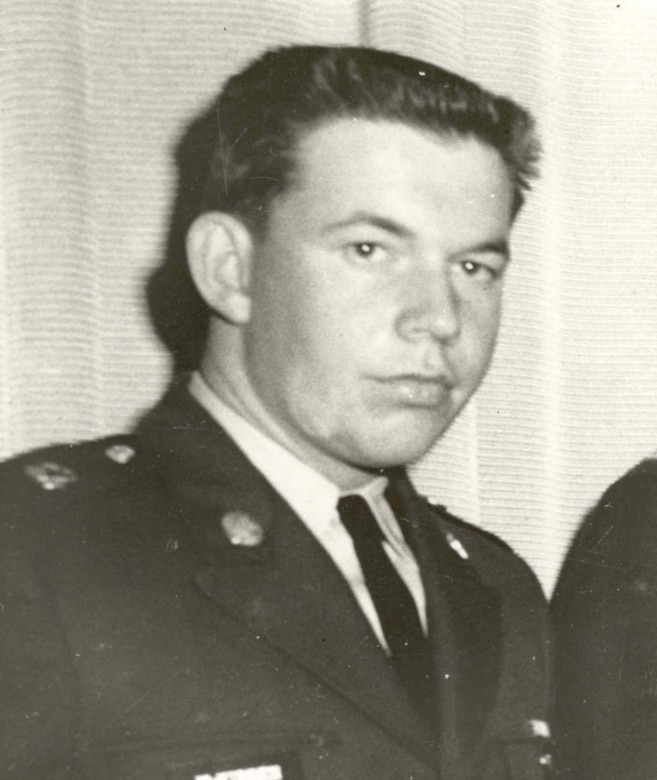
On his third deployment to Vietnam, Army Sgt. Ray McKibben went after the enemy on numerous occasions when his unit was unable to do so themselves. McKibben didn't survive his tour of duty, but his courage and dedication to the mission led him to receive a posthumous Medal of Honor. 

A man in a military dress uniform looks stoic for a photo.

McKibben was born Oct. 27, 1946, in Felton, Georgia, to Albert and Dottie McKibben. He had an older brother named AJ.

Little has been published about McKibben's childhood, but he attended Buchanan High School before following in his brother's footsteps by joining the Army in the early 1960s.

According to a 1970 article in The Atlanta Constitution newspaper, McKibben had been in the Army for five years and was on his third tour of duty in Vietnam when he gave his life to save his comrades.

On Dec. 8, 1968, McKibben led a unit at the head of a reconnaissance patrol of Troop B of the 7th Squadron, 17th Cavalry Regiment, 1st Aviation Brigade. They were in enemy territory near Song Mao in southeast Vietnam, where the U.S. Army had a base.

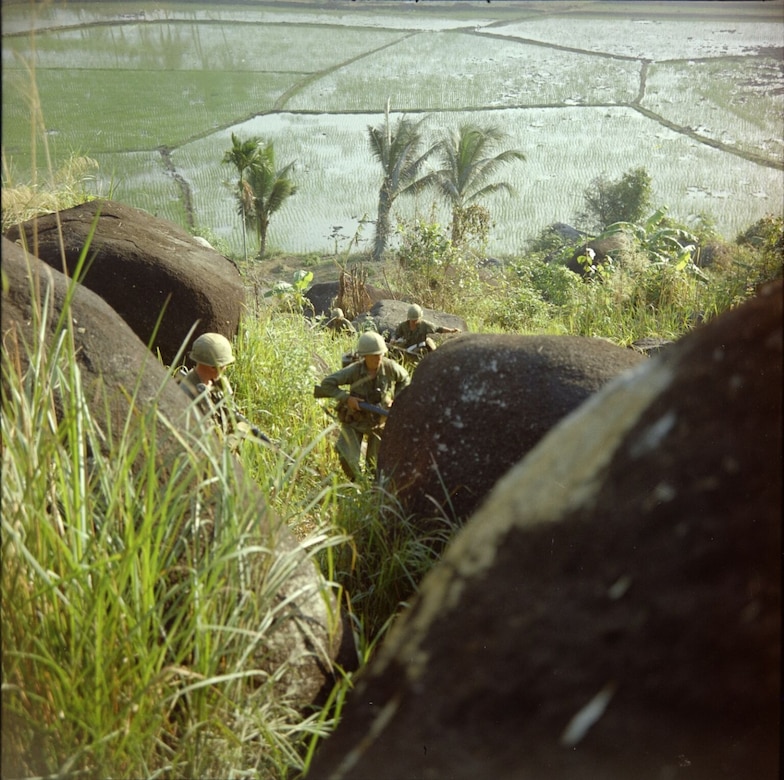
As McKibben led his team along a well-traveled trail, they came under heavy automatic-weapons fire from a fortified bunker, forcing them to take cover. McKibben appraised the situation before charging through bamboo and heavy brush toward the position, killing its gunner and securing the weapon before directing his patrol to keep moving forward.

Men in combat gear move up a rocky, grassy slope.

As his men continued on, McKibben noticed enemy movement to the patrol's flank. He quickly called in a helicopter gunship for close-air support to neutralize the threat.

When the patrol rounded the bend of a river, they were hit by heavier automatic-weapons fire, this time from camouflage bunkers. When one soldier fell wounded, McKibben ignored the intense gunfire all around him and ran to the man's side, pulling him to safety behind a rock before giving the soldier rudimentary first aid.

McKibben then noticed more of his fellow soldiers were pinned down and unable to take out the enemy bunkers. So, he went on a one-man mission to take them out himself. McKibben charged through the brush amid a hail of gunfire to get to the first bunker, where he killed the enemy inside with his rifle before securing its weapon.

McKibben then charged the next bunker, using his rifle and the captured enemy gun as he went. When both weapons ran out of ammunition, he finished the bunker off with hand grenades.

Reloading his rifle, McKibben provided cover for his fellow soldiers as they continued moving. When he noticed yet another bunker blocking their advance, he once again took it upon himself to assault the position.

Sadly, his luck had run out. As McKibben got close, he was hit by gunfire and didn't survive. However, he was able to shoot one final burst from his weapon, once again killing the enemy inside.

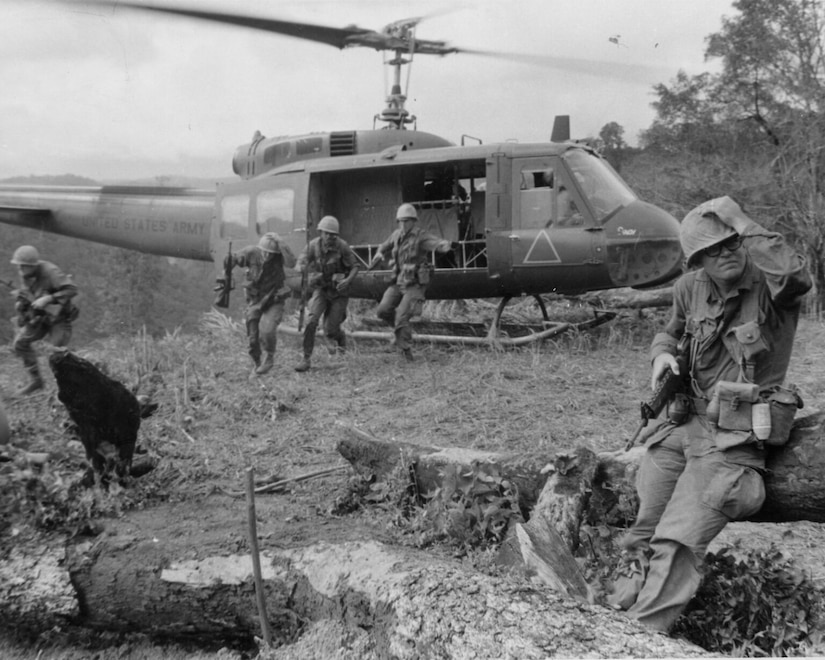
Four men wearing military combat gear move away from a helicopter hovering just off the ground. In the forefront, another man in similar attire sits on a log.

McKibben's courage and commitment helped save the lives of his fellow soldiers and allowed them to finish their mission.

On April 7, 1970, McKibben's widow, Anna, received the Medal of Honor on his behalf from President Richard M. Nixon during a White House ceremony. Twenty other fallen Vietnam soldiers also received the nation's highest medal for valor that day.

McKibben is buried at the Center Baptist Cemetery in his Georgia hometown, where he has not been forgotten. A portion of Highway 120 near where he grew up was renamed in his honor in the 1990s.

The military continues to honor his sacrifice as well. In 1984, a renovated building was renamed McKibben Hall at the now-closed Fort Gillem, Georgia. In 2008, the 7th Squadron that he was once a part of dedicated a conference center and a memorial to him at the unit's new headquarters at Fort Campbell, Kentucky. 

Tuesday, September 23, 2025

From Combat Veteran to TV Star

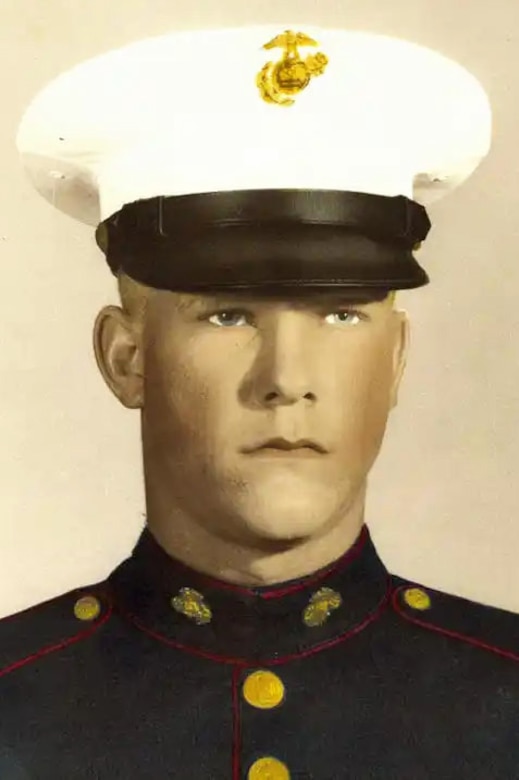
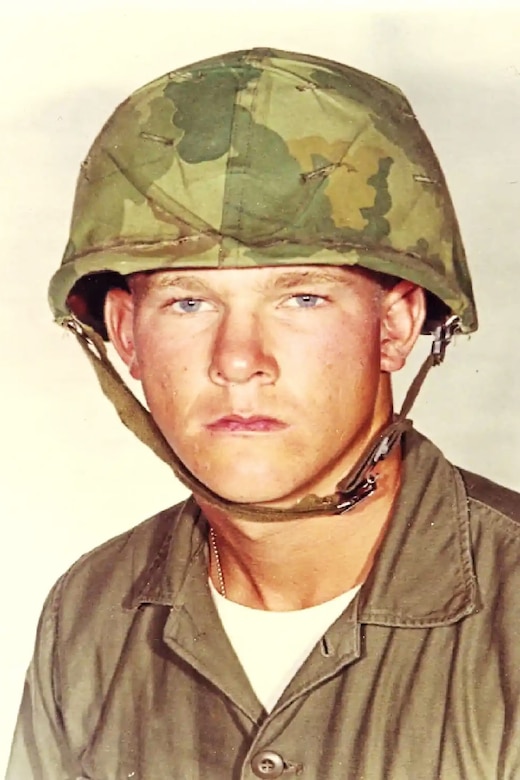
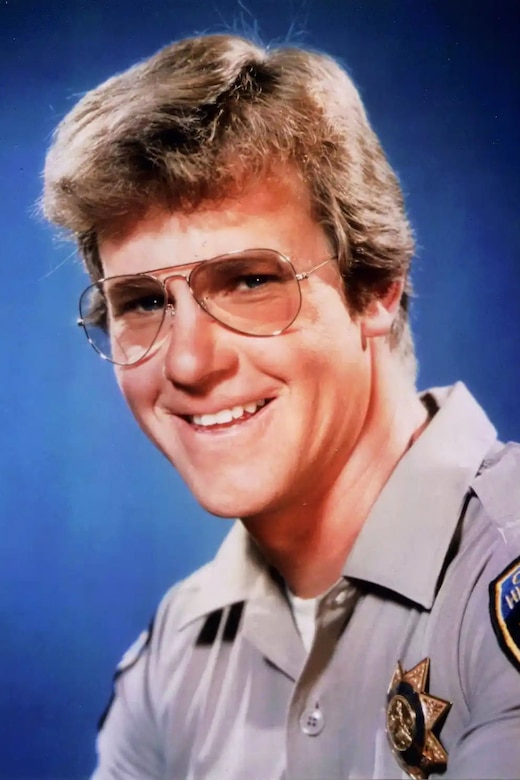
Actor Larry Wilcox, best known for his leading role as a California Highway Patrol motorcycle officer and later as a captain in the TV series CHiPs, which aired from 1977 to 1983, was also a Marine Corps combat veteran.

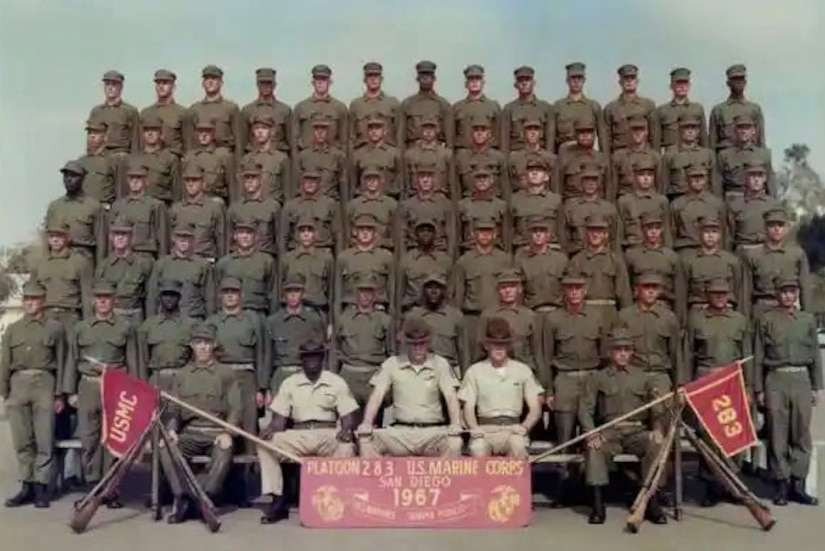
In May 1967, Wilcox went to boot camp at Marine Corps Recruit Depot San Diego. 

He served as a field artilleryman assigned to 2nd Battalion, 12th Marine Regiment, from 1967 to 1970. 

A Marine in a military dress uniform poses for a photo.
A Marine is pictured in a military uniform and helmet.
A man poses for a photo in sunglasses and a police uniform costume.
Those years included a 13-month deployment to South Vietnam, where he served in the northernmost region of the country, in places such as Dong Ha, Con Thien and the demilitarized zone bordering North Vietnam.  

Also, he fought in the Tet Offensive, which started Jan. 30, 1968, and lasted until September 1968.

Like many Vietnam War veterans, Wilcox's homecoming was not joyous. 

"My memories of my returning home to San Francisco were ugly, and I did not understand why people spat on you for risking your life," he said, referring to people at the airport. 

 During his final year of military service, he was stationed at Marine Corps Air Ground Combat Center in Twentynine Palms, California, where he was honorably discharged as a staff sergeant in 1973. 

Wilcox, born Aug. 8, 1947, in San Diego, still lives there. 

His older brother, Randy, also served in the Marine Corps, including during the 1962 Cuban missile crisis.

A platoon of Marines wearing military uniforms sitting and standing on bleachers.

Wednesday, August 02, 2023

The Abrams Charter: A Landmark Document Shaping the U.S. Military

The Abrams Charter is a landmark document that has significantly influenced the United States military's organization, strategies, and capabilities. Named after its author, General Creighton W. Abrams Jr., the charter laid the foundation for modernizing and reforming the U.S. Army after the tumultuous experiences of the Vietnam War. In this article, we explore the origin, history, and lasting impact of the Abrams Charter on today's U.S. military.

Origin and Historical Context:

The Abrams Charter was formulated in the aftermath of the Vietnam War, a conflict that posed immense challenges to the U.S. military. During the war, the U.S. Army faced various issues, including inadequate training, lack of public support, and a demoralized force. Recognizing the need for transformative changes, General Abrams, who succeeded General William Westmoreland as the commander of U.S. forces in Vietnam in 1968, embarked on a mission to address these shortcomings.

Development and Key Principles:

General Abrams outlined his vision for the future of the U.S. Army in a document known as the "Abrams Charter." This document, drafted in 1971, sought to address the challenges faced during the Vietnam War and proposed a series of principles and reforms to revitalize the Army.

Some of the key principles of the Abrams Charter included:

  1. Manpower and Training: The charter emphasized investing in the professional development and training of soldiers. It advocated for a better-trained, well-disciplined, and more cohesive force.

  2. Technological Advancements: Recognizing the importance of technological superiority on the battlefield, the charter called for increased research and development of advanced military equipment and weapons.

  3. Combined Arms Doctrine: The Abrams Charter emphasized the importance of combining infantry, armor, artillery, and other combat arms in unified and integrated operations, enhancing the overall effectiveness of military units.

  4. Mobility and Flexibility: The charter highlighted the need for enhanced mobility and flexibility to counter various threats effectively, focusing on expeditionary warfare capabilities.

  5. Improved Command and Control: The document stressed the importance of effective command and control structures, facilitating better coordination and decision-making in military operations.

Effect on Today's U.S. Military:

The Abrams Charter's profound influence on the U.S. military landscape cannot be overstated. Its principles and recommendations laid the groundwork for significant reforms that continue to shape the military's structure and approach to warfare.

Today, the U.S. military, particularly the Army, incorporates many of the concepts outlined in the charter:

  1. Training and Professionalism: The U.S. military places a strong emphasis on training and professionalism, ensuring that its soldiers are well-prepared for the complexities of modern warfare.

  2. Technological Advancements: The U.S. military remains at the forefront of technological advancements, continuously developing and adopting cutting-edge equipment and systems.

  3. Combined Arms Doctrine: The principle of combining different combat arms in unified operations is integral to the U.S. military's approach to joint warfare.

  4. Mobility and Flexibility: The U.S. military maintains highly mobile and flexible forces capable of rapidly responding to a wide range of threats and contingencies.

  5. Command and Control: Effective command and control structures ensure seamless coordination among military units, enabling better decision-making and execution of operations.

Conclusion:

The Abrams Charter stands as a pivotal document in the history of the U.S. military. General Abrams' vision for reform and modernization has had a lasting impact, shaping the U.S. military into the highly professional, technologically advanced, and agile force it is today. The principles laid out in the charter continue to guide the U.S. military's evolution, ensuring it remains a formidable and adaptable force capable of defending the nation's interests at home and abroad.

Wednesday, July 19, 2023

The Republic of Vietnam Campaign Medal: Recognizing Service in the Vietnam War

The Republic of Vietnam Campaign Medal holds significant historical importance as a symbol of recognition for the men and women who served in the Vietnam War. Awarded by the Republic of Vietnam (South Vietnam) government, this medal commemorates the dedication, sacrifice, and valor displayed by those who fought alongside South Vietnamese forces in their struggle against communist aggression.

Origins and Purpose:

The Republic of Vietnam Campaign Medal was established on May 12, 1964, by the South Vietnamese government to honor military personnel and civilians who participated in the defense of South Vietnam. It recognized individuals who served for at least six months in the country or who were engaged in direct combat with enemy forces. The medal aimed to highlight the contributions made by allied forces and the shared commitment to protecting the freedom and sovereignty of South Vietnam.

Design and Symbolism:

The design of the Republic of Vietnam Campaign Medal reflects the cultural heritage and symbolism of South Vietnam. The medal features a central image of a stylized dragon surrounded by a laurel wreath. The dragon, a revered creature in Vietnamese folklore, represents power, strength, and protection. The laurel wreath symbolizes honor and victory. The reverse side of the medal displays an inscription in Vietnamese, which translates to "Republic of Vietnam Armed Forces."

Eligibility and Criteria:

To be eligible for the Republic of Vietnam Campaign Medal, individuals had to meet specific criteria set by the South Vietnamese government. This included serving in the Republic of Vietnam Armed Forces, the U.S. military, or other allied forces during the designated period of the war. The eligibility criteria also extended to individuals who provided direct support to the South Vietnamese government or participated in operations against enemy forces.

Recognition and Legacy:

The Republic of Vietnam Campaign Medal served as a tangible recognition of the bravery and sacrifice of those who fought in the Vietnam War. It acknowledged the contributions made by allied forces in supporting the defense of South Vietnam against the communist threat. The medal became a cherished memento for veterans, serving as a reminder of their commitment to the cause and their comrades who fought side by side.

Controversy and Debate:

It is important to note that the awarding of the Republic of Vietnam Campaign Medal has generated controversy and differing opinions. The medal was awarded by the South Vietnamese government, which ceased to exist after the fall of Saigon in 1975. As a result, the medal does not have official recognition or authorization from the United States government. Some veterans and organizations do not consider it an official U.S. military decoration. However, it remains a significant symbol of service and sacrifice for those who received it.

Honoring Vietnam War Veterans:

Regardless of the debate surrounding its official status, the Republic of Vietnam Campaign Medal continues to hold personal significance for Vietnam War veterans. It serves as a tangible reminder of their contributions, bravery, and the difficult conditions they endured during the conflict. As we reflect on the Vietnam War, it is essential to honor and recognize the service of these veterans, ensuring their sacrifices are acknowledged and remembered.

In conclusion, the Republic of Vietnam Campaign Medal represents the valor and commitment of those who served in the Vietnam War. While its official status may be a subject of debate, its personal significance for veterans cannot be diminished. This medal serves as a lasting testament to the shared sacrifices made by allied forces and the common purpose of defending South Vietnam's freedom and sovereignty. Let us remember and honor the service of Vietnam War veterans, recognizing their courage and dedication to duty.


Friday, September 18, 2015

Stories from Vietnam: Into the assassin's den

by Karen Petitt
375th Air Mobility Wing Public Affairs


9/12/2015 - SCOTT AIR FORCE BASE, Illinois -- Editor's Note:  This is a first in a series on Scott's Vietnam Veterans, and is part of the DoD's 50th Anniversary Commemoration of the Vietnam War.

Low on fuel, a radio call came over the net directing a search for a downed American pilot. Capt. Keith Sawyer was returning from directing an air strike in the mountains north of Saigon, the capital city of Vietnam in 1963, and instantly headed to the new coordinates.

As a Forward Air Controller, his job was to fly low to the ground in his L-19 (O-1A) "Bird Dog" aircraft to mark targets with smoke grenades or white phosphorus rockets called "Willie-Petes," signaling enemy positions for fighter aircraft to come in behind and destroy. On this mission he would have helped signal a rescue mission.

He searched for the pilot when red and yellow tracer rounds shot past him, and he suddenly realized it was a trap. The Viet Cong had infiltrated the radio signals, and finding himself sandwiched between a narrow pass in the valley and unable to turn, he braced himself to fly right through it.

Unable to perform defensive maneuvers, he prayed that he and his back seat South Vietnamese observer would make it back to base alive. He stayed fixated on his near-empty fuel tank until he arrived back at Tan Son Nhut Air Base, a major operating air field during the Vietnam War from 1959 through the Fall of Saigon in 1975.

"After we landed, everyone came out to inspect our aircraft to count the number of bullet holes, but there weren't any," said Sawyer, now a retired colonel who served in the Air Force for 30 years. "That alone was incredible, but we also checked our fuel because my gauges showed empty for most of the flight home. They got out a measuring stick. It came out dry. They went to the lowest point in the fuel tank and came out with one cup of fuel. From then on, everyone wanted to fly with me because of my 'invisible shield,' although I know it was divine intervention."

That divine intervention would last throughout his year-long service in Vietnam from April 24, 1963 to April 24, 1964 as he accumulated 600 flying hours that included 386 combat missions. This 26-year-old would become so good at finding, targeting and thus destroying important enemy targets that he would earn the prestigious Distinguished Flying Cross as well as the Air Medal with 16 oak leaf clusters--awarded to aviators who distinguished themselves in flight. He also became a target for enemy assassins.

Once, he landed on a road by a small village and walked in to coordinate air cover with the local Vietnamese army commander. The mission was delayed so he explored the two streets that made up the village. The mission was subsequently called off due to lack of enemy contact so Sawyer started walking back to his plane when a U.S. Army advisor came out of a house and told him an assassination squad had been seen in town that was after him. The price on his head was $500.

"That was a very small village that I had been walking around in that day," he said. "And the Viet Cong assassins only made $6 a month, so you can imagine the incentive that kind of money could give them. How we didn't see them or they see us as we walked around was unbelievable."

Another time he was in a Chinese restaurant near the hotel where he stayed in Saigon. Always on the lookout for the enemy, he selected a table near an exit and mapped out an escape plan--just in case. Before he finished his meal, two assassins burst through the front door with grenades in their hands. They pursued him on foot as Sawyer ran back toward his hotel, shooting at them with a pistol he always carried. Near his hotel, guards caught and killed one of assassins while the other one escaped.

This became the new normal for him, but it didn't deter him from his efforts in performing his missions. He cared about his safety because he had a young wife and 2½ year-old-daughter at home who were counting on him to return, but he said he also had the reassurance from his ecclesiastical leaders before he left that "evil would be banished from his footsteps."

"I was protected every day I was there, and I saw that protection in dramatic ways ... and sometimes in not so dramatic ways. Sometimes I was protected merely by the choices I made," he said.

For instance, he had made a vow to keep Sunday a day that was holy by going to church and refraining from entertainment. Once he declined a Sunday evening event at a movie theater and that very night it was attacked and 20 people were killed--right where he normally sat.

"I am not sure all the reasons why I was protected while so many others died. I knew men who lost their lives or who were shot down and became prisoners. I wrestled with this and like many, I felt guilty for surviving. Towards the end of my tour, I was assigned one mission that a visiting U.S. Air Force pilot asked to take. He was killed on that mission and that is hard to live with. I did my duty, but when I was just a week from coming home, I did not want to put myself in unnecessary risk just to achieve a 'milestone' such as my 400th combat mission. I saw others try to do that, only to lose their lives. I just decided that what was important was focusing on going home. So, during that week I flew 'safer' missions."

Going home could have been a challenge, but the faith and moxie of his wife, Amy Jo, made that adjustment not only bearable, but healing as well.

It was during this time that America was just beginning to see the impact of the growing military action. Ho Chi Minh had declared Independence after World War II and began a revolution to unify North and South Vietnam under his communist rule. What followed was a lengthy build up to war that by 1975 had killed nearly three million Vietnamese and claimed 58,000 American lives.

It was in 1963 that a Buddhist monk would soak himself in gas and set fire to himself at a main intersection in Saigon as part of a political protest. Back home, President John F. Kennedy would be assassinated and the South erupt with Civil Rights demonstrations in Birmingham, Ala.

Adding to the turmoil were images that brought the vicious fighting of Vietnam into everyone's living rooms showing how Americans were becoming more entrenched in the region. These images documented the bloody casualties on the ground and air strikes that left the jungles ablaze, leaving Amy Jo haunted with every news report of a downed aircraft near Saigon. She'd have to wait for days--even weeks--to find out if her husband was yet alive.

"Can you imagine not knowing?" she said. "I would read the newspapers and then just wait. I knew of Keith's blessing of protection, but he didn't tell me all that was going on with him. In fact, there are stories that he'll tell now that I'm still learning about. I know he worked hard to protect me from the dangers he faced. I just did a lot of praying and tried to live each day as normally as I could. It's not like today's families who are able to Skype to where they're serving. No, we didn't have anything like that. Today's families are blessed to have such instant communication."

Amy Jo proved wise as she kept a picture of him next to her daughter's bed and told her stories every night. That, he said, made all the difference when he came home a year later.

"Instead of being afraid of me, she ran into my arms and recognized me as her daddy," he said. "I consider that one of the greatest gifts my wife gave to me while I was gone. It meant everything to me to have my daughter know me and it speaks well of the efforts Amy Jo went to keep our home a safe and happy place while I was gone."

They had married when just 19 years old. He was a farmer near Gilbert, Ariz., and during the age of the cotton cash crops, he managed quite well for himself. She was a musically gifted and cultured "city girl" from Mesa. They had known each other since age 16, and once married they attended college where he joined the ROTC program and eventually committed to serving in the Air Force before being drafted into another branch of service.

During this time, his brother, Darrell, who had always dreamt of being a pilot, not only acquired his pilot's license but became the flight instructor who taught Keith how to fly. Those flying lessons came in handy during his service in Vietnam where he flew so low that he could see the enemy submerged in the river breathing through bamboo reeds.

Sawyer's many missions were dangerous and harrowing. He took lives. He saved lives. And he, like many veterans, suffered symptoms of Post Traumatic Stress Disorder, including nightmares and hyper sensitivity. Unlike veterans of today, there were no support groups and no PTSD therapy for Vietnam veterans. But, gradually, his nightmares disappeared, he said, as he continued to freely share his experiences with friends and family.

"There are many who still don't talk about their experiences even today," he explained. "I've always been able to talk about mine, so I think that has been its own type of therapy in a way."

After his tour in Vietnam, the farming industry was at a low point for Arizona, due to drought, so Sawyer decided to stay in the Air Force where he often returned to Vietnam between 1965 through 1974. This time he flew C-124 and C-141 cargo aircraft that brought in supplies to the troops throughout the country and he often airlifted the wounded back to the U.S. He continued a career in cargo aircraft settling into the C-141s becoming a squadron commander and a mission planner for several highly visible operations, including bringing the first round of POWs home from Hanoi.

Now, at age 78, with four children, 11 grandchildren, and one great-grandchild, he continues to serve in the community, at church and with his wife in her music activities. He said he plans to keep on sharing his memories as long as he's able and as long as there are people willing to hear the war stories from this Vietnam veteran.

Friday, August 21, 2015

Soldier Missing From Vietnam War Accounted For


The Department of Defense POW/MIA Accounting Agency (DPAA) announced today that the remains of a serviceman, missing from the Vietnam War, have been identified and will be buried with full military honors.

Army Maj. Dale W. Richardson of Mount Sterling, Illinois, will be buried Aug. 29, in Mountain View, Ark. Richardson was assigned to 2nd Battalion, 34th Armor Regiment, 1st Cavalry Division, and was the passenger aboard an UH-1H Iroquois (Huey) helicopter that was en route to Fire Support Base Katum, South Vietnam, when it was diverted due to bad weather. After flying into Cambodian airspace, the aircraft came under heavy enemy ground fire, causing the pilot to make an emergency landing in Kampong Cham Province, Cambodia. The Huey’s four crewmen and its four passengers survived the landing. One crewman was able to evade being captured by enemy forces and later returned to friendly lines. The other three crewmen and one passenger were captured. Two of the captured crewmen were released by the Vietnamese in 1973, and the remains of the other two captured men were returned to U.S. control in the 1980s and identified. Richardson died at the site of the crash during a fire fight with enemy forces. His remains were not recovered after the fire fight.

From 1992 through 2008, joint U.S. / Kingdom of Cambodia (K.O.C.) teams investigated the site without success. On Feb. 18, 2009, a joint team interviewed witnesses in the Memot District of Cambodia who claimed to have information on the loss. The witnesses identified a possible burial site for the unaccounted for servicemen. The team excavated the burial site but was unsuccessful locating the remains.

From Jan. 16, 2010 to March 11, 2011, joint U.S. / K.O.C. teams excavated the area, but were unsuccessful recovering the crewman’s remains.

In February 2012, another joint U.S. / K.O.C. team re-interviewed two of the witnesses. The witnesses identified a secondary burial site near the previously excavated site. The team excavated the secondary burial site and recovered human remains and military gear from a single grave.

In the identification of Richardson, scientists from DPAA and the Armed Forces DNA Identification Laboratory (AFDIL) analyzed circumstantial evidence and used forensic identification tools, to include mitochondrial DNA, which matched his sister.


Today there are 1,627 American service members that are still unaccounted for from the Vietnam War.

Wednesday, July 29, 2015

McChord Field Honor Guard honors Vietnam War veteran

by Airman 1st Class Keoni Chavarria
62nd Airlift Wing Public Affairs


7/29/2015 - JOINT BASE LEWIS-MCCHORD, Wash. -- Helping to bring closure to a family after a service members death is an honor many people might not experience day-to-day, but for the McChord Field Honor Guard, it is something they deal with on a daily basis.

Recently, the McChord Field Honor Guard presented the family of Tech. Sgt. Hugh Sherburn, a Vietnam War veteran, with an active duty honors ceremony, July 25, at Waldport High School in Waldport, Ore.

Sherburn was an airborne radio communications analyst who went missing in action during his tour in the Vietnam War. He was assigned to the 6994th Security Squadron and was awarded the Distinguished Flying Cross with Oak Leaf Cluster, the Air Medal with fifth Oak Leaf Cluster, and Purple Heart after the incident.

Sherburn was given full service honors during the ceremony, which included a presentation from the honor guard's pallbearer, color guard, firing party, and bugle team.

"They are a great example and inspiration to everybody," said Brian Norris, Bateman Funeral Homes funeral director from Oregon. "The honor guard has been amazingly helpful and they know exactly what they are doing."

The honor guard's pallbearer team began their trip with a visit to Portland International Airport, Ore., to lead Sherburn off of an air plane and into a hearse, July 24.

From there, the team prepared for the funeral ceremony which took place the next day.

At the beginning of the ceremony, the pallbearer team brought the casket from the hearse and placed it on a stand.

After bringing out the casket, the honor guards firing party fired three volleys followed by a playing of taps by the bugle player.

According to Norris, the performances by the honor guard helps tremendously with bringing closure to the families.

"The compassion, care and the precision the honor guard performs with really, demonstrates to the family that they respect the sacrifice their loved one gave," he said.

Mary Jarvis, Sherburn's sister, was then presented a flag from Capt. Brian Meredith, 627th Force Support Squadron flight commander.

"We think that the presentation the honor guard gives is wonderful," said Jim Neal, Oregon Coast Veterans Association vice president. "We're glad the honor guard can come out and support this event."

The honor guard then concluded the ceremony by retiring the casket.

According to honor guard members, while the ceremony helps bring closure to families, it also gives the teams a sense of honor in helping veterans.

"Giving our brother [in arms] and his family a final closure, with the final ceremonial honors shows that we care about our fallen brothers and sisters and that we will do anything for them," said Senior Airman Angel Laureano, McChord Field Honor Guard lead trainer.

The McChord Field Honor Guard is made up of 30 Airmen who work in this special duty for six months out a year. For more information, call the McChord Field Honor Guard at (253) 982-3775.

Friday, July 10, 2015

AF Vietnam veterans honored on Capitol Hill


By Staff Sgt. Carlin Leslie , Secretary of the Air Force Public Affairs / Published July 09, 2015

WASHINGTON (AFNS) -- Current and former service members, members of Congress, Vietnam veterans and Air Force senior leaders gathered in the Emancipation Hall of the U.S. Capitol in Washington July 8 for a Congressional Commemoration to honor those who served during the Vietnam War.

The ceremony was part of the 50th Vietnam War Commemorative Partner Program, which is a multiyear campaign to thank and honor the veterans of the Vietnam War for their sacrifice and service and to pay tribute to the contributions of their families. Two Air Force veterans were among the 10 recognized in honor of their friends and comrades of war.

“It was a privilege to be present for the pinning of the 50th Anniversary of the Vietnam War lapel pin on Colonel William Driggers Jr. and Colonel Michael Brazelton in honor of all of those who served during Vietnam,” said Air Force Vice Chief of Staff Gen. Larry O. Spencer. “Like many great Americans who served during Vietnam, you will find it was not about them, it was about service to their country and their friends who didn’t make it back. I was proud to help recognize these heroes.”

Driggers served 26 years in the Air Force, earning the Legion of Merit, Distinguished Flying Cross, Meritorious Service Medal, Air Medal, Vietnam Campaign Medal, as well as three bronze stars, and many other awards and medals. He completed 337 combat missions in Southwest Asia and 714 combat hours in the F-4 Phantom II as an aircraft commander.

During this 50th anniversary event, Driggers spoke of his comrades who could not be in attendance for this occasion.

“As I thought about this 50th anniversary event, I wrote down 43 names of my friends and comrades, who didn’t make it home,” Driggers said. “This is a time for me to honor those men, their memories and accomplishments.”

Standing by Driggers’ side was Brazelton.

Brazelton was one of the most decorated pilots of the Vietnam War. He volunteered for duty in Southwest Asia to gain more flight experience and return home with enough hours to apply for test pilot school. On Aug. 7, 1966, Brazelton was shot down in his F-105 Thunderchief and was captured by the North Vietnamese and become a prisoner of war.

According to Brazelton, Vietnam veterans should be proud and honored to be received in such a way as this ceremony.

“I have had a number of medals pinned on me in my day and this is certainly the highest ranking and the most honors I have received for any pinning ceremony,” Brazelton said. “Even though it might just be a lapel pin to a lot of people, this is like a medal to the Vietnam veterans.”

Brazelton wants to ensure America remembers and never forgets the sacrifices of these American heroes.

“Remember the Vietnam veterans, especially those who are still suffering from their wounds even after 50 years.”