Showing posts with label WWII hero. Show all posts

Monday, August 31, 2026

Medal of Honor Monday: Marine Corps Brig. Gen. Robert Edward Galer

Marine Corps Brig. Gen. Robert Edward Galer was a fighter pilot during World War II and went on to serve more than 20 years on active duty. He received the Medal of Honor for his actions in the skies over Guadalcanal in 1942.
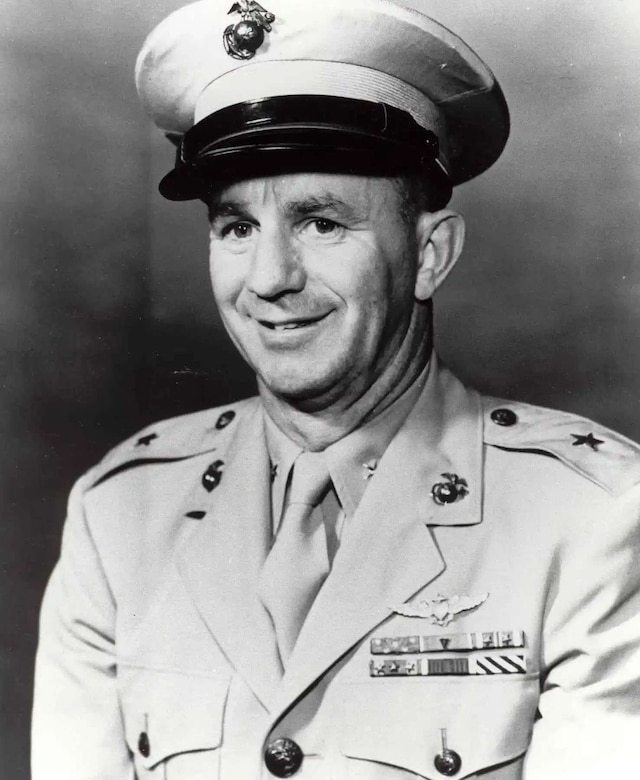
A man in a formal military uniform poses for a photo.

Galer was born Oct. 23, 1913, in Seattle. He was the youngest son of Frederick George Galer and Mary Loretta Leahy, and he had two older brothers, Vincent and Fred Galer Jr. 

Galer went to Queen Anne High School, where he excelled in sports, playing basketball, football, baseball and tennis, as well as running track. After high school, he attended the University of Washington in Seattle, where he was an All-American basketball player and a member of Navy ROTC. He graduated in 1935 with a bachelor's degree in industrial engineering. Following graduation, he enlisted in the Marine Corps because he wanted to fly quicker than an officer commission would allow. Galer began flight training at Naval Air Station, Pensacola, Florida, and about halfway through the course, he was offered an officer commission and became a second lieutenant in July 1936. 

In April 1937, he was assigned to the 1st Marine Brigade, Marine Corps Base Quantico, Virginia, for duty with Aircraft One. Over the next year, he served at The Basic School in Philadelphia, and he was briefly assigned to the Brooklyn Navy Yard before being ordered to St. Thomas in the U.S. Virgin Islands, where he served with Marine Scouting Squadron-3.
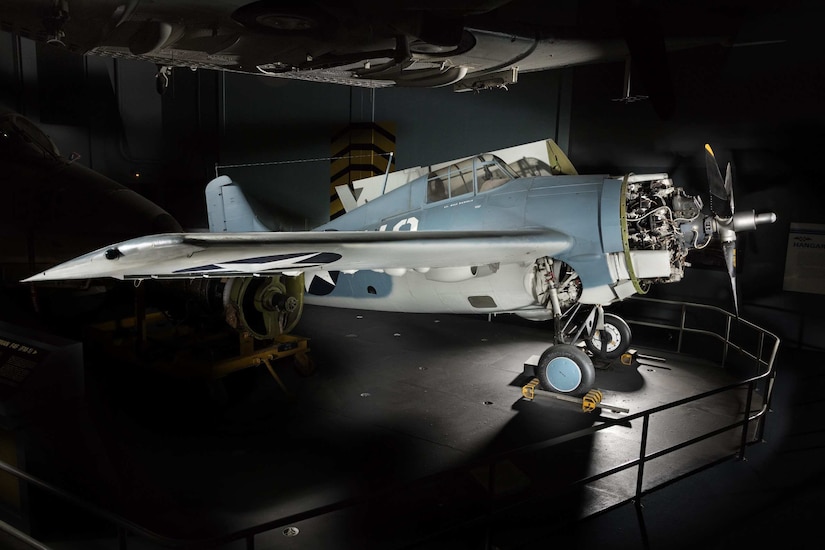
A propeller aircraft is displayed in a dark museum with a spotlight shining on it.

He married his first wife, Dorothy Beyer, shortly before the start of World War II. They had two children: Vincent and Robert Tipton Galer, who later retired as a colonel from the Air Force. Galer's first marriage ended in divorce, and he married his second wife, Sharon Alexander, in 1981; he became the stepfather to her children, Charles and Christine. 

Galer transferred to Marine Corps Air Station Ewa Field on Oahu, Hawaii, in January 1941. In an August 1998 interview, he described the days leading up to the Dec. 7, 1941, Japanese attack on Pearl Harbor. 

"There was practically no mention of trouble with Japan," Galer said. "In fact, the Saturday before the attack, we lined up the airplanes, wingtip-to-wingtip, and nobody even mentioned that we should scatter them."  

Ewa had very little damage from the attack, except for the airplanes. Galer said none of them were operational, so the Marines were issued rifles. 

Four Marines at Ewa were killed during the attacks, becoming some of the first American casualties of World War II. Galer and his fellow Marines on the ground fought back with machine guns, rifles and pistols.
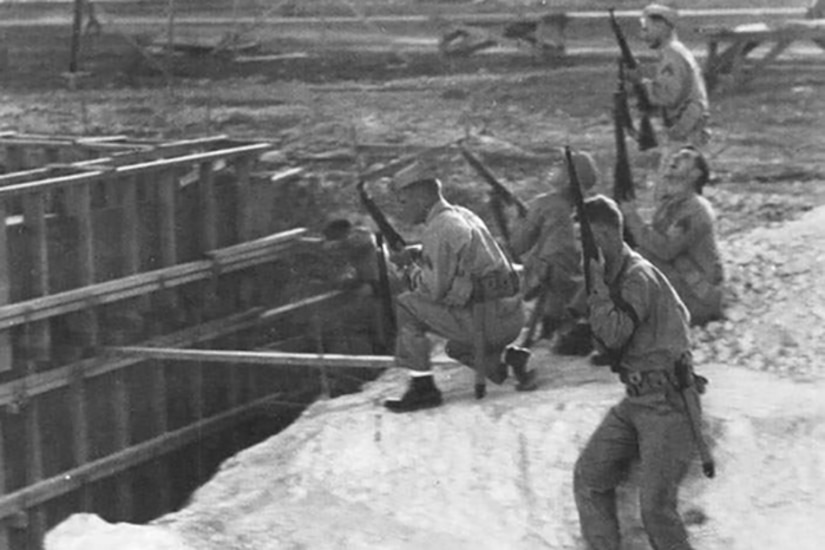
Five men in World War II-era military uniforms crouch and stand outside as they point their rifles toward the sky.

From Aug. 30 to Sept. 28, 1942, the dates of his Medal of Honor action, Galer, now a major, was the commander of Marine Fighter Squadron 224, Marine Aviation Group 21, flying over the skies around Guadalcanal in the Solomon Islands in the South Pacific in an F4F-4 Wildcat. 

His citation reads that he led his squadron in aerial combat with enemy forces in daring and aggressive raids against Japanese aerial forces, which were vastly superior in numbers.  

He availed himself of every favorable attack opportunity, shooting down 11 enemy bomber and fighter aircraft over a period of 29 days. Though suffering the extreme physical strain attendant upon protracted fighter operations at an altitude above 25,000 feet, the squadron, under his zealous and inspiring leadership, shot down a total of 27 Japanese planes. 

Galer received the Medal of Honor from President Franklin D. Roosevelt during a White House ceremony held March 24, 1943. 

The following month, he was assigned to Marine Corps Air Depot Miramar, in Southern California, where he was the assistant operations officer. He was promoted to lieutenant colonel and returned to Ewa in November 1943, where he was chief of staff, Marine Air, Hawaiian Area. During his 1998 interview, Galer said he was told Medal of Honor recipients wouldn't fly again, so he trained units on "this new-fangled radar." 

In July 1945, he took command of a cadet regiment at Marine Barracks, Naval Air Training Base, Corpus Christi, Texas, a position he held for two years before he attended the Armed Forces Staff College in Norfolk, Virginia. 

Galer remained on active duty another 10 years, with assignments at Marine Corps Air Station Cherry Point in North Carolina, Naval Air Station San Diego and the 1st Marine Aircraft Wing in South Korea. He was promoted to colonel in March 1951. 

On Aug. 5, 1952, while flying an AU-1 Corsair, Galer was shot down by antiaircraft fire over North Korea, while leading a squadron attack near Wonsan. After parachuting safely to the ground, he evaded capture by hiding in a cornfield.  

Upon his rescue, Galer said, "I do know that every pilot flying in this theater should have the highest possible morale with the knowledge that so many are ready and willing to risk so much to get them [when they are shot down]." 

After being hospitalized for two months for injuries sustained from ejecting from his aircraft, Galer was assigned as the assistant chief of staff for personnel at Marine Corps Air Station El Toro, California.  

His final assignment was with the Guided Missiles Division for the Department of the Navy, in Washington, where he served as the assistant director and then the acting director in January 1956. 

Galer retired from the Marine Corps July 31, 1957, and he was meritoriously promoted to brigadier general. That same year, he graduated from George Washington University in Washington with a master's degree in engineering administration. 

Following his retirement, Galer moved to Dallas, where he worked in the defense industry and then at a real estate firm.
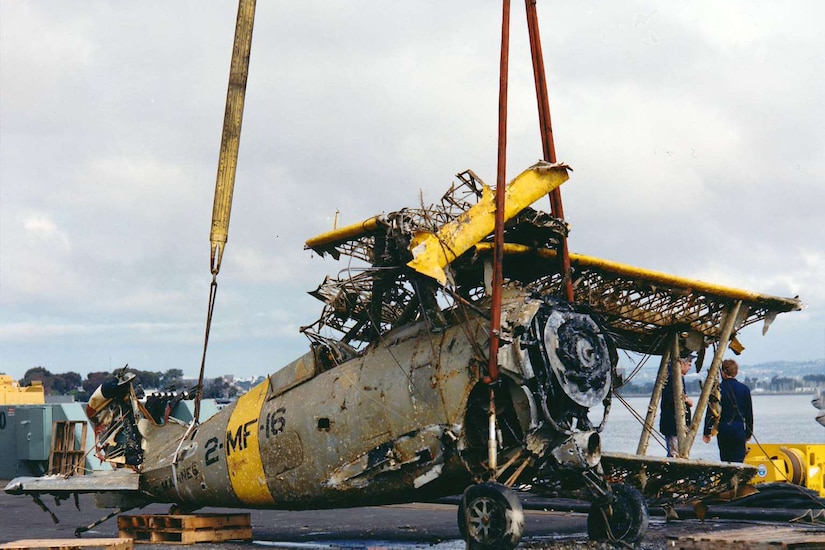
A wrecked World War II-era plane is lowered to the ground near an ocean.

In the early 1990s, he collaborated with the San Diego Air and Space Museum to restore the F3F biplane that he had ditched off the coast of San Diego in 1940 due to a mechanical failure. It was recovered from the ocean floor April 5, 1990, at a depth of 1,800 feet. 

Galer died June 27, 2005. He is buried alongside his wife, Sharon, in the Texas State Cemetery in Austin, Texas. 

In addition to the Medal of Honor, he also received the Legion of Merit with Valor, the Distinguished Flying Cross with one gold star, the Air Medal with four gold stars and the Purple Heart. 
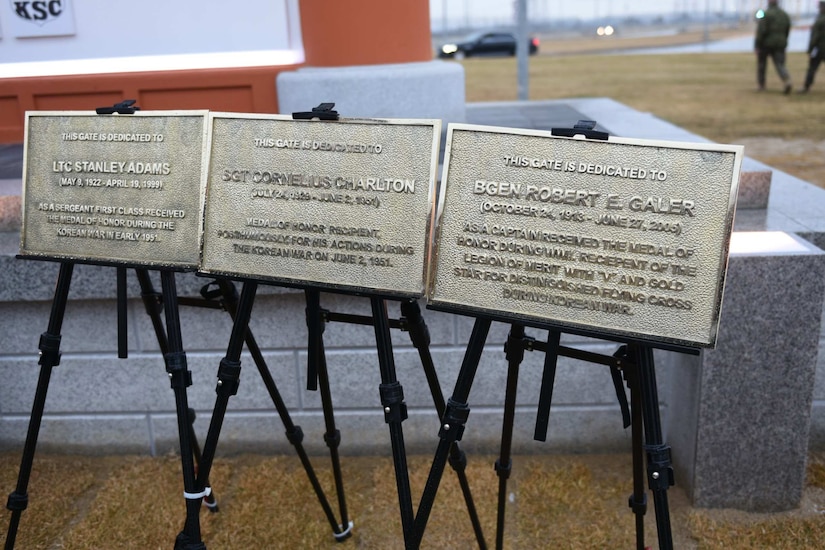
Three plaques, each dedicated to service members, are displayed on easels outside during a ceremony.

On Dec. 17, 2020, a plaque was dedicated to Galer at Camp Humphreys, South Korea. There's also a monument dedicated to him and other military alums on the campus at the University of Washington in Seattle. 

Monday, August 17, 2026

Medal of Honor Monday: Army Staff Sgt. Stanley Bender

Army Staff Sgt. Stanley Bender was an infantryman during World War II whose unwavering courage under extreme fire earned him the Medal of Honor. 

Bender was born to Andrew and Eva Bender Oct. 31, 1909, in Carlisle, West Virginia. His parents emigrated from the Lithuanian region of Russia. His father was a World War I Army veteran and a coal miner. 

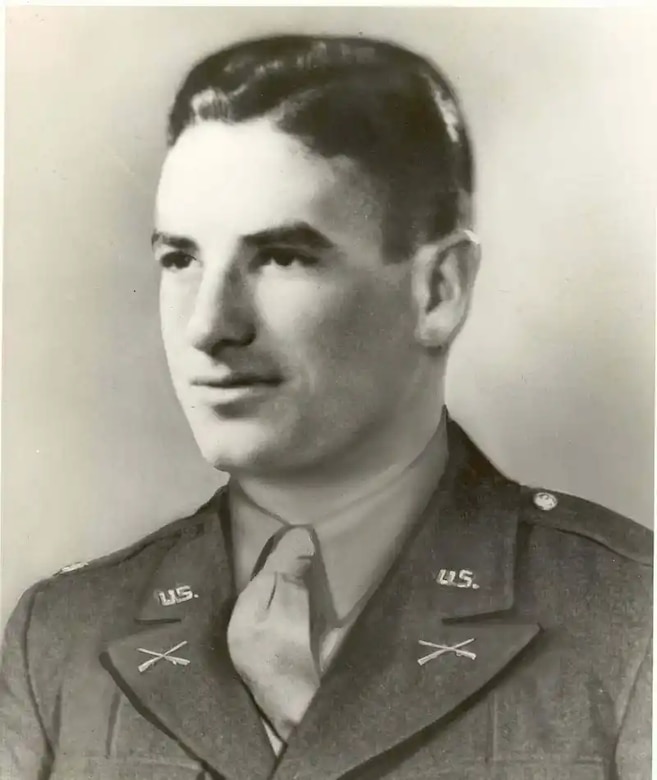
A man wearing a military dress uniform poses for a photo.

His brothers were John, Tony and George and his sisters were Maggie and Eva. 

Bender attended school in Carlisle but dropped out after seventh grade.

The family moved to Chicago at the start of the Great Depression. Bender worked as a truck driver for 10 years before enlisting in the Illinois National Guard in December 1939. He also was a chauffeur for a department store. 

Bender married Esther Marie Tincher, April 9, 1945, and they had two daughters, Shirley Ann and Evelyn Marie. 

His Medal of Honor action took place Aug. 17, 1944, near La Londe-les-Maures, France. At the time, he was assigned to Company E, 2nd Battalion, 7th Infantry Regiment, 3rd Infantry Division. 

That day, Bender climbed on top of an inoperable tank in full sight of the enemy to locate the source of the withering machine-gun fire that had halted the advance of his company. 

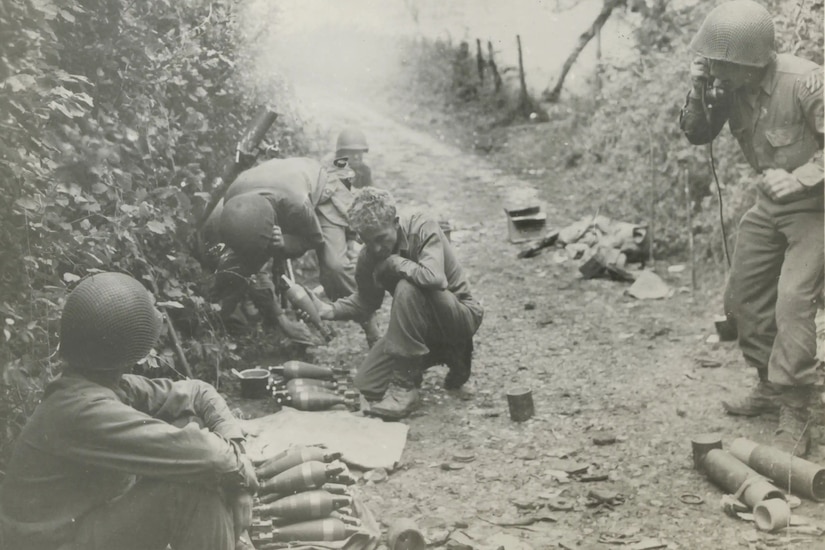
Soldiers on a dirt road operate weapons and a field radio.

Although bullets ricocheted off the turret near his feet, he nevertheless remained standing upright on the tank for more than two minutes. 

Locating the enemy machine guns on a knoll 200 yards away, Bender ordered two squads to cover him and led his men down an irrigation ditch, running a gauntlet of intense machine-gun fire that completely blanketed 50 yards of his advance and wounded four of his men.  

While the Germans hurled hand grenades at the ditch, Bender stood his ground until his squad caught up with him, then advanced alone in a wide flanking approach to the rear of the knoll.  

Bender walked 40 yards, without cover, in full view of the Germans and under a hail of enemy and friendly fire, to the first machine gun and knocked it out with a single short burst. Then he made his way through the strongpoint, despite bursting hand grenades, toward the second machine gun, 25 yards away, whose two-man crew fired two bursts at him. He walked calmly through the fire, reached the edge of the emplacement and dispatched the crew. 

Signaling his men to rush the rifle pits, Bender then walked 35 yards further to kill an enemy rifleman and returned to lead his squad in the destruction of the eight remaining Germans in the strongpoint.  

Bender's audacity so inspired the remainder of the assault company that the men charged out of their positions, shouting and yelling, to overpower the enemy roadblock and sweep into town, knocking out two antitank guns, killing 37 Germans and capturing 26 others.  

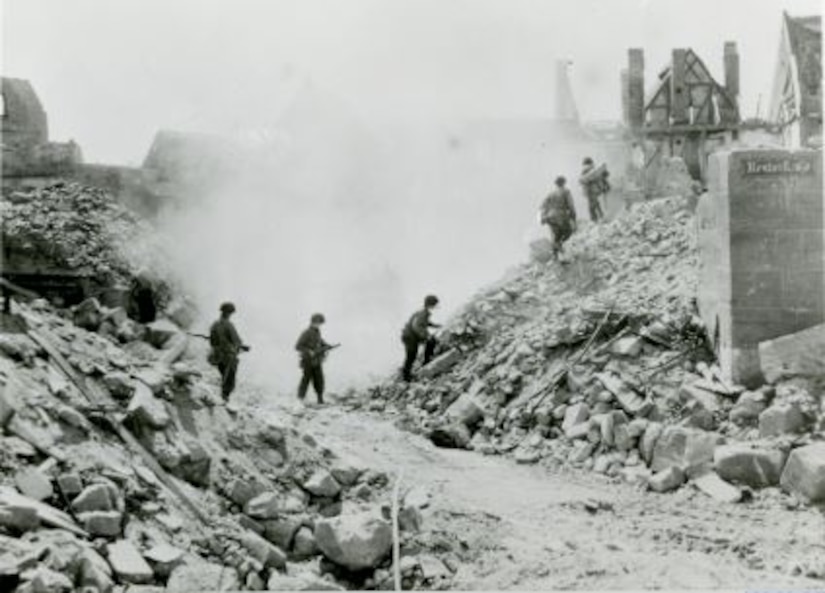
Soldiers wander through the rubble of a destroyed town.

He led the assault company in an attack that overwhelmed the enemy, destroyed a roadblock, took a town, seized three bridges over the Maravenne River and captured commanding terrain dominating the area. 

What makes his feat even more incredible is that he was 35, one of the older soldiers. 

Prior to fighting in France, he participated in Operation Torch in North Africa in 1942, the invasion of Sicily in 1943, and the invasion of Italy and liberation of Rome in 1944. His highest rank was technical sergeant, equivalent to an E-7 in World War II-era rankings. 

After Aug. 17, 1944, he continued with his unit, fighting in France and then in Germany until the war's end in 1945.  

Army Lt. Gen. Alexander M. Patch III, commander of the Seventh Army, presented the Medal of Honor to Bender in France on Jan. 21, 1945. He was honorably discharged on May 19, 1945. 

After the war, Bender worked for the Veterans Administration in Beckley, West Virginia. He was a member of the American Legion and Veterans of Foreign Wars, advocating for veterans' benefits. 

He died June 22, 1994, and is buried in High Lawn Memorial Park in Oak Hill, West Virginia, along with his wife, who died in 2006. 

The Stanley Bender Memorial Bridge on the West Virginia Turnpike was named in his honor Nov. 9, 1954. It was later demolished as part of a highway realignment project. A second bridge on the West Virginia Turnpike was named for him in 1987. 

There is also a Sergeant Stanley Bender Bridge in La Londe-les-Maures, France, close to where his Medal of Honor action occurred. 

Bender, along with legendary Air Force Col. Chuck Yeager, participated in a June 1963 Centennial Day parade in Charleston, West Virginia. 

The Darius-Girėnas American Legion Post dedicated a memorial to Bender in the Brighton Park area of Chicago. He was a member of that post following the war. 

His Medal of Honor is on display at the West Virginia State Museum in Charleston, West Virginia.

Monday, June 22, 2026

Medal of Honor Monday: Army Lt. Col. Robert G. Cole

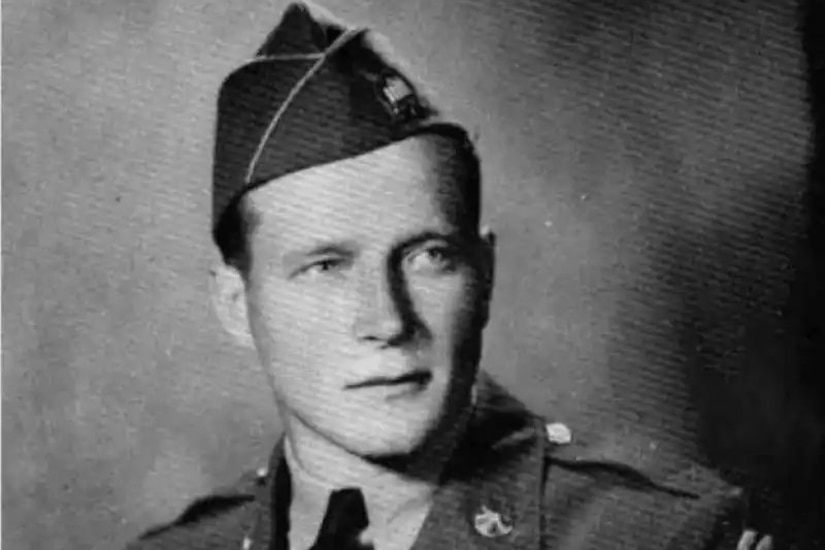
A man is pictured wearing a military dress uniform.

Army Lt. Col. Robert G. Cole was a 101st Airborne Division paratrooper who fought in the European Theater during World War II, where his valorous actions near Carentan, France, earned him the Medal of Honor. 

Cole was born to Army Col. Clarence Leroy and Clara Hoff Cole, March 19, 1915, in Fort Sam Houston, Texas. His father served as an Army doctor and his mother was a teacher at the Mark Twain School in San Antonio. He had two siblings, Leroy and Mary. 

In 1933, Cole graduated from Thomas Jefferson High School in San Antonio and joined the Army, July 1, 1934. Nearly one year later, June 26, 1935, he was honorably discharged to accept an appointment to the U.S. Military Academy at West Point, New York, where he played on the football team. 

He married his childhood sweetheart Allie Mae Beall in 1940, and they had a son, Robert Bruce.

After graduating from West Point in 1939, he was assigned to the 15th Infantry Regiment at Fort Lewis, Washington. While serving there, he befriended Lt. Col. Dwight D. Eisenhower, who commanded the 1st Battalion, 15th Infantry Regiment, and later became the regimental executive officer. 

After volunteering and being accepted for airborne duty in 1941, Cole was assigned to the 501st Parachute Infantry Battalion at Fort Benning, Georgia, and trained to become a paratrooper. He earned his jump wings in March of that year.  

The Army changed its command structure in the early 1940s to meet the demands of World War II, and the parachute battalions were divided into regiments. In 1942, Cole was transferred to the 3rd Battalion, 502nd Parachute Infantry Regiment, 101st Airborne Division, and was subsequently appointed commander. 

In 1943, the division sailed to England to prepare for Operation Overlord, the D-Day invasion of Normandy, France. While there, he met his friend, Eisenhower, who was now a general and the Allied supreme commander. 

A few days after D-Day, at the onset of the Battle of Carentan, June 10, 1944, Cole led his 400-man battalion in a single file line through an exposed raised road with marshes on both sides that led to the last four bridges over the Douve River floodplain and Carentan, France. The 101st Airborne Division had been ordered to seize Carentan and link up with the 29th Infantry Division.

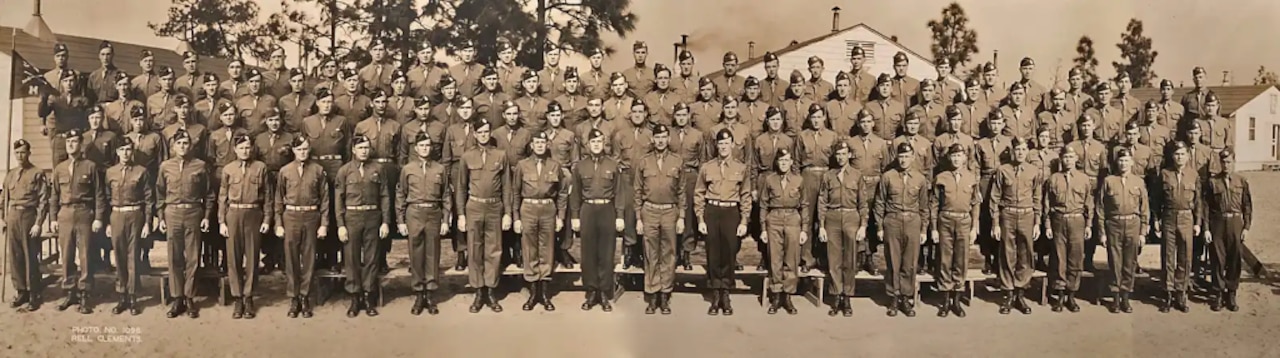
Soldiers wearing Army khakis stand on bleachers and pose for a photo.

German troops were dug in by hedgerows behind a large farmhouse. As the battalion advanced to the river, they were subjected to continuous fire from machine guns, artillery and mortars, sustaining many casualties. They came upon a mobile anti-tank obstacle, known as a Belgian gate, that only allowed one man to pass through at a time. After enduring a night of shelling and bombing, Cole's remaining 265-man battalion moved through the obstacle and prepared for an assault, June 11, 1944. The German troops at the farmhouse continued to resist, so Cole ordered a bayonet charge that he led. The battalion engaged in hand-to-hand combat with the enemy, forcing the Germans to retreat but not without suffering 130 additional casualties. The assault became known as the "Cole Charge" and led to the establishment of a bridgehead across the Douve River and the capture of Carentan. 

After the Battle of Carentan, Cole led his paratroopers into their next battle as part of Operation Market Garden, Sept. 17, 1944, when they parachuted into the Netherlands 

Their mission was to secure bridges in Sint-Oedenrode, North Brabant, Netherlands, which they did. The battalion then moved out to the town of Best to secure railroad bridges. 

On the morning of Sept. 18, 1944, his battalion faced fierce German opposition from small-arms fire and artillery in the Zonsche Forest. After radioing for air support, P-47 Thunderbolt aircraft arrived, firing at German positions — and hitting Cole's battalion as well.

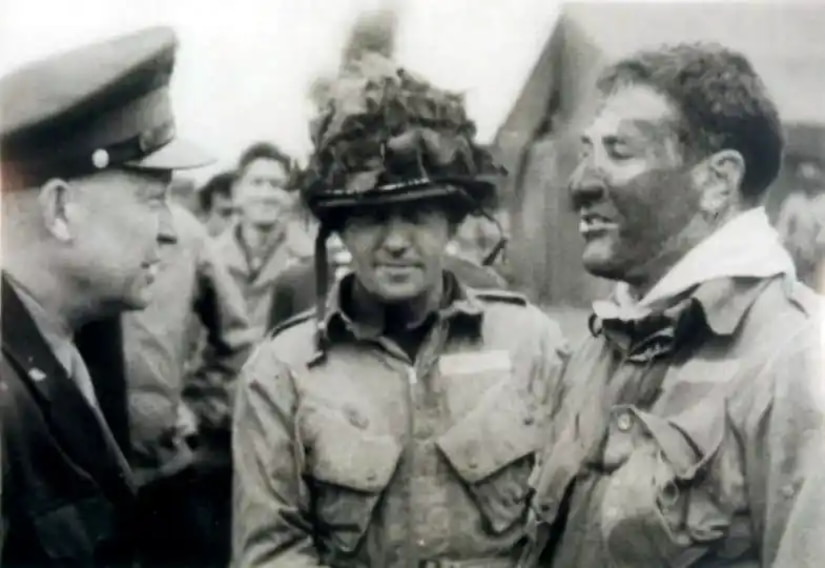
Three men wearing military uniforms are pictured chatting.

While the attack was underway, Cole was in the process of placing orange panels on the ground so that pilots could identify his battalion's position. As he was in the process of doing this, a German sniper, hiding out in a barn, shot and killed Cole instantly. 

He was buried in the Netherlands American Cemetery and Memorial at Margraten, Netherlands, the only American cemetery in that country where more than 8,000 U.S. service members are buried. 

Cole was posthumously awarded the Medal of Honor for actions during the Battle of Carentan, June 11, 1944. He was also awarded the Purple Heart and the French Croix de Guerre. 

"After the devastating and unceasing enemy fire had for over one hour prevented any move and inflicted numerous casualties, Lt. Col. Cole, observing this almost hopeless situation, courageously issued orders to assault the enemy positions with fixed bayonets," Cole's Medal of Honor citation reads. "With utter disregard for his own safety and completely ignoring the enemy fire, he rose to his feet in front of his battalion and with drawn pistol shouted to his men to follow him in the assault. Catching up a fallen man's rifle and bayonet, he charged on and led the remnants of his battalion across the bullet-swept open ground and into the enemy position."  

Cole's medal was presented by Army Maj. Gen. Jonathan W. Anderson to his mother on Oct. 30, 1944, during a ceremony at Fort Sam Houston on the same parade field where Cole once played as a child. Cole's widow and 18-month-old son also attended. 

According to the Texas State Historical Association, Army Maj. Gen. Maxwell Taylor, in a handwritten letter to Cole's widow, wrote, "Bob was our ideal airborne soldier. His courage was legendary, and his hold on his rugged parachutists is an example which few other commanders ever attained."  

In his condolence note, Eisenhower wrote that Cole was "one of our ablest and certainly one of our most gallant officers," according to the association. 

During the Normandy invasion, a Stars and Stripes newspaper reporter mentioned that Cole was "a terror to German troops in the area of the Cherbourg peninsula," according to an Oct. 30, 1944, article in the Fort Worth Star-Telegram newspaper. 

Although Robert Bruce Cole was exempt from the draft as an only child and the son of a Medal of Honor recipient, he volunteered to serve in the Marine Corps during the Vietnam War. 

His widow died Dec. 15, 2000, and is buried in a family plot at Fort Sam Houston National Cemetery. Also buried there is their son, who died Dec. 5, 2024. 

Robert G. Cole Middle and High School in San Antonio is named for him. A monument to Cole is at the location where he led his battalion in a bayonet charge and another monument to him is located near the spot he was killed. Also, plaques commemorating Cole's leadership are in Best and Carentan. At Fort Campbell, Kentucky, where the 101st Airborne Division is based, there is a park, a golf course and a community activity center named after him.  

Sunday, August 31, 2025

WWII Hero Honored at U.S. Open Tennis Championships

The U.S. Tennis Association hosted the 2025 Lt. Joe Hunt Military Appreciation Day yesterday at Arthur Ashe Stadium, in Queens, New York. 

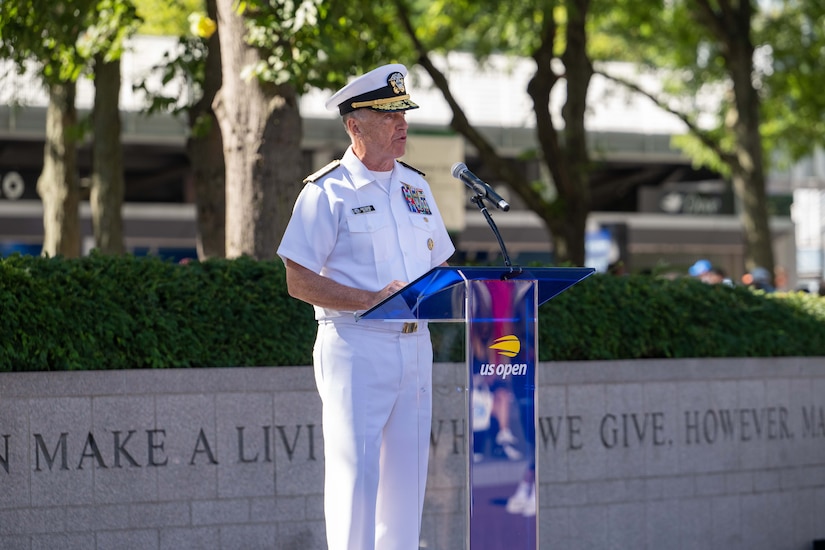
A man wearing a formal military uniform stands at a podium and speaks during an outdoor ceremony.

This U.S. Open tennis tournament event is dedicated to honoring and recognizing members of the U.S. military, named in honor of Hunt, the only U.S. Open champion to die in service to his country. 

Several speakers at the event paid tribute to Hunt. 

More than a tennis player, Hunt was the U.S. Nationals champion, an NCAA champion, a Naval Academy graduate and a Navy football star. Like so many of his generation, he put aside his personal achievement to answer his nation's call, said Navy Rear Adm. Michael Boyle, director of the Navy staff. 

After the Japanese attack on Pearl Harbor on Dec. 7, 1941, Hunt "traded aces on the court for the challenge of becoming an ace in the sky, earning his wings of gold as a naval aviator," he said. 

This year marks 80 years since his sacrifice, and it also marks a historic milestone: the 250th birthday of the United States, Navy, Marine Corps and Army, Boyle noted. 

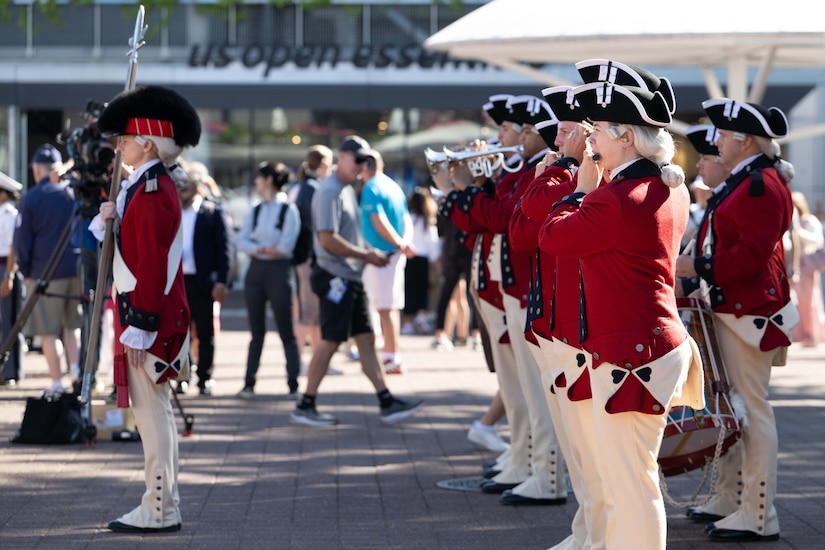
People dressed in colonial period uniforms stand in formation and play instruments at an outdoor event.

"Our sacred duty is to fight with toughness, tenacity and integrity to defend this nation. That is what 250 years of service means," he added. 

Joe Hunt, grand-nephew of Lt. Joe Hunt, said, "The military has a code which says we shall never forget, and that is what this day is very much about. To those of you who wear and have worn the uniform, we will not forget your service.  

"We truly appreciate your sacrifice and the sacrifice of your families, and we will never forget you," he added. 

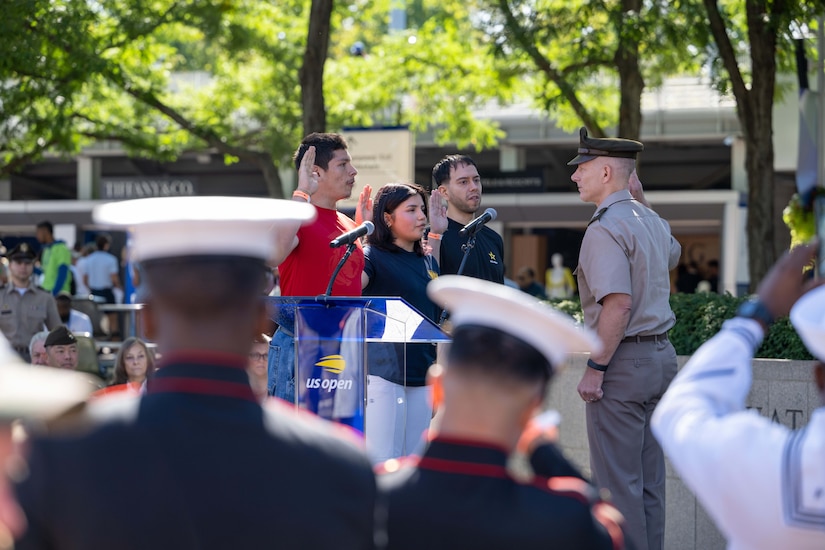
Yesterday's events included an oath of enlistment ceremony, military family engagements and performances by the Old Guard Fife and Drum Corps, as well as the Navy Sea Chanters. 

More About Lt. Joe Hunt 

Hunt won the 1943 U.S. Open Tennis Championships in New York City while on leave from the Navy in early September of that year. 

He is the only man in history to win the U.S. national boys' (then 15-and-under), juniors' (18-and-under), collegiate and U.S. men's singles titles.  

Hunt also played football at the U.S. Naval Academy, winning a game ball in the 1941 Army-Navy game after beating Army 14-6 in Philadelphia, Nov. 29, 1941. Eight days later, the Japanese bombed Pearl Harbor, Hawaii. 

Due to wartime needs, Hunt's class graduated early on Dec. 19, 1941, instead of in the spring of 1942. Upon graduation, he was assigned to the destroyer USS Rathburne, an antisubmarine warfare training ship homeported in San Diego.  

At the end of September 1943, Hunt was assigned to the destroyer USS Kearny, which escorted a merchant convoy to Casablanca, Morocco. However, he wanted to fly and was eager for combat duty, according to his grand-nephew Joe Hunt, a Seattle attorney who was named for his great uncle.  

Hunt requested a transfer to aviation, and it was granted. His training began at Naval Air Station Dallas on Dec. 30, 1943. In May 1944, he received advanced aviation training at Naval Air Station Pensacola, Florida. He wanted to defend his tennis title that year, but his leave request was denied. 

On Feb. 2, 1945, Hunt's F6F Hellcat fighter aircraft crashed into the Atlantic Ocean east of Daytona Beach, Florida, during a training flight. Hunt and his aircraft were never recovered. 

Hunt left behind a wife, Jacque Virgil Hunt, whom he married in 1942.  

Hunt was inducted into the International Tennis Hall of Fame in Newport, Rhode Island, in 1966. 

On Sept. 1, 2014, Hunt was honored on center court at Arthur Ashe Stadium during the U.S. Open, an event he won 71 years earlier.  

Every year since 2019, the U.S. Open has celebrated his service and honored service members and veterans on "Lt. Joe Hunt Military Appreciation Day."