Showing posts with label Valiant Shield. Show all posts

Saturday, August 01, 2026

USS Minnesota Completes First Forward-Deployment

The submarine USS Minnesota returned to its home port at Naval Base Guam July 29, after completing its first deployment since becoming the Navy's first forward-deployed submarine.
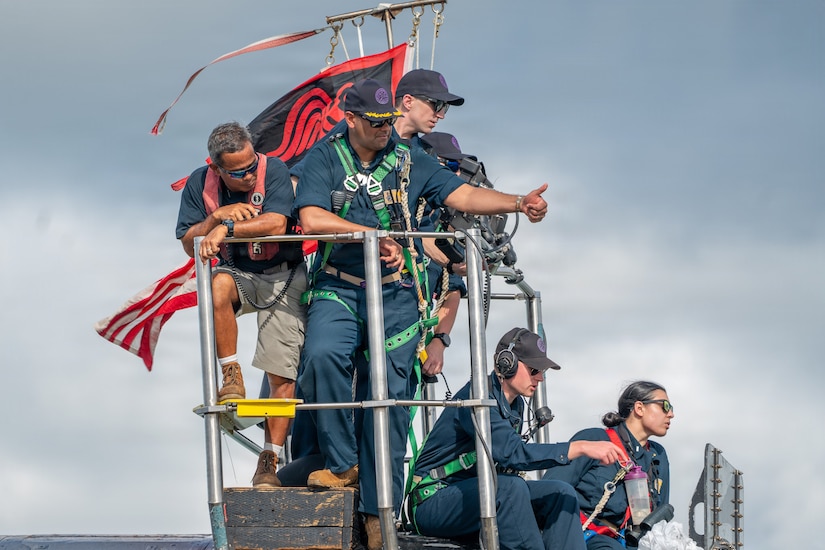
Six people in military uniforms and casual attire stand on top of a submarine as they signal to other people.
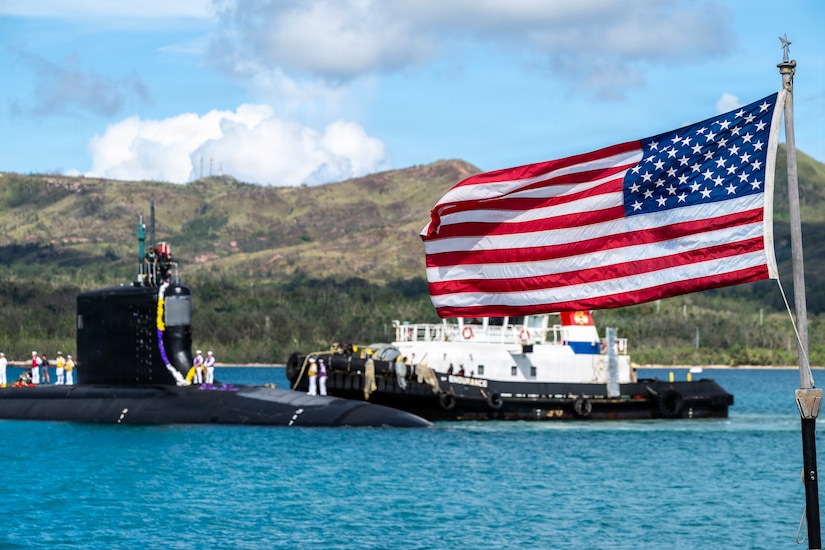
An American flag flies as a tugboat guides a submarine in the background.
"[The] Minnesota's return marks a significant milestone for the Pacific submarine force and demonstrates the Navy's ability to sustain and employ advanced Virginia-class capabilities in the Pacific," said Navy Capt. Christopher Carter, Submarine Squadron 15 commander. "Operating from Guam, this crew demonstrated the readiness, endurance and advanced capabilities the Virginia-class platform brings to the strategic outpost in the Western Pacific." 
 
The Minnesota participated in the multinational Exercise Valiant Shield 26 and made port visits to Okinawa and Sasebo, Japan. The Okinawa visit demonstrated the Navy's ability to sustain undersea capabilities at a variety of locations throughout the Pacific region. 
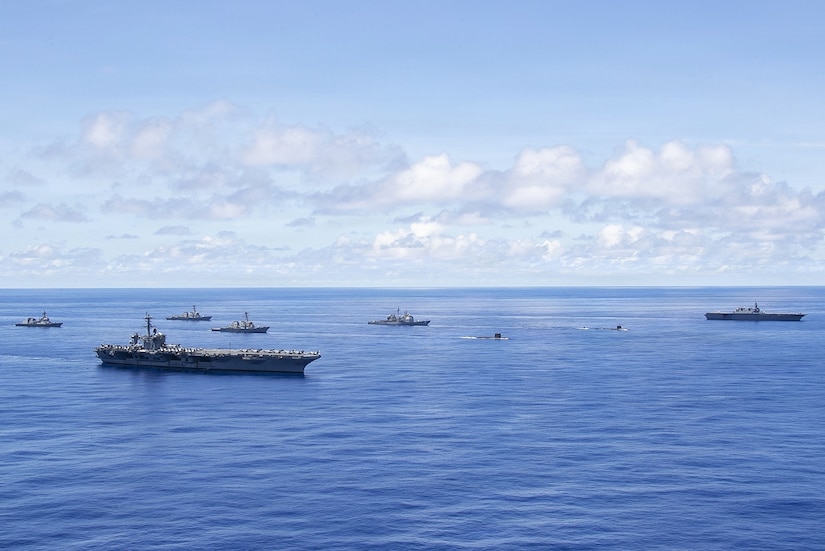
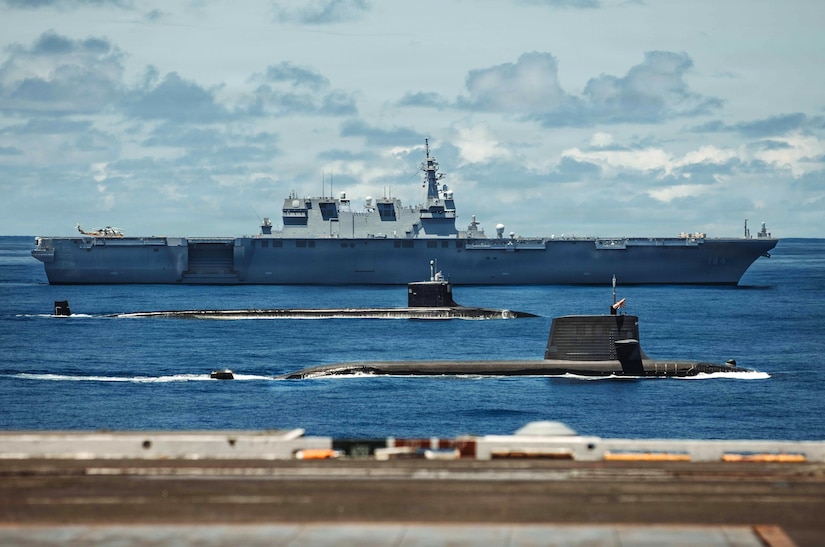
Six large military ships and two submarines sail in formation in the ocean.
Two submarines and a large military ship sail in formation in the ocean.
"This homecoming marks the successful completion of [the] Minnesota's first deployment from Guam," said Navy Cmdr. Jeffrey Cornielle, USS Minnesota commander. "The crew performed superbly while executing missions vital to the defense of the homeland and strengthening our alliances and partnerships.

"The experience they gained operating throughout the Western Pacific will shape [the] Minnesota's continued success for years to come," he continued. "I am proud of every sailor and deeply grateful to our families, whose strength and support made this deployment possible." 
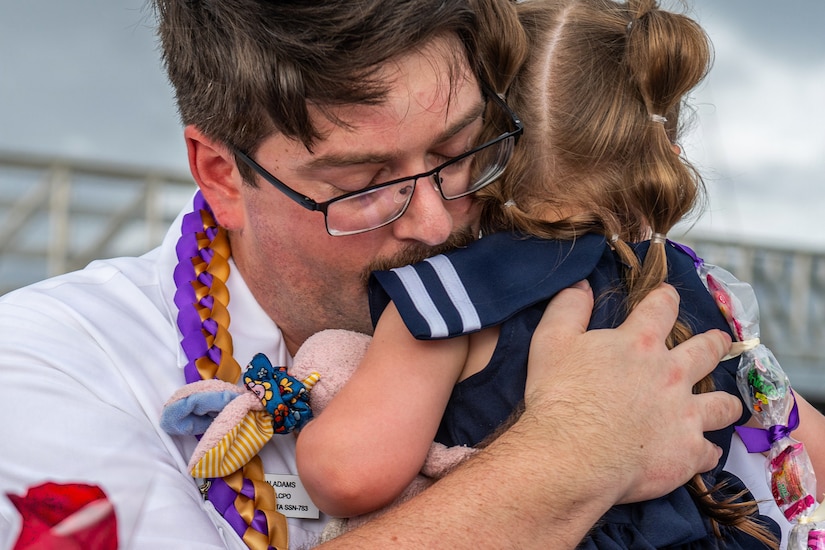
A close-up of a man in a camouflage military uniform hugging a young girl.

 
During the deployment, two officers and 20 enlisted sailors earned their submarine warfare insignia. The insignia signifies qualification to operate at the highest standards of the undersea force and reflects mastery of submarine systems, watch stations and mission execution. 
 
"The sailors aboard [the] Minnesota represented the Navy with pride and professionalism, no matter the task," said Navy Master Chief Petty Officer Joshua Garrett, the Minnesota's chief of the boat. "Every time a challenge stood before them, they answered the call with discipline, character and an unwavering commitment to one another. Their readiness and effectiveness were evident throughout this deployment, and I could not be prouder of what this crew accomplished." 
 
The homecoming included the Navy's traditional first kiss and first hug, awarded to Navy Petty Officer 2nd Class Jose Salazar and Navy Petty Officer 1st Class Jaccor Blakley, respectively. 
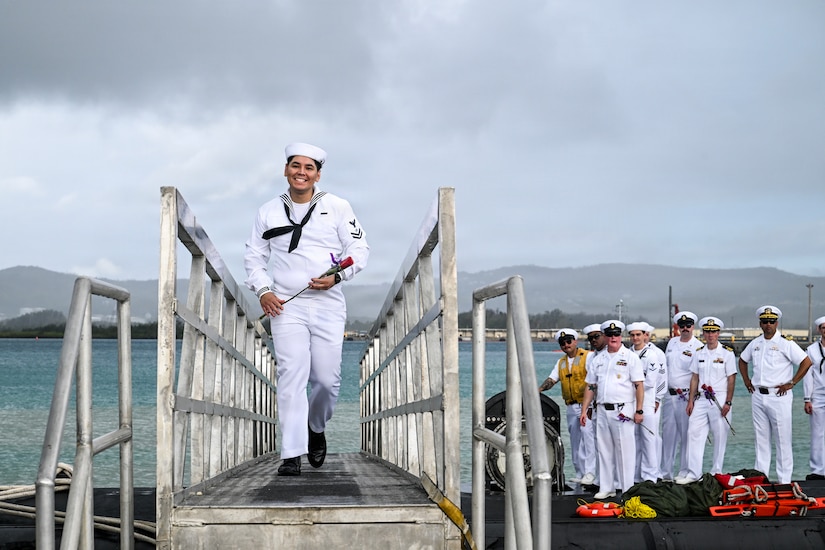
A sailor in a military dress uniform walks across a bridge from a submarine as several people in similar attire stand on top of the vessel in the background.

 
Since arriving in Guam November 2024, the USS Minnesota has visited Western Australia, where the crew conducted at-sea operations in support of the Submarine Command Course and participated in Exercise Lungfish, a tactical development exercise between the U.S. Navy and Royal Australian Navy.

The ship also visited Darwin, Australia, in support of bilateral engagements. These accomplishments add to the Minnesota's growing list of milestones and demonstrate its ability to deliver credible combat power from a forward-deployed location in the Pacific.

Tuesday, June 30, 2026

Sinking Exercise Demonstrates Capabilities of Joint Force

U.S. Pacific Command joint forces, along with allied and partner forces, successfully carried out a live-fire sinking exercise as part of Valiant Shield 2026, targeting the thoroughly cleaned and decommissioned amphibious transport dock USS Juneau more than 200 nautical miles off the coast of Guam. 

The Juneau launched in 1966 and saw action during the Vietnam War and Operation Desert Storm before it was decommissioned in 2008. 

The evolution brought together air, surface and subsurface assets in coordinated strikes, allowing crews to sharpen critical skills in weapons employment and target engagement under realistic conditions that no simulator can fully replicate.

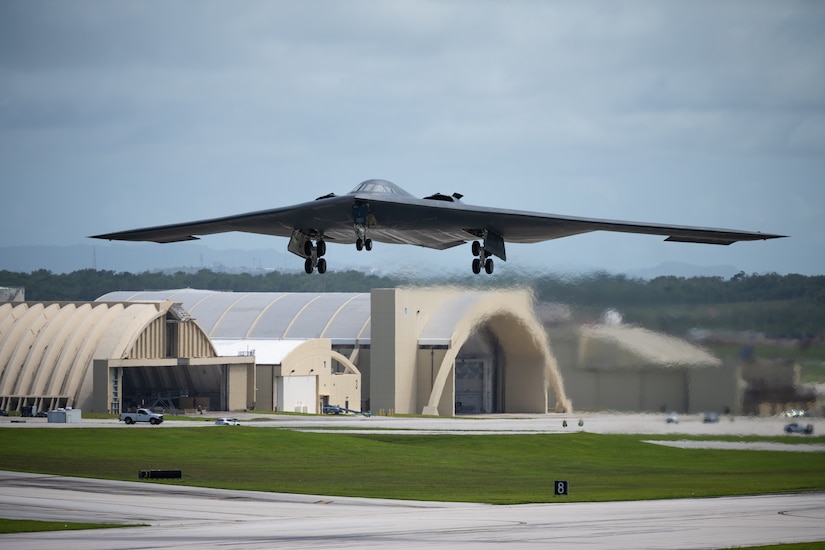
A military bomber aircraft takes off from a runway with aircraft hangars in the background.
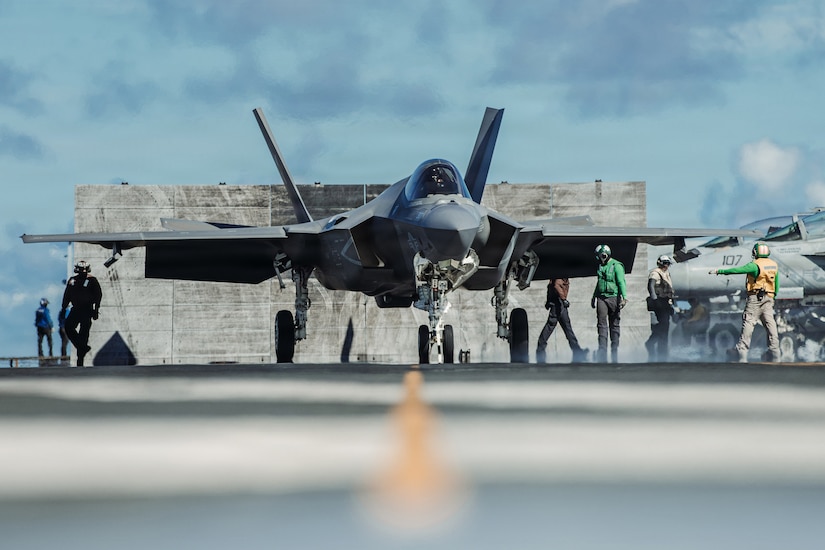
Several people in military uniforms walk around a military aircraft on the flight deck of an aircraft carrier.
"This [exercise] provided an outstanding opportunity for our joint team to integrate capabilities across domains, honing the lethal precision and coordination essential for high-end maritime operations in the Pacific theater," said Navy Rear Adm. Eric Anduze, commander of Carrier Strike Group 5 and Task Force 70. 

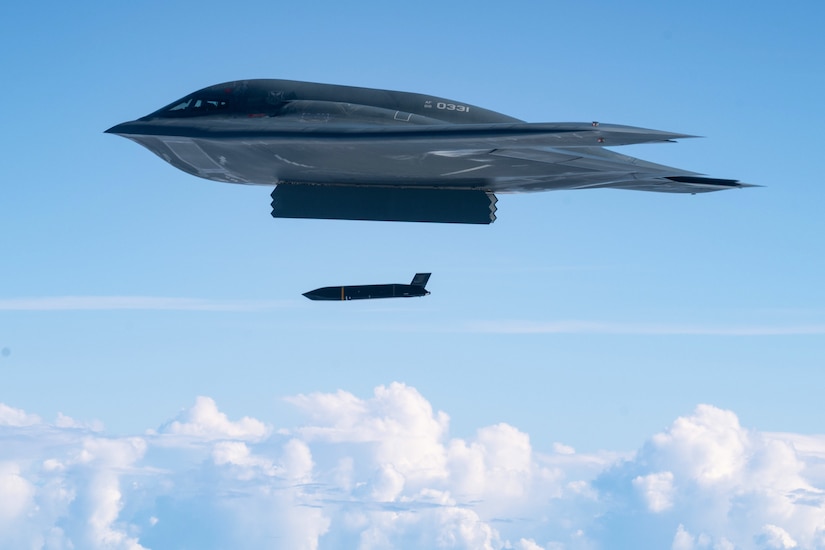
The coordinated strike included a long-range anti-ship missile deployed by an Air Force B-2 Spirit bomber. The LRASM is designed to detect and destroy enemy ships at long ranges. Developed by the U.S., it's a key component in the military's counter-maritime strike operations.   

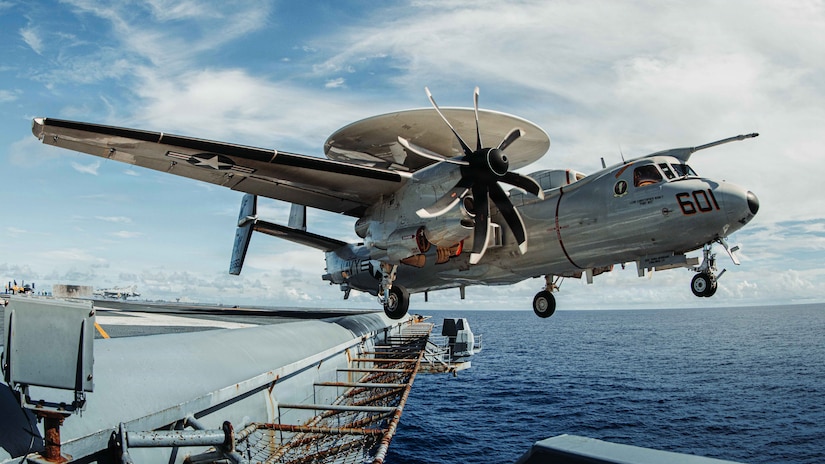
A military aircraft flies off the end of an aircraft carrier sailing in the ocean.

"The B-2's impressive performance underscores the U.S. military's commitment to adaptability and flexibility in the face of emerging security challenges," said Air Force Gen. Kevin B. Schneider, commander of Pacific Air Forces. "By prioritizing counter-maritime strike operations, we can maintain a decisive edge over adversaries, protect our national interests and ensure the free and open Pacific that underpin our global security."  

With the deployment of the LRASM from the B-2 Spirit, the Pacific Air Forces has another tool in countering maritime threats. This milestone showcased high-end innovation reinforcing the War Department's commitment to safeguarding national interests and maintaining global security.

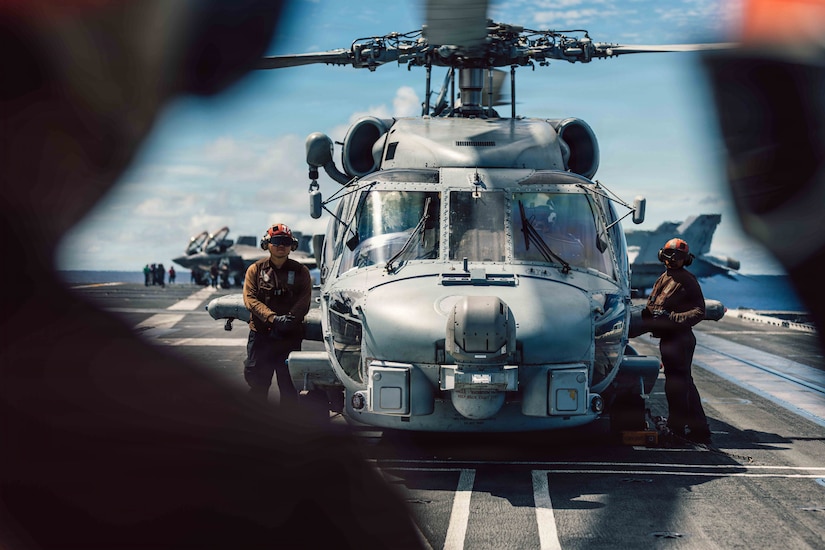
Two people in military uniforms stand next to a military helicopter on the flight deck of an aircraft carrier as a person in the foreground signals them.
A missile launches from a stealth bomber in the air, with clouds below it and a light blue sky in the background.
All operations adhered strictly to federal environmental regulations and international standards. Prior to the exercise, the target vessel underwent extensive preparation, including the complete removal of hazardous materials in line with Environmental Protection Agency guidelines. The selected site was surveyed to ensure the safety of marine life, vessels and personnel, with full compliance to the National Environmental Policy Act, Marine Mammal Protection Act and other key statutes. 

Exercise Valiant Shield is a biennial, multilateral field training exercise conducted by the U.S. and partner nations in the Western Pacific focusing on joint, cross-combatant integration operating across sea, air, land and cyberspace.

Monday, June 22, 2026

Allies Come Together in the Indo-Pacific for Exercise Valiant Shield 26

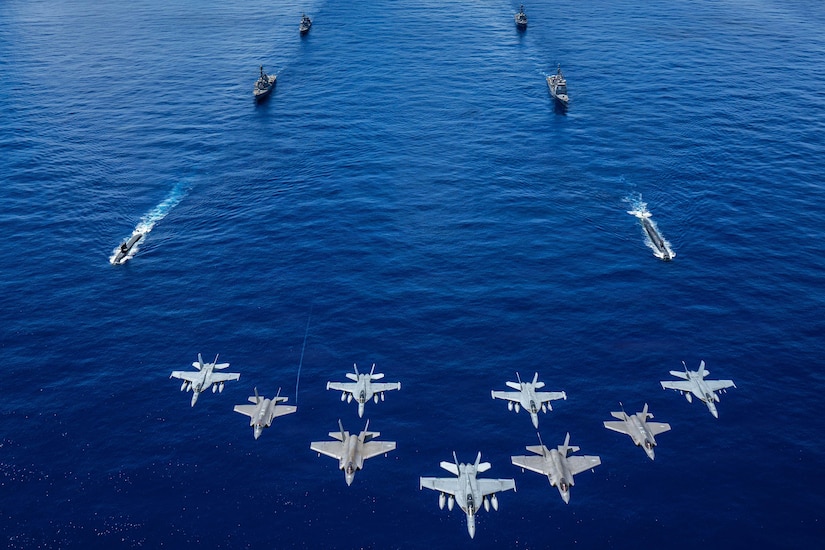
Nine military fighter jets fly in formation while two submarines and four large military ships sail in two rows in the ocean.

U.S. Pacific Command joint forces, along with allied and partner forces, kicked off Exercise Valiant Shield 2026 today in the Indo-Pacific region. 

The training exercise will run until July 1 and take place in the Northern Mariana Islands, Guam, Japan and at sea around the Mariana Islands Range Complex. 

Valiant Shield 26 is a multinational, biennial field training exercise focused on integrating interoperability training in a multidomain environment. This training builds real-world proficiency in sustaining joint forces through detecting, locating, tracking and engaging units at sea, in the air, in space, on land and in cyberspace. 

Exercises such as VS26 enable all U.S. forces and allies across the Indo-Pacific region to integrate and train in precise, lethal and overwhelming scenarios that demonstrate the strength and versatility of the joint and combined force.  

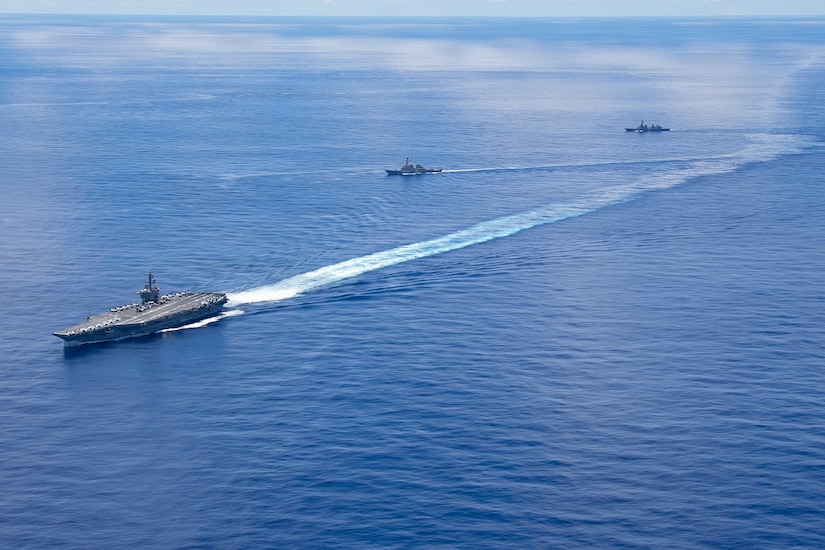
Three large military ships sail in the ocean.

With the involvement of U.S. Space Command and U.S. Transportation Command, VS26 is expanding the multidomain, cross-combatant command collaboration required for any large-scale exercise or operation. The exercise prepares the joint and combined force to rapidly respond to crises and contingencies across the spectrum of operations — from humanitarian assistance and disaster response to armed conflict. 

"Valiant Shield demonstrates our enduring commitment to a free and open Indo-Pacific," said Navy Adm. Steve Koehler, commander of U.S. Pacific Fleet. "Exercising advanced multidomain capabilities with our allies ensures we continue to seamlessly innovate and operate together, project combat power together and prevail over any challenge — together." 

The exercise assists U.S., allied and partner forces in developing regional and global power projection capabilities. Integrated training provides a full range of options to succeed in the defense of U.S. interests and those of like-minded nations around the world. 

This year marks the 11th iteration of Exercise Valiant Shield, which began in 2006. It is also the second time the Japan Self-Defense Forces has been heavily integrated in the planning and execution.   

Since 2024, Valiant Shield has become a multilateral joint field training exercise, further integrating allies and partners into the multidomain environment. While it started as a unilateral U.S. exercise, it has evolved to meet the demands of the security environment, incorporating new technologies and strategies.