Aug. 10, 2021
Pentagon Press Secretary John F. Kirby
PRESS SECRETARY JOHN F. KIRBY: OK, just a couple of
things at the top here. I'd like to take a moment to recognize two
Senate confirmations yesterday, which – which adds to – continues to
add to the list of Senate-confirmed political appointees that we have
here at the department: Dr. Mara Karlin, who many of you know; confirmed
as the assistant secretary of defense for strategy, plans and
capabilities; and Karl Spangler as Army comptroller and assistant
secretary of the Army for financial management. And then I think, as you
know, we also recently welcomed the following other appointees:
Caroline Krass to general counsel, Heidi Shyu as undersecretary for
research and engineering, Deborah Rosenblum, assistant secretary of
defense for nuclear, chemical and biological defense, Gina Ortiz Jones,
undersecretary of the Air Force, Meredith Berger, assistant secretary of
the Navy for energy, installations and environment, and Shawn Skelly,
assistant secretary of defense for readiness.
So we're continuing to flesh out the team here, and the secretary's
grateful for the willingness of all these leaders and experts to – to
serve the country, some of them to serve the country again in these
capacities, and we're – we're – we're pleased to have them on – on
board and joining the team at this very critical time.
And with that, we'll take questions. Bob, I think, is on the phone.
Q: Yes, thank you, John. I've got a question for you about
Afghanistan, and I – I know you spoke quite a bit about Afghanistan
yesterday. I'll try not to tread the same ground. But it's sort of a
two-part Q: What – in your view, in the – the air strikes that the
U.S. has done thus far over the past three or four weeks with some
regularity, how would you – how much difference have those air strikes
made on the ground, in terms of the battlefield?
And – and, secondly, I'd like to get your – ask you about Secretary
Austin's thinking on this question about the utility of limited air
strikes in Afghanistan. So as you get – get to August 31st, what is his
view about, do air strikes alone by the U.S. make a decisive – can
they make a decisive difference? Thanks.
MR. KIRBY: There's a lot there, Bob. What I would tell you is – let
me – let me reset this again, and I – I – I want to be very
deliberate here, and – and I know you've heard me say it – you've
probably heard me say it three times yesterday, but I'm going to say it
again today because it's an important framing.
We have the authorities to continue to conduct air strikes in support
of Afghan National Security Forces, Defense and Security Forces through
the end of the drawdown, which ends on the 31st of August. I won't
speculate about authorities beyond that, but we have the authorities to
do it now, and we are, and we have flown airstrikes in just the last
several days. We – we have every confidence, without getting into
details on every individual strike, which I won't do – we have every
confidence that we hit what we're aiming at, and that the strikes are
absolutely having a kinetic effect – if you don't mind the Pentagon-ese
there – a kinetic effect on the Taliban on the ground.
Obviously, as I said yesterday, we're watching with deep concern the
Taliban advances throughout the country. They continue to make advances.
As I've said, we will conduct these strikes where and when feasible
with the full understanding that as we continue the drawdown and the
drawdown for – in many ways, in – in – in the – in many facets, is
all but complete. The where and the when, in terms of feasibility, of
these strikes is going to be – is – is – is going to be different,
and it's going to decline. So we do it where and when feasible with the
understanding that it's not always going to be feasible. But when we
strike, we have every confidence that those strikes are – are – are
hitting what we're aiming at and are having an effect on the Taliban in
that place and in that time.
Nobody is suggesting – nobody has suggested here at the Pentagon
that air strikes are a panacea that – that will solve all the problems,
all of the conditions on the ground. We've never said that. What –
what we have said is that the Afghan forces have the capability, they
have the capacity, they have numerical advantage, they have an Air
Force, and that – and – and – and oh, by the way, that Air Force is
engaged. I mean, they are – they are also flying strikes, many more
than we are. So they – they have – they have the capabilities at – at
hand, and it's really going to come down to the – to the – to the
leadership and the will to use those capabilities.
As for Secretary Austin, I think the way I've just summarized it
summarizes very well his thinking about this. I don't think I can
elaborate any any more. He he understands that – you know, he
understands the authorities that he has. He certainly understands the
need to use those authorities and capabilities as appropriate in support
of Afghan forces. And he also recognizes he has got a drawdown to
complete and a new relationship with the Afghan forces that – that he
wants to pursue.
I would also add, not that you asked this, Bob, but I would also add
that – I mean, you know, we're focused on airstrikes, and I understand
that. I understand the interest in that. But I would ask you not to
forget the other things that we continue to do and have done since the
president's decision for Afghan national security forces. We continue to
be committed to helping their air force. Just last month we delivered
three refurbished the Black Hawk helicopters at the Hamid Karzai
International Airport. There are 37, so another 34 in the pipeline that
will get delivered to the Afghan air force over time.
We have agreed to purchase three A-29s, the propeller-driven strike
aircraft, to the Afghan air force. We are helping with the financial
aspect of refurbishing, not the actual overhaul, but helping with the
financial aspect of overhauling their fleet in MI-17s. We have continued
to pursue contract and maintenance support options for them
over-the-horizon. They are contractors on the ground that are still
supporting the Afghan air force, in particular.
I mean, so there is – there is still a lot that we're doing. And the
relationship is going to be different going forward. We've talked about
that because we aren't going to be on the ground in numbers. But it's
not like we're walking away from Afghan national security and defense
forces, either now, as they – as the Taliban continues to make moves on
the ground, or later when our drawdown is complete. That's a long
answer, Bob, but I appreciate the chance to let me filibuster a little
bit.
Q: Thank you.
MR. KIRBY: (Megan ?)?
Q: Do you all have numbers on the number of troops who have
religious exemptions for vaccines? And are those broken out at all by
vaccine, by which kind of vaccine for what...
(CROSSTALK)
MR. KIRBY: I don't know, Megan. I'm going to take your question, I
honestly don't know, to – I'm going to hazard a guess that if we do,
it's going to be the services that will have that, not OSD, because
exemptions – religious exemptions to vaccines are decided by the
services, not by – not by OSD.
Q: Right.
MR. KIRBY: So let me take a question and get back to you. I truly don't know the answer.
Q: I'm told your people are looking into it (INAUDIBLE).
(Laughter.)
(CROSSTALK)
MR. KIRBY: I actually asked that question myself this morning.
Yes?
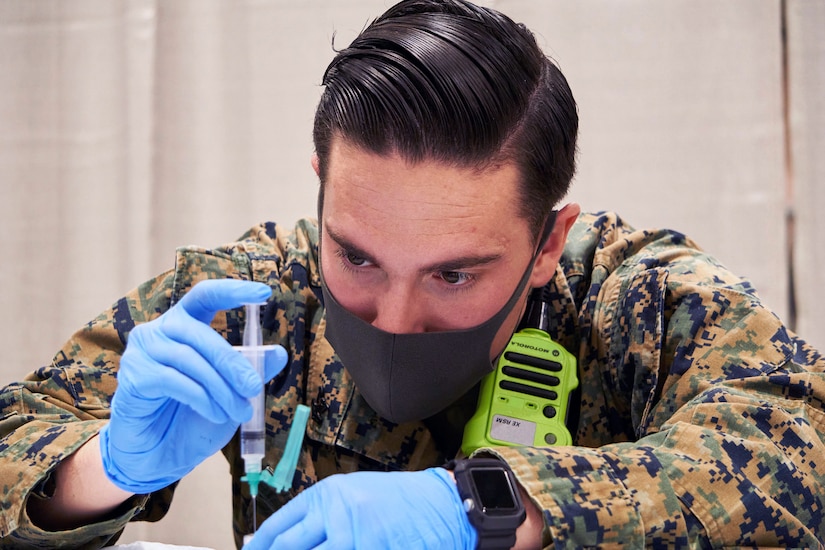
Q: John, can you provide a breakdown by service of who is vaccinated in the U.S. military?
MR. KIRBY: We already put that information...
(CROSSTALK)
MR. KIRBY: It's a little old, but it's because it – but it's more
accurate. I mean, we – we – I mean, Lucas, go to our website. It's up
there. I mean, we do that. Now, yes, there is a little time lag but
that's because we're trying to funnel the data through the Advana
system, and so there is a little bit of a lag, but it gives you a pretty
darn good sense.
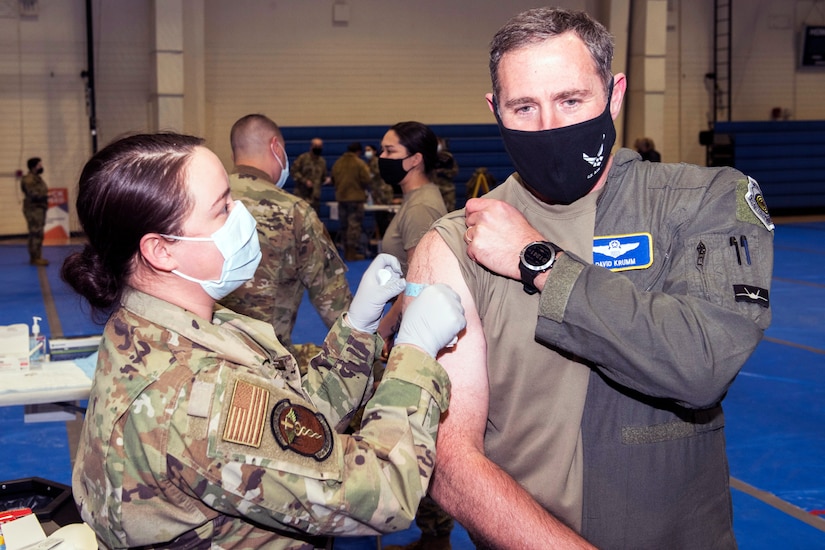
Q: Is the military considering any incentives to get the troops the jab besides just ordering them?
MR. KIRBY: I know of no corporate level DoD-wide incentives that are
being pursued. But as you've reported yourself, I mean, many of the
services, local commanders have the authority to offer incentives such
as, you know, working out at a gym over – versus a – a masked gym and
that kind of thing, and they – they ...
Q: a day off perhaps?
MR. KIRBY: I beg your pardon?
Q: a day off perhaps?
MR. KIRBY: Again, local commanders and unit commanders have – have
their – the ability to offer some positive incentives, but I don't know
of any department-wide incentive program. I think – and I would, you
know, go back to what the Secretary said – the – the best incentive to
get the vaccine is the knowledge that you're not only protecting
yourself but you're protecting your unit, your ship, your teammates,
your shipmates and you're doing the right thing for force readiness.
That should be the biggest incentive of all.
Jim?
Q: Just jump on that a little bit. Now, you were talking about the
Pfizer vaccine possibly going through the FDA approval (inaudible) maybe
by the end of this month. The other vaccines, though, are they going to
be coming out at the same time? And will – will the Secretary need to
ask the President for a waiver to be able to use those vaccines, even if
the Pfizer vaccine is passed?
MR. KIRBY: I don't know what the timeline is for licensure. That's
really an FDA question. We're – we're not in any position to know what
timeline (are ?). As the Secretary noted in his memo yesterday, press
reporting suggests that the Pfizer vaccine could achieve licensure by
early next month, and I think we saw Dr. Fauci say yesterday it could be
even before the end of this month. So I – I wouldn't speculate about
timing on those.
To your other questions – so a couple of points. One, once FDA
licensure occurs for a vaccine, the Secretary doesn't need any more
permission to make it mandatory. He has the authority to – to mandate
that vaccine upon licensure. And as he indicated in his memo yesterday,
that's exactly what he'll do, if licensure occurs on any of the vaccines
prior to mid-September.
But if – if he wanted to pursue mandatory vaccinations for, say, the
remaining vaccines that have not achieved licensure, yes, he would need
a waiver from the President. I think if – I – I don't want to get
into speculation but the – the – the – there's a lot of Pfizer
vaccines in the inventory and there's certainly the capacity and the
capability to get more so that if Pfizer were to achieve licensure
before mid-September, I think you can expect that the department would
energetically pursue a mandatory vaccination program for using – using
the Pfizer vaccine.
Q: Yeah, that would've been my second question – is there enough Pfizer in the pipeline ...
MR. KIRBY: I don't know what the actual inventory is. As you know,
there's a shelf life on these things and – and the services and the
COCOMs handle their inventories. I – I – I couldn't begin to guess
what that would look like.
But if – if there's not enough on hand immediate – first of all,
the – you know, to – to vaccinate the rest of the force, you're –
it's going to take a little time. It's not – you can't just knock it
out in one day. And to what – to – to the degree that there are needs
in – in inventory, we'll meet those needs. I mean, there is absolutely
the manufacturing capacity to get them and to get them on – in – in
pretty short order. The – the Secretary's not worried about that.
Q: So are ...
MR. KIRBY: Go ahead, Barb.
Q: Just to make sure I understand, you're saying if full licensure
occurs for Pfizer, your understanding is that'll be a – they won't
pursue mandatory for other vaccines that remain under emergency use?
MR. KIRBY: No, that's not what I said at all. I – I said that –
and that's not what I said, Barb – I said – I said that regardless of
which – I don't want to speak for the FDA's timeline – regardless of
which one's first, once they have achieved ...
(CROSS-TALK)
MR. KIRBY: We have press – press reporting suggests that they'll be
first. Whatever one – however they reach FDA licensure, once they've
reached FDA licensure, the Secretary has the authority to make them
mandatory, and as he put in his memo, that's his intention.
But I don't want to get into the timeline of which one's first and
which one's next but you can expect that he will make them mandatory
when they reach licensure. I did not suggest – and if I – if I – if I
came across that I suggested that "well, we're just going to get – the
– the Pfizer will be first and then that's the only one we're going to
do," I – I – that is not at all what I was trying to express.
Q: So even the ones that remain under emergency use, you will still pursue having them become a mandatory vaccination?
MR. KIRBY: If, by mid-September, we have not ...
Q: Any – by mid-September, anything that's still under EUA, you will pursue having a waiver for a mandatory ...
MR. KIRBY: The Secretary wants to preserve that option for himself.
Q: Preserve the option? I thought you were going to do it? I'm really confused.
MR. KIRBY: Well, what if, Barb, you're able to vaccinate the rest of
the force before the second or third vaccine gets licensure?
Q: Well, don't you want to have maximum vaccine ...
MR. KIRBY: The Secretary's going to preserve the option to make all
the vaccines mandatory, pursue the waiver by mid-September. As I said –
as he – as he wrote and I said yesterday, it's whichever comes first.
Q: Can I just ask one other very quick question on Afghanistan? You
keep talking about doing strikes that are feasible. Can you tell us what
the use – what is meant by that? What makes a strike feasible?
MR. KIRBY: The availability of – of aircraft, proper – enough time
to reach the target, enough knowledge that it's a valid target and a
target that could be hit with the ordinance that you have on the – I
mean, it goes on and on and on. It's no different than the kind of
calculation we use when we conduct airstrikes anywhere else in the
world.
Q: Thank you.
Q: Can you talk to me about the President – or the Secretary's
authority to – he doesn't have to approve every airstrike in
Afghanistan, right? Isn't the – General McKenzie have that authority?
MR. KIRBY: He does not approve every airstrike.
Q: But he doesn't have to – I – is – is it – whether it's CT or
Taliban, the Secretary does not have to get – have any (inaudible)
authority, right?
MR. KIRBY: The – when we're talking about supporting Afghan
National Security Forces, he does not have to – he's not involved in
the specific decision-making process for each airstrike.
Q: I just asked you cause that was something you said earlier. Can I ask one more on the vaccine?
MR. KIRBY: Yeah.
Q: I – there – like, the – the main question that I keep getting
is what happens if service members – the – refuse to take it? And –
and I – I know that yesterday, you said you didn't have any fidelity on
that but, like, can you just give us anything – if – if – if –
especially if you're – you're someone who's been in the military for
some time and they add this vaccine – so we're not talking about people
who are going to boot camp and have to get all of these vaccines that
they know about before they even joined – like, if you're in a new –
is there any path for you to – to decline to get the vaccine for – for
what – whatever reason? Not – not, you know, a religious exemption
but for any reason if you're opposed to it?
MR. KIRBY: One – look, once – once a vaccine becomes the –
mandatory, then it's a lawful order to administer the – to – to – to
administer the vaccine. I think you guys have all – I think Megan's
question gets at the religious exemption. Clearly, there is a religious
exemption possibility for any mandatory vaccine and there's a process
that we go through to counsel the individual, both from a medical and
from a command perspective, about using a religious exemption. There's a
– there's an actual thoughtful process. Each service does it a little
differently, but there's a process here. It's not just – it's not –
it's not done in a thoughtless way. And an individual could also be
exempt from a mandatory vaccine based on medical purposes, reasons – a
pre-existing condition, that kind of thing. Again, the – the – the
primary care physician will be able to help make that determination.
I really don't – the reason why I didn't want to get into it
yesterday, because I don't want to speculate and – and hypothesize
about – about what we think would – won't be a serious issue. I mean,
we have every expectation that once the vaccine's made mandatory, the
troops are going to – they're going to do the right thing. But without
speaking to the future, you know, if it – it's treated like, certainly,
any lawful order – and – and there could be administrative and
disciplinary repercussions for failing to obey that order.
I would tell you that going forward with this particular vaccine, the
secretary's expectation is that commanders are going to treat the
administration of that vaccine with, as he wrote in his memo,
professionalism – professionalism, skill and compassion, and we're
going to make sure that every individual who has reservations about
taking a vaccine for whatever reason is properly counseled about the
safety and the efficacy of the vaccines and the – the health risks for
not taking it, and as well as counsel about the readiness impact of not
taking it, the impact that – that an individual would be having on his
or her teammates. So we're – there's going to be, certainly, a measure
of counseling here as – as a result of that.
And I would also remind, Courtney, that commanders have a range of
tools, short of using the UCMJ, available to them to try to help
individuals make the right decisions. And again, it's the secretary's
expectation that – that – that that's going to be the locus of the
effort here, OK?
Let me get on the phones here, all right? Megan, it says you're on the phone.
Q: (inaudible)
MR. KIRBY: It says you're on the phone.
Q: My (inaudible), actually. (inaudible).
(CROSSTALK)
MR. KIRBY: That's Brooke – that's Brooke DeWalt's terrible spelling.
Q: Is – you're calling (Megan Epstein ?), or...
MR. KIRBY: No, says Megan Myers. All right, Jeff...
Q: I mean, I did not call in.
MR. KIRBY: Jeff Selden, VOA.
Q: Thanks, John. Thanks very much for doing this. If – if I could
bring this back to Afghanistan for a moment, you said yesterday, and you
kind of inferred it again today, that the Afghan government and the
military, they have the – the capability. They have the capacity, and
they really needed to show leadership. Are you seeing any indications,
as we're getting word today that – that another provincial capital
appears to have fallen to the Taliban. Are you seeing any indications
that Afghanistan's leadership is – is – is starting to show, "exude", I
think was the word you used yesterday, the – the leadership that you
want? And – and is the fact that you're all publicly saying that they
need to show leadership, what does that say about the – the plan and
the confidence the U.S. has in the plan that President Ghani offered,
where he said that it would stabilize Afghanistan over the next six
months, if they're not showing leadership and they need to show more?
Does that mean the – the – the plan that he's putting out there is not
going to work?
MR. KIRBY: Jeff, I want to be careful. What I said yesterday was
when we look back at the outcome, whatever the outcome is, we're going
to be able to say that a lot of it had to do with leadership, both
political and military. That's how I phrased it, and I stand by that
today.
I'm not going to assess on a day-to-day basis Afghan progress,
meeting their – their responsibilities to defend their country and
their people. That's for them to speak to. What I can tell you is that
we will continue to support them where and when feasible from the air,
and we are still working to complete our – our drawdown. But I do not
want to – and it wouldn't be appropriate for the Department of Defense
every day to be getting up here and – and – and talking about what –
what is or what isn't going right on the battlefield when we aren't on
the battlefield. It is – it is – this is an Afghan strategy that –
that – that they – that they have to execute, and we are going to
continue to support them as – as best we can, as I mentioned. And it's
not just through air strikes, although I understand that that's the
interest item. We are continuing to support them in other longer-term
strategic ways, and that will continue.
Jeff Shogol?
Q: Thank you. There are already memes being posted on social media
with templates allegedly showing service members how they can apply for
religious exemptions for COVID-19 vaccines. I'm hoping you can say –
you can provide some information about what – what are the steps? How
can service members apply for religious exemptions for the mandatory
COVID-19 vaccines?
MR. KIRBY: So Jeff, as I said, each service does it a – a little
bit differently. Requests for religious exemption must comply with the
provisions of the applicable – applicable policy and/or regulation for
the service member requesting it.
So for the Army, it's – that policy's provided in an instruction, AR
600-20, which I think you can find online. For the Navy and the Marine
Corps, waivers are granted on a case-by-case basis by the chief of
Bureau of Medicine and Surgery, and so on. Each service does it a little
bit differently.
But in general, once an application is made, a military physician
must counsel the applicant. The physician should ensure that the service
member is making an informed decision and should address, at a minimum,
specific information about the diseases concerned, in this case, COVID,
specific vaccine information, including product constituents, benefits,
risks and potential risks of infection incurred by the un-immunized
individuals. The commander then must counsel the individual that
noncompliance with an immunization may – it may adversely affect
deployability, assignment or international travel. And so again, it –
there – there's a DOD instruction, DOD instruction 1300.17, and
applicable service regulations will be provided, whether service members
were pending active requests for religious exemption or temporarily
deferred, pending outcome of their request.
So there is a process. It's not like we haven't done this before or
we haven't thought about it before, and it's all laid out there in these
instructions that you can go look at online.
Q: So – so I'm clear, there will be a process for service members
to apply for religious exemptions once these vaccines become mandatory?
MR. KIRBY: Absolutely, as is – as is for every other mandatory
vaccine that is required from – of – of – of service members.
Yeah, (Tom ?)
Q: Hi, good morning, John. Over the weekend, U.S. Army Europe
announced that they were going to retain, I think, six or seven bases
that were previously going to be turned over. Is that decision of
harbinger of the Global Force Posture Review, or is it just a one-off?
MR. KIRBY: It's not a one-off, and it's not part of the Global
Posture Review. It's a separate process. It's a separate process. It's a
separate process.
Q: Thank you.
Q: On Afghanistan – from the roughly 650 troops who are expected to
remain past the deadline to support the diplomatic mission, can you
give any detail, without giving too much, about, you know, how those
troops are comprised as the Joint Force across services? What type of
support are they expected to have from over-the-horizon, the situation?
MR. KIRBY: So without getting into too much of the granularity, I
think there'll be a portion of them on the embassy compound – yes, it's
a Joint Force, so that's one – the portion of them, not the majority,
at the embassy compound, and then the remainder will largely be based at
the airport.
So there'll be obviously physical security provided, you know, for
the embassy compound and for our diplomats, and then there'll be a range
of – of security, as well as enabling functions that will be
maintained at the airport, to – to include, you know, some air
logistics and that kind of thing.
Q: And on vaccination, in terms of religious exemption, I was
wondering if you could say any more about how that sort of thing is
justified when typically, service members' personal beliefs have to be
subordinated if it conflicts with readiness? This seems to fall under
that – that sort of thing. How are the – how is that kind of exemption
justified but not somebody ...
MR. KIRBY: Well, again, it's something we've done for a long time,
Matt, and there is a – as I said in – it – here in the outset, there
is a – I mean, there's a series of counseling that goes on to – to
make sure that the – the member's making an informed decision and –
and – and that they understand the repercussions of the – of that
decision.
But – but we take freedom of religion and – and worship seriously
in the military. It's one of the things that – that we sign up to
defend. And so it's – it's – it's something that's done very
carefully. And there are, as I'm sure – and Megan has reported – I
mean, there's a range of religious accommodations that are – that are
made in the services to accommodate the belief systems of – of those
who raise their right hand and – and serve. This is no different.
And it will be done when the COVID vaccines are – are mandated and
put on the required list. They will – they will be subjected to the
same level of scrutiny for exemptions that – that all of the other
mandatory vaccines are.
Q: Thank you.
MR. KIRBY: Yeah. Yeah, Pierre ?
Q: (Inaudible) toward Afghanistan – what is it that we don't want
Pakistan to do and what is it – what we want Pakistan to do to help the
situation?
MR. KIRBY: I'm not going to, you know, message Pakistani leaders
here from the podium here. I – I – as I said yesterday – and
Secretary talked to his counterpart just yesterday from Pakistan. We
clearly want to see, continue to see – or want to see the safe havens
that – that are still afforded members of the Taliban along the border
between Afghanistan and Pakistan – we want to see those safe havens
shut down and that – and that free flow of access across that – that
border.
And where – we're mindful that the Pakistani people themselves fall
victim to terrorist attacks that emanate from that region. So we all
have a common interest here. And the – without speaking to Pakistan or
any one country, as I said yesterday, we want to see all of the
neighboring countries, all the – all the nations that – that – that
believe they have or want to have a stake in Afghanistan to pursue those
stakes that – in – in a – such a manner that – that – that
Afghanistan can – that – that – that their – the security of
Afghanistan is not impaired, stability is – is ensured, and that the
Afghan people have a voice in their future, and that whatever any nation
neighboring Pakistan does, that – that they contribute to trying to
find a political, negotiated settlement to the war.
Q: (Inaudible) just a follow up to that question? Do you think the
Taliban could be making these battlefield gains in Afghanistan without
Pakistan's help?
MR. KIRBY: I – I'm – I – again, I'm not going to – I – I can't
assess the – the – the Taliban order of battle, Lucas. I – I – I –
so I won't – I – I won't speculate about what manner of support
they're getting from any other nation state or any other source.
Clearly, the security situation is – is not moving in the right
direction, they continue to make advances, it's deeply concerning to us
and to the international community, but I'm not going to speculate about
motivations or resources.
Q: Pakistan's intelligence services helping the Taliban right now?
MR. KIRBY: I – I'm not going to get into intelligence assessments here, Lucas.
Q: Shifting gears – can you confirm that the attack on the oil tanker off the coast of Oman originated in Yemen?
MR. KIRBY: Are you talking about the Mercer Street?
Q: Mhm.
MR. KIRBY: No, I cannot confirm that.
Q: Did – did the Secretary address specifically – with his call
yesterday, did he specifically – oh, it was General (inaudible), right,
that he spoke with?
MR. KIRBY: Correct.
Q: Did he ask him specifically if the Pakistani military or
intelligence services or anyone is – is aiding the Taliban right now? I
mean, was it addressed – that – that directly in the call?
MR. KIRBY: I – I – look, it was a – a very frank discussion. I –
I – I – I'm not going to get in beyond – into details beyond what
the – the readout was. But I – I ...
(CROSSTALK)
Q: ... there is a lot of – I mean, there's a – it's – it's beyond
just press reporting. There are people who have – there's – there's
photos on Twitter and video and people who are saying that the Pakistani
military is – is helping them, you know, and – and that it's – it
goes (inaudible) more senior levels of the Pakistani government.
So if – if they had a conversation yesterday where they were talking
about the security situation in Afghanistan, it'd stand to reason that
he would address it very – especially in a frank conversation, that he
would address it specifically and ask him "are they helping and – and"
...
MR. KIRBY: I think we've been – we've been nothing but frank and
honest about our concerns for the safe haven that – that continue to
exist along that border. I think I'd leave it at that.
Let me go back to – just so there's no confusion – back to your
question, Jim – the Secretary made it clear that – that he will seek a
waiver from the President by mid-September. Doesn't mean that the –
I've seen press reporting that, you know, all of the troops are going to
get vaccinated by 15 September. That's not accurate – or that he set a
– a – a mid-September date to have everybody vaccinated. He said by
mid-September, he will seek a waiver from the President to make the
vaccines mandatory – vaccines, plural – or upon FDA licensure,
whichever comes first.
He's going to keep as many options open as he can. And I would also
point you to what he said in the memo, that if he feels, watching the
trends, that he needs to act any sooner than the timeline he laid out in
that memo, he'll do that. OK?
I just want to make that clear cause there was some confusion about
whether he's going to – you know, whether we're just going to try to
solve everything with Pfizer or not, and that is not at all what I was
trying to imply. He wants to keep as many tools in the toolbox as
possible to make sure that the force is protected. There are three very
effective vaccines out there. When they become licensed by the FDA, you
can expect the Secretary will have – make them – put them on the
required list of vaccinations, on whatever timeline that happens to
occur.
And if that doesn't occur before the middle of September, he'll – he
has every intention of – of asking the President for a – a waiver to
assist. OK?
Thanks, everybody.











 Posts

