![]() July 17, 2020
, Army News Service
July 17, 2020
, Army News Service
It's an invisible enemy. At least that's how soldiers
felt about COVID-19 after their six-week stint at the overburdened
University Hospital in Newark, New Jersey, where they said it was more
like a war zone.
They worked countless hours to assist beleaguered civilian doctors
and nurses — from the frantic hallways in overcrowded hospitals to quiet
moments at a patient's bedside, holding their hand as they passed away
alone, they said.
While there were no bombs or gunfire, the infectious disease still
mounted attacks as exhausted health care workers hurried to save lives.
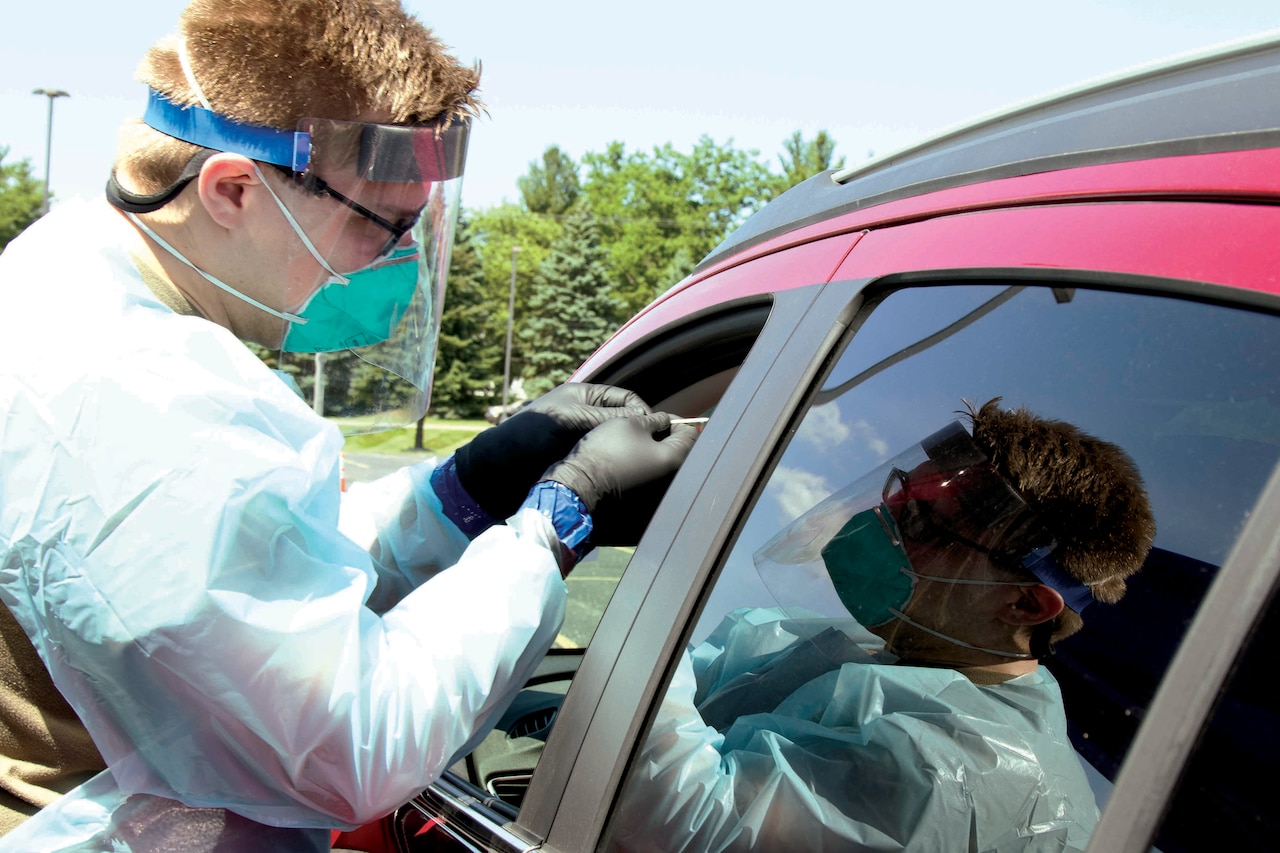
Starting in March, the Army deployed thousands of soldiers to help health care providers nationwide.
"Our integration was seamless," Army Maj. Erin Velazquez said after
her unit's warm reception by the hospital staff. "We were greeted with
open arms, and we made sure to have the greatest impact possible in all
areas [of the hospital]."
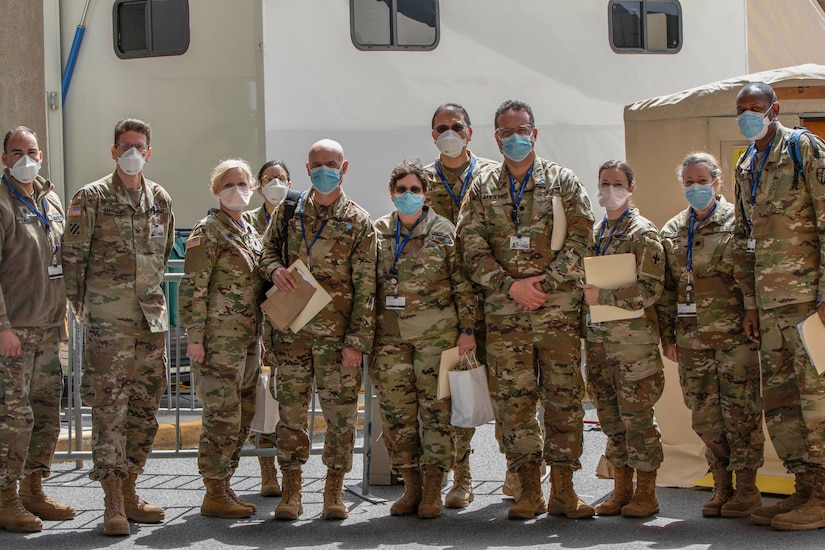
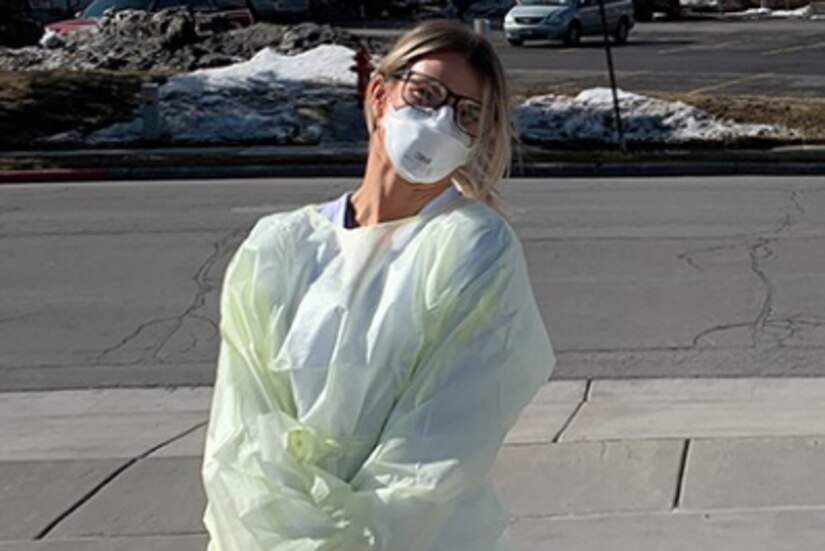
Velazquez commanded Urban Augmentation Medical Task Force 332-1, one
of the Army Reserve's 15 task forces that were initially sent to Newark
and elsewhere to battle the disease. And now, as cases in the first
locations subside, new hotspots have surfaced in southern and western
states, with soldiers preparing to assist again.
I knew at that moment we had to use our skill set and training to make a positive, impactful contribution."
Staff Sgt. Mauricio L. Pena
The 85-member task forces have critical care personnel who have
rapidly deployed across the country, in what has become the largest
domestic mobilization in Army Reserve history, they said. Each team is
made up of various medical specialties from doctors and nurses to supply
and administrative support. At the height of its overall response in
April, U.S. Northern Command had more than 9,000 military medical
personnel, including those teams, in the fight.
Early in the pandemic, New Jersey became one of the country's
worst-hit states by the virus and is also where Urban Augmentation
Medical Task Force 332-1, an arm of the 332nd Medical Brigade out of
Nashville, Tennessee, called home for nearly six weeks.
Other units were sent to similar critical areas, including New York City; Baton Rouge, Louisiana; and Seattle.
By the time the task force arrived on April 14, the Garden State had
roughly 70,000 confirmed cases and more than 2,800 deaths. As with other
COVID-19 breeding grounds, the exact tally was hard to count and
growing by the hour. It was spring, and the University Hospital in
Newark "was at its breaking point," said Staff Sgt. Mauricio L. Pena,
UAMTF 332-1's top enlisted Soldier and a respiratory therapist. As cases
surged, many hospitals had run out of beds to care for the sick.
In those days, the academic hospital was stretched beyond its limits.
"I was taken aback and saddened by the conditions in New Jersey," Pena
recalled. "The emergency department was overwhelmed, even though the
hospital [staff] was moving as fast as they could."
The virus had outpaced their best efforts. The hospital's emergency
room was jam-packed with sick people, many with coronavirus-like
symptoms. The need for care didn't slow down even when the hospital
reached its capacity, so many patients were forced into the hallways
ofthe emergency room. "I knew at that moment we had to use our skill set
and training to make a positive, impactful contribution," Pena said,
regarding the Reserve troops' unique ability to combine military
training with their civilian medical experience.
They should all be extremely proud of what they accomplished during this historic mission."
Army Col. Kimberlee Aiello
Upon arrival, the soldiers in Newark also noticed that many members
of the undermanned staff were visibly burned out as the countless long
days at the hospital had worn them down. "They were on the verge of
collapsing," Pena said.
Before the task force arrived, doctors and nurses had already worked
for weeks at a time — even after many of their colleagues tested
positive for the virus, which reduced the number of available health
care workers. But with each passing day, things inched from chaotic back
to stable. On May 20, the unit's last day at University Hospital, the
facility was running smoothly again, Velazquez said. The cohesion
between the soldiers and hospital staff was immediate, she added. Once
integrated, they worked side by side to provide support to more than 100
COVID-19 positive patients daily.
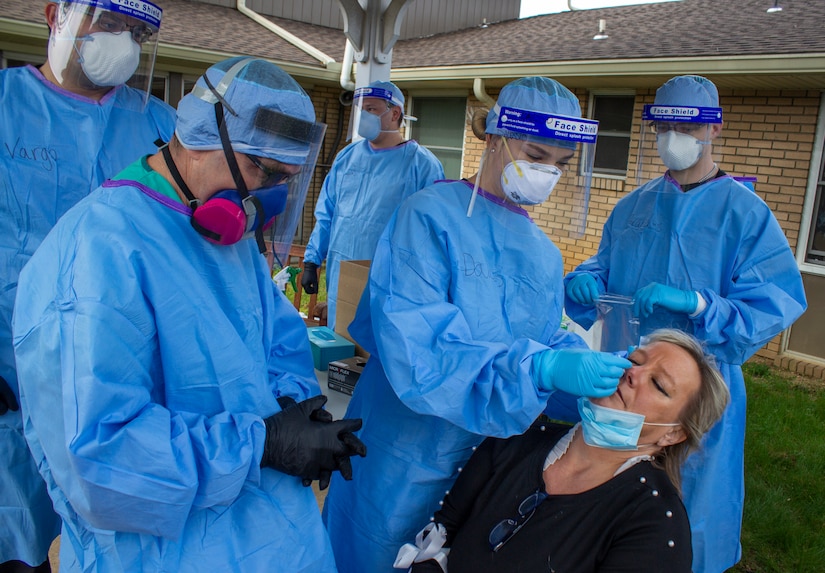
Along the way, the task force went on to assist all around the
hospital, not only providing care to COVID-19 patients, but also helping
to give mental health support to the hospital staff, patients and other
soldiers, Velazquez said. They also volunteered with other daily tasks,
such as N95 mask-fitting and sterilization.
"This was an exceptional mission that provided our soldiers with the
opportunity to support our most burdened communities in a time of great
need," Velazquez said. "Many lives were not only saved but forever
touched by the collaborative impact between the Department of Defense
and state health care professionals."
Ten miles from University Hospital across the Hudson River was the
nation's epicenter of the virus: New York City. That's where the 44th
Medical Brigade assumed the role of Task Force Silver Dragon, which
oversaw more than 3,000 troops in medical units across six states as
part of Federal Emergency Management Agency operations.
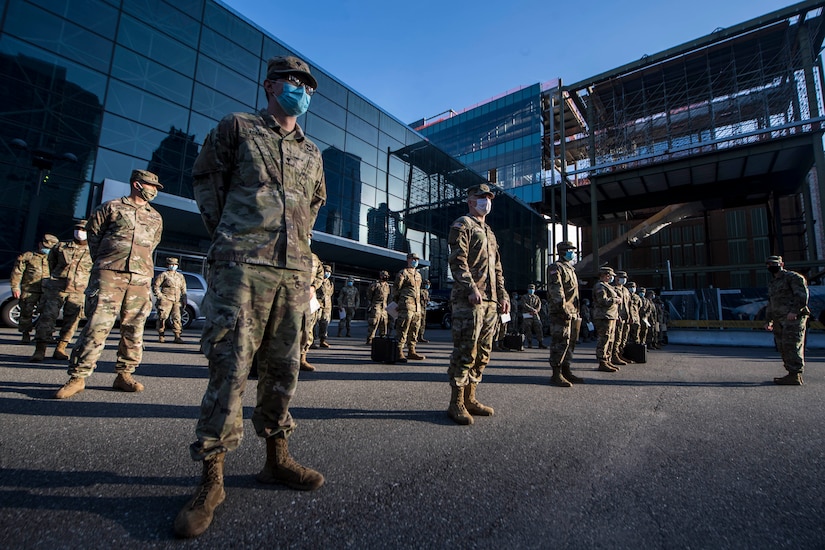
The task force's headquarters was in a converted convention center in
Manhattan, dubbed the Javits-New York Medical Station, where more than
500 service members treated nearly 1,100 patients, said Army Col.
Kimberlee Aiello, the brigade commander.
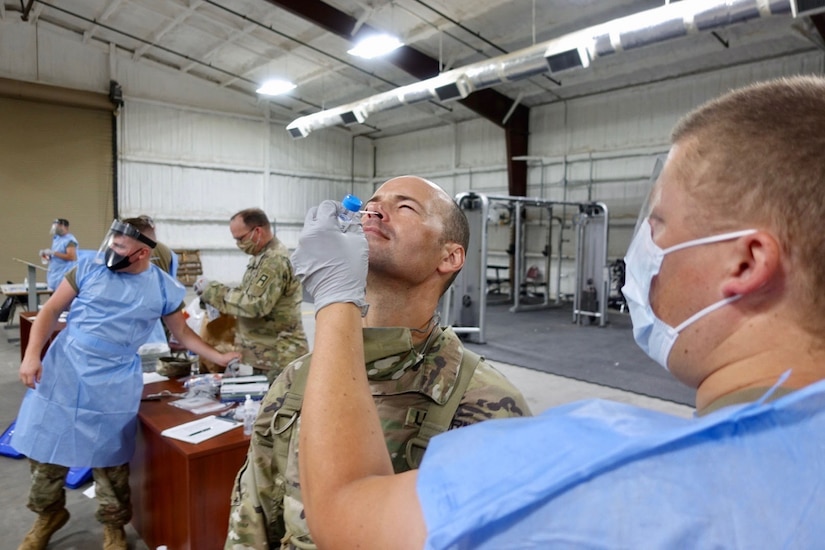
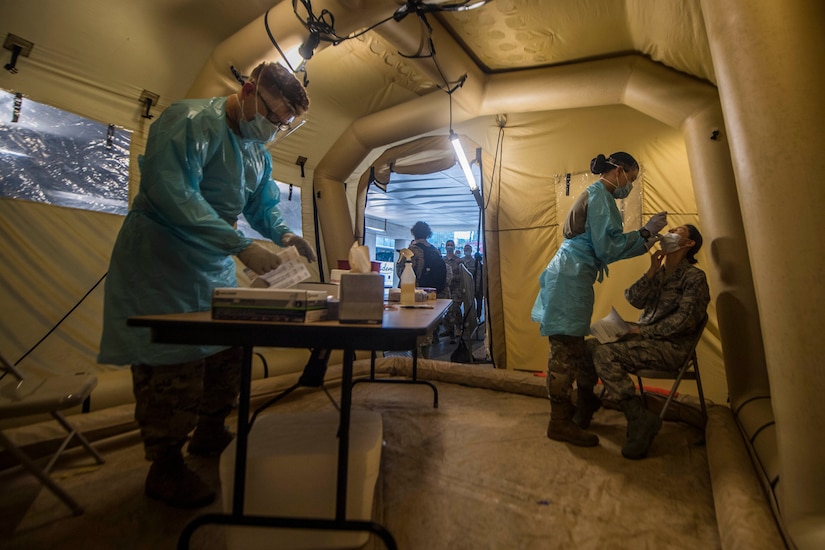
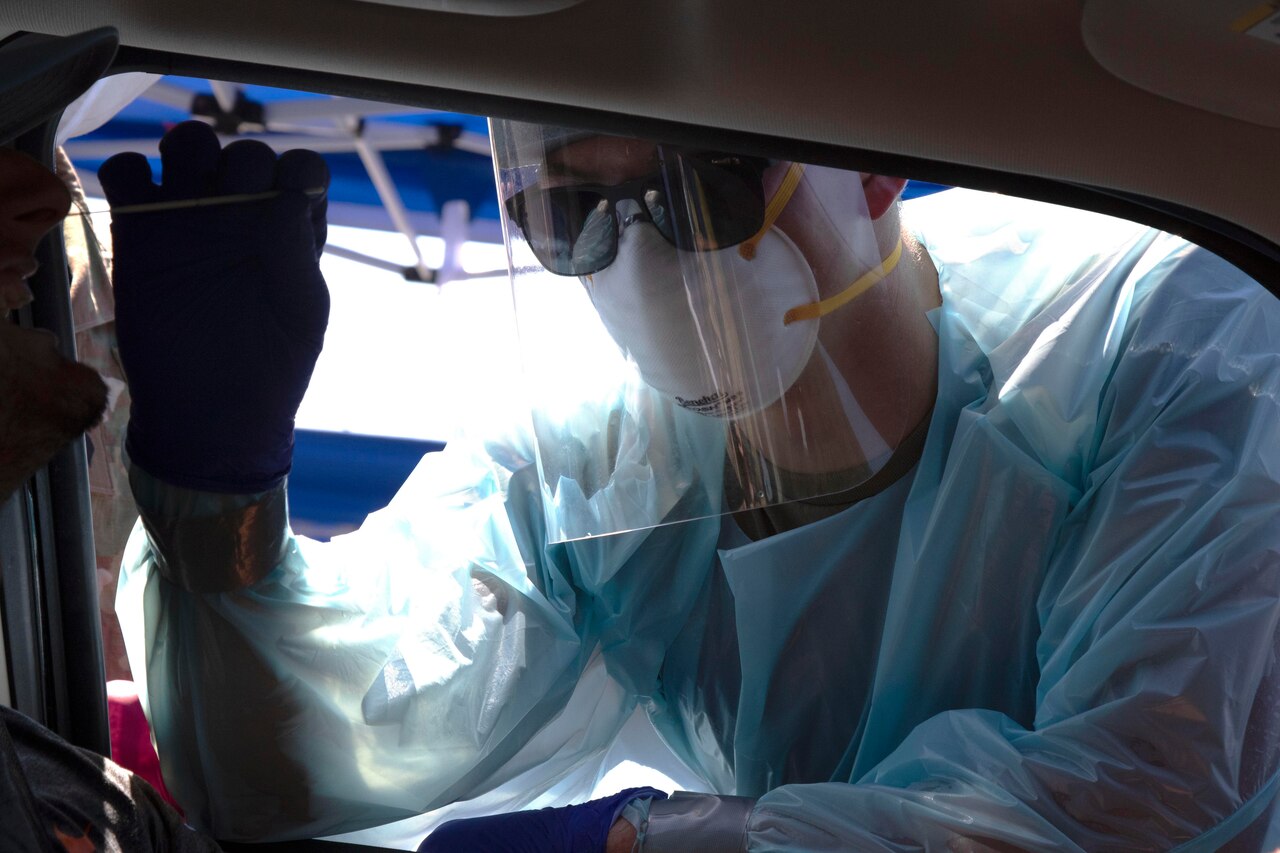
Despite daily interactions with COVID-19 patients, service members
only had a 0.05% infection rate, Aiello said, adding not everyone was
tested due to limited supplies. "When we looked across the United
States, [we] saw there were limited testing capabilities," she said.
"Therefore, we wanted to be good stewards of our nation's resources,
[so] we only [tested] those who were symptomatic for COVID-19."
While normalcy returns to parts of the country, the battle against
COVID-19 persists elsewhere. About 740 military medical and support
personnel have been assigned this week to go to Texas and California in
support of FEMA missions, U.S. Army North officials. More troops are on
prepare-to-deploy orders, according to Army officials, in case the
demand for additional forces are needed in other hotbeds. And if called
on again, the Reserve Soldiers will be able to tap into their real-world
experience.
"COVID has not stopped. This is ongoing," Aiello said. "We did a
great job with what we knew at the time, and we learned from our
partners on how to care for patients. They should all be extremely proud
of what they accomplished during this historic mission."








 Posts
Posts

