Jan. 25, 2021
Acting Army Secretary John E. Whitley; Army Gen.
Daniel R. Hokanson, Chief, National Guard Bureau; Army Maj. Gen. William
J. Walker, Commanding General, District Of Columbia National Guard
STAFF: Ladies and gentlemen, the Honorable Whitley,
General Hokanson, and Major General Walker will be will be out in just a
moment. They'll make brief opening statements, and we'll have time for
questions. We are also sending out a press release. You'll see that in
your inboxes later this afternoon. We do have a list of reporters both
here in the room and on the phone, and so I'll call on folks by name
who've indicated their questions, and we will begin momentarily. Thank
you.
ACTING ARMY SECRETARY JOHN E. WHITLEY: We ready to go? Hello. Do I need to do anything for this?
Good afternoon. I want to give you a quick update on the status of
our National Guard Airmen and Soldiers performing duties at the Capitol.
I'm John Whitley, the acting Secretary of the Army. I'm joined by, I
think most of you probably know General Dan Hokanson, chief of the
National Guard, and Major General William Walker, commander of the D.C.
National Guard.
To begin, I'd like to thank our National Guard Soldiers and Airmen
for the hard work, swift response, and steadfast dedication they've
committed, ensuring that our Capitol remains secure. I'm incredibly
proud of our Airmen and Soldiers serving in support of local and federal
law enforcement activities. This mission shows the breadth,
flexibility, and resolve of the National Guard, and the sacrifice and
service it provides to our nation. I'd like to thank the governors who
volunteered their guardsmen, the mayor of D.C., and our local and
federal law enforcement partners.
As we continue to work to meet post-inauguration requirements, the
National Guard has been requested to continue supporting federal law
enforcement agencies with about 7,000 personnel for the coming weeks.
That presence will likely draw down to about 5,000 by mid-March. I'm
going to go through the specifics of that.
We've received four requests for follow-on assistance from federal
and municipal partners. The requests have come from the U.S. Park
Police, U.S. Secret Service, the Capitol Police, and the Metropolitan
Police Department of Washington, D.C. All four requests have been
approved through the -- the federal requests by the Secretary of
Defense, the municipal requests by myself, the acting Secretary of the
Army.
National Guard service members will provide a variety of support
including security, communications, medical evacuation, logistics, and
safety support to these organizations. Support to the Metropolitan
Police Department and the U.S. Park Police will continue through the end
of January and the first week of February, respectively, with about 500
supporting the park -- 500 supporting municipal -- MPD and the
municipal police department, and about 550 supporting -- that's
backwards, I'm sorry. About 500 supporting the Park Police and about 550
supporting the Metropolitan Police Department. Approximately 600 will
be supporting the Secret Service, and approximately 5,000 will be
supporting the Capitol Police. National Guard members will be postured
to meet the requirements of the supported civil authorities, up to and
including protective equipment and arming, if necessary.
I'd now like to turn it over to General Hokanson for his opening statement.
GENERAL DANIEL R. HOKANSON: Good afternoon. I'm Dan Hokanson. I want
to thank you for the opportunity to give you an update on what our
National Guard Soldiers and Airmen are doing here at home and around the
globe.
As I speak, there are approximately 13,000 National Guard men and
women here in the District of Columbia, primarily conducting security
missions in support of our district and federal partners. As the
Secretary mentioned, we should all be proud of the effort of these
Soldiers and Airmen. I continue to visit with them daily to ensure they
have everything they need.
And let me be clear: The logistics involved in moving 25,000 people
from every state and territory to D.C. in less than two weeks and
supporting them is unprecedented. It speaks volumes about the support we
received from our governors and adjutants general. It also speaks to
the investment America has made in the National Guard's ability to
respond whenever and wherever we are needed. And I'd also like to
recognize our logistics professionals behind our troops that are doing
everything they can to support every aspect of their missions.
As requested by the federal agencies we are supporting, we are
drawing down to 7,000 Soldiers and Airmen by the end of this week, and
that number will decrease based on the support requirements from our
federal partners. As we right-size the National Guard here in D.C.,
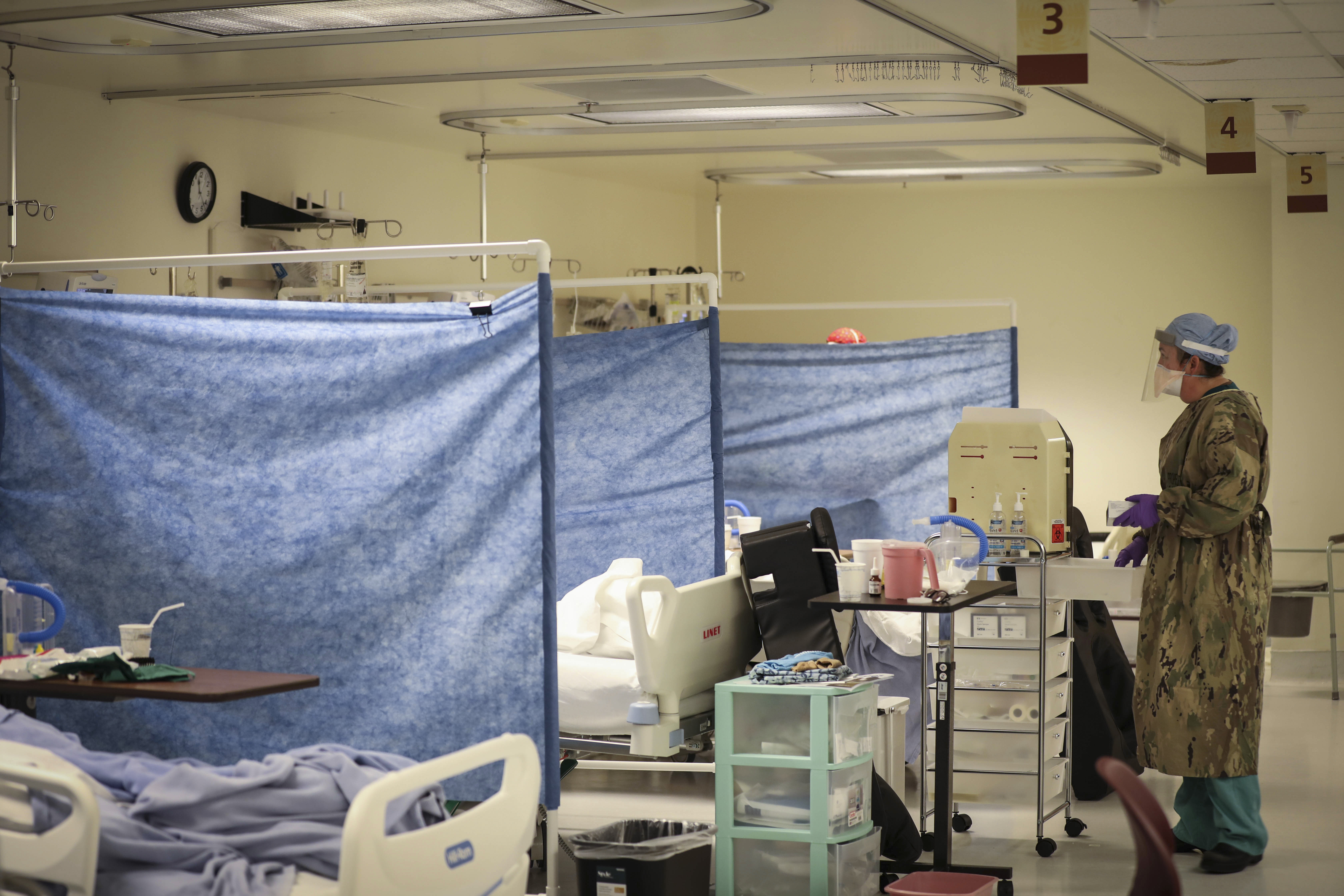
there are over 23,000 Guard members working with community partners in
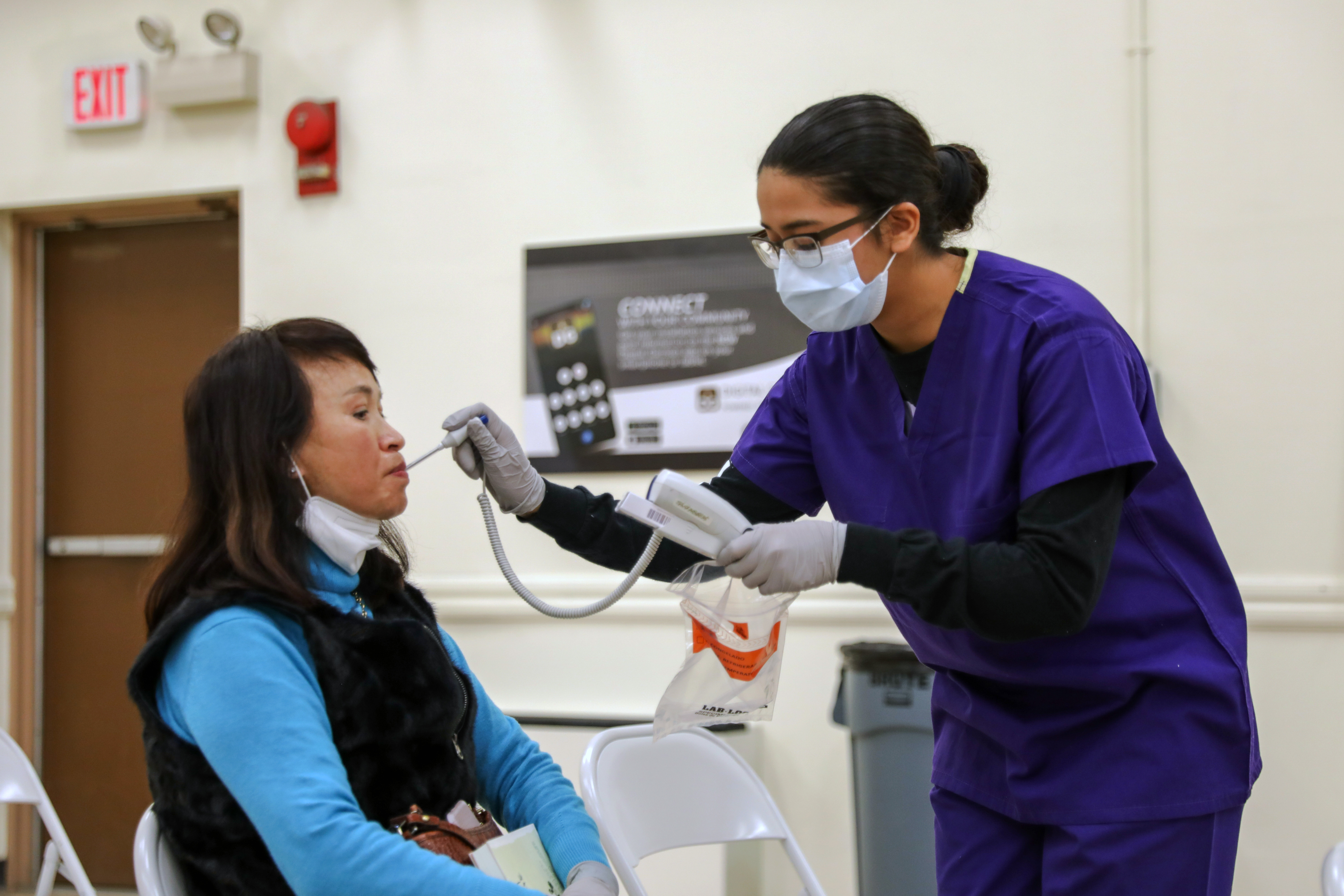
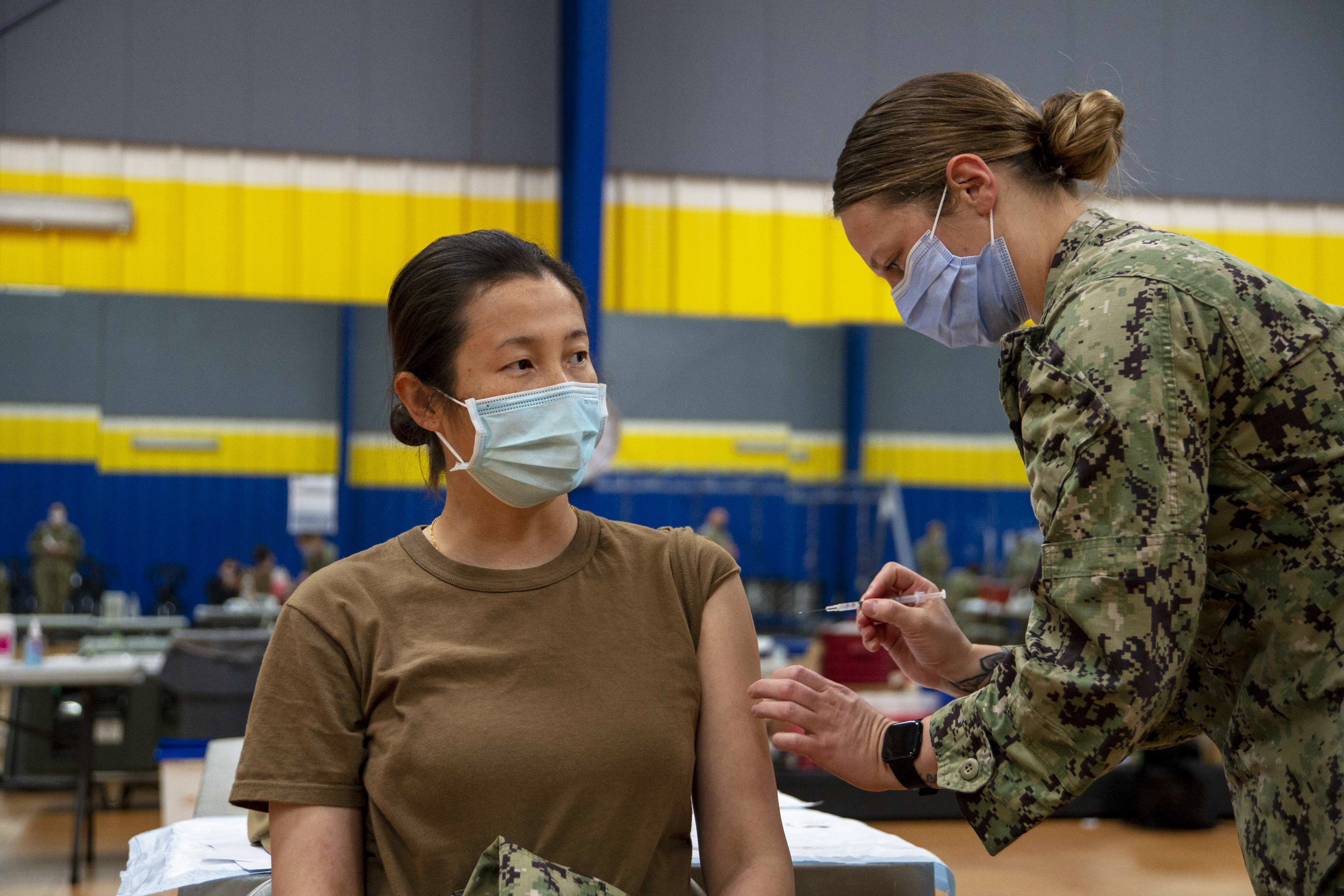
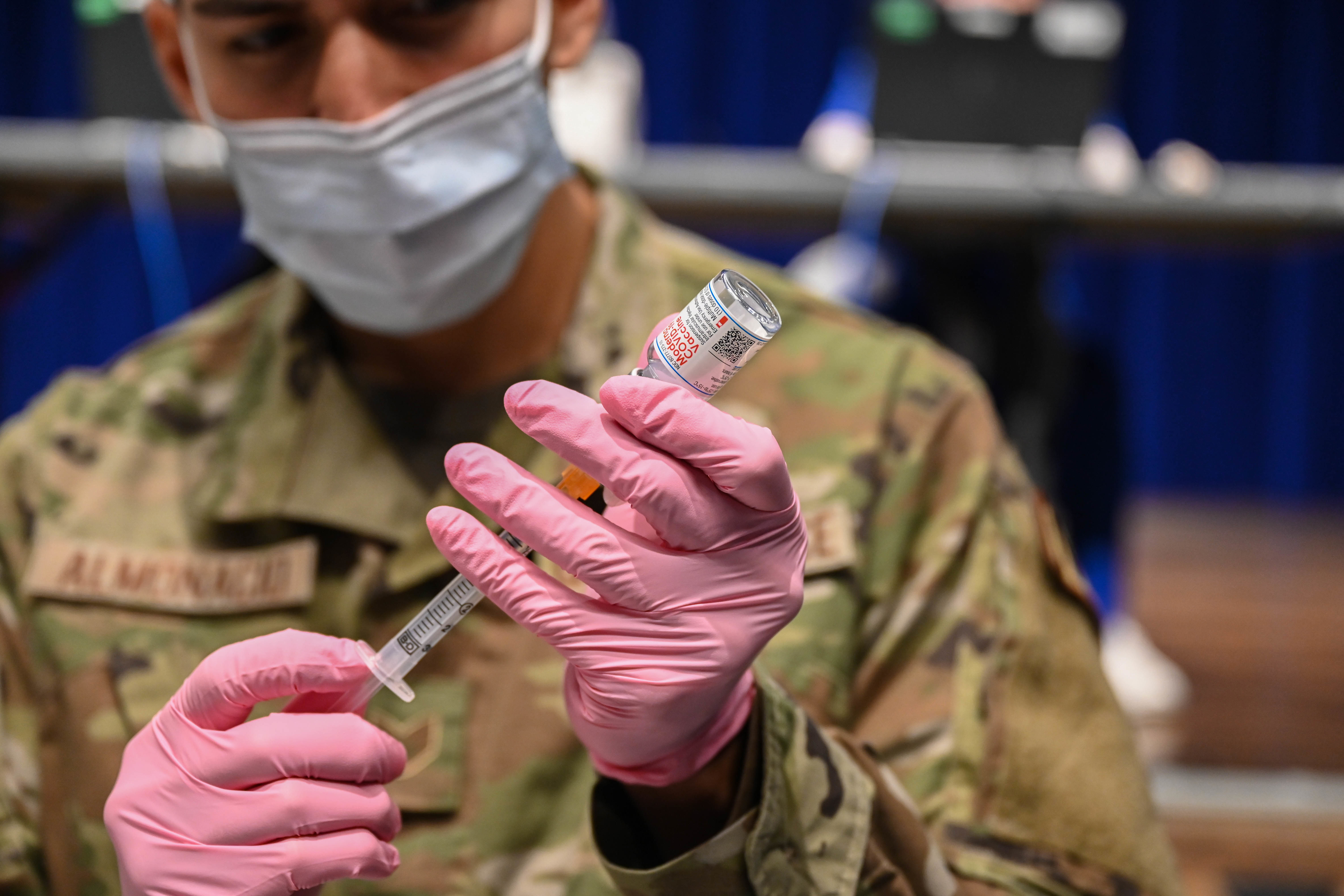
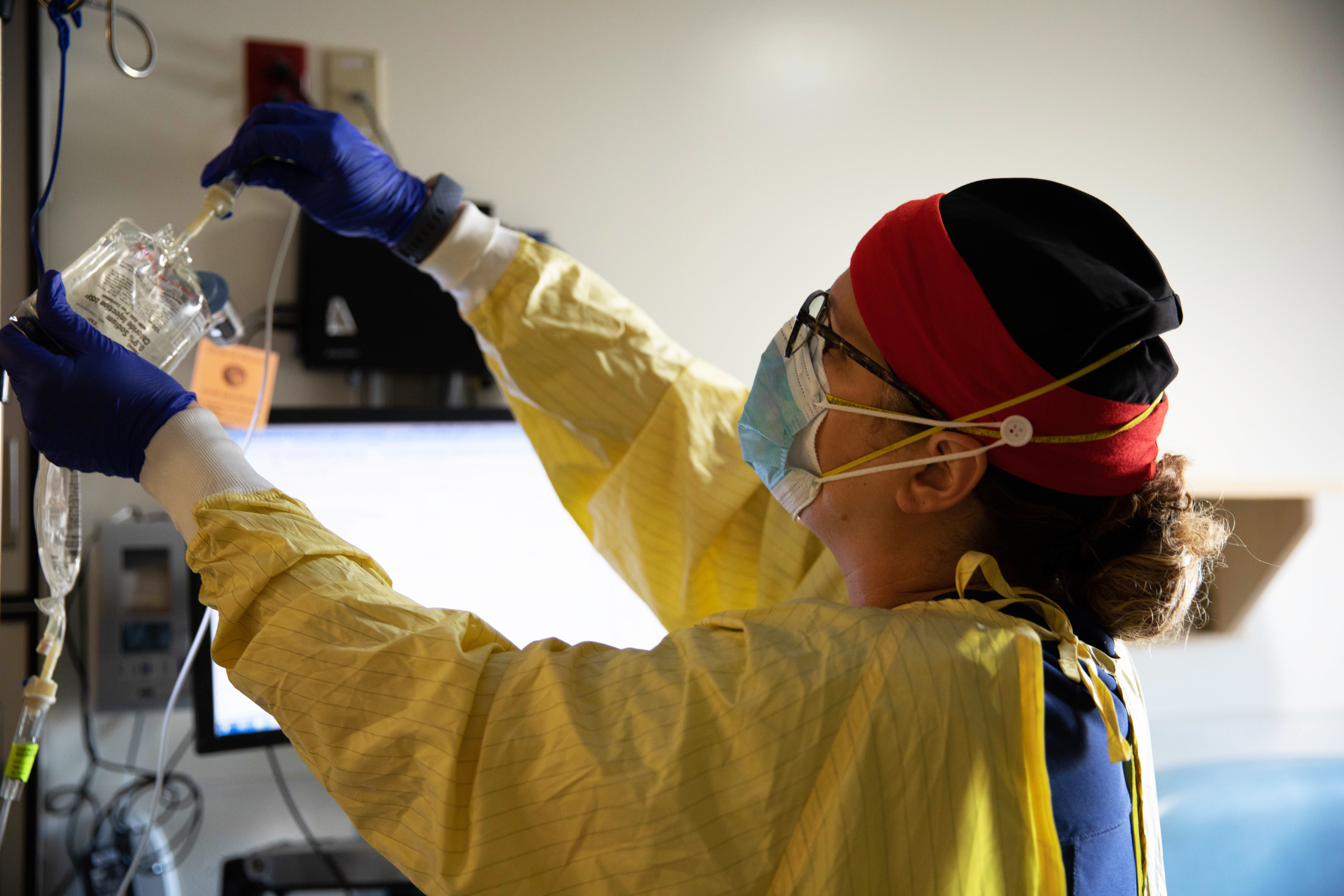
support of the COVID-19 response. They're providing vaccines, testing,
screening and supporting local food banks. In addition, nearly 30,000
Guard members have received their first dose of the COVID-19 vaccine so
they can remain ready for any mission.
We also continue to support overseas combat operations and today,
there are more than 72,000 Guard Soldiers and Airmen engaged in the
homeland and overseas.
The outpouring of support we have received from our community
partners has been extraordinary. Over the past week, I received multiple
phone calls from President Biden, members of our congressional
delegations, and military service organizations expressing their thanks
to the incredible Soldiers and Airmen who have left their employers and
their families to serve their nation.
On behalf of our Guard members, I want to thank everyone -- President
Biden, members of Congress, the USO, the residents here of D.C., the
many local businesses who have shown their support, the governors and
adjutants general, and especially our National Guard families and their
employers.
Their support, generosity and kind words are genuinely appreciated. And for all of us, it's an honor to serve you.
With that, I'll turn it over to Major General Will Walker, the commanding general of the D.C. National Guard.
MAJOR GENERAL WILLIAM J. WALKER: Good afternoon, everyone. I'm
William Walker, commanding general, District of Columbia National Guard.
It's a privilege to be with you all this afternoon.
On behalf of the entire District of Columbia National Guard, I want
to thank all the National Guardsmen, 25,000-plus, who came to support
the District of Columbia National Guard with our mission to help the
Secret Service with the 59th Presidential Inauguration.
I also want to thank their families and their employers for their
patience and cooperation and understanding that we needed every single
one of those guardsmen here to support us as we supported federal and
District of Columbia law enforcement.
Our tasking in support of the 59th Presidential Inauguration was to
help provide security, protection of life, preservation of property, and
to ensure public safety. We had the cooperation, and the understanding,
and the patience of the community around the Capitol.
And with that, I want to thank the residents of the Capitol area for
that understanding. We know we inconvenienced them, but they understood
the reason why.
I'm proud of the role the District of Columbia National Guard played
and the role of the entire National Guard… what we fondly call “Guard
Nation”, played in supporting the United States Capitol Police, the
Metropolitan Police Department, the United States Secret Service, the
Park Police, and the others that supported this mission.
I am very proud of the discipline and professionalism displayed by
U.S. Army Soldiers, guardsmen, Soldiers and Airmen, and I believe we
were uniquely suited for this mission and we will continue to provide
the requested assistance and will do so as long as necessary.
District of Columbia National Guard stands ready to support the
Capitol. So as the Secretary and the chief of the National Guard Bureau
said, we're here to support. Thank you very much.
STAFF: First question to the Associated Press.
Q: Thank you, this is
STAFF: Bob, are you there? I think you might be on mute.
Q: What are the security threats that you're seeing and hearing and
being told of, that justify keeping 5,000 National Guard troops at the
Capitol for some time to come?
DR. WHITLEY: I think the question was about what's the security
picture, what's the threats that we're facing, what do we know about
those threats.
We receive briefings, we do not engage in that intelligence work
ourselves, we rely on our federal partners, in particular the FBI, to
provide that information.
And so what I can tell you in terms of what they're briefing us, is
there are several upcoming events -- we don't know what they are -- over
the next several weeks, and they're concerned that there could be
situations where there are lawful protests, First Amendment-protected
protests that could either be used by -- by malicious actors or other
problems that could emerge.
So I'll defer to the FBI to talk about those threats specifically,
but we are briefed on a very regular basis about those and we are
posturing our forces to be able to respond to those threats if -- if
they emerge.
GEN. HOKANSON: I would just add that the number 5,000 is directly
related to the request for assistance from the U.S. Capitol Police.
STAFF: NPR?
Q: Yeah, this Guard effort on Capitol Hill in D.C., thousands of
Guard members going into March, who's in command of this? Is it the D.C.
Guard, is it the Guard Bureau, or the Army?
And also, General, you know, 12 Guard Soldiers were removed right
before the Inaugural, I guess two for incendiary comments, 10 others
also removed. Did that have to do with extremism and have you had to
remove anyone else since then for whatever reason?
DR. WHITLEY: I'll start with the chain of command, and then I'll turn
it over to General Walker to talk about the chain of command and his
responsibilities, and then I'll turn it over to General Hokanson.
So the chain of command for the forces while they're here in D.C. are
-- they report to the commander of the D.C. National Guard. General
Walker reports to myself, I report to the Secretary of Defense, and the
Secretary of Defense reports to the president, that's the chain of
command for the forces on the ground.
Those forces are being provided by other states and governors and
they have important responsibilities there, but for control on the
ground, for military operations, that's the chain of command.
GEN. WALKER: So to get after your question about the 12, we had
25,000-plus guardsmen here, the FBI said that 12 -- didn't tell us why,
just said that 12 were questionable and we're not taking any chances,
we're not accepting any risk. We sent those guardsmen back to their home
states.
Q: But any others removed since the Inaugural for...
GEN. WALKER: No, sir, just those 12.
STAFF: OK, on the phone, David Martin, CBS?
Q: One other number that was out there last week was the number of
guardsmen who had tested positive for COVID. Then, the number was
roughly 150. Are COVID cases still going up and how many troops have you
had to put into quarantine?
GEN. WALKER: So thank you for the question. I'm deeply troubled by
the number, we're almost at 200 right now. What happens -- we follow the
CDC guidelines, the Department of Defense protocols. We test and
screen. However, we have that number.
So what happens is, once we send a Soldier or Airman to a treatment
facility for a test, they come up positive, they are quarantined and
they remain here until they are cleared to go back to their state.
GEN. HOKANSON: And one thing I would add is that's out of the 25,000,
so it's well less than one percent, but we take every case seriously
and want to make sure -- I know Will's folks are checking on them every
single day and we did allocate 14 days of ROM for them to stay here so
that they're fully recovered before they go back home.
STAFF: Here in the room, Bob?
Q: Members of their unit who were in close contact with them, do they
have to quarantine as well so that 200 gets multiplied by some other
number?
GEN. WALKER: So we do contact tracing and then we're pretty well
separated, but yes sir, so they would be tested to see if they are
positive, and then would be quarantined as well.
Q: Can you tell me roughly how many are in quarantine right now?
GEN. WALKER: I don't have those numbers sir.
Q: Sir, Tara Copp from McClatchey. For the 12 who were sent home, can
you tell us, will there be any additional administrative action taken?
Will they be removed from duty or, I guess, have an extensive
investigation?
And then, there are at least a couple of Guard members who have been
arrested who were at the rally not in their official capacity. Has this
prompted a deeper review by the Guard of all its members for extremism?
GEN. HOKANSON: So, I can answer with respect to the 12. So, the ones
that were identified, that information is provided back to their chain
of command and whether it's a law enforcement or chain of command issue,
whatever's appropriate will be addressed immediately.
(OFF-MIKE)
MR. WHITLEY: I'll just say with respect to I think your question was
also getting at the challenge we have of extremism in the ranks and I
think, you know, I can certainly speak for the Army and I certainly
speak for the Secretary of Defense, we view that as unacceptable. And I
would put that – we have a variety of challenges that we're dealing
with.
I think the incoming Secretary met with all of us this morning and
emphasized his priorities, and so it's extremism in the ranks, it's the
sexual harassment, sexual assault problems we have. And we have problems
with suicide. And so, we take all three of those very seriously.
I think you've heard General McConville, the Chief of Staff of the
Army talking about people first and that is really the way we are
structuring the priorities. I am here in interim capacity, that's
certainly my priority, and I'm sure it will be my successor’s priority
when he or she comes in as well. So, it's unacceptable and we're going
to continue to work on it.
Q: And then secondly, as a separate follow-up, can you talk about
what additional roles the Guard may be taking on as the Biden
administration expands the COVID vaccine roll-out.
GEN. HOKANSON: So, we're in very close contact with the governors and
the adjutant general in each state. As I mentioned, we have 23,000
right now doing that and in 31 of those states, there are guardsmen
administering vaccines to the civilian population. And so, we stand
ready to assist in any way that we can to make sure that we can really
help as much as possible.
And that's related not only to the state plans but also related to Operation Warp Speed.
STAFF: All right, Reuters.
Q: Thanks for that. I mean, you know this better than I do but
extremism based on an ideology can take years and for decades to get rid
of, and I was just wondering if you had any conversations with the
Capitol Police to say, hey look guys, you have a budget of, you know,
over $500 million, you have 2,000 officers, and to remind them to take
more of a lead on this or are you OK with the Guard having this mission
in perpetuity because, sure, in March that the (inaudible), but over the
course of the year there will be several of events that could be
security incidents. So, at what point do you say, you know, enough is
enough. We're happy to help, but we can't stay here forever?
MR. WHITLEY: Look, I can speak to that from a policy perspective and,
you know, certainly the policy of the Department of Defense that we
believe that military forces should be used as a last resort. We believe
that both law enforcement options should be explored before military
forces are called upon and asked to respond. We faced some unprecedented
crises over the last three weeks and our United States Military,
particularly the National Guard, responded in an exemplary manner. And
we will always do that if there's a need for the security of our
nation.
So we will always respond if the need is there. Going forward, from a
long-term perspective, we want to continue to emphasize to our partners
that we should be the last port of call, the last resort, and that
every step should be taken to use appropriate law enforcement, law
enforcement partnerships, and bringing in law enforcement personnel
before we're called upon.
In the short run, you use the forces you have. So in the long term,
we'd like to work with those partners and try to ensure that we are the
last place called.
STAFF: Right here in the room.
Q: Do you feel that the Capitol Police is listening to you or do you
feel that, you know, given the perceived failure that they had, they're
relying on you a bit too much?
MR. WHITELY: I’m sorry, I didn’t, I didn’t catch that?
Q: I was just saying, I mean, do you believe, the Capitol Police is listening to you…
MR. WHITLEY: Oh, yeah, we have an outstanding relationship with all
of our partners, including the Capitol Hill. We've worked very closely
with members of Congress, members of our oversight committees as well as
the Capitol Hill Police, so I think we've had very positive dialogues
over time. We talk about emplacement of forces, we talk about the
employment of forces, and we’ve talked about what specific needs might
be.
But I also want to emphasize, they are the requester and we are the
provider, the supplier. So at the end of the day, they made a request to
us, and we analyzed that request, determined what we could supply, and
we were able to support -- we believe we're going to be able to support
the entire request, and so we're supporting the request.
So yes, there's dialogue. We believe and our experience has been that
dialogue is productive and helpful. But at the end of the day, they are
in the lead and we are in support and we're very conscious of that and
very much try to stick to that relationship.
STAFF: (inaudible) in the room and then...
(CROSSTALK)
STAFF: (inaudible)
Q: Yeah, actually I have two questions. One, will those guardsmen be
armed and equipped when in D.C.? And the other question on social media,
we have seen dozens of images of National Guardsmen laying on the
ground in a parking lot, and then of course it was criticized a lot.
What's your reaction to this?
MR. WHITLEY: Do you want take that?
GEN. WALKER: Yes, sir.
So the guardsmen are armed, as the Secretary just stated. We are in
support of a federal or District of Columbia civil authority. So we were
requested to be armed. Everybody is not armed, but we are providing the
level of security that was requested by us on behalf of the United
States Capitol Police.
Regarding the photographs of Soldiers taking a break, every single
guardsman -- every single guardsman -- has a hotel. But you stand 12
hours on your feet, you want to take a break. And that's what these
guardsmen were doing. They were taking a -- as we say in the military --
taking a knee, so they took a knee and sometimes they did more than
that, they actually laid down. But nobody slept there, nobody spent the
night there.
GEN. HOKANSON: And if I could just add that, that was just an
unfortunate incident. But once the chain of command was notified, they
established the procedures, got everybody back in.
And in fact, this weekend, I got a chance to tour all the facilities.
They've got integrated warming rooms to keep everybody warm for their
break in the time they have between their eight- or 12-hour shift that's
out there. And I think we've gone well past that. It's one of those
things, we find an issue, we resolve it as quickly as we can and I don't
see any issues right now, but thank you.
STAFF: (inaudible) follow up in the room here?
Q: Yes, hi, (inaudible).
So my question is, piggybacking off of what he just asked, are there
any investigations being done, or are you taking steps to make sure that
guardsmen aren't posting their locations on social media? Because this
whole firestorm happened after someone anonymously -- from the Guard --
posted photos about it.
So what's going to be the repercussions if you're able to find out
who posted those? Because I know when I was in the D.C. National Guard,
you are not allowed to post your location on a deployment because you
put your unit in danger. And you know, it makes the unit a target. And
not only that, you're not supposed to talk against your employers, even
if you're not in the military, this does not look well.
So, one, are you doing any investigations about who leaked that? And,
two, what are you telling your troops to make sure that they're not
exposing themselves and possibly putting themselves at risk by posting
different things on social media?
GEN. WALKER: So thank you for the question.
A, there will be no investigation. The guardsmen have phones; it
would be very difficult. They didn't compromise security, they're inside
a buffered bubble of layered security, so they'd have to get past the
Capitol Police, the D.C. -- all the National Guard, so it's not a
security risk that they posted it.
Here's what I have done, and the chief of the National Guard Bureau,
General Hokanson and others, three- and four-star generals and command
sergeant majors, have been out walking and talking to guardsmen. If you
have a problem, let the chain of command know and we'll fix it.
So that's the guidance that every single guardsman has been given. If
you had a problem with the break area, let someone in command know and
we'll fix it. But there is no investigation, security was not
compromised. It's good to see you again.
Q: Thank you. And I do actually have one more...
GEN. WALKER: Thank you for your service.
Q: Well, thank you for yours. And I do have one more follow-up
question. There's a rumor that there's an armed protest coming up by the
end of this month. Are you posturing any of the guardsmen to expect
potential armed protests coming up before the end of this month? And if
so, how are you going to handle it?
GEN. WALKER: So we have an adequate number of guardsmen armed, we are
relying on the intelligence from our federal partners, and essentially
our customers, in this case, the United States Capitol Police. We are in
support of them, and if there needs to be a shift in our security
posture, they will let us know and we will adjust accordingly.
STAFF: Meghann, last question?
Q: Because the deployment has turned into weeks and months and all
these guardsmen are on state orders to be here, they're not getting
active duty days toward benefits, retirement benefits, that sort of
thing. Is there any reconsideration of the way that they've been
activated or some sort of memo maybe to rectify that?
GEN. HOKANSON: Actually, all the Soldiers that are here, and Airmen,
are on federal orders under Title 32. They remain under the command and
control of their governor, but they're paid by the federal government
and they're under the control of General Walker as the D.C. National
Guard commanding general while they're here.
STAFF: OK, I think we actually do have time for one last question. On the phone, ABC? Are we here? OK.
All right, anyone in the room have one last question? OK, go ahead.
Q: General Walker, are there any conversations you're aware of, any
process that you're aware of to try to make sure that the D.C. National
Guard answers to the D.C. mayor, to sort of streamline the process of
trying to deploy them if the mayor wants them deployed?
GEN. WALKER: So I'm not aware of any actual questions on that. I can
share with you that the District of Columbia National Guard was
established by President Thomas Jefferson, May of 1802, and the chain of
command is exactly how the Secretary of the Army described it.
Since I've been in charge we've been very responsive to the mayor.
She provides a request. It comes to me. I conduct mission analysis. And I
send it to the Secretary of the Army for his approval.
STAFF: Okay. We're out of time. Thank you very much.
























 Posts
Posts

