Thursday, July 12, 2018

Task Force Alamo Arrives in Djibouti, Assumes Security Mission


By Air Force Senior Airman Scott Jackson, Combined Joint Task Force Horn of Africa

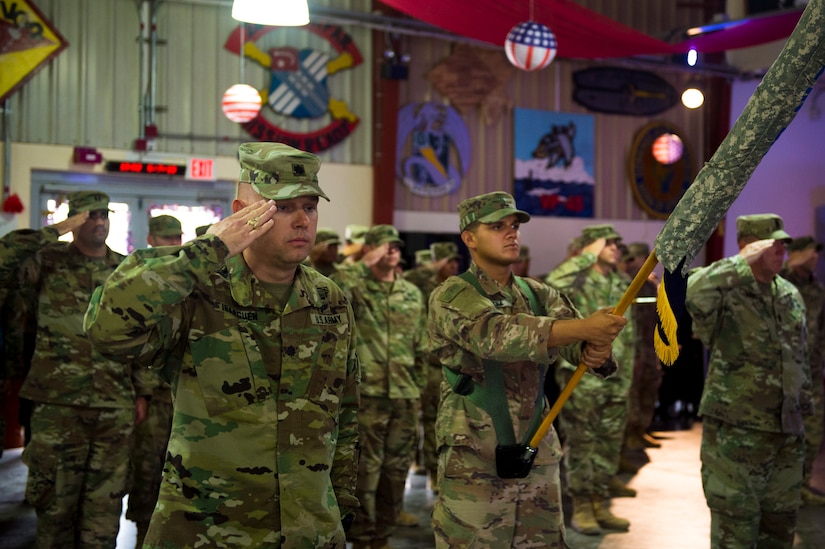
CAMP LEMONNIER, Djibouti -- One Texas Army National Guard battalion transferred security force responsibilities for Combined Joint Task Force Horn of Africa to another at a ceremony here July 5.

Soldiers assigned to 3rd Battalion, 144th Infantry Regiment, known as “Task Force Bayonet,” officially passed their mission to the soldiers of 1st Battalion, 141st Infantry Regiment, known as “Task Force Alamo.”

In its role as the task force’s security force battalion, the 1-141st will be responsible for rapidly deploying in response to any crisis threatening U.S. personnel or property throughout an area nearly half the size of the continental United States.

Welcome, Farewell

Army Lt. Col. Ross Walker, battalion commander of Task Force Bayonet, welcomed Lt. Col. Sean Ibarguen and the soldiers of Task Force Alamo.

“We came here with one goal, and that was to be better,” Walker said to his soldiers. “We have focused on mission command as well as individual and collective training. Through these accomplishments, you have increased Texas readiness.”

He commended them, but also told them not to stop their growth.

“This was not done by me or [the] command sergeant major,” he said. “It was done by the sergeant on the line driving readiness. The only thing I ask is, share your experience and be proud of your accomplishments, but not satisfied.”

Ibarguen accepted the authority on behalf of the Task Force Alamo soldiers and bid farewell to Task Force Bayonet. “We are ready to take on this mission,” he said. “Thank you, and always remember the Alamo.”
During their rotation here, the Task Force Alamo soldiers will contribute to international efforts to enhance security and stability in East Africa by providing security force assistance and fostering the capabilities of partner nations.

Maintenance Innovation Slashes Delivery Times


By Air Force Senior Airman Kelly O’Connor, 100th Air Refueling Wing

ROYAL AIR FORCE MILDENHALL, England -- Imagine shopping online for an item that must arrive quickly and realizing the process will take 90 days. Ninety long days.

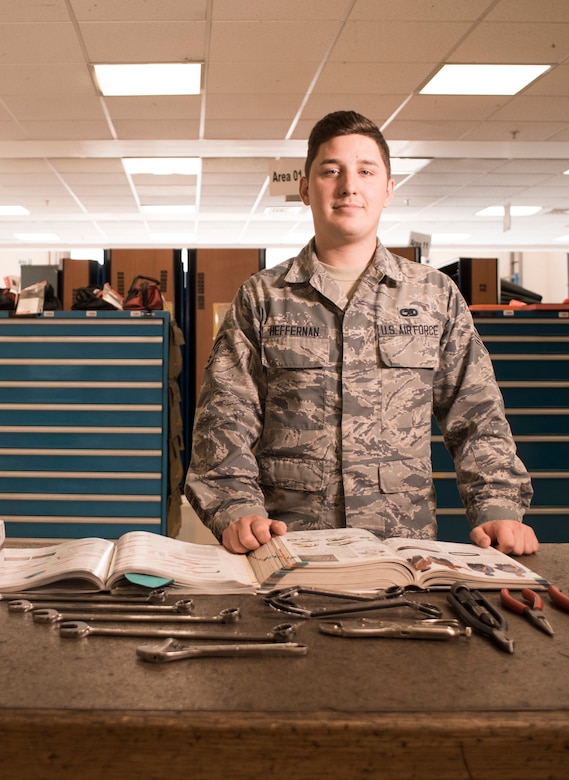
Air Force Senior Airman Joshua Heffernan, a flight aerospace propulsion journeyman with the 100th Maintenance Squadron here, experienced this problem while working in the composite tool kit section last year. When customers tried to order tools and equipment, the process took an average of three months. Heffernan saw the frustration and wanted to swap out the old process with a new one.

Heffernan went to Mia Tobitt, the squadron’s continuous process improvement manager, for guidance. Tobitt suggested he enroll in Green Belt, or CPI training. There, he discussed his flight’s problem, and with the help of others, they made his vision a reality.

“The old ordering process had all these defects, and we eliminated them,” Heffernan said. “The root cause was there wasn’t a standard process, so we created one. The average was 90 days to order something, and our flight chief’s policy was 30 days. We got it down from 90 days to a day and a half.”

Making a Difference

The process simplified purchasing items and brought maintainers the equipment they needed in a fraction of the time it used to take.

“The lines of communication are much smoother now because everyone knows what their role is, Everyone knows who’s accountable,” Tobitt said. “We’ve put it back into the customer’s hands. It’s important that we empower them.”

Airmen are now trained to use tracking logs and place orders with a step-by-step guide for continued accountability and communication across the flight.

“This project illustrates how one airman can make a difference,” said Air Force Lt. Col. Paul Weme, 100th MXS commander. “Joshua used his training to focus on and fix a problem that affected his flight and daily mission. Now, that solution is benefiting our entire squadron.”
The 100 MXMT flight is made up of 61 personnel who maintain a squadron of KC-135 Stratotankers that support missions in Europe and Africa.

DoD Announces Policy Change on Transfer of Post-9/11 GI Bill Benefits


WASHINGTON -- The Defense Department issued a substantive change today to its policy on the transfer by service members in the uniformed services of Post-9/11 GI Bill educational benefits to eligible family member recipients.

Effective one year from the date of this change, eligibility to transfer those benefits will be limited to service members with less than 16 years of total active-duty or selected reserve service, as applicable.

Previously, there were no restrictions on when a service member could transfer educational benefits to their family members. The provision that requires a service member to have at least six years of service to apply to transfer benefits remains unchanged in the policy.

Focus on Retention

“After a thorough review of the policy, we saw a need to focus on retention in a time of increased growth of the armed forces," said Stephanie Miller, director of accessions policy in the Office of the Secretary of Defense. “This change continues to allow career service members that earned this benefit to share it with their family members while they continue to serve.” This change is an important step to preserve the distinction of transferability as a retention incentive, she added.

If service members fail to fulfill their service obligation because of a “force shaping” event -- such as officers involuntarily separated as a result of being twice passed over for promotion or enlisted personnel involuntarily separated as a result of failure to meet minimum retention standards, such as high year of tenure -- the change will allow them to retain their eligibility to transfer education benefits even if they haven't served the entirety of their obligated service commitment through no fault of their own.

All approvals for transferability of Post-9/11 GI bill continue to require a four-year commitment in the armed forces and, more importantly, the member must be eligible to be retained for four years from the date of election, officials said.

The policy affects service members in the uniformed services, which includes the U.S. Coast Guard as well as the commissioned members of the U.S. Public Health Service and National Oceanic and Atmospheric Administration.