Showing posts with label 173rd Airborne. Show all posts

Tuesday, September 01, 2026

Airlift Wing Builds Mobility Readiness During Exercises

The 86th Airlift Wing supported Exercise Saber Junction 26 with joint air mobility operations alongside Army and Marine Corps forces at Ramstein Air Base, Germany, Aug. 24-30. 
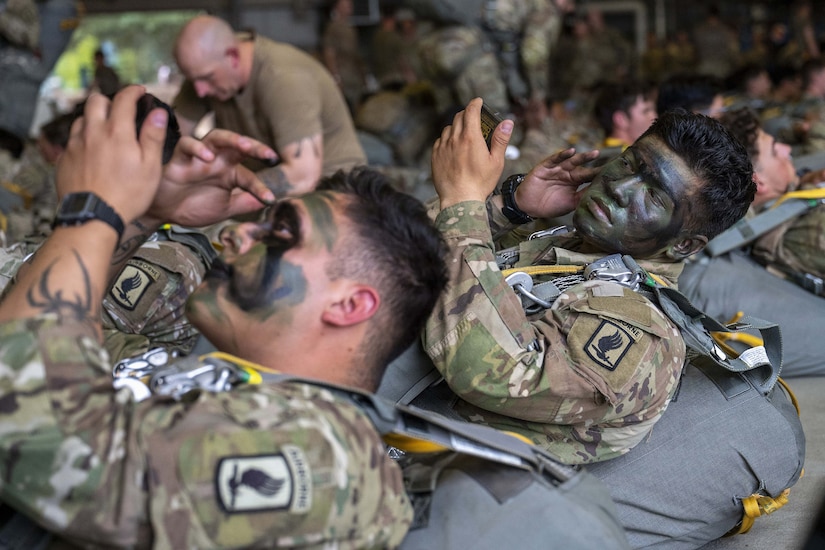
Two men wearing camouflage military uniforms put camouflage paint on their faces while lying in an aircraft hangar.

During the week, the wing executed distributed mission planning, patient movements, tactical airdrops and joint airborne operations, culminating in a joint forcible entry event that integrated Air Force C-130J and Marine Corps KC-130J Super Hercules crews with more than 600 paratroopers assigned to the 173rd Airborne Brigade. 

Saber Junction 26 is a U.S. Army Europe and Africa exercise that tests the airborne brigade's ability to rapidly deploy, conduct joint forcible entry and operate alongside allied and partner forces during large-scale combat operations. 

Leading into Saber Junction, the airlift wing conducted Exercise Agile Gateway, which began with a staging event at Chievres Air Base, Belgium, where, with 86th Communications Squadron support, an aircrew received its tasking and planned the mission from a distributed location. 
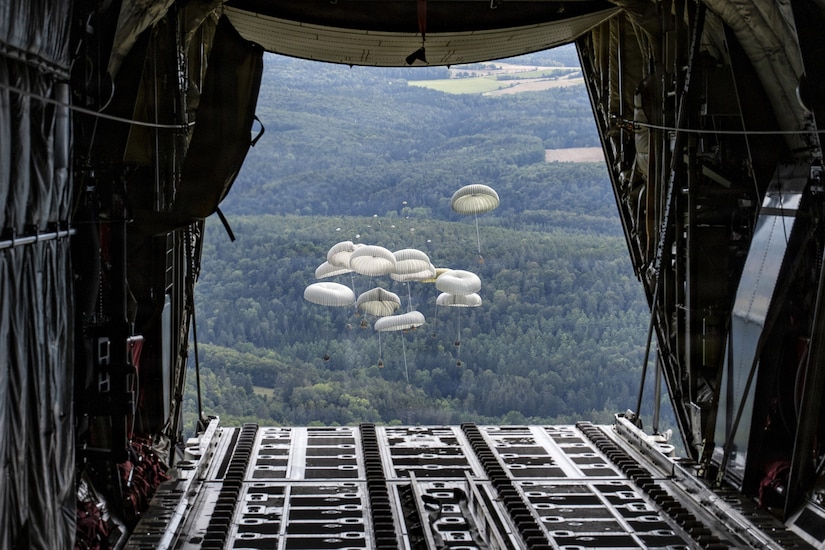
Packages parachute to the ground in a wooded area after being dropped from a military aircraft.

The following day, the 86th Aeromedical Evacuation Squadron responded to a simulated mass casualty event, transporting three simulated patients from Belgium to Germany. They were then transferred to a 76th Airlift Squadron C-21A Learjet during an engine-running offload/onload for a follow-on aeromedical evacuation. 

The transfer was one of three aeromedical evacuation training flights conducted throughout the week as the squadron exercised engine-running patient transfers, rapid alert response and simultaneous generation of its C-21A and C-37A Gulfstream fleets. 

"Agile Gateway and Saber Junction gave us an opportunity to test our agility and crisis-response capabilities in ways routine day-to-day missions can't," said Air Force Lt. Col. Kyle Gadoury, 76th Airlift Squadron assistant director of operations. "These exercises help ensure our squadron remains ready to support joint partners across Europe and Africa in high-tempo or contested environments." 

Following the patient transfer, the 86th Logistics Readiness Squadron conducted simultaneous hot-pit refueling and engine-running onload operations on the C-130J. 

These employment capabilities enabled the immediate transfer of patients and rapid onload and airdrop of sustainment cargo, setting the stage for the 173rd Airborne Brigade's upcoming operations at the Joint Multinational Readiness Center in Hohenfels, Germany. 

The training also demonstrated joint interoperability capabilities as 37th Airlift Squadron crews planned and operated alongside aircrews from Marine Aerial Refueler Transport Squadron 234, working through differences in terminology, procedures and aircraft capabilities before mission execution. 

"This week showed how our different capabilities can connect and build on one another," said Air Force Capt. Charles Khoshabjian, 37th Airlift Squadron weapons officer. "Working with the Marines reinforced the importance of identifying differences in terminology and procedures early so we can build shared understanding, integrate effectively and deliver combat power for the joint force." 

The wing's support for Saber Junction 26 peaked Aug. 26, when Air Force C-130Js and Marine Corps KC-130Js carried more than 600 paratroopers from Ramstein to the Joint Multinational Readiness Center. A C-37A also supported the mission as an airborne communications node, relaying the launch command between the airborne brigade and the airlift squadron. 

The mission brought together Air Force, Army and Marine Corps capabilities to strengthen interoperability and rehearse rapid force employment across the theater. 

"The joint forcible entry may be the culmination of our air mobility mission, but for the Army, it marks the start of the larger operation," Khoshabjian said. "What we deliver by air enables everything that follows on the ground." 

The integration across airframes, mission sets and military services reflects the broader role the airlift wing provides to the joint force. 

"No single capability defines what the 86th Airlift Wing brings to the fight," said Air Force Col. Matthew Wunderlich, 86th Operations Group commander. "By integrating our mobility capabilities with the joint force, we create the flexibility commanders need to respond across the theater. That integration is what turns individual capabilities into combat power."

Sunday, August 30, 2026

Sky Soldiers Train for Modern Conflict in Europe's Premier Crucible Event

More than 2,300 paratroopers assigned to the 173rd Airborne Brigade, along with more than 2,100 allied and partner forces from 10 nations are participating in Exercise Saber Junction 26 at the Joint Multinational Readiness Center in Hohenfels, Germany.

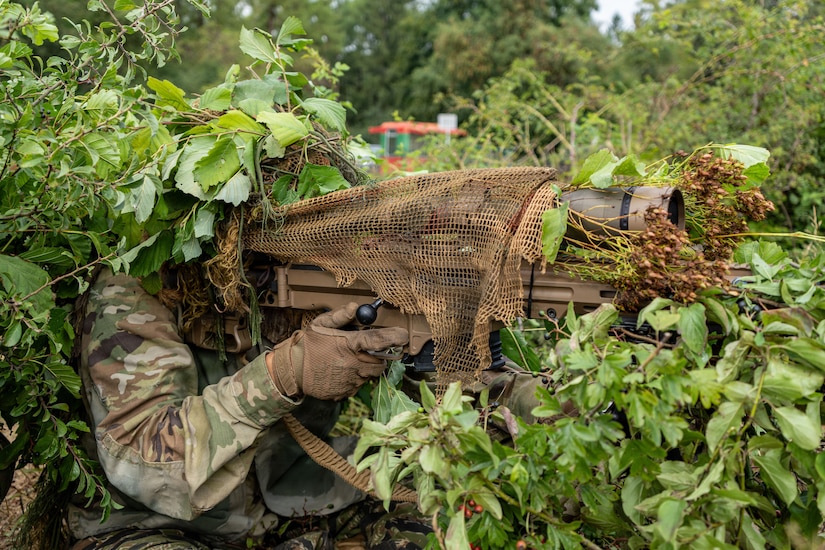
Two people wearing military combat gear walk through a forest.

Overseen by U.S. Army Southern European Task Force, Africa, the rotation is designed to validate warfighting readiness, strengthen NATO interoperability and prepare forces for large-scale combat operations across the European theater. 

Exercise Saber Junction 26 tests the brigade's ability to rapidly deploy, conduct joint forcible entry, execute offensive and defensive operations, and regenerate combat power in a contested environment. The exercise incorporates lessons learned from ongoing conflicts, including electronic warfare, unmanned aerial systems, dispersed maneuver and contested communications.  

Southern European Task Force, Africa serves as the division-level higher command for the rotation, integrating U.S. and allied formations, issuing division orders, maintaining the common operating picture, and rehearsing mission command essential for operations across Europe and Africa. 

"Saber Junction is where our soldiers and our allies prove they are ready for the demands of modern war," said Army Maj. Gen. Matthew W. Brown, Southern European Task Force, Africa commander. "This rotation is a crucible event — designed to expose gaps, accelerate learning and ensure that formations are trained and lethal. The 173rd continues to demonstrate that disciplined application of the fundamentals, ground-up innovation and persistence remain the hallmarks of a combat-credible force. The brigade is ready — and the lessons we gather here help our Army scale innovation at pace and strengthen NATO's collective readiness."

The exercise also highlights modernization efforts within the 173rd Airborne Brigade, including the work of the bayonet innovation team, the brigade's internal innovation cell comprised of paratroopers, engineers, warrant officers and technical specialists. The team designs, builds and fields low-cost, high-impact technologies such as first-person view drones, intelligence, surveillance and reconnaissance platforms, ground robots and artificial intelligence-enabled tools. It operates a facility that can produce drones in-house and integrates lessons from Ukraine, Joint Multinational Readiness Center rotations and multinational exercises to help the brigade adapt rapidly and strengthen NATO interoperability.

"Our standards are nonnegotiable: disciplined, lethal and relentless. Saber Junction is where we put those expectations to the test," said Army Col. Mark E. Bush, 173rd Airborne Brigade commander. "This exercise validates our ability to deploy at the time of need, fight and succeed regardless of the mission environment or enemy capability and posture the brigade for future operations. Through the character, competence and commitment of our Sky Soldiers, we will deliver overwhelming firepower, maneuver aggressively and accomplish the mission alongside our allies." 

Exercise Saber Junction 26 includes participants from Belgium, Bosnia and Herzegovina, Czech Republic, Germany, Hungary, Italy, Kosovo, Lithuania, Poland, Ukraine, and the United States. The exercise strengthens multinational interoperability and accelerates combined decision making across the European theater.

Sunday, July 05, 2026

Vietnam Veteran Receives Purple Heart 57 Years Later

Fifty-seven years after Spec. 4 Raymond Williams was wounded in Vietnam, one Army Reserve noncommissioned officer made sure he finally had his moment.

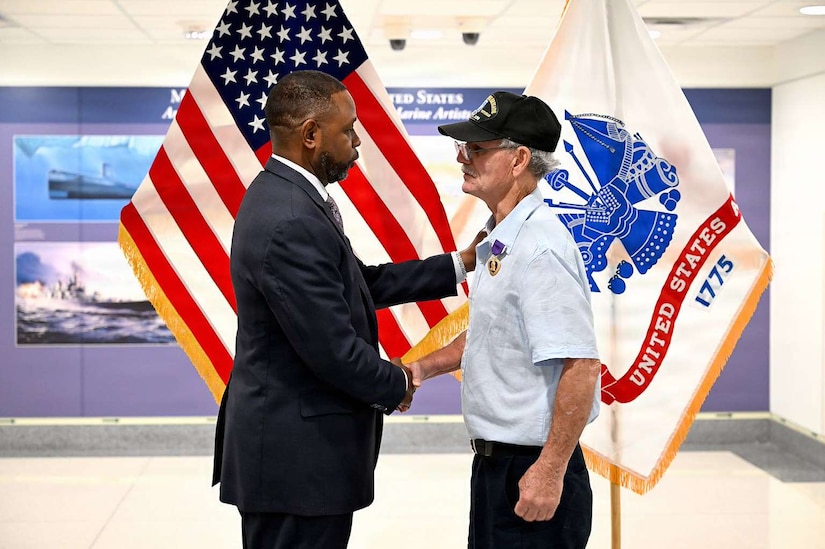
A man in business attire shakes the hand of a man in casual attire in front of an American flag and an Army flag.

For then-19-year-old Williams, 1969 was shaping up to be a year to forget before it even began. On Dec. 31, 1968, the young infantryman was being loaded onto a helicopter and evacuated out of the jungle with wounds that would take more than half a century to heal. 

A year earlier, almost to the day, Williams walked into a recruiting station and raised his right hand. He completed basic training, earned his paratrooper wings and soon became the M60 gunner for his unit, Bravo Company, 4th Battalion, 503rd Infantry, 173rd Airborne Brigade. It was the weapon he carried into the Central Highlands of Vietnam, where Williams found himself in what he called "a small firefight." 

"I just remember getting shot in the arm first, then the shoulder. I was trying to carry on, but my right arm was just hanging," Williams said. "I did the best I could." 

Military records confirm what happened; at approximately 10 a.m., local time, near the town of An Khe, Vietnam, an enemy AK-47 round tore through his right arm. The round fractured the bone in two places and lacerated the nerve leading to his forearm and thumb. 

Eight months later and permanently disabled from his combat wounds, Williams medically retired from the Army. 

"I remember getting on the chopper, and I didn't want to leave," he said. "I did not want to leave." 

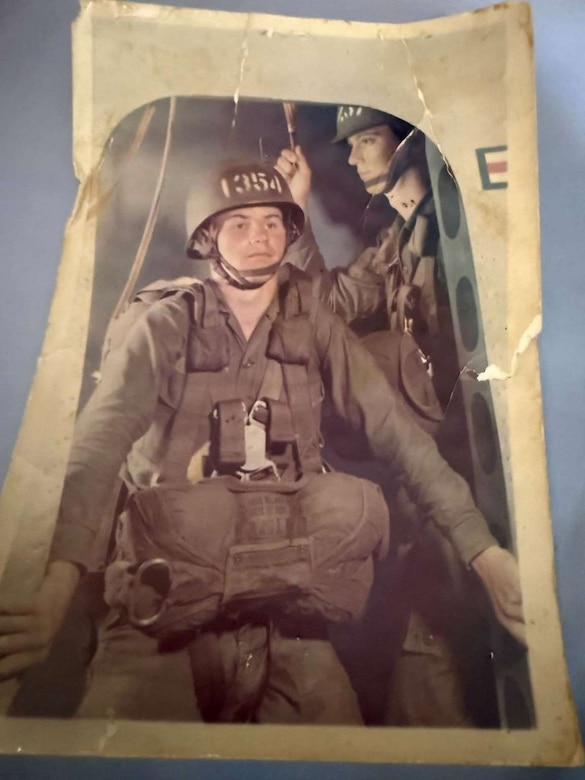
A man, wearing a Vietnam-era Army uniform, a helmet and a packed parachute, prepares to jump from an aircraft.

Back home, Williams built a life. He worked as a pressman at the Easter Seals printing press, married and raised three children. Life was good — but the war never fully lost its grip. 

"The [Department of Veterans Affairs] was never prepared for us," he said. "We stood outside in a line in the ice-cold to get into the hospital because they just weren't ready. But it was just what it was." 

Williams rarely spoke of the war. Like many veterans of that era, he battled with depression and did his best to cope with post-traumatic stress disorder, long before it had a name. 

"It was a tough, unpopular war — coming home was tough," he said. "Nobody wanted to talk. You kind of bury it." 

Years passed; his family learned not to bring it up. Then, in 2025, Williams decided it was time. 

At 77, while in the hospital, Williams told his daughter Kelly he wanted to visit the Vietnam Veterans Memorial — and finally receive the Purple Heart he had earned but never been awarded. 

Kelly Williams filed the paperwork with the National Personnel Records Center. Weeks later, she received confirmation. When the medal arrived in May, she contacted the Army to ask whether her father could receive it during their trip to Washington. She hoped it could be a surprise. 

It was a long shot. The family was deep into their travel plans from New Hampshire, and time was short. 

Army Master Sgt. Virginia Crutchfield was working at the Pentagon when the request came through — and immediately knew she had to make it happen. 

Crutchfield was on a yearlong tour coordinating Medal of Honor ceremonies; Purple Heart presentations were not in her lane. She had just nine days to pull it together, and the team shifted workloads so she could take on the mission. She handled every detail — from securing Pentagon space to arranging homemade brownies and cake. She said she was driven by an understanding of what soldiers of Williams' generation faced when they came home — the silence, the stigma, the lack of welcome — it drove her to make the moment right. 

"When I go out, people see me in uniform and say, 'thank you for your service,' with a smile; sometimes with a hug. In their time, they didn't," Crutchfield said, her voice breaking. "It touched me. They go out and fight for us to remain free. It's the least we could do." 

On the morning of the ceremony, Williams arrived expecting a tour. He and his family — daughter Kelly, sons Eric and Mark, and grandson Fynn — were escorted through the Pentagon to a corridor junction where a crowd had gathered: unfamiliar faces, soldiers in uniform and Crutchfield.

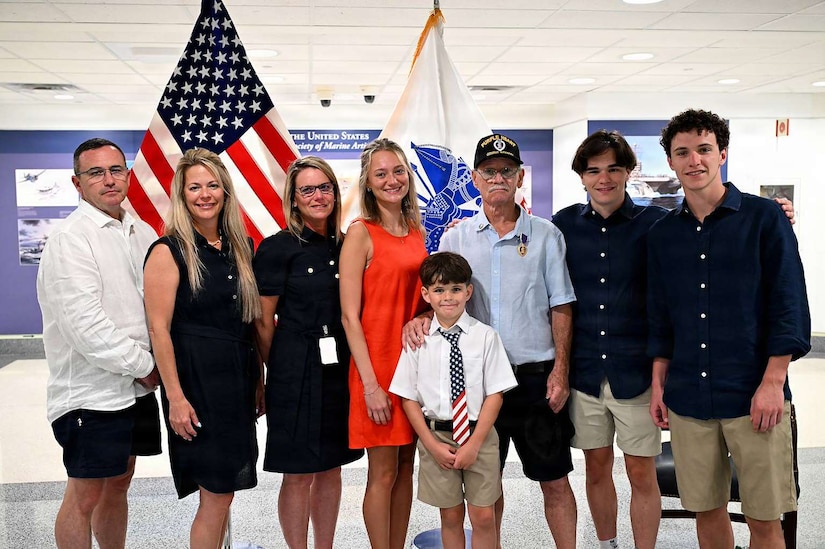
Eight people pose for a photo in front of an American flag and an Army flag.

That's when he realized what was happening. Overwhelmed, he took Crutchfield's hand. 

"All he could say was, 'You, you … you got me,'" she recalled, replying, "Sir, you did this. We are honored to do this for you." 

Retired Army Maj. Gen. Phillip Churn Sr., Army Reserve ambassador, presented the award.  

"The Purple Heart is not an award soldiers seek," Churn said. "It is … earned through blood, sacrifice and an unyielding commitment to the defense of this nation. Today, we correct the record. Today, we pin this medal where it has always belonged — on the chest of a paratrooper who gave his blood for our freedom." 

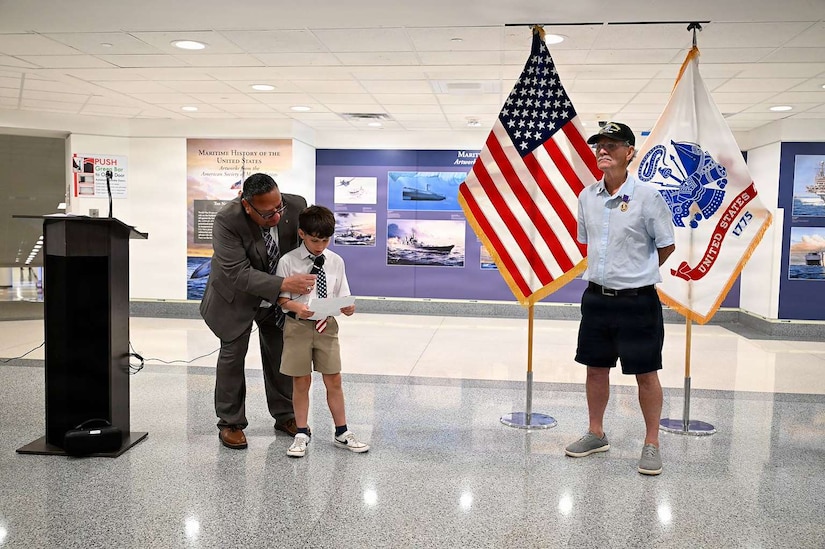
Fynn Williams, 8, had practiced his speech for weeks while keeping the secret from his grandfather. 

"There are some things in life that should never be lost," Fynn said. "Especially honor, sacrifice and courage. Years ago, you earned this through your service and sacrifice for our country. Even though the medal was gone, what it represents never was. We wanted to make sure it found its way back home, to where it belongs."

"We are proud of you. We are grateful for you. We love you, Papa."

A man in business attire crouches to hold a microphone for a boy who is speaking into a microphone while another man stands to the side at parade rest. An American flag and an Army flag are in the background.

For Kelly Williams, the ceremony was about more than just a medal. 

"It is about ensuring that his story, his service and his legacy are remembered," she said. "We have hope that today provides our father with a measure of peace." 

Williams had one word to describe the ceremony: "closure." 

"It never goes away," he said of the memories that still haunt him. "But it's a step in the right direction. This is probably good closure now. I feel like it's all out in the open." 

"I feel good now; I feel good today. This is good," he added.