Oct. 7, 2026
|
By Army Sgt. George Mattison, U.S. Army Network Enterprise Technology Command
|
Soldiers assigned to the U.S. Army Network Enterprise Technology Command's Headquarters and Headquarters Company took part in the first "Mercury Rising" event of the new fiscal year at Fort Huachuca, Arizona, Oct. 2.
Led by Army Capt. Ara L. Gahan, the company commander, and Army 1st Sgt. Ruben Chavez, the event combined physical training and professional development aimed to strengthen readiness, cohesion and individual accountability.
"Mercury Rising/payday activities strengthen readiness by combining physical training, professional development, mandatory training and barracks inspections to reinforce standards, discipline and individual accountability," Gahan said. "Conducting these events together also builds camaraderie and unit cohesion by creating regular opportunities for soldiers to train, communicate and maintain pride in their appearance, living areas and organization."
Mercury Rising is the command's approach to traditional payday activities, combining physical training, professional development, mandatory training and barracks inspections.
Soldiers began with a physical training circuit designed to support the Army Fitness Test. They then competed in a timed team race carrying a 365-pound sandbag.
The day also included professional development sessions for leaders covering suicide awareness and prevention, the sexual harassment and assault response and prevention and equal opportunity. In small groups, soldiers discussed their responsibilities for maintaining a professional, supportive environment.
The physical challenge and professional development combination reflects the Army's focus on preparing soldiers to meet changing demands such as performing under pressure. Shared training and communication help build trust among teammates. Professional discussions reinforce knowledge and standards needed for disciplined, effective organization.
The program also provides a recurring opportunity for leaders and soldiers to connect outside their daily duties. Unit leadership said the event supports the command's efforts to build the Army of 2030 through greater resiliency, adaptability and lethality. By bringing soldiers together to train, learn and uphold unit standards, Mercury Rising contributes to the preparedness and unity needed for the force to respond to future challenges.
Sept. 16, 2026
|
By Amy Phillips, Fort Hunter Liggett Public Affairs Office
|
The swift response of Fort Hunter Liggett, California, to the encroaching Plaskett Fire in the adjacent Los Padres National Forest reflects its emergency preparedness and strong mutual aid partnerships in Monterey County, California. The fire ignited Aug. 26, burned 29,976 acres and is 89% contained as of yesterday.
There is no threat to the cantonment area, and the installation continues daily operations to support military training. While the threat never necessitated activating the installation's emergency operations center, garrison directorates effectively synchronized operations to deliver rapid fire-support operations. Fort Hunter Liggett remains mission ready with minimal disruption to daily operations.
"I'm incredibly proud of the tremendous teamwork and dedication the installation and our tenants displayed," said Army Col. Jason McKenzie, the garrison commander. "The fact that our military training and daily operations continued through these last two weeks illustrates that Fort Hunter Liggett is always mission ready."
The installation's fire department routinely monitors regional fire activity and conducts prescribed fires, when possible, to reduce the abundant fuel in and around the installation. They immediately started defensive planning and acting when they learned of the Plaskett Fire.
Aaron Smith, Fort Hunter Liggett fire chief, is serving as the installation's unified incident commander and is working alongside California Interagency Incident Management Team 7 to ensure a coordinated, safe and effective response to the Plaskett Fire. Fort Hunter Liggett is providing dozers, dozer bosses and dozer operators in support of suppression operations. The installation is also providing an advanced life support ambulance to support the incident medical plan.
"At the same time, we continue to maintain a dedicated initial attack capability for structural and wildland emergencies for the installation," Smith said. "This allows us to support the larger firefighting effort while continuing to protect our community, infrastructure, and training mission."
The Directorate of Public Works Roads and Ground crew works in lockstep with firefighters year-round to create firebreaks. DPW provided four dozers and eight equipment operators to the incident management control team, creating new firebreaks and enhancing existing ones to help contain the fire.
"I've heard nothing but great things from the incident team…they're doing a great job. I'm very proud of my team for their contributions," said Army Lt. Col. Loren Baldwin, DPW director.
The Fort Hunter Liggett police department plays a critical role in patrolling infrastructure and establishing a checkpoint at the installation's Nacimiento-Ferguson Road entry to prevent non-emergency responders' traffic from impeding fire operations. Those living within the Los Padres Forest and installation boundaries have unimpeded access to their homes.
Through it all, Fort Hunter Liggett remains fully operational, with the installation's Directorate of Plans, Training, Mobilization and Security team coordinating and synchronizing support efforts. With more than a dozen aircraft supporting the fire and thousands of firefighters in and around the installation, Range Operations are operating at full throttle. They are constantly engaged — monitoring the situation, collecting data and supporting the U.S. Forest Service Fire Service base camp at Schoonover Airfield.
"While our EOC-Light and weekend operations were highly successful, our true victory lies in the lessons learned. We are already leveraging this experience to refine our systems, processes, and communication tools," said Paul Lewis, DPTMS director. "I could not be prouder of the DPTMS team and the garrison's unified response."
The AirNow website reported that air quality at the installation ranged from moderate to hazardous. However, Fort Hunter Liggett discovered that the quality measurements used by online platforms such as AirNow are based on sensors 40-50 miles from the installation. To rectify this, DPTMS worked with the PurpleAir site and installed four air quality sensors inside the cantonment area. These measures allow the installation to get accurate readings and apply appropriate safety measures to protect those who work and live at Fort Hunter Liggett.
Effective communication during any crisis is critical, and the installation uses all available channels to keep the Fort Hunter Liggett community and neighbors informed. The installation uses face-to-face briefings, internal emails, the My Army Post app, mass notification systems, and many online platforms to communicate with the community. Fort Hunter Liggett also has a webpage dedicated to fire-related information.
Good communication and the fact that this is not the first or last wildfire the installation has faced, helps the community stay prepared. The Dolan Fire in 2020 was the last major wildfire to significantly impact the installation. Then and now, seeing the night sky aglow is traumatic for Fort Hunter Liggett residents.
"I went through the Dolan Fire filled with fear and uncertainty. Facing the Plaskett Fire, I understood exactly what could happen," said Talia Wesley, a FHL resident and Army civilian. "That experience didn't erase the fear, but it gave me the resilience, strength and clarity to prepare. I can't control the flames, smoke, or wind in either event, but I can control my readiness."
Wesley and many installation residents are prepared with air purifiers, to-go bags for evacuation orders, and dusted-off family emergency plans.
"The Dolan Fire taught me the reality of wildfire danger; the Plaskett Fire showed me how preparation turns fear into action," she said.
McKenzie said that serving and protecting the community requires a united front and Fort Hunter Liggett is showing its true colors to support each other.
"We're also incredibly grateful for the Army Reserve providing emergency funds, Cadence Communities for sharing command information to keep our residents informed, the Association of the U.S. Army for providing N95 face masks to combat the hazardous air quality, and many others that helped during our time of need," he said.
During the Sept. 8 virtual community town hall, Tom Clemo, incident commander, emphasized the importance of community engagement, listening to concerns and building partnerships.
"The partnerships that have been created…Chief [Aaron] Smith at Fort Hunter Liggett has done an amazing job taking care of firefighters at the base," Clemo said. "If there's anything we've learned during incident management, [it] is that we cannot do this alone."
The Plaskett Fire has reduced some of the available wildland fuels within the affected area, but that does not eliminate the installation's future wildfire risk, Smith said.
"We will continue evaluating burned and unburned areas, maintaining established fuel breaks, conducting mitigation activities when conditions permit and incorporating lessons from this incident into Fort Hunter Liggett's long-term wildland fire management planning," he said.
Preparedness, prevention and strong interagency coordination will remain central to protecting the installation and sustaining its training mission.
Fire also risks federally protected resources and future erosion. The Fort Hunter Liggett DPW environmental team coordinates with CIIMT-7 by providing environmental data for operations and recovery planning. The environmental team will follow up in 2027 with surveys of key areas to monitor the status of threatened and endangered species and cultural resource sites.
Steep, remote terrain and weather play a critical role in fire containment. Various fire operations continue, including applying mobile fire retardant, building backfires, deploying direct handline crews, and building firebreaks continue. Plaskett Fire information is available here.
Sept. 2, 2026
|
By Army Capt. Lydia Laga, 75th Field Artillery Brigade
|
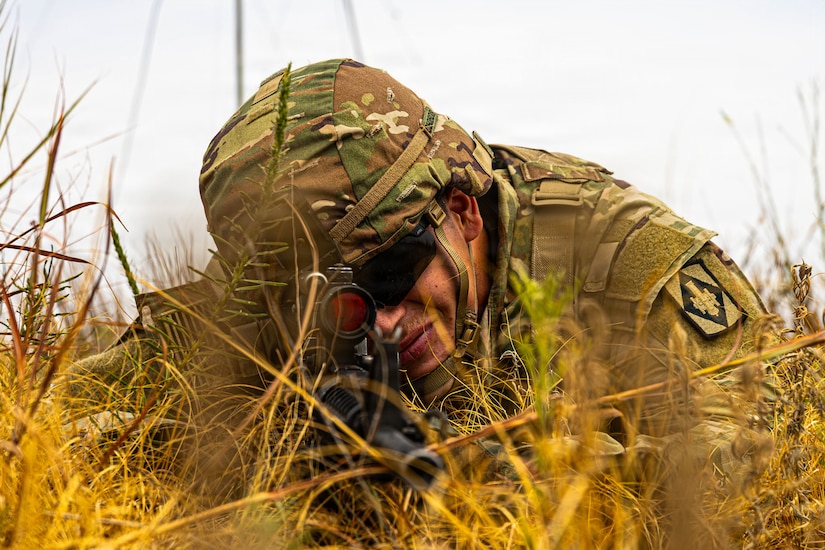
Warfighting mastery is forged through the relentless, daily grind of tough, realistic training, fueled by the dedication of soldiers who refuse to let constraints define their readiness.
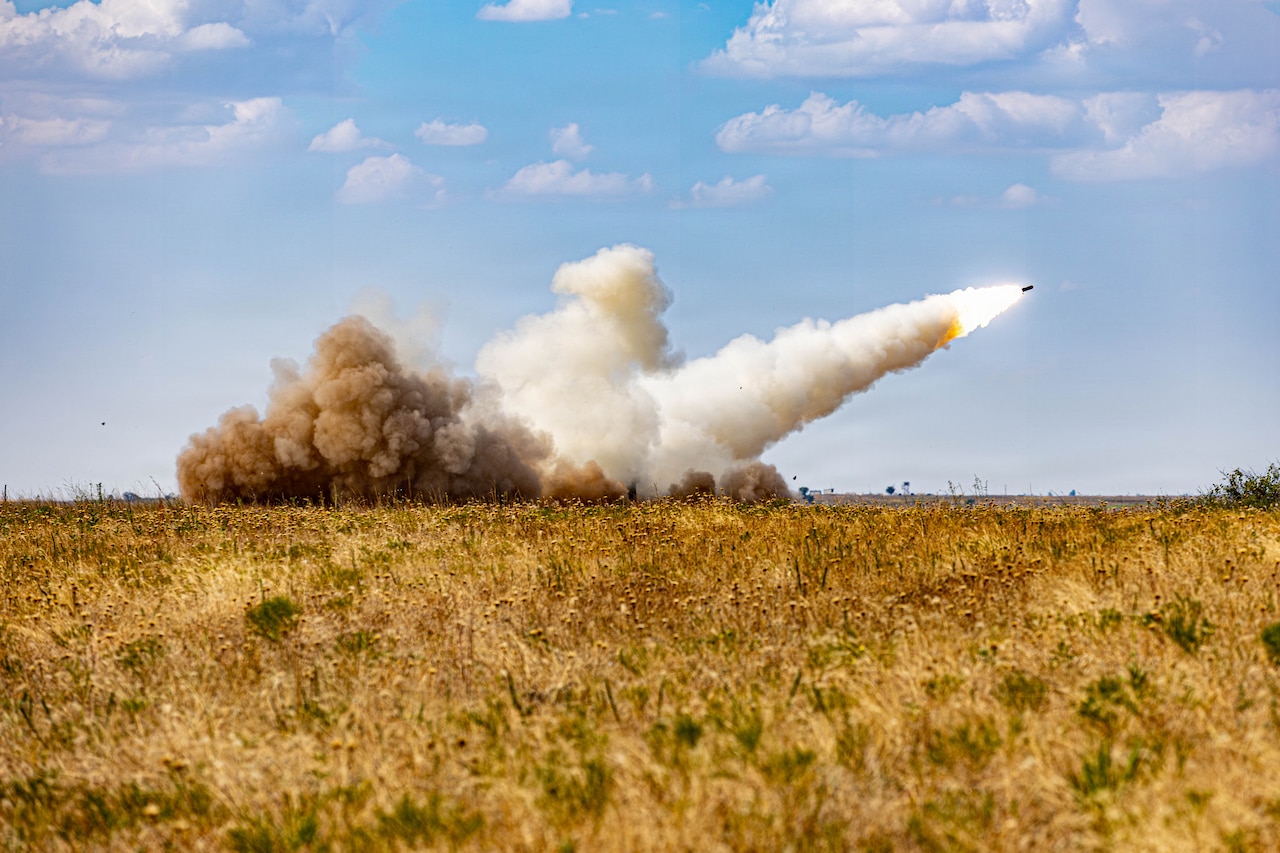
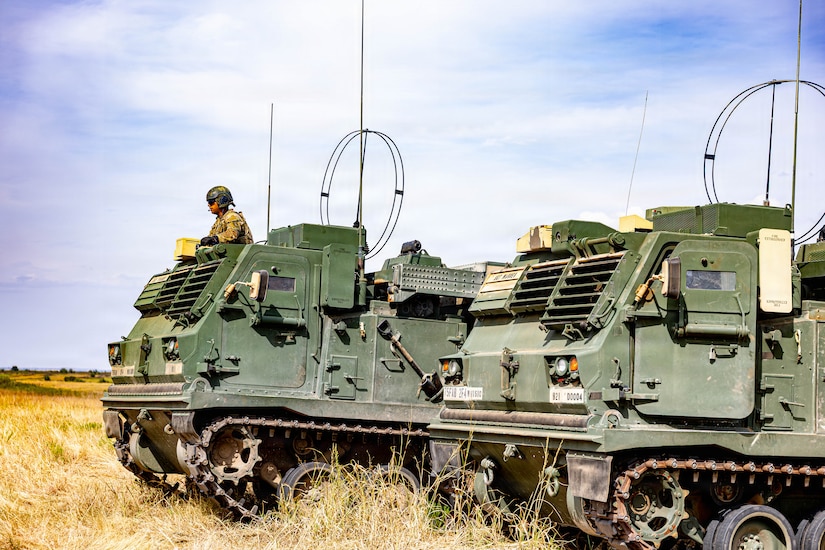
This is the standard of the 75th Field Artillery Brigade, and it was on full display in late August as the 2nd Battalion, 4th Field Artillery Regiment, took to the Fort Sill, Oklahoma, training areas to execute Artillery Table VI section qualifications and validate their Role 1, initial medical support for combat operations capabilities.
In the high-tempo environment of large-scale combat operations, the M270A1 Multiple Launch Rocket System is a devastating instrument of tactical lethality. But the platform's capability is only as good as the crew inside. Rather than treating the qualification as a routine exercise, the battalion used it to build adaptability and grit under pressure, particularly as soldiers navigated real-world manning and maintenance constraints.
For unit leaders, the focus was clear: build tactical proficiency from the ground up by investing in soldiers and empowering junior leaders.
"I feel that my battery did very well on this certification/qualification considering some of our maintenance and manning constraints," said Army Capt. Rachele Smith, Bravo Battery commander. "We have mostly new leaders within our formation and some soldiers stepping up to fill chief and gunner roles, so this was their first time having their feet to the fire."
Smith's approach was unyielding, pushing her platoon leaders to treat every simulated and live-fire iteration with absolute tactical realism.
"Our goal was to keep this training as tactical and realistic to how we'd fight as possible, so I was hard on the platoon leadership to stick to our hit times and key tasks," she explained. "The great part about these section qualifications is that it builds the training foundation for the battery and allows us to progress into our platoon and battery collective training in the upcoming months."
This commitment to incremental growth embodies the III Armored Corps' training guidance, refining lethality and mastering the fundamentals of combat. By letting junior soldiers step up into critical roles, the unit turned potential constraints into a powerful opportunity for leader development.
While the firing batteries refined their lethality downrange, the battalion's Headquarters and Headquarters Battery validated medical readiness, another critical element of survival on the modern battlefield.
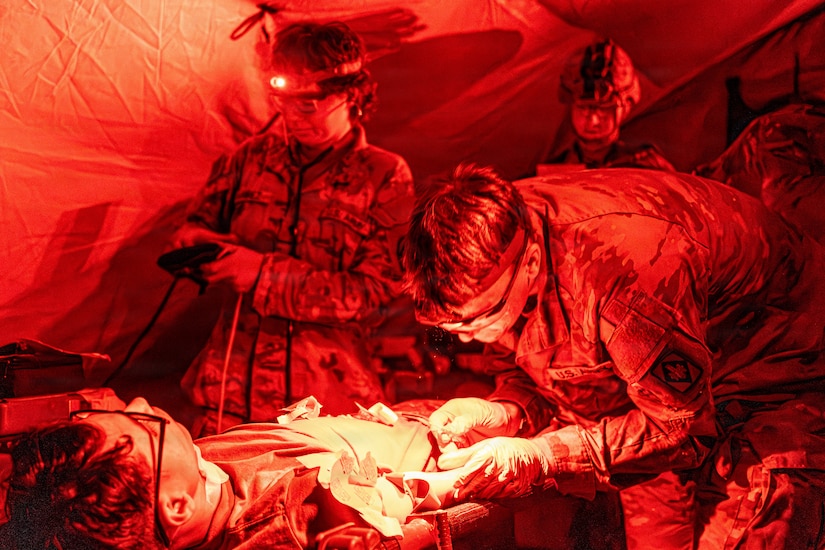
Under the cover of darkness Aug. 27, the battalion's medical section established an aid station in the training area, treating simulated blast trauma and severe hemorrhages under unscripted, chaotic conditions.
Like the firing crews, the medical team had to overcome the challenge of a fresh roster to build a cohesive capability.
"Role 1 training is beneficial to our medical section because it allows us to train as we would fight," said Army 1st Lt. Monique Pilcher, battalion field medical assistant and medical exercise training lead. "It builds our ability to rapidly establish, operate and sustain a Role 1 capability while developing proficiency in casualty treatment, triage, evacuation, medical logistics and team coordination."
For Pilcher, success during the nighttime validation came from exhaustive rehearsals and trusting her young medics to carry out their duties.
"Most importantly, it gives our soldiers the opportunity to rehearse their individual responsibilities as part of a cohesive medical team, so when we encounter a real-world casualty or [mass casualty], we can respond quickly, confidently and effectively," she said. "Rehearsals were very important due to having a brand-new team of medics training for the first time."
From the fire direction centers transmitting data-centric missions to the signal specialists securing the tactical networks, and the medical teams operating under limited visibility, the unit demonstrated what cohesive readiness looks like. It is a shared burden carried by every soldier who stepped up to fill a larger role and every leader who mentored them through the process.
The battalion now shifts focus to Artillery Table XII platoon collective qualifications, building on a foundation of hard work and professionalism from its crew members. While this recent qualification focused on individual launcher sections and fire direction centers, the next one elevates the training to a collective qualification.
In this phase, these independent sections must integrate, move, communicate and survive together as cohesive, synchronized platoon-sized elements under tactical command, transforming individual weapon systems into a unified force multiplier. The road to warfighting mastery is long, but as Smith noted, the unit is taking it "day by day to make small incremental changes over time."




 Posts

