Monday, June 07, 2021

Readout of Secretary of Defense Lloyd Austin's Meeting With NATO Secretary General Jens Stoltenberg

 June 7, 2021


Pentagon Press Secretary John F. Kirby provided the following readout:

Secretary of Defense Lloyd J. Austin III hosted NATO Secretary General Jens Stoltenberg in the Pentagon today to discuss the security challenges facing the Alliance, and to prepare for the June 14 NATO Summit.

Secretary Austin reinforced the United States’ view that NATO is the essential forum underpinning Transatlantic security and reaffirmed strong support for Secretary General Stoltenberg’s NATO 2030 initiative, which aims to keep the Alliance strong militarily, make it stronger politically, and give it a more global view.

They discussed the upcoming meeting of NATO Heads of State and Government.  The leaders also underscored that the Summit will showcase unity, strength, and determination to meet security and defense challenges into the future.  Both leaders acknowledged the progress made on military adaptation since 2014 and agreed the Alliance must remain committed to funding defense properly and equitably as deterrence and defense remains first among NATO’s core tasks.

They applauded NATO decisions and plans to respond to emerging and evolving challenges, which include cyber threats and climate change, and addressed China, Russia, Afghanistan, and Iraq.

Secretary General Stoltenberg said that he looked forward to seeing Secretary Austin in Brussels next week and that they would continue close consultations.

Wire Walk


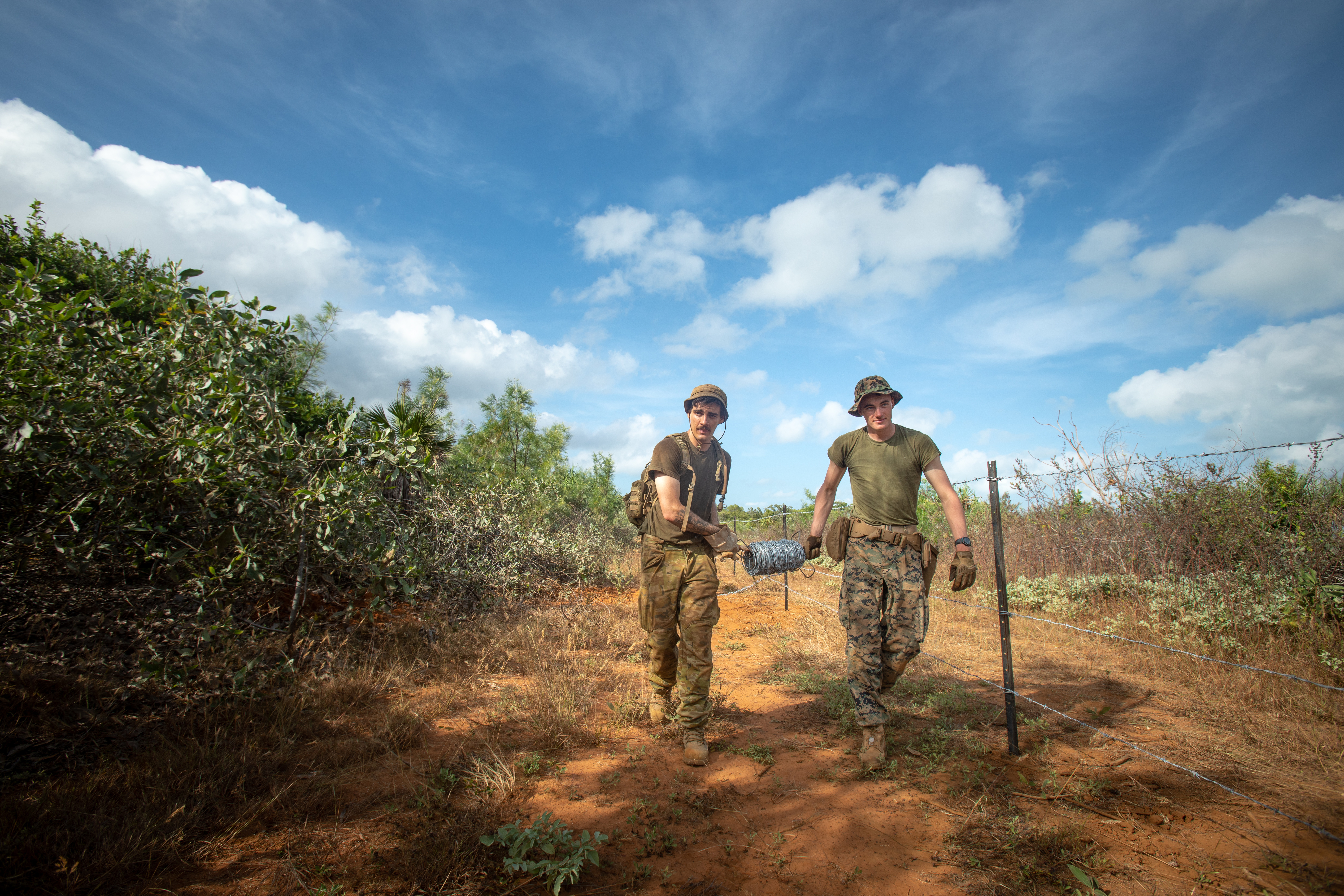
An Australian Army engineer and a U.S. Marine build a barbed wire fence at Point Fawcett in Northern Territory, Australia, May 25, 2021, during Crocodile Response, an annual civil-military exercise to strengthen humanitarian response capability between Australia, the United States and Indonesia.

Normandy Flyover


Airmen aboard a C-130J Super Hercules watch as the aircraft passes over the Normandy American Cemetery and Memorial in France, June 6, 2021, during a flyover to commemorate the 77th anniversary of D-Day.

Ukraine Making Progress on Defense Reforms, Official Says

 June 7, 2021 | BY David Vergun , DOD News

America is unwavering in its support for Ukraine sovereignty, territorial integrity and Euro Atlantic aspirations, said the deputy assistant secretary of defense for Russia, Ukraine and Eurasia.

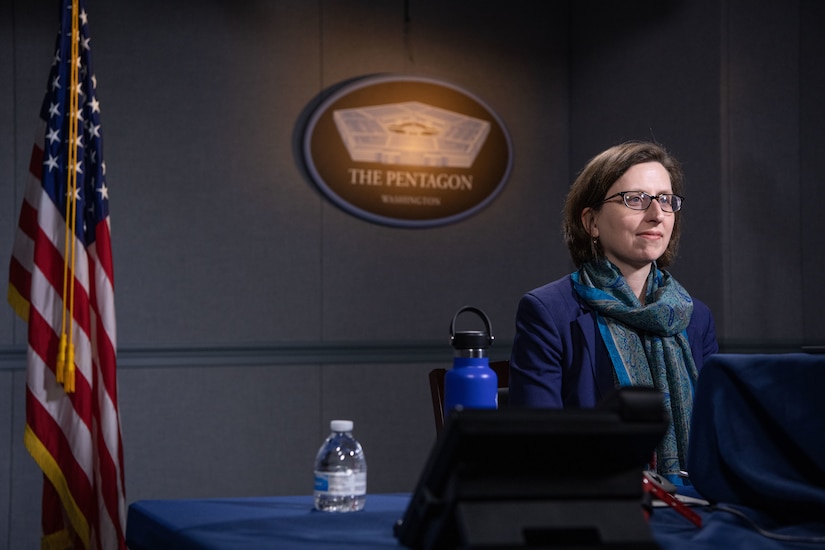
Laura K. Cooper spoke virtually today at the Democracy in Action: Zero Corruption Conference.

Ukraine is a critical partner on the frontline of Russian aggression, she said. Russia occupies Crimea and fuels conflict in the Donbas in its attempt to change borders by force. 

A woman, seated at a computer, speaks during a virtual meeting.

"We must not accept this as a fait accompli. Russia's aggression is not only a matter for Ukraine, it is a threat to Europe, to the United States and to the stability of the international order," Cooper said.

The United States has long understood that the projection of strength and unity among its NATO allies and partners are vital components to deter Russian aggression and coercion, she said. In that vein, the United States is committed to ensuring that NATO's door remains open to aspirants such as Ukraine, when they are ready and able to meet the commitments and obligations of membership and to contribute to security in the Euro Atlantic area. 

To that end, the United States will continue to work with and urge the government of Ukraine to implement the deep, comprehensive and timely reforms that are necessary to advance its Euro Atlantic aspirations in support of a secure, prosperous, democratic and free Ukraine, Cooper said.

Airmen load cargo onto a plane.

Ukraine has made tremendous strides in its reform efforts over the last 30 years of its independence, she said, citing some examples:

  • Ukraine's passage of the law On National Security in 2018 provided a legislative framework for aligning its national security architecture with Euro Atlantic principles, and constituted a major step forward toward its goal of achieving NATO interoperability.
  • In March 2020, Ukraine President Volodymyr Zelensky signed an amendment that separates the positions of the chief of the general staff from the commander in chief of the armed forces. This new system of command and control separates force generation from force employment functions, which is a core feature of Western military structures. 
  • Kyiv passed a law on defense procurement, and advanced a bill that could remake the Security Service of Ukraine into a modern security service guided by Western democratic standards.
  • Ukraine adopted both a national security strategy and national military strategy, which codified national strategic objectives and set conditions for reforms across Ukraine's defense enterprise. 

A woman, seated at a computer, speaks during a virtual meeting.

While the Government of Ukraine has made substantial progress, there are some areas that require further attention, she said, mentioning some:

  • The United States encourages Ukraine to pass legislation that clearly delineates the duties of the ministry of defense and the Ukrainian armed forces. This will better align Ukraine's defense enterprise with the core NATO principles of democratic civilian control of the military. 
  • Regarding defense industry, the United States urges Ukraine to adopt a strategy to better support the needs of the Ukrainian armed forces and Ukraine economic objectives, while implementing effective corporate governance and supervisory board principles that are in line with global best practices. 
  • The United States believes that the adoption of foreign direct investment controls based on national security interests are vital to protecting Ukraine's critical civil and defense infrastructure from foreign exploitation. Effective defense industry processes and institutions will lead to sustained improvement in combat capability, reduce corruption and open the door to increased Western investments. 
  • The Defense Department strongly encourages Ukraine to continue to implement its law on defense procurement to create a globally competitive process, increase efficiency and enhance transparency in the defense procurement cycle. 
  • While there have been promising human resource management reforms, Kyiv must continue to advance these reforms to truly transform the Ukrainian armed forces and pave the way for a Western style career management system. 

"The United States is committed to assisting Ukraine with the implementation of these reforms, and we maintain a robust advisory effort to help modernize Ukraine's military in line with NATO principles and standards," Cooper said. 

Two ships sail side by side.

The Annual National Program under the NATO Ukraine Commission is an invaluable resource to take forward the reforms that are needed to advance Ukraine's NATO membership aspirations, Cooper added. 

"I encourage Ukraine to make the best use of this dedicated forum, as well as the benefits of capacity building programs, through NATO's comprehensive assistance package, and more recently, through enhanced opportunities for partner status to promote greater interoperability through exercises and training," she said. 

"I also want to underscore that the United States remains committed to continuing our political, economic and military cooperation with Ukraine in support of an even stronger and more enduring strategic partnership between our two great nations," she said.

Torpedo Team



Sailors load a Mark 48 advanced capability torpedo onto the USS Columbia at Joint Base Pearl Harbor-Hickam, Hawaii, June 2, 2021, during Agile Dagger. The exercise assesses warfighting readiness and builds capacity for the joint force.

Fantastic Flares


An Air Force C-17 Globemaster III deploys flares as part of a training event over the Atlantic Ocean, June 5, 2021.

Survival Training


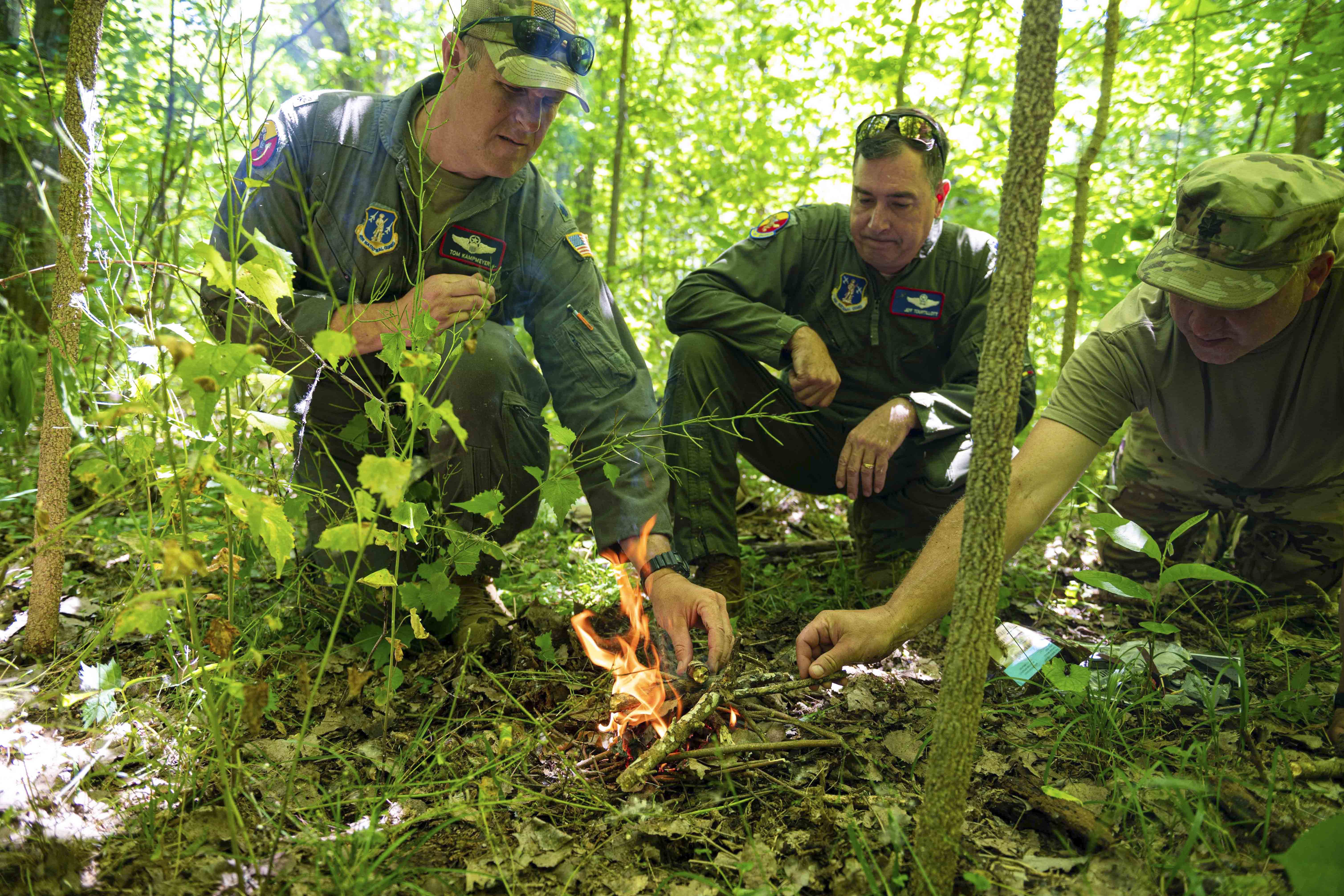
Missouri Air National Guardsmen conduct survival, evasion, resistance and escape training at Rosecrans Air National Guard Base, Mo., June 6, 2021.

Secretary of Defense Lloyd J. Austin III and NATO Secretary General Jens Stoltenberg Opening Remarks at Bilateral Meeting

 June 7, 2021

Secretary of Defense Lloyd J. Austin III; NATO Secretary General Jens Stoltenberg

SECRETARY OF DEFENSE LLOYD J. AUSTIN III:  Mr. Secretary General, it is a pleasure to welcome you at the Pentagon.  Thanks again for making the trip here.

I’m delighted that COVID conditions have improved enough for us to be able to host you.

I want to thank you as well for your exceptional leadership and for the efforts you have been expending to improve Alliance capability, as well as our transatlantic relationship.

Indeed, I know that you are here in Washington to meet with President Biden and to get ready for a NATO Summit that will no doubt demonstrate the unity and strength of our alliance.

The President and I are both looking forward to attending.

Let me stress again, right at the top of our meeting, that the Department of Defense strongly supports your “NATO 2030” initiative and its goal of keeping the Alliance strong militarily, and making it stronger politically, and giving it a more global view.

Obviously, we’re focused on NATO’s top job– maintaining credible deterrence and being ready to fight and win if deterrence should fail.

But so too, are we focused on ensuring the entire Alliance has a comprehensive view of the challenges the transatlantic community faces and for leading NATO’s adaptation to meet those threats.

We can be proud of what we and all Allies have done since 2014, and I expect the Summit will chart a course for continued adaptation into the future.

We can also be proud of our efforts to ensure our Allies share equitably in the responsibility to procure, prepare, and provide ready forces and capabilities.  

As a result of your leadership, Mr. Secretary General, this is the seventh consecutive year of increased defense spending.  

I think that’s extraordinary, and I appreciate the emphasis you have placed on this issue.

Finally, I want to note our collective efforts in Afghanistan.

The withdrawal of U.S. forces from that country is proceeding well.  And as I have made clear back in April when we announced our decision in Brussels, the United States remains committed to assisting our Resolute Support partners as they, too, retrograde.

As you yourself said, we went into Afghanistan together, we adjusted our posture together and we are united in leaving together. And that’s exactly what we are doing.

I am confident that, as Resolute Support begins to stand down, we will transition to a new relationship with Afghanistan and with the Afghan forces … one that continues to help them meet their responsibilities to their citizens.

Again, Mr. Secretary General, for being here, and I’m looking forward to our discussion today and to the Summit next week.

NATO SECRETARY GENERAL JENS STOLTENBERG:  Thank you so much, Secretary Austin, and thank you so much for the warm welcome. And most of all, thank you for your leadership, for your strong commitment to our transatlantic Alliance, to NATO. 

We very much look forward to the NATO summit next week in Brussels, to welcoming President Biden and you and all the other leaders, because we face many challenges which we cannot face alone, but we need to face them together in NATO. 

The global balance of power is shifting. We see the rise of China, we see Russia continue to be responsible for aggressive actions against NATO Allies, and our neighbors, in cyberspace, through hybrid means, and also the way they have used military force against the Ukraine, Georgia and other countries in that region.
 
Then we, of course, also very much realize that we need to invest in our security to make sure that we continue to be able to deliver a credible deterrence and defense in a more unpredictable and competitive world. And therefore, as you just alluded to, I welcome the fact that the European Allies and Canada have invested more over now seven years, and I expect them to continue to do so. 
 
And one of the messages we are preparing for the NATO 2030 agenda is that we need to continue to invest. We need to continue to strengthen our deterrence and defense, but also to broaden our security agenda, to do more when it comes to resilience, technology and also working with our partners.
 
Allies are coordinating the withdrawal from Afghanistan, all the NATO Allies and the partners. My message is that as we now end our military presence in Afghanistan, we will continue to provide support to the Afghans with our continued civilian presence in Afghanistan, with continued funding for the Afghan security forces, and also looking into the possibility of providing out-of-country training for Afghan forces, and of course, also helping to maintain critical infrastructure such as the airport. So we need to stay coordinated, we need to work together with the partners as we now end our military presence in Afghanistan. 
 
Once again, thank you so much for hosting me and my delegation here today, and I look forward to our meeting. And thank you for your strong commitment to NATO. Thank you.

Cable Swap


Air Force Senior Airman Jeffrey Velvis, a 341st Missile Maintenance Squadron missile communications technician, conducts a cable swap at Malmstrom Air Force Base, Mont., June 4, 2021. The missile communications section maintains and repairs communications systems used in launch control centers and the support information network to Malmstrom’s launch facilities.

Airmen and sailors perform joint dive training at Naval Activity Center, Souda Bay, Greece,


Airmen and sailors perform joint dive training at Naval Activity Center, Souda Bay, Greece, May 25, 2021.


Soldiers in Silhouette


A soldier demonstrates a proper leg tuck to fellow soldiers preparing to take the new Army Combat Fitness Test in Winchester, Va., May 18, 2021.

Rescue Ready


A sailor uses a recuse hoist from a Navy MH-60S Seahawk helicopter during an expeditionary mine countermeasures training exercise in Apra Harbor, Guam, June 3, 2021.

Ghost Fleet Overlord Unmanned Surface Vessel Program Completes Second Autonomous Transit to the Pacific

 June 7, 2021


The Office of the Secretary of Defense Strategic Capabilities Office (SCO), in partnership with the U.S. Navy, recently conducted a second long-range autonomous transit with a Ghost Fleet Overlord Unmanned Surface Vessel (USV) from the Gulf Coast, passing through the Panama Canal, to the West Coast.

The unmanned vessel, named NOMAD, traveled 4,421 nautical miles (nm), 98 percent of which was in autonomous mode. The first Ghost Fleet Overlord vessel, RANGER, completed a similar transit in October 2020.  Both USVs passed through the Panama Canal while in manual mode.

The NOMAD transit provided an opportunity for extended testing of vessel endurance, autonomous operations, and interoperability of government command, control, communications, computers and intelligence systems with vendor autonomy, hull mechanical and hull electrical systems. Remote mission command and control for the NOMAD transit was conducted from an ashore Unmanned Operations Center operated by U.S. Navy Sailors from Surface Development Squadron One.

“This is another significant milestone for SCO’s Ghost Fleet Overlord program and supports the Navy’s Unmanned Campaign Framework by adding a second Overlord vessel to the West Coast. The SCO Ghost Fleet Overlord program serves to inform Navy prototype efforts by integrating mature technologies to accelerate Service priorities and is a key piece of the build a little, test a little, and learn a lot philosophy articulated in the Navy Unmanned Campaign Framework,” said SCO Director Jay Dryer.

The NOMAD USV is joining the RANGER USV to participate in fleet experimentation exercises to further mature the autonomy systems, demonstrate system reliability, and explore employment concepts for coordinated operations with manned combatants while stressing our command and control systems. Both vessels will continue to provide key system data, enable fleet operator feedback, and demonstrate capabilities essential to continued maturation and development of USV concepts of operation.

The Ghost Fleet Overlord program is currently in its second phase, which began in September 2019 and focuses on the integration of government-furnished command-and-control systems and payloads and more complex and challenging naval operations experimentation. Phase II is being conducted with the same vessels and industry teams that took part in Phase I and will conclude in early 2022, at which point both Ghost Fleet Overlord vessels will transition to the Navy for further experimentation.

The Ghost Fleet Overlord program, executed by SCO in partnership with Program Executive Office, Unmanned and Small Combatants, is playing a central role in informing the Navy’s new classes of USVs and serving as part of extensive technical risk-reduction efforts.

“Our close partnership with SCO on the Overlord program is accelerating the technology demonstration, CONOPs [concept of operations] development, and operational command and control of unmanned surface vessels in direct alignment with the Navy’s plans,” said Captain Pete Small, Navy Program Manager for USVs.

Two additional Ghost Fleet Overlord prototype USVs are currently under construction and will be used to expand and accelerate the Navy’s experimentation and testing.

Department of Defense Extends Uniformed Services Identification Card Expiration Policy Guidance

 June 7, 2021


The Department of Defense (DoD) remains committed to ensuring the health and safety of all DoD personnel and beneficiaries and ensuring their continued access to healthcare and all authorized benefits.  In its ongoing response to the COVID-19 pandemic and its impact on identification (ID) card site operations, effective immediately, the DoD is extending temporary Uniformed Services ID (USID) card expiration policy guidance for all USID cards with expiration dates between January 1, 2020 and July 31, 2021 as follows:

  • Through August 31, 2021 for all Foreign Affiliates and their dependents;
  • Through October 31, 2021 for the Dependents of Active Duty uniformed Service members, and Reserve and National Guard uniformed Service members and their dependents; and
  • Through January 31, 2022 for retirees and their dependents, and all other USID card populations.

ID cards that expired prior to January 1, 2020, have not been extended and must be replaced.  ID cards with expiration dates after July 31, 2021, must be replaced by their expiration date.

To learn more about the extension of policy guidance for expiring USID cards visit the DoD Response to COVID-19 - DoD ID Cards and Benefits website (https://www.cac.mil/Coronavirus/) for a fact sheet and FAQs.

To schedule an appointment to have an ID card reissued, visit the ID Card Office Online website (https://idco.dmdc.osd.mil/idco/), and select the ID Card Office Locator & Appointments option.

Sunday, June 06, 2021

Plotting Points


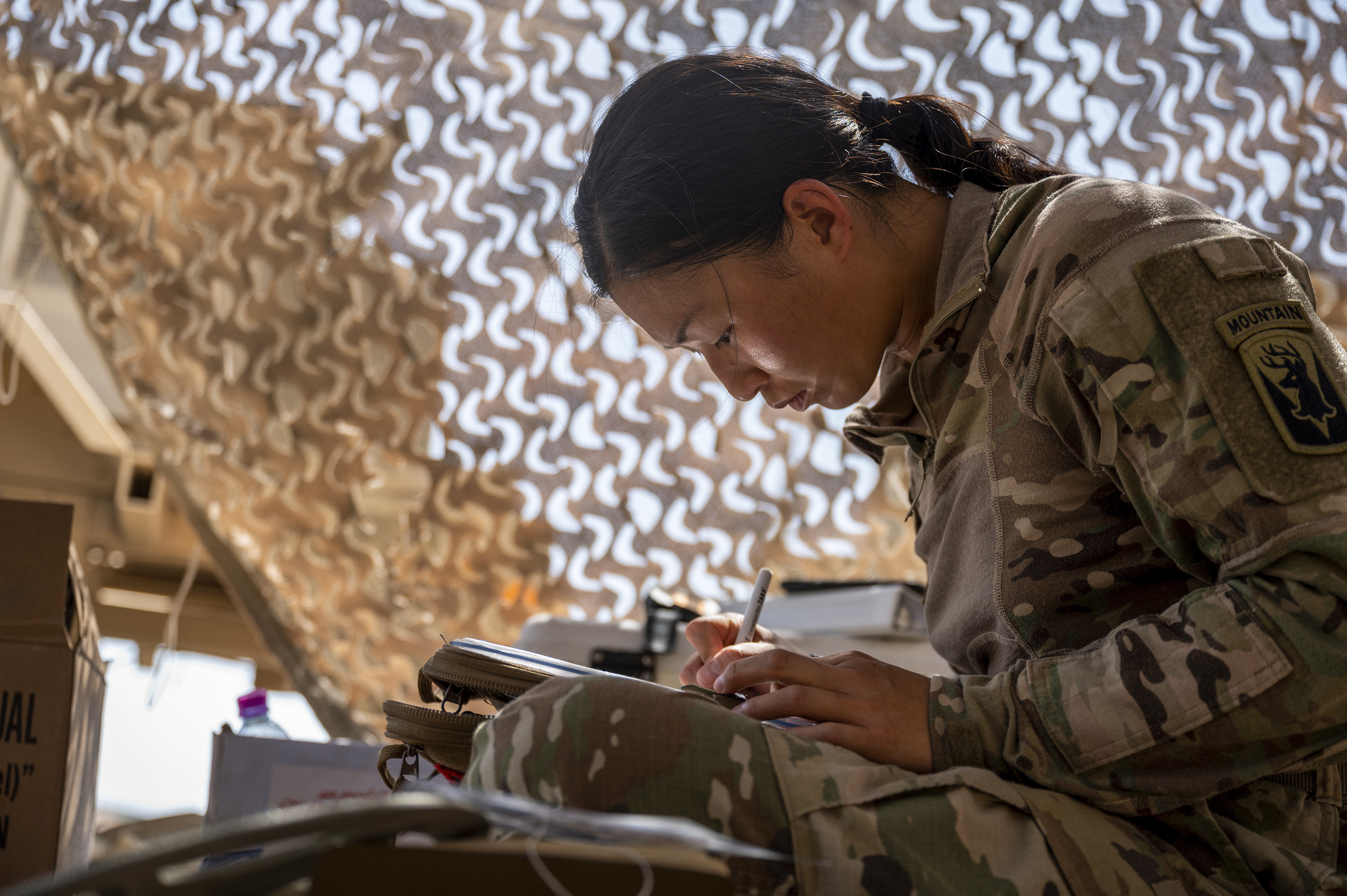
Army 1st Lt. Emily Chen plots locations during a joint mortar live-fire exercise conducted by U.S. and French service members in Djibouti, May 25, 2021. U.S. and French forces trained together to strengthen bonds between the nations and learn each other’s techniques for indirect fire.

Friday, June 04, 2021

Hawaii Wave


Family members wave as the fast-attack submarine USS Missouri departs from Joint Base Pearl Harbor-Hickam, Hawaii, June 3, 2021, to participate in Exercise Agile Dagger 2021. A third of the Navy’s Pacific submarine force got underway for the exercise, which was designed to assess warfighting readiness and build capacity for the joint force.

DOD Looking For an Advanced Command, Control Solution

 June 4, 2021 | BY David Vergun , DOD News

The Joint All-Domain Command and Control's strategy goal is to link networks and sensors to warfighters with shared data in all domains — cyber, land, sea, air and space — across all of the military services and combatant commands in a secure manner and at great speed.

A woman dressed in a military uniform operates a radio.

Marine Corps Lt. Gen. Dennis A. Crall, the Joint Staff's director of command, control, communications and computers — commonly called the J-6 — and the chief information officer for the Joint Staff, spoke at a Pentagon press briefing today about the JADC2 strategy.

On May 13, Secretary of Defense Lloyd J. Austin III signed a JADC2 strategy document that provides momentum to the continuation of the experimentation phase, Crall said.

The JADC2's strategy provides the governance and framework necessary to enable rapid integration of artificial intelligence, machine learning, predictive analytics and other emerging technologies, he said. 

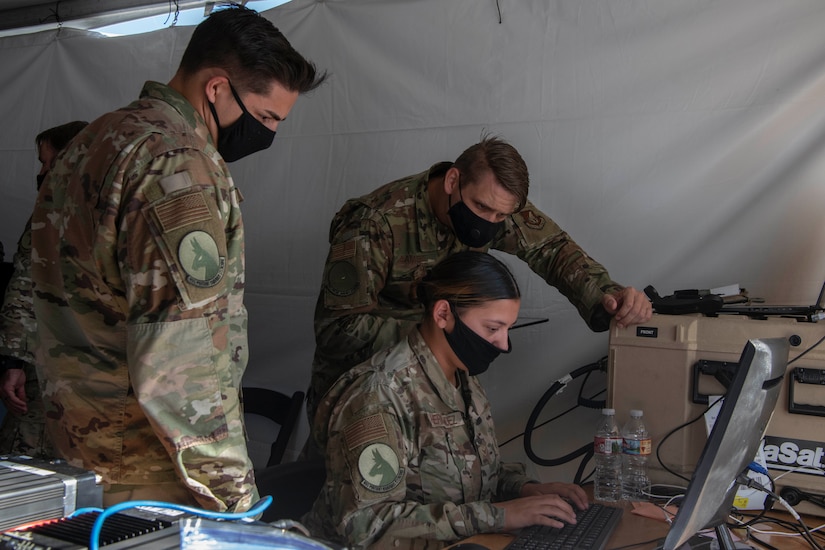
Airmen monitor computers.

Each of the services is involved in JADC2 experimentation, he said, and the best solutions will be implemented as long as there is no vendor lock or proprietary limitation. "We want this to be open source."

Crall said that JADC2 is dependent on an enterprise cloud-based computing solution, software development that is sharable, network enhancements, a zero trust environment, data sharing in nimble ways, and solutions that work on the tactical edge in a deployed environment. 

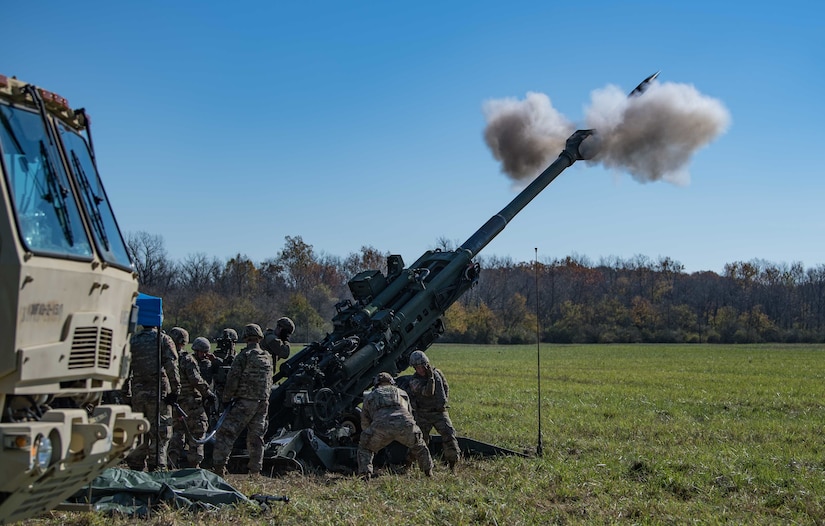
A piece of artillery fires in a field.

What works in the National Capital Region most likely won't work in an austere environment, he said, adding that warfighters will be robustly testing the system in those environments.

Integrating allies and partners will also be an important aspect of JADC2, he said.

360 Patriot and 360 Ventures Pay $1.12 Million to Resolve False Claims Act Allegations of Service-Disabled Veteran-Owned Small Business Fraud

 ALEXANDRIA, Va. – 360 Patriot Enterprises, LLC (360 Patriot), located in Alexandria, Virginia, and its former minority shareholder, 360 Ventures LLC (360 Ventures), located in Wilmington, Delaware, agreed to pay a combined $1.12 million to settle civil fraud allegations that 360 Patriot was awarded two U.S. Army contracts set aside for service-disabled veteran-owned small businesses (SDVOSB) at a time when 360 Patriot was not controlled by a service-disabled veteran (SDV), announced Acting U.S. Attorney Raj Parekh for the Eastern District of Virginia. 

In order to qualify as a SDVOSB, companies must meet defined eligibility criteria, including that the company is at least 51% unconditionally and directly owned and controlled by one or more SDVs. The United States alleged that from March 2015 to December 2017, 360 Patriot was controlled by a non-SDV, and 360 Ventures facilitated the non-SDV’s control of the company under previous ownership and management. During that time, 360 Patriot was awarded two Army contracts that were set aside for qualified SDVOSBs. 

360 Patriot’s current management submitted a written contractor disclosure to the Department of Defense Office of Inspector General in October 2020, describing the company’s likely prior control by a non-SDV.   

The resolutions obtained in this matter were the result of a coordinated effort between the U.S. Attorney’s Office for the Eastern District of Virginia; the Defense Criminal Investigative Service; U.S. Army Criminal Investigation Command, Major Procurement Fraud Unit; and the Naval Criminal Investigative Service.

The matter was investigated by Assistant U.S. Attorneys Kristin S. Starr and William Hochul.

The civil claims settled by the settlement agreement are allegations only; there has been no determination of civil liability.

DOD Gives Update on Tenant Bill of Rights for Privatized Housing

June 4, 2021 , DOD News

The Defense Department has made strides toward ensuring that service members and their families have safe, quality housing that's well-maintained by private contractors, a top DOD housing official said.

Paul Cramer, who's performing the duties of the assistant defense secretary for sustainment and chief housing officer, said the DOD has prioritized reforms under the Military Housing Privatization Initiative, as well as reforms to rebuild tenant trust and help maintain the financial viability of MHPI housing projects. According to Cramer, the initial phase has focused on implementing the MHPI Tenant Bill of Rights as a visible commitment to military members and their families.

"The department has issued the policy guidance necessary to implement all 18 tenant rights at all MHPI housing projects," Cramer said. "Through negotiation and lots of work with our privatized housing partners, nearly all of the MHPI companies have agreed to implement all 18 tenant rights at their existing privatized housing projects," he added.

Congress recognized in the fiscal year 2020 National Defense Authorization Act that the retroactive application of the 18 tenant rights at existing projects requires voluntary agreement by the respective MHPI companies. The DOD can't unilaterally change the terms of the complex, public-private partnerships that established the MHPI projects.

Girl rides bike in a neighborhood.

Cramer confirmed that, with few exceptions, the DOD expects all 18 tenant rights to be fully available at all installations with privatized housing by the end of FY 2021, noting that a number of MHPI housing projects have already incorporated those rights and many are providing all but the final right — standard documentation, focused on a universal lease framework.

"Military members and their families who are tenants of MHPI housing should check with the property manager or the government's installation housing office to confirm which of the tenant rights have been implemented at their installation," Cramer said.

The universal lease framework will standardize the general content of the MHPI tenant lease to the maximum extent possible given the need for tenant leases to comply with state and local requirements. MHPI housing projects at most installations will start using the new universal lease framework for prospective tenants entering a lease for new MHPI housing, typically when tenants have their next, permanent change-of-station move.
 
In addition to issuing the policies to implement all 18 tenant rights, the DOD has issued housing policies to strengthen the department’s oversight of MHPI housing projects. Secretary of Defense Lloyd J. Austin III has also established a deputy assistant defense secretary for housing to support the chief housing officer in oversight of the MHPI program.

"The department's priority going forward is to implement additional MHPI reforms that improve [the] safety, quality and maintenance of the privatized housing, and to ensure accountability at all levels within DOD and MHPI companies to perform housing oversight as originally intended at the outset of the MHPI program," Cramer said.

Navy to Christen Littoral Combat Ship Canberra

 June 4, 2021


The Navy will christen its newest Independence-variant littoral combat ship (LCS), the future USS Canberra (LCS 30), during a 12 p.m. CDT ceremony Saturday, June 5 in Mobile, Ala.

The Australian Minister of Foreign Affairs, Senator the Honourable Marise Payne, serves as the ship’s sponsor. As she is unable to attend, His Excellency the Honourable Arthur Sinodinos, Australian Ambassador to the United States will deliver the christening ceremony's principal address. Mr. Todd Schafer, acting assistant secretary of the Navy (Energy, Installations, and Environment) and Vice Adm. Ricky Williamson, Deputy Chief of Naval Operations for Fleet Readiness and Logistics (N4) will also provide remarks. In a time-honored Navy tradition, the Australian Ambassador’s wife, Mrs. Elizabeth Anne Sinodinos, will break a bottle of sparkling wine across the bow on behalf of Foreign Minister Payne.

“Tomorrow we christen the second USS Canberra named for the great capital city of Australia, our stalwart ally and superb naval partner,” said acting Secretary of the Navy Thomas Harker. “In so doing we move one step closer to welcoming a new ship to Naval service and transitioning the platform from a mere hull number to a ship with a name and spirit. There is no doubt future Sailors aboard this ship will carry on the same values of honor, courage and commitment upheld by crews from an earlier vessel that bore this name.”  
LCS is a fast, agile, mission-focused platform designed to operate in near-shore environments, winning against 21st-century coastal threats. The platform is capable of supporting forward presence, maritime security, sea control, and deterrence.

The LCS class consists of two variants, the Freedom-variant and the Independence-variant, designed and built by two industry teams. The Freedom variant team is led by Lockheed Martin in Marinette, Wisconsin (for the odd-numbered hulls). The Independence-variant team is led by Austal USA in Mobile, Ala., (for LCS 6 and the subsequent even-numbered hulls).

LCS 30 is the 15th Independence-variant LCS and 30th in class. It is the second ship named in honor of the city of Canberra. The first USS Canberra (CA 70) was laid down as USS Pittsburgh on Sept. 3, 1941 and renamed Canberra on Oct. 15, 1942. She was named in honor of the Australian heavy cruiser HMAS Canberra, which sank after receiving heavy damage during the Battle of Savo Island. CA 70 was the first U.S. Navy cruiser named for a foreign capital. USS Canberra (CA 70) received seven battle stars for her service in World War II. In May 1958, Canberra served as the ceremonial flagship for the selection of the Unknown Serviceman of World War II and Korea. Canberra was decommissioned in a ceremony on Feb. 2, 1970, at the San Francisco Bay Naval Shipyard. One of her propellers is preserved at the Los Angeles Maritime Museum, while the ship's bell was donated to the Australian National Maritime Museum in 2001.

Media may direct queries to the Navy Office of Information at (703) 697-5342. More information on the Littoral Combat Ship Program can be found at: https://www.navy.mil/Resources/Fact-Files/Display-FactFiles/Article/2171607/littoral-combat-ship-class-lcs/