
Secretary of Defense Lloyd J. Austin III exchanges greetings with Air Force Lt. Gen. Kevin B. Schneider, commander of U.S. Forces Japan, upon arriving at Yokota Air Base, Japan, March 15, 2021.
Providing up-to-date information, news and original content on American Military issues.
Secretary of Defense Lloyd J. Austin III exchanges greetings with Air Force Lt. Gen. Kevin B. Schneider, commander of U.S. Forces Japan, upon arriving at Yokota Air Base, Japan, March 15, 2021.
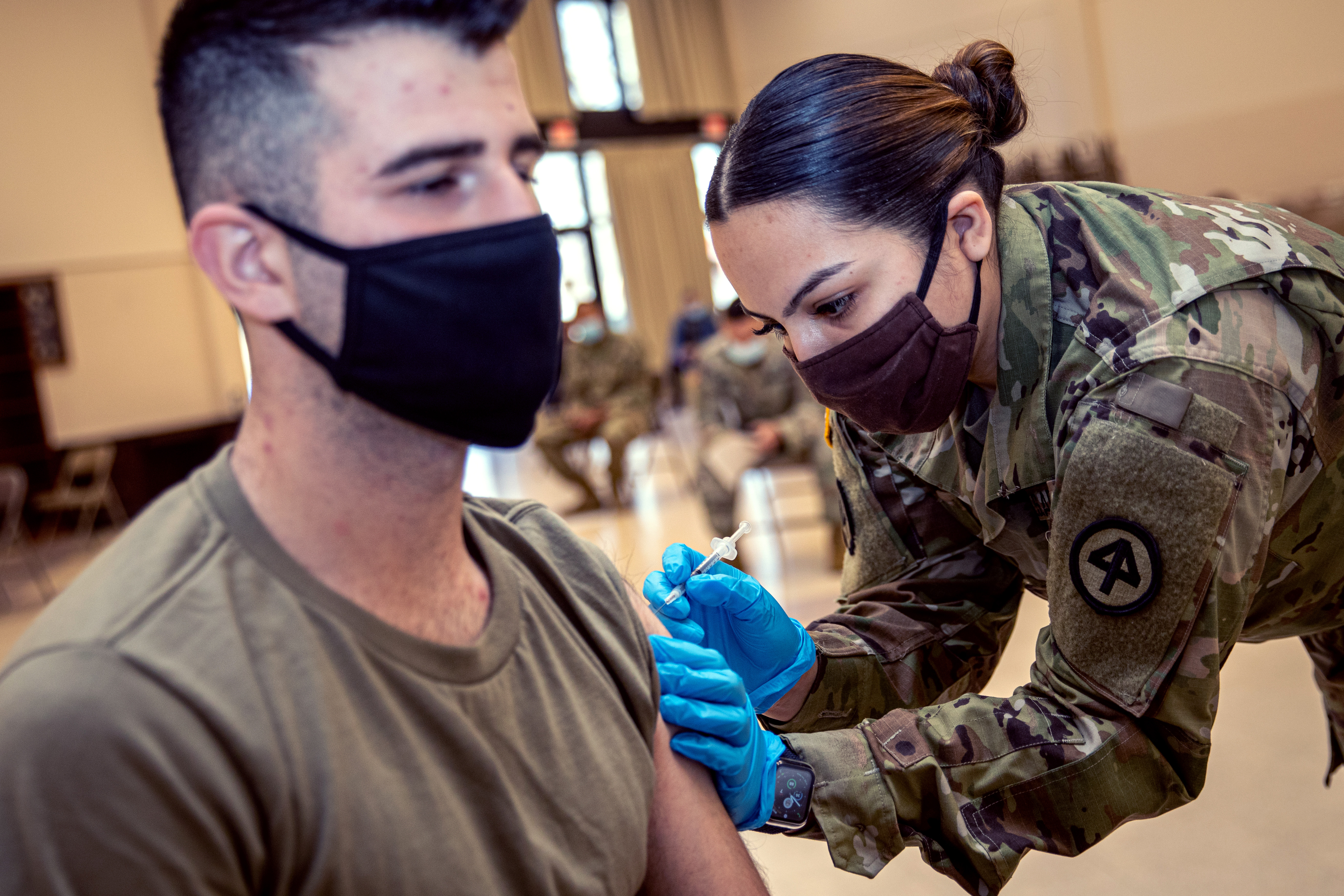
Army Sgt. Alexa Caramb gives the COVID-19 vaccination to a soldier at Joint Base McGuire-Dix-Lakehurst, N.J., March 6, 2021. Caramb is a medic with Charlie Company and is assigned to the 250th Brigade Support Battalion. The vaccination hub was run by the 108th Medical Group, New Jersey Air National Guard.

Air Force Master Sgt. Nicole Jacocks examines a COVID-19 vaccine at Robins Air Force Base, Ga., March 6, 2021. Jacocks is assigned to the 413th Aeromedical Staging Squadron and is in charge of the immunizations clinic. During their March unit training assembly, the 413th ASTS administered 92 vaccines. Next month, they will give out second doses to those 92 people.

Dr. John S. Baxter, director of the Pentagon Flight Medicine Clinic, conducts COVID-19 testing as Secretary of Defense Lloyd J. Austin III and staff travel from Hawaii to Japan, March 14, 2021.
March 15, 2021
The following individuals have been sworn-in virtually or in-person from March 9, 2021, through March 15, 2021.
For the lists of personnel sworn-in previously, please see the releases on Jan. 20, 2021, Feb. 9, 2021, Feb. 16, 2021, Feb. 22, 2021, March 1, 2021, and March 9, 2021.

Three soldiers in the 2021 Best Warrior Competition employ a smoke grenade to conceal their movement as they prepare to capture a high value target during a military operation in urban terrain event at Camp Navajo, Ariz., March 4, 2021.

Sailors check the functionality of the flight deck sprinkler system on board the USS Hershel “Woody” Williams during operations in the Atlantic Ocean, March 13, 2021.

A LC-130 Skibird sits on the ramp at Kangerlussuaq Airport, Greenland, with the Northern Lights dazzling in the sky above, March 14, 2021.
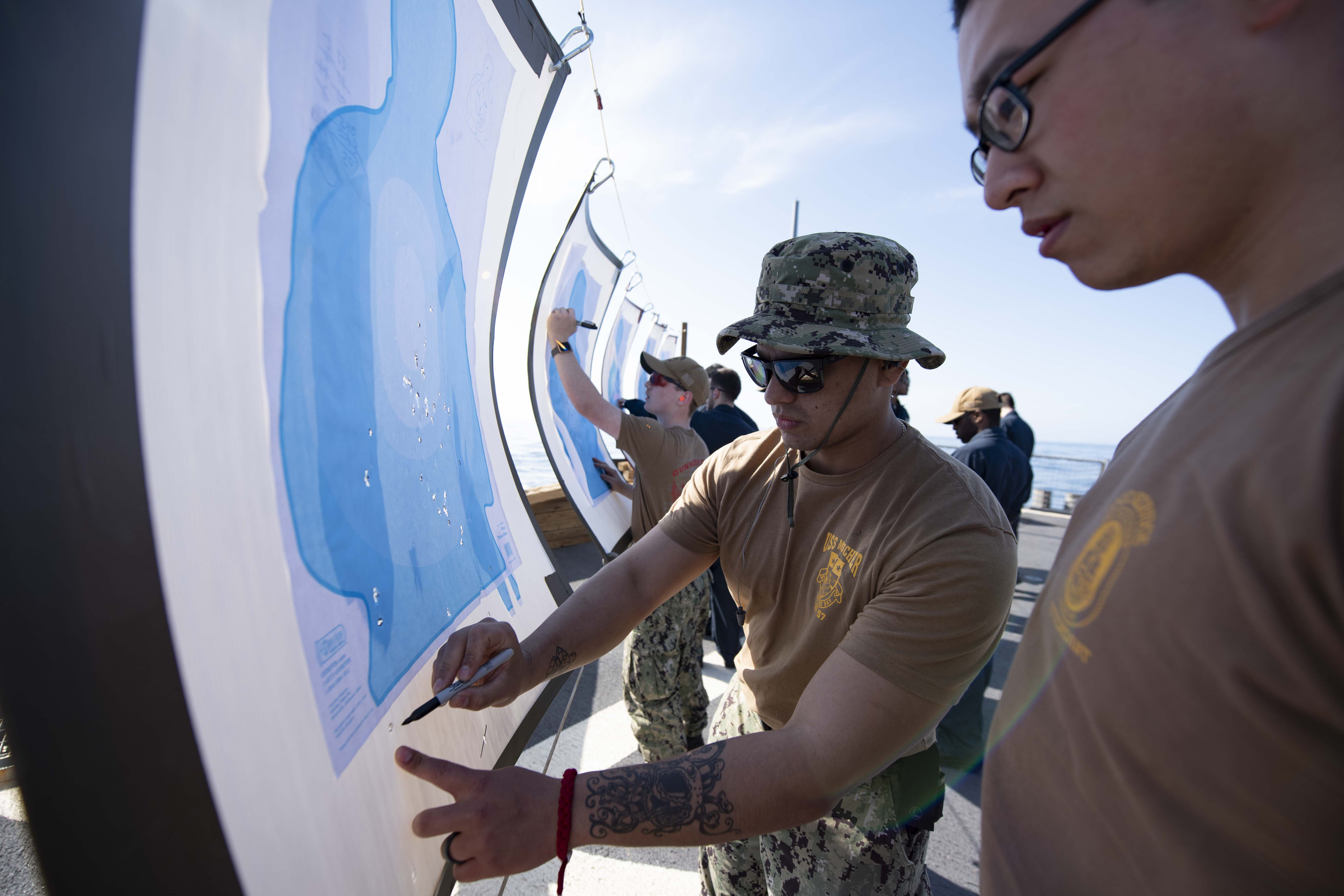
Two sailors grade targets during a small-arms qualification course aboard the guided missile destroyer USS Mitscher in the Mediterranean Sea, March 13, 2021.
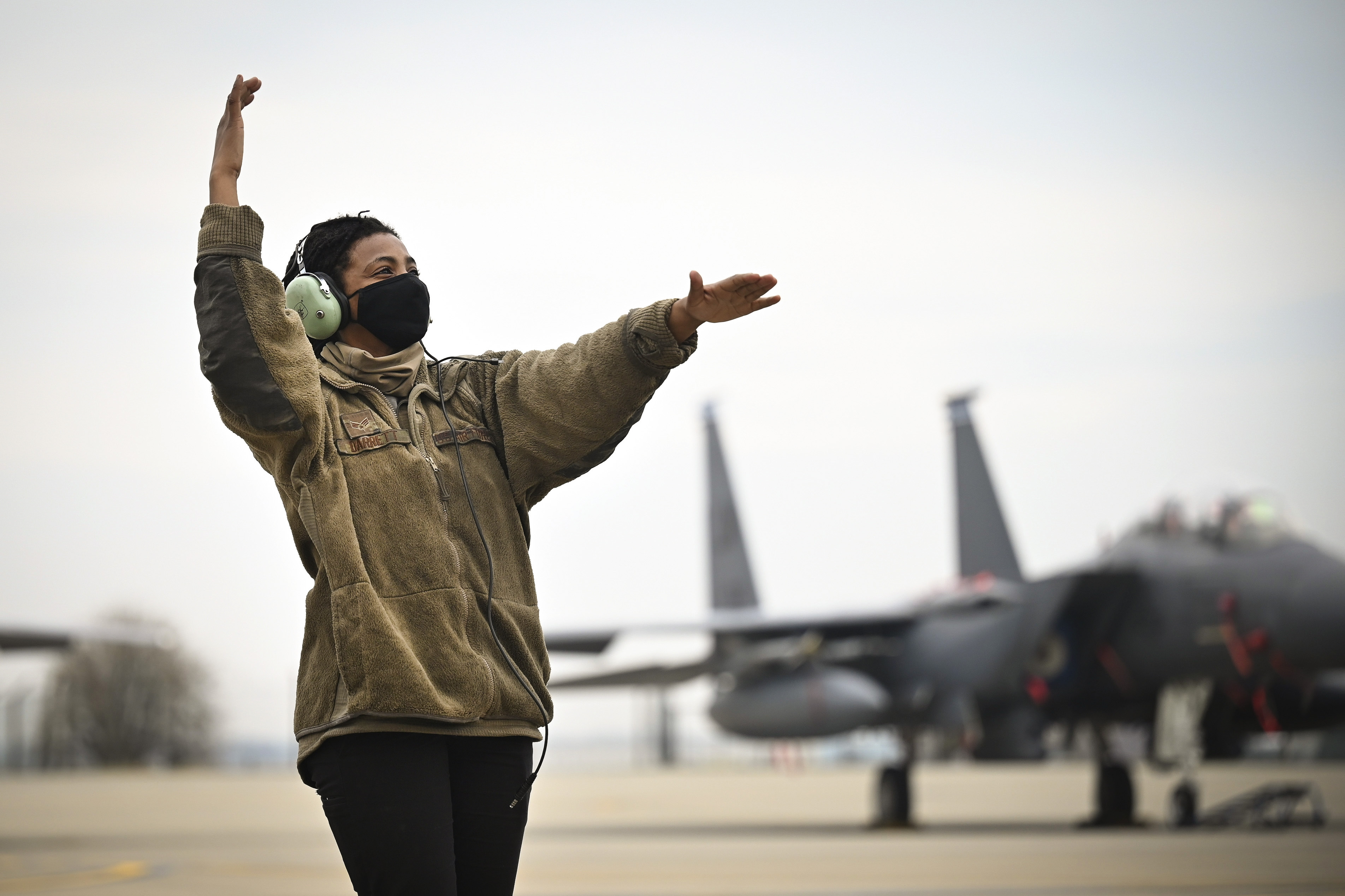
Air Force Senior Airman Lael Darrett communicates with the pilot before takeoff at Royal Air Force Lakenheath, England, March 8, 2021.

Marines and sailors prepare to launch a combat rubber raiding craft during an onload exercise aboard the USS Ashland in the Philippine Sea, Feb. 24, 2021.
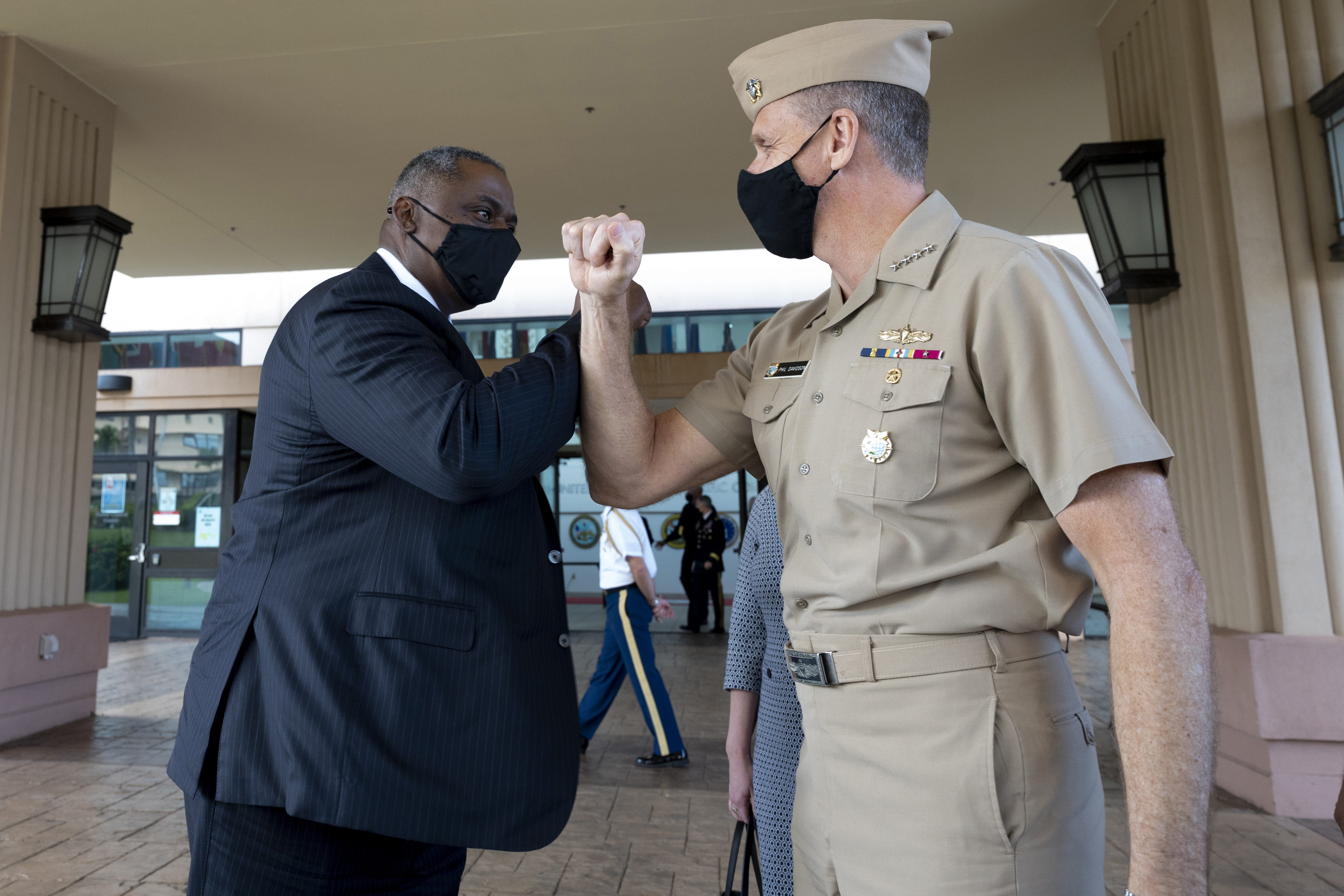
Defense Secretary Lloyd J. Austin III greets Navy Adm. Philip S. Davidson, commander of U.S. Indo-Pacific Command, at Indo-Pacific Command headquarters in Hawaii, March 14, 2021.
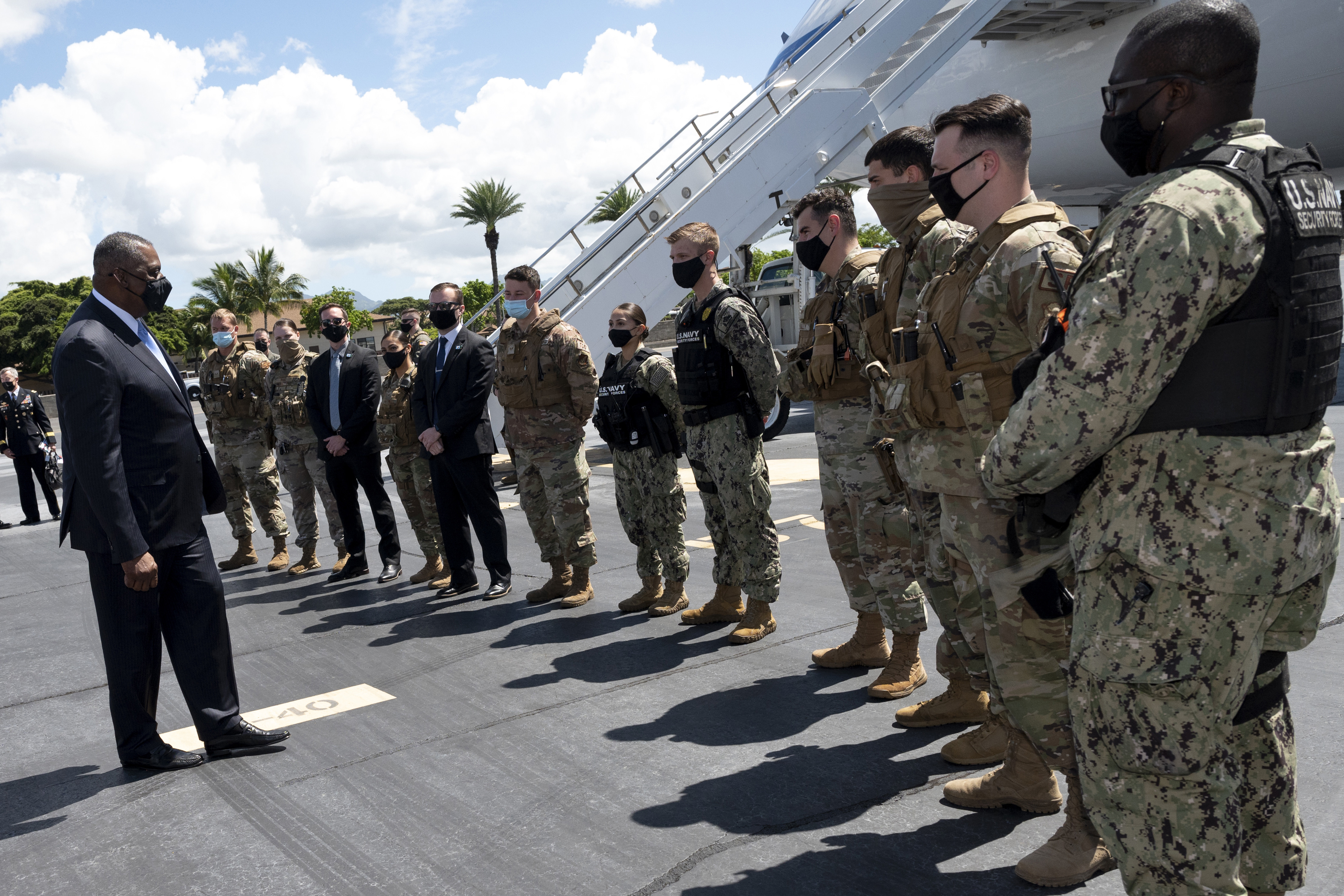
Defense Secretary Lloyd J. Austin III greets military personnel at Joint Base Pearl Harbor-Hickam, Hawaii, March 14, 2021.
The Department of Defense announced Friday the approval of a series of grants that will help military spouses with the issue of professional license portability.
Through a cooperative agreement with the Council of State Governments, grants will allow selected professions to work with CSG’s National Center for Interstate Compacts to develop model interstate occupational licensure compact legislation, addressing license portability affecting transitioning military spouses, along with other practitioners in the profession.
The five selected professions are teaching, social work, cosmetology, massage therapy, and dentistry/dental hygiene.
This is the first time the department has provided this kind of grant.
“The department views the selection of these professions as a significant milestone in achieving the long-term goal of providing license portability for military spouses,” Lernes J. Hebert, performing the duties of the assistant secretary of defense for manpower and reserve affairs, said Friday to the Senate Armed Services Committee staff at their staffer day presentation. “We look forward to working with the National Center for Interstate Compacts and the selected professions on the completion of compacts for these professions.”
Today’s announcement is the first installment of the cooperative agreement authorized by10 U.S.C. 1784, a bill that addresses the burden associated with relicensing by assisting professions interested in developing interstate licensing compacts except that the organizations overseeing these professions lack the resources necessary to engage in the process. Medicine, nursing, physical therapy, psychology, emergency medical services, audiology/speech-language pathology, licensed professional counseling and occupational therapy are professions that have successfully developed interstate licensing compact prior to the cooperative agreement grant process.
Reducing the burden associated with the occupational relicensing of military spouses is a priority for the department. The annual percent of the military spouse population that moves across state lines is 14.5% — compared to 1.1% for civilian spouses. As much as 34% of military spouses in the labor force are required to be fully licensed; and of those spouses, 19% experience challenges maintaining their licenses.
Military spouses can call Military OneSource at 800-342-9647 to speak with a Spouse Education and Career Opportunities career coach to learn about free tools and resources to help them achieve their education and career goals.
About the Department of Defense-State Liaison Office
The Department of Defense-State Liaison Office engages state policymakers on the needs of military members and their families. Currently, efforts focus on 10 key issues (as approved by the assistant secretary of defense for Manpower and Reserve Affairs), which promote the well-being of service members and their families. The DSLO is the department’s point of contact for the cooperative agreement with Council of State Governments.
About Spouse Education and Career Opportunities
The Defense Department established the Spouse Education and Career Opportunities program to provide education and career guidance to military spouses worldwide, offering free comprehensive resources and tools related to career exploration, education, training and licensing, employment readiness and career connections. This program also offers free career coaching services six days a week.
About Military OneSource
Military OneSource is a DOD-funded program that is both a call center and a website providing comprehensive information, resources and assistance on every aspect of military life. Service members and the families of active duty, National Guard, and reserve (regardless of activation status), Coast Guard members when activated for the Navy, DOD expeditionary civilians, and survivors are eligible for Military OneSource services, which are available worldwide 24 hours a day, seven days a week, at no cost to the user.

Navy Petty Officers 3rd Class David Rapp, left, and Jonathan Payanparra fight a simulated fire during a damage control drill on the USS John Finn, March 13, 2021.

A soldier participates in a live-fire exercise during Eagle Sokol 21 at Pocek Range in Postojna, Slovenia, March 12, 2021. The bilateral training exercise with the Slovenian Armed Forces builds a foundation of teamwork and readiness between NATO allies.
The visit of Secretary of Defense Lloyd J. Austin III and Secretary of State Antony J. Blinken to Japan is all about consulting on shared concerns and opportunities in the Indo-Pacific, a senior defense official said today.
The official told reporters traveling with Austin that the meetings in Tokyo signify the importance the new administration places on U.S. relationships in Northeast Asia.
Blinken and Austin will meet with Japanese Foreign Affairs Minister Toshimitsu Motegi and Defense Minister Nobuo Kishi.
The trip is about investing in the U.S.-Japan relationship, "which is our cornerstone alliance for Indo-Pacific strategy," the official said. "It's about maintaining peace and stability across the priority theater for the department and for our country."
Diplomacy is at the center of U.S. foreign policy. The Defense and State department secretaries making the visits by cabinet-level leaders in the Biden administration to Northeast Asia sends an unmistakable signal of the importance that America places on the relationship. The official said Austin wants to engage in a deepened, sustained discussion about the regional security environment. He will get the Japanese perspective of the region, including the situation in North Korea, the rise of China and adventurism by the Russians.
Japan and the United States are treaty allies. But beyond that both nations share the commitment to defending the rule-based international order, the official said.
Finally, Austin wants to discuss ways to increase military interoperability with Japanese leaders. "We've got a very strong alliance with Japan, and we're going to be looking at ways where we can make it stronger," the official said.
He noted that just as the United States military is looking at a strategic posture review, so, too, are the Japanese. "So, this is an opportunity for us to talk about how we can build interoperability within the alliance to strengthen the interoperability within our alliance, what kind of capabilities we need to invest in, [and] how we can work together to better advance our shared goals and common objectives," he said.
The Indo-Pacific has always been a region of superlatives, but the terms have changed over the past decades.
Now people talk about the Indo-Pacific being a "region of consequence," "the priority theater," or the "global economic engine."
For decades, the U.S. military has recognized the importance of the theater. U.S. Indo-Pacific Command covers 51 percent of the globe. The region has 60 percent of the world's population. The United States and China are the world's largest economies. The most soldiers, the biggest navies, the longest distances, most endangered and much, much more. There are hundreds of languages and cultures and environments.
China is the pacing challenge for the United States military, and service members must respond — but it's not the only challenge in the region.
"We've all had these concerns for decades — the rising China, [North Korea], Russia, violent extremist activities — but their scope, volume, scale are much more problematic," said a senior defense official.
Added to all this is the issue of climate change, which touches fundamentally on many of the island nations of Oceania. Also a problem is that this is the Ring of Fire, where tectonic plates collide causing volcanoes, earthquakes and tsunamis. Top it off with COVID-19 and the global pandemic, and there is a complex brew of problems and issues.
China, Russia, North Korea and violent extremism are in the Indo-Pacific and operate there every day. The threats are a direct challenge to the mission of the U.S. Indo-Pacific Command to provide freedom and mobility for commerce in the region, to support good governance, and to deter aggression.
The best weapon in the arsenal is the U.S. network of allies and partners. Unlike Europe where NATO and the European Union have inured the nations to working together multilaterally, the Indo-Pacific doesn't have that architecture, a senior defense official said.
The United States has treaty allies in the region: the Republic of Korea, Japan, the Philippines, Thailand, Australia and New Zealand.
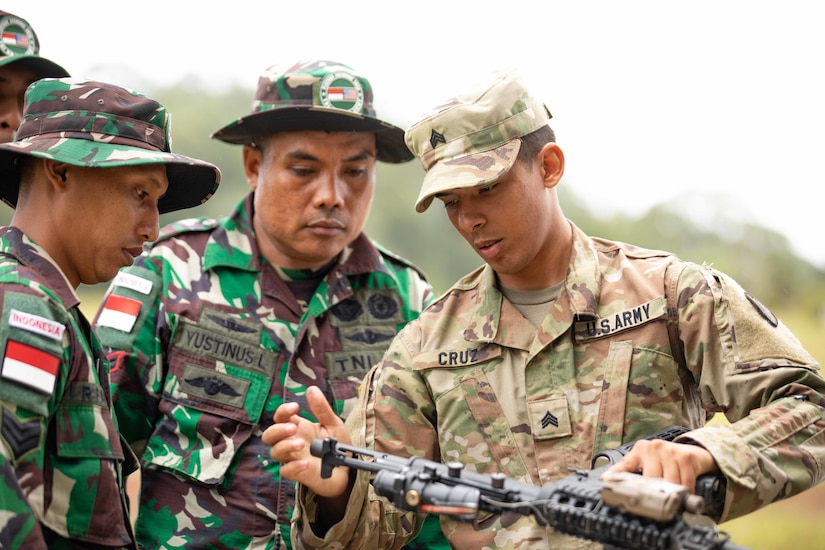
While the United States works bilaterally with many nations in the region, leaders would like to see more multilateral engagement. "The Quad" call that President Joe Biden participated in with the leaders of Australia, India and Japan is promising, officials said. The Quad is not a security pact, but it could grow into an arena that allows the countries to cooperate more.
China's behavior in the region — from fighting with India at the line of control, to increasing efforts and patrols in the Indian Ocean region — is worrisome to India. "They are aware of that and the traditionally non-aligned country is starting to do more with the United States, with Australia and with Japan," the official said. "India is not going to sign a mutual defense treaty with us any time soon, but they are a major defense partner of the United States and they are trying to become more interoperable with the U.S. military in their military capabilities, their command and control, their information sharing."
This is important because the region is so vast and so varied that no one country can do it alone. The United States will need allies and partners to defend the rules-based architecture that has benefited so many — including China.
The U.S. center of gravity is the friends and allies who want a free and open Indo-Pacific. China and Russia really do not have a network even close to this.
U.S. government officials will study the basing of U.S. troops in the region. This doesn't mean bases, but spaces. "We are not looking to reposition large numbers of troops, in large vulnerable concentrations," the official said. "We want to get the virtues of massing without the vulnerabilities of concentration."
This means troops positioning in many different countries in episodic and dynamic ways. The U.S. military doesn't require new and permanent bases in Indonesia and Malaysia, for example. "What we need is episodic places that support operations with our allies and partners," the official said.
Also, officials do not know China's plans, "and anyone who says they do, is probably being a little disingenuous," officials said.
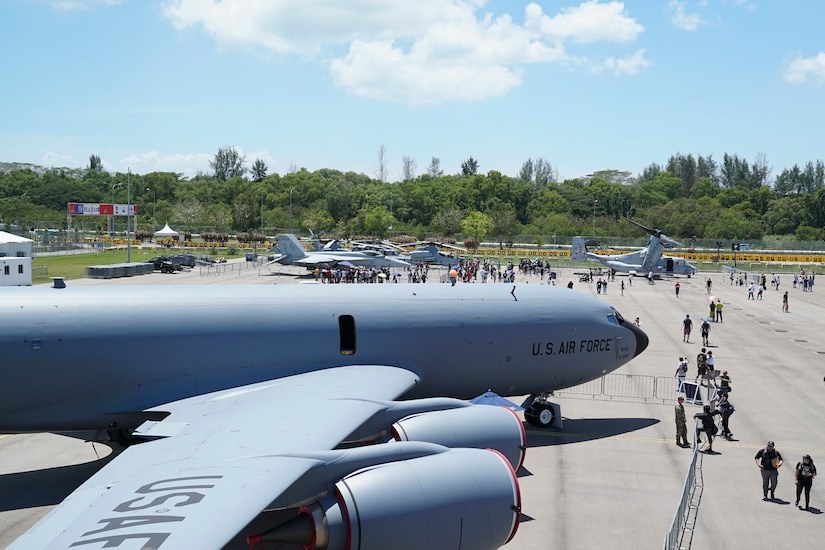
China has built islands in the South and East China Seas and plunked missiles on top. Chinese leaders talk of unifying Taiwan under Chinese rule, but Taiwan was never part of China.
With Taiwan in particular, Defense Department officials look at Chinese capacity. "Do they have sufficient numbers of the right pieces of equipment necessary to execute what … they would believe would be a successful operation?"
China has fielded scores of new and modern systems. "Just in 2020, in the midst of all the COVID related stuff, China still commissioned 25 major new ships," the official said.
A second part of this is that while the U.S. military was fighting in Afghanistan and Iraq, "China went to school on us: We're their pacing threat," the official said.
The Chinese army has training centers similar to those the U.S. has at Fort Irwin, California, and Fort Polk, Louisiana. "They're trying to become joint interoperable," he said.
All this leads to an erosion of U.S. conventional deterrence. Leadership processes are weak. "We believe in decentralized execution," the official said. "The American GI or Marine fights best when there are hand grenades being thrown at them, and nobody's around to tell them what to do."
China has nothing comparable. Chinese leaders can write excellent plans, but once they confront the unexpected, there will be trouble for them.
March 13, 2021 | BY Jim Garamone , DOD News
America's network of alliances and partnerships is an asymmetric advantage. Austin and Secretary of State Anthony J. Blinken will visit Japan and South Korea.
"As a country [we] have more alliances than any other country in the world, more partnerships than any other country in the world," Austin said as the jet he was riding in approached Hawaii. "They give us a lot more capability and so one of the big things the Secretary of State and I want to do, is begin to strengthen those alliances — great alliances, great partnerships to begin with."

Both Japan and South Korea are treaty allies of the United States.
The visit will be about listening and learning, the secretary said. He and Blinken want to understand how the allies see things in the region with an eye towards increasing regional stability. "So I'm looking forward to engaging the leadership in each of the countries," he said.
Austin will also discuss enhancing capabilities with Japan and South Korea. "China is our pacing threat," he said. "Our goal is to make sure that we have the capabilities and the operational plans and concepts to be able to offer credible deterrence to China or anybody else who would want to take on the U.S."
As the United States focused on the Middle East for the last two decades, "China has worked to build a modernized military capability," the secretary said.
The U.S. competitive edge has eroded. "We still maintain the edge and we're going to increase the edge going forward," he said.
This is the first trip of both Austin and Blinken out of the country. The fact that this trip is to Asia is meant to reassure allies of America's commitment to the region.
March 12, 2021 | BY Terri Moon Cronk , DOD News
Senior-class Naval Academy Midshipman 1st Class Sydney Barber is a mechanical engineering major at the campus in Annapolis, Maryland, and will be a 2nd lieutenant Marine Corps ground officer when she graduates this spring.
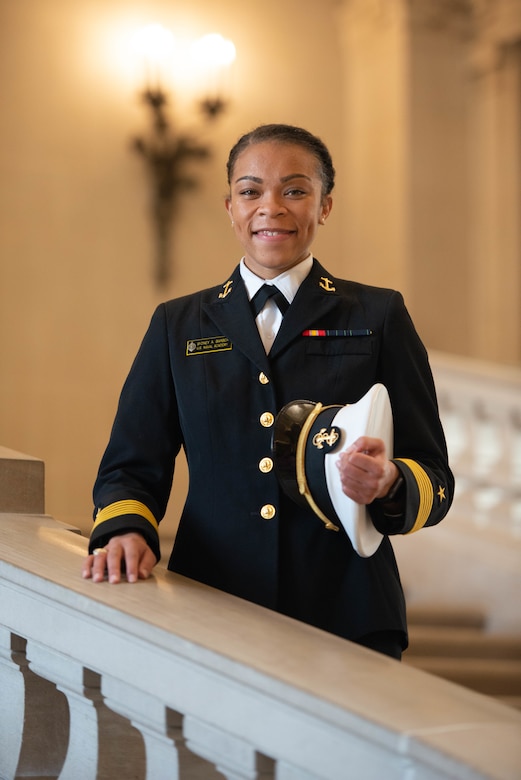
She's on the Women's Varsity Track and Field team, co-president of the Fellowship of Christian Athletes club, and secretary of the National Society of Black Engineers. She also sings with the academy's gospel choir and is a member of the Midshipman Black Studies Club. In addition, she initiated a STEM outreach program for mentoring middle school girls of color in science, technology, engineering and math.
If that is not enough, Barber's most awe-inspiring position is as the academy's first Black female brigade commander this spring semester.
In the academy's 175-year history, women were only first accepted into the class of 1980, and she is the 16th woman selected for brigade commander since that time. She beat out 30 competitors for the top leadership position.
Hailing from Lake Forest, Illinois, Barber, 21, is known as the "six-striper" at the academy. She said last night at the Ronald Reagan Presidential Foundation in Simi Valley, California, that she's in the highest leadership position within the brigade of more than 4,000 midshipmen, and she has a staff of 30 people.
As brigade commander, Barber finds solutions to issues that exist in the brigade and presents them to the academy commandant at the end of the day, among her many other duties.
"My job is to build a team," she said. "The team has to trust you and respect you and know their voices are heard. They must feel critical to the mission, and you must touch the hearts of the people you lead."
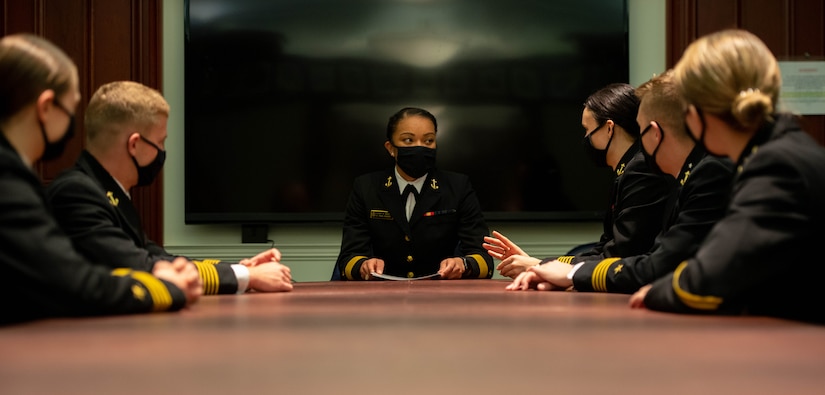
Barber said she never pictured herself as brigade commander. "I looked up to strong female leaders and had lot[s] of role models. A year ago, someone said they could see me as battalion commander, so I took on leadership roles, performed community service and joined service clubs. I threw my name in the hat to maximize my potential as much as possible."
Her efforts had to do with her becoming the best version of herself, she said.
A self-described introvert, Barber says she's not used to being under the spotlight that's shined on her since her appointment, but she came to embrace the idea that another opportunity might not exist for someone else who looks like her.
Barber says she feels blessed to be brigade commander at the academy, and her approach comprises her lifelong faith, heart and passion. Service became her passion, whether serving her country or working in a soup kitchen.
She left her comfortable suburban life as a teen to do humanitarian work in Chicago, the Dominican Republic and India, among other places. "It opened my eyes," she said of working in the Dominican Republic. "…I grew up in privilege and affluence. I saw people living in metal sheds and making it from one meal to the next. There is much more to life than materialism, and it made me grateful for all I had. I want to pour that back into the world."
The Naval Academy, she noted, was the perfect place for her to do that, and she pursues three things in her life: heart, purpose and legacy.
"There's no greater sacrifice or expression of love than someone who's willing to lay down their life for their country," Barber offered. "What we do is out of an act of love. Out of love, you make sacrifices, and love is proven by action. Everyone wants to have purpose, but words are meaningless unless you pursue the action, not only in this generation, but especially in 10, 20, 30 years."

When she thinks about the life she wants hers to be, Barber wants to confidently say she emptied the tank and did all she could with her humanitarian passion.
"I pursued things that light fire in my heart. In diversity and inclusion, how do you impact a large sector of people? In a Marine Corps career, leading with heart can be unconventional, but empathy, fostering trust, sharing your story and embracing someone else's, cultivates the passions of others," she said. She said being a leader throughout her career is vital to her and the legacy she hopes to leave.


 Posts
Posts

