Sunday, September 13, 2020

General Officer Announcement

 Sept. 10, 2020


Secretary of Defense Mark T. Esper announced today that the president has made the following nomination:

Marine Corps Maj. Gen. Michael S. Groen for appointment to the grade of lieutenant general with assignment as director, Joint Artificial Intelligence Center.  Groen is currently serving as deputy chief of computer network operations, National Security Agency, Fort Meade, Maryland. 

[Eds. Note:  The information in this announcement has been updated with the correct name of the officer being nominated.]

Friday, September 11, 2020

Landing Signal


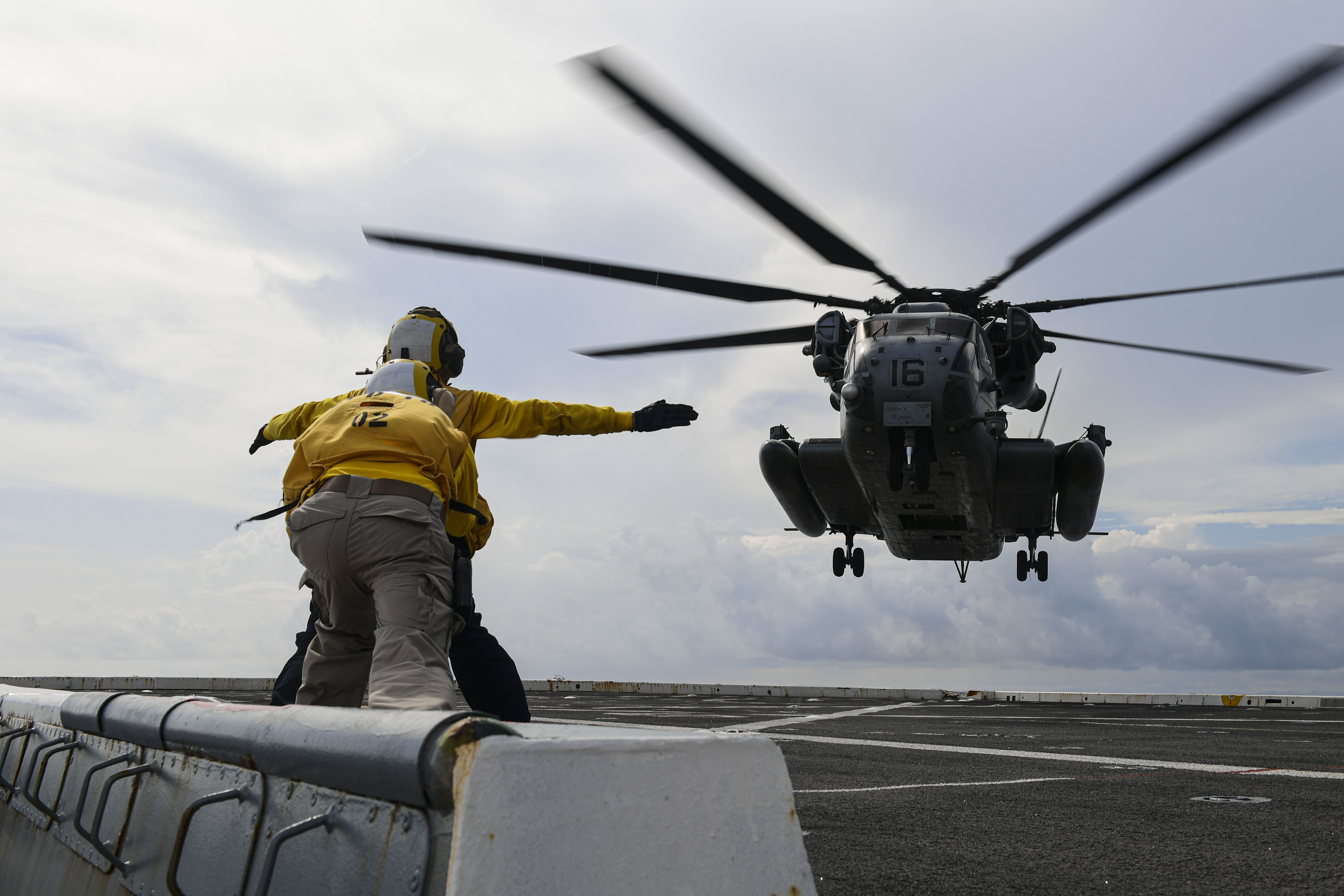
Navy Petty Officer 3rd Class Michael Aguda and Chief Petty Officer Joan Revilla direct the landing of a Marine Corps CH-53 Sea Stallion helicopter on the flight deck of the USS New Orleans in the Philippine Sea, Sept. 10, 2020.

Navy to Christen Submarine Montana

 Sept. 11, 2020


The Navy will christen one of its newest attack submarines, the future USS Montana (SSN 794), during a 10 a.m. EDT ceremony Saturday, Sept. 12, 2020, at Newport News Shipbuilding, a division of Huntington Ingalls Industries, in Newport News, Virginia.

The principal speaker will be Under Secretary of the Navy (Acting) Gregory J. Slavonic. Ms. Sally Jewell, former Secretary of the United States Department of Interior, will serve as the ship’s sponsor. In a time-honored Navy tradition, she will christen the ship by breaking a bottle of sparkling wine across the bow and state, “in the name of the United States I christen thee.”

“The future USS Montana will play an important role in the defense of our nation and maritime freedom,” said Slavonic. “She stands as proof of what teamwork – from civilian to contractor to military – can accomplish. I am confident USS Montana and her crew will ensure our Navy remains safe and strong to proudly serve our nation’s interest for decades to come.”

The future USS Montana (SSN 794) honors the Treasure State. She will be the second commissioned warship bearing the name. The first USS Montana (ACR-13), an armored cruiser, was also built at Newport News Shipbuilding and commissioned July 1908. She served in the Atlantic and Mediterranean, landed Marines during unrest in Haiti in 1914 and escorted convoys during World War I. She was decommissioned in 1921. 

Construction of the current Montana began April 2015 and is the third of the ten Block IV Virginia Class submarines. 

Virginia Class submarines are built to operate in the world's littoral and deep waters while conducting anti-submarine warfare; anti-surface ship warfare; strike warfare; special operation forces support; intelligence, surveillance and reconnaissance; irregular warfare; and mine warfare missions. Their inherent stealth, endurance, mobility and firepower directly enable them to support five of the six maritime strategy core capabilities – sea control, power projection, forward presence, maritime security and deterrence. They are replacing older Los Angeles Class submarines as they retire.

Media may direct queries to the Navy Office of Information at (703) 697-5342. More information about the Virginia-class Attack Submarines is available online here. 

Additional information about the Naval History of Montana can be found online here.

Senior Defense Officials Discuss 2030 Missile Defense

 Sept. 11, 2020 | BY TERRI MOON CRONK , DOD News

Three senior Defense Department officials took part in a discussion about missile defense capabilities in 2030 and the demands of tomorrow at the Missile Defense 2030 symposium.

Yesterday's panel included James H. Anderson, acting undersecretary of defense for policy; Navy Vice Admiral Jon A. Hill, director of the Missile Defense Agency; and Army Lt. Gen. Daniel L. Karbler, commander of the Army Space and Missile Defense Command.

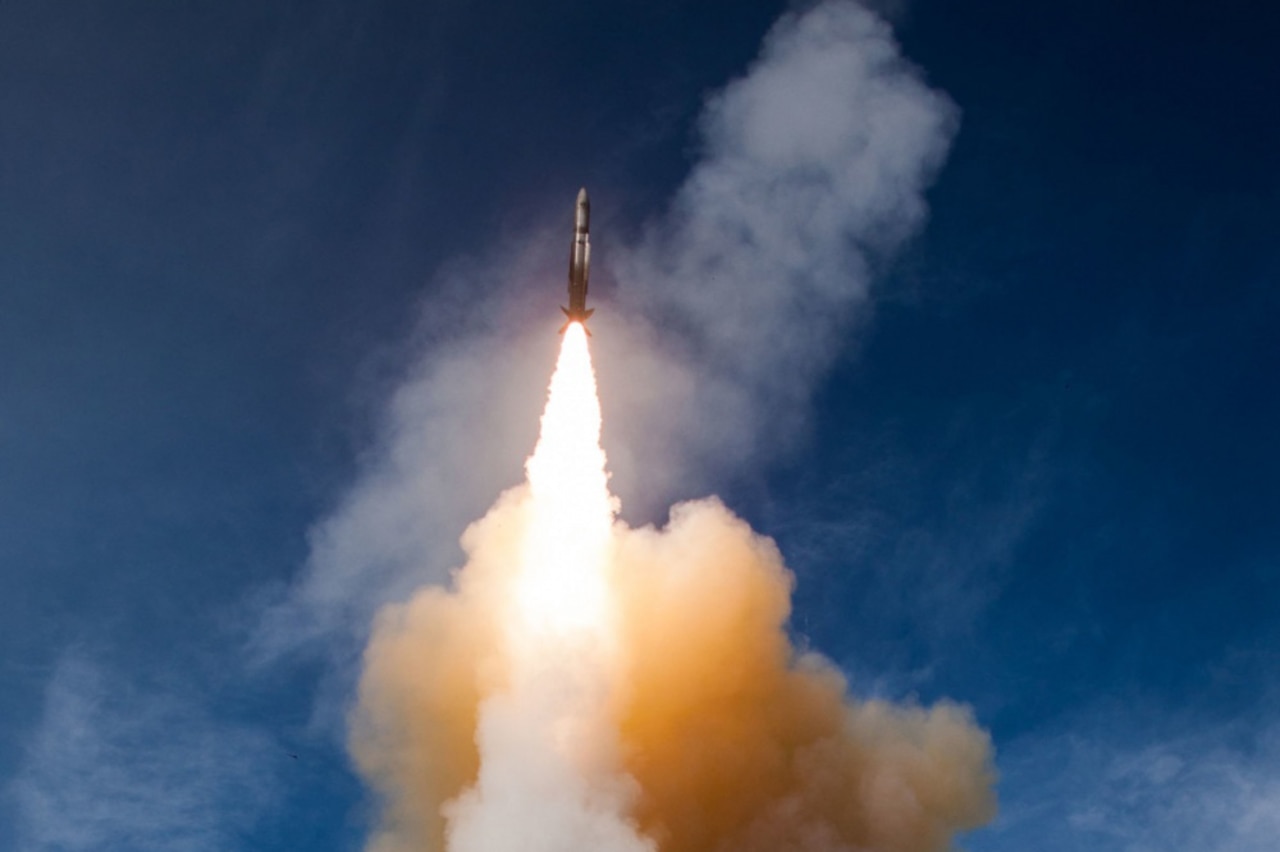
A missile is launched from a ship.

 
"When you look at 2030, we're looking at advanced ballistic missiles, [and] we know they're going to maneuver hypersonic threats and cruise missile threats," Hill said. "That's a very challenging place to be."

When you get into ground-based missile defense or midcourse defense for protection of the United States, we are working very Intensely on the service-life extension program, along with the reliability program that takes us beyond just the analytical, he added. "We now have hardware and equipment tied into that thanks to very great support coming from Congress, as well as the department."

That support, Hill said, will help DOD increase and extend the life of the existing fleet, which he said is vital. 

"While we have to also compete in parallel with the next generation interceptor, … by closing that gap with a very strong liability program for the fleet today, and bringing on a new interceptor that will tie into the ground systems and into the sensors, [it] is going to be pretty formidable," Hill said.

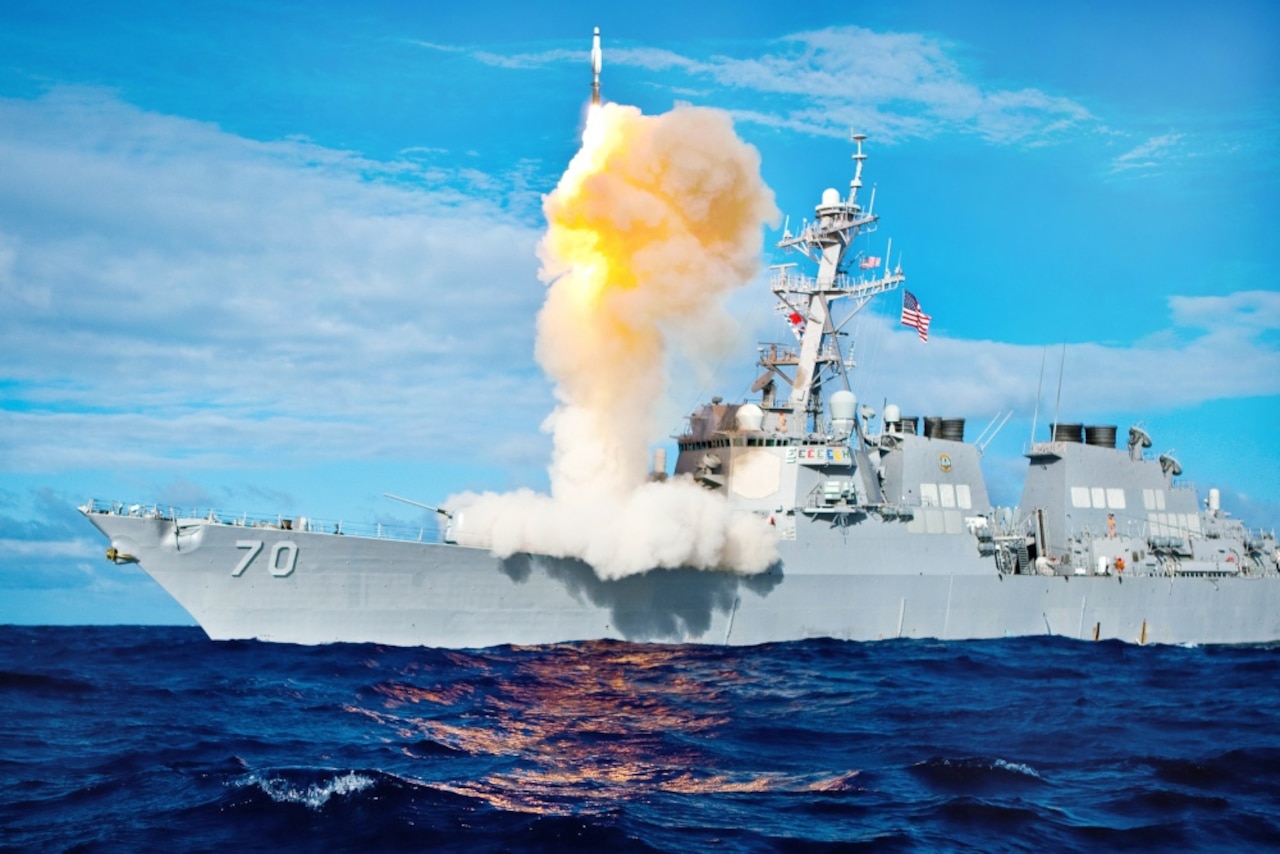
A ship deploys a missile.

The joint kill web has to enable DOD's defensive systems and its offensive systems, Karbler said. 

"If the adversary launches at us, we're going to the joint kill web [to] enable us to censor any sensor by shooter to engage," he said. He noted it also will allow DOD, integration-wise, to offensively respond with whatever capability that it might have from air to surface.

"The Army is working very hard on long-range precision fires to be able to counter what that adversary brings to us," Karbler said.

In terms of DOD's vision for 2030, the department will seek out those opportunities where it makes sense to work with allies and partners in missile defense, Anderson said.

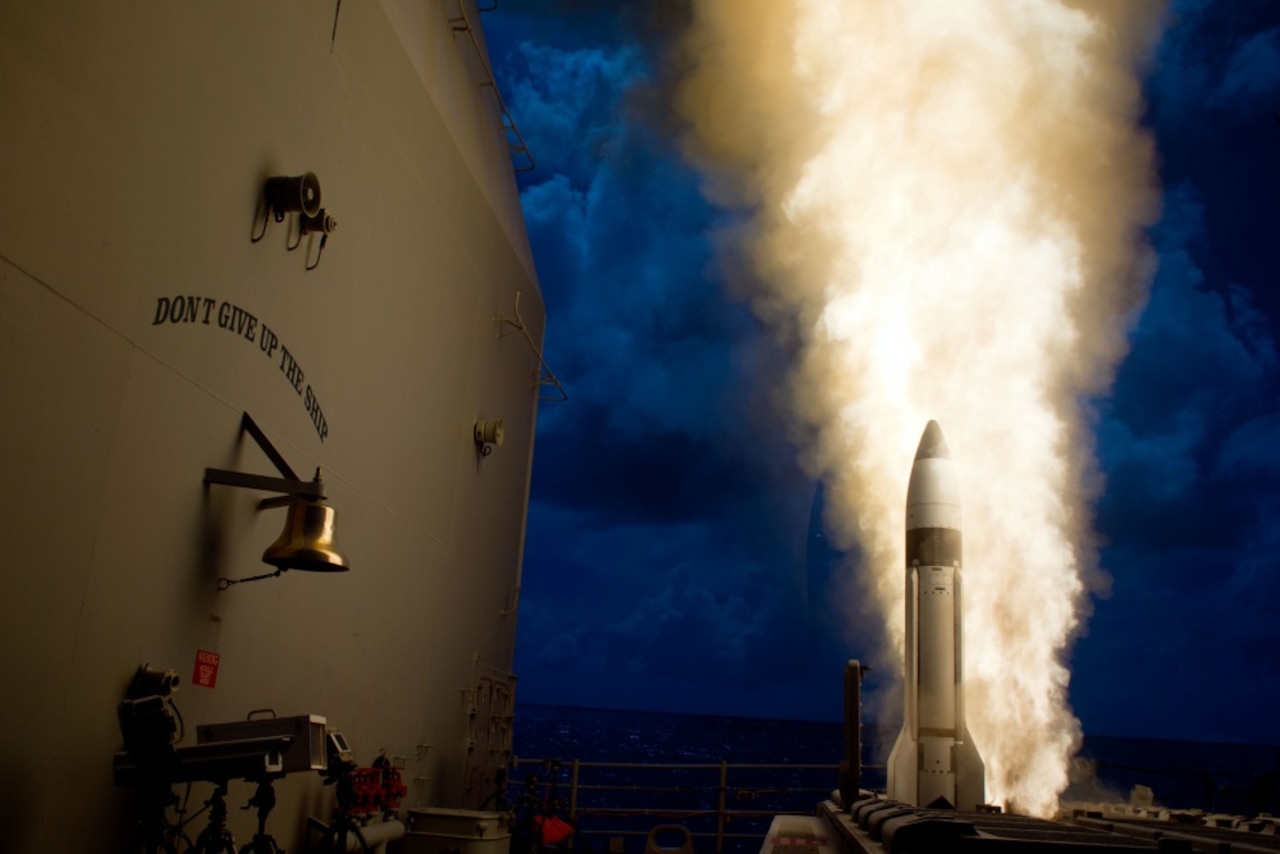
Interceptor is launched.

"We talked before about defending the homeland. What's also very critical when we talk about missile defense is the regional context," he noted. 

Anderson also said both China and Russia would seek to overwhelm the U.S. and its allies early in a particular theater  and impede the flow of allied forces.

Because of this, it's vital in a regional context for the United States to have a robust integrated air and missile defense. "That's why we have had these collaborative efforts, and we will seek out them going forward, as well," he added.

DOD Awards Contracts for COVID-19 Reusable Isolation Gowns

 Sept. 11, 2020


Today, the Department of Defense, on behalf of the Department of Health and Human Services, signed contracts with a maximum value of $136 million with five American businesses to manufacture up to 15 million Covid-19 reusable isolation gowns for the replenishment of the HHS-managed Strategic National Stockpile.  

Delivery of the gowns will be complete by January 2021 ensuring HHS is poised to meet the Nation’s critical medical needs. 

Today’s contract awards, along with additional planned US-sourced gown contracts, will boost the domestic industrial base for textiles and reduce dependency on foreign sources for critical personal protective items.  There was robust competition for the contracts, which were executed by the Defense Logistics Agency. 

All of the gowns procured adhere to the Berry Amendment, an acquisition regulation that requires DOD to give preference to domestically produced clothing and textiles.  All of the contract awardees are American small businesses, with the largest portion of the quantities going to a woman-owned small business.

Hornet Launch


An F/A-18E Super Hornet launches from the flight deck of the aircraft carrier USS Ronald Reagan in the Philippine Sea, Sept. 7, 2020.

Sunny Sail


The guided missile destroyer USS Mustin conducts a replenishment with the aircraft carrier USS Ronald Reagan in the Philippine Sea, Sept. 7, 2020.

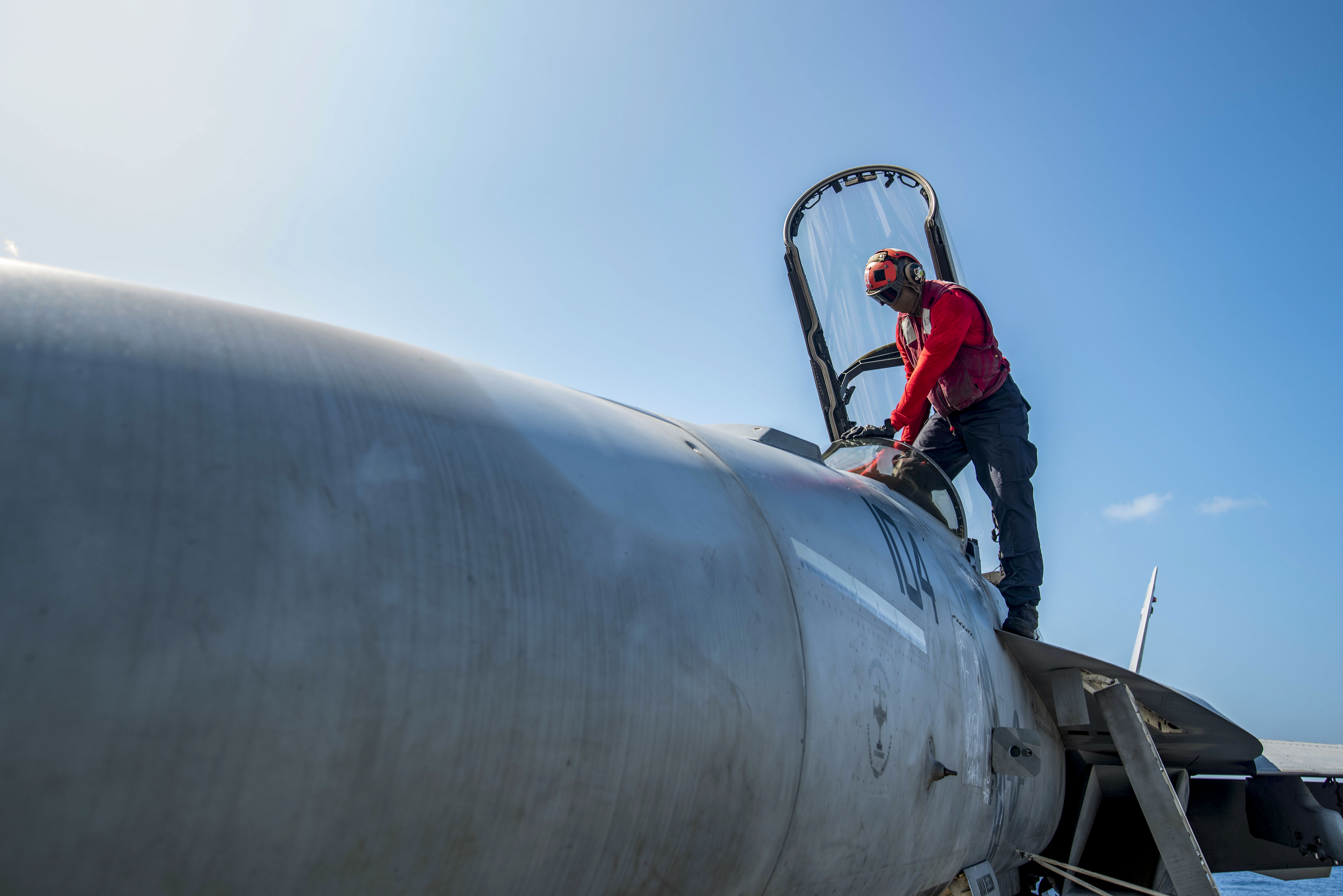
Cockpit Climb


Navy Seaman Isaiah Washington climbs into the cockpit of an F/A-18F Super Hornet on the flight deck of the aircraft carrier USS Ronald Reagan in the Philippine Sea, Sept. 9, 2020.

Iroquois Exit


Air Force Staff Sgt. Patrick Grandison and military working dog Tek exit a UH-1N Iroquois during aircraft familiarization and detection training at Sagami Depot in Sagamihara, Japan, Sept. 2, 2020.

Delivery Duty


Arizona Army National Guardsmen prepare boxes of groceries for delivery in Phoenix, Sept. 8, 2020, as part of COVID-19 relief efforts.

Advancement Exam


Navy Petty Officer 2nd Class Camille Harrington takes an advancement examination at Naval Base Ventura County, Calif., Sept. 9, 2020. The examinations were administered with a tailored approach to ensure safety during the COVID-19 pandemic.

Joint Press Statement for the 18th Korea-U.S. Integrated Defense Dialogue

 Sept. 11, 2020


The Republic of Korea (ROK) Ministry of National Defense (MND) and the United States (U.S.) Department of Defense (DOD) held the 18th Korea-U.S. Integrated Defense Dialogue (KIDD) September 9-10, 2020. Due to ongoing travel restrictions related to the coronavirus (COVID-19) pandemic, the two sides held a robust exchange on a range of ROK-U.S. Alliance priorities via secure video teleconference. ROK Deputy Minister Chung Sukhwan and David Helvey performing the duties of Assistant Secretary of Defense with U.S. Deputy Assistant Secretary of Defense for East Asia Heino Klinck led their respective delegations.

The leaders underscored the importance of strengthening the combined readiness posture of the ROK-U.S. Alliance to address the current security environment on the Korean Peninsula as well as mutual regional security concerns. The two sides also committed to continue bilateral security cooperation including senior-level policy consultations, information sharing, and personnel exchanges to promote peace and stability on the Korean Peninsula and throughout Northeast Asia. 

Concurring on the importance of establishing stable access to training facilities and other critical sites and resources as essential to maintaining a steadfast combined defense posture, the two leaders also reviewed the progress made in the combined joint multi-purpose live firing range joint study and discussed the way ahead to ensure continued progress in advance of this fall’s Security Consultative Meeting (SCM).

Both sides also reaffirmed the common objectives of establishing permanent peace on the Korean Peninsula and the complete denuclearization of North Korea. The delegations agreed to continue close coordination on the implementation of the Armistice Agreement, Comprehensive Military Agreement (CMA), and other relevant agreements.

The two leaders additionally reviewed the progress made in relocating the ROK-U.S. Combined Forces Command (CFC) headquarters and committed to expeditiously pursue the CFC HQ relocation.

The delegation heads affirmed the progress made in preparation for eventual wartime OPCON transition. They also concurred that the Combined Command Post Training (CCPT) in August was a step toward realizing the conditions necessary for FOC certification. Both sides recognized the importance of the ROK forces’ acquisition of critical military capabilities and committed to continue joint assessments through meetings of the special Permanent Military Committee (sPMC) to ensure a successful outcome. Both sides will provide a progress report on COTP requirements and discuss next steps at the SCM later this year.

The two sides celebrated the recent completion of the Comprehensive Joint Study on Extended Deterrence and discussed a range of issues to improve the Alliance’s effective deterrence against North Korean nuclear and missile threats. Moving forward, the two sides committed to enhancing the efficacy of the tailored deterrence strategy.

Both delegations noted that the KIDD reaffirmed the steadfast solidarity of the ROK-U.S. Alliance and further strengthened coordination between the respective defense authorities of the two countries. The leaders pledged to advance the aforementioned issues at the SCM in October, 2020.  

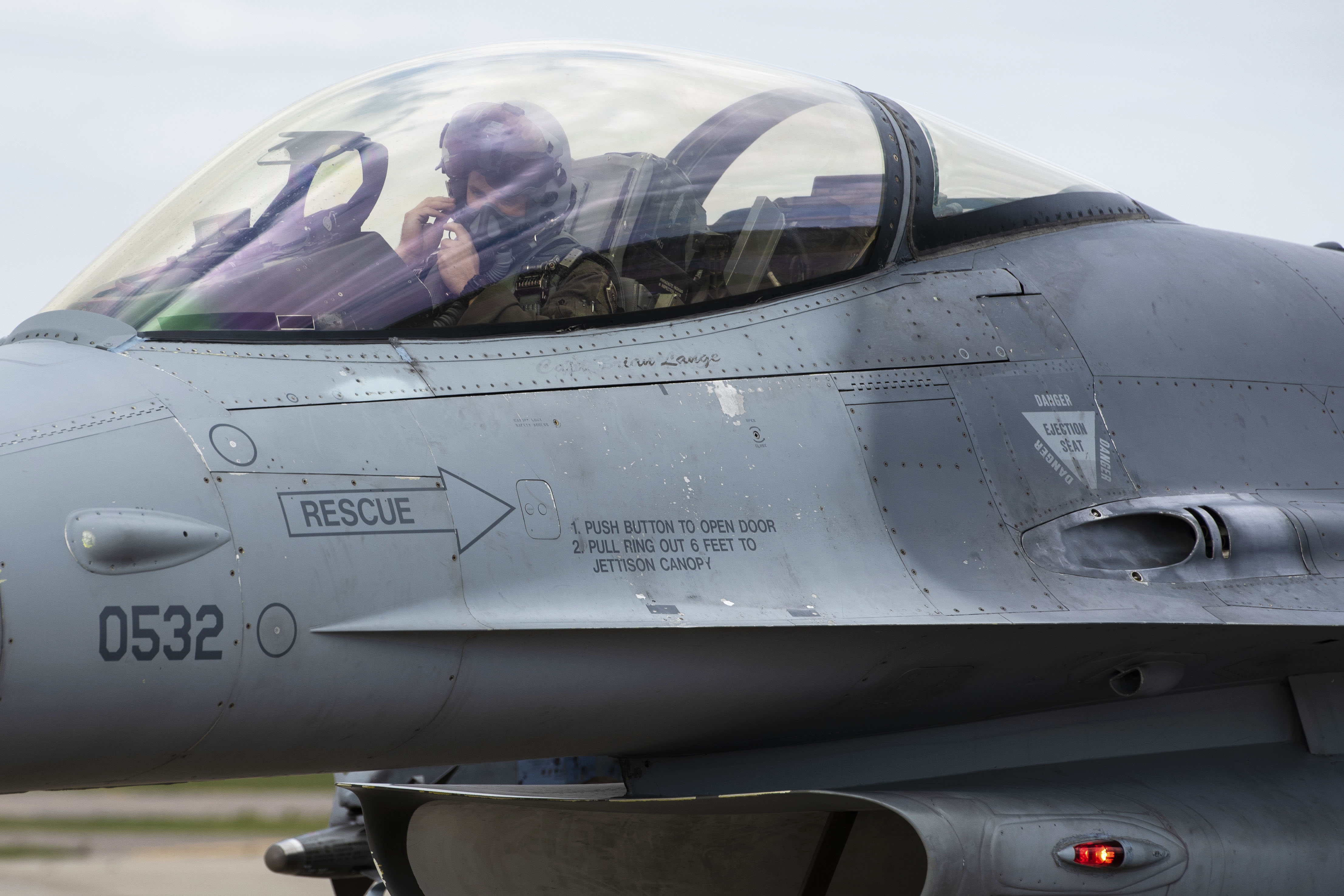
Takeoff Ready


An Air Force pilot gets ready to takeoff from Royal Air Force Lakenheath, England, Sept. 10, 2020.

General Officer Announcement

 Sept. 10, 2020


Secretary of Defense Mark T. Esper announced today that the president has made the following nomination:

Marine Corps Maj. Gen. Patrick M. Shanahan for appointment to the grade of lieutenant general with assignment as director, Joint Artificial Intelligence Center.  Shanahan is currently serving as deputy chief of computer network operations, National Security Agency, Fort Meade, Maryland.   

General Officer Announcement

 Sept. 11, 2020


Secretary of Defense Dr. Mark T. Esper announced today that the president has made the following nomination:

Air Force Maj. Gen. Robert J. Skinner for appointment to the grade of lieutenant general with assignment as director, Defense Information Systems Agency/commander, Joint Forces Headquarters-Department of Defense Information Network, Fort George G. Meade, Maryland.  Skinner is currently serving as director, Command, Control, Communications, and Cyber, J6, Headquarters United States Indo-Pacific Command, Camp H.M. Smith, Hawaii.

Flag Officer Announcement

 Sept. 10, 2020


Secretary of Defense Mark T. Esper announced today that the president has made the following nomination:

Navy Vice Adm. Lisa M. Franchetti for reappointment to the grade of vice admiral with assignment as director for strategy, plans, and policy, J-5, Joint Staff; and senior member, United States Delegation to the United Nations Military Staff Committee, Pentagon, Washington, District of Columbia.  Franchetti is currently serving as deputy chief of naval operations for Warfighting Development, N-7, Office of the Chief of Naval Operations, Washington, District of Columbia. 

Partner Flight


An Air Force B-52H Stratofortress leads a formation of U.S. and Dutch aircraft over the North Sea during Point Blank, a recurring exercise.

Intersessional Meeting of the U.S.-India 2+2 Ministerial Dialogue

 Sept. 11, 2020


Principal Deputy Assistant Secretary of State for South and Central Asian Affairs Dean Thompson and Principal Deputy Assistant Secretary of Defense for Indo-Pacific Security Affairs David Helvey joined their Indian counterparts today for a virtual Intersessional Meeting of the U.S.-India 2+2 Ministerial Dialogue.  The two sides welcomed the opportunity to discuss the U.S.-India Comprehensive Global Strategic Partnership, noting increased closeness and cooperation across multiple areas of the bilateral relationship.

The United States underscored the importance of India’s status as a Major Defense Partner, growing military-to-military cooperation, and other defense priorities.  The two sides discussed a range of bilateral, regional, and multilateral issues, including combating COVID-19, counterterrorism, India’s membership on the UN Security Council, support for good governance and sustainable development in the Indo-Pacific region, and efforts to counteract recent destabilizing actions in South Asia and the broader Indo-Pacific region.  Both sides agreed to further strengthen consultation through United States-India-Australia-Japan Quadrilateral consultations.

Principal Deputy Assistant Secretary Thompson and Principal Deputy Assistant Secretary Helvey pledged to continue working with their Indian counterparts to advance the U.S.-India partnership for the benefit of both countries, the region, and the world.  They looked forward to preparing for the U.S.-India 2+2 Ministerial Dialogue later this year.

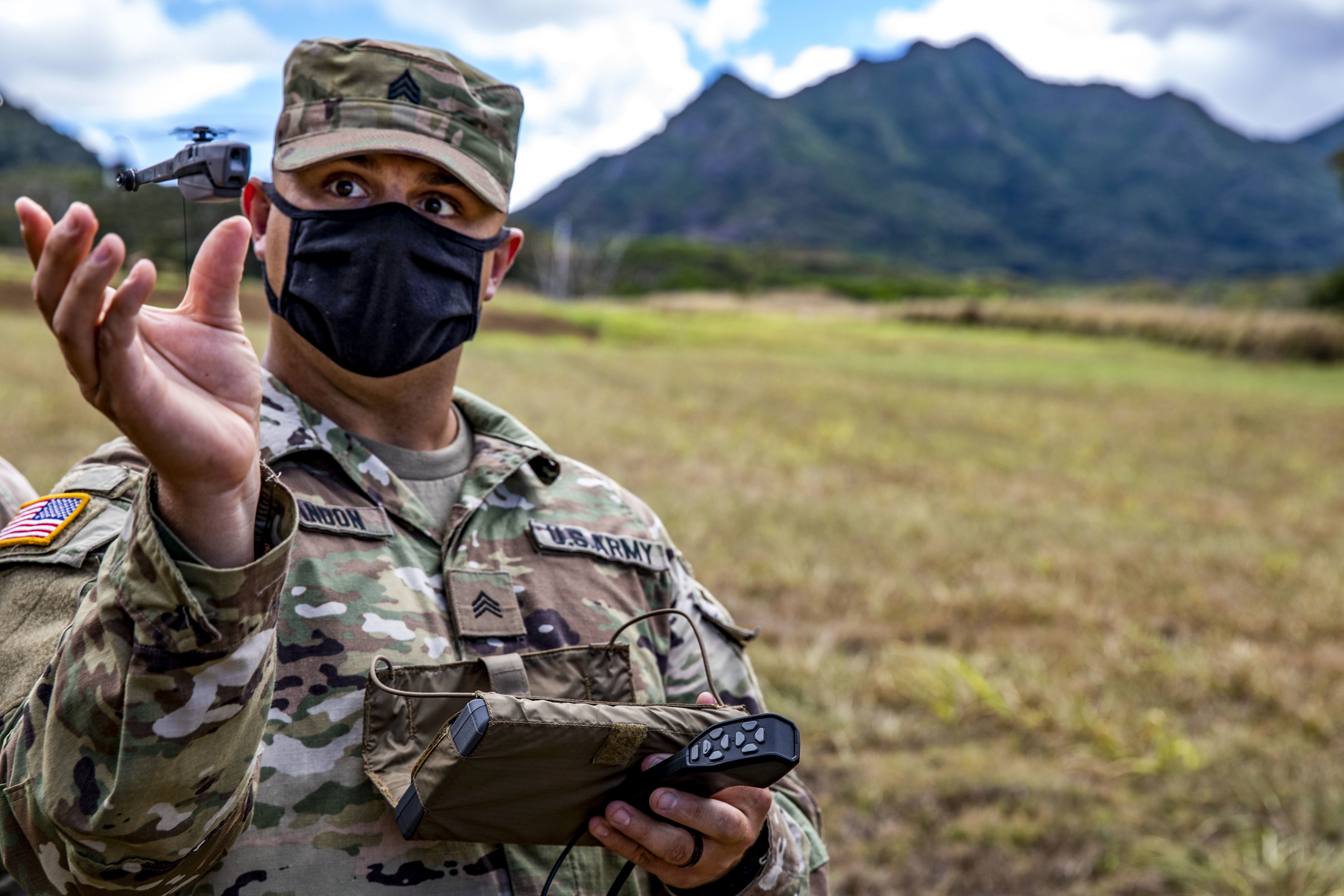
Drone Drill


Soldiers train and certify on a soldier-borne sensor at Schofield Barracks, Hawaii, Sept. 3, 2020. The sensor enables soldiers to deploy a micro-drone to gain situational awareness and observe where a soldier cannot physically reconnoiter.

The Maldives and U.S. Sign Defense Agreement

 Sept. 11, 2020


Deputy Assistant Secretary of Defense for South and Southeast Asia Reed Werner and Maldivian Minister of Defense Mariya Didi signed the “Framework for U.S. Department of Defense-Maldives Ministry of Defence Defense and Security Relationship” in Philadelphia on September 10.  
 
The Framework sets forth both countries’ intent to deepen engagement and cooperation in support of maintaining peace and security in the Indian Ocean, and marks an important step forward in the defense partnership.  
 
DASD Werner and Minister Didi also discussed U.S. support for the Maldives’ response to COVID-19 and areas for future cooperation, and agreed to work toward scheduling the first Defense and Security Dialogue. Both sides reiterated their commitment to a free and open Indo-Pacific that promotes the security and prosperity of all nations in the region.